

Solar Lighting Manufacturer
for OEM and Project Supply
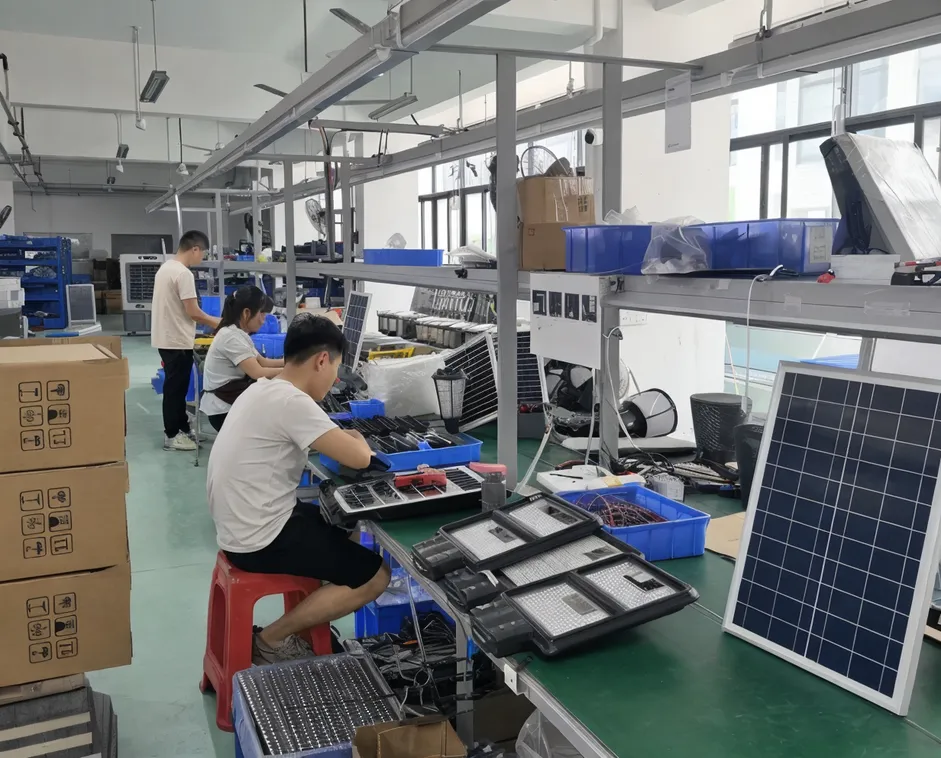
We are a solar light factory in Guzhen Town, Zhongshan — the center of China's lighting manufacturing industry. Since 2012, our core export work has been solar-powered outdoor lighting, with selected adjacent solar-powered lines added where they fit buyer catalog needs.
In-house production, on-site engineering, and an inspection lab in the same building where the product is assembled. If you need a factory you can reorder from, not a sourcing agent assembling orders from three different suppliers, that is what we are.
Solar Lighting Product Lines You Can Build a Catalog Around
The main catalog is organized around seven outdoor solar lighting categories. Solar fans and solar battery products are linked below as selected adjacent solar-powered product lines for buyers who want to extend a catalog from the same factory relationship.
Solar Street & Roadway Lighting
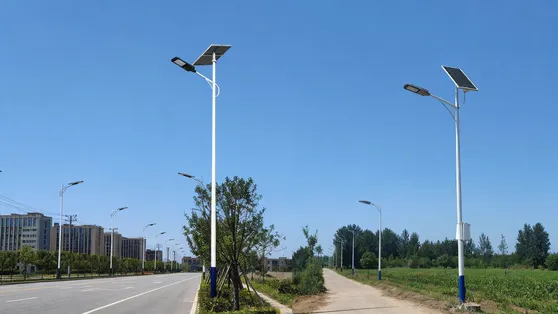
Street and roadway fixtures are the highest-volume category in solar outdoor lighting. All-in-one and split configurations cover the range from rural road programs to urban arterial projects. SKU depth runs from standard wattage models to smart-enabled variants with dimming and motion sensing, so a single distributor can cover multiple project tiers from one catalog.
Solar Parking Lot & Area Lighting
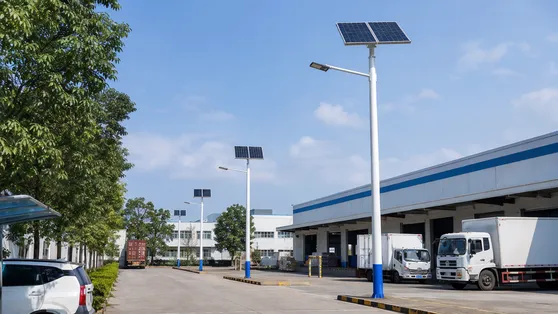
Parking lot and area lights are a repeat-order category — commercial properties, logistics yards, and retail developments replace and expand lighting on predictable cycles. High-mast and pole-mount configurations cover the full range of area sizes, and the category supports both retrofit and new-installation project types.
Solar Flood & Security Lighting
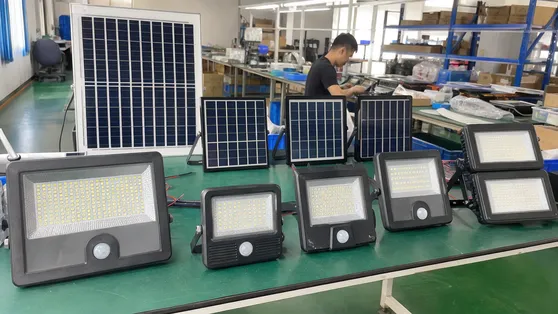
Flood and security fixtures move in volume across property management, perimeter security, and construction site accounts. PIR motion sensor variants are the fastest-moving SKU type in this category — buyers who stock both standard and motion-sensor models cover a wider range of end-customer requests without adding supplier complexity.
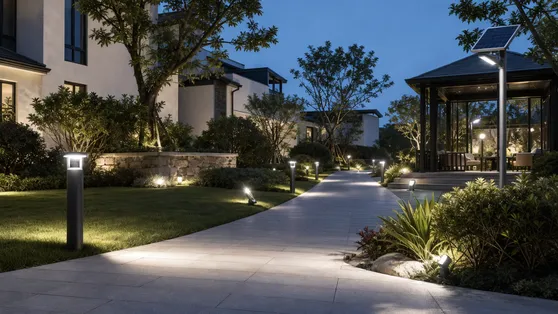
Solar Garden & Landscape Lighting
Garden and landscape products serve residential community developers, resort and hospitality projects, and landscape contractors who specify lighting as part of larger outdoor programs. Decorative and functional SKUs in the same catalog let buyers serve both the specification and the retail channel from one source.
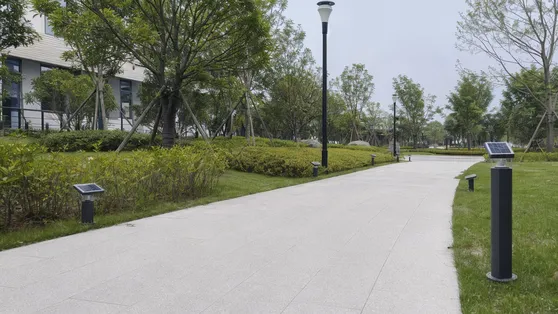
Solar Pathway, Walkway & Bollard Lighting
Pathway and bollard fixtures are a consistent add-on category for buyers already stocking street or area lights — the same project that needs roadway lighting usually needs walkway and access route lighting too. Bollard and post-top variants extend the catalog into campus, park, and public access applications.
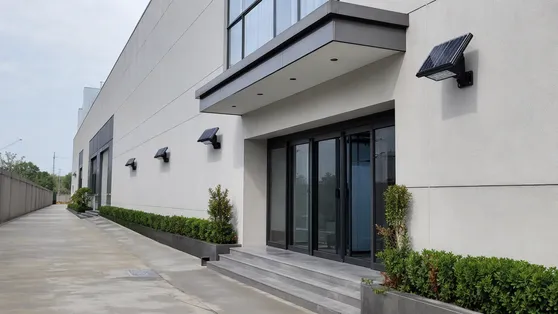
Solar Wall Lighting
Wall-mount solar fixtures cover building perimeter, entrance, and façade lighting applications. Motion sensor and separate-panel variants address the two most common installation constraints: shaded mounting surfaces and high-security perimeter requirements. A compact category with steady reorder demand from property management and security accounts.
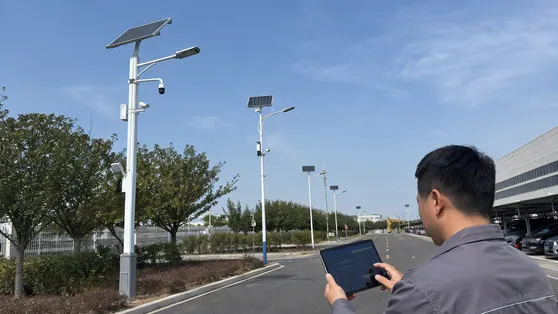
Smart Solar Lighting Systems
IoT-enabled solar lighting — smart poles, lighting control systems, and camera-integrated street lights — is the category where OEM solar lighting buyers are building differentiated product lines. Remote monitoring, dimming schedules, and sensor integration are the features that separate a smart system from a standard fixture. Buyers entering this segment early are building catalog positions that are harder for competitors to replicate on price alone.
Additional Solar Powered Product Lines
These two lines are secondary routes for buyers extending a solar-powered catalog. They are kept separate from the core solar lighting category map while still giving search engines and visitors clear internal paths.
Solar Fans
Solar fans are an adjacent solar-powered product line for distributors and brand owners adding portable, stand, exhaust, or fan-with-light SKUs. This route captures fan demand while the main site identity stays focused on solar lighting manufacturing.
Solar Battery & Portable Power
Home energy storage batteries, home battery backup units, portable power stations, and solar generators cover battery-led solar product demand. The scope stays focused on home and portable power instead of broad commercial energy storage systems.
Private-Label Solar Lighting Without Forcing a Full Container First
Test a new SKU at 100 units, confirm it moves with your customers, and scale to a full OEM program without switching factories mid-program.
The Standard Complaint
Most factories require a full container minimum — 500 to 1,000 units of an untested configuration — before they will touch a custom spec. That means committing capital to a product you have not validated in your market.
How We Run It Differently
- Standard catalog models available from 100 units — test a new SKU before committing to a larger program
- Scale to full OEM with custom packaging and labeling without switching factories
- Same engineering team from review through production — no handoff between sales and manufacturing
Engineering Review Before Production
For OEM/ODM projects, we work through an engineering review before production to lock the spec. This is not a formality — it is where our optical and electrical engineers confirm the configuration is achievable for your target market conditions.
Custom Spec Parameters
Lumen Output
Color Temperature
Battery Capacity
Solar Panel Sizing
Sensor Logic
Housing Modifications
Packaging
Labeling
Why the Engineering Review Matters
The review confirms that your configuration is achievable for your target market conditions — whether that means extended battery autonomy for lower-irradiance regions or specific color temperature requirements for a branded product line.
We have seen buyers skip the engineering review to save a week and then spend three times as long resolving spec mismatches during production. The review is faster.
Spec Continuity
The engineering team that reviewed your spec is the same team that runs production — the difference between a spec that holds across batches and one that drifts.
Failure Controls Built Around Batteries, Lumens, and Waterproofing
When we started in 2012, the three things buyers complained about most in solar outdoor lighting were battery failures after one rainy season, lumen output that varied between batches, and waterproof ratings that did not survive field conditions. We built the production system around those three failure points.
Battery Consistency
Battery consistency starts at the cell level. We match battery packs by capacity and internal resistance before assembly — cells that fall outside tolerance go back to the supplier, not into a unit.
Process
- 1. Cell-level matching by capacity and internal resistance
- 2. Out-of-tolerance cells returned to supplier
- 3. Full charge/discharge cycle test on aging racks before final assembly
Result: Battery performance across a 500-unit order is consistent, not a distribution curve where 10% of units underperform. For buyers selling into markets with long rainy seasons or extended low-irradiance periods, that consistency is the difference between a product that works and a warranty claim.
Lumen Output Verification
Lumen output is confirmed at the LED module assembly stage, before the unit is closed. We bin LED chips by flux output and color temperature, and we verify lumen output at assembly rather than assuming it from the chip spec sheet.
Tolerances
- LED chips binned by flux output and color temperature
- Lumen output verified at assembly, not assumed from spec sheet
- Color temperature confirmed to within ±200K of specified value
For buyers who have had batches arrive with visible color temperature variation — some units warm, some cool, in the same order — this is the checkpoint that prevents it.
IP65/IP67 Waterproof Verification
IP65/IP67 waterproof verification runs on our own inspection equipment, not assumed from housing design. Every unit's waterproof structure is checked before packing.
Key Differentiator
- IP rating tested on our own equipment, not a housing design claim
- Every unit's waterproof structure checked before packing
- Torque-controlled assembly on lens-to-housing joint
The most common waterproof failure mode we see in competitor products is seal compression inconsistency at the lens-to-housing joint — we run a torque-controlled assembly process on that joint specifically because of it.
Why These Three Failure Points
We built the production system around batteries, lumens, and waterproofing — not because they were the easiest problems to solve, but because they were the ones generating warranty claims and killing reorder relationships. Every control in our line exists to protect the buyer's ability to reorder with confidence.
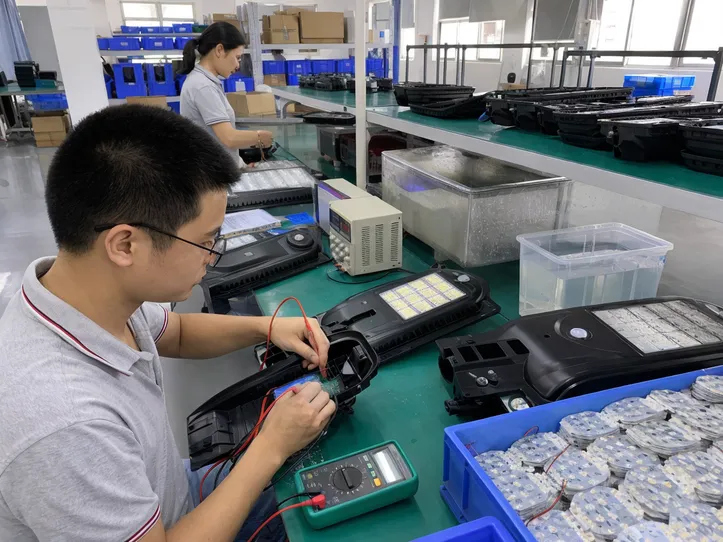
One Solar Light Factory for a Complete Outdoor Lighting Catalog
One factory, one quality standard, one reorder contact — fewer supplier relationships to manage and consistent documentation across every product line.
The Multi-Factory Problem
A distributor building a solar lighting catalog typically sources from multiple factories — one for street lights, another for garden products, a third for wall fixtures.
- Each factory has different quality standards
- Different lead time patterns across suppliers
- A different point of contact for every reorder
- When a batch has a problem, the conversation about responsibility starts with which factory made which SKU
The JXSOL Approach
We manufacture the core outdoor solar lighting categories with the same production system, QC checkpoints, and inspection standards across every product type.
- Same production system across all categories
- Unified QC checkpoints and inspection standards
- One reorder contact for your entire catalog
- Consistent documentation across product lines
Street & Roadway
Garden & Landscape
Wall Fixtures
Solar Fans & Power
Adjacent solar-powered lines such as solar fans and home or portable solar battery products are handled as selected extensions, so buyers can broaden a catalog without changing the main solar lighting sourcing relationship.
Export Documentation for Markets With Different Compliance Requirements
We export to all five regions and maintain the compliance documentation for each — available with the order, not as an add-on request that delays shipment.
North America & Europe
Buyers need CE documentation, RoHS compliance records, and English-language installation guides.
- CE Declaration of Conformity
- RoHS test reports
- English-language installation guides
Middle East & Africa
Project buyers often need extended battery autonomy configurations for lower-irradiance seasons and robust housing specs for high-temperature environments.
- Extended battery autonomy configs
- High-temperature housing specs
- Lower-irradiance season support
Southeast Asia
Distributors frequently run mixed-SKU orders across multiple solar lighting categories with varying documentation requirements by destination market.
- Mixed-SKU order handling
- Multi-category documentation
- Market-specific compliance sets
Documentation Available With Every Order
CE Declaration
of Conformity
RoHS Reports
Test Documentation
IP Test Certificates
Ingress Protection
IEC 62124
PV Performance
For buyers entering a new market or responding to a project tender with specific certification requirements, the documentation is ready when you need it.
Production Proof Behind the Supply Promise
The business claims above are backed by a specific production setup. Here is what that looks like operationally.
Founded 2012 — 13+ Years Focused on Solar Lighting
Solar lighting failures in the field are predictable after you have seen enough of them. Battery degradation patterns, lumen depreciation curves, seal failure modes under thermal cycling — we have built the production system around the failure points that actually generate warranty claims, not the ones that look good on a spec sheet.
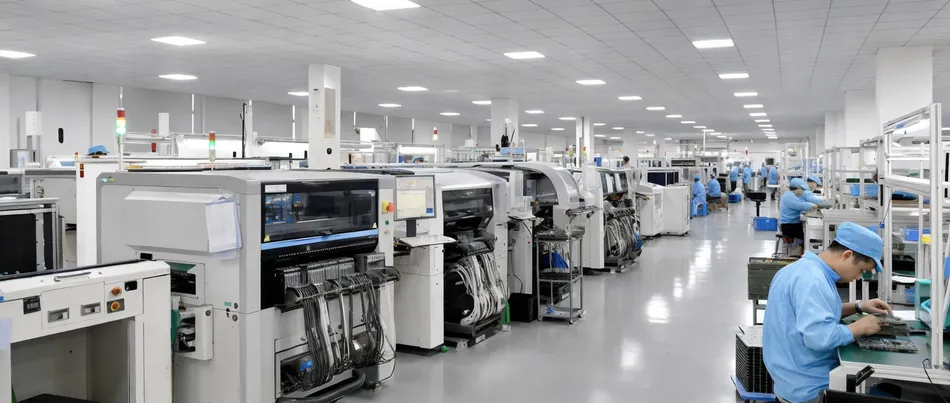
12,000 m² Facility, 6 Production Lines, 150 Employees
Six dedicated lines run automated SMT assembly, LED module integration, battery pack matching, and final assembly simultaneously. Daily output above 5,000 units and annual capacity of 1,200,000 units mean your reorder runs on a scheduled line — it does not queue behind a new customer's first run. We schedule production in advance, and a 10,000-unit repeat order does not displace a 50,000-unit project order.
In-House R&D Team: 15+ Optical and Electrical Engineers
OEM/ODM configuration work — lumen adjustment, battery sizing for target autonomy days, solar panel sizing for your target latitude, sensor logic configuration — is handled by engineers who work on the product daily. Not outsourced, not handled by a sales team reading a spec sheet.
100% Pre-Shipment Inspection
Every unit, every carton, every accessory pack, every label — before the container is sealed. ISO 9001:2015, CE, RoHS, IP65/IP67, and IEC 62124 certifications with documentation available per order.
Daily Output
Units produced per day across 6 lines
Annual Capacity
Units per year — reorders run on schedule
R&D Engineers
Optical & electrical — in-house, not outsourced
Pre-Shipment Inspection
Every unit checked before container seal
Markets Where Solar Lighting Buyers Can Build Repeat Business
Solar-powered outdoor lighting sells into markets with recurring demand — infrastructure programs, commercial property cycles, and public space development. Here are the segments where our buyers are building consistent volume.
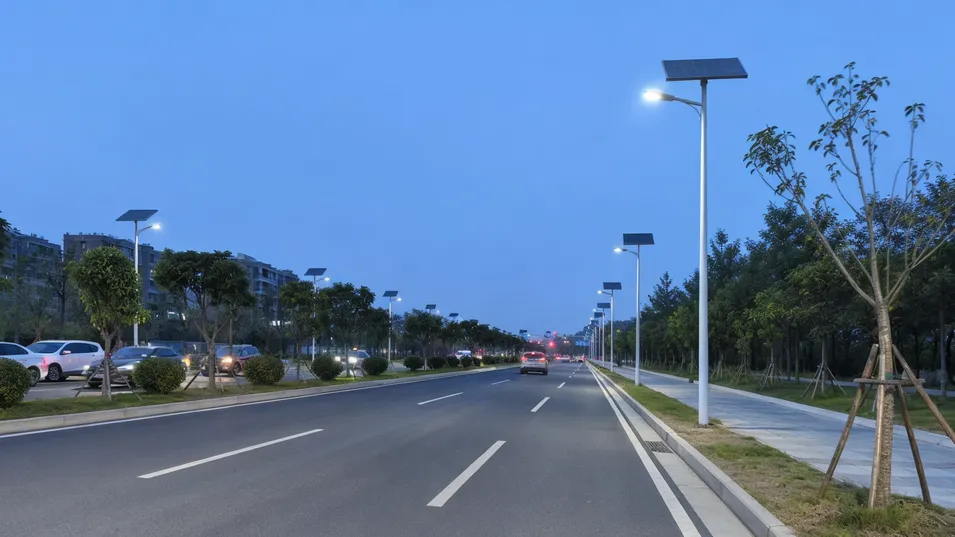
Roadway, Municipal, and Public Infrastructure Programs
Municipal and government infrastructure is the largest volume segment in solar outdoor lighting. Road lighting programs run in phases — a district or municipality lights one corridor, then the next, then expands to secondary roads. Buyers who establish a supplier relationship on the first phase are positioned for the follow-on orders.
The compliance documentation requirements for this segment — CE, IEC 62124, IP ratings — are the same ones we maintain as standard.
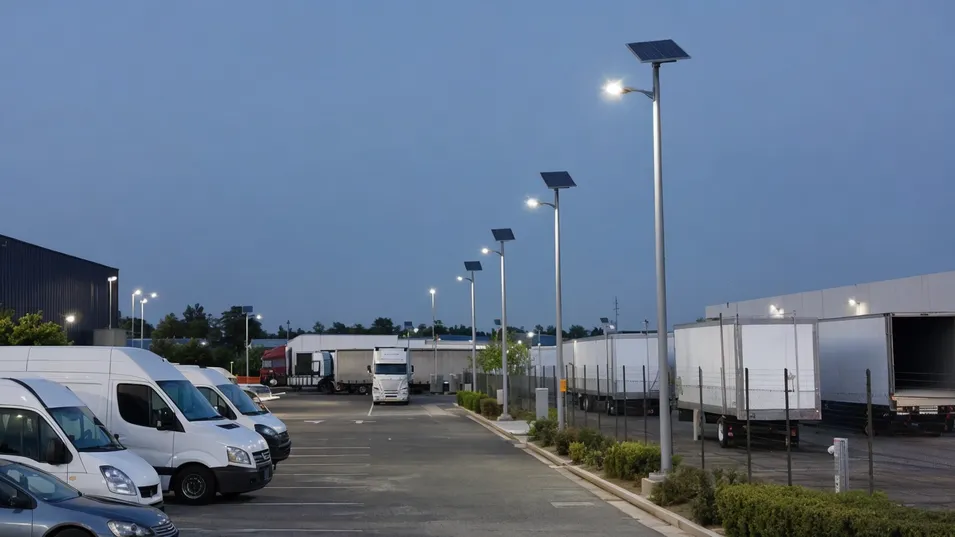
Commercial Parking, Logistics Yards, and Area Lighting Projects
Commercial property developers and logistics operators are consistent buyers of area lighting — new construction, expansion, and retrofit programs generate steady demand. The off-grid advantage of solar area lighting is particularly strong for logistics yards and remote commercial sites where grid connection costs are high.
Buyers serving this segment typically run 50–300 unit orders per project, with multiple projects per year from the same property management or development accounts.
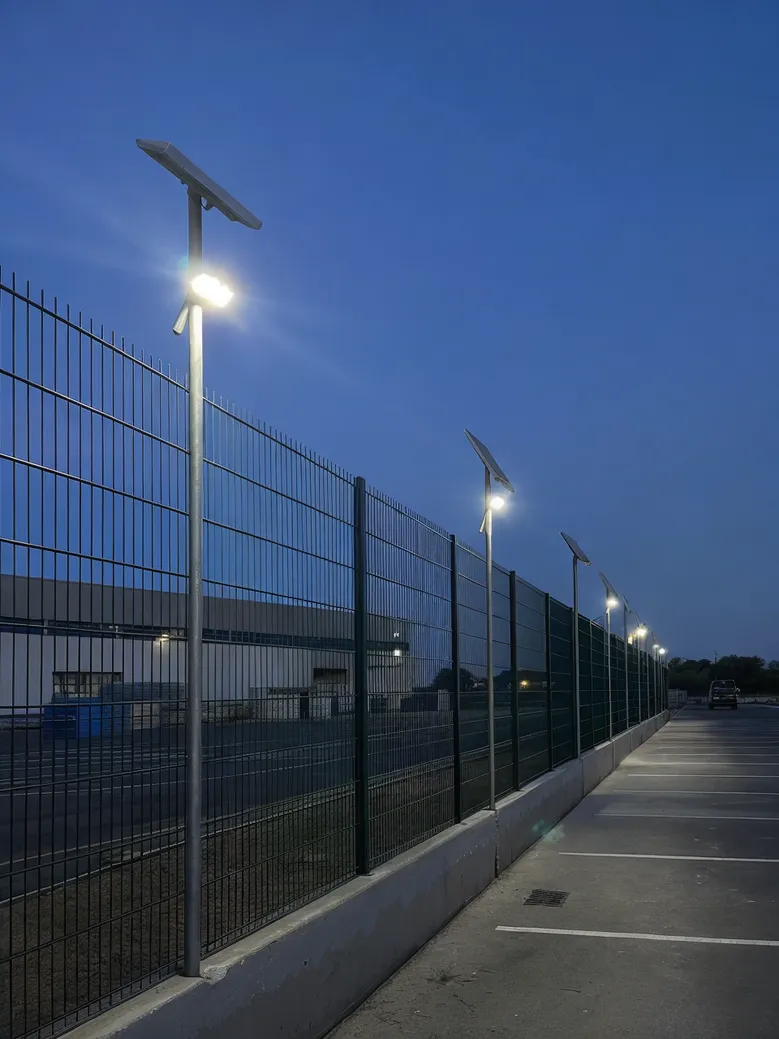
Security, Perimeter, and Property Retrofit Accounts
Security lighting is a retrofit-heavy segment — existing properties upgrading perimeter coverage, adding motion-sensor fixtures to parking areas, or replacing failed grid-connected fixtures with solar alternatives. The retrofit dynamic means orders are smaller (20–100 units) but more frequent, and buyers who stock the right SKU mix — standard flood, motion sensor, and PIR variants — can serve a wide range of property types from a single catalog position.
This segment has strong reorder characteristics once a buyer establishes a product that works in their market.
20–100 Units
Typical Order Size
High Frequency
Reorder Pattern
3 Core SKUs
Flood · Motion · PIR
Landscape, Resort, Park, and Residential Community Programs
Resort and hospitality developers, residential community builders, and municipal park programs are the main buyers in this segment. Orders tend to be specification-driven — a landscape architect or project developer specifies a fixture type and quantity, and the buyer sources to that spec.
Typical order sizes run 100–500 units per project, with follow-on orders as phases complete or as the developer moves to the next property. Decorative and functional SKUs in the same catalog let buyers serve both the specification channel and the landscape contractor channel.
100–500 Units
Per Project Order
Spec-Driven
Architect Specified
Phase Orders
Follow-On Reorders
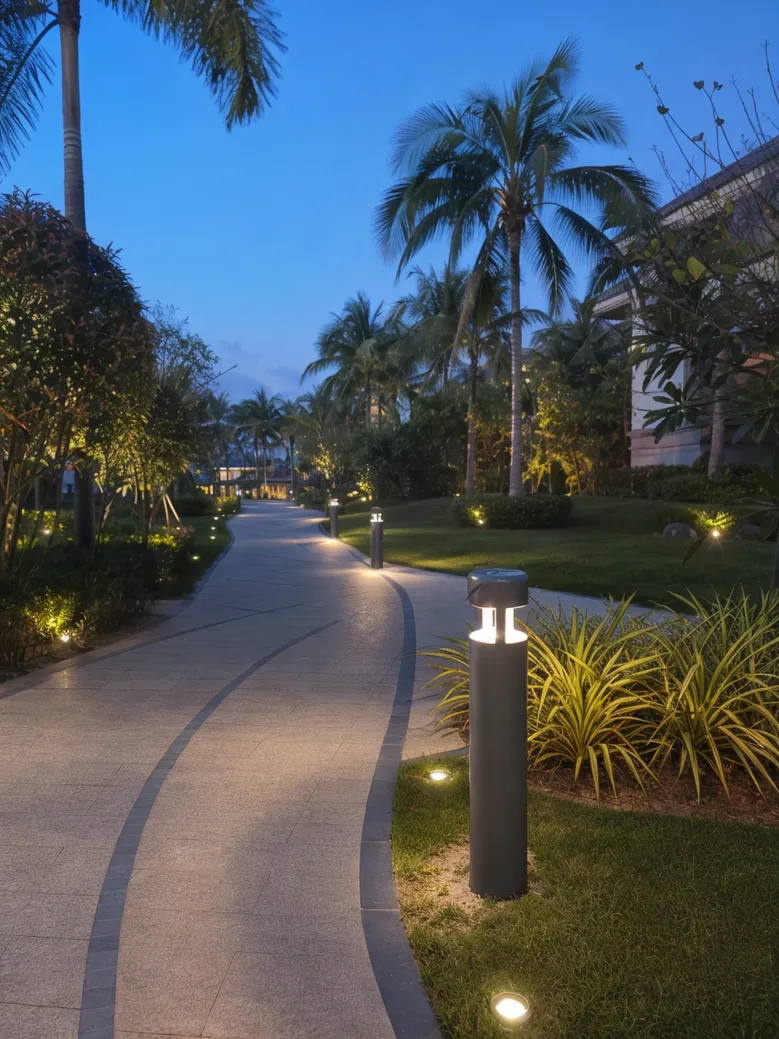
Walkway, Campus, and Public Access Routes
Campus developers, public transit authorities, and municipal parks departments are consistent buyers of pathway and bollard lighting. This segment often runs alongside street or area lighting programs — the same project that needs roadway lighting needs walkway and access route lighting, and buyers who can supply both from one factory simplify the procurement process for their customers.
Order sizes are typically 100–400 units, with strong repeat demand as campuses and public spaces expand.
Solar Pathway, Walkway & Bollard Lighting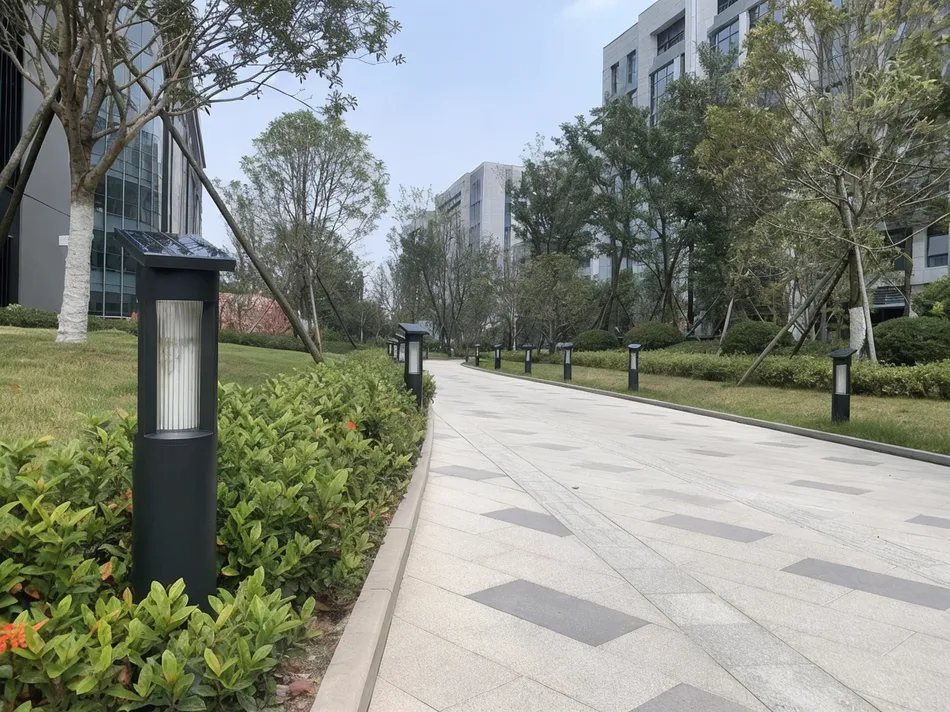
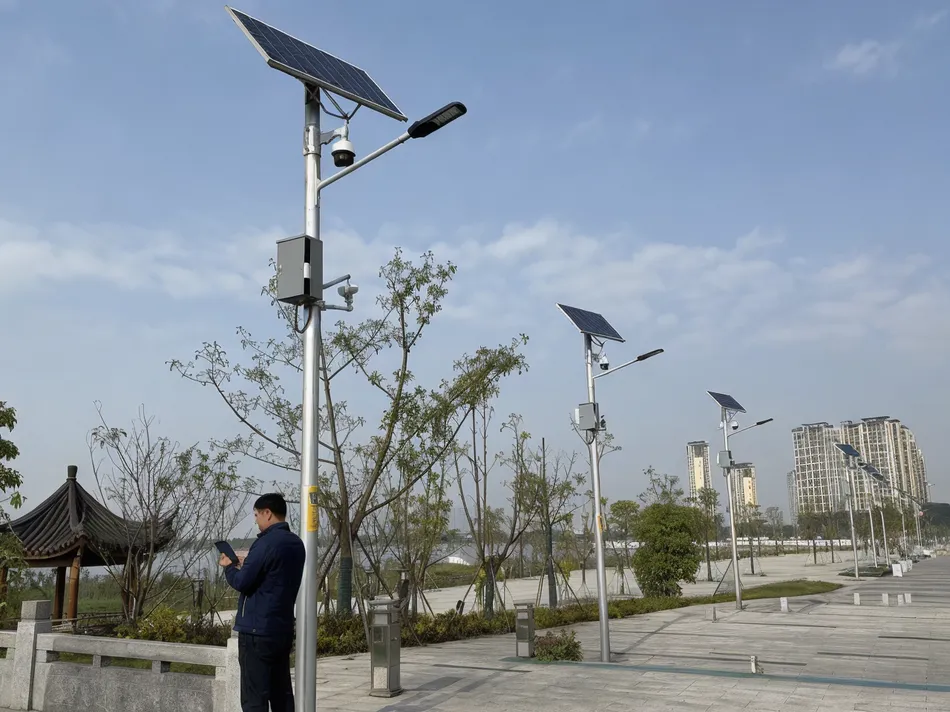
Smart Lighting and Connected Infrastructure Buyers
Smart solar lighting — IoT-enabled fixtures, remote monitoring, camera integration, and lighting control systems — is where OEM solar lighting buyers are building product differentiation. Municipal buyers and smart city developers are the primary end customers, and the specification process is longer and more technical than standard solar lighting.
Buyers entering this segment need a factory with engineering depth to support custom configurations and documentation for connected systems. The order sizes are smaller (50–200 units per project), but the margin profile and the barrier to competitive substitution are both higher than in standard solar lighting categories.
Smart Solar Lighting SystemsAdjacent Solar-Powered Product Buyers
Some distributors and brand owners want a solar-powered catalog that extends beyond lighting. Solar fans and home or portable solar battery products can support that demand when the factory has matching product capability. These pages act as secondary conversion paths, not as the main identity of the site.
Send Your Solar Lighting Specs for a Factory Quote
Tell us your target market, required lumen output, order volume, certification requirements, or OEM/ODM program details — we will respond with a configuration recommendation and pricing.
New to a product category? Send us your current sourcing situation and we will suggest a starter SKU mix based on what is moving for our existing distributors in your region.
Lumen & Wattage Specs
Share your target output requirements
Target Market
Region-specific certification guidance
Order Volume
MOQ flexibility for new categories