

Solar Post Top Lights Direct From Factory
Pole-mounted solar post top lights for commercial landscapes, resorts, parks, and heritage streetscapes — no trenching, no grid connection.
Decorative elevated solar lighting with die-cast aluminum housing, IP65/IP67 construction, and OEM/ODM support from 100 units. Built for project buyers who need consistent output across a full installation run.
13+
Years Mfg.
1.2M
Annual Capacity
IP65/67
Weatherproof
100+
MOQ Units
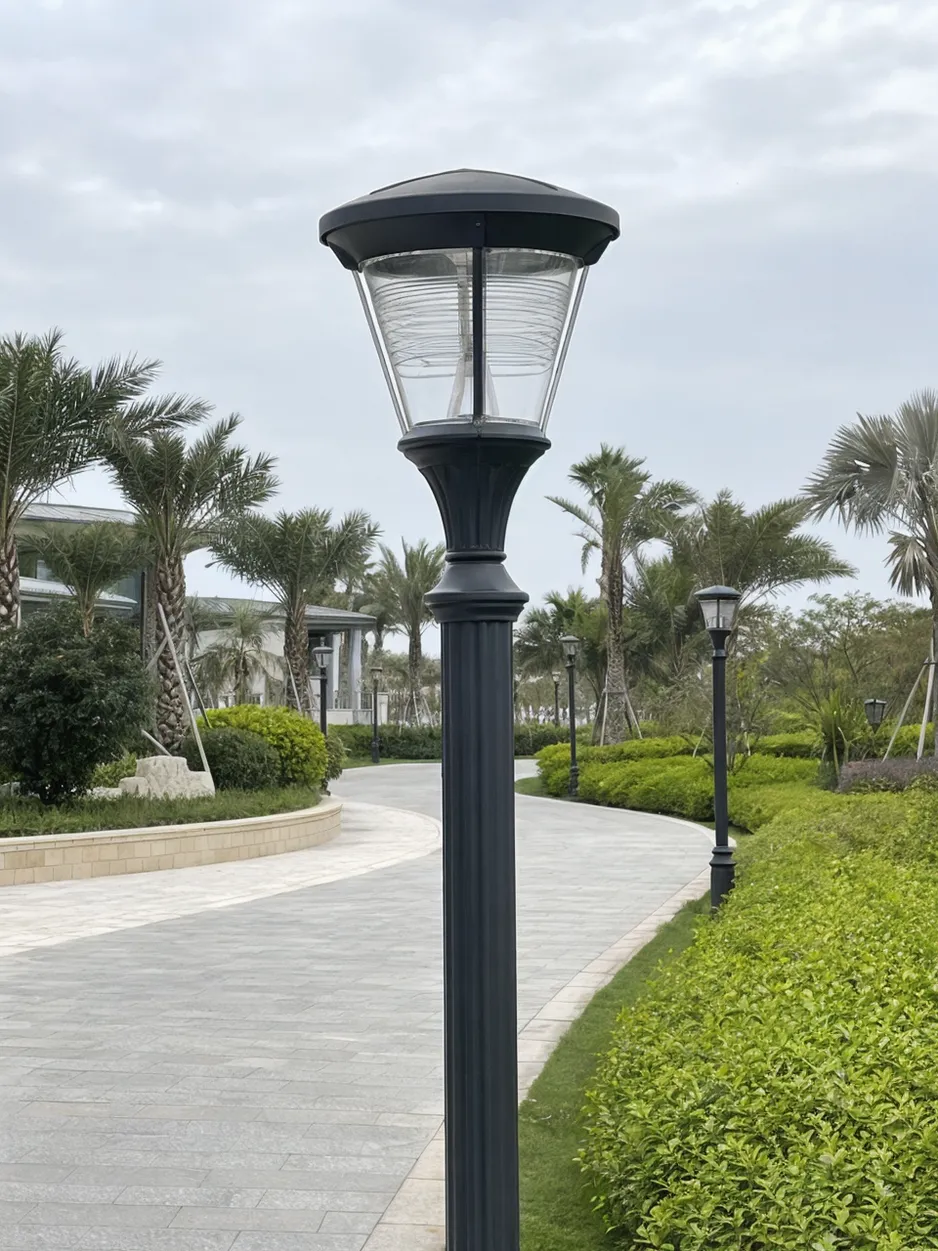
Solar Post Top Lights for Pole-Mounted Commercial Projects
Solar post top lights are pole-mounted outdoor solar fixtures designed for decorative area lighting in commercial landscapes, hospitality grounds, municipal parks, and heritage streetscapes. They sit above pathway and bollard fixtures in mounting height and visual presence — delivering elevated light output and architectural form without trenching conduit or connecting to the grid.
JXSOL manufactures solar post top lights as part of our solar pathway and bollard lighting series, which covers seven product families from one production system. Post-top fixtures are the commercial-grade tier of that range: die-cast aluminum housing, IP65/IP67 weatherproof construction, and lumen output sized for pedestrian-scale area lighting rather than simple path marking. If your project or product line needs a fixture that reads as a permanent installation — not a garden stake — this is the product family.
We've been making solar-powered outdoor lighting since 2012. Post-top fixtures are among the more demanding products in this category to get right: the housing sits exposed at pole height, the solar panel and battery must be sized for the fixture's lumen output and the buyer's target latitude, and the mounting interface has to match the pole the buyer is using. We've shipped post-top fixtures to resort developers in Southeast Asia, municipal contractors in the Middle East, and landscape distributors in Europe. The configuration questions are always the same — pole diameter, tenon size, lumen target, CCT, autonomy requirement — and we've built the engineering review process around answering them before production starts, not during it.
Key Configuration Parameters
When Post-Top Fixtures Beat Bollards, Pathway Lights, or Small Street Lights
Post-top lights occupy a specific position in the outdoor solar lighting range. Buyers sometimes arrive at this page after looking at bollards or small solar street lights and not finding the right fit. Here's how to confirm whether post-top is the right format for your project or product line.
| Format | Mounting | Typical Height | Lumen Range | Best Commercial Fit |
|---|---|---|---|---|
| Solar Pathway Lights | Ground stake | 0.3–0.6 m | 10–80 lm | Residential paths, garden routes, retail landscape SKUs |
| Solar Walkway Lights | Ground stake / surface | 0.5–0.8 m | 50–200 lm | Campus paths, commercial walkways, project spacing runs |
| Solar Bollard Lights | Ground anchor / base plate | 0.6–1.2 m | 100–500 lm | Hotel grounds, plazas, commercial landscapes, impact-resistant routes |
| Solar Post Top Lights | Pole top / tenon mount | 2.5–5 m (pole height) | 200–800 lm | Decorative area lighting, heritage streetscapes, resort grounds, parks |
| Solar Street Lights | Pole arm / bracket | 6–12 m | 2,000–10,000+ lm | Roadway and parking lot illumination |
Height & Coverage: The Key Distinction
The key distinction between post-top lights and bollards is mounting height and coverage pattern. A bollard at 1 m height marks a route and provides low-level ambient light. A post-top fixture at 3–4 m height covers a wider area, creates a stronger visual presence, and reads as a permanent streetscape element rather than a landscape accessory. For buyers supplying resort developers, municipal parks, or heritage conservation projects, that visual distinction is part of the product specification — not just a preference.
When Poles Are Already Specified
Post-top lights are also the right choice when the project already has poles or when the buyer's customer is specifying a pole-and-fixture package. If the installation involves ground-level impact resistance as the primary concern, bollard lights may be a better fit. If the project needs pedestrian-route spacing without pole infrastructure, walkway lights are the more practical option.
Not Sure Post-Top Is Right? Explore Related Formats
Each format in the solar pathway and bollard series serves a distinct installation context. Use the guide below to confirm the best fit for your project or product line.
Design Styles & Aesthetic Families
Solar post top lights serve projects where visual design is as important as illumination performance. Buyers typically need fixtures that match an architectural brief or complement existing streetscape furniture. The main aesthetic families available for OEM and wholesale sourcing include:
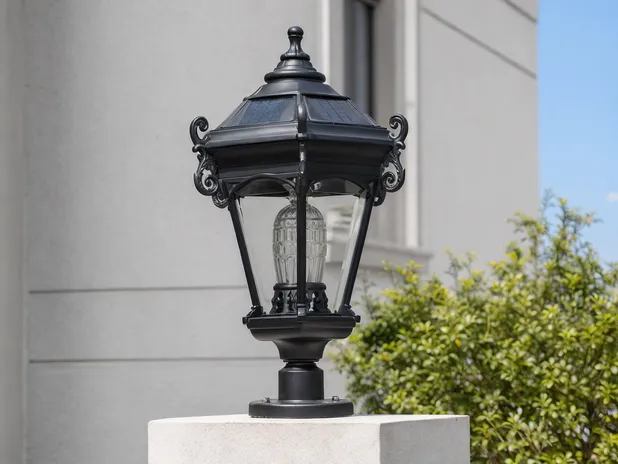
Heritage / Traditional
Ornate lantern profiles with decorative scrollwork, finials, and multi-pane glass or acrylic diffusers. Suited to heritage conservation districts, colonial-style resorts, and municipal streetscape restoration projects.
- Victorian, colonial, and European lantern profiles
- Warm white CCT (2700–3000K) standard
- Antique bronze, black, and verdigris finishes
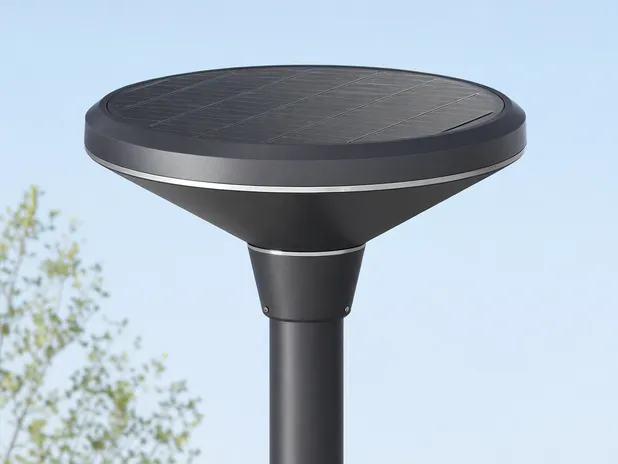
Contemporary / Minimalist
Clean geometric forms — cylinders, flat discs, or tapered cones — with flush-mounted solar panels. Designed for modern commercial developments, tech campuses, and urban renewal projects.
- Integrated panel designs with minimal visual break
- Neutral white CCT (4000–5000K) options
- Graphite, silver, and matte white finishes
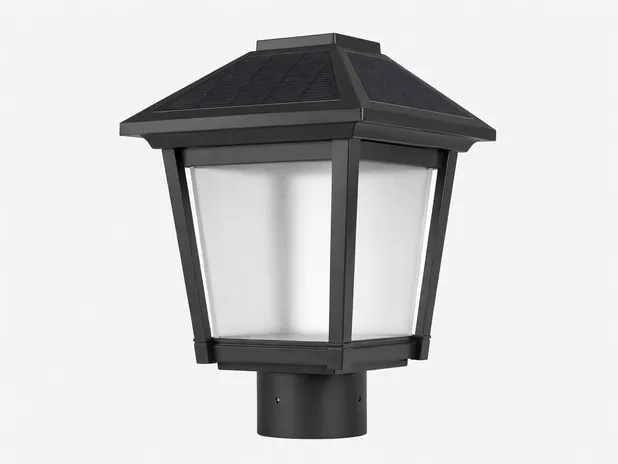
Transitional / Architectural
Blends traditional proportions with simplified detailing. No ornate scrollwork, but retains the lantern silhouette. Versatile enough for mixed-use developments and hospitality projects.
- Simplified lantern forms with clean joints
- Tunable CCT available (3000–4000K)
- Dark bronze, textured black, and charcoal finishes
OEM & Custom Design Options
All aesthetic families are available for OEM customization including custom color matching (RAL/Pantone), logo embossing, modified diffuser shapes, and bespoke finial designs. Minimum order quantities for custom tooling typically start at 200–500 units depending on modification complexity. Contact us for custom design specifications.
Technical Specifications & Engineering Details
For procurement teams, engineers, and product managers evaluating solar post top lights for bulk orders or project specifications. These ranges represent typical configurations available across our manufacturing partners.
Solar Panel & Battery System
LED & Optical Performance
Housing & Durability
Mounting & Smart Controls
Certifications & Compliance
Applications & Project Types
Solar post top lights are specified across a range of commercial and municipal projects where decorative pole-mounted lighting is required without grid connection. These are the primary application categories our wholesale and OEM buyers serve.
Parks & Public Gardens
Municipal parks, botanical gardens, and public green spaces where decorative lighting enhances evening usability without trenching through established landscapes.
Resorts & Hospitality
Hotel grounds, resort pathways, and villa complexes where aesthetic consistency and zero-wiring installation reduce project timelines and ongoing energy costs.
Heritage & Conservation Districts
Historic town centers, conservation areas, and cultural precincts requiring period-appropriate fixture designs that meet modern solar performance standards.
Residential Developments
Gated communities, townhouse complexes, and subdivision common areas where developers specify uniform decorative lighting across shared pathways and entry drives.
Campus & Institutional
University campuses, corporate headquarters, and government facilities where solar post tops provide pedestrian-scale lighting along walkways and courtyards.
Commercial & Retail
Shopping centers, outlet malls, and mixed-use developments where post-top fixtures define pedestrian zones and create inviting evening environments for foot traffic.
Buyer Profiles & Use Cases
Our solar post top lights serve distinct buyer segments, each with specific procurement requirements, volume expectations, and customization needs. Understanding these profiles helps us deliver the right product configuration and service level.
Municipal & Government Buyers
Public SectorCity councils, public works departments, and government agencies procuring solar post tops for streetscape upgrades, park improvements, and sustainability mandates. Typically require compliance documentation, warranty guarantees, and competitive tender pricing.
- Order volumes: 50–500+ units per project
- Key requirement: Full certification packages & test reports
- Decision cycle: 3–12 months (tender process)
Distributors & Wholesalers
Channel PartnersRegional lighting distributors and solar product wholesalers stocking post top fixtures for resale to contractors and installers. Prioritize competitive margins, reliable supply, and product range breadth to serve diverse end-customer needs.
- Order volumes: 100–1,000+ units per quarter
- Key requirement: Tiered pricing & consistent lead times
- Decision cycle: 2–6 weeks (repeat orders)
Contractors & Integrators
Project-BasedElectrical contractors, landscape architects, and system integrators specifying solar post tops for specific development projects. Need technical support, photometric data, and installation guidance to meet project specifications.
- Order volumes: 20–200 units per project
- Key requirement: IES files, photometric layouts & spec sheets
- Decision cycle: 4–8 weeks (project timeline driven)
OEM & Brand Partners
Private LabelLighting brands and OEM partners requiring custom-branded solar post top fixtures manufactured to their specifications. Need flexible MOQs, custom finishes, branded packaging, and white-label documentation.
- Order volumes: 200–5,000+ units per SKU
- Key requirement: Custom tooling, branding & packaging
- Decision cycle: 6–16 weeks (sampling & approval)
Why Source Solar Post Tops From Us
As a vertically integrated manufacturer, we control every stage from solar cell lamination to final assembly. This gives our wholesale and OEM partners advantages that trading companies and assemblers cannot match.
Vertical Integration
In-house panel lamination, battery assembly, LED driver production, and fixture fabrication. No middlemen, no markup layers, full quality traceability from raw material to finished product.
Full Customization
Custom lantern shapes, RAL color matching, bespoke wattage configurations, and private-label packaging. Our engineering team works directly with your design requirements from concept to production.
Rigorous Testing
Every batch undergoes salt spray testing, thermal cycling, IP verification, and 72-hour burn-in. We provide full test reports and can accommodate third-party inspection at our facility.
Reliable Lead Times
Standard models ship within 15–20 days. Custom orders typically 25–35 days. We maintain safety stock of high-demand components to buffer against supply chain disruptions.
Comprehensive Warranty
3–5 year full-system warranty covering panel, battery, controller, and LED module. Extended warranty programs available for municipal and government contracts requiring longer coverage periods.
Technical Support
Dedicated project engineers provide photometric layouts, solar irradiance calculations, and system sizing for your specific latitude and climate conditions. Pre-sales and post-sales support included.
Ready to Source Solar Post Top Lights?
Get factory-direct pricing, custom design support, and dedicated project engineering for your next solar post top lighting project. Request a quote or schedule a technical consultation with our team.
Specification Checklist for Poles, Output, Battery, and Control
The table below covers the typical specification range for JXSOL solar post top lights. These are industry-standard values for this product type — exact specifications vary by model and configuration. Request a datasheet for your specific requirements.
| Parameter | Typical Value / Range | Notes |
|---|---|---|
| Mounting Type | Pole top, tenon mount, pillar top | Tenon adapter size must be confirmed against buyer's pole |
| Pole Interface | 38–76 mm tenon diameter (typical) | Confirm pole OD, tenon depth, and screw pattern before production |
| Recommended Pole Height | 2.5–5 m | Higher poles increase coverage area; affects carton planning and freight |
| Lumen Output | 200–800 lm (typical decorative range) | Confirm against spacing and project illumination target |
| LED Power | 3W–10W | Scales with lumen output |
| Color Temperature | 2700K, 3000K, 4000K, 5000K, 6500K | 3000K warm white for hospitality/heritage; 4000K neutral for public routes |
| Solar Panel Type | Monocrystalline silicon | Integrated fixture-top panel; size scales with battery and autonomy target |
| Solar Panel Output | 5W–15W (typical) | Sized per lumen output and target latitude |
| Battery Type | LiFePO4 (standard) / Li-ion 18650 | LiFePO4 preferred for thermal stability and cycle life at pole-top exposure |
| Battery Capacity | 2,000–6,000 mAh (typical) | Sized to autonomy target; confirm against lighting mode |
| Autonomy (cloudy days) | 2–4 days typical | Depends on battery capacity, lumen output, and lighting mode |
| Housing Material | Die-cast aluminum | Powder-coated finish; stainless steel hardware |
| IP Rating | IP65 / IP67 | IP65 standard for pole-top; IP67 available on request |
| Control Mode | Dusk-to-dawn, timer, dimming, optional PIR | Multi-mode dimming extends autonomy significantly |
| Operating Temperature | -20°C to +50°C (typical) | Confirm for extreme-climate markets |
| Warranty | 3 years | Standard across JXSOL solar lighting range |
Specifications shown are industry-standard values for this product type. Actual specifications vary by model and order configuration. Request a post-top light datasheet for confirmed parameters.
Why LiFePO4 Is the Default for Post-Top Fixtures
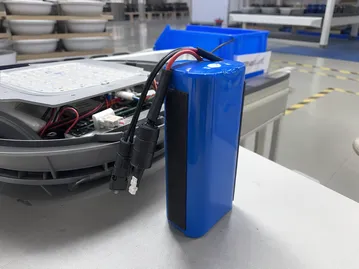
We run LiFePO4 cells as the default for post-top fixtures rather than standard Li-ion. The reason is thermal cycling: a fixture housing at pole height in direct sun can reach 60–70°C on the surface in summer, and the battery compartment sees meaningful temperature swings between day and night. LiFePO4 handles that thermal stress better over a multi-year service life, and the autonomy degradation curve is flatter.
For cost-sensitive SKUs where the buyer's market has a moderate climate, Li-ion 18650 is available — but we flag the trade-off during the engineering review.
Pole Height, Solar Exposure, and Mounting Details That Prevent Site Callbacks
Post-top fixtures generate more pre-production questions than any other product in this category, and most of them trace back to three variables: pole compatibility, solar panel exposure, and wind loading. Getting these wrong creates site callbacks that cost more than the fixture itself. Here's what to confirm before you quote a project or place an order.
Pole Compatibility & Mounting Interface
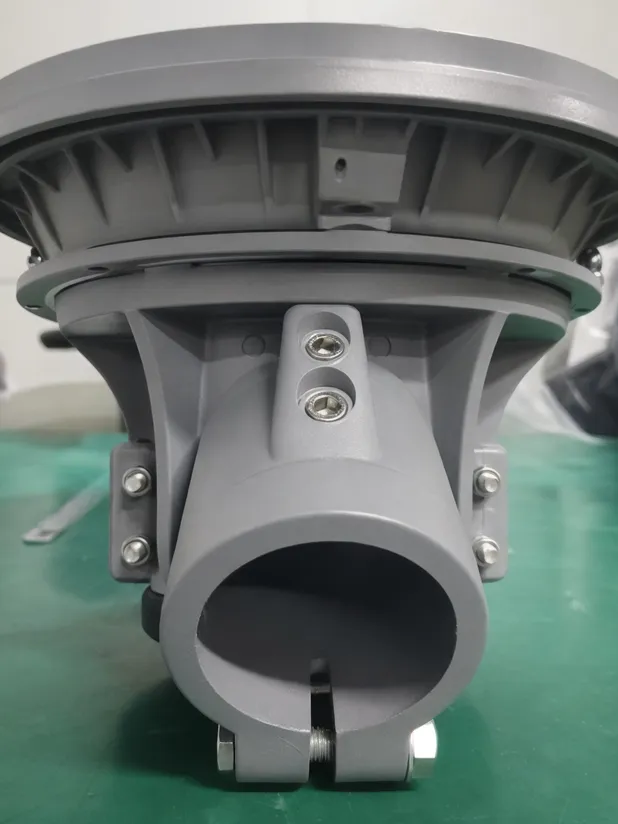
The mounting interface is the most common source of post-production problems on post-top projects. Pole top diameter, tenon size, screw pattern, and adapter depth all need to match the fixture's mounting hardware.
Key action: If your customer is supplying the poles, get the pole drawings or at minimum the top OD and tenon dimensions before we go to production. If JXSOL is supplying poles as part of a package, we size the interface during the engineering review.
Solar Panel Exposure & Shading
Post-top solar panels are integrated into the fixture top and face skyward. The panel needs unobstructed access to direct sunlight for the majority of the day — typically 4–6 peak sun hours depending on latitude and season.
Key action: For projects in dense urban environments or tree-lined routes, send site photos and location. We assess whether panel sizing needs to increase to compensate for partial shading.
Wind Loading & Pole Stability
Post-top fixtures at 3–5 m pole height are exposed to wind loading that ground-level pathway lights never see. The fixture weight, housing profile, and pole wall thickness all affect the system's wind resistance.
Key action: For coastal, hilltop, or typhoon-season markets, confirm pole specification against local wind load requirements. We provide fixture weight and projected area data for structural calculations.
Pole Compatibility and Mounting Interface
Standard tenon adapters cover the most common pole top configurations, but non-standard pole profiles — tapered tops, flanged caps, or poles with existing hardware — may need a custom adapter. We can review buyer drawings and confirm compatibility before production.
Real example: We've had orders where the buyer assumed a standard 60 mm tenon would fit their existing poles, and the poles turned out to have a 76 mm OD with a non-standard screw pattern. A 10-minute drawing review before production saves a container-load of rework.
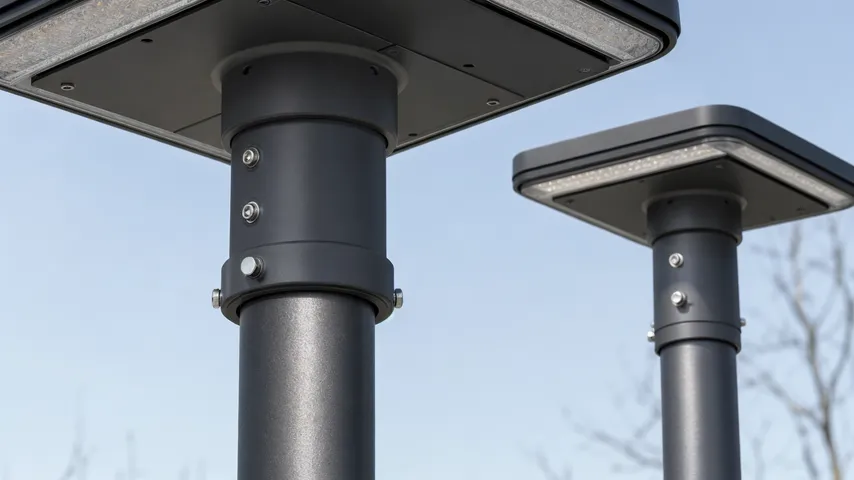
Anti-Theft Fastening
For public-area projects, anti-theft fastening is worth specifying — standard hex bolts are accessible with common tools. We offer tamper-resistant fastener options on request.
Solar Panel Exposure and Shading
Shading from trees, building facades, canopies, or adjacent signage reduces charging efficiency and directly shortens autonomy. A fixture sized for 4 peak sun hours in an open park will underperform in a shaded courtyard — the battery autonomy spec is only valid for the solar exposure condition it was calculated against.
For projects in dense urban environments or tree-lined routes, send us the site photos and location. We can assess whether the panel sizing needs to be increased to compensate for partial shading, or whether the installation spacing needs to be adjusted.
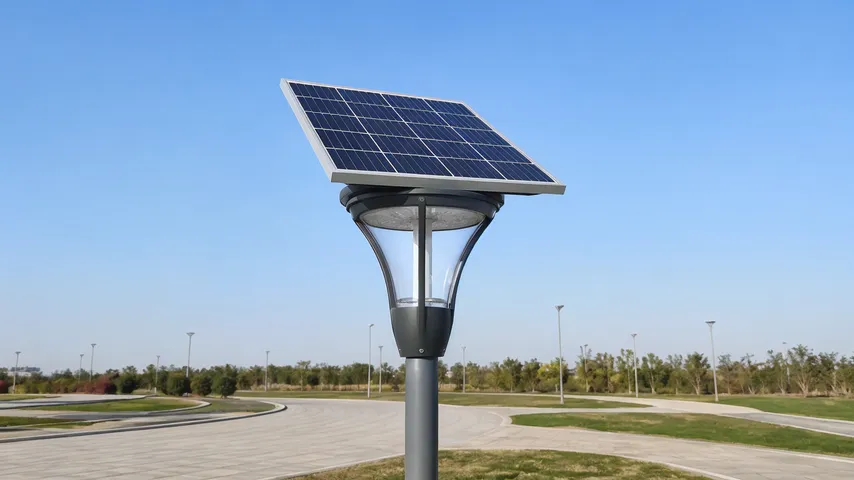
Wind Loading and Pole Stability
For coastal projects, exposed hilltop installations, or markets with typhoon or high-wind seasons, confirm the pole specification against local wind load requirements before ordering. We can provide fixture weight and projected area data for structural calculations.
3–5 m
Pole Height Range
IP65+
Weather Sealing
Die-cast
Aluminum Housing
Market Segments Where Outdoor Solar Post Lighting Carries Higher Project Value
Post-top fixtures sit at the premium end of the pathway and bollard lighting range. The commercial logic for buyers in this segment is different from pathway or deck lights: the unit value is higher, the project quantities are meaningful, and the buyer's customer is often specifying the fixture as part of a landscape design package rather than buying on price alone. Here are the segments where outdoor solar post lighting generates repeatable project volume.
Resorts, Hotels, and Hospitality Grounds
Hospitality buyers specify post-top fixtures for entrance routes, garden paths, pool surrounds, and villa access roads where the fixture needs to carry visual weight alongside the landscape design. Warm CCT (2700K–3000K) is almost universal in this segment — the fixture is part of the guest experience, and cool white reads as industrial in a resort context.
Order quantities typically run 50–300 units per property, with repeat orders as new phases or properties open. Margin is higher than in the residential segment, and buyers are less price-sensitive when the specification is right.
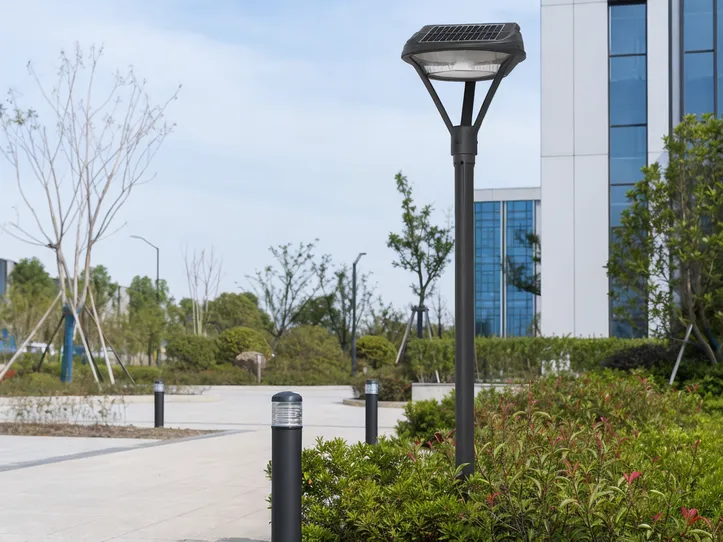
From our project experience: This segment has grown consistently for us over the past several years — resort developers in Southeast Asia and the Middle East are specifying solar post-top fixtures specifically to avoid the civil work cost of trenching grid power through landscaped grounds. The no-trench argument is a genuine project cost saving, not just a sustainability talking point.
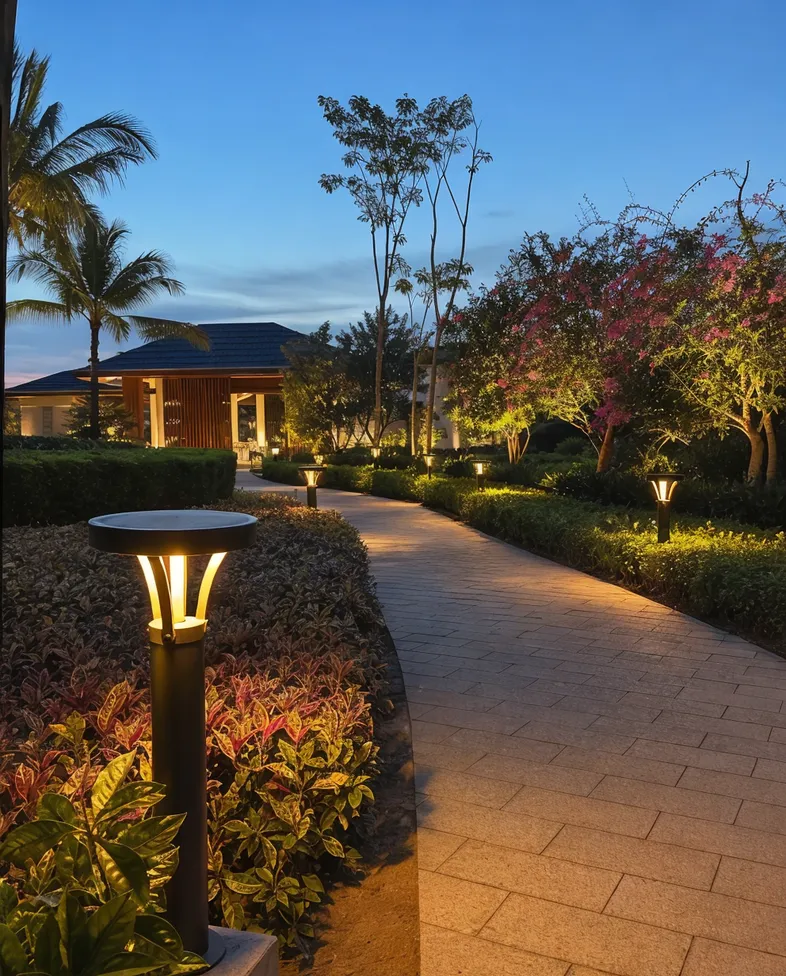
Warm-CCT solar post-top fixtures along a hospitality entrance route — no trenching required through landscaped grounds.
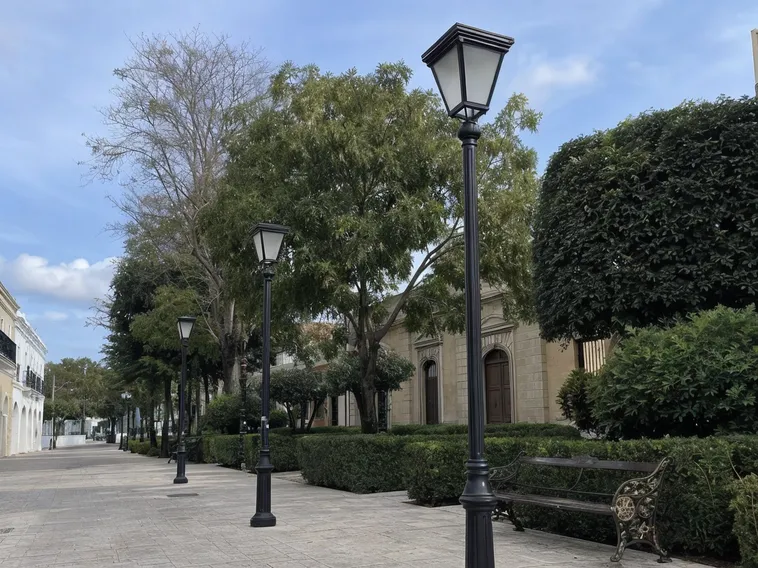
Municipal Parks and Heritage Streetscapes
Municipal and heritage buyers specify post-top fixtures for pedestrian routes, park paths, and conservation areas where the fixture form needs to match the architectural context. These projects often require documentation: CE Declaration of Conformity, IP test certificates, and RoHS records for tender submission.
Order quantities range from 100 to 2,000+ units per project, and the buying cycle is longer — but the project value per order is proportionally higher.
Heritage Housing Options
Heritage streetscape projects frequently specify decorative housing styles — lantern tops, traditional post profiles, or period-appropriate finishes. We can review custom housing requirements during the OEM/ODM engineering process, though structural changes to the housing require tooling review and higher MOQ.
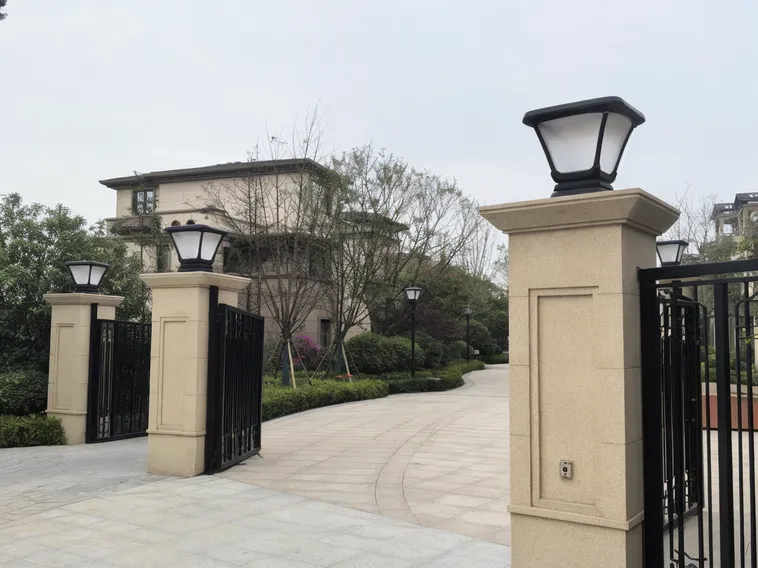
Residential Communities and Villa Developments
Developers and property management companies specify post-top fixtures for entrance gates, clubhouse areas, and main pedestrian routes where the fixture needs to signal quality to residents and visitors.
The buying pattern is phased: a spec is set for the first development phase, and subsequent phases reorder the same SKU. Batch consistency across reorders is the primary sourcing requirement — a fixture that looks slightly different in phase two creates a visible mismatch that generates complaints.
Batch Consistency Across Reorders
For this segment, locking the batch specification — CCT, finish color, lumen output — and maintaining it across reorders is more important than unit price. We track batch codes and component lots so reorders can be validated against the original sample.
CCT
Locked per batch
Finish Color
Matched to sample
Lumen Output
Validated per lot
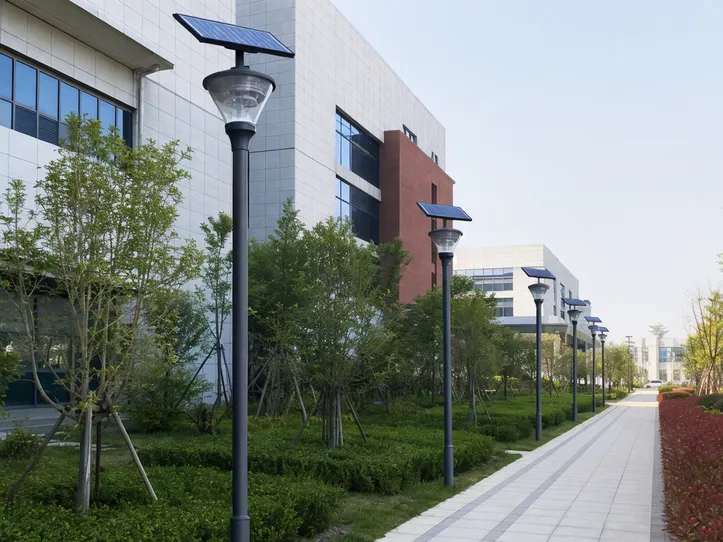
Campuses, Business Parks, and Commercial Plazas
Campus and commercial buyers specify post-top fixtures for main pedestrian routes, parking lot perimeters, and plaza areas where consistent illumination across a long run matters. The retrofit argument is strong here: replacing wired fixtures with solar post-top lights eliminates the ongoing electricity cost and removes the need for licensed electrical work on future replacements.
For buyers supplying campus retrofit projects, the total cost of ownership argument — no grid connection, no electrical permit, no ongoing energy cost — is a genuine selling point to the end customer.
Retrofit Value Proposition
No grid connection. No electrical permit. No ongoing energy cost. For campus and commercial plaza projects, solar post-top fixtures reduce total cost of ownership while eliminating licensed electrical work on future replacements.
Landscape Contractors and Lighting Distributors
Landscape contractors building a complete outdoor lighting package — poles, bollards, pathway lights, and post-top fixtures — need a supplier who can deliver all four product types with consistent visual language and a single quality standard. Distributors adding post-top fixtures to an existing solar lighting line use them as a premium SKU above pathway and deck lights, with higher per-unit margin and a different buyer profile.
For distributors, the key sourcing question is whether the post-top fixture can be positioned as a distinct product tier — not just a taller pathway light. The die-cast aluminum housing, elevated lumen output, and pole-mount installation method create a genuine product differentiation that supports a higher price point in the catalog.
Distributor Differentiation Factors
- Die-cast aluminum housing — distinct from stamped pathway light bodies
- Elevated lumen output tier above bollard and deck categories
- Pole-mount installation method — different buyer profile and project scope
- Higher per-unit margin supports premium catalog positioning
Build a Solar Post Lighting Package for Your Market
Whether you supply campuses, landscape projects, or distribute through a catalog — configure post-top fixtures with consistent quality across poles, bollards, and pathway lights.
Request a QuoteStyle, Finish, and Configuration Options Without Losing Production Control
Post-top fixtures are more customization-intensive than pathway or deck lights because buyers often need the fixture to match an existing landscape design, a heritage context, or a branded product line. Here's what we can adjust, what requires engineering review, and what stays standardized to protect production consistency.
What Can Be Customized
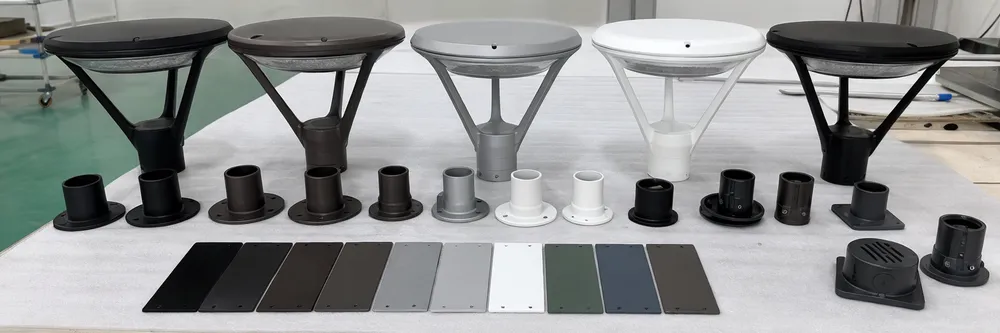
Housing Finish
Standard options: black, dark bronze, silver, and white powder coat. Custom RAL colors available on runs over 500 units — below that, the powder line changeover cost doesn't make commercial sense for either side.
Powder coat applied at 60–80 μm thickness, passes a 500-hour salt spray test. Matters for coastal and high-humidity installations.
Color Temperature
Available CCTs: 2700K, 3000K, 4000K, 5000K, and 6500K.
For most post-top applications, we recommend limiting a product line to two CCTs — warm white for hospitality and heritage contexts, neutral white for public and commercial routes. More CCT options create inventory fragmentation without proportional commercial benefit.
Lumen Output
Adjustable within the LED module's design range without changing the housing. Useful for positioning a premium SKU above a standard one, or for matching a project's illumination specification.
Battery Capacity & Solar Panel Size
Sized to your target autonomy requirement and installation latitude. We run the engineering calculation before confirming the spec — a buyer targeting 3 cloudy days of autonomy in Northern Europe needs a different battery/panel combination than the same fixture deployed in the UAE.
Lighting Mode & Control Logic
Dusk-to-dawn, timer, multi-level dimming, and PIR activation can be programmed to your specification.
PIR-activated dimming (20% standby, 100% on trigger) can extend autonomy by 2–3× compared to full-brightness all-night operation — worth specifying for projects where the fixture is in a low-traffic area for most of the night.
Pole Adapter & Mounting Interface
We can review buyer pole drawings and confirm or adjust the adapter design before production.
Branding & Packaging
Logo application via laser engraving, pad printing, or label. Custom carton design, multilingual installation guides, and accessory pack configuration for distributor programs.
What Requires Engineering Review
Decorative housing changes — new top-cap profiles, lantern-style lens housings, non-standard solar panel layouts, or structural modifications to the pole interface — require engineering review and may involve tooling costs.
These are achievable for OEM/ODM programs with sufficient volume, but they add lead time and require sample validation before production.
Our 15+ optical and electrical engineers handle the review; the process is straightforward if the buyer provides reference drawings or samples.
MOQ Reference
| Configuration Type | Minimum Order |
|---|---|
| Standard catalog models | 100 units |
| Housing color or packaging changes | 300–500 units |
| Tooling-dependent modifications (new housing form, custom lens) | Confirmed during engineering review |
Battery, LED, and Waterproof Controls for Pole-Top Reliability
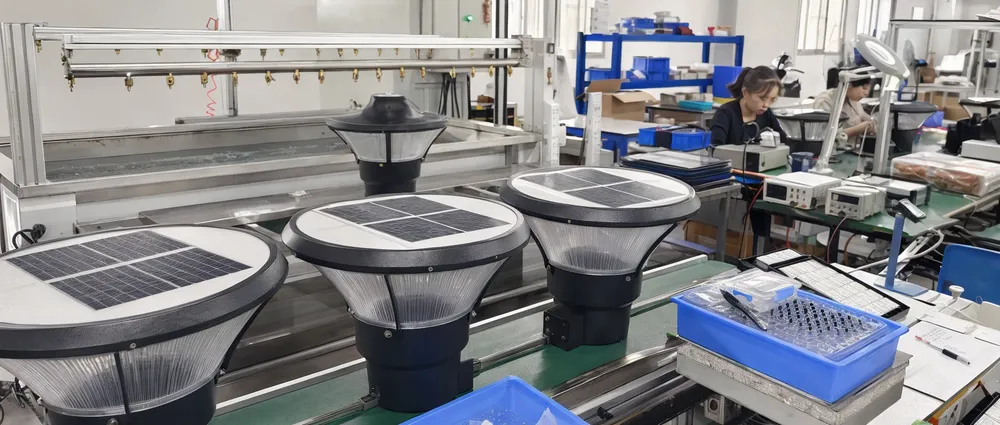
Post-top fixtures fail in predictable ways. We've been making solar outdoor lighting since 2012, and the failure modes for pole-mounted fixtures are specific enough that we've built dedicated controls around each one. Here's what we watch for and how we address it before a unit leaves the factory.
Water Ingress at Cap-to-Housing & Lens Seams
Most Common Field FailureThe fixture sits at pole height, fully exposed to rain, and the seam between the top cap, lens, and housing body is the most vulnerable point.
Our control: We seal these joints with silicone during assembly and verify seal integrity on our IP waterproof inspection equipment — not a visual check of the housing design, but an actual ingress test on assembled units. IP65 is standard; IP67 is available for buyers in high-rainfall markets or where the specification requires it.
Battery Mismatch & Autonomy Shortfall
Second Most Common ComplaintHappens when cells aren't matched by capacity and internal resistance before pack assembly, or when the battery is sized for ideal solar irradiance rather than the buyer's actual installation latitude.
Our control: We match cells by capacity and internal resistance before pack assembly, and packs go through charge/discharge cycle testing on our aging test racks before installation. For OEM/ODM orders with a specified autonomy target, we size the battery and panel combination against that requirement during the engineering review.
Lumen & CCT Drift Between Batches
Visible Mismatch RiskCreates visible mismatches in a post-top installation run — a fixture that's noticeably warmer or dimmer than its neighbors is immediately visible at pole height.
Our control: We run lumen binning at the LED module assembly stage: chips are sorted by output and color temperature before module assembly, and the output range for a batch is confirmed before units move to final assembly. CCT is held within ±200K of the specified value across a production run.
Controller & Sensor Failures
Functional DefectDusk-to-dawn circuits that activate in daylight, dimming modes that don't hold their programmed behavior — caught at a dedicated function test bench.
Our control: Every unit's controller is verified against the programmed spec before final assembly. For products with PIR sensors, trigger distance and angle are confirmed as part of the 100% pre-shipment inspection.
100% Pre-Shipment Inspection
The 100% pre-shipment inspection covers function, accessories, labels, and packing before container loading. It adds time to the production schedule.
It also means defective units are caught before they're on a ship, not after they're installed on a project site where a callback costs ten times the unit value.
Export Documentation for Public, Hospitality, and Distributor Orders
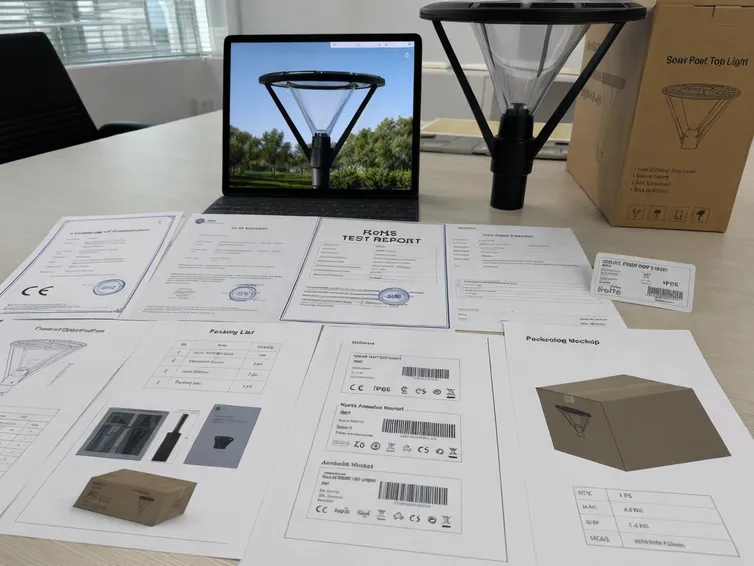
Post-top fixtures for public projects, hospitality developments, and distributor programs typically require compliance documentation at the order level. Here's what JXSOL holds and what we can provide.
Confirmed Company Credentials
- ISO 9001:2015 — Quality management system
- CE — Electrical safety and EMC compliance
- RoHS — Restricted substance compliance
- IP65/IP67 — Ingress protection tested on in-house equipment
- IEC 62124 — Solar photovoltaic system performance standard
Documentation Available With Orders
- CE Declaration of Conformity
- RoHS test reports
- IP test certificates
- IEC 62124 documentation where applicable
For tender submissions and project approvals, we can provide documentation packages configured to your market's requirements.
A Note on Certification Scope
CE and RoHS cover the compliance requirements for European market entry. IEC 62124 covers solar system performance. IP65/IP67 ratings are tested on our own equipment and documented per order.
We don't claim that every configuration automatically holds every certificate without confirmation — if your project requires a specific certification or test report, confirm it during the RFQ process and we'll verify it against the model and configuration before production.
Export Markets & Labeling Configuration
We export to North America, Europe, the Middle East, Southeast Asia, and Africa. Each market has different documentation requirements, and we've handled the paperwork for all of them.
For buyers importing into markets with specific labeling requirements — country of origin, voltage/frequency marking, warning symbols — we configure packaging and product labeling to your market's requirements.
Packing, Accessories, and Reorder Traceability for Post-Top Fixtures
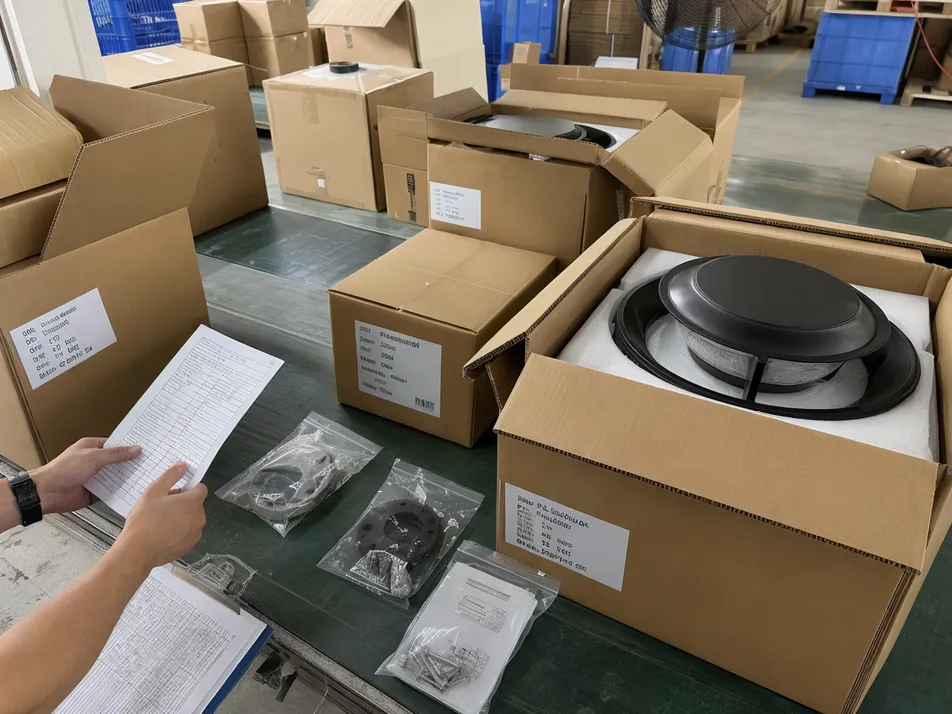
Post-top fixtures have more components to protect than pathway or deck lights: the lens cover, solar panel surface, decorative housing, powder-coated finish, and mounting adapter all need to arrive undamaged. Export packing for this product type is not an afterthought.
Individual Carton Protection
Each fixture is packed in individual cartons with foam inserts or PE bag protection for the housing and lens. The solar panel surface is protected with a film cover.
Accessory Separation
Mounting adapters, fasteners, and installation hardware are packed in a labeled accessory bag within the carton — not loose in the same compartment as the housing.
Container-Optimized Sizing
For fixtures with longer poles supplied as part of a package, carton dimensions are sized to keep the product within standard container loading configurations.
Carton Labeling & Verification
Accessory packs are checked against a packing list before carton sealing. Every carton is labeled with:
This labeling matters for two reasons: your receiving team can verify the order without opening every carton, and your reorder can reference the batch code to confirm the new production run matches the original.
Batch Traceability for Phased Deliveries
Batch traceability is particularly important for post-top projects that are delivered in phases. A resort development that installs 100 fixtures in phase one and reorders 80 units for phase two needs the second batch to match the first — same CCT, same finish, same lumen output.
We maintain batch records and can confirm component lot availability before a reorder goes to production.
Reorder Match Guarantee
- Batch records maintained per order
- Component lot availability confirmed pre-production
- CCT, finish, and lumen output matched to original run
White-Label Packaging for Distributor Programs
White-label packaging and market-specific installation guides are available for distributor programs. If you're building a branded solar post lighting line, we can configure the carton, inner packaging, and documentation to your brand standards.
FAQ for Solar Post Top Light Procurement
Answers to the specification and ordering questions we hear most from project engineers, landscape architects, and procurement teams.
What pole height works best for solar post top lights?
For decorative pedestrian-scale area lighting — resort paths, park routes, plaza perimeters — a pole height of 3–4 m is the most common specification. At 3 m, the fixture provides good coverage for a 4–6 m spacing interval and reads as a permanent streetscape element without dominating the landscape. At 4–5 m, coverage per fixture increases and spacing can be extended, which reduces the total fixture count for a given route length.
Below 2.5 m, a post-top fixture starts to compete visually with bollards without the structural advantage of a bollard's ground-anchor base. Above 5 m, you're moving into solar street light territory in terms of output requirements and pole engineering.
Practical range for most commercial landscape and hospitality projects: 3–4 m pole height with 4–6 m spacing intervals at the 3 m height.
What mounting diameter or adapter information should be confirmed before ordering?
At minimum, confirm the following before placing an order:
- Pole top outside diameter (OD)
- Tenon diameter (if the pole has a tenon)
- Tenon depth
- Screw pattern or fastener method
If the buyer is supplying poles, send us the pole drawings or a photo of the pole top with dimensions — a 10-minute review before production prevents adapter mismatches that require rework after delivery.
Standard Tenon Adapter Sizes
Non-standard pole profiles need a custom adapter review.
If JXSOL is supplying poles as part of a package, we size the interface during the engineering review and confirm before production.
Are solar post top lights suitable for shaded parks or streetscapes?
Partially shaded installations are manageable with the right panel and battery sizing, but they require an honest assessment before ordering. A fixture sized for 4–5 peak sun hours in an open installation will underperform in a location that receives 2–3 peak sun hours due to tree canopy or building shading. The fix is to increase the solar panel output and battery capacity to compensate — which increases the fixture cost.
Viability threshold
For heavily shaded locations where peak sun hours drop below 2, solar post-top fixtures are not the right product regardless of panel size; the charging deficit is too large to overcome with practical battery capacity.
Send us site photos and the installation location — we can assess the solar exposure and recommend whether the configuration is viable and what sizing adjustments are needed.
What lumen range is suitable for decorative outdoor solar post lighting?
For decorative pedestrian-scale area lighting at 3–4 m pole height with 4–6 m fixture spacing, 300–600 lm per fixture covers most commercial landscape and hospitality applications.
200–300 lm
Ambient lighting suitable for resort paths and garden routes where the goal is atmosphere and safe navigation.
500–800 lm
Functional area lighting suitable for public parks, campus routes, and commercial plazas where safety lighting standards apply.
Key variable — spacing: Tighter spacing allows lower lumen per fixture; wider spacing requires more output per unit to maintain consistent illumination across the run. Confirm your spacing plan before specifying lumen output.
What IP rating should pole-mounted solar post lights use?
IP65 is the standard specification for pole-mounted post-top fixtures — it covers protection against water jets from any direction, which handles rain, irrigation spray, and cleaning. The fixture housing sits above ground level, so it doesn't face the standing-water immersion conditions that make IP67 necessary for ground-level products like driveway lights or recessed deck lights.
IP67 is available for buyers in high-rainfall markets or where the project specification requires it. The IP rating should be verified by test certificate, not assumed from the housing design — we test on in-house waterproof inspection equipment and provide IP test certificates with the order.
Can JXSOL customize finish, CCT, battery autonomy, packaging, and logo for bulk orders?
Yes. Housing finish options include black, dark bronze, silver, and white as standard; custom RAL colors are available on runs over 500 units. CCT options cover 2700K through 6500K. Battery capacity and solar panel size are sized to your target autonomy requirement and installation latitude during the engineering review.
Packaging can be fully customized — carton design, inner packaging, multilingual installation guides, and accessory pack configuration. Logo application is available via laser engraving, pad printing, or label.
Standard models start from 100 units; OEM/ODM programs with custom specifications typically start at 300–500 units for finish or packaging changes, higher for tooling-dependent housing modifications.
What MOQ applies to standard solar post top light models?
100 units per SKU for standard catalog models. Mixed-SKU orders are accepted — you can combine post-top lights with bollard lights, pathway lights, or other products in the solar pathway and bollard lighting series as long as each SKU meets the 100-unit minimum.
For OEM/ODM programs with custom specifications, MOQ varies by customization scope: typically 300–500 units for finish or packaging changes, higher for tooling-dependent modifications.
Request a Solar Post Top Light Quote From JXSOL
Send us your project or order details and we'll return a configuration recommendation and pricing. The more specific your inputs, the faster we can confirm the right spec.
What to Include in Your RFQ
-
Quantity
Units per SKU and total order volume
-
Target Market
Country or region — affects compliance documentation and battery/panel sizing
-
Pole Details
Pole height, pole top OD, tenon diameter and depth, screw pattern — or send drawings
-
Lumen Target
Required output per fixture, or describe the application and spacing
-
CCT
Preferred color temperature, or your target market and we'll recommend
-
Autonomy Requirement
Target cloudy-day autonomy, or your installation latitude
-
Finish
Standard color or custom RAL
-
Certification Needs
CE, RoHS, IP test certificates, or other documentation required
-
OEM/ODM Requirements
Logo, packaging, custom housing, or other customization
-
Timeline
Target delivery date or project schedule
MOQ & OEM/ODM Programs
Standard models are available from 100 units. OEM/ODM programs with custom specifications are supported by our in-house engineering team:
- Lumen confirmation for your application
- Battery sizing for target autonomy
- Solar panel sizing for your target latitude
- Adapter review and pole compatibility