

Smart Solar Lighting Systems Manufacturer
Complete smart solar lighting system manufacturing — from IoT-enabled street lights to integrated smart poles and camera-equipped security lighting.
JXSOL has manufactured solar-powered outdoor lighting since 2012. Our smart solar lighting line covers four product groups: smart solar lighting systems, smart solar poles, solar lighting control systems, and solar street lights with camera — all built on automated SMT lines with 100% pre-shipment inspection.
Smart Solar Lighting Systems Built for Project and Resale Programs
A smart solar lighting system is not a standard solar light with a remote control added. It's a configured system: solar panel, battery pack, LED module, controller, sensor logic, communication module, pole or housing, and — in security-driven projects — an integrated camera. Each component affects the others.
Why Component Interdependency Matters
Size the battery wrong and the controller's dimming schedule can't compensate.
Pair a high-lumen LED module with an undersized solar panel and you lose runtime in winter.
Add a camera without accounting for its power draw and the whole system underperforms.
We've been manufacturing solar-powered outdoor lighting since 2012, and the smart solar lighting category is where the engineering complexity is highest. Our in-house team of 15 optical and electrical engineers works on system configuration before mass production — not after the first container ships.
We supply distributors, project contractors, and OEM/ODM buyers who need a manufacturer that can configure the system correctly, not just assemble components to a parts list.
If you're sourcing smart solar lighting for resale, for a municipal or commercial project, or for a private-label program, JXSOL's solar lighting factory has the production capacity and engineering depth to support it.
Send Your Project Requirements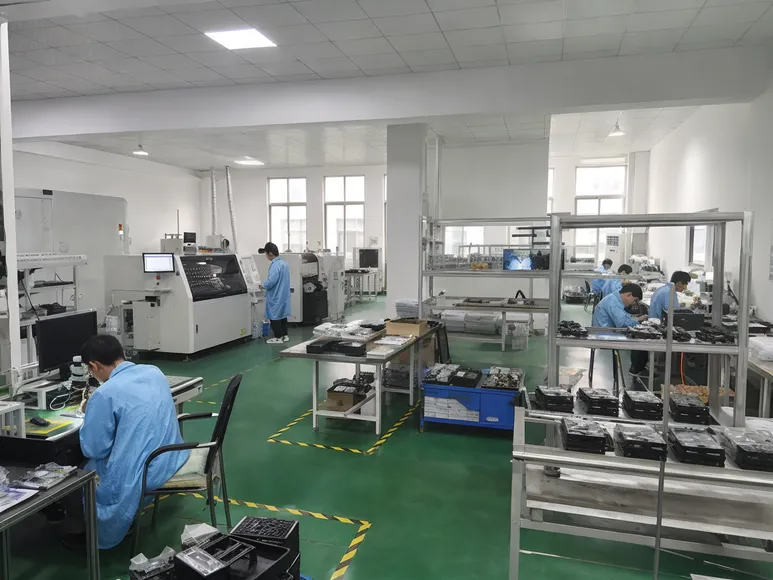
Product Line Coverage for Smart Solar Lighting Procurement
This category covers four product groups. Each serves a different procurement need — the descriptions below are designed to help you identify which page to explore next.
Smart Solar Lighting System
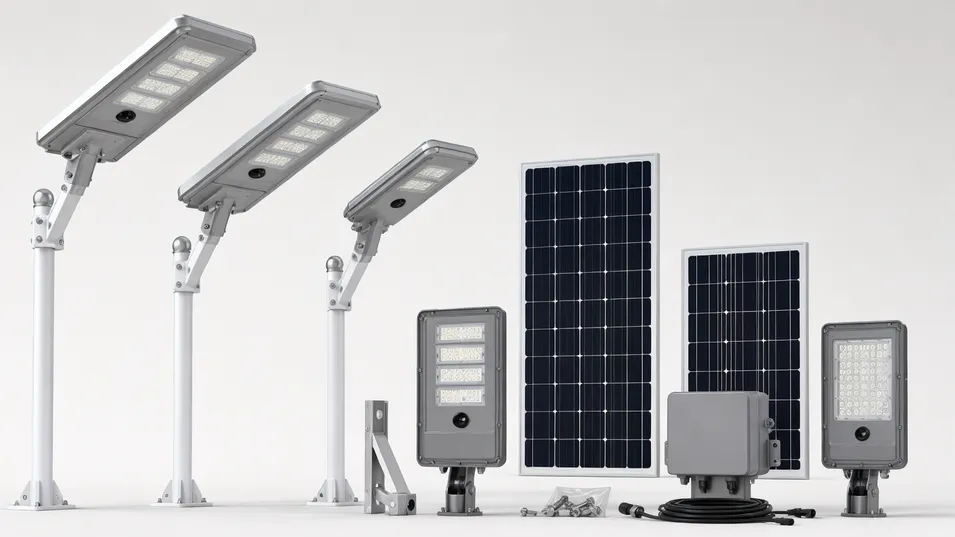
Core Product · Road, Pathway, Parking, CampusThe core product in this category. An integrated solar lighting unit combining solar panel, LiFePO4 or lithium-ion battery, LED module, PIR or microwave sensor, and a programmable controller with dimming schedule support. Available in all-in-one and split configurations.
The right starting point for most road, pathway, parking, and campus lighting projects where the primary requirement is reliable autonomous operation with adjustable brightness modes. Buyers sourcing for distribution typically start here — the product line is broad enough to cover multiple project types from a single supplier relationship, and the MOQ from 100 units on standard models makes it practical to test SKUs before committing to a full program.
View Smart Solar Lighting System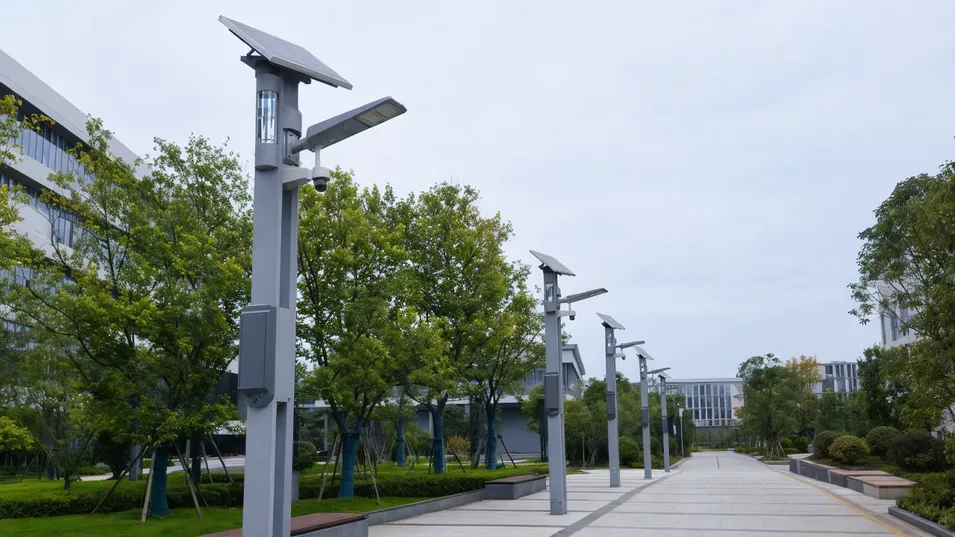
Smart Solar Poles
Urban Streetscape · Campus · Smart CityA pole-integrated smart solar lighting system where the solar panel, battery compartment, LED fixture, controller, and optional IoT communication module are built into a single pole structure. The pole is the product — not a mounting accessory.
Smart solar poles are specified for urban streetscape projects, campus infrastructure, and smart-city demonstration installations where the visual integration of the system matters alongside the lighting performance.
Note for specifiers: The pole needs to handle wind load with the panel mounted at height, and the battery compartment needs its own IP-rated enclosure separate from the fixture. Both are engineered into our pole designs from the start.
Solar Lighting Control System
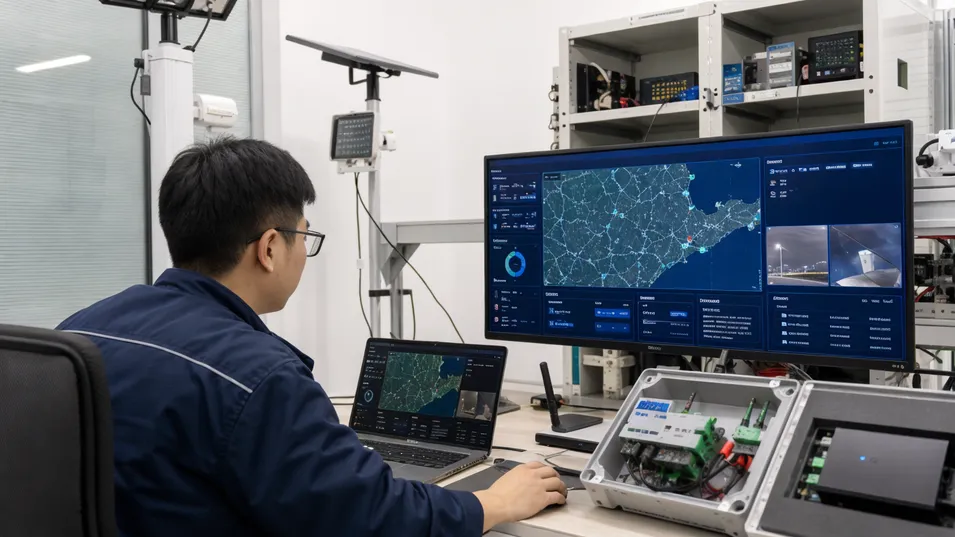
Controller & Communication Layer · IoT DeploymentsThe controller and communication layer for smart solar lighting. Covers standalone programmable controllers, group control units, and remote monitoring/management systems for IoT solar lighting deployments.
Relevant for two buyer types: project contractors who need centralized control over a large installation, and OEM buyers who want to integrate a specific control architecture into their own product line.
Field note:The control system page includes protocol compatibility matrices and integration notes for common SCADA and BMS platforms used in municipal and campus deployments.
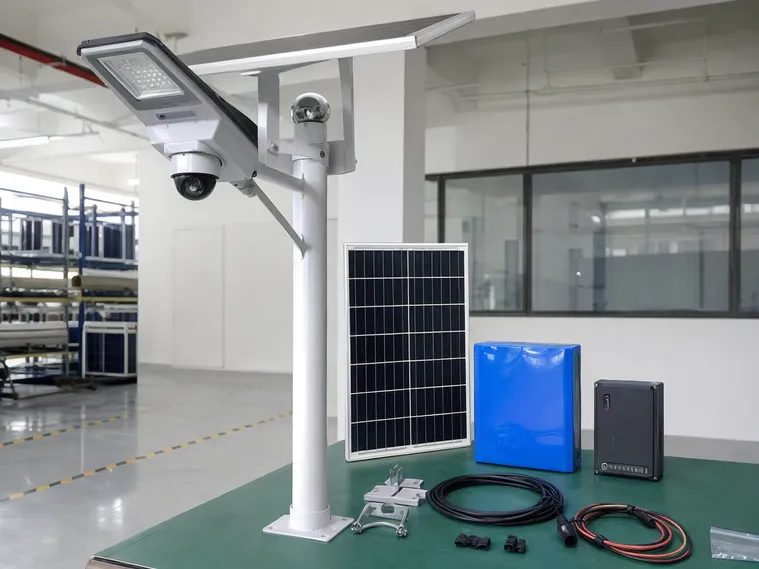
Solar Street Light With Camera
Lighting · Surveillance · Remote SecurityA solar lighting and camera package for sites where CCTV power infrastructure is difficult or expensive. LED fixture, camera load, solar panel, controller, and battery capacity are sized together as one system.
Most relevant for remote roads, industrial parks, campus perimeters, construction sites, substations, and security-driven projects where lighting and surveillance need to operate off-grid from the same pole.
Engineering note: Camera runtime, transmission method, storage requirement, and night lighting schedule all affect battery sizing. We confirm these inputs before quoting.
Which Product Group Fits Your Procurement Need?
| Your Situation | Recommended Starting Point | Why |
|---|---|---|
| Road, pathway, or parking project — need reliable autonomous lighting | Smart Solar Lighting System | Broadest SKU range, lowest MOQ entry point, covers most standard project specs |
| Urban streetscape or smart-city project where visual integration matters | Smart Solar Poles | Pole is the product — engineered for wind load and IP-rated battery compartment from the start |
| Large installation needing centralized control or OEM control integration | Solar Lighting Control System | Protocol options (4G, NB-IoT, Zigbee, LoRa) and SCADA/BMS integration documentation available |
| Remote site or perimeter project needing lighting and surveillance without grid power | Solar Street Light With Camera | Camera load, LED schedule, panel wattage, and battery capacity are sized together as one off-grid security system |
Technical Specifications Across the Product Line
The ranges below reflect the full production scope across all four product groups. Individual product pages carry the detailed spec sheets. Use this section to confirm the category covers your project's technical requirements before going deeper.
Solar Panel
- Cell Type
- Monocrystalline PERC
- Power Range
- 20W – 200W
- Efficiency
- 21% – 23%
- Encapsulation
- EVA / POE film
- Frame
- Anodized aluminium alloy
- Operating Temp
- −40°C to +85°C
Battery
- Chemistry
- LiFePO4 (standard) / Li-ion
- Capacity Range
- 20Ah – 200Ah
- Cycle Life
- 2,000+ cycles (LiFePO4)
- BMS
- Integrated overcharge / over-discharge protection
- Operating Temp
- −20°C to +60°C
- Backup Nights
- 3 – 7 rainy days (configurable)
LED Fixture
- LED Source
- Bridgelux / Epistar / Cree-compatible
- Power Range
- 10W – 120W
- Luminous Efficacy
- 160 – 180 lm/W
- CCT Options
- 3000K / 4000K / 5000K / 6000K
- CRI
- ≥ 70 (standard) / ≥ 80 (optional)
- IP Rating
- IP65 – IP67
- L70 Lifespan
- ≥ 50,000 hours
Controller & Sensing
- Dimming
- 0 – 100% PWM
- Schedule Segments
- Up to 4 per night
- Motion Sensor
- PIR or microwave (selectable)
- Detection Range
- 5m – 12m (adjustable)
- Communication
- 4G / NB-IoT / Zigbee / LoRa
- Remote Management
- Cloud dashboard + API access
Structural & Environmental
- Pole Material
- Q235 steel / 6063 aluminium
- Surface Treatment
- Hot-dip galvanised + powder coat
- Wind Resistance
- ≤ 60 m/s (typhoon zone rated)
- Pole Height Range
- 4m – 12m
- Ambient Temp
- −40°C to +60°C
- Salt Spray
- ≥ 500 hours (coastal grade)
Certifications
- Safety
- CE / UL / CB
- EMC
- CE EMC / FCC Part 15
- Solar Panel
- IEC 61215 / IEC 61730
- Battery
- UN38.3 / IEC 62133
- RoHS
- Compliant
- Market-Specific
- SASO / INMETRO on request
Specifications above represent the production range across all models. Individual SKU datasheets are available on each product page. For project-specific configurations — custom wattage combinations, non-standard pole heights, or specific certification requirements — contact the technical team directly with your project brief.
System Configuration Choices That Affect
Runtime, Margin, and Warranty Risk
The most common sourcing mistake in smart solar lighting is treating configuration as a post-order detail. By the time the container ships, the battery capacity, solar panel wattage, sensor logic, and controller firmware are fixed. If they're wrong for the project site, you're managing warranty claims and field adjustments — not reorders.
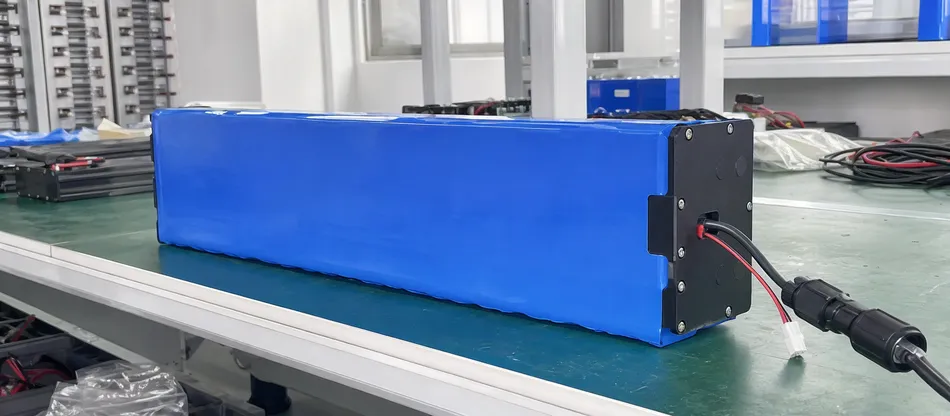
Battery Capacity and Autonomy Nights
Sizing for your market's irradiance profile
Battery capacity is sized to the LED power draw, the operating hours per night, and the required autonomy — the number of consecutive cloudy days the system must run without solar input.
Autonomy Night Targets by Region
High-latitude and Africa installations face significant seasonal irradiance variation — autonomy sizing must account for worst-case winter performance.
Chemistry Default: LiFePO4
2,000+
LiFePO4 cycle life
500–800
Standard Li-ion cycle life
Cycle life matters when you're selling a 3-year warranty and your buyer's customer expects the system to run for 5–7 years. The upfront cost difference is real, but the warranty claim rate difference is larger.
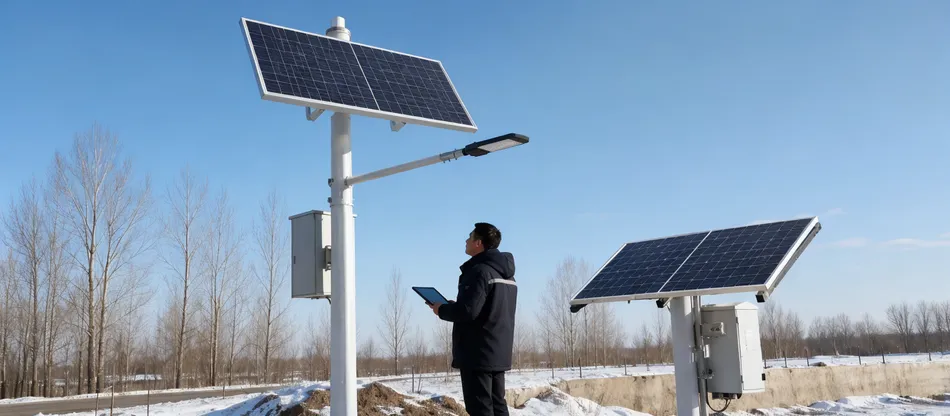
Solar Panel Wattage and Seasonal Matching
Sizing to winter solstice, not annual average
The solar panel has to recharge the battery in the available peak sun hours at the installation latitude. A panel sized for summer irradiance in a temperate climate will underperform in winter — the battery never fully recovers and runtime degrades over consecutive cloudy days.
Our Sizing Baseline
We size panels to the winter solstice irradiance at the target latitude — not the annual average. This is the difference between a system that works year-round and one that generates complaints from October to March.
What Winter-Solstice Sizing Means for Your Order
Adds 15–25% to panel wattage in temperate markets compared to annual-average sizing
Ensures full battery recovery even during short winter days with reduced peak sun hours
Protects your warranty position — runtime degradation in winter is the leading cause of field complaints in under-specified systems
Middle East and Southeast Asia projects recover faster due to higher year-round irradiance, so the winter-sizing premium is smaller in those markets. Latitude and seasonal swing are the key inputs.
Sensor Logic and Dimming Schedule
PIR Sensors
Passive Infrared Detection
- 8–12 meter detection range at 120° cone angle
- Sufficient for most road and pathway projects
- Lower false-trigger rate in stable environments
- Performance degrades in heavy rain and fog
Microwave Sensors
Active Radar Detection
- Penetrates non-metallic materials
- Reliable through rain and fog
- Preferred for covered parking structures and wet climates
- More prone to false triggers in high-wind environments
Dimming Schedule Programming
Schedules are programmed into the controller before shipment. A typical configuration runs in three phases:
Post-Dusk
100%
First 2–3 hours after dusk
Mid-Night Dim
30–50%
Motion-triggered return to 100%
Pre-Dawn
Off / Min
Minimal or off before dawn
Any schedule you specify can be programmed to order. For OEM buyers, the firmware can be locked to prevent field modification — protecting your product specification and reducing warranty claims from end-user misconfiguration.
Camera Power Load and System Sizing
Camera modules add a continuous power draw that must be factored into battery and panel sizing. Buyers who source the camera separately and add it to a standard solar street light often discover the system cannot sustain both loads through a cloudy week.
Camera Module Power Draw Reference
A 30–96Wh daily addition is a meaningful load on the battery budget. We calculate the combined LED + camera power draw when sizing the battery and panel for camera-equipped systems.
Integrated camera systems require coordinated battery and panel sizing — not a simple add-on to a standard solar street light specification.
IoT Communication and Remote Monitoring
The communication module choice depends on your target market's network infrastructure and your buyer's monitoring platform requirements. We can configure any of the options below; the decision is yours to make based on deployment context.
4G / LTE
Most widely deployed option. Coverage available in most urban and peri-urban markets. Data cost for lighting telemetry is low.
Best for: Urban & peri-urbanNB-IoT
Preferred for dense urban deployments where network congestion is a concern. Lower power consumption than 4G.
Best for: Dense urbanZigbee
Used for mesh networks in campus or industrial park installations where a local gateway is available.
Best for: Campus / industrialLoRa
Long-range, low-power mesh option for campus or industrial park installations with a local gateway infrastructure.
Best for: Campus / industrialExplore Related Systems
Category-Level Technical Specification Ranges for Fast Supplier Screening
The table below covers category-wide ranges for smart solar lighting systems. Individual product pages carry exact specifications for each model.
| Parameter | Category Range |
|---|---|
| LED Power | 20W – 200W |
| Lumen Output | 2,000 lm – 24,000 lm |
| Color Temperature | 2700K – 6500K (standard: 4000K, 5000K, 6000K) |
| Battery Chemistry | LiFePO4 (standard), Li-ion (available) |
| Battery Capacity | 20Ah – 200Ah (sized to project autonomy requirement) |
| Solar Panel Wattage | 30W – 300W (matched to battery and latitude) |
| Autonomy Nights | 2–7 nights (project-specific sizing) |
| Control Modes | Time control, PIR motion sensor, microwave sensor, dimming schedule, remote/IoT |
| Communication Options | 4G, NB-IoT, Zigbee, LoRa (project-specific) |
| Sensor Options | PIR (120°, 8–12m range), microwave (adjustable sensitivity) |
| Ingress Protection | IP65 (standard), IP67 (available for camera and battery compartments) |
| Pole Options | Integrated smart pole, standard mounting arm, wall bracket |
| Camera Options | 2MP–4MP integrated, IP67-rated, night vision available |
| Operating Temperature | -20°C to +60°C |
| Certifications | ISO 9001:2015, CE, RoHS, IP65/IP67, IEC 62124 |
| OEM/ODM Variables | Lumen output, CCT, battery capacity, panel wattage, sensor logic, firmware, pole design, camera spec, branding |
For compliance documentation — CE declarations, RoHS certificates, IP test reports, IEC 62124 test data — see JXSOL certifications and quality standards.
Covers pathway lighting through high-mast road and industrial applications. Lumen output scales from 2,000 lm to 24,000 lm across this range.
LiFePO4 standard chemistry. Capacity is sized to project autonomy requirement — 2 to 7 nights of backup depending on latitude and load profile.
Panel wattage is matched to battery capacity and installation latitude. Oversizing the panel is the primary lever for extending autonomy nights.
IP65 is standard across the category. IP67 is available for camera and battery compartments where submersion risk or high-pressure wash-down is a site requirement.
View exact specifications by product line:
Electronics, Battery, and Waterproof Controls That Prevent Field Failures
Smart solar lighting fails at predictable points. We've been manufacturing this category long enough to know exactly where the failures originate, and the factory is built around preventing them.
Controller and Sensor Circuit Assembly
Brain of the system — manages charge/discharge, dimming, sensor input, and communication simultaneously
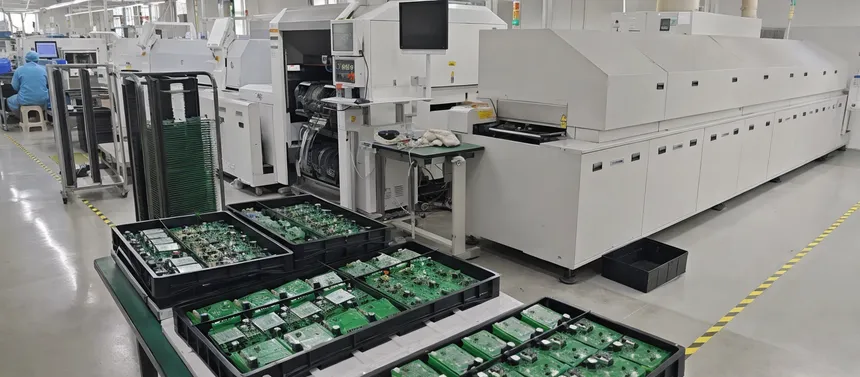
The controller is the brain of a smart solar lighting system — it manages battery charge/discharge, LED dimming, sensor input, and communication output simultaneously. A controller assembled with inconsistent solder joints or misplaced surface-mount components will pass a bench test and fail in the field after thermal cycling.
Our automated SMT lines place and solder controller and sensor circuit boards with machine precision — solder joint consistency is tight across the full batch, not just the first units off the line. Manual SMT is where you start seeing variation in driver performance between units; we moved away from it years ago on all controller boards.
Post-SMT Function Test — Every Board
- Charge/discharge logic verification
- Dimming response across full range
- Sensor input signal validation
- Communication module handshake confirmation
Boards that fail function test don't reach final assembly.
Battery Pack Testing and Cell Matching
Most common cause of smart solar lighting warranty claims — and the most preventable
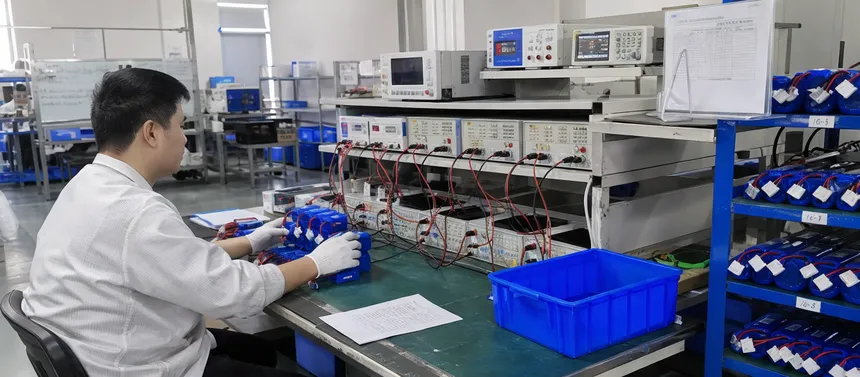
Battery failure is the most common cause of smart solar lighting warranty claims. The failure mode is usually not a dead cell — it's a weak pack that passes a visual check but has elevated internal resistance, which means it can't deliver rated capacity under load after 50–80 charge cycles.
We test every battery pack for capacity, internal resistance, and charge/discharge behavior before it's paired with a controller. Packs that fall outside tolerance are rejected at this station, not discovered in the field.
Multi-Day Aging Test Racks
Finished units run through multi-day charge/discharge cycles before final inspection. This catches early-life failures — units that would have failed within the first 30 days of deployment — before they leave the factory.
LiFePO4 Cell Matching — 5% Variance Limit
For LiFePO4 packs, we verify cell matching within the pack: cells with more than 5% internal resistance variance are not assembled together, because mismatched cells accelerate degradation in the weakest cell and shorten the pack's effective life.
Rejected at the station.
Packs outside tolerance are caught before pairing with a controller — not discovered after deployment.
Waterproof Structure and IP Verification
IP65 and IP67 ratings are tested, not assumed. The most common waterproof failure in outdoor solar lighting is not the housing itself — it's the cable entry points and the junction between the housing and the lens or cover. We pressure-test every IP65/IP67 housing after final assembly, not just a sample. The test applies positive air pressure to the sealed enclosure and checks for pressure drop over a hold period. A housing that passes visual inspection but has a micro-gap at a cable gland will fail this test.
Supplier Due Diligence Note
We've seen competitor products with IP67 labels that had no evidence of pressure testing in their QC documentation. It's worth asking your supplier for their test protocol, not just the certificate. A certificate without a documented test procedure is not a quality control record — it's a label.
Standard Housing IP Test
- Positive air pressure applied to sealed enclosure after final assembly
- Pressure drop monitored over a defined hold period
- 100% of units tested — not a sample pull
- Cable gland and lens junction points verified under pressure
Camera-Equipped Units
- Camera module has its own IP67 enclosure tested separately from the main fixture
- Cable routing between camera and controller passes through a sealed conduit
- Compression fittings used — not a simple grommet
- Camera image quality and night vision verified at outgoing inspection
LED Module Lumen and CCT Consistency
Lumen depreciation and color temperature drift across a batch are the two quality issues that generate the most buyer complaints in solar lighting. Both originate at the LED module assembly stage. We test every LED module for lumen output and color temperature before it goes into a housing. This keeps your batch consistent — the units at the end of the container perform the same as the units at the front.
±10%
Lumen Output Tolerance
Modules outside this range are rejected before housing assembly
±200K
CCT Tolerance
Color temperature drift controlled at module stage, not after installation
100%
Module-Level Testing
Every LED module tested before it enters the housing assembly line
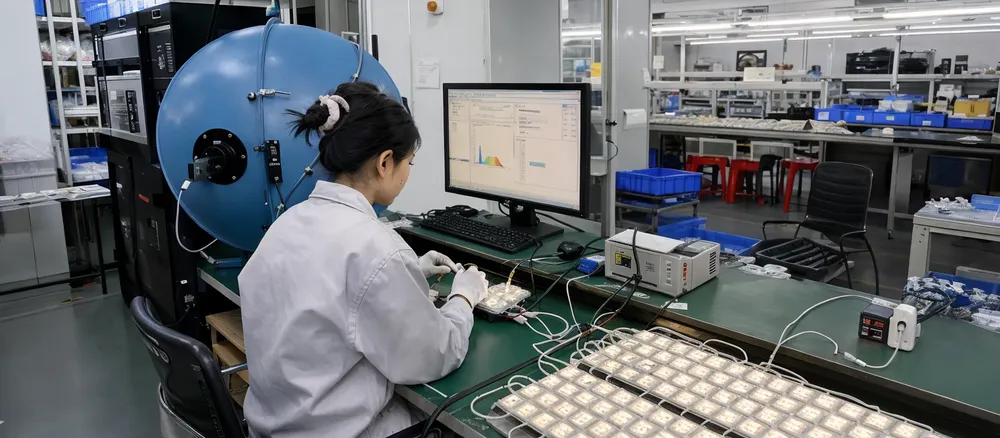
100% Outgoing Inspection
Every unit is function-tested before the container loads. The result is that your packing list matches your container, and your container matches the spec you approved.
Lighting Modes
All programmed lighting modes verified — motion response, dimming schedules, and dusk-to-dawn behavior confirmed before packing.
Sensor Response
PIR and microwave sensor trigger response tested. Detection range and sensitivity confirmed against spec.
Controller Function
Controller communication, firmware version, and programmed parameters verified against the approved configuration.
Battery Charge State
Battery charge level and BMS communication confirmed. Units ship with a minimum charge state that supports initial commissioning.
Accessory Completeness
Mounting hardware, remote controls, installation guides, and any included accessories checked against the packing list for every carton.
Custom Labeling and Packaging
Private-label packaging and custom labeling checked against approved artwork at this stage — not after the container is loaded.
Camera-Equipped Units: Additional Outgoing Checks
For camera-equipped systems, the outgoing inspection includes camera image quality verification and night vision function testing. Both are confirmed under controlled conditions before the unit is packed. This means field teams receive units where the camera is already confirmed operational — not units where camera function is discovered on-site.
Solar Street Light With Camera — product specificationsMarket Segments Where Smart Solar Lighting Creates Commercial Value
Smart solar lighting commands a higher price point than standard solar lights — and that margin is defensible when the system is configured correctly for the application. The segments below are where our buyers are building profitable programs.
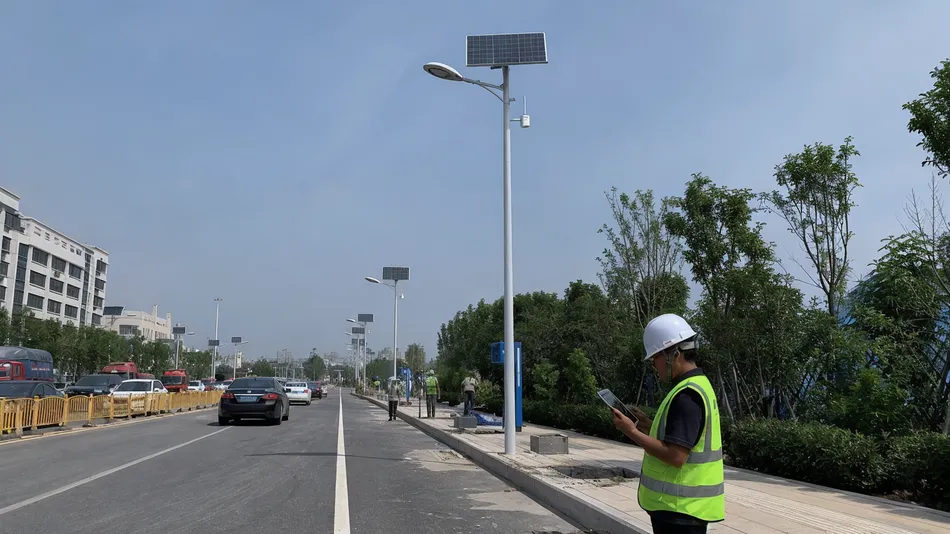
Municipal Road and Street Upgrades
Municipal procurement for road lighting upgrades is one of the highest-volume segments for smart solar lighting systems. Tenders typically specify lux levels, autonomy nights, control capability, and certification requirements.
IoT solar lighting with remote monitoring capability is increasingly specified in municipal tenders because it reduces maintenance dispatch costs — the control system reports faults before a resident complaint triggers a work order.
Typical Tender Requirements
- Specified lux levels and autonomy nights
- Remote monitoring and control capability
- CE certification and IEC 62124 compliance
- Documentation packages for bid submissions
Buyers supplying municipal contractors need CE certification, IEC 62124 compliance, and documentation packages that support bid submissions.
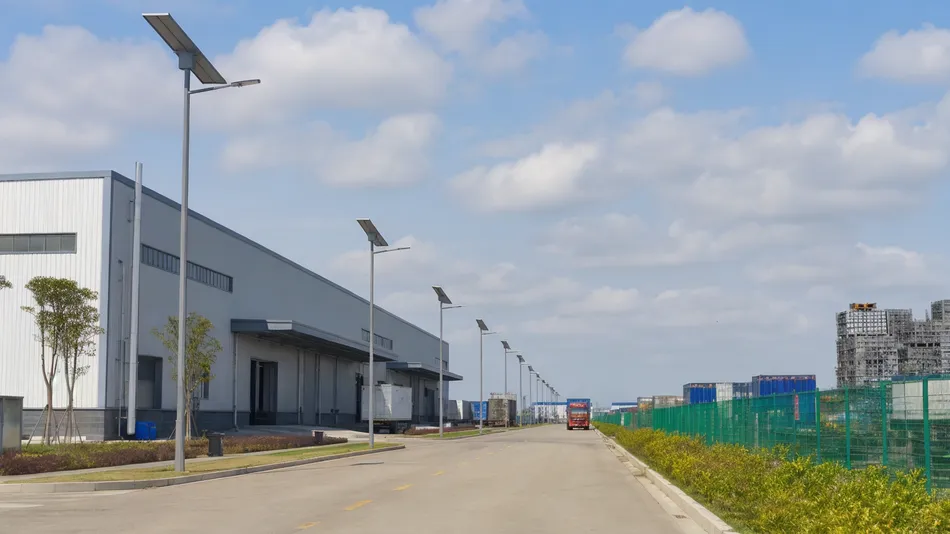
Industrial Parks and Logistics Yards
Industrial park operators and logistics facility managers source smart solar lighting for perimeter roads, loading areas, and internal circulation routes. The value proposition is infrastructure cost reduction — no trenching, no grid connection fees, no ongoing electricity cost.
The smart solar poles format works well here because the integrated design reduces installation time and the pole's structural engineering handles the wind load requirements typical of open industrial sites.
Campus and Institutional Projects
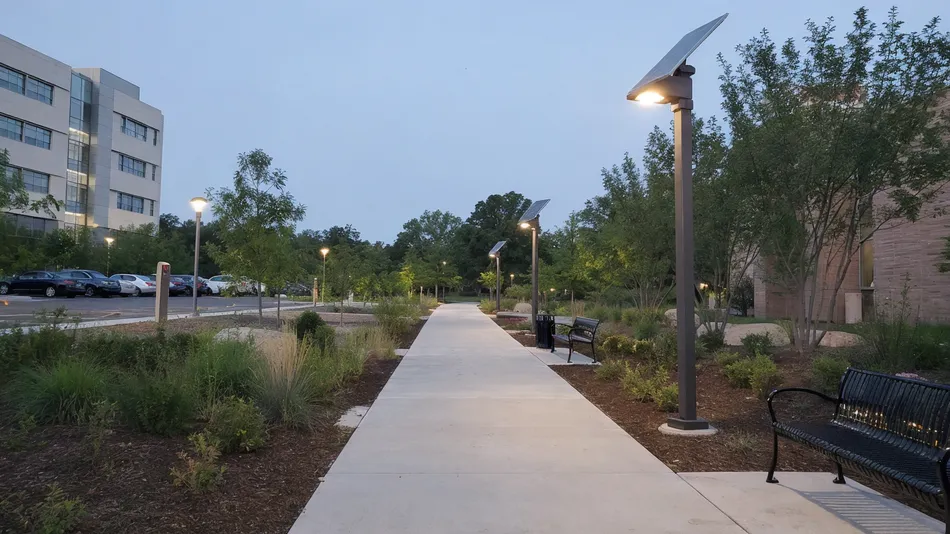
Universities, hospitals, and corporate campuses specify smart solar lighting for pathways, parking areas, and perimeter roads. These projects often have aesthetic requirements alongside performance specs — warm color temperature (3000K–4000K), consistent pole design, and sometimes custom branding on the pole or fixture. OEM/ODM configuration is common in this segment.
Segment note: Campus sustainability programs are now driving procurement decisions that previously went to grid-tied LED. This segment has grown significantly over the last three years.
Security Perimeters and Remote Site Monitoring
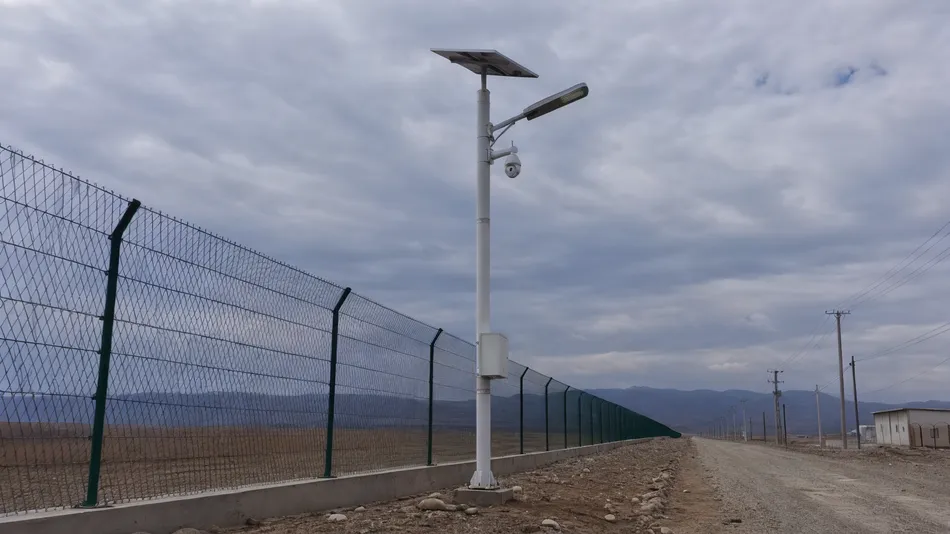
The solar street light with camera is the primary product for this segment. Remote sites — mining operations, agricultural facilities, border infrastructure, utility substations — need lighting and surveillance without grid access. The combined solar lighting and camera system eliminates the need for separate power infrastructure for each function.
Smart-City Demonstration and Pilot Projects
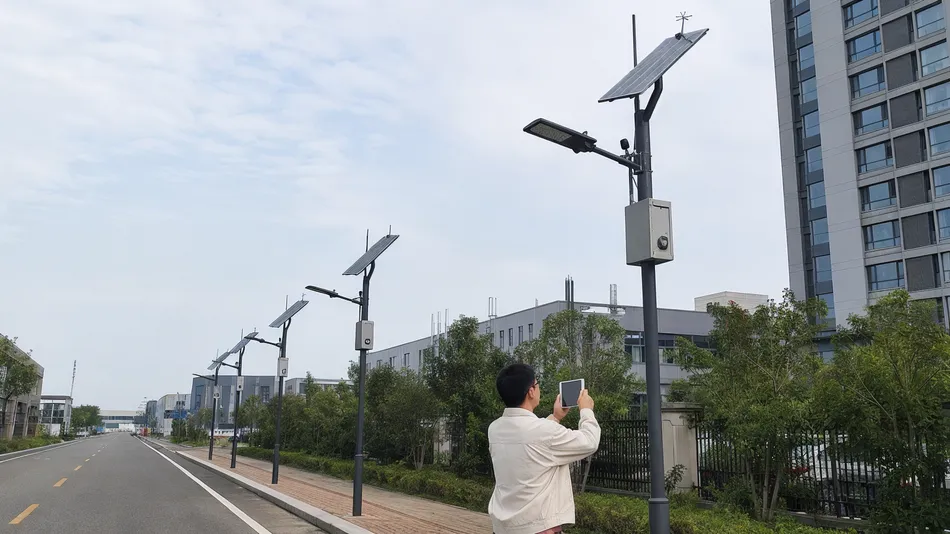
Smart-city procurement programs often start with a pilot installation — 50–200 units in a defined area — before scaling to a full deployment. IoT solar lighting with remote monitoring, dimming control, and data reporting capability is the standard specification for these pilots.
The solar lighting control system with a cloud-based monitoring dashboard is what makes the pilot reportable to city stakeholders. Buyers supplying smart-city integrators need a manufacturer who can configure the communication protocol and monitoring interface to match the integrator's platform.
Typical pilot scale: 50–200 units in a defined geographic zone, with full IoT reporting before city-wide rollout approval.
Residential Communities and Resort Infrastructure
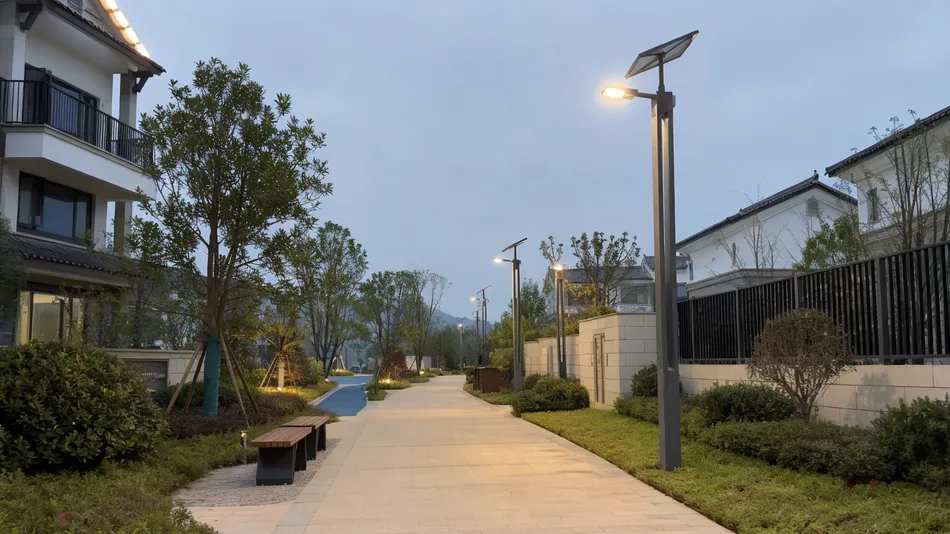
Residential developers and resort operators source smart solar lighting for internal roads, pathways, and amenity areas. The buying pattern here is typically project-based — a developer sources 200–500 units for a single project, then returns for the next development.
Warm color temperature, low-glare optics, and quiet pole design are the differentiating specs in this segment. Standard solar street lights are often over-specified for these applications; the smart solar lighting system's dimming capability and motion-sensor mode reduce energy consumption and extend battery life in low-traffic areas.
Explore related lighting categories
OEM/ODM Configuration for Distributors, Contractors, and Private-Label Programs
Smart solar lighting is a system product — which means OEM/ODM customization goes deeper than changing a logo or a color. The variables below are what we actually adjust for buyers building their own product lines or project-specific configurations.
Performance Configuration
Output, color temperature, and battery sizing
- Lumen output adjusted by changing LED configuration and driver current — we hit a specific lux level for a project spec rather than shipping a standard output and hoping it meets the requirement.
- Color temperature covers 2700K through 6500K. Warm-white options (2700K–3000K) are common for hospitality and residential segments; 5000K–6000K is standard for road and industrial applications.
- Battery capacity is sized to your required autonomy nights based on your target latitude and seasonal irradiance data — we run the calculation, not just accept a number from a spec sheet.
Control and Communication Customization
Firmware, protocol, and platform integration
- Controller firmware can be programmed to your specified dimming schedule and locked to prevent field modification — useful for buyers who want consistent system behavior across a large installation.
- Communication protocol selected based on your target market's network infrastructure: 4G for most markets, NB-IoT for dense urban deployments, Zigbee or LoRa for campus mesh networks.
- If your buyer has an existing monitoring platform, we can configure the communication module to report to it rather than requiring a new dashboard.
Structural and Mechanical Customization
Pole, housing, bracket, and camera geometry
- Pole height, arm length, mounting bracket configuration, and housing color are adjustable for OEM orders.
- For smart solar poles, the pole cross-section, battery compartment size, and panel mounting angle can be modified to match a project's structural or aesthetic requirements.
- Camera mounting position and angle are configurable on camera-equipped systems.
Private-Label and Documentation Support
Branding, compliance docs, and import paperwork
- Logo placement on the fixture, pole, and packaging is standard for OEM programs. Carton labeling, user manuals, and compliance documentation can be produced under your brand.
- For buyers supplying markets with specific import documentation requirements, we prepare CE declarations, RoHS certificates, IP test reports, and IEC 62124 test data under your product specifications.
MOQ and Engineering Review
Engineering review is included: send us your project requirements or your current supplier's spec sheet and we'll come back with a configuration recommendation.
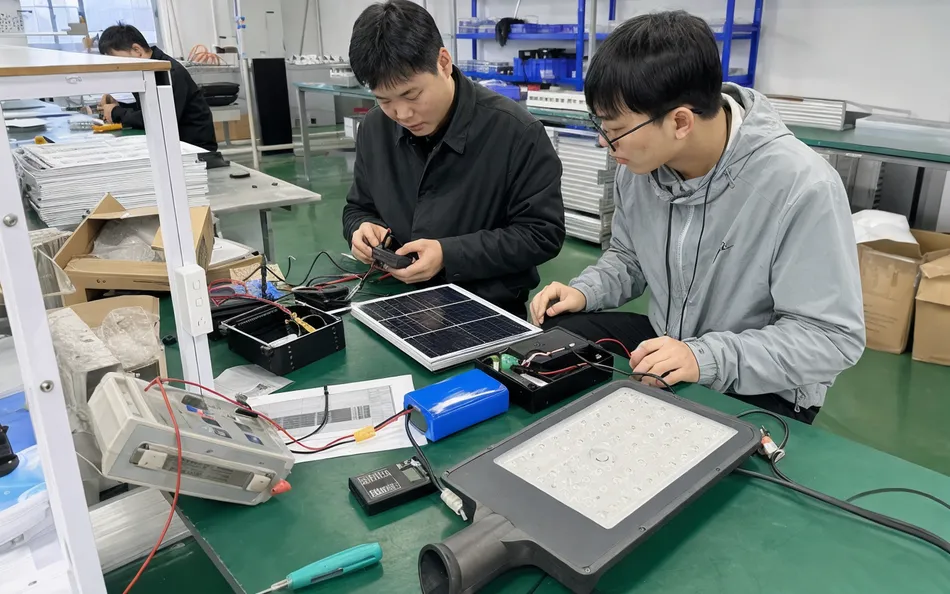
Why System-Level OEM Matters
Most solar lighting OEM programs stop at cosmetic changes. Because smart solar lighting integrates the panel, battery, controller, communication module, and fixture into a single engineered system, a change to one component affects the others. We adjust the full system — not just the label.
That means your private-label product ships with a configuration that actually meets the performance spec, not a standard unit with your logo on it that may or may not perform in your target market's climate.
Export Readiness, Documentation, and Batch Traceability
Smart solar lighting systems ship as multi-component packages: fixture or pole assembly, solar panel, battery pack, controller, mounting hardware, and — for camera systems — the camera module and communication hardware. Each component needs its own protective packing, and the full system needs to arrive with the documentation your import process requires.
Certification and Compliance Documentation
Standard with every shipment
Export Packing for System Components
Component-by-component protection for multi-part shipments
Batch Traceability
Every carton carries a batch code that links to the production run, incoming material records, and QC inspection data.
If a warranty issue surfaces in the field, you can isolate the affected production batch without pulling your entire inventory.
For OEM buyers with private-label programs, batch codes are integrated into your labeling format.
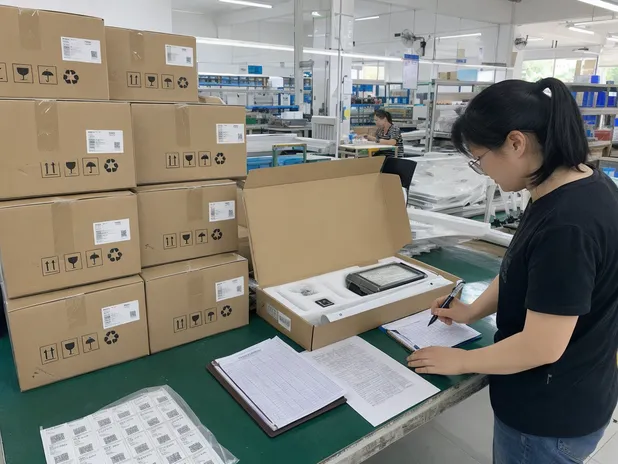
Why Batch Codes Matter for Warranty
A field failure in one installation doesn't mean your entire inventory is affected. Batch traceability lets you respond to a warranty claim with precision — identifying whether the issue is isolated to a single production run or requires a broader review — without disrupting stock you've already sold or deployed.
Shipping, Delivery, and Warranty
Review our full shipping and delivery process, or see how our 3-year warranty support policy works in practice.
Request a Smart Solar Lighting System Quote With the Right Inputs
A useful quote for smart solar lighting requires more than a product name and quantity. The configuration — battery capacity, solar panel wattage, controller firmware, communication module, camera spec — depends on your project parameters. Send us the following and we'll come back with a specific configuration recommendation and a detailed quote.
Site & Installation Parameters
-
Project country and installation latitude
For solar irradiance and autonomy sizing
-
Installation type
Road, pathway, parking, campus, perimeter, remote site
-
Pole height and arm configuration
Or pole-integrated if specifying smart solar poles
-
Target lux level or road width
For LED power and optic selection
-
Lighting schedule
Operating hours, dimming profile, motion-sensor requirement
-
Autonomy nights required
Consecutive cloudy days the system must sustain
Technical & Commercial Requirements
-
Communication requirement
Standalone, 4G IoT, NB-IoT, Zigbee, LoRa
-
Camera requirement
Yes/no, resolution, night vision, communication protocol
-
Order quantity
For standard or OEM/ODM pricing
-
Certification market
CE for Europe, or other market-specific requirements
-
Branding requirement
Standard JXSOL, private-label, or OEM
Send us these parameters and we'll return a specific configuration recommendation alongside a detailed quote — battery sizing, panel wattage, controller firmware, communication module, and camera spec matched to your project conditions.
Smart Solar Lighting Systems FAQ
Technical and procurement questions answered directly — sizing logic, battery chemistry, winter performance, and what information we need to configure a system for your project.
What information do you need to size a smart solar lighting system for a project?
What information do you need to size a smart solar lighting system for a project?
The minimum inputs are: installation latitude (or country and city), LED power requirement or target lux level, operating hours per night, required autonomy nights, and whether the system includes a camera. From these we calculate the battery capacity, solar panel wattage, and confirm the controller configuration.
Minimum inputs required for system sizing
If you have a project spec sheet or a competitor's product you're trying to match, send it — that's a normal starting point and usually faster than building the spec from scratch.
How do you choose battery capacity for IoT solar lighting?
How do you choose battery capacity for IoT solar lighting?
Battery capacity is calculated from three variables: LED power draw (plus camera draw if applicable), operating hours per night, and required autonomy nights.
Worked example
IoT module draw
Communication modules add 2–5W of continuous draw. Small individually, but compounds over a long operating schedule.
Per-project calculation
We run this calculation for every project configuration rather than applying a standard battery size across all orders.
What causes solar street lights with cameras to lose runtime in winter?
What causes solar street lights with cameras to lose runtime in winter?
Two causes, usually in combination.
Panel sized to annual average irradiance
The solar panel was sized to average annual irradiance rather than winter solstice irradiance. The panel can't fully recharge the battery on short winter days, and the battery state of charge drops progressively over consecutive days.
Camera draw excluded from battery sizing
The camera's power draw wasn't included in the battery sizing calculation, so the system is running a larger load than the battery was designed for.
How JXSOL sizes for year-round performance
We size both the panel and battery to the combined LED + camera load at winter irradiance for the installation latitude. Systems sized this way maintain runtime year-round.
For camera-equipped systems, see the full product page: Solar Street Light With Camera
What IP rating should smart solar poles use for outdoor projects?
What IP rating should smart solar poles use for outdoor projects?
IP65 is the minimum for any outdoor solar lighting application — it protects against dust ingress and water jets from any direction. For smart solar poles with battery compartments at ground level or in coastal environments with salt spray, IP67 is the better specification: it adds protection against temporary immersion up to 1 meter.
Solar street lights with camera should always use IP67-rated camera modules, as they're exposed to direct weather and the lens seal is a common failure point. We test every IP65/IP67 housing with positive air pressure after final assembly — not just a visual inspection.
- Full dust ingress protection
- Water jets from any direction
- Suitable for standard outdoor installations
- Temporary immersion up to 1 meter
- Ground-level battery compartments
- Coastal / salt spray environments
- Camera modules on solar street lights
Testing protocol: Every IP65/IP67 housing is verified with positive air pressure after final assembly — not just a visual inspection. This catches seal failures that visual checks miss.
Can a solar lighting control system be customized for different dimming schedules?
Can a solar lighting control system be customized for different dimming schedules?
Yes. The solar lighting control system firmware is programmed before shipment to your specified schedule. Available modes include time-based dimming, motion-triggered override, dawn/dusk detection, or a combination of these.
Fixed schedule dimming by hour of night
Triggered boost when movement is detected
Automatic on/off based on ambient light
Any combination of the above modes
For OEM buyers, the firmware can be locked to prevent field modification. This is useful when you need consistent system behavior across a large installation or want to protect your product configuration from being altered by end users.
If your buyer has an existing monitoring platform, we can configure the communication module to report to it. This avoids forcing a platform migration on your end customer.
Schedule updates via firmware push through the communication module — no site visit required.
Schedule changes require a physical controller replacement. Factor this into your project planning if schedules may need adjustment post-installation.
What is the MOQ for standard and OEM/ODM smart solar lighting orders?
What is the MOQ for standard and OEM/ODM smart solar lighting orders?
Standard catalog models: 100 units minimum. This is low enough to test a new SKU with your customers before committing to a larger program.
OEM/ODM orders with custom specifications — modified lumen output, custom firmware, private-label packaging, non-standard pole design — typically start at 500 units, depending on the scope of component or tooling changes. For camera-equipped systems with custom communication configuration, the OEM MOQ is also 500 units.
100 units minimum. Suitable for market testing a new SKU before scaling to a larger program.
500 units minimum. Covers custom lumen output, firmware, private-label packaging, non-standard pole design, and camera-equipped systems with custom communication configuration.
Engineering review and sample production are included in the OEM process; we don't charge separately for configuration work on orders that proceed to production.
Which certifications matter when importing smart solar lighting systems?
Which certifications matter when importing smart solar lighting systems?
Certification requirements vary by destination market. The table below covers the primary requirements for each major import region.
- CE marking (LVD and EMC directives)
- RoHS compliance
- IP65/IP67 test reports
- IEC 62124 test data (increasingly required in municipal tenders for solar performance verification)
- CE not required
- RoHS compliance (standard procurement requirement)
- IP ratings (standard procurement requirement)
- SASO certification required for Saudi Arabia
- Other GCC markets typically accept CE documentation
- SAA/RCM marking required
Standard CE, RoHS, IP, and IEC 62124 documentation is provided with every shipment. Market-specific certifications are available on request — see our full certifications page for current documentation. For OEM buyers, compliance documentation can be prepared under your product specifications.
Ready to Proceed
Explore OEM and ODM Solar Lighting Support
Custom specifications, private-label packaging, and compliance documentation — all handled in-factory from 500 units.
Product Line
Smart Solar Lighting System Categories
Smart Solar Lighting System
Integrated IoT-enabled solar lighting with remote monitoring, adaptive control, and configurable runtime profiles.
View productSmart Solar Poles
Multi-function smart poles combining solar lighting with optional EV charging, Wi-Fi, environmental sensors, and display integration.
View productSolar Lighting Control System
Centralized management platform for scheduling, dimming, fault detection, and energy reporting across distributed solar lighting networks.
View productSolar Street Light With Camera
Solar street lights with integrated surveillance camera, independent power supply, and configurable communication for security and traffic applications.
View product