

Solar Bollard Lights Direct From Factory
Freestanding solar bollard lights built for commercial pathways, parks, and landscape projects — no trenching, no grid connection.
IP65/IP67 weatherproof construction, CE and RoHS certified, 100% pre-shipment inspection. Standard models from 100 units; OEM/ODM configurations available with engineering review.
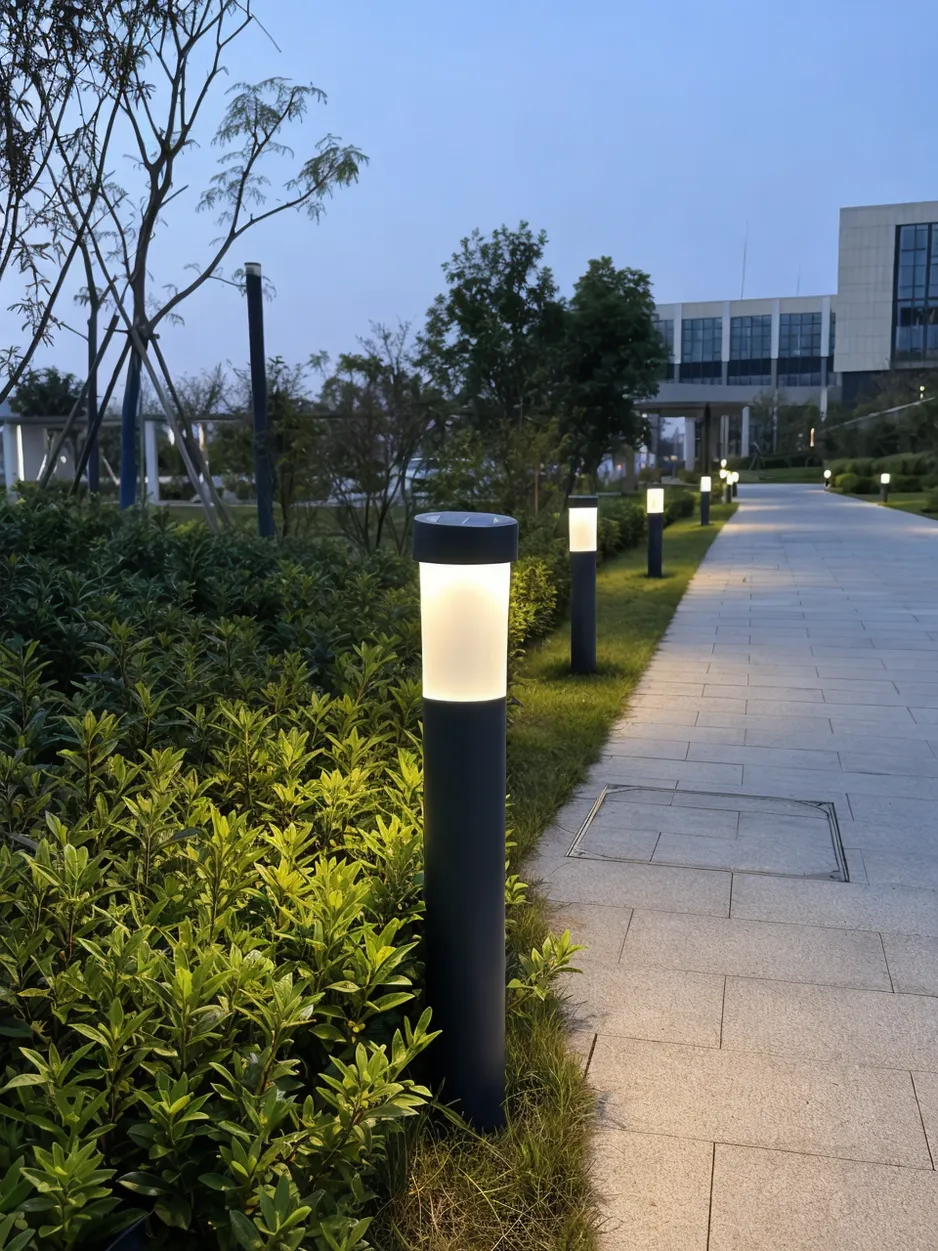
Solar Bollard Lights for Commercial Pathway Projects
Solar bollard lights are freestanding, low-level outdoor fixtures that mark pedestrian routes, define landscape edges, and guide movement through parks, resort paths, campus walkways, and residential community entrances — without connecting to the grid. That last point is the commercial argument: no trenching, no conduit, no licensed electrician for every installation point. For a contractor pricing a 200-unit pathway project, the civil work savings alone can shift the bid.
We manufacture solar bollard lighting at our 12,000 m² factory in Guzhen Town, Zhongshan — the same facility that produces our full range of outdoor solar lighting. Every bollard that leaves our line has gone through battery matching, LED module lumen confirmation, and IP waterproof inspection. We're not a trading company assembling orders from multiple suppliers; the production, engineering, and QC are all in the same building.
If you're evaluating solar bollard lights for a project quote, a distribution catalog, or a private-label program, send us your target quantity, height range, lumen requirement, and market — we'll come back with a configuration and pricing. Get a quote for solar bollard lights or browse the full solar pathway and bollard lighting series.
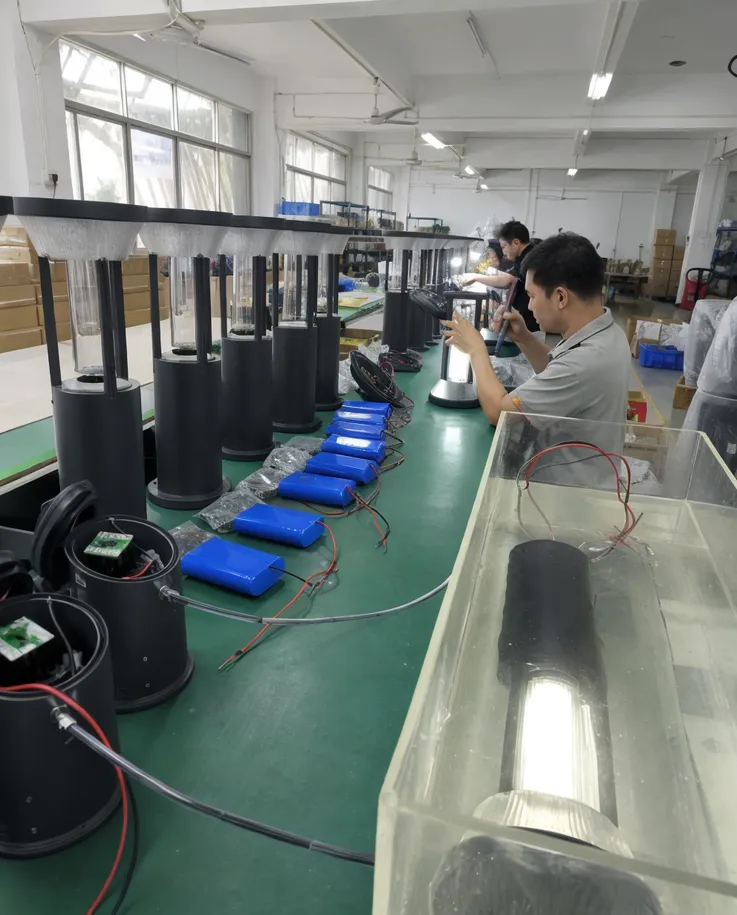
Factory QC Checkpoints
- Battery matching per unit
- LED module lumen confirmation
- IP waterproof inspection
- 100% pre-shipment inspection
No Grid Connection
No trenching, no conduit, no licensed electrician for every installation point.
Single-Source Factory
Production, engineering, and QC all in the same 12,000 m² building — not a trading company.
Civil Work Savings
For a 200-unit pathway project, eliminating trenching alone can shift the contractor's bid.
OEM/ODM Ready
Standard models from 100 units; custom configurations available with engineering review.
Where Bollards Fit Better Than Pathway, Post Top, or Driveway Lights
Solar bollard lights occupy a specific position in the pathway lighting category. Before committing to a SKU, it helps to know where bollards are the right call and where a sibling product serves the project better.
| Product | Best Fit | Commercial Profile |
|---|---|---|
| Solar bollard lights | Commercial pathways, park boundaries, resort entrances, campus walkways | Architectural presence, freestanding, project-grade housing — higher unit value, stronger margin potential |
| Solar pathway lights | Residential gardens, light-duty decorative paths | Lower cost per unit, high volume for garden retail and e-commerce channels |
| Solar walkway lights | Pedestrian route lighting with less architectural mass | Practical, mid-range SKU for walkway packages |
| Solar post top lights | Decorative pole-top projects, entrance columns | Higher mounting point, suited for feature lighting rather than path guidance |
| Solar driveway lights | Vehicle-edge marking, driveway boundary definition | Low-profile, vehicle-rated, different buyer segment |
| Solar fence lights | Fence-mounted boundary lighting | Surface-mounted, not freestanding — different installation method |
| Solar deck lights | Deck steps, recessed or surface deck lighting | Structure-mounted, not for open landscape layouts |
Solar Bollard Lights
Best fit: Commercial pathways, park boundaries, resort entrances, campus walkways
Commercial profile: Architectural presence, freestanding, project-grade housing — higher unit value, stronger margin potential
Solar Pathway Lights
Best fit: Residential gardens, light-duty decorative paths
Commercial profile: Lower cost per unit, high volume for garden retail and e-commerce channels
Solar Walkway Lights
Best fit: Pedestrian route lighting with less architectural mass
Commercial profile: Practical, mid-range SKU for walkway packages
Solar Post Top Lights
Best fit: Decorative pole-top projects, entrance columns
Commercial profile: Higher mounting point, suited for feature lighting rather than path guidance
Solar Driveway Lights
Best fit: Vehicle-edge marking, driveway boundary definition
Commercial profile: Low-profile, vehicle-rated, different buyer segment
Solar Fence Lights
Best fit: Fence-mounted boundary lighting
Commercial profile: Surface-mounted,not freestanding — different installation method
Solar Deck Lights
Best fit: Deck steps, recessed or surface deck lighting
Commercial profile: Structure-mounted, not for open landscape layouts
When a project mixes fixture types, we can quote a combined package across categories — ask your account manager for a bundled pathway lighting proposal.
Technical Specifications That Matter for Commercial Procurement
Distributors and project specifiers need numbers they can put into submittals. Below are the specification ranges across our solar bollard light catalog — individual product pages carry full datasheets.
Solar Panel
Monocrystalline, 2W–8W depending on model. Integrated top-mount or angled configurations for higher latitude performance.
Battery
LiFePO4 (lithium iron phosphate), 3.2V, 6Ah–20Ah. 2,000+ cycle life. Operating range: −20°C to 60°C.
LED Output
50–400 lumens. Bridgelux or Cree LEDs. CCT options: 3000K (warm), 4000K (neutral), 5000K (cool white).
Runtime
8–14 hours on full charge. Adaptive dimming profiles extend runtime to 3+ nights of autonomy in some models.
Ingress Protection
IP65 standard across the range. IP66 available on select heavy-duty models for coastal or high-exposure sites.
Height & Materials
600mm–1200mm above grade. Die-cast aluminum or 304 stainless steel housing. Powder-coated finish in black, graphite, or bronze.
Certifications & Compliance
Application Scenarios: Where Solar Bollard Lights Deliver ROI
Solar bollard lights perform across a range of commercial environments. Each scenario below represents a proven deployment pattern with measurable returns for the end client.

Hospitality & Resorts
Guest pathway lighting for hotels, resorts, and wellness retreats. Warm CCT options create ambiance while meeting safety requirements for nighttime navigation.
- No trenching disruption to landscaped grounds
- Zero energy cost per fixture
- Architectural finish options match property design language

Municipal Parks & Public Spaces
Pathway and boundary lighting for parks, plazas, and civic spaces. Vandal-resistant housings and IK08-rated models handle public-access environments.
- Reduces municipal energy budgets
- Fast deployment for grant-funded projects
- Dark Sky compliant optics available

University & Corporate Campuses
Pedestrian route lighting between buildings, parking areas, and common spaces. Supports campus sustainability targets and safety compliance.
- Contributes to LEED and green building credits
- Relocatable if campus layout changes
- Consistent light levels across long pathways

Residential Developments
Shared pathway and common-area lighting for housing estates, townhouse complexes, and gated communities. Reduces HOA energy costs from day one.
- No ongoing electricity cost for common areas
- Faster site handover — no electrical inspections needed
- Uniform aesthetic across the development

Retail & Commercial Plazas
Pedestrian guidance and ambient lighting for shopping centers, outlet malls, and mixed-use developments. Enhances after-hours safety and curb appeal.
- Operates during power outages — always on
- No trenching through existing hardscape
- Supports tenant safety and insurance requirements

Industrial & Logistics Sites
Pedestrian route marking in warehousing districts, logistics parks, and manufacturing campuses. Separates foot traffic from vehicle zones.
- IP65/IP66 handles industrial environments
- IK08 impact resistance for high-traffic zones
- Supports OSHA pedestrian safety requirements
How Solar Bollard Lights Work: From Sunlight to Pathway Illumination
Understanding the operating cycle helps specifiers set realistic expectations for autonomy, placement, and maintenance intervals.
Solar Harvest
Monocrystalline panel converts sunlight to DC current throughout daylight hours, even under overcast conditions at reduced efficiency.
Charge Control
MPPT or PWM controller regulates charging current, prevents overcharge, and manages battery health for maximum cycle life.
Energy Storage
LiFePO4 battery stores energy with minimal degradation. Sized for 2–3 nights of autonomy to cover consecutive cloudy days.
Dusk-to-Dawn Output
Light sensor triggers LED activation at dusk. Adaptive dimming profiles reduce output during low-traffic hours to extend runtime.
Intelligent Control Features
Dusk/Dawn Sensor
Automatic on/off based on ambient light levels. No timers to adjust seasonally.
Motion Detection (Select Models)
PIR sensor boosts output to 100% on movement, returns to dim mode after timeout.
Adaptive Dimming
Multi-stage profiles: 100% at dusk, 60% mid-night, 30% pre-dawn. Maximizes autonomy.
Temperature Compensation
Charge parameters adjust for ambient temperature, protecting battery in extreme climates.
IoT Connectivity (Optional)
Bluetooth or LoRa modules for remote monitoring, fault alerts, and fleet management.
Low-Voltage Protection
Auto-shutoff prevents deep discharge, extending battery lifespan beyond rated cycles.
Specification Range Buyers Can Put Into a Comparison Sheet
The table below reflects typical industry values for commercial solar bollard lights. Exact specifications vary by model and configuration — contact us for model-specific data sheets.
| Parameter | Typical Range / Value |
|---|---|
| Overall Height | 300 mm – 1,000 mm (model dependent) |
| Housing Material | Die-cast aluminum, aluminum profile, or powder-coated steel |
| Finish | Powder coat (standard: black, dark grey, silver, bronze); custom RAL colors available |
| LED Power | 2 W – 10 W (pedestrian guidance output, not street-light level) |
| Lumen Output | 100 lm – 800 lm (typical for pathway and boundary marking) |
| Color Temperature (CCT) | 2700 K (warm white), 4000 K (neutral white), 6000 K (cool white) |
| Solar Panel | Monocrystalline silicon, 2 W – 8 W (integrated or top-mounted) |
| Battery Type | Lithium-ion or LiFePO4 (model dependent) |
| Battery Capacity | 1,500 mAh – 6,000 mAh (varies by autonomy target) |
| Charging Time | 6–8 hours under standard solar irradiance |
| Working Time | 8–12 hours at full output; 12–16 hours with dimming or time-control mode |
| IP Rating | IP65 (standard) / IP67 (available on selected models) |
| Control Mode | Dusk-to-dawn; time control; optional PIR motion/dimming |
| Mounting | Base plate with anchor bolts; embedded base option available |
| Operating Temperature | -20°C to +60°C |
| Warranty | 3 years |
Specifications shown are typical values for this product type. Actual specifications depend on model selection and order configuration.
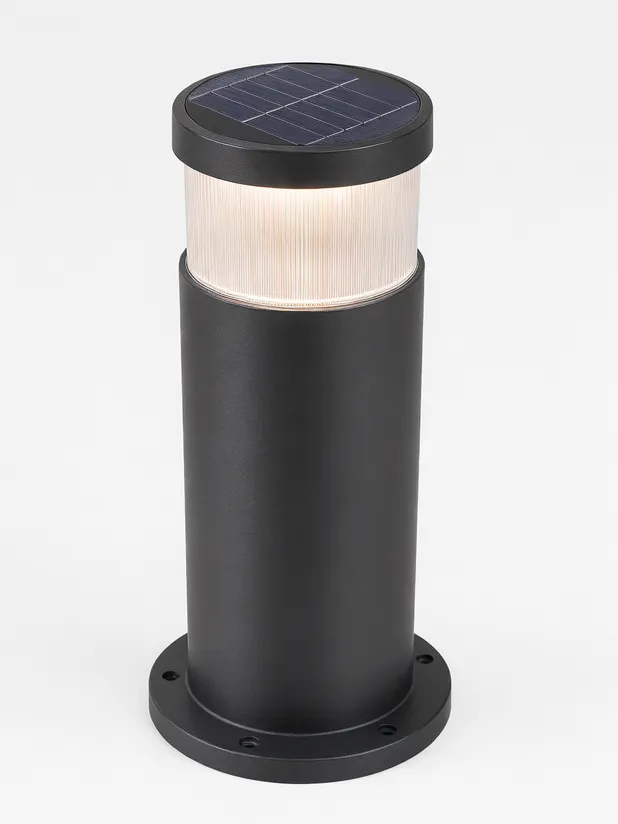
Need exact model data?
Request a bollard light specification sheet for your comparison.
Request Spec SheetOutput Tier Context
Solar bollard lighting sits in a different output tier than street lights or flood lights — the goal is pedestrian guidance and boundary definition, not wide-area illumination. Buyers who need 1,000+ lm output for a pathway should look at our solar walkway lights or post top lights instead; bollards at that output level typically require a larger solar panel and battery that changes the housing proportions significantly.
(We've had buyers spec bollards at street-light lumen levels and then wonder why the housing looks oversized for the path — it's a common mismatch worth catching early.)
Battery Chemistry Selection
For battery chemistry, LiFePO4 offers better cycle life and thermal stability in high-temperature climates — relevant for Middle East, Southeast Asia, and African markets where ambient temperatures regularly exceed 40°C. Lithium-ion is lighter and lower cost for temperate markets. We can configure either depending on your target region.
Layout and Installation Details That Change Project Cost
The installation economics of solar bollard lighting are the main reason contractors and developers choose them over grid-connected alternatives. No trenching, no conduit runs, no grid connection permits, no cable theft exposure in public spaces.
Civil Work Cost Reduction
On a 100-unit pathway project, eliminating trenching, conduit, and grid connection can represent a meaningful reduction in civil work cost — and it makes retrofit projects viable where running new cable would be prohibitive.
Spacing and Coverage
Typical spacing for pedestrian guidance is 3–6 meters between bollards, depending on lumen output, beam pattern, and whether the goal is uniform illumination or boundary marking.
- Wider spacing works for boundary definition
- Tighter spacing needed for consistent illumination on dark paths
- Photometric data available for specific models to support layout planning
Foundation and Base Options
Most commercial installations use a base plate with anchor bolts set into a concrete footing — straightforward for paved paths and plazas.
- Embedded ground spike base available for softer ground or temporary installations
- Tamper-resistant fasteners for public projects where vandalism is a concern
- Reinforced base plates available as a configuration option
Solar Exposure Common Mistake
This is the most common installation mistake we see in project feedback. Bollards need unobstructed solar exposure for 4–6 hours daily to maintain rated working time.
Placement under tree canopies, close to walls, or in the shadow of signage will reduce charging efficiency and shorten nightly run time.
For shaded sites: Specify a higher battery capacity to buffer for lower daily charge input — or reconsider the fixture type entirely. (We'd rather tell you this upfront than have you deal with field complaints six months after installation.)
Anti-theft and Public-Space Hardening
For municipal tenders and public park projects, specify tamper-resistant fasteners and a reinforced base plate. These are available as a configuration option and should be included in the project spec from the start.
Note: Retrofitting tamper-resistant hardware after installation is more expensive than specifying it upfront. Include it in the initial project spec.
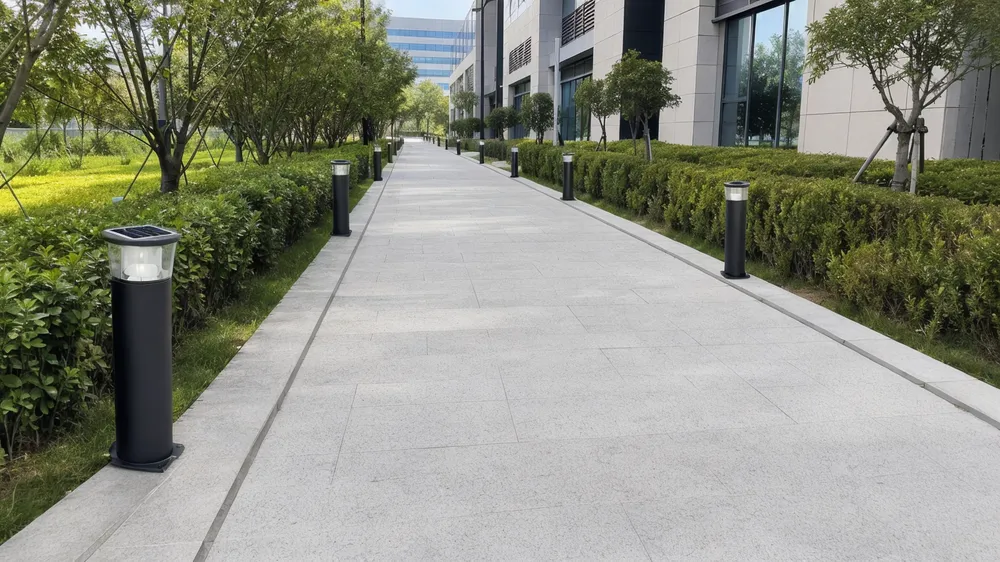
Layout Planning Resources
For detailed spacing and layout planning, our pathway lighting layout guide covers calculation methods and common configuration patterns for commercial projects.
Market Segments Where Solar Bollard Lighting Sells Repeatedly
Solar bollard lights are not a single-project SKU. The segments below generate repeat orders — either because projects run in phases, or because the buyer serves a market that installs this product type regularly.
Municipal Pathways & Parks
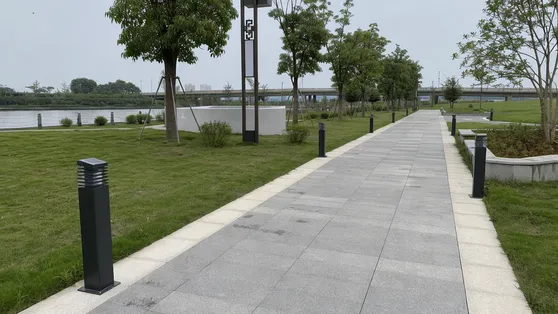
Public-space tenders for parks, riverside walkways, and pedestrian plazas are a consistent volume segment. Municipal buyers need IP-rated housings, anti-theft mounting, CE documentation for project submittals, and neutral finishes that match existing infrastructure.
Typical order size
200–2,000 units per tender
Follow-on orders as parks expand or fixtures are replaced. Documentation requirements — CE Declaration of Conformity, IP test certificates, RoHS compliance records — are standard in our export package.
Resorts & Hospitality
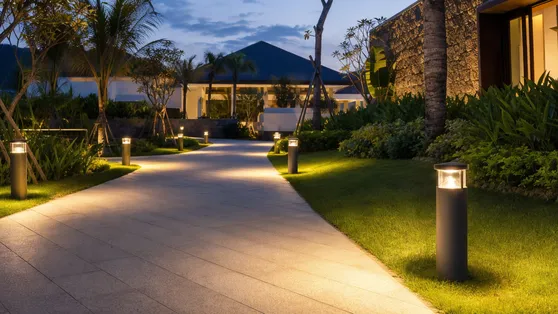
Resort developers and hotel landscape contractors specify solar bollard lighting for entrance paths, pool surrounds, garden walkways, and villa access routes. Warm CCT (2700–3000 K) is the standard spec for this segment, and architectural finish quality matters — powder coat consistency, clean lens edges, and housing proportions that read as premium.
Typical order size
300–800 units per property
Margin potential is higher here than in municipal tenders because the buyer is selling on aesthetics and brand experience, not just lowest compliant bid. Repeat orders as properties expand or rebrand.
Residential Developments
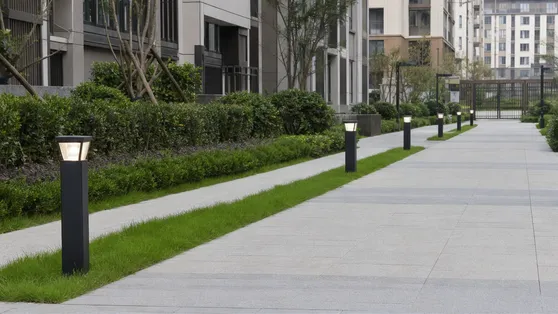
Developers building gated communities, apartment complexes, and townhouse estates need pathway lighting for community walkways, entry routes, and perimeter paths. These projects often run in phases — Phase 1 might be 150 units, Phase 2 another 200 — which makes reorder reliability as important as the initial price.
Key advantage
No utility coordination needed
Solar installation removes the need to coordinate with utility companies for grid connections in new developments, which simplifies the project timeline.
Campuses & Business Parks
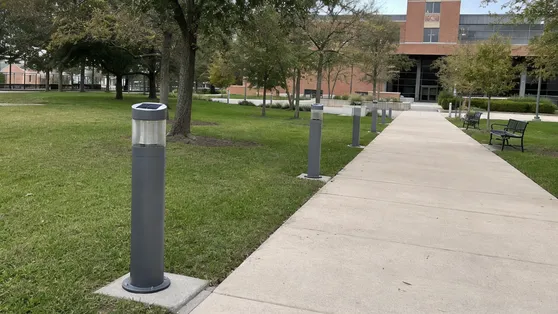
Universities, corporate campuses, and industrial parks retrofit solar bollard lighting on existing pathways where running new cable is disruptive or expensive. The no-trench installation is the primary selling point for facilities managers.
Typical order size
100–500 units
Follow-on orders as the campus expands the program to additional paths.
Landscape Contractors

Contractors who bundle lighting with planting, paving, and pathway upgrades can add solar bollard lighting as a margin-positive line item. The low MOQ (100 units for standard models) means a contractor can stock a small quantity for project use without committing to a large inventory position.
OEM option
White-label packaging available
OEM packaging options let contractors present the product under their own brand.
Commercial Entrances & Courtyards
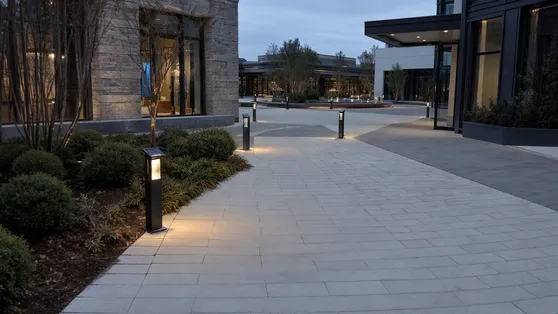
Retail centers, office buildings, and mixed-use developments use solar bollard lighting to define entrance paths and courtyard boundaries without large poles. The architectural housing profile and powder-coat finish options make bollards a better fit than stake lights for these environments.
Design advantage
Architectural profile, no pole clutter
Custom Configurations Without Turning the Order Into a Tooling Project
Most buyers don't need a completely new product — they need a standard bollard with specific adjustments. Here's what we can configure without engineering review, and what requires one.
Standard Customization
Available from 100 units on most options
Height
Within the model's available range (typically 300–1,000 mm depending on housing design)
Finish Color
Any RAL powder coat color; standard colors (black, dark grey, silver, bronze) ship faster
CCT
2700 K, 4000 K, or 6000 K — selected at order placement
Lumen Output
Adjustable within the LED module's design range without changing the housing
Battery Capacity
Higher-capacity battery for extended autonomy in low-irradiance regions or shaded sites
Solar Panel Wattage
Matched to battery capacity and target charging time
Lighting Mode
Dusk-to-dawn, time control, or PIR motion/dimming — configured at the controller level
Logo & Labeling
Custom logo on housing or base plate; custom carton label and instruction sheet
Packaging
White-label carton, custom insert, market-specific accessory pack
Requires Engineering Review
Typically adds 1–2 weeks to project timeline
New housing shape or profile outside existing tooling
New optical lens design or custom beam pattern
Battery autonomy targets significantly outside the standard model range
Modified mounting base for unusual installation conditions
Integration of additional sensors or control modules not in the standard configuration
Do the review before production, not after
We've seen buyers skip it to save time and then spend three times as long resolving spec mismatches during production runs. The review locks the configuration before component procurement and tooling, which protects both sides.
Building a Good / Better / Best SKU Tier
For buyers building a good/better/best SKU tier — for example, a standard model for volume distribution and a premium finish model for resort and hospitality accounts — we can configure two or three variants from the same base housing with different specs and packaging.
This is a common approach for distributors who want to serve multiple price points without managing multiple supplier relationships.
Battery, LED, and Waterproof Checks Before Shipment
Solar bollard lights fail in the field for three predictable reasons: battery degradation after the first rainy season, lumen drop between batches, and waterproof failure at the housing seams. We've been making solar-powered outdoor lighting since 2012, and those three failure modes are built into how we run production.
Battery Matching & Charge/Discharge Testing
Battery cells are matched by capacity and internal resistance before pack assembly. Mismatched cells in a pack degrade faster and unevenly — the weakest cell limits the whole pack's effective capacity.
After assembly, every battery pack goes through a charge/discharge cycle test on our aging racks before it's installed in a unit.
For bollard lights running in environments with variable solar input (seasonal changes, occasional shading), battery consistency is the difference between a product that performs to spec in year two and one that generates warranty claims.
LED Module Lumen Binning & CCT Confirmation
LED chips are binned by lumen output and color temperature before module assembly. We confirm lumen output and CCT at the module stage, not just at final assembly.
This means your batch of 500 bollards ships with consistent light output — not a mix of warm and cool units that look different side by side on the same path.
Lumen and CCT inconsistency is one of the most common complaints we hear from buyers who switched to us from other suppliers. It's a binning discipline issue, not a component quality issue.
IP65/IP67 Waterproof Inspection
Housing seals, lens gaskets, cable entry points, and base plate connections are inspected on our waterproof test equipment before units move to final packing.
IP65 covers rain and dust ingress; IP67 covers temporary immersion — relevant for bollards installed in areas with irrigation systems, flooding risk, or coastal spray.
We don't assume IP rating from housing design; we test it.
100% Pre-Shipment Inspection
Every unit, every carton, every accessory pack is checked before the container is sealed. This adds time to the production schedule, and we've had buyers push back on it as a cost driver.
It also means we catch a defective batch before it's on a ship, not after it's in your warehouse generating return claims. We've kept it as a non-negotiable since 2012.

Our in-house R&D team of 15+ optical and electrical engineers supports both standard product development and OEM/ODM configurations. For bollard light buyers who need a specific lumen output, battery autonomy, or sensor configuration, the engineering team handles the spec review before production.
Certifications and Export Documentation for Your Market
Solar bollard lighting sold into regulated markets needs documentation — for customs clearance, project submittals, tender qualification, and downstream liability protection.
| Certification | Scope | Buyer Value |
|---|---|---|
| ISO 9001:2015 | Quality management system | Confirms production process controls; required for many project tender qualifications |
| CE | EU electrical and safety directives | Required for import and sale in EU markets; covers electrical safety and EMC |
| RoHS | Restricted hazardous substances | Required for EU import; increasingly required in other markets; traces to component level |
| IP65 / IP67 | Ingress protection (dust and water) | Tested on our own equipment; IP65 for standard outdoor use, IP67 for higher-exposure environments |
| IEC 62124 | Photovoltaic standalone systems | Covers solar system performance and reliability; relevant for project specification compliance |
North America & Europe
CE Declaration of Conformity, RoHS test reports, and IP test certificates are available with order review.
Middle East & Africa
We can provide documentation packages suited to local tender requirements for project buyers in these regions.
Other National Standards
For buyers importing into markets with specific national standards, confirm requirements at inquiry — we'll advise on what documentation applies.
We don't claim every model automatically carries every certificate without confirmation. If your project requires a specific certification or test report, include it in your inquiry and we'll confirm coverage before order placement.
Export Packing, Labeling, and Reorder Control
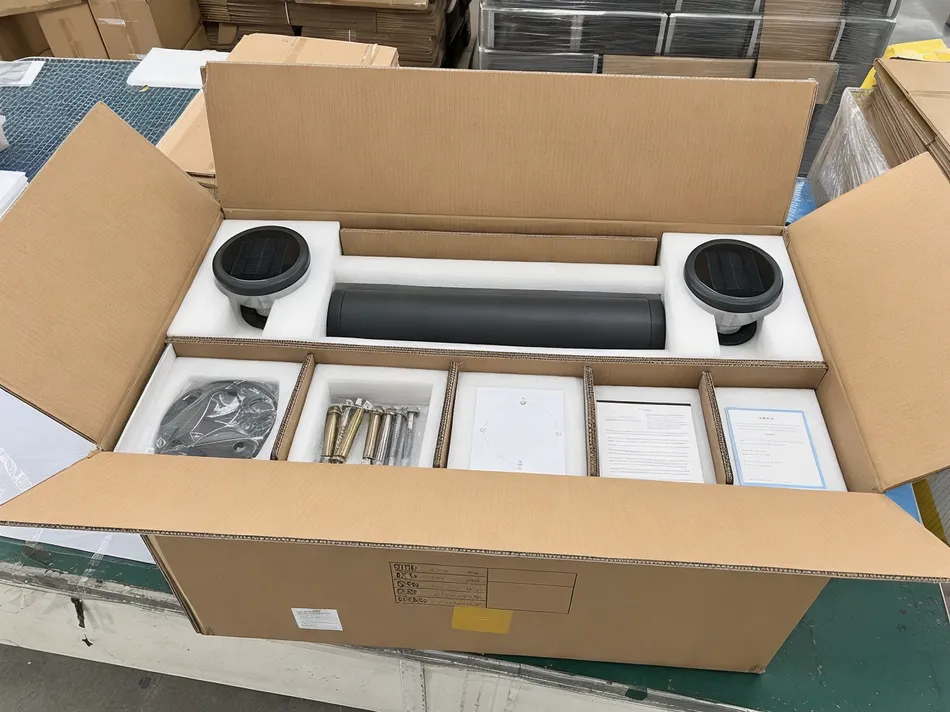
Bollard housings are painted, the lenses are polished, and the solar panels are glass — all three surfaces need protection in transit. Our export cartons use foam inserts and corrugated dividers sized for the specific bollard model, with the base plate, anchor hardware, and accessory pack in a separate sealed bag inside the carton. We've had containers arrive with surface scratches from inadequate packing on previous supplier runs — it's a margin problem, not just an aesthetic one, because damaged finish means returns or price concessions.
Standard Export Packing
- Individual carton per unit with foam protection for housing, lens, and solar panel
- Accessory pack: anchor bolts, base plate screws, installation template, instruction sheet, and warranty card
- Batch code and SKU label on each carton for traceability
- Master carton labeling with quantity, model, CCT, and destination market
Palletization
Available for project shipments where site delivery or warehouse handling requires palletized loads. Pallet configuration is planned for 20GP and 40HQ container efficiency — carton dimensions are sized to minimize wasted space.
White-Label Options
Custom carton printing, private-label instruction sheets, and market-specific accessory packs are available for distributors who present the product under their own brand. Minimum quantities for custom carton printing depend on print run economics — confirm at inquiry.
Reorder Control
Batch codes on every carton trace back to production records, so if a field issue surfaces on a specific batch, we can identify the production run and component lot. For distributors managing ongoing inventory, this simplifies warranty claim investigation and reorder specification matching.
FAQ for Solar Bollard Light Procurement
Practical answers to the specification, installation, and ordering questions that come up during project planning and procurement review.
What spacing should be used for solar bollard lights on a commercial pathway?
For pedestrian guidance on a standard 2–3 meter wide path, 3–5 meter spacing between bollards is typical. For boundary marking where uniform illumination is less critical, spacing can extend to 6–8 meters.
The right spacing depends on the bollard's lumen output, beam angle, and whether the goal is consistent illumination or visual route definition.
For projects where photometric compliance matters (municipal tenders, safety-rated walkways), request a photometric layout from us based on the specific model — we can provide IES files for lighting design software.
What IP rating is suitable for outdoor solar bollard lighting?
IP65 is the minimum for any outdoor installation — it covers rain, dust, and irrigation splash. For bollards installed in coastal environments, areas with regular flooding, or sites with aggressive irrigation systems, IP67 is the better spec.
IP67 covers temporary immersion up to 1 meter for 30 minutes, which provides meaningful margin against water ingress in high-exposure conditions. Both ratings are available in our bollard range; specify your installation environment at inquiry and we'll recommend the appropriate rating.
How many hours should solar bollard lights run after a full charge?
A fully charged bollard light should run 8–12 hours at full output under standard conditions. With time-control or dimming modes (common in commercial installations to reduce energy draw after peak hours), working time extends to 12–16 hours.
Battery autonomy — the number of consecutive cloudy days the light can run without solar recharge — depends on battery capacity and is configurable. For markets with extended low-irradiance seasons or shaded installation sites, we recommend specifying a higher battery capacity at order placement rather than discovering the limitation in the field.
Are solar bollard lights suitable for shaded walkways?
Partially shaded sites are manageable; heavily shaded sites are not. A bollard that receives 3–4 hours of direct solar exposure daily will charge to roughly 50–60% of rated capacity, which reduces nightly run time proportionally.
For sites with consistent partial shading, we can configure a higher battery capacity to buffer the reduced daily charge input.
For sites under dense tree canopy or in the shadow of tall structures for most of the day, solar bollard lighting is not the right product — the performance will disappoint regardless of battery size. We'd rather advise against the application than have the product fail in the field.
What mounting base is better for public projects — base plate or embedded base?
Base plate with anchor bolts is the standard for permanent public installations. It allows the bollard to be removed and replaced without disturbing the surrounding surface, which matters for maintenance access and vandalism repair.
Embedded base (ground spike or cast-in-place anchor) is faster to install on soft ground but harder to service. For municipal and park projects where long-term maintenance access is a consideration, base plate is the better choice.
Add tamper-resistant fasteners to the spec for public spaces — standard hex bolts are an invitation to theft in high-traffic areas.
What is the MOQ for standard JXSOL solar bollard lights?
Standard catalog models start at 100 units. This is low enough to test a new SKU with your customers or run a small project without committing to a large inventory position.
For OEM/ODM configurations with custom specifications — housing modifications, custom finish colors, private-label packaging — MOQ depends on the scope of customization. Most finish and configuration changes don't require new tooling and can be done from 100–200 units.
Housing shape changes that require new tooling carry a higher MOQ to amortize the tooling cost. Confirm your configuration requirements at inquiry and we'll advise on the applicable MOQ.
Request a Solar Bollard Light Quote From JXSOL
Send us the details below and we'll come back with a configuration recommendation, model options, and pricing.
Details to Include
-
Quantity Total units for the project or initial order
-
Target Market Country or region — affects certification requirements and battery/panel configuration
-
Height Preferred bollard height or height range
-
Finish Color preference or RAL code; standard or custom
Technical & Logistics
-
Lumen Output / CCT Target light output and color temperature
-
Autonomy Requirement How many consecutive cloudy days the light needs to run without recharge
-
Packaging Standard export carton, white-label, or custom branded
-
Certification Requirements CE, RoHS, IP test certificates, or other documentation needed for your market
Standard & OEM/ODM Programs
Standard models ship from 100 units. OEM/ODM programs with custom specifications include an engineering review before production to confirm the configuration and lock the spec. Most buyers in this category start with a sample order of 2–5 units to test with their own customers or on a pilot installation before committing to a full project run — we can arrange samples with confirmed lead time.