

Solar Pole Lights Direct From Factory
Pole-mounted solar lighting built for distributed outdoor sites — configured for your pole height, your market, and your reorder schedule.
JXSOL manufactures outdoor solar pole lighting for pathways, campus roads, compounds, municipal parks, and residential developments. Every unit ships with 100% pre-shipment inspection and full export documentation.
IP65/IP67
Waterproof
CE, RoHS
Certified
MOQ 100
Units
OEM/ODM
Supported
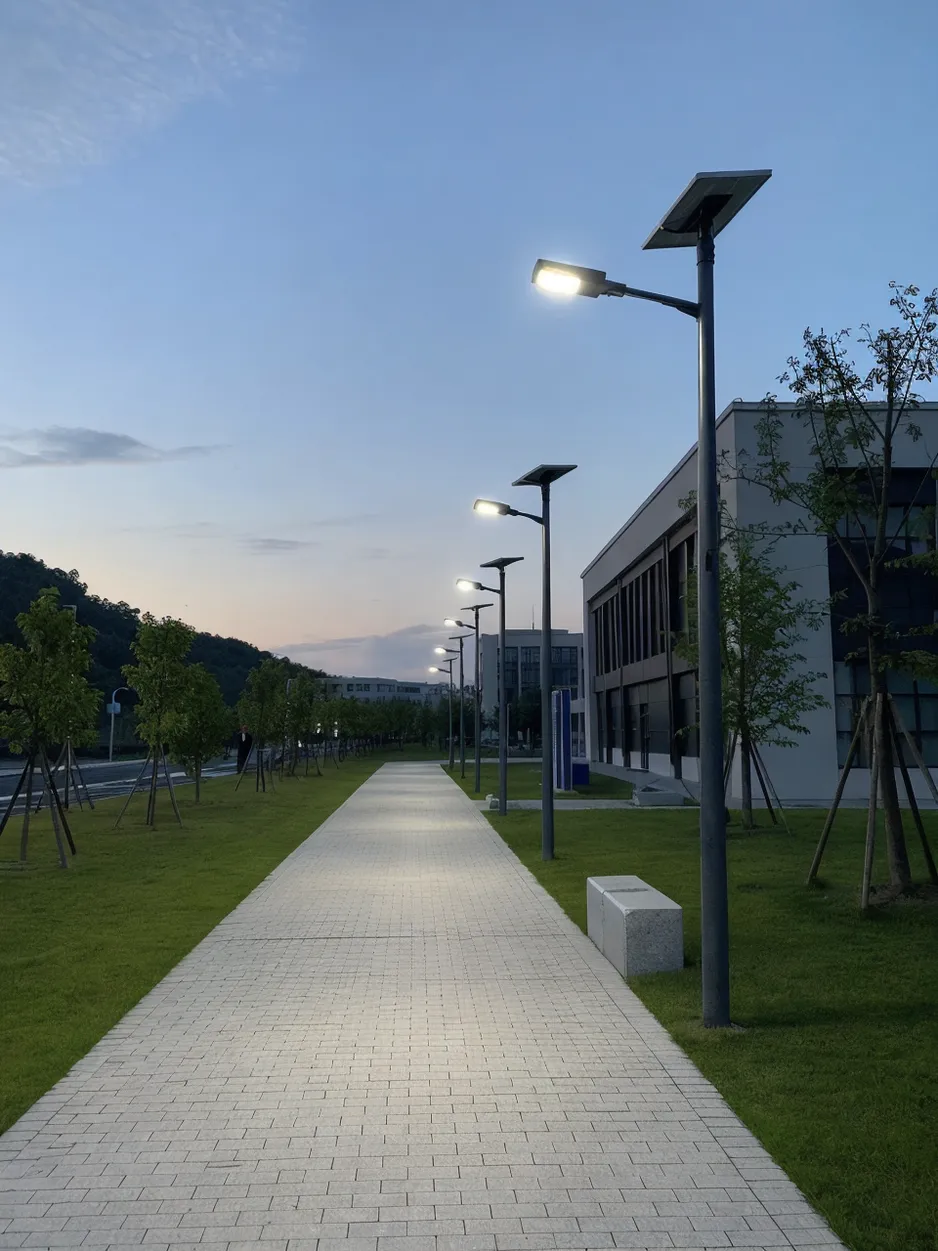
Pole-Mounted Solar Lighting for Distributed Project Sites
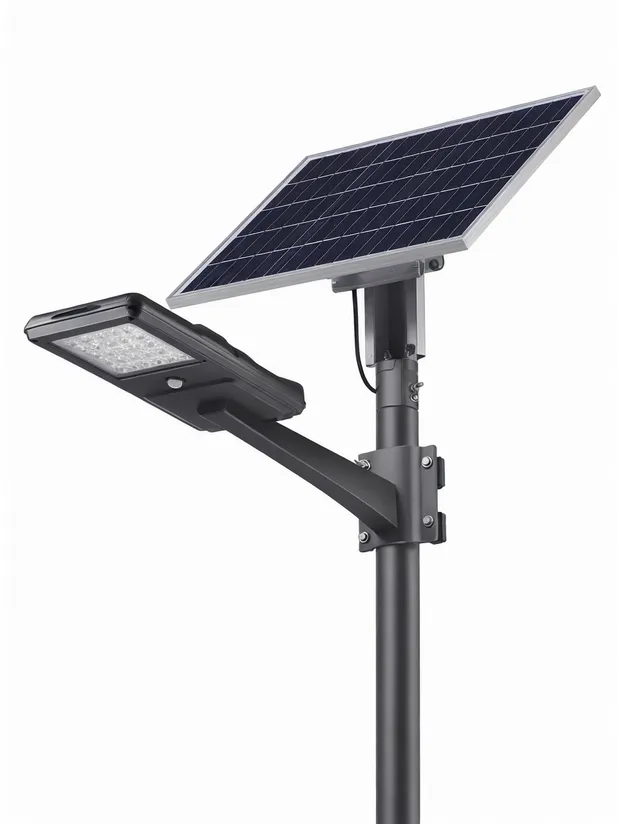
Solar pole lights are pole-mounted solar lighting systems for distributed outdoor sites — pathways, campus roads, residential compounds, municipal parks, perimeter routes, and any outdoor area where individual fixture placement makes more sense than a single high-mast installation covering a large zone. If you're sourcing for a parking lot that needs broad overhead coverage, solar parking lot lights are the right product. If you need portable lighting for a construction site, that's a solar lighting tower. Solar pole lights sit in the middle: fixed, pole-mounted, moderate output, and designed to be spaced across a site rather than concentrated at one point.
We manufacture solar pole lights at our 12,000 m² factory in Guzhen Town, Zhongshan — the same facility where the product is engineered, assembled, and inspected before it ships. Production, engineering, and the inspection lab are all in the same building. We are not a sourcing agent. The JXSOL solar lighting factory has been producing solar-powered outdoor lighting since 2012, and solar pole lights are one of the product types we've built consistent production depth around.
If you have a pole height, a site type, a target lumen output, or an order quantity in mind, send us the details and we'll come back with a configuration recommendation.
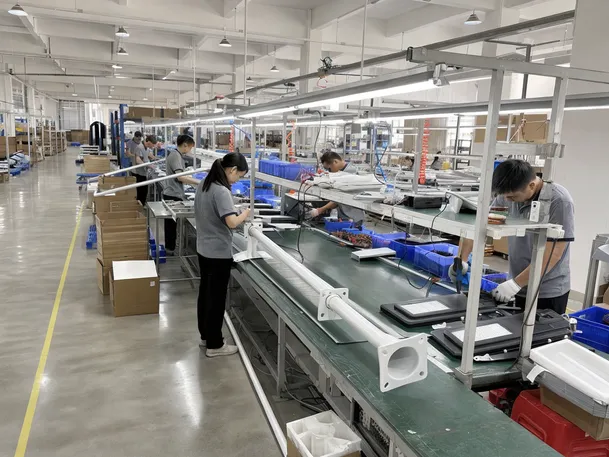
Product Positioning
- Fixed pole-mounted, moderate output
- Spaced across a site, not concentrated
- Pathways, campus roads, compounds, parks
- Engineered, assembled & inspected in-house
Configuration Logic Before You Compare Solar Pole Light Prices
Comparing solar pole light prices across suppliers without aligning the configuration first is where most sourcing problems in this product type start. A lower-priced unit may carry a smaller battery, a weaker solar panel, a thinner bracket, or a shorter autonomy rating — and none of that shows up in a line-item price comparison. The difference surfaces later, usually in a warranty claim or a reorder conversation after the first wet season.
The configuration variables that actually determine whether a solar pole light performs in your market:
Pole Height and Lumen Output
Pole height and lumen output are the first pair to confirm. For a 4-meter pole on a pedestrian pathway, 1,500–2,500 lumens per fixture is typically adequate for safe walking illumination. A 6-meter pole on a campus road or compound perimeter needs 2,500–5,000 lumens to achieve useful coverage per fixture. At 8 meters — the upper end of the standard solar pole light range — you're looking at 5,000–8,000 lumens for meaningful area coverage.
Specifying lumen output without confirming pole height leaves the coverage calculation incomplete, and the wrong combination means either over-lit fixtures that drain the battery faster or under-lit sites that generate complaints.
Battery Autonomy
Battery autonomy is where most solar lighting failures originate in the field. For outdoor solar pole lighting in markets with extended rainy seasons — equatorial Southeast Asia, West Africa, monsoon regions — we recommend a minimum of 3–5 autonomy days for commercial applications. For North American and European markets with more predictable irradiance, 2–3 days is often sufficient.
We've had buyers in equatorial markets order 2-day autonomy units because the price was lower, then come back after the first wet season. The battery sizing conversation is worth having before production, not after.
Solar Panel Wattage
Solar panel wattage is tied to both the lumen output and the target latitude. A fixture designed for Southern California needs a different panel-to-battery ratio than the same fixture deployed in Northern Europe or Central Africa. Send us the destination country or latitude and we'll size the panel configuration accordingly.
Control Mode
Control mode affects both energy balance and buyer expectations. Standard options include full-night mode, 50% dimming after midnight, PIR motion-activated boost, and programmable dimming schedules.
For campus roads and compound perimeters with consistent foot traffic, full-night mode at reduced output is often the right balance. For parks and pathways with intermittent use, motion-activated boost saves battery and extends autonomy.
Pole Height Configuration Reference
| Pole Height | Typical Lumen Range | Site Type | Recommended Control Mode |
|---|---|---|---|
| 3–4 m | 1,000–2,500 lm | Pedestrian paths, garden walkways | Full-night or dimming |
| 5–6 m | 2,500–5,000 lm | Campus roads, compound perimeters, parks | Full-night or motion-activated |
| 7–8 m | 4,500–8,000 lm | Wider roads, open compound areas, rural routes | Full-night or dimming after midnight |
Send us your pole height and site layout
We'll confirm the lumen output and battery configuration before you commit to a sample order.
Product Specification Range Buyers Can Put Into RFQs
The ranges below are specific to JXSOL's solar pole light product line. Use them to pre-qualify whether our production capability covers your project specs before requesting samples or a formal quote. Final specifications are confirmed against your destination market, pole height, required runtime, and autonomy days — not selected from a static catalog alone.
| Parameter | Solar Pole Light Range |
|---|---|
| LED Power | 20W – 120W |
| Lumen Output | 1,500 lm – 12,000 lm |
| Solar Panel | Monocrystalline, 20W – 180W |
| Battery Chemistry | LiFePO4 (lithium iron phosphate), Li-ion |
| Battery Capacity | 20Wh – 400Wh (sized by autonomy requirement) |
| Autonomy Days | 2–5 days (configuration-dependent) |
| Color Temperature (CCT) | 3000K, 4000K, 5000K, 5700K, 6500K |
| Beam Angle / Optics | 60°, 90°, 120°, 150°; asymmetric road optics available |
| Mounting Height | 3m – 8m (standard project range) |
| Mounting Type | Pole-top integrated, side-arm bracket, adjustable tilt bracket |
| Working Modes | Full-night, 50% dimming after midnight, PIR motion-activated, programmable schedule |
| Charging Time | 6–10 hours (full sun) |
| IP Rating | IP65 (standard), IP67 (available on specified models) |
| Housing Material | Die-cast aluminum, powder-coated; stainless steel hardware |
| Operating Temperature | -30°C to +60°C |
| Certifications | CE, RoHS, IP65/IP67, IEC 62124 (documentation available per order) |
Specifications shown are product-line values for JXSOL solar pole lights. Actual specifications vary by model and configuration. Contact us for detailed product data sheets and confirmed specs for your project.
Certification Documentation
CE Declaration of Conformity, RoHS test reports, and IP test certificates are available with the order. For buyers importing into regulated markets, see our certification documentation.
Pole Height, Bracket Fit, and Accessory Control Reduce Site Problems
Pole-mounted solar lighting has more installation variables than most product types in this category, and the ones that cause the most problems on site are rarely about the fixture itself. They're about bracket diameter mismatch, missing hardware kits, solar panel orientation that doesn't match the installation latitude, or pole sections that arrive without assembly guides. We've seen enough of these to treat accessory completeness as a QC checkpoint, not a packing afterthought.
Bracket & Spigot Compatibility
The first thing to confirm before production. Standard solar pole light brackets use a spigot diameter of 40–60mm for side-arm mounting, with anti-rotation pins to prevent the fixture from rotating on the arm.
If you're supplying your own poles, send us the pole outer diameter and wall thickness — we'll confirm the bracket fit before we produce. If we're supplying poles as part of the order, we size the bracket to the pole specification and pack them as a matched set.
Key detail: Anti-rotation pins prevent fixture rotation on the arm. Bracket-to-pole match is confirmed before production starts.
Solar Panel Orientation
Panel orientation matters more on pole-mounted fixtures than on parking lot lights, because the panel tilt angle is often fixed at the factory rather than adjustable on site.
For installations in the Northern Hemisphere, panels should face south at a tilt angle roughly equal to the installation latitude. For Southern Hemisphere installations, the orientation reverses. We configure the panel bracket angle for your target latitude — send us the installation country and we'll set it correctly.
Performance impact: Getting orientation wrong by 20–30 degrees can reduce panel output by 15–25%, which directly shortens autonomy days. A small detail with a measurable effect on field performance.
Accessory Pack Completeness
Part of our outgoing QC process. Each carton ships with the fixture, the bracket assembly, the hardware kit (bolts, washers, anti-rotation pins), the installation guide, and a packing list that matches the carton label.
Bracket packs for pole-top or side-arm configurations are packed separately with matching batch labels. If your project requires poles, pole sections are packed with assembly guides and labeled to match the fixture cartons.
QC standard: Accessory completeness is a QC checkpoint, not a packing afterthought.
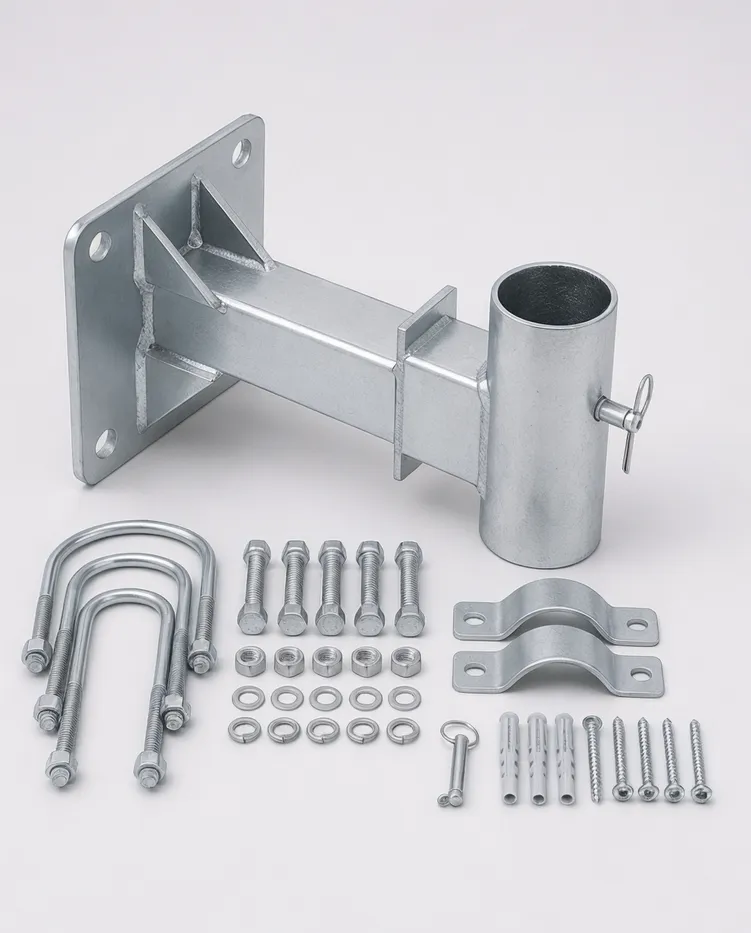
Before You Send an RFQ for a Pole-Mounted Project
Confirm the following details to ensure bracket compatibility, correct panel orientation, and complete accessory packing:
- Existing pole outer diameter (if you're supplying poles)
- New pole requirement: height, wall thickness, base plate or direct-burial
- Mounting type: pole-top integrated or side-arm bracket
- Solar panel orientation constraints (any shading or orientation restrictions on site)
- Wind exposure zone (affects pole wall thickness and bracket fastener spec)
- Whether pole supply is included in the order or sourced separately
Include your pole dimensions and site location in the RFQ. For export packing and delivery control details, see our shipping and delivery page.
Market Segments Where Solar Pole Lights Create Repeatable Orders
The commercial value of solar pole lights is not the same in every market segment. Some segments generate high-volume repeatable orders; others are project-driven with longer sales cycles but larger per-order quantities. Understanding which segment you're selling into shapes which configurations are worth stocking and which customization options are worth building into your catalog.
Campus Roads & School Pathways
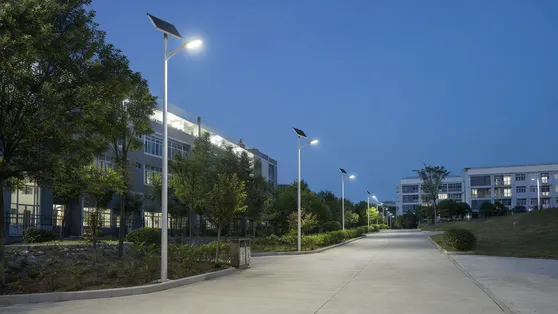
One of the most consistent segments. Universities, K-12 campuses, and technical colleges order in batches of 50–300 units per campus, and the same specification often gets replicated across multiple sites within the same institution or district.
Once a fixture is approved for a campus procurement program, reorders follow the same spec — your first successful delivery is the entry point for a multi-year account.
Typical Configuration
- Pole height: 5–6 meters
- Output: 2,500–4,000 lumens
- Motion-activated or dimming control
Municipal Parks & Public Walkways
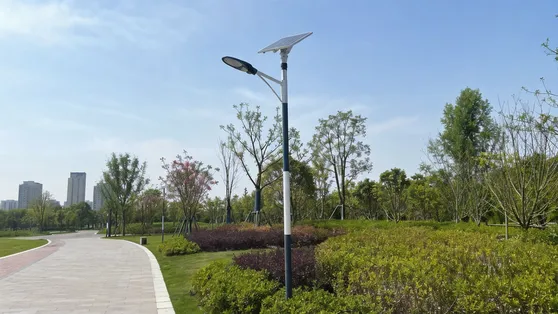
Standardized procurement programs with tender cycles. The fixture specification gets written into the tender document, and the same product gets ordered across multiple parks or districts on annual or multi-year contracts.
Getting on an approved vendor list is the entry point; consistent quality on the first order is what keeps you there.
Buyer Requirements
- IP65 or IP67 rated fixtures
- CE documentation required
- Compliance records before first order (EU/NA markets)
Residential Compounds & Property Developments
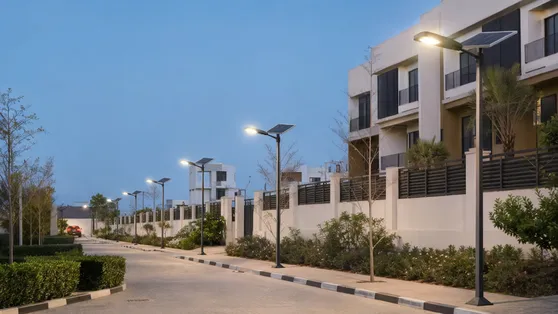
Moderate per-project volume but high repeatability across a developer's portfolio. A residential developer building 10 compounds over three years will order the same specification for each — 30–100 units per compound, consistent spec, predictable reorder pattern.
The fixture needs to look good as well as perform, so CCT selection and housing finish matter more here than in industrial applications.
Design Priorities
- CCT: 3000K warm white (common)
- Housing finish matters
- Multi-compound reorder pattern
Industrial Compounds & Perimeter Routes
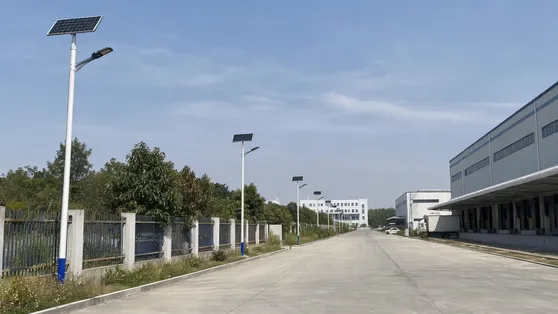
Distributed fixture placement without grid trenching — exactly what solar pole lights are designed for. Warehouses, logistics facilities, and manufacturing compounds with perimeter roads and internal access routes are a natural fit.
These buyers are less price-sensitive than residential developers and more focused on reliability and documentation. A single industrial compound can represent a 100–300 unit order, and the same buyer often has multiple facilities.
Buyer Profile
- Less price-sensitive
- Reliability & documentation focused
- Multi-facility accounts
Rural Roads, Villages & Public Service Areas
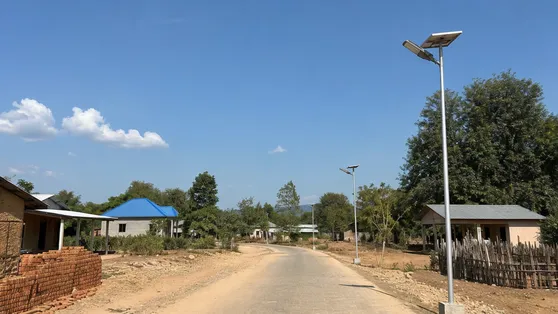
Grid-independent deployment is the primary driver. Government electrification programs, NGO-funded infrastructure projects, and rural development initiatives in Africa, Southeast Asia, and parts of the Middle East are active buyers.
Orders tend to be larger — 200–1,000 units per project — and require extended autonomy configurations. 4–5 days backup is common for equatorial markets.
Project Requirements
- 4–5 day autonomy (equatorial)
- IEC 62124 compliance (some projects)
- Africa, SE Asia, Middle East markets
Distributor Catalog Programs
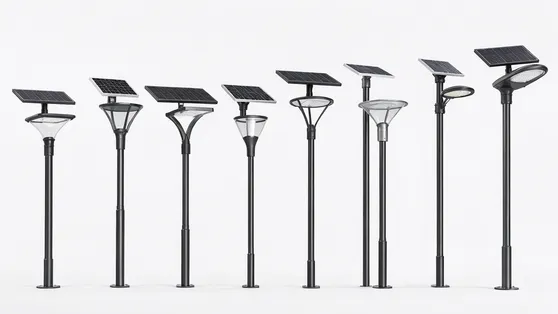
Solar pole lights serve as a mid-range SKU between lower-height solar yard lights and higher-output solar area lights.
A distributor who stocks both ends of the range without a pole light SKU in the middle is leaving a segment of their customer base underserved. The pole light fills the gap for buyers who need more output than a yard light but don't need the broad-area coverage of a full area light.
Catalog Position
- Above: Solar Yard Lights
- Mid-range pole light SKU
- Below: Solar Area Lights
Build a Solar Pole Light SKU or Project Quote
Send us your target market, expected order quantity, and the segments you're selling into. We'll configure the right specification for your channel.
Request Configuration QuoteOEM/ODM Options for Distributors and Project Contractors
Standard catalog models cover most commercial applications. When they don't — because your market has specific lumen requirements, your project needs a custom battery autonomy configuration, or you're building a private-label outdoor solar pole lighting line — our in-house engineering team handles the customization.
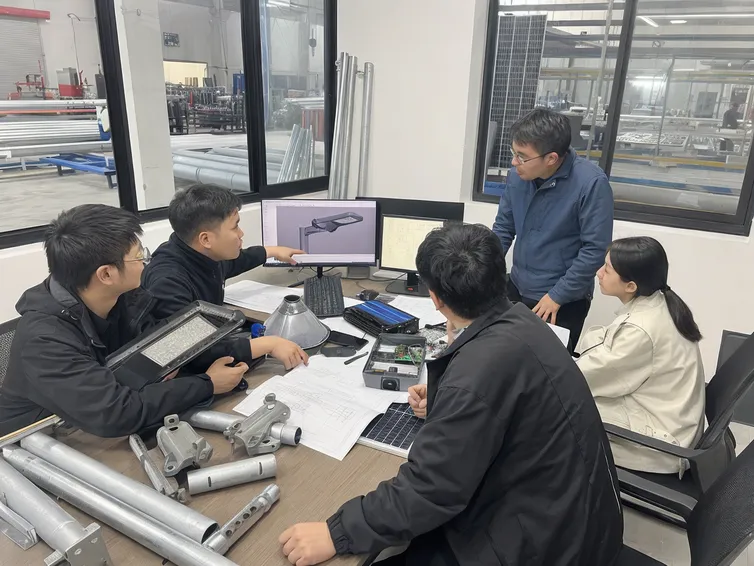
R&D Team Capacity
The R&D team includes 15+ optical and electrical engineers who work on both standard product development and OEM/ODM project support.
Customization Dimensions Available for Solar Pole Lights
Lumen Output
Adjusted within the LED module's design range without changing the housing — useful for market-specific brightness requirements without retooling.
Color Temperature
Full range from 3000K warm white through 6500K daylight; 4000K neutral white is the most common request for campus and municipal applications.
Battery Capacity & Autonomy Days
Sized for your target deployment latitude and required autonomy — the most commercially significant customization for buyers in variable-irradiance markets.
Solar Panel Wattage
Configured for your target irradiance region; buyers in lower-irradiance markets (Northern Europe, high-latitude regions) typically need a larger panel-to-battery ratio.
PIR Sensor Logic & Dimming Schedule
Trigger distance, sensitivity, dimming percentage, and schedule timing — configurable for your site's actual usage pattern.
Bracket Configuration
Pole-top integrated, side-arm bracket, or adjustable tilt bracket; spigot diameter matched to your pole specification.
Housing Finish
Standard powder coat colors or custom RAL color on runs over 100 units.
Logo & Labeling
Private-label packaging, carton printing, and accessory kit configuration for branded solar lighting programs.
Market Documentation
CE Declaration of Conformity, RoHS records, and installation guides in your required language.
MOQ & Engineering Review Process
MOQ for standard catalog models starts at 100 units — low enough to test a new SKU with your customers before committing to a larger program.
OEM/ODM projects go through an engineering review before production to confirm the configuration is achievable and to lock the spec before component procurement. Some changes — housing modifications, new tooling, non-standard bracket configurations — affect lead time and minimum quantities; the engineering review is where those constraints get identified before they become production surprises.
Configuration Confirmation
Engineering review confirms achievability before procurement begins.
Spec Lock
Specifications locked before component procurement to prevent mid-production changes.
Lead Time Transparency
Tooling, housing mods, and non-standard brackets identified early so lead time is predictable.
Battery, LED, Controller, and Waterproof Checks for Pole-Mounted Orders
Solar pole lights fail in predictable ways. We've been watching the same failure modes since 2012, and the production controls we run are built around them specifically — not as a general quality statement, but as checkpoints tied to the failure modes that generate warranty claims and reorder problems.
Battery Capacity Mismatch
Most Common Cause of Early Field Failure
A battery pack that tests at rated capacity on day one may perform significantly below spec after 50–100 charge/discharge cycles if the cells were not matched by capacity and internal resistance before assembly.
Our Control
We match battery cells by capacity and internal resistance at the pack assembly stage — every pack, not a sample. Packs that fall outside tolerance are pulled before they reach final assembly.
The result is consistent autonomy performance across your batch, not just across the first few units. For buyers supplying projects where all fixtures need to perform consistently through the same weather event, this matters more than the rated capacity number on the spec sheet.
LED Lumen & CCT Inconsistency Between Batches
Second Most Common Complaint
It shows up when a reorder arrives and the color temperature or brightness is visibly different from the first shipment — a problem that's difficult to explain to downstream customers and expensive to resolve after the container is open.
Our Control
We run lumen output and color temperature confirmation at the LED module assembly stage, with binning controls that keep CCT and lumen output within a defined tolerance across the batch.
The tolerance we hold is tighter than what most buyers specify in their purchase orders — we've found that buyers who don't specify a tolerance often don't realize they need one until they see two batches side by side on the same pathway.
Controller & PIR Sensor Faults
Surfaces After Installation
PIR sensors that trigger inconsistently, dimming schedules that reset after a power interruption, or charge controllers that don't regulate correctly under high-temperature conditions — these failures are hard to diagnose in the field and expensive to resolve.
Our Control
We run controller and PIR sensor function checks on dedicated test benches before final assembly, and aging tests under load confirm that the control logic holds through a full charge/discharge cycle.
Water Ingress
Most Feared Failure Mode
Water ingress at the housing, cable entry points, and solar panel connection is the failure mode buyers fear most in outdoor solar pole lighting. An IP65 or IP67 rating is a test result, not a design claim.
Our Control
We test waterproof structure on our own IP inspection equipment — not assumed from housing geometry or gasket specification. Units that don't pass the waterproof inspection don't move to final packing.
For pole-mounted fixtures, the cable entry point where the wiring runs down the pole is a common ingress point that requires specific attention during assembly; we treat it as a separate inspection checkpoint.
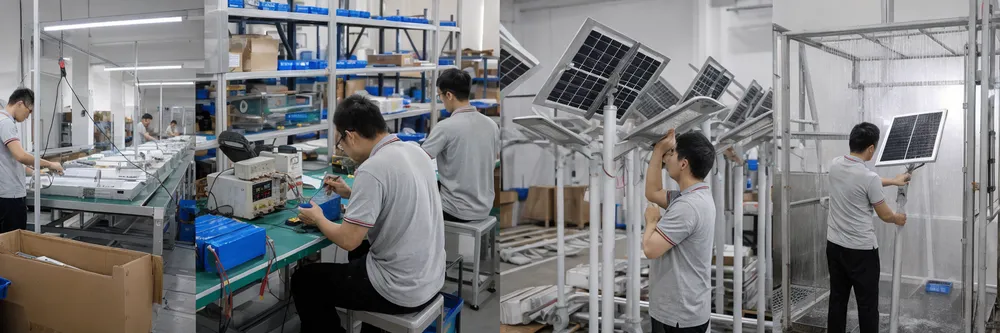
100% Outgoing Inspection
The full outgoing inspection is 100% — every unit, every carton, every accessory pack, every label — before the container is sealed. That process is described in detail on our inspection process page.
Choosing Solar Pole Lights Instead of Nearby Product Types
"Solar pole lights" overlaps in search intent with several adjacent product types. The table below maps each product type to its primary use case so you can confirm you're looking at the right product — or find the right sibling product if your application is different.
| Product | Primary Use Case | Mounting Height | Output Range |
|---|---|---|---|
| Solar Pole Lights | Distributed pole-mounted lighting for pathways, campus roads, compounds, parks | 3m – 8m | 1,500 – 12,000 lm |
| Solar Parking Lot Lights | Fixed overhead lighting for retail and commercial parking lots | 6m – 12m | 3,000 – 15,000 lm |
| Solar Area Lights | Broad open-area coverage for sites without grid infrastructure | 5m – 10m | 3,000 – 10,000 lm |
| Commercial Solar Area Lights | High-output industrial yards, logistics perimeters, security zones | 8m – 15m | 8,000 – 20,000 lm |
| Solar Yard Lights | Lower-height area lighting for smaller outdoor spaces and residential developments | 2m – 4m | 800 – 2,500 lm |
| Solar Lighting Tower | Portable or semi-permanent lighting for construction, events, emergency response | 6m – 20m (mast) | 10,000 – 30,000 lm |
Roadway or Street Application?
If your application is a roadway or street — not a pathway or compound — the product you're looking for may be under the street and roadway category. Buyers sourcing pole structures specifically for roadway solar street lights can compare with the solar street lighting pole under that category.
Pole Lights vs. Parking Lot Lights
The practical distinction is mounting height and coverage pattern. Parking lot lights are designed for higher poles with broader coverage per fixture — fewer fixtures covering a larger area. Solar pole lights are designed for closer spacing at lower heights, where individual fixture placement along a path or road is the right approach.
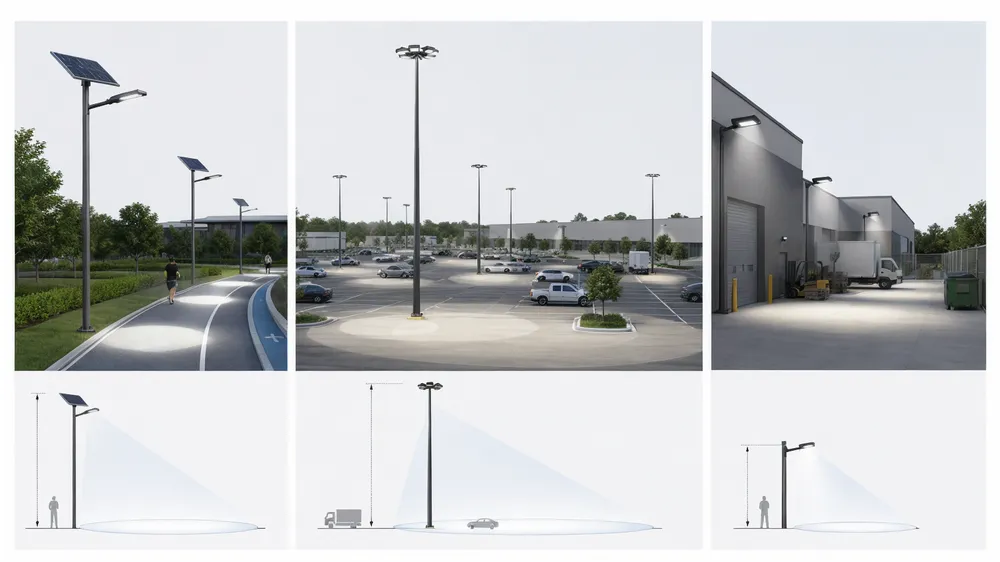
If you're unsure which product fits your site, send us the site dimensions and pole height and we'll recommend the right configuration.
Send Site Dimensions for RecommendationExport Packing and Mixed-SKU Order Control
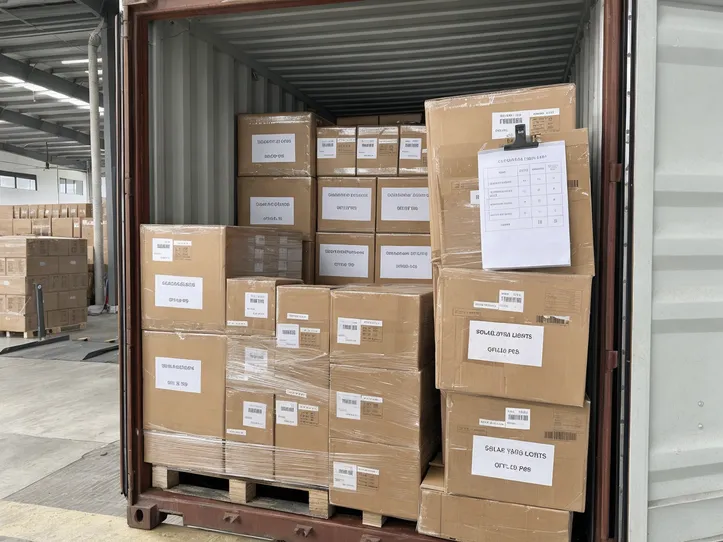
Pole-mounted solar lighting orders ship as multi-component sets: fixtures, solar panels (where separate), mounting brackets, hardware kits, pole sections (where included), and installation guides. A missing bracket or an unlabeled hardware kit creates a receiving problem at your warehouse and a delay on the installation site. We treat packing completeness as part of the QC process.
Per-Carton Completeness
Each carton ships with the fixture, its corresponding bracket assembly, the hardware kit, and a packing list that matches the carton label. No partial shipments, no missing fasteners.
Batch Code Traceability
Batch codes on carton labels trace back to the production run. If a question comes up after delivery about a specific unit's test record or a batch's certification documentation, we can pull the records by batch code.
Pole Section Matching
For orders that include pole sections, poles are packed separately with matching batch labels and assembly guides, labeled to correspond with the fixture cartons they belong to.
Mixed-SKU Order Management
Mixed-SKU orders — a common pattern for distributors sourcing solar pole lights alongside solar parking lot lights, solar area lights, or solar yard lights in one container — are managed with a consolidated packing list that maps each carton to its SKU, quantity, and batch code.
This makes warehouse receiving straightforward and simplifies reorder tracking when you're restocking individual SKUs at different rates.
Export Documentation Available Per Order
Commercial Invoice
Packing List
Bill of Lading
CE Declaration of Conformity
RoHS Test Reports
IP Test Certificates
IEC 62124 Documentation
Pallet Configurations
Carton dimensions are sized for standard 20GP and 40HQ container loading. Pallet configurations are available for buyers who need palletized delivery.
For full details on our export process, see solar lighting export packing.
FAQ for Solar Pole Light Buyers
Direct answers to the configuration and sizing questions that come up most often during quoting and project planning.
What pole height is best for solar pole lights?
The right pole height depends on the site type and the spacing between fixtures.
Pedestrian Pathways
4–5 m
Fixtures spaced 15–20 m apart. Enough height to spread the light cone without requiring high lumen output.
Campus Roads & Compound Perimeters
5–6 m
Fixtures spaced 20–30 m apart. More appropriate for wider coverage areas.
Wider Roads & Open Compounds
7–8 m
5,000–8,000 lumens typical. Broader coverage per fixture for open areas.
Going higher than 8 meters on a solar pole light starts to push into solar parking lot light or commercial solar area light territory, where the fixture design and battery sizing are different.
If you're replacing existing pole-mounted lights, the existing pole height is a useful starting point — match it unless there's a specific reason to change.
How many lumens do solar pole lights need for pathways, compounds, or campus roads?
A general starting point:
| Pole Height | Application | Fixture Spacing | Lumen Range |
|---|---|---|---|
| 4 m | Pedestrian pathway | 15 m | 1,500–2,500 lm |
| 6 m | Campus road / compound perimeter | 20–25 m | 2,500–4,500 lm |
| 7–8 m | Wider road | 25–30 m | 4,500–8,000 lm |
These are starting points — the actual lumen requirement depends on the required illuminance level (lux), the beam angle, and the reflectance of the surface below.
If you have a lux requirement from a project specification or a local standard, send it to us and we'll work backward to the fixture configuration.
Should I choose integrated or split solar pole lights?
Integrated solar pole lights have the solar panel, battery, LED module, and controller built into a single fixture head — simpler installation, fewer connection points, and a cleaner appearance. Split configurations have the solar panel mounted separately on the pole or on a separate bracket, with the battery either in the fixture head or in a separate enclosure at the pole base.
- Faster installation, fewer field failure points
- Cleaner appearance on pole
- Standard choice for pathway, campus, and compound applications
- Panel positioned away from fixture when shading constraints exist
- Larger battery capacity than fixture head can accommodate
- Appropriate when site constraints require separation
For most standard outdoor solar pole lighting projects, integrated is the right starting point unless there's a specific site constraint that requires separation.
What autonomy days should outdoor solar pole lighting be configured for?
The standard commercial recommendation is 3 autonomy days for most markets — enough to cover a typical cloudy period without visible dimming or shutdown.
| Market / Climate | Recommended Autonomy | Rationale |
|---|---|---|
| Most markets (standard) | 3 days | Covers typical cloudy periods without dimming or shutdown |
| Extended rainy seasons Equatorial SE Asia, West Africa, South Asia monsoon |
4–5 days | Prolonged low-irradiance periods require deeper battery reserve |
| High irradiance, predictable weather Middle East, Southern Europe, Southwest US |
2–3 days | Consistent solar harvest reduces need for deep reserve |
Control mode affects autonomy sizing
Autonomy days are determined by battery capacity relative to nightly energy consumption — a fixture running at 50% power after midnight needs less battery than one running at full output all night. The control mode and the autonomy spec need to be confirmed together.
If you're unsure what autonomy configuration is right for your target market, send us the destination country and we'll recommend based on the irradiance data for that region.
What IP rating is needed for pole-mounted solar lights?
IP65 is the minimum for any outdoor solar pole lighting application — it covers dust ingress protection and water jet resistance, which handles rain, cleaning, and standard outdoor exposure. IP67 adds submersion protection to 1 meter for 30 minutes, which matters for fixtures installed in flood-prone areas, low-lying sites, or locations with regular pressure washing.
For most pathway, campus, and compound applications, IP65 is sufficient.
If your project is in a coastal environment with salt spray exposure, confirm that the housing material and hardware are also rated for corrosion resistance — IP rating covers water ingress, not salt corrosion. We test both IP65 and IP67 on our own waterproof inspection equipment, not assumed from housing design.
What information does JXSOL need to quote solar pole lights accurately?
The minimum we need: pole height (or mounting height), required lumen output or site type, required autonomy days, destination country or latitude, order quantity, and any certification requirements for your market.
If you have existing pole dimensions (outer diameter, wall thickness), include those so we can confirm bracket compatibility. If you're supplying poles separately, note that in the inquiry. If you have a project specification document or a lux requirement, attach it — it speeds up the configuration review significantly.
Without the autonomy and latitude data, any quote we provide is based on assumptions that may not match your deployment conditions, and the price difference between a 2-day and a 5-day autonomy configuration can be 30–50% on the battery alone.
Submit your solar pole light project detailsGet a Quote for Solar Pole Lights
Send us your project details and we'll respond with a configuration recommendation tailored to your site conditions, pole specifications, and order volume.
Include in Your Request
-
Pole height and mounting type (pole-top or side-arm)
-
Site type and fixture spacing
-
Required lumen output or target illuminance (lux)
-
Autonomy days and destination country
-
Order quantity
-
Existing pole dimensions (if supplying poles separately)
-
Packaging or branding requirements (if applicable)
Why JXSOL
Manufacturing Since 2012
Over a decade of solar outdoor lighting production
6 Production Lines
1,200,000-unit annual capacity
100% Pre-Shipment Inspection
Every order inspected before dispatch
Solar Parking Lot & Area Lights / Solar Pole Lights