

Solar Street & Roadway Lights Manufacturer
Factory-direct solar street lighting for distributors, project contractors, and brand owners.
Nine product families covering standard street lights through smart highway systems — all manufactured in-house, 100% pre-shipment inspected, and export-ready for North America, Europe, the Middle East, Southeast Asia, and Africa.
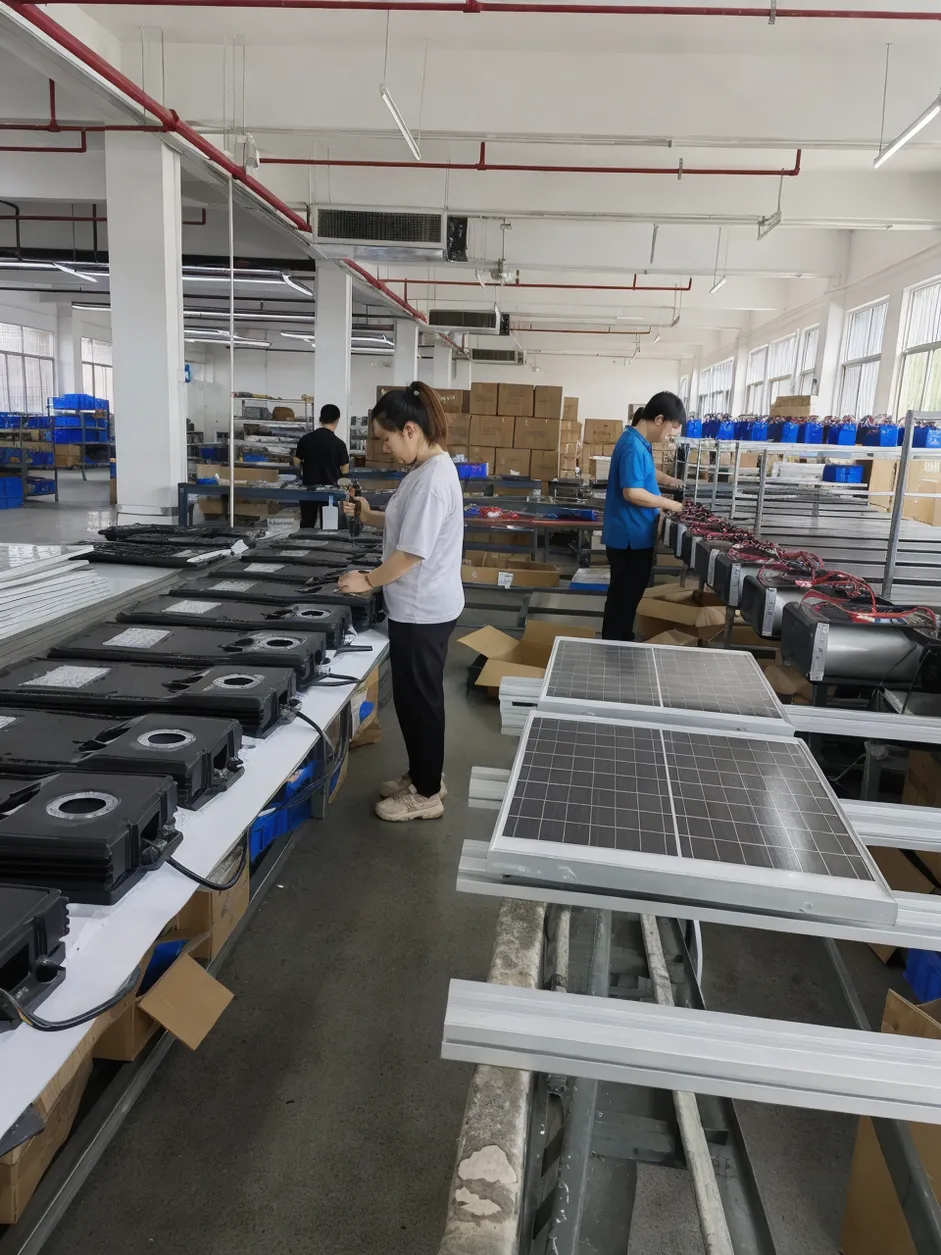
Factory-Built Solar Street Lighting for Repeat Orders
JXSOL is the export brand of Zhongshan Century Juxing Optoelectronics Technology Co., Ltd., a solar street lighting manufacturer based in Guzhen Town, Zhongshan, Guangdong. We've been making solar-powered outdoor lighting since 2012 — street and roadway fixtures are the core of what we do, not a product line we added to fill a catalog gap.
Our factory covers 12,000 square meters with six dedicated production lines, 150 employees, and 1,200,000-unit annual capacity. Solar street lighting production runs through automated SMT for control boards, LED module assembly with lumen binning, battery pack matching by capacity and internal resistance, solar panel electrical testing, controller and sensor function checks, aging tests, IP65/IP67 waterproof inspection, and 100% pre-shipment outgoing inspection. Every stage has a defined checkpoint. Nothing moves forward without passing the previous one.
We supply distributors who need a factory they can reorder from, project contractors who need spec-matched configurations for municipal and commercial bids, and brand owners who need private-label solar roadway lighting with consistent quality across batches. If you need a factory that handles engineering, production, QC, and export documentation under one roof — that's what we are. Learn more about the JXSOL factory.
Production QC Sequence
- 1 Automated SMT for control boards
- 2 LED module assembly with lumen binning
- 3 Battery pack matching by capacity & internal resistance
- 4 Solar panel electrical testing
- 5 Controller & sensor function checks
- 6 Aging tests
- 7 IP65/IP67 waterproof inspection
- 8 100% pre-shipment outgoing inspection
Distributors
Need a factory you can reorder from with consistent quality across batches and competitive MOQs for catalog stock.
Project Contractors
Need spec-matched configurations for municipal and commercial bids with full export documentation.
Brand Owners
Need private-label solar roadway lighting with engineering, production, QC, and export documentation under one roof.
Street, Roadway, Highway, and Commercial Lighting Product Range
Nine product families cover the full range of solar street and roadway lighting applications. Each family maps to a primary buying scenario so you can identify the right starting point before going deeper.
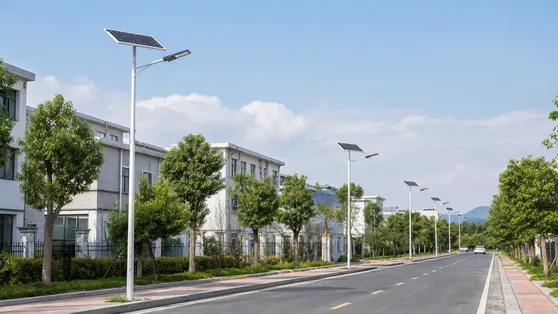
Solar Street Lights
Standard residential and secondary road replacement; distributor stock SKUs.
View Products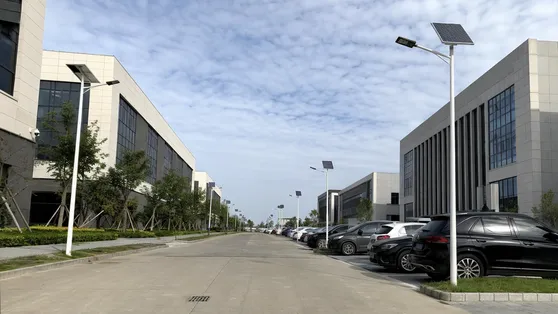
Commercial Solar Street Lights
Commercial developments, business parks, and private road projects requiring higher lumen output and longer nightly hours.
View Products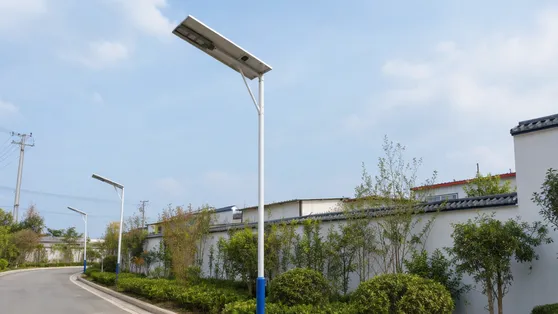
All-in-One Solar Street Light
Distributor catalog programs and standard road projects where compact form factor and simple installation reduce project cost.
View Products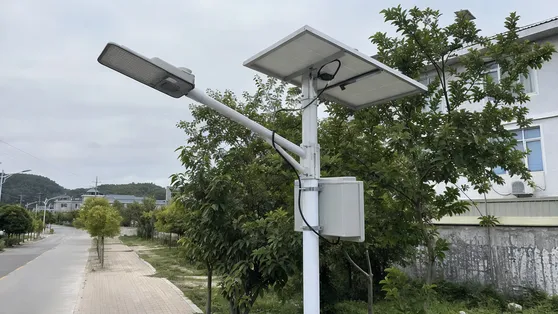
Split Solar Street Light
Projects requiring larger solar panels or battery banks than an integrated housing allows — higher latitudes, longer autonomy requirements, or high-wattage fixtures.
View Products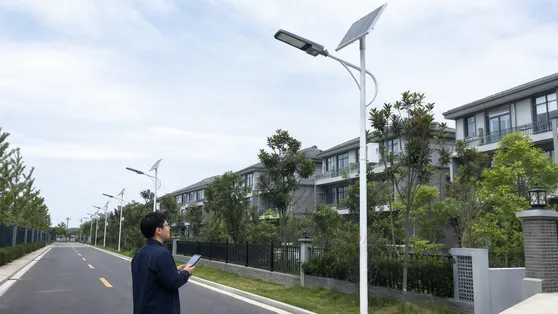
Smart Solar Street Light
Municipal projects with remote monitoring, dimming schedules, fault reporting, or IoT integration requirements.
View Products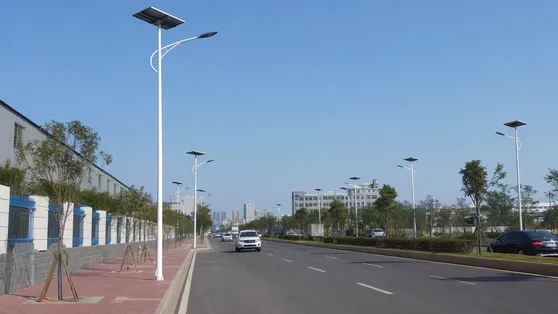
Solar Road Lights
Arterial roads, collector roads, and urban road projects where pole height, beam, and lux uniformity must meet national road lighting standards.
View Products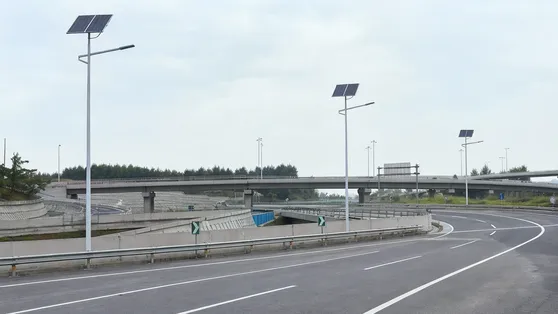
Solar Highway Lights
Expressways, interchanges, and toll plazas requiring high-mast mounting, extreme wind resistance, and continuous dusk-to-dawn operation.
View Products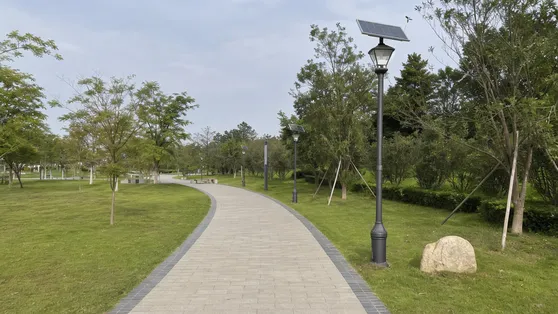
Solar Park Lighting
Parks, pedestrian paths, cycling tracks, plazas, and recreational areas where lower pole heights and pedestrian-scale illumination matter.
View Products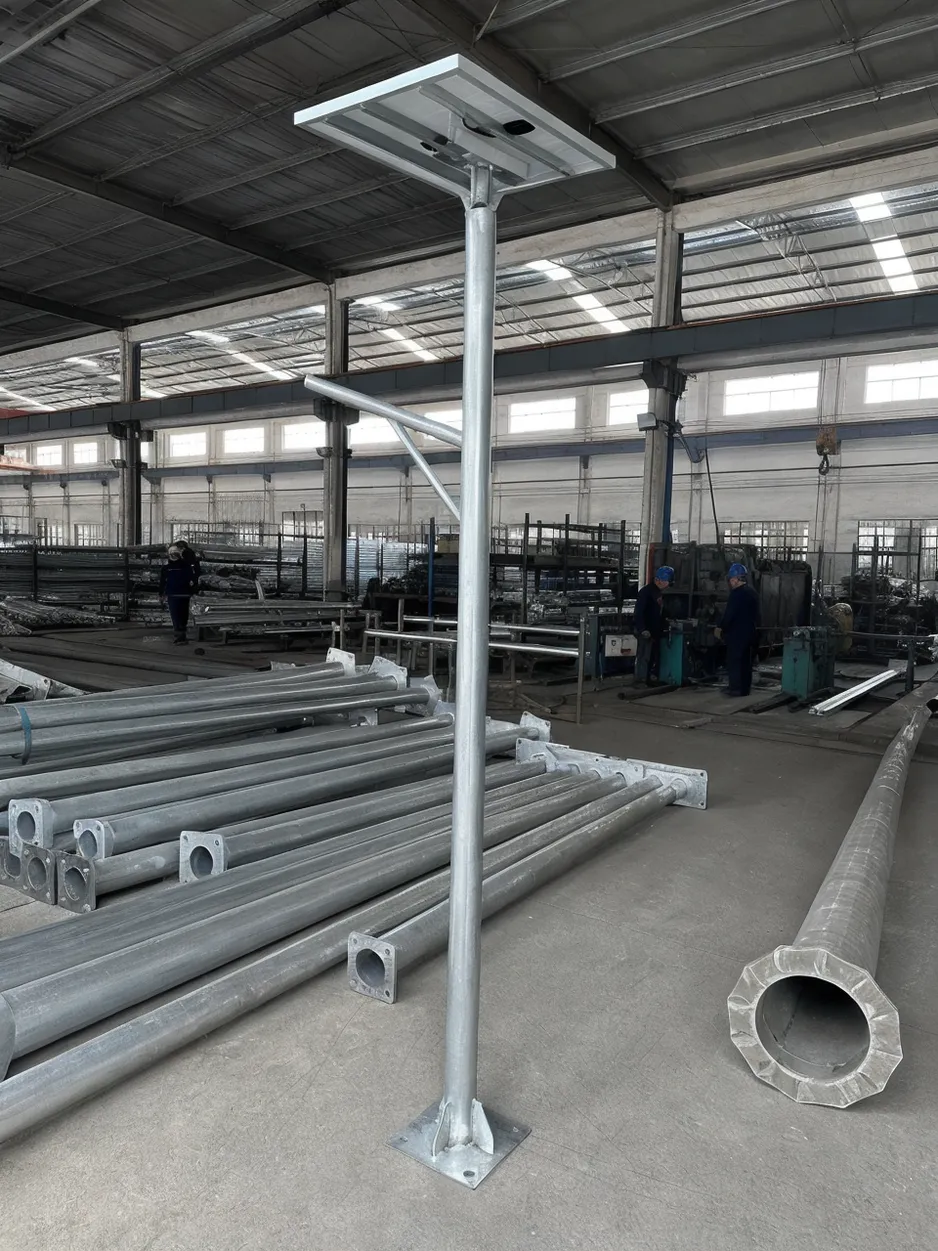
Solar Street Lighting Pole
Galvanized steel poles, arms, brackets, flange bases, and project-ready mounting configurations supplied alongside solar lighting fixtures.
View ProductsHow We Work: From Inquiry to Delivery
A transparent process designed for B2B buyers who need predictability. Every stage has a defined output so you always know what comes next.
Requirements Review
Share your project specs, target road class, pole height, autonomy nights, and budget range.
Engineering & Quotation
Our engineers configure the system, run DIALux simulations if needed, and deliver a detailed quotation with full BOM.
Sample & Validation
Receive production-representative samples for field testing. Approve or request adjustments before mass production.
Production & Delivery
Production with in-line QC, pre-shipment inspection photos, and coordinated logistics to your port or site.
Typical Lead Times
Samples
7–12 working days
Production (standard)
20–30 working days
Shipping (sea freight)
15–35 days depending on destination
Technical Capabilities
The engineering and manufacturing infrastructure behind every product we ship. These capabilities determine what we can configure, customize, and certify for your market.
Optical Engineering
Precision light distribution design
- Type II, III, and V distribution patterns
- Custom lens arrays for specific pole spacing
- DIALux simulation for every project
- CCT range: 3000K–6500K
- CRI > 70 standard, > 80 available
Solar & Energy Storage
Power system sizing and integration
- Monocrystalline panels up to 200Wp per fixture
- LiFePO4 batteries: 3,000+ cycle life
- MPPT charge controllers with adaptive algorithms
- 3–7 autonomy nights configurable
- Location-based solar irradiance sizing
Mechanical & Structural
Built for harsh outdoor environments
- Die-cast aluminum housings with powder coating
- Wind resistance rated to 55 m/s (Category 3 typhoon)
- IP65/IP67 ingress protection
- IK08+ impact resistance
- Operating temperature: -20°C to +60°C
Smart Controls & IoT
Remote management and intelligence
- 4G/NB-IoT/LoRa connectivity options
- Cloud-based fleet management dashboard
- Programmable dimming schedules
- Real-time fault detection and alerts
- Motion sensor adaptive dimming
Configuration Choices That Protect Project Margin
The most common sourcing mistake in solar street lighting is choosing a configuration based on unit price rather than project fit. A cheaper all-in-one fixture on a highway project will generate warranty claims. An oversized split system on a standard residential road will price you out of the bid. Here's how we think about configuration selection — and how we advise buyers who send us project specs.
All-in-One Solar Street Lights
Single housing, single mounting point
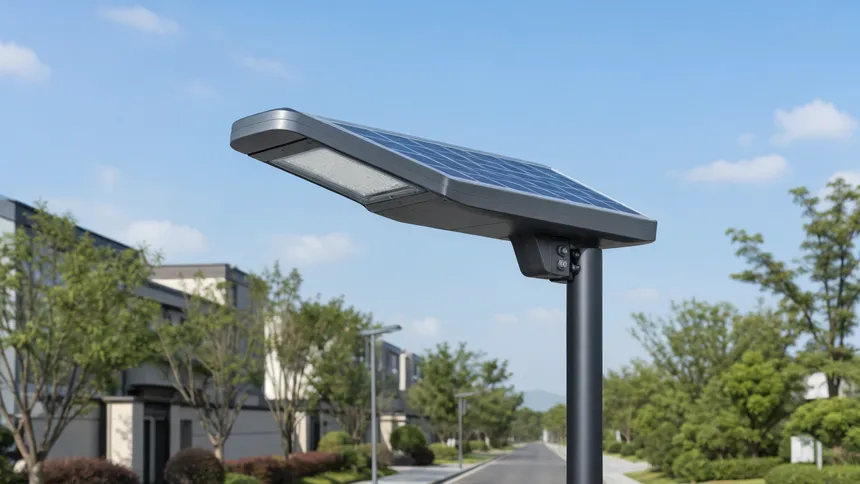
All-in-One Solar Street Lights integrate the solar panel, battery, LED module, and controller into a single housing. Installation is straightforward — one component, one mounting point, no wiring between panel and fixture.
For distributors, this means lower installation labor cost for your customers and simpler inventory management for you.
For standard road projects at latitudes with reasonable solar irradiance (roughly 15°N to 45°N), all-in-one configurations cover most requirements up to around 150W LED output.
Best fit:
- Standard residential and secondary roads
- Latitudes 15°N–45°N with reasonable irradiance
- Projects requiring fast, low-labor installation
- Distributor stock programs (fewer SKUs)
Split Solar Street Lights
Separate panel and fixture, higher output ceiling
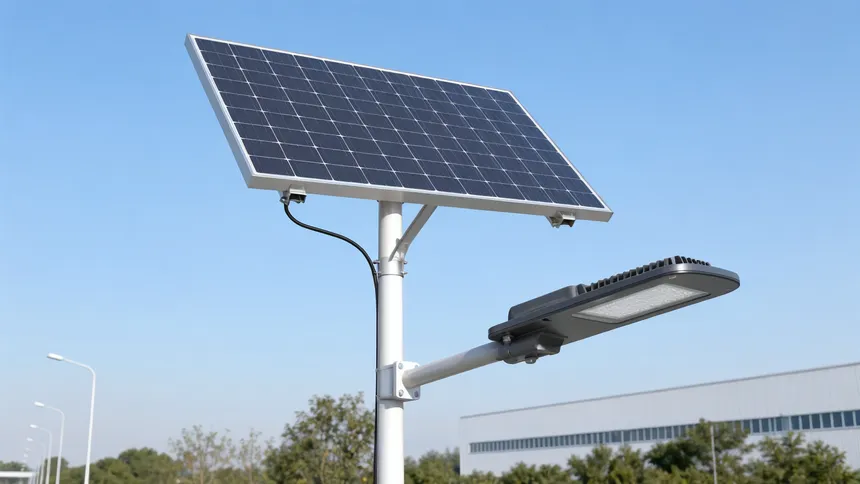
Split Solar Street Lights separate the panel from the fixture, which matters when the panel needs to be larger than the fixture housing allows, or when the battery bank needs to be sized for 3–5 autonomy days in lower-irradiance regions.
If your buyers are in Northern Europe, Canada, or high-latitude markets, or if the project spec calls for 200W+ output, split is the right starting point.
The trade-off is installation complexity — two mounting points, a wiring run between panel and fixture, and a slightly higher per-unit cost. For the right project, that cost is justified by the performance margin.
Best fit:
- High-latitude or low-irradiance regions
- Projects requiring 200W+ LED output
- 3–5 autonomy day requirements
- Northern Europe, Canada, high-latitude markets
When Smart Systems Change the Equation
Smart Solar Street Lights add remote monitoring, dimming schedules, and fault reporting to the base fixture. For municipal buyers, this is increasingly a bid requirement rather than an optional upgrade — city procurement offices want to manage street lighting networks without sending a crew to check each pole.
For distributors, smart systems open a higher-margin product tier. The per-unit cost is higher, but so is the selling price, and the differentiation from commodity all-in-one fixtures is clear.
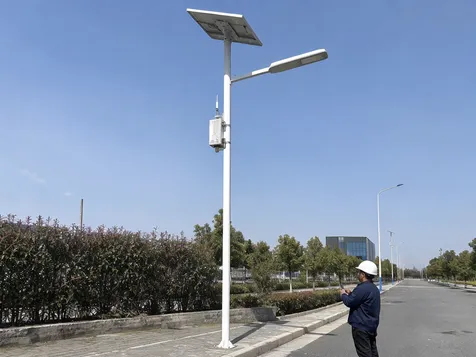
Practical note: We've seen buyers try to retrofit smart controllers onto standard fixtures after the fact. It works, but the integration is messier and the warranty picture gets complicated. If smart is in the project scope, spec it from the start.
Road and Highway Configurations
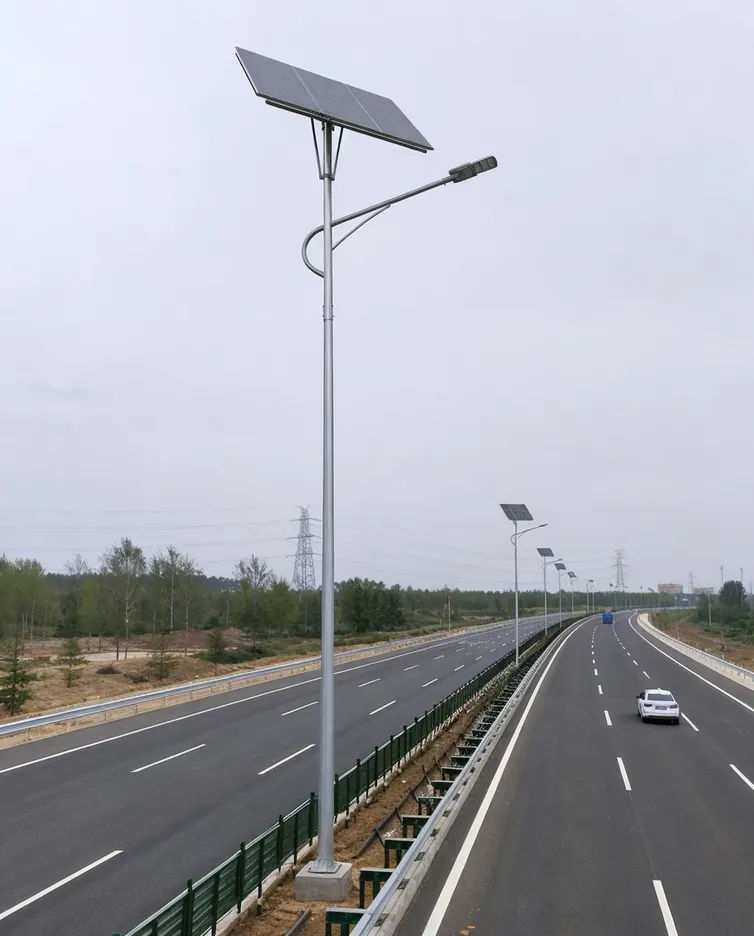
Solar Road Lights and Solar Highway Lights are engineered for higher pole heights (8–12m for road, 12m+ for highway), wider beam distributions, and longer nightly operating hours than standard street lights.
The key spec inputs are:
Road Width
Pole Spacing
Pole Height
Lux Level
If you're working from a project brief with those four numbers, send them to us — we'll run the configuration and confirm the fixture spec before you quote.
For deeper guidance on photometric planning and layout, send the project brief to our engineering team before you quote.
Distributor Stock Programs
For distributors building a catalog rather than quoting a specific project, the practical starting point is two or three SKUs that cover the majority of your market's road types.
We work with distributors in Southeast Asia, the Middle East, and Africa who run mixed-SKU programs — typically a standard all-in-one in two or three wattage steps, plus a split configuration for higher-output requirements. That covers most residential and secondary road projects without overstocking configurations your market won't use.
Category-Level Specifications Buyers Should Confirm Before RFQ
The table below covers the specification ranges across the solar street and roadway lighting category. These are category-level ranges — exact values for individual products are on each product page. Use this table to confirm that our spec range covers your project requirements before sending an RFQ.
| Specification | Category Range | Buyer Decision Note |
|---|---|---|
| LED Output | 20W – 300W | Match to road width, pole height, and required lux level. Higher wattage doesn't automatically mean better coverage — beam angle and mounting height matter equally. |
| Lumen Output | 2,000 lm – 40,000 lm | Confirm lumen output at the fixture, not at the LED chip. We test and confirm lumen output at the module assembly stage. |
| Solar Panel | 30W – 400W mono | Panel wattage is sized to battery capacity and daily operating hours. Oversizing the panel without matching battery capacity wastes cost. |
| Battery Type | LiFePO4 | LiFePO4 is our standard across the category — better cycle life (2,000+ cycles), wider operating temperature range, and safer chemistry than lead-acid or standard lithium. |
| Battery Capacity | 20Ah – 200Ah | Sized for autonomy days and daily operating hours. Confirm your target autonomy (typically 3–5 days) and operating hours (8–12 hours/night) before RFQ. |
| Autonomy Days | 3 – 7 days | Depends on battery capacity, panel wattage, and daily operating hours. Higher autonomy = larger battery and panel, which affects unit cost and housing size. |
| Color Temperature | 3000K – 6500K | 4000K–5000K is standard for road and highway applications. 3000K warm white is common for park and pedestrian paths. |
| IP Rating | IP65 / IP67 | IP65 is standard for most applications. IP67 is available for flood-prone or coastal installations. Both are tested on our own waterproof inspection equipment. |
| Pole Height Compatibility | 4m – 15m | Confirm pole height and arm length before specifying beam angle. We supply Solar Street Lighting Poles alongside fixtures. |
| Lighting Modes | Full / 50% / Motion / Scheduled | Standard models include full power and 50% dim. Smart models add scheduled dimming and remote control. |
| Housing Finish | Die-cast aluminum, powder-coated | Standard colors: silver grey, black, dark green. Custom colors available on runs of 100+ units. |
| Certifications | CE, RoHS, IP65/IP67, IEC 62124 | CE and IEC 62124 cover European and regulated market entry. RoHS covers restricted substance compliance. Documentation provided with order. |
LED Output Range
20W – 300W across all fixture types
LiFePO4 Standard
2,000+ cycle life, all models
IP65 / IP67 Tested
In-house waterproof inspection
Up to 7-Day Autonomy
Battery + panel sized to project
Battery, Lumen, and Waterproof Controls Before Shipment
We built our production system around the three failure modes that generated the most buyer complaints in solar street lighting when we started in 2012: battery capacity mismatch, inconsistent lumen output across batches, and waterproof structures that failed in the field. Those three problems are still the most common reasons buyers switch suppliers.
Battery Matching and Charge/Discharge Testing
Battery failure in solar street lighting is almost never a single-cell defect — it's a matching problem. When cells with different internal resistance values are assembled into a pack, the weaker cells discharge faster and degrade faster, pulling down the whole pack within one or two seasons.
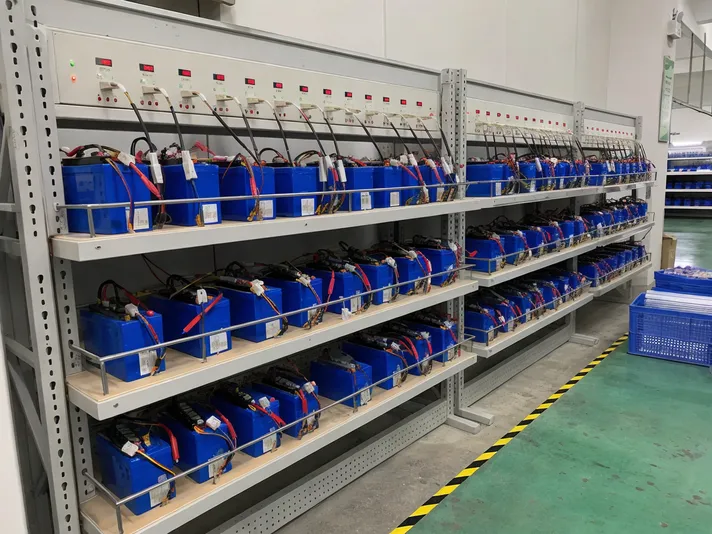
We match battery cells by capacity and internal resistance before pack assembly, and every completed pack goes through a charge/discharge cycle test on our aging test racks before it moves to final assembly.
The aging test runs a full charge/discharge cycle under load — not a quick continuity check, a full cycle. Packs that don't hold their rated capacity within tolerance are pulled before they reach the fixture.
Lumen Output and Color Temperature Confirmation
Lumen inconsistency across batches is a sourcing problem that shows up as a field problem — your customer installs 50 fixtures and notices that some are visibly brighter or cooler than others. The root cause is usually LED chip binning: chips from the same production run can vary in lumen output and color temperature if they're not sorted and matched before assembly.
We run lumen binning at the LED module assembly stage. Chips are sorted by lumen output and color temperature bin before they're assembled into modules, and lumen output is confirmed at the module level before the module moves to final assembly.
Color temperature is confirmed against the specified CCT range — not assumed from the chip datasheet. This keeps your batches consistent across reorders.
IP65/IP67 Waterproof Inspection
Waterproof claims in solar lighting are easy to make and hard to verify without the right equipment. Housing design alone doesn't guarantee IP performance — the seal integrity depends on gasket compression, fastener torque, cable entry sealing, and the consistency of the assembly process.
We test waterproof structure on our own IP inspection equipment, not by visual check or by assuming the housing design is sufficient. IP65 units are tested for dust ingress protection and water jet resistance. IP67 units are tested for temporary immersion.
This is not a sample check — it's 100% inspection on the waterproof structure. Units that fail are pulled, the failure mode is identified, and the assembly process is corrected before the batch continues.
Why These Three Controls Exist
This step adds time to the production schedule. It also means we don't ship battery packs that will fail in the field after one rainy season. We've kept it as a non-negotiable since the early years.
Lumen binning matters when your customer is expanding a road project in phases and expects the new fixtures to match the ones already installed. Waterproof inspection matters because field failures on IP claims are the fastest way to lose a repeat buyer.
These three controls address the three most common reasons buyers switch suppliers. They're production-stage interventions — problems caught here don't become field problems for your customer.
Full Quality System: Four Stages
Incoming Inspection
Solar panels, LED chips, battery cells, controllers, housings — all inspected on arrival before entering production.
In-Process Inspection
SMT, LED module assembly, and battery matching stages — each with inline quality gates.
Reliability Checks
Aging tests (full charge/discharge cycles), lighting mode verification, and IP waterproof structure testing.
100% Outgoing Inspection
Every unit inspected before the container is sealed. No sample-only checks on critical parameters.
OEM/ODM Solar Street Lighting for Private Label and Project Specs
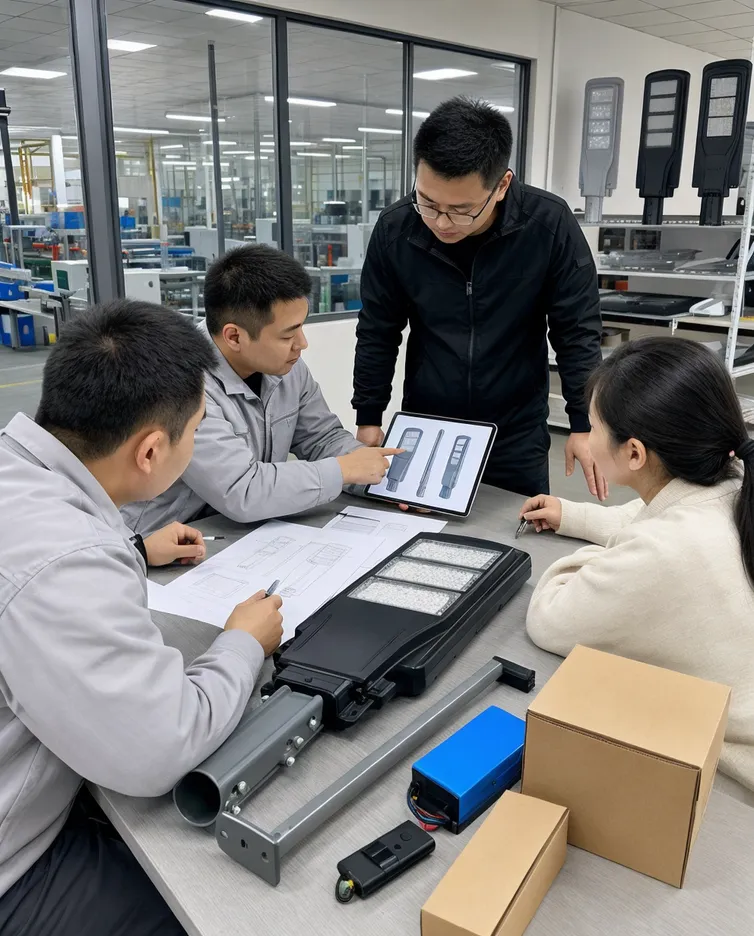
Standard catalog models cover most distributor and project requirements. When they don't, our in-house engineering team of 15+ optical and electrical engineers handles the customization. OEM and ODM work is a significant part of what we do — not a side service.
What We Can Configure
Lumen Output and Color Temperature
Lumen output can be adjusted within the LED module's design range without changing the housing. Color temperature covers the standard range from 3000K warm white through 6500K daylight. For road and highway applications, 4000K–5000K is the most common specification; we can confirm the exact CCT against your project requirement.
Battery Capacity and Autonomy
Battery capacity is sized to your target autonomy days and daily operating hours. If your market is in a lower-irradiance region or requires 5+ autonomy days, we size the battery and panel together — increasing battery capacity without matching panel wattage is a common spec error that leads to underperformance in the field.
Solar Panel Sizing for Target Latitude
Panel wattage is calculated against the peak sun hours at your installation latitude. We ask for the installation location or target latitude as part of the OEM/ODM engineering review — it's the input that determines whether the system will perform as specified year-round, including in the lowest-irradiance month.
Sensor Logic and Controller Modes
Standard models include PIR motion sensing and 50% dim mode. Custom controller configurations can include scheduled dimming profiles, dawn-to-dusk timing, multi-level dimming, and smart network integration for municipal projects.
Housing Color and Finish
Standard colors are silver grey, black, and dark green. Custom colors are available on runs of 100+ units — below that, the powder line changeover cost doesn't make sense for either side.
Private Label and Packaging
Custom logo, brand labeling, packaging design, and accessory configuration for buyers building a branded solar lighting line. We handle the packaging engineering alongside the product engineering.
MOQ & Engineering Review
Standard catalog models: MOQ starts at 100 units — low enough to test a new SKU with your market before scaling.
OEM/ODM projects: Custom specifications go through an engineering review before production to confirm the configuration is achievable and to lock the spec before component procurement.
Why the review matters: It prevents spec mismatches during production, which cost more time to resolve than the review takes.
Market Segments Where Solar Roadway Lighting Sells
Solar street and roadway lighting serves a range of market segments with different buying patterns, volume profiles, and specification requirements. Understanding which segments your buyers operate in helps you stock the right configurations and position the product correctly.
Municipal Street Lighting Programs
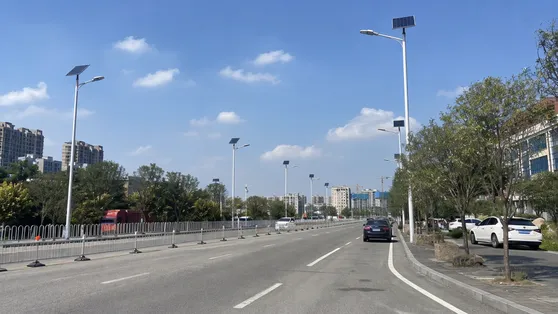
Municipal governments replacing grid-connected street lighting with solar are the largest single-volume segment in most markets. Projects range from a few hundred fixtures for a district upgrade to tens of thousands of units for a city-wide program.
Municipal buyers typically work from a road classification standard that specifies lux levels, pole heights, and spacing — they need a supplier who can match those specs and provide the compliance documentation for the procurement process.
Standard Requirements:
Commercial and Industrial Developments
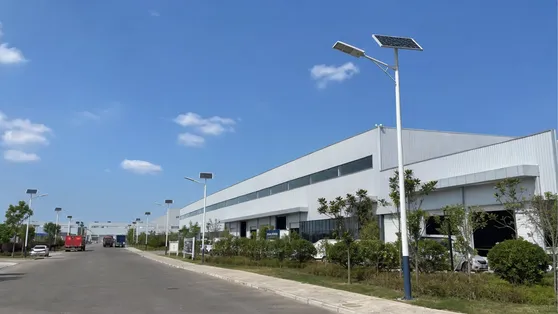
Private developers, industrial park operators, and logistics facility owners install solar road lights and commercial solar street lights as part of site infrastructure.
These buyers are cost-sensitive on a per-unit basis but value installation simplicity and low maintenance — all-in-one configurations are the most common choice.
Typical Order Profile:
50–500 units per project, with repeat orders as the development expands.
Highway and Arterial Road Projects
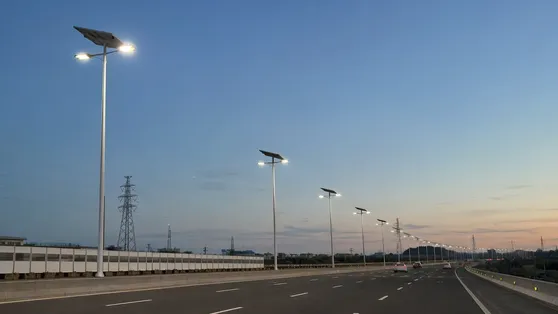
Solar highway lights for expressways and arterial roads are a higher-spec, higher-margin segment. These projects require higher pole heights, wider beam distributions, longer nightly operating hours, and often extended battery autonomy for regions with variable solar irradiance.
Project contractors in this segment typically work from a photometric specification and need a manufacturer who can confirm fixture performance against the spec before production.
This segment has grown significantly in the Middle East and Southeast Asia over the last three years — infrastructure investment in both regions is driving demand for solar highway lighting as an alternative to grid extension.
Rural Electrification and Off-Grid Roads
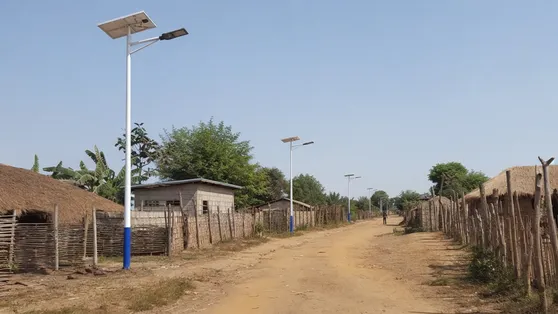
Rural roads, village access roads, and off-grid infrastructure projects in Africa, Southeast Asia, and parts of the Middle East represent a high-volume, price-sensitive segment. Solar roadway lighting is often the only practical option where grid infrastructure doesn't exist or is unreliable.
Buyers in this segment prioritize battery autonomy, robustness, and low maintenance over advanced features. Split configurations with larger battery banks are common for higher-latitude or lower-irradiance locations.
Park and Recreational Area Lighting
Solar park lighting covers parks, pedestrian paths, cycling tracks, and recreational areas where lower pole heights, decorative housing options, and warm color temperatures are specified.
This is a distinct product family from road lighting — the fixture design, beam angle, and lumen output are different. Distributors who supply municipal parks departments or landscape contractors often run this alongside their road lighting catalog.
Distributor Catalog Programs
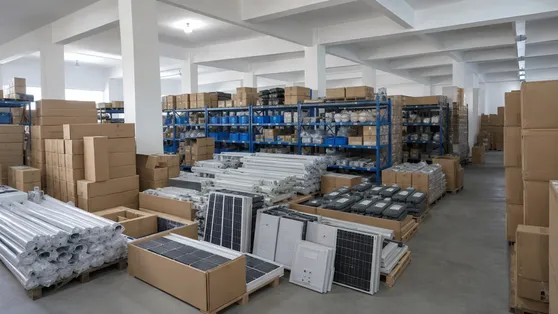
Distributors building a solar street lighting catalog typically start with two or three all-in-one SKUs covering the most common wattage steps in their market, then add split and smart configurations as their customer base grows.
We work with distributors across North America, Europe, the Middle East, Southeast Asia, and Africa who run mixed-SKU programs with reorder cycles of 3–6 months. The key sourcing requirement for this segment is batch consistency — your customers expect the fixtures they reorder to match the ones already installed.
For buyers sourcing adjacent area lighting alongside road fixtures, see our solar parking lot and area lighting category.
Export Packing, Documentation, and Reorder Control
Solar street lighting fixtures are bulky, and mixed-SKU orders add complexity to packing and documentation. Here's how we manage export shipments to keep your landed cost predictable and your reorders clean.
Carton Planning
Carton dimensions are sized for standard 20GP and 40HQ container loading. Fixtures, poles, mounting hardware, and accessory packs are packed separately with clear labeling — mixed-SKU orders are organized by product family and labeled by batch code so your receiving team can sort and verify without unpacking everything.
Accessory Pack Verification
Every carton includes a packing list, and accessory packs (mounting brackets, fasteners, installation guides, remote controls for smart models) are checked against the packing list before carton sealing. Missing accessories are one of the most common causes of installation delays on project sites — we check them before the container closes, not after.
Batch Traceability
Every carton carries a batch code that traces back to the production run, component lot, and QC records. If a field issue surfaces after installation, the batch code lets us identify the production window and pull the relevant inspection records. For buyers running large project deployments, this traceability is the foundation of any warranty claim process.
Palletized Packing
Available for buyers who need palletized delivery for warehouse receiving or project site logistics. Pallet configurations are confirmed at order placement.
Documentation for Regulated Markets
Standard export documentation includes commercial invoice, packing list, and certificate of origin. CE Declaration of Conformity, RoHS test reports, IP test certificates, and IEC 62124 documentation are provided with orders for markets that require them.
English-language installation guides are standard. If your market requires additional documentation — country-specific certifications, translated guides, or specific labeling formats — confirm at order placement.
Standard
Commercial Invoice
Standard
Packing List
Standard
Certificate of Origin
On Request
CE DoC
On Request
RoHS Reports
On Request
IEC 62124
Lead times are confirmed at order placement. If a production schedule change affects your delivery window, we communicate it before it becomes a problem at your end.
FAQ for Solar Street Lighting Buyers
What IP rating do I need for outdoor solar street lighting?
IP65 is the minimum for any outdoor solar street lighting application — it covers dust ingress protection and water jet resistance from any direction, which handles rain, road spray, and pressure washing.
IP67 adds temporary immersion protection (up to 1 meter for 30 minutes) and is worth specifying for installations in flood-prone areas, coastal locations with heavy salt spray, or any site where standing water is a regular condition.
Both ratings are tested on our own waterproof inspection equipment — not assumed from housing design.
Quick guidance: For most road and highway projects, IP65 is sufficient. If you're unsure, send us the installation environment and we'll confirm the right rating.
Should I choose all-in-one or split solar street lights for road projects?
The decision comes down to three factors: required LED output, installation latitude, and target autonomy days.
All-in-One Works When
- LED output up to ~150W
- Installation between ~15°N and 45°N latitude
- 3-day autonomy target
Split System Required When
- Higher LED output beyond 150W
- Higher latitude installations
- Longer autonomy requirements
Beyond those parameters, the panel and battery sizing required exceeds what an integrated housing can accommodate, and a split solar street light is the right choice.
Split systems cost more per unit and require more installation labor, but they're the only configuration that can reliably deliver performance at the edges of the spec range.
Need a definitive answer? If you're working from a project brief with pole height, road width, and required lux level, send it to us — we'll run the configuration and tell you which system fits.
How many autonomy days should solar roadway lighting be designed for?
Three days is the standard minimum for most road lighting applications — it covers a typical sequence of overcast days without the system going dark. Five days is common for projects in regions with variable solar irradiance, monsoon seasons, or high-latitude winters where consecutive low-irradiance days are more frequent. Seven days is specified for critical infrastructure or locations where maintenance access is difficult.
Autonomy Day Sizing Reference
The trade-off is direct: more autonomy days require a larger battery bank, which increases unit cost and, for all-in-one configurations, may require moving to a split system. We size battery capacity against your target autonomy days and daily operating hours as part of the configuration process — it's one of the first inputs we ask for.
Why do solar street lights lose brightness after installation?
The most common cause is LED lumen depreciation accelerated by thermal management failure — the LED junction temperature runs too high because the heat sink is undersized or the thermal interface between the LED module and the housing is poorly executed. A secondary cause is battery capacity degradation from cell mismatch in the pack, which reduces the available energy for full-power operation as the pack ages.
How JXSOL Prevents Brightness Loss at Production
LED modules assembled with thermal interface material applied to spec; heat sink design validated against the LED module's thermal requirements
Battery cells matched by internal resistance before pack assembly to prevent cell mismatch degradation
Lumen output confirmed at module assembly stage and again at final inspection
If you're seeing brightness loss on fixtures from another supplier, the failure mode is almost always one of these two — and both are preventable at the manufacturing stage.
What certifications matter for importing solar street lights?
European Market Entry
- CE marking — covers the Low Voltage Directive and EMC Directive requirements for the electrical components
- IEC 62124 — covers photovoltaic system performance requirements, increasingly referenced in project specifications for solar street lighting
- RoHS compliance — required for EU import and affects import clearance in an expanding list of markets
- IP65 or IP67 certification — documents the ingress protection rating against a recognized test standard
North American Markets
Requirements vary by state and application — some projects specify UL listing, others accept CE with test reports.
Middle East & African Project Tenders
CE and IEC 62124 are commonly accepted.
Documentation We Provide With Orders
- • CE Declaration of Conformity
- • RoHS test reports
- • IP test certificates
- • IEC 62124 documentation
See our solar lighting certifications page for the full documentation list.
What is JXSOL's MOQ for standard solar street light models?
Standard Catalog MOQ
Low enough to run a market test with your customers before committing to a larger program
OEM/ODM Projects
MOQ depends on customization scope — custom lumen output, battery sizing, housing color, private label — goes through engineering review before production
Sample Orders
Mixed sample order across configurations to test with your own customers or confirm project fit before the first production order
We can ship samples ahead of a production order.
For more on solar street lighting systems and how to evaluate manufacturers, see our resource library. Questions about solar street lighting manufacturers and what to look for in a factory audit are covered there as well.
Send Project Specs for a Factory Quote
The most useful inquiry includes the details below. With those inputs, we can confirm the right configuration, provide a detailed quote, and flag any spec considerations before production.
What to Include in Your Inquiry
- Road width and pole height
- Target lumen output or lux level
- Required operating hours per night
- Target autonomy days (backup capacity)
- Installation location or latitude
- Destination market
- Order quantity
- Branding or private-label requirements
Earlier in the Process?
If you're comparing configurations, building a distributor catalog, or evaluating us as a supplier — send what you have. We'll work from there.
Contact Details
- Email [email protected]
- Phone / WhatsApp +8613627818806
- Address 9th Floor, Houda Industrial, No. 65 Pinghe Road, Guzhen Town, Zhongshan, Guangdong, 528421, China