

Smart Solar Street Light With Built-In Control Intelligence
Solar street lighting with scheduled dimming, remote monitoring, and fault reporting in a factory-tested fixture.
Designed for municipal programs, infrastructure tenders, and project contractors who need more than illumination — controllability, fleet visibility, and maintenance efficiency that standard solar street lights can't deliver.
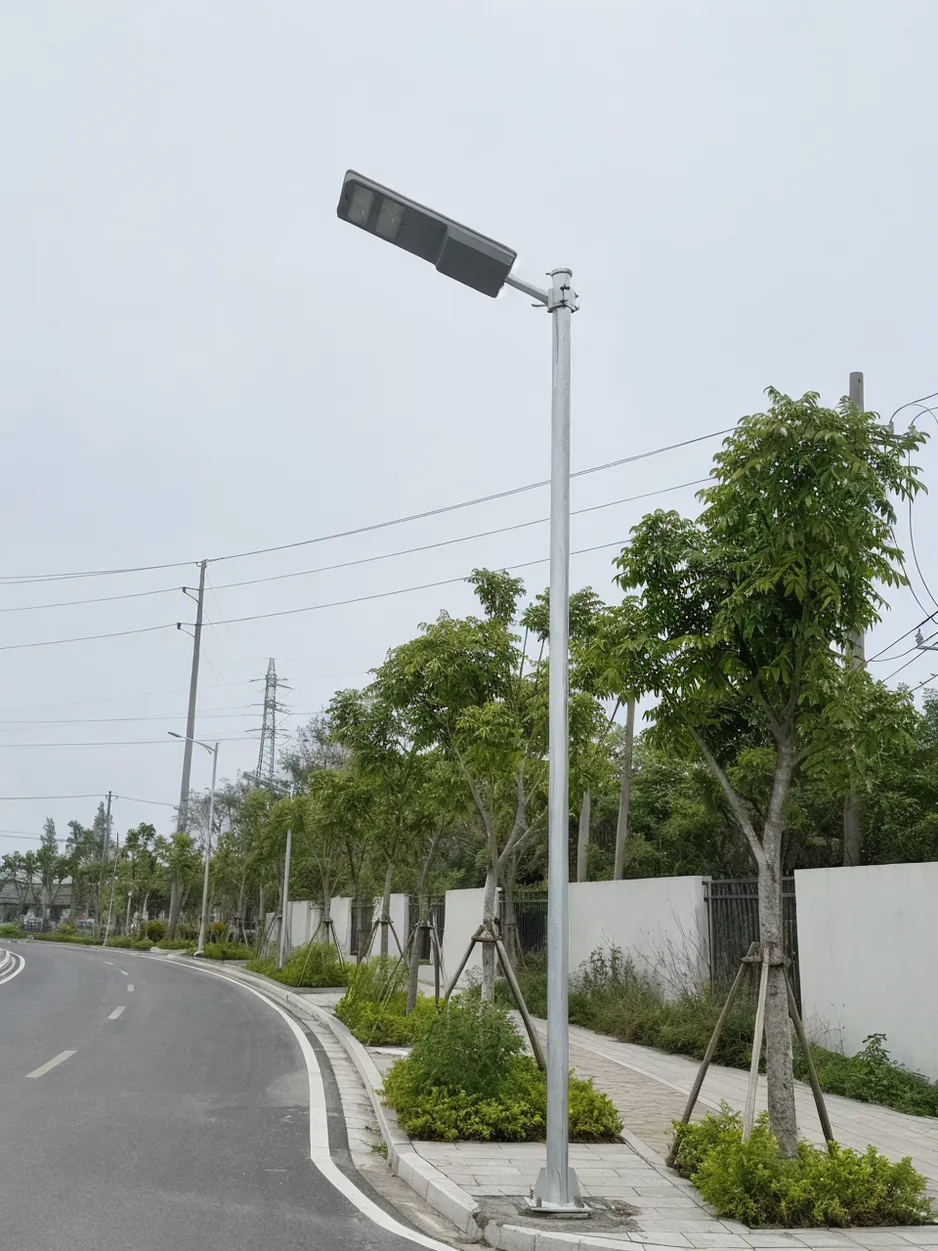
Smart Solar Street Light for Projects That Need Control, Not Just Illumination
A smart solar street light is a solar roadway fixture with integrated LED output, LiFePO4 energy storage, and a controller that does more than switch the light on at dusk and off at dawn. The controller manages dimming schedules, responds to motion or occupancy, reports operating status, and — depending on the communication module specified — allows remote adjustment of operating parameters without sending a crew to the pole.
That last point is where the commercial value sits. Standard solar street lights illuminate a road. A smart solar street light gives the project owner visibility into the entire fleet: which fixtures are operating normally, which have triggered a fault alert, which are running at reduced output due to low battery state, and whether the dimming schedule is executing as programmed.
For a municipal buyer managing 500 poles across a district, that visibility replaces a significant portion of the routine inspection labor. For a project contractor bidding on a municipal tender, it's increasingly a specification requirement rather than an optional upgrade.
Normal Operation Status
Confirm which fixtures are operating within programmed parameters without physical inspection.
Fault Alert Reporting
Identify which poles have triggered a fault alert and prioritize maintenance dispatch accordingly.
Low Battery State Visibility
Know which fixtures are running at reduced output due to low battery state before they go dark.
Schedule Execution Verification
Verify whether the dimming schedule is executing as programmed across the entire fleet.
Manufacturing Solar Street Lighting Since 2012
The smart control tier is the highest-margin segment in the category, and it's also the one where production quality matters most — a controller that fails in the field doesn't just leave a dark pole, it generates a warranty claim, a site visit, and a conversation about whether the whole fleet is at risk.
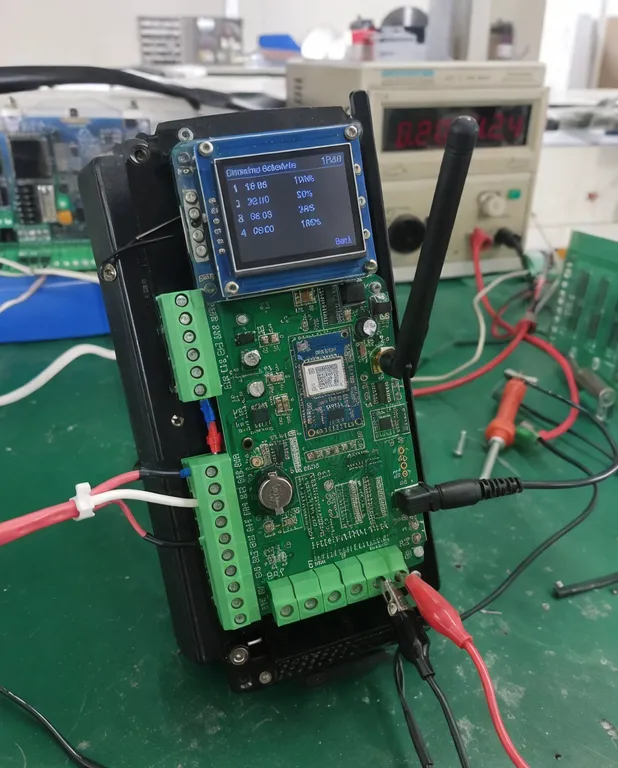
Our smart fixtures go through the same four-stage QC process as every other product we make, with additional controller function testing and sensor mode verification added at the assembly stage.
Smart Control Functions That Change the Bid Value
The difference between a standard solar street light and a smart solar street light isn't a single feature — it's a set of control functions that, together, change what the project owner can do with the lighting network after installation. Here's what those functions are and what they mean for the projects you're bidding on or supplying.
Scheduled Dimming
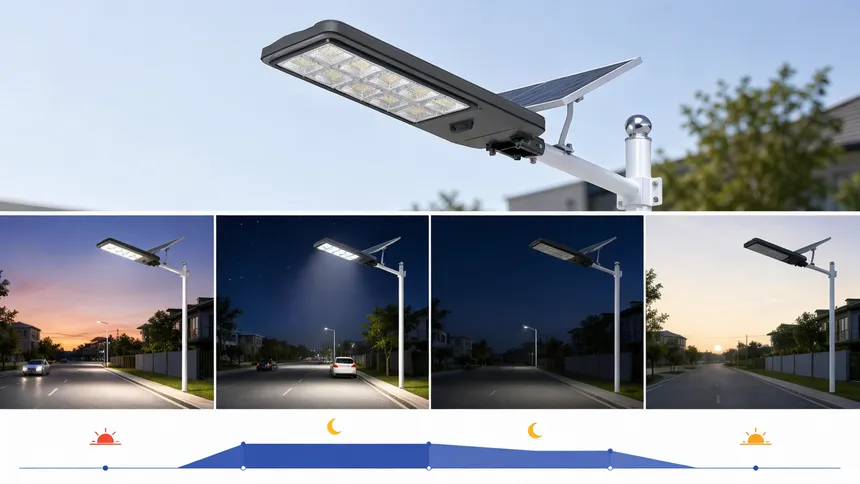
The controller runs a programmable dimming schedule — typically full output during peak traffic hours (early evening and pre-dawn), reduced output (30–50%) during low-traffic hours (midnight to 4 AM), and off or standby at dawn.
The schedule is set during commissioning and can be adjusted remotely if the communication module supports it.
For the project owner:
Extends battery autonomy without reducing illumination during the hours that matter.
For the buyer supplying the fixture:
A specification point that standard solar street lights can't match.
Note: We've seen buyers try to approximate this with a simple timer relay on a standard fixture. It works for on/off, but you lose the proportional dimming and the battery protection logic that prevents deep discharge during extended low-irradiance periods. The smart controller handles both.
PIR / Motion-Activated Boost
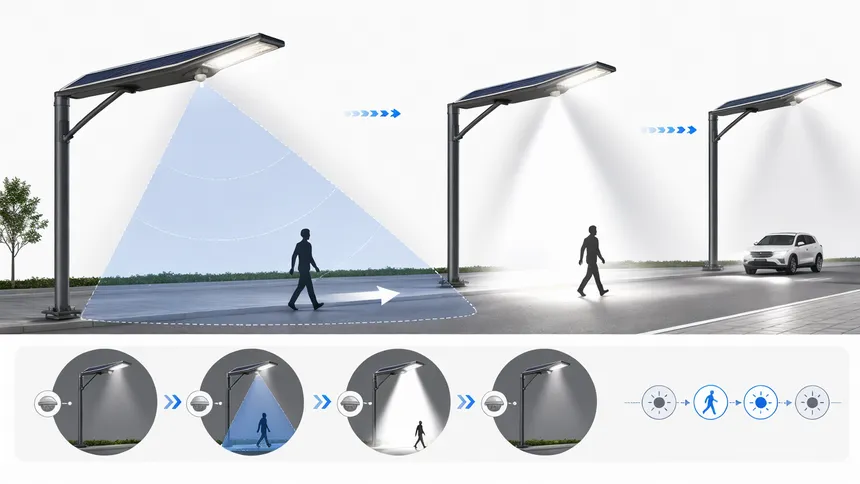
When a PIR sensor detects movement, the fixture boosts from its dimmed operating level to full output for a configurable hold time (typically 30–120 seconds), then returns to the scheduled dim level.
The sensor detection angle and sensitivity are set during commissioning.
Best suited for:
- Industrial access roads
- Campus perimeter paths
- Rural secondary roads
For roads with intermittent traffic, this extends battery life significantly compared to running full output all night.
Hold Time
30–120s
Configurable
Boost Level
100%
From dim state
Remote Monitoring and Fault Reporting
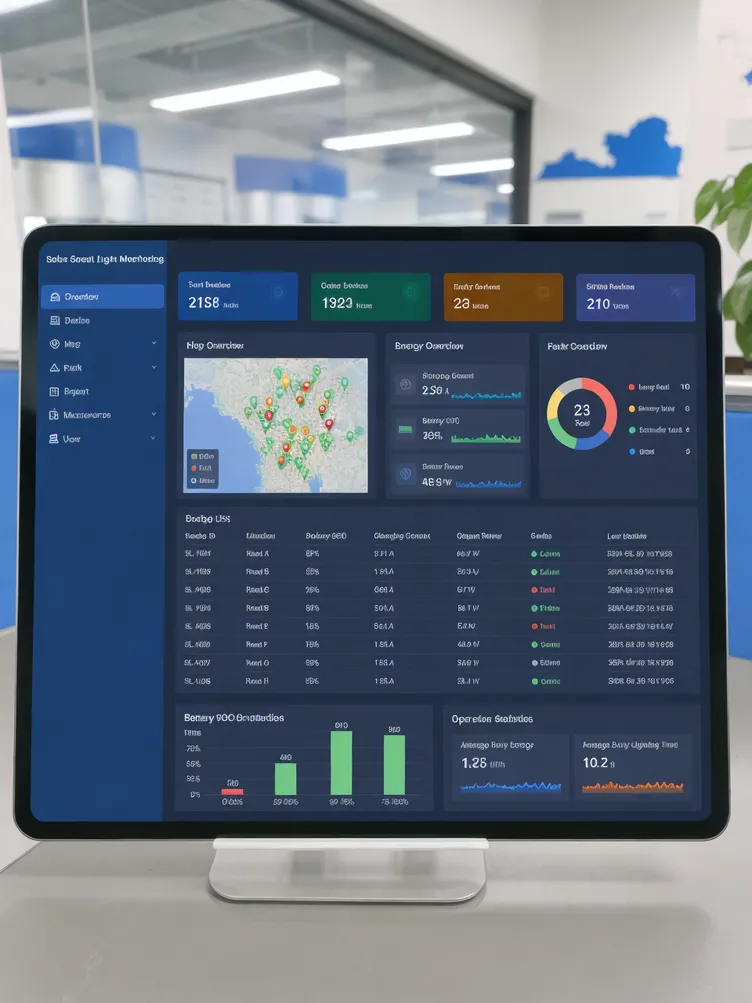
This is the function that changes the maintenance economics for large deployments. Each fixture reports its operating status — output level, battery state of charge, panel charging current, fault codes — to a central management interface. When a fixture triggers a fault (battery below threshold, LED driver fault, panel output below expected range), the system flags it without waiting for a resident to call the municipality or a crew to do a physical inspection round.
The Distributor's Pricing Argument
For a distributor selling into municipal programs, remote monitoring is the feature that justifies the price premium over standard solar street lights. The municipality's maintenance team can manage 500 poles from a dashboard instead of scheduling weekly inspection routes. That's a quantifiable labor cost reduction, and it's the argument that closes the premium tier sale.
Monitored Parameters
Output Level
Battery SoC, Panel Current
Fault Detection
Automatic
No physical inspection needed
Management Scale
500+ Poles
Single dashboard interface
Battery Protection Logic
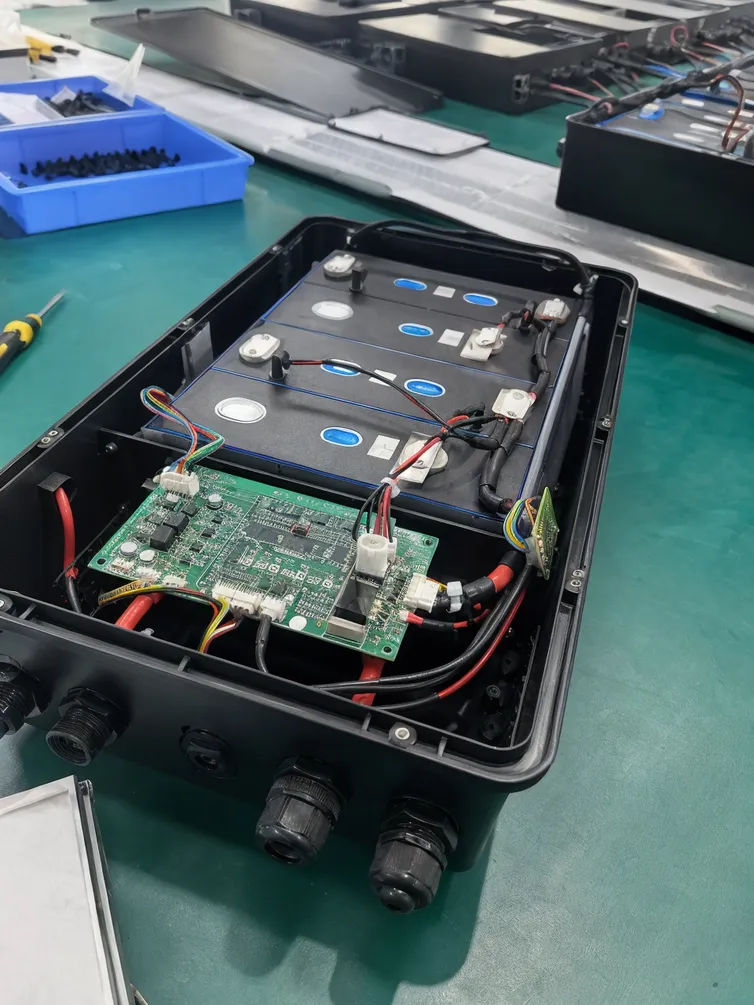
The controller monitors battery state of charge and applies protection logic to prevent deep discharge — the primary cause of premature battery degradation in solar street lighting. When the battery drops below a configurable threshold (typically 20% state of charge), the controller reduces output or enters a protection mode that preserves enough charge to restart the system when solar charging resumes.
Firmware-Level Integration
This is built into the controller firmware, not a separate component, and it's one of the reasons LiFePO4 battery packs in smart fixtures outlast those in standard fixtures running unmanaged discharge cycles.
Protection Threshold
20% SoC
Configurable per deployment
Recovery Mode
Auto-Restart
Resumes when solar charging returns
Deep discharge prevention extends LiFePO4 cycle life significantly compared to standard fixtures with unmanaged discharge profiles — a direct impact on total cost of ownership over a 5–7 year deployment horizon.
Operating Mode Control
Beyond scheduled dimming and motion response, the controller supports configurable operating modes: dawn-to-dusk full power, multi-level dimming profiles, motion-only activation, and — where the communication module supports it — remote override for special events or emergency conditions. The specific modes available depend on the controller firmware version and communication module specified at order.
| Smart Control Function | Commercial Value for Your Project | Project Note |
|---|---|---|
| Scheduled dimming | Extends battery autonomy; reduces energy waste during low-traffic hours | Schedule programmed at commissioning; remote adjustment requires communication module |
| PIR / motion boost | Reduces battery consumption on low-traffic roads; maintains safety illumination | Detection angle and hold time set at commissioning |
| Remote monitoring | Replaces routine inspection labor; enables predictive maintenance | Requires communication module; platform compatibility confirmed at order |
| Fault reporting | Identifies failed fixtures without physical inspection | Fault codes logged and transmitted per communication module capability |
| Battery protection logic | Prevents deep discharge; extends LiFePO₄ pack life | Built into controller firmware; threshold configurable |
| Remote mode override | Allows schedule adjustment without site visit | Requires communication module with two-way capability |
Need a specific control mode configuration?
Tell us which control modes your project requires — we'll confirm the configuration and firmware compatibility.
Product-Level Configuration Data for Roadway Projects
The specification table below covers typical values for JXSOL smart solar street lights. Actual configuration depends on your project inputs: pole height, road width, required lux level, daily operating hours, target autonomy days, and installation latitude. Send those inputs and we'll confirm the exact specification before you quote.
For the full category specification range across all solar street and roadway lighting products, see our solar street and roadway lighting range.
| Specification | Typical Value / Range | Buyer Note |
|---|---|---|
| LED Output | 30W – 200W | Matched to road width, pole height, and required lux level |
| Lumen Output | 3,000 lm – 24,000 lm (typical) | Confirmed at module assembly stage; not chip-rated |
| Solar Panel | 60W – 300W monocrystalline | Sized to battery capacity and daily operating hours at installation latitude |
| Battery Type | LiFePO4 (lithium iron phosphate) | 2,000+ cycle life; wider operating temperature range than standard lithium |
| Battery Capacity | 40Ah – 150Ah (typical) | Sized for target autonomy days and operating hours |
| Autonomy Days | 3 – 5 days (typical) | Higher autonomy requires larger battery and panel; affects unit cost |
| Control Modes | Scheduled dimming, PIR boost, remote monitoring, fault reporting, battery protection | Specific modes depend on controller firmware and communication module |
| Sensor Options | PIR motion sensor (standard); additional sensor types on request | Detection angle and sensitivity set at commissioning |
| Color Temperature | 3000K – 6500K | 4000K–5000K standard for road applications |
| IP Rating | IP65 / IP67 | IP65 standard; IP67 available for flood-prone or coastal sites |
| Pole Height Compatibility | 5m – 12m | Confirm pole height and arm length before specifying beam angle |
| Housing | Die-cast aluminum, powder-coated | Standard: silver grey, black, dark green; custom colors on 100+ unit runs |
| Communication Module | RF remote (standard); 4G/NB-IoT/LoRa on request | Protocol and platform compatibility confirmed at engineering review |
| Certifications | CE, RoHS, IP65/IP67, IEC 62124 | Documentation provided with order |
| Warranty | 3 years | Covers LED module, battery pack, and controller |
LED Output
30W – 200W
Matched to road width, pole height, and required lux level
Lumen Output
3,000 lm – 24,000 lm (typical)
Confirmed at module assembly stage; not chip-rated
Solar Panel
60W – 300W monocrystalline
Sized to battery capacity and daily operating hours at installation latitude
Battery Type
LiFePO4 (lithium iron phosphate)
2,000+ cycle life; wider operating temperature range than standard lithium
Battery Capacity
40Ah – 150Ah (typical)
Sized for target autonomy days and operating hours
Autonomy Days
3 – 5 days (typical)
Higher autonomy requires larger battery and panel; affects unit cost
Control Modes
Scheduled dimming, PIR boost, remote monitoring, fault reporting, battery protection
Specific modes depend on controller firmware and communication module
Sensor Options
PIR motion sensor (standard); additional sensor types on request
Detection angle and sensitivity set at commissioning
Color Temperature
3000K – 6500K
4000K–5000K standard for road applications
IP Rating
IP65 / IP67
IP65 standard; IP67 available for flood-prone or coastal sites
Pole Height Compatibility
5m – 12m
Confirm pole height and arm length before specifying beam angle
Housing
Die-cast aluminum, powder-coated
Standard: silver grey, black, dark green; custom colors on 100+ unit runs
Communication Module
RF remote (standard); 4G/NB-IoT/LoRa on request
Protocol and platform compatibility confirmed at engineering review
Certifications
CE, RoHS, IP65/IP67, IEC 62124
Documentation provided with order
Warranty
3 years
Covers LED module, battery pack, and controller
Specifications shown are typical values for this product type. Actual specifications depend on project configuration. Contact us with pole height, road width, operating hours, and autonomy target for a confirmed specification.
Market Segments Where Smart Solar Street Lighting Sells at a Premium
Smart solar street lighting isn't the right product for every project — and that's exactly what makes it a profitable segment for buyers who understand where it fits. The projects below are the ones where smart control functions translate directly into order value, margin, and repeat business.
Municipal Street Lighting Programs
Municipal governments managing street lighting networks are the primary market for smart solar street lighting. The buying logic is straightforward: a city with 1,000 solar street light poles can either schedule weekly inspection routes to check fixture status, or deploy smart fixtures that report their own status to a central dashboard. The labor cost difference over a 5-year maintenance cycle is significant, and it's a calculation that municipal procurement offices are increasingly making before they write the specification.
For buyers supplying municipal programs, smart solar street lighting opens a higher-margin product tier with a clear value argument. The per-unit cost is higher than standard solar street lights, but the selling price premium is larger — and the specification requirement for remote monitoring in municipal tenders is growing in North America, Europe, and the Middle East. Distributors who have established supply relationships in this segment report that smart fixtures now represent a growing share of their solar street lighting revenue, with reorder cycles tied to municipal budget cycles (typically annual or biennial).
Key Buying Logic
5-Year Labor Cost Reduction
Remote status reporting vs. weekly inspection routes
Specification-Driven Demand
Remote monitoring increasingly required in municipal tenders
Higher Margin Tier
Selling price premium exceeds per-unit cost increase
Predictable Reorder Cycles
Tied to annual or biennial municipal budget cycles
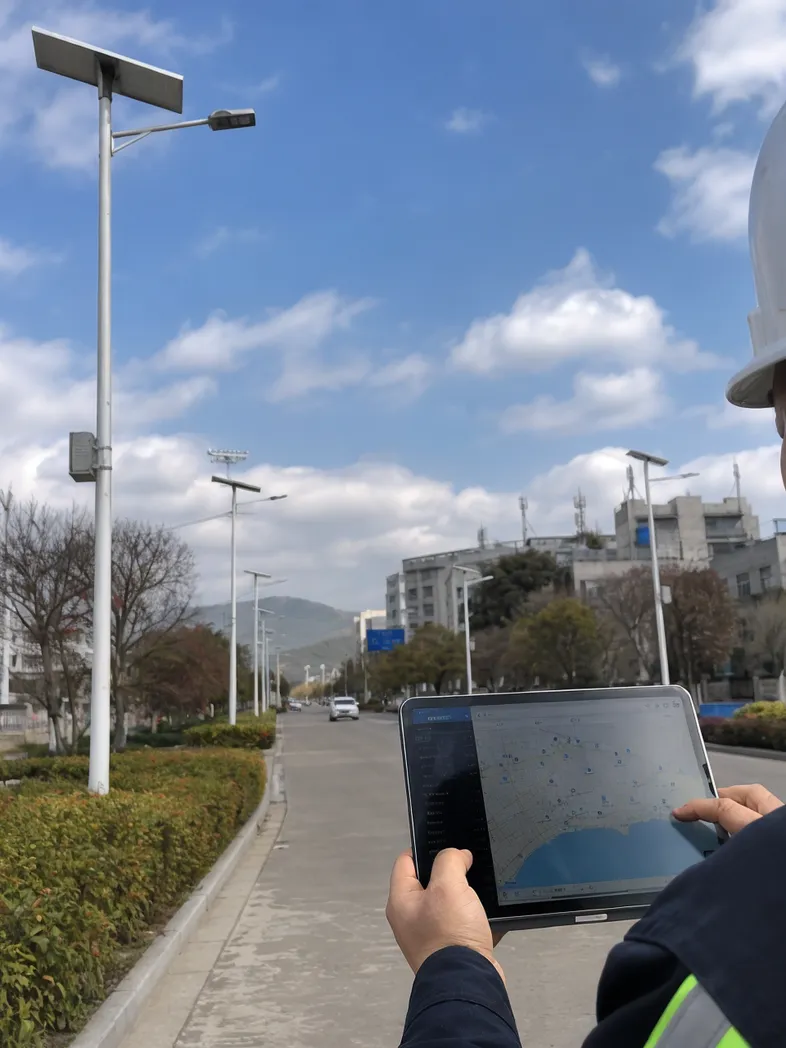
Primary Markets for Municipal Smart Solar
Industrial Parks and Logistics Roads
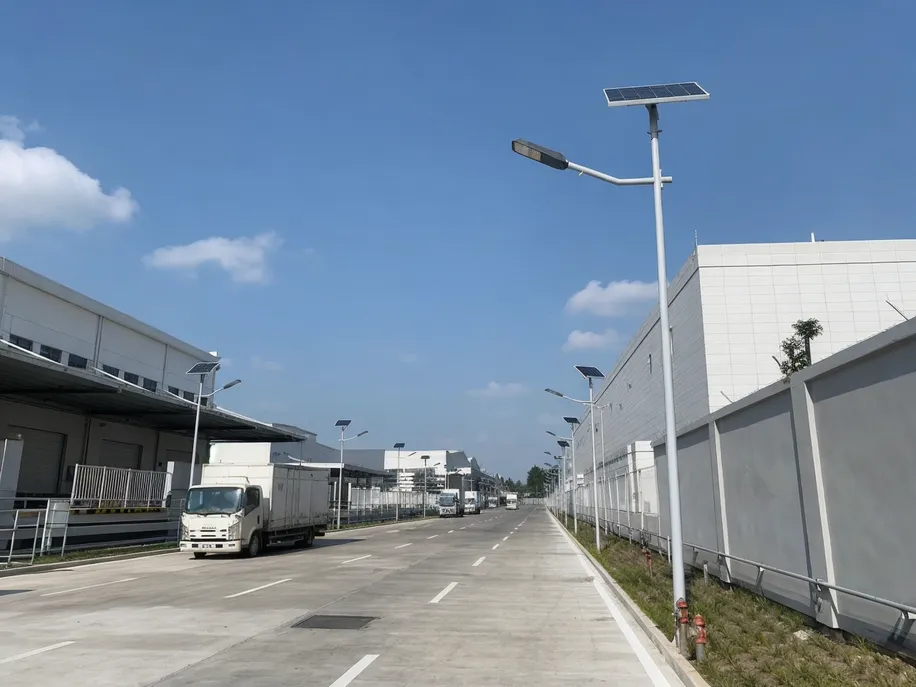
Industrial park operators and logistics facility developers install road lighting as site infrastructure, not as a public service. Their maintenance model is different from a municipality — they have on-site facilities teams, but those teams are managing buildings and equipment, not running lighting inspection routes. Smart solar street lighting with fault reporting means the facilities team gets an alert when a fixture needs attention, rather than finding out when a driver reports a dark section of road at 2 AM.
For project contractors bidding on industrial park infrastructure, smart fixtures are a differentiation point in the proposal. The per-unit cost premium is absorbed into the project budget, and the maintenance argument is easy to make to a facilities manager who understands operational cost.
Typical Order Profile
- Volume: 100–500 units per site
- Repeat orders as the park expands phases
- Buyer: EPC contractor or park developer
- Key value driver: Fault reporting eliminates manual patrol routes
Campus and Private Road Networks
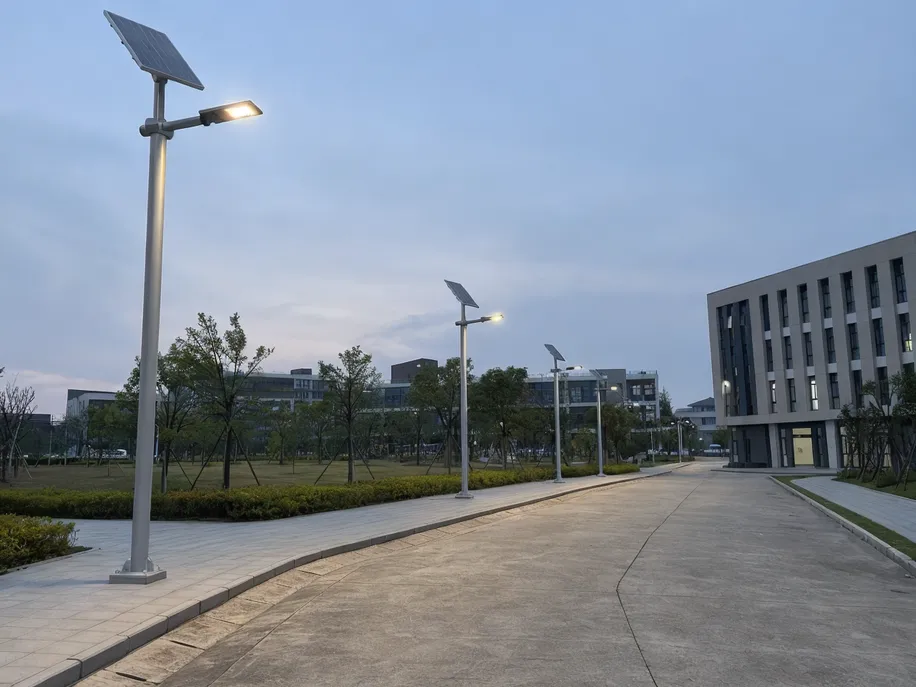
University campuses, hospital complexes, resort developments, and gated communities operate private road networks where lighting management is handled by a facilities or security team. Scheduled dimming is particularly valuable in these environments — the team can set different brightness profiles for different zones (main access roads at full output, perimeter paths at 50% after midnight) without manual intervention at each pole. Remote monitoring gives the facilities team a single view of the entire lighting network.
This segment tends to order in smaller quantities (50–200 units per project) but with higher specification requirements and less price sensitivity than standard road projects. The buyer is often a facilities consultant or EPC contractor who will specify the same product across multiple campus projects if the first installation performs well — making it a high-value segment for repeat business.
Segment Characteristics
Order Size
50–200 units per project
Spec Level
Higher than standard road projects
Price Sensitivity
Lower — value-driven purchasing
Repeat Potential
High — same spec across multiple sites
Infrastructure Tenders with Smart Control Requirements
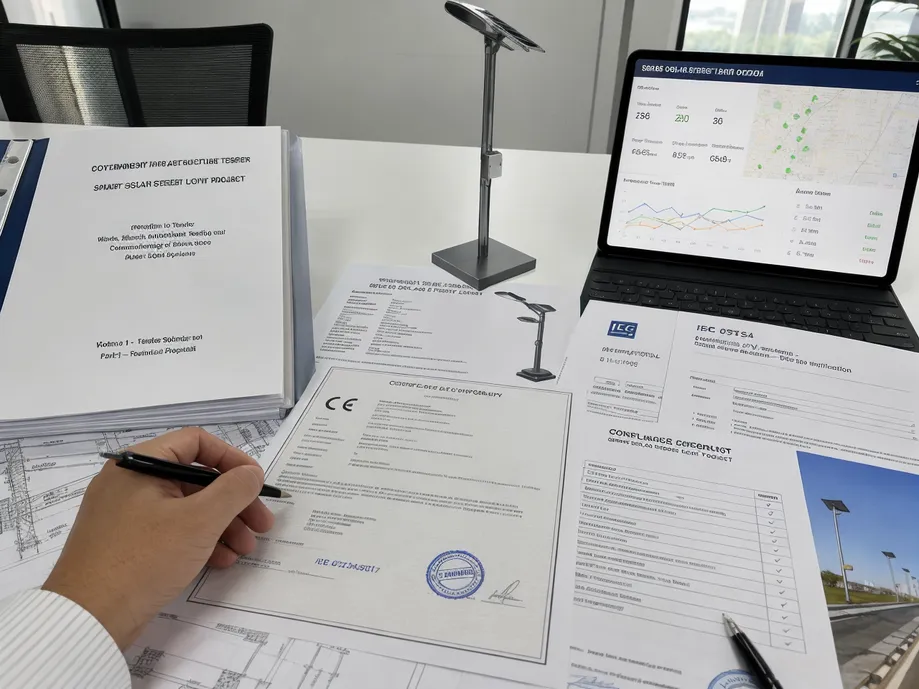
Government infrastructure tenders in regulated markets increasingly include smart control as a specification requirement rather than an optional feature. CE certification, IEC 62124 compliance, and documented remote monitoring capability are written into the tender specification, and suppliers who can't provide the documentation are disqualified before the price comparison begins.
For distributors and project contractors bidding on these tenders, having a qualified smart solar street light in the catalog is a prerequisite for participation. The margin on tender projects is typically lower than on private projects, but the volume is higher and the payment terms are more predictable. Buyers who have established a track record with smart fixtures in smaller projects are better positioned to win larger tender contracts.
Tender Qualification Checklist
- CE certification documentation
- IEC 62124 compliance report
- Remote monitoring capability proof
- Higher volume, predictable payment terms
Retrofit Programs: Upgrading from Standard Solar or Grid
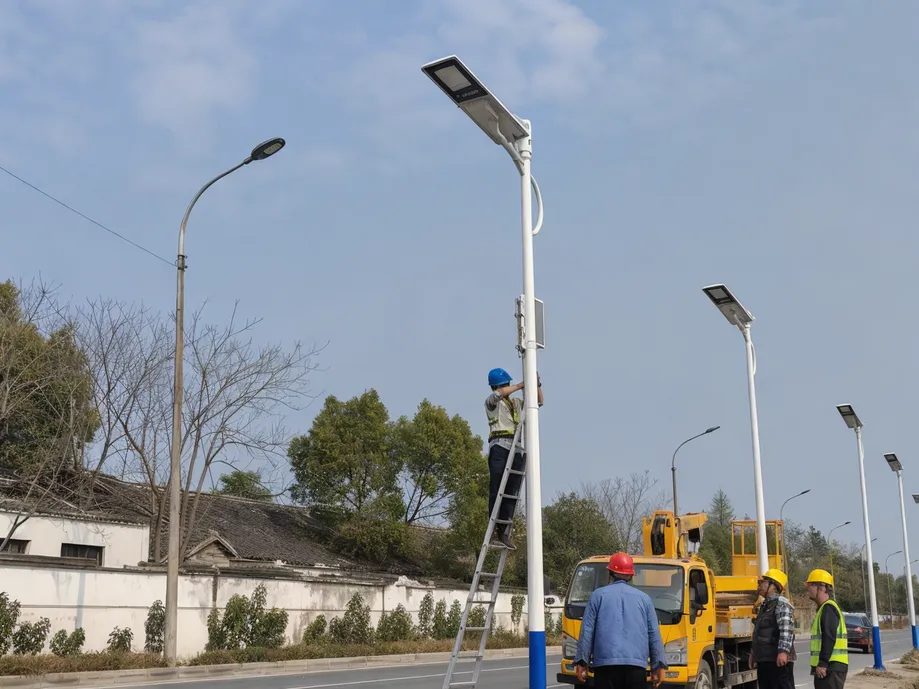
Retrofit projects — replacing aging grid-connected street lights or first-generation solar fixtures with smart solar street lighting — are a growing segment in markets where early solar street light deployments are reaching end-of-life. The buying argument is the combination of energy independence (no grid connection required) and smart control (the new fixtures do more than the old ones).
For buyers in markets with established solar street lighting infrastructure, retrofit programs represent a recurring revenue opportunity as the installed base ages.
Tell Us Your Project Segment and Quantity
We'll confirm the right configuration and pricing for your specific market — whether it's a government tender, retrofit program, or private development.
Get Configuration & PricingCommissioning, Connectivity, and After-Sales Cost Before the Bid
Smart solar street lights add commissioning requirements that standard fixtures don't have. Understanding those requirements before you bid protects your project margin and your relationship with the end client.
Project Inputs We Need Before Quoting
The configuration of a smart solar street light depends on more variables than a standard fixture. Before we can confirm a specification and price, we need:
- Installation location or latitude — determines panel wattage sizing for year-round performance
- Pole height and arm length — determines beam angle and lumen output requirement
- Road width and pole spacing — determines coverage pattern and fixture count
- Required lux level — from the project specification or road classification standard
- Daily operating hours — affects battery sizing and autonomy calculation
Configuration & Control Inputs
Smart control and connectivity variables that lock the specification before procurement:
- Target autonomy days — typically 3–5 days; higher autonomy increases battery and panel size
- Smart control requirements — which functions are required: scheduled dimming, PIR, remote monitoring, fault reporting
- Communication module requirement — RF remote only, or network-connected (4G/NB-IoT/LoRa); if network-connected, confirm the platform or protocol requirement
- Destination market — determines certification documentation requirements
Sending these inputs at the inquiry stage means we can return a confirmed specification and price, not a range. It also means the configuration is locked before component procurement, which prevents the spec changes mid-production that add cost and delay to both sides.
Commissioning Tasks That Affect Project Cost
Smart fixtures require commissioning steps that standard solar street lights don't. These are not complex, but they take time and need to be planned into the project schedule.
Controller Mode Setup
Dimming schedule, PIR sensitivity, hold time, and operating mode programmed per the project specification.
Sensor Function Check
PIR detection angle and range verified at each pole.
Communication Module Test
Network connectivity confirmed for each fixture (for network-connected configurations).
Battery State Verification
Initial charge state confirmed before handover.
Documentation Handover
Controller settings, network configuration, and fault code reference provided to the end client.
100-unit project: commissioning typically runs 1–2 days with a two-person team. For larger deployments, the commissioning schedule should be planned as a separate project phase, not assumed to be absorbed into installation time.
Communication Module Selection
The communication module determines what remote monitoring capability the fixture has and what infrastructure the project site needs to support it. Three options cover most project requirements:
RF Remote Control
No network infrastructure required
Allows schedule adjustment and mode changes from a handheld remote within range of the fixture
Best For
Projects where remote monitoring is not required but schedule flexibility is.
4G / NB-IoT
Cellular network connectivity; fixtures report to a cloud platform via the cellular network
No site infrastructure required beyond cellular coverage
Best For
Municipal programs and distributed deployments where site-level network infrastructure is not available.
LoRa
Long-range, low-power radio network; requires a LoRa gateway at the site or within range
Project owner manages the network infrastructure independently
Best For
Campus or industrial park deployments where a gateway can be installed.
Protocol and platform compatibility must be confirmed at the engineering review stage. We do not claim compatibility with specific third-party platforms without confirming the integration requirements first.
Get commissioning cost planning included with your quote.
OEM/ODM Control Options Without Losing Batch Consistency
Smart solar street lights have more customization variables than standard fixtures — and more ways for a batch to go wrong if the customization isn't managed carefully. Here's what we can configure, what requires engineering review, and where the limits are.
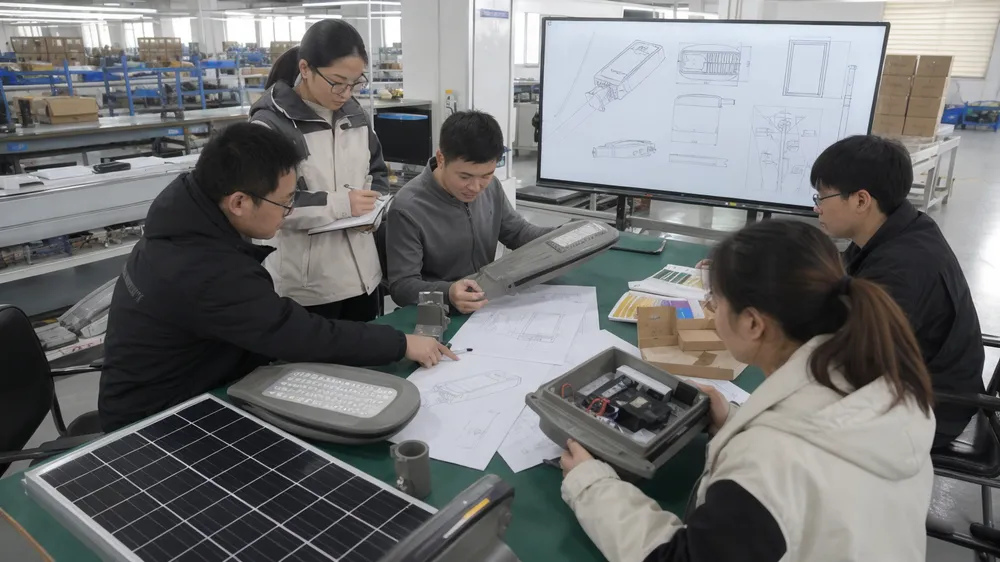
Engineering Review
Non-standard configurations go through engineering review before production — confirming achievability, locking specs before procurement, and flagging lead time implications.
MOQ 100 Units
Standard smart solar street light models start at 100 units. Custom color, logo, and packaging also require 100+ units minimum.
Customization Table
| Parameter | Standard Options | Custom Options | MOQ / Notes |
|---|---|---|---|
| LED Output | 30W, 60W, 100W, 150W, 200W | Other wattages within module design range | Engineering review required |
| Lumen Output | Per standard wattage steps | Adjusted within LED module design range | Confirmed at module assembly stage |
| Color Temperature | 4000K, 5000K (standard road) | 3000K–6500K range | Confirmed against CCT spec |
| Battery Capacity | 40Ah, 60Ah, 100Ah (typical) | Sized to autonomy and operating hours | Engineering review for non-standard sizing |
| Solar Panel Wattage | Per standard configurations | Sized to latitude and battery capacity | Engineering review required |
| Dimming Schedule | Factory default (full / 50% / off) | Custom multi-level schedule | Programmed at commissioning or pre-programmed at factory |
| Controller Logic | Standard firmware | Custom operating modes | Engineering review; minimum batch size applies |
| Sensor Mode | PIR standard | Additional sensor types on request | Confirm detection requirements |
| Communication Module | RF remote (standard) | 4G/NB-IoT/LoRa | Protocol and platform confirmed at engineering review |
| Housing Color | Silver grey, black, dark green | Any RAL color | 100+ units minimum for custom color |
| Logo / Labeling | JXSOL standard | Custom logo, brand labeling | 100+ units minimum |
| Packaging | Standard export carton | Custom packaging design | 100+ units minimum; packaging engineering included |
Engineering Review Process
OEM/ODM configurations with custom controller logic, communication modules, or non-standard battery/panel sizing go through an engineering review before production. The review:
- Confirms the configuration is achievable
- Locks the spec before component procurement
- Identifies lead time implications for non-standard components
Cost vs. Margin Trade-Off
Adding smart modules to a fixture increases setup, testing, and documentation requirements compared to a standard solar street light. The per-unit cost is higher, and the commissioning requirement is real.
The trade-off: a product that commands a higher selling price and differentiates your catalog from commodity all-in-one fixtures. Most buyers in this segment find the margin justifies the complexity — but it's worth understanding the full cost picture before committing to a smart configuration for a price-sensitive project.
Controller, Battery, and Waterproof QC for Smart Fixtures
Smart solar street lights have more failure modes than standard fixtures — the controller, communication module, and sensor add components that can fail independently of the LED module and battery. Our QC process for smart fixtures extends the standard four-stage inspection system with additional function tests specific to the smart control components.
SMT Control Board Assembly
The controller board is assembled on our automated SMT lines — the same lines that handle control boards for our full solar lighting range. SMT assembly controls solder joint quality and component placement accuracy to tolerances that manual assembly can't consistently achieve. After reflow, boards go through automated optical inspection (AOI) to catch solder defects, missing components, and placement errors before the board moves to function testing.
We switched to automated AOI on the control board line after seeing intermittent field failures that traced back to marginal solder joints that passed visual inspection but failed under thermal cycling. The AOI catches those before they leave the SMT stage.
That change added a step to the process and a small cost per board. It also eliminated a category of warranty claims that were expensive to diagnose and resolve in the field.
Controller Function Testing
Every controller board is function-tested before it's assembled into a fixture. The test bench runs through each operating mode and confirms that the controller responds correctly to each input. Boards that fail any mode test are pulled and the failure mode is logged.
Test bench covers:
- Full power output verification
- Dimming levels across programmed steps
- PIR trigger response timing
- Battery protection threshold activation
- Fault code generation
For communication-module-equipped fixtures, the module is tested for network registration and data transmission before final assembly. We don't assume a module works because it passed incoming inspection — we test it in the configuration it will be shipped in.
Battery Matching and Aging Test
Battery cell matching by capacity and internal resistance is standard across our full solar lighting range — it's the step that prevents the cell mismatch degradation that causes premature battery failure in the field.
For smart fixtures, the battery protection logic in the controller adds a layer of protection, but it doesn't substitute for matched cells. A pack with mismatched cells will still degrade faster than a matched pack, even with protection logic active.
Every completed battery pack goes through a full charge/discharge cycle on our aging test racks before it moves to final assembly. The aging test runs under load — not a continuity check, a full cycle — and confirms that the pack holds its rated capacity within tolerance. Packs that don't pass are pulled before they reach the fixture.
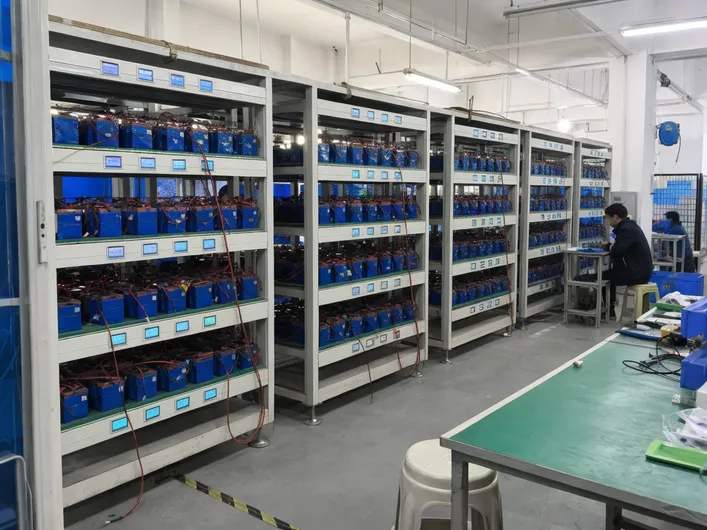
Key distinction:
Full charge/discharge cycle under load — not a continuity check. Confirms rated capacity within tolerance before assembly.
Waterproof Inspection
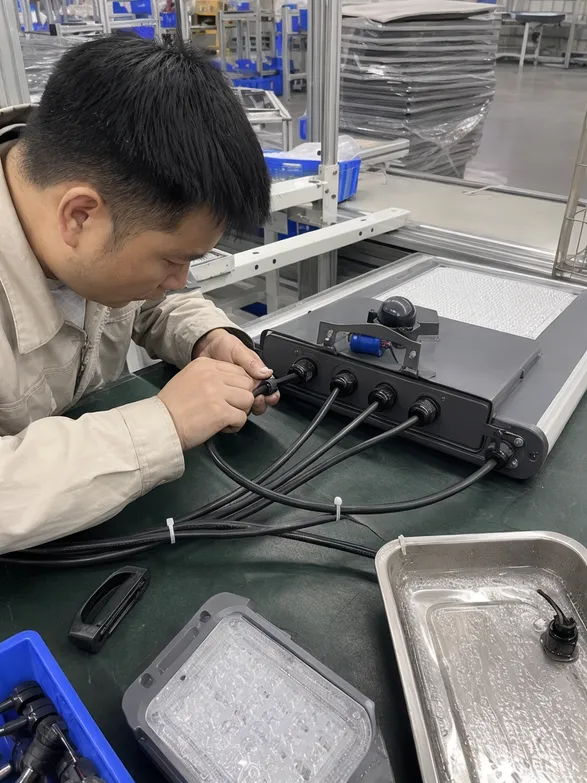
IP65/IP67 waterproof inspection is 100% on every unit — not a sample check. Smart fixtures have additional cable entry points for the communication module and sensor wiring, which are additional potential failure points for the waterproof seal. We inspect every cable entry point as part of the waterproof inspection, not just the main housing seal.
IP65 Testing
Dust ingress protection and water jet resistance verification.
IP67 Testing
Temporary immersion testing under controlled conditions.
Units that fail are pulled, the failure mode is identified, and the assembly process is corrected before the batch continues.
Certifications
Confirmed certifications for JXSOL smart solar street lights:
ISO 9001:2015
CE
RoHS
IP65/IP67
IEC 62124
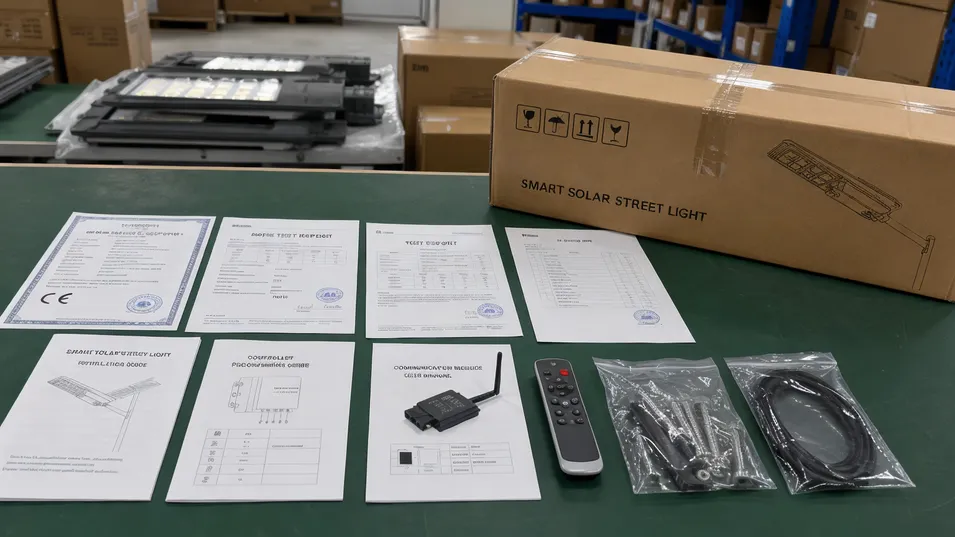
CE Declaration of Conformity, RoHS test reports, IP test certificates, and IEC 62124 documentation are provided with orders for markets that require them.
For markets with additional certification requirements, confirm at order placement.
Choosing Smart vs. Standard, All-in-One, Split, Road, and Highway Lines
Smart solar street lighting is the right choice for specific project requirements — not every project. The table below maps each product in the solar street and roadway lighting range to its primary use case so you can identify the right fit before sending an inquiry.
| Product | Best Fit | When to Choose Instead of Smart |
|---|---|---|
| Smart Solar Street Light | Municipal programs, infrastructure tenders, campuses, industrial parks — any project where remote monitoring, scheduled dimming, or fault reporting is required or specified | — (This is the smart option) |
| Standard Solar Street Lights | Residential roads, secondary roads, distributor stock programs where basic illumination is the requirement | When smart control is not in the project spec and budget is the primary constraint |
| Commercial Solar Street Lights | Commercial developments, business parks, private roads requiring higher lumen output | When higher output is needed but smart control is not specified |
| All-in-One Solar Street Light | Standard road projects, distributor catalog programs, simple installation environments | When compact form factor and installation simplicity matter more than control features |
| Split Solar Street Light | Higher-latitude projects, longer autonomy requirements, 200W+ output — where panel and battery sizing exceeds integrated housing capacity | When output or autonomy requirements exceed all-in-one limits, but smart control is not required |
| Solar Road Lights | Arterial roads, collector roads, urban road projects with specified pole height and road width coverage | When road-width coverage and pole height are the primary spec drivers |
| Solar Highway Lights | High-speed roads, expressways, high-mast configurations | When high-mast mounting and wide beam distribution are required |
| Solar Park Lighting | Parks, pedestrian paths, recreational areas — lower pole heights, decorative housing, warm CCT | When the application is pedestrian rather than vehicular |
| Solar Street Lighting Poles | Complete fixture-and-pole sourcing from one supplier | When sourcing poles alongside fixtures to simplify procurement |
Best fit: Municipal programs, infrastructure tenders, campuses, industrial parks — any project where remote monitoring, scheduled dimming, or fault reporting is required or specified
Best fit: Residential roads, secondary roads, distributor stock programs where basic illumination is the requirement
Choose over smart: When smart control is not in the project spec and budget is the primary constraint
Best fit: Commercial developments, business parks, private roads requiring higher lumen output
Choose over smart: When higher output is needed but smart control is not specified
Best fit: Standard road projects, distributor catalog programs, simple installation environments
Choose over smart: When compact form factor and installation simplicity matter more than control features
Best fit: Higher-latitude projects, longer autonomy requirements, 200W+ output — where panel and battery sizing exceeds integrated housing capacity
Choose over smart: When output or autonomy requirements exceed all-in-one limits, but smart control is not required
Best fit: Arterial roads, collector roads, urban road projects with specified pole height and road width coverage
Choose over smart: When road-width coverage and pole height are the primary spec drivers
Best fit: High-speed roads, expressways, high-mast configurations
Choose over smart: When high-mast mounting and wide beam distribution are required
Best fit: Parks, pedestrian paths, recreational areas — lower pole heights, decorative housing, warm CCT
Choose over smart: When the application is pedestrian rather than vehicular
Best fit: Complete fixture-and-pole sourcing from one supplier
Choose over smart: When sourcing poles alongside fixtures to simplify procurement
The Practical Decision Point
If the project specification includes remote monitoring, scheduled dimming, or fault reporting — or if the end client is a municipality that will eventually require those features — specify smart from the start. Retrofitting smart control onto standard fixtures after installation is possible but adds cost and complicates the warranty picture.
If you're not sure which configuration fits your project, send us the project brief and we'll recommend the right product and configuration.
Contact JXSOL to Confirm Which Product Fits Your ProjectPacking, Documentation, and RFQ Inputs for Project Orders
Export Packing
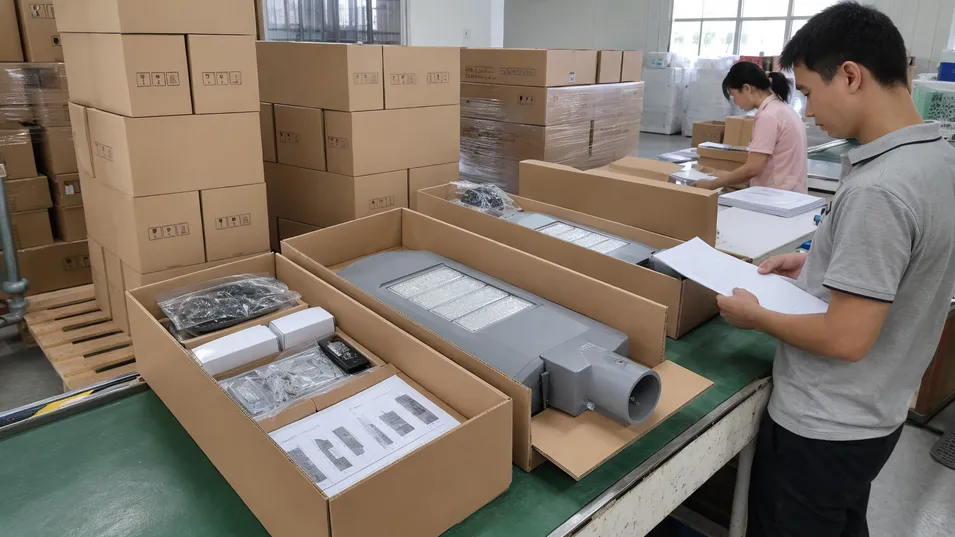
Smart solar street light fixtures are packed in individual export cartons with accessory packs checked against a packing list before carton sealing. Accessory packs for smart fixtures include:
- Mounting hardware
- Installation guide
- Controller programming guide
- Remote control unit (for RF-equipped models)
- Communication module documentation
Note: Missing accessories on a smart fixture installation site cause more delay than on a standard fixture — the controller can't be commissioned without the programming guide and remote. We check accessory packs before the carton closes.
Carton dimensions are sized for standard 20GP and 40HQ container loading. Palletized packing is available for buyers who need palletized delivery for warehouse receiving or project site logistics — confirm at order placement.
Each carton carries a batch code that traces back to the production run, component lot, and QC records.
Export Documentation
Standard documentation:
- Commercial invoice
- Packing list
- Certificate of origin
For regulated markets:
- CE Declaration of Conformity
- RoHS test reports
- IP test certificates
- IEC 62124 documentation
English-language installation and commissioning guides are standard. If your market requires additional documentation — translated guides, country-specific certification formats, or specific labeling requirements — confirm at order placement.
RFQ Inputs for Smart Solar Street Light Orders
To return a confirmed specification and price, we need the following inputs:
- 1 Road width and pole spacing
- 2 Pole height and arm length
- 3 Required lux level or lumen output target
- 4 Daily operating hours
- 5 Target autonomy days (typically 3–5)
- 6 Installation location or latitude
- 7 Smart control requirements: which functions are required (scheduled dimming, PIR, remote monitoring, fault reporting)
- 8 Communication module requirement: RF remote only, or network-connected (4G/NB-IoT/LoRa); if network-connected, platform or protocol requirement
- 9 Destination market (for certification documentation)
- 10 Order quantity
- 11 Branding or private-label requirements
The more complete your inputs, the faster we can return a confirmed quote. If you're earlier in the process, send what you have — we'll work from there and ask for the missing inputs.
Ready to start your RFQ? Send us your project inputs and we'll return a confirmed specification and price.
Submit Your RFQ Inputs to JXSOLWarranty, After-Sales Support, and Maintenance Guidance
Smart solar street lights have more components and more integration points than standard fixtures. The warranty structure reflects that complexity — covering the fixture as a system, not just individual parts.
Standard Warranty Coverage
| Component | Warranty Period |
|---|---|
| LED module | 3 years |
| Solar panel | 5 years (25-year output warranty from cell manufacturer) |
| LiFePO4 battery | 3 years |
| Smart controller | 3 years |
| Communication module | 2 years |
| Housing and structure | 5 years |
| PIR / microwave sensor | 2 years |
Note: Communication modules and sensors carry shorter warranty periods because they are exposed to more environmental variables and have more failure modes than passive components. This is standard across the industry.
Warranty Claim Process
Warranty claims follow a structured process designed to minimize downtime:
- 1 Report: Submit fault description with batch code, installation date, and photos or monitoring data showing the issue.
- 2 Diagnosis: Our technical team reviews the data. For network-connected fixtures, we can often diagnose remotely via the monitoring platform.
- 3 Resolution: Replacement components shipped against the next production run, or credited against a future order — buyer's choice.
For network-connected installations, the monitoring platform often identifies faults before the site team does. This means warranty claims can be initiated proactively — we contact you when we see a pattern that indicates a component issue.
Response time: Initial technical response within 48 hours. Replacement component shipping within the next available production batch (typically 2–4 weeks depending on component).
Maintenance Guidance for Smart Solar Street Lights
Routine maintenance (recommended annually):
- Clean solar panel surface — dust accumulation reduces charging efficiency
- Inspect mounting hardware and tighten if needed
- Check cable connections and waterproof seals
- Verify sensor operation (PIR/microwave response test)
- Check communication module signal strength (for networked fixtures)
Component lifecycle planning:
- Battery: LiFePO4 cells maintain >80% capacity at 2000 cycles. Plan battery replacement at year 6–8 depending on cycling depth.
- LED module: L70 rated at 50,000+ hours. At 10 hours/night, that's 13+ years before output drops below 70%.
- Solar panel: Monocrystalline panels degrade ~0.5%/year. Still producing >80% output at year 25.
- Controller: Solid-state electronics with no moving parts. Expected life exceeds fixture life if operating within temperature spec.
- Communication module: Technology lifecycle is the limiting factor — 4G/NB-IoT modules may need replacement if network standards change.
Smart advantage: Network-connected fixtures report their own health data. Instead of scheduling maintenance visits on a calendar, you can maintain based on actual condition — cleaning panels when charging efficiency drops, replacing batteries when capacity falls below threshold. This reduces maintenance cost and prevents unnecessary site visits.
Need warranty terms confirmed for a specific order, or want to discuss maintenance planning for a large installation?
Discuss Warranty and Support Terms with JXSOLReady to Specify Smart Solar Street Lights for Your Project?
Send us your project requirements — road dimensions, lighting targets, smart control needs, and installation location. We'll return a confirmed specification, energy calculation, and pricing within 48 hours.
FAQ for Smart Solar Street Light Buyers
Technical and procurement questions answered for municipal engineers, EPC contractors, and project specifiers evaluating smart solar street lighting.
What makes a solar street light "smart" for municipal projects?
In a municipal context, "smart" means the fixture can be managed remotely — the lighting schedule can be adjusted without a site visit, the operating status of each fixture is reported to a central system, and faults are flagged automatically rather than discovered during physical inspection rounds.
Core Smart Functions
- Scheduled dimming — programmable brightness levels by time of night
- Remote monitoring — operating status and battery state reported to a management interface
- Fault reporting — automatic alerts when a fixture operates outside normal parameters
Some configurations add PIR motion sensing for brightness boost on low-traffic roads. The communication module — 4G/NB-IoT or LoRa — determines what network infrastructure the project requires and what platform the data reports to.
For municipal procurement, the specification typically defines which functions are required; the communication protocol is confirmed during the engineering review.
Do smart solar street lights need a network connection?
It depends on the monitoring requirement.
RF Remote Control
Requires no network infrastructure — the remote communicates directly with the fixture within range, allowing schedule adjustment and mode changes without any network connectivity. Suitable for projects where schedule flexibility is needed but centralized monitoring is not.
Network-Connected Module
Required for remote monitoring and fault reporting across a distributed fleet. 4G/NB-IoT uses the cellular network — no site infrastructure needed beyond cellular coverage. LoRa requires a gateway within range of the fixtures.
If your project specification includes fleet monitoring, confirm the communication module requirement and platform compatibility at the inquiry stage.
What dimming schedule is best for roadway projects?
The most common schedule for municipal road lighting is three levels: full output from dusk to approximately 11 PM (peak traffic hours), 50% output from 11 PM to 5 AM (low-traffic hours), and off or standby from 5 AM to dawn.
Typical Three-Level Dimming Schedule
This schedule extends battery autonomy by 30–40% compared to full-output all-night operation, which either allows a smaller battery for the same autonomy target or increases autonomy days for the same battery size.
The exact schedule depends on the road classification, local traffic patterns, and the project owner's maintenance preferences. We program the schedule at commissioning based on the project specification — it can be adjusted remotely after installation if the communication module supports it.
How many autonomy days should smart solar street lighting use?
Three days is the standard minimum for most road lighting applications — it covers a typical sequence of overcast days without the system going dark. Five days is common for projects in regions with variable solar irradiance, monsoon seasons, or high-latitude winters.
Standard Minimum
Most road lighting applications, stable solar regions
Extended Autonomy
Variable irradiance, monsoon seasons, high-latitude winters
The smart controller's battery protection logic and scheduled dimming extend effective autonomy compared to an unmanaged standard fixture running the same battery capacity — the controller prevents deep discharge and reduces consumption during low-traffic hours.
That said, the protection logic doesn't substitute for correctly sized battery capacity. We size battery capacity against your target autonomy days, daily operating hours, and installation latitude as part of the configuration process.
What IP rating and certifications should buyers confirm for smart solar street lights?
IP65 is the minimum for any outdoor installation — it covers dust ingress and water jet resistance from any direction. IP67 adds temporary immersion protection and is worth specifying for flood-prone sites, coastal locations with heavy salt spray, or any environment where standing water is a regular condition.
Smart fixtures have additional cable entry points for the communication module and sensor wiring; confirm that the IP rating applies to the complete assembled fixture, not just the main housing.
Certifications to confirm:
- CE — Required for European market entry and increasingly referenced in project specifications in other regulated markets.
- IEC 62124 — Covers photovoltaic system performance and is commonly specified in solar street lighting tenders.
- RoHS — Required for EU import compliance.
We hold CE, RoHS, IP65/IP67, and IEC 62124 certifications with documentation available per order.
What is the MOQ for JXSOL smart solar street light orders?
smart solar street light models
For OEM/ODM configurations — custom controller logic, non-standard communication modules, custom battery/panel sizing, private label — MOQ depends on the customization scope and is confirmed after the engineering review.
Most new buyers in this segment start with a 2–5 unit sample order to test commissioning, confirm controller function, and validate the fixture in their target environment before placing the first production order. We can ship samples ahead of a production order.
For project orders with a confirmed specification, lead time is confirmed at order placement.
Send Your Project Specs for a Smart Solar Street Light Quote
The most useful inquiry includes: road width, pole height, pole spacing, required lux level or lumen output target, daily operating hours, target autonomy days, installation location or latitude, smart control requirements (which functions), communication module requirement, destination market, order quantity, and any branding requirements. With those inputs, we return a confirmed specification and price — not a range.
What to Include in Your Inquiry
- Road width, pole height, pole spacing
- Required lux level or lumen output target
- Daily operating hours & target autonomy days
- Installation location or latitude
- Smart control requirements (which functions)
- Communication module requirement
- Destination market, order quantity, branding needs
Earlier in the Process?
If you're comparing smart vs. standard configurations, building a distributor catalog, or evaluating JXSOL as a supplier — send what you have. We'll work from there.
+8615398807118
9th Floor, Houda Industrial, No. 65 Pinghe Road, Guzhen Town, Zhongshan, Guangdong, 528421, China
© 2026 JXSOL. All rights reserved.