

Portable Solar Generator Kits for Distributors
Panel-plus-power configurations, OEM/ODM from 100 units, CE and RoHS certified, 100% pre-shipment inspection before every container closes.
Manufactured by a solar-powered product factory with 13+ years of battery testing discipline.
13+
Years Battery Testing
ISO 9001
Quality System
100
Unit MOQ (OEM/ODM)
6
Production Lines
Solar Generator Kits for Solar Product Distributors
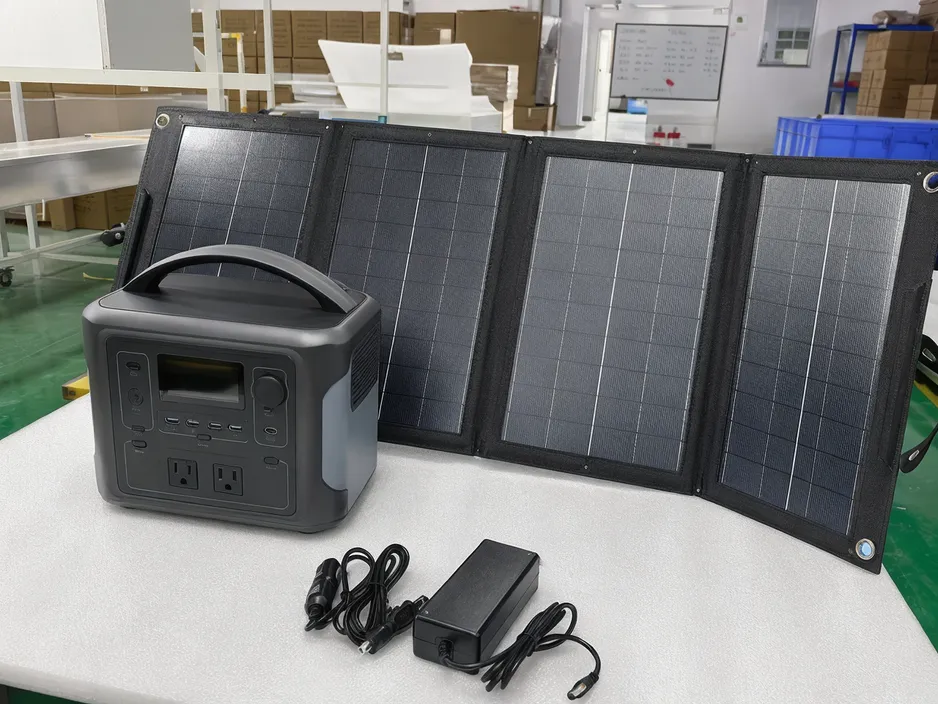
A solar generator, as we supply it, is a portable power unit with solar charging compatibility — typically sold as a panel-plus-battery bundle or as a power station with a matched solar panel input spec. The distinction from a standalone portable power station is commercial, not just technical: the solar generator is positioned as a complete kit, and the bundle format is where the margin and the market differentiation live.
JXSOL is primarily a solar lighting manufacturer. Solar generators and portable power products are an adjacent line we support for buyers who want to expand a solar-powered catalog without adding a separate factory relationship. If you're already sourcing solar street lights, flood lights, or garden lighting from us, adding a portable solar generator SKU runs through the same engineering team, the same inspection lab, and the same reorder process. If you're new to JXSOL, the Solar Battery & Portable Power category page covers the full product family and how the lines fit together.
The buyers who get the most out of this product line are distributors building outdoor, emergency preparedness, or off-grid kit programs — channels where a bundled solar charging solution commands a higher average order value than a power station sold alone. Quote solar generator with your target capacity, panel wattage, and destination market, and we'll confirm the right configuration.
Bundle Format
Panel + power station sold as a complete kit — the configuration where margin and differentiation live.
Same Factory Relationship
Same engineering team, inspection lab, and reorder process as solar lighting lines.
Higher AOV
Bundled solar charging solutions command higher average order value than standalone power stations.
Bundle Configuration Is Where the Margin Is Made
Before you look at a spec table, the commercial decisions that determine your landed cost and selling price band are the configuration choices — and they're worth thinking through before you send an RFQ.
Battery Capacity Tier
The 500 Wh–1,000 Wh range covers the outdoor recreation and emergency preparedness sweet spot — light enough to carry, enough output to run a CPAP, charge phones, and power LED lighting for a weekend.
The 1,000 Wh–2,000 Wh range moves into serious off-grid and field use, with higher landed cost but meaningfully higher retail price points.
Above 2,000 Wh, you're competing with home backup products on price and logistics, and the portable positioning starts to blur.
Most of our buyers in this category anchor their first SKU in the 500–1,000 Wh range and add a higher-capacity model once they understand their market's demand.
Solar Panel Wattage
Panel wattage determines how fast the kit recharges in the field — and how the bundle photographs and merchandises.
A 100W panel paired with a 500 Wh unit gives roughly 5–6 hours of full-sun recharge time, which is a credible claim for outdoor retail. A 200W panel cuts that to 3 hours and justifies a higher bundle price.
The panel wattage also affects carton configuration and container loading — a 200W panel adds meaningful volume to the kit, and that affects your freight cost per unit.
We've had buyers spec a larger panel than their market actually needs because it looks better on the listing, then discover the freight premium erodes the margin they were trying to build. The right panel size is the one that matches your buyer's actual use pattern, not the largest one that fits in the carton.
Inverter Output
Rated and peak output determines what loads the unit can run.
300W–500W rated output covers phone charging, laptops, small appliances, and LED lighting.
1,000W+ rated output covers power tools, small refrigerators, and medical devices.
Peak output matters for motor-start loads (refrigerators, pumps) that draw 2–3× their running wattage at startup. If your market is outdoor recreation, 500W rated is usually sufficient. If your market is emergency preparedness or field service, 1,000W+ is the more defensible spec.
Output Port Mix
AC outlets, DC 12V, USB-A, USB-C PD — the port mix affects how the product is perceived at retail and how many accessories your buyer needs to carry separately.
A well-configured port mix reduces the "wrong cable" support tickets that generate returns.
For North American markets, two AC outlets plus USB-C PD is the standard expectation. For European markets, confirm the socket type before production.
Charging Inputs
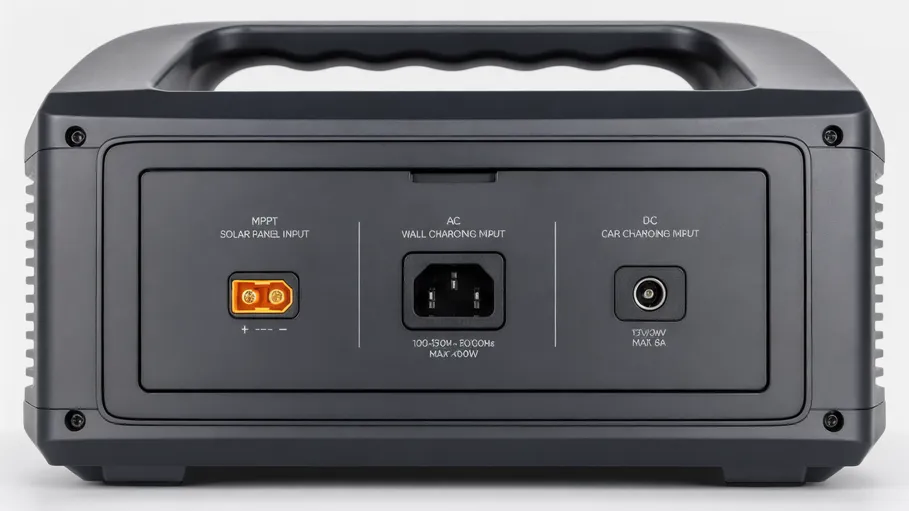
Solar panel input (MPPT), AC wall charging, and DC car charging determine the product's versatility claim. All three inputs is the standard configuration for a portable solar generator.
MPPT charging efficiency matters for the solar input spec: a well-tuned MPPT controller extracts more usable power from the panel across varying light conditions, which is a real performance difference your downstream buyers can verify in the field.
Ready to Spec Your Bundle?
Send us your target capacity, AC output, panel wattage, port configuration, and destination market — we'll spec the bundle that protects your margin.
Procurement Specification Table for Solar Generator Quotes
The table below covers the parameter fields you'll need to confirm before placing an order. Fields marked "configurable" are OEM options — the actual value depends on your program requirements and engineering review.
| Parameter | Typical / Configurable Range | Notes |
|---|---|---|
| Battery capacity | 300 Wh – 2,000 Wh (configurable by tier) | Confirm usable capacity vs rated capacity — they differ by BMS depth-of-discharge setting |
| Battery chemistry | LiFePO4 or NMC (configurable) | LiFePO4 preferred for cycle life; NMC for energy density in weight-sensitive programs |
| Rated AC output | 300W – 2,000W (model-dependent) | Confirm for your target load profile |
| Peak AC output | Typically 2× rated (model-dependent) | Relevant for motor-start loads |
| AC output voltage | 110V/60Hz or 220V/50Hz (configurable by region) | Must be confirmed before production — affects inverter spec and CE documentation path |
| Solar input (MPPT) | 100W – 400W (configurable by panel bundle) | MPPT voltage range should match the panel's Voc; confirm compatibility |
| AC charging input | Standard wall adapter, 100–240V | Included in standard kit |
| DC car charging | 12V/24V (configurable) | Optional input; confirm if your market uses car charging as a primary input |
| DC output | 12V DC (configurable) | Port count and amperage are OEM options |
| USB-A output | 5V/2.4A typical (configurable) | Port count is OEM option |
| USB-C PD output | Up to 100W PD (configurable) | Confirm PD wattage for your market's device expectations |
| BMS protections | Overcharge, over-discharge, over-current, short-circuit, over-temperature, cell balancing | Confirm BMS test data, not just spec sheet claim |
| Cycle life (LiFePO4) | 2,000+ cycles at 80% DoD (typical) | Confirm with test data for your selected chemistry and capacity tier |
| Operating temperature | Discharge: -20°C to 60°C; Charge: 0°C to 45°C (typical) | Cold-market buyers should confirm low-temperature charging protection |
| Solar panel bundle | 100W – 200W monocrystalline (configurable) | Foldable or rigid panel options; confirm connector type matches unit input |
| Accessories | Charging cables, AC adapter, DC car cable, solar panel cable, carry bag (configurable) | Accessory kit composition is an OEM option |
| Carton configuration | Single unit per carton (typical); panel may ship separately | Confirm carton dimensions and weight for your freight planning |
| MOQ | 100 units (standard models) | Custom electrical configurations require engineering review before MOQ confirmation |
| Warranty support | 1–3 years (model-dependent) | Confirm warranty terms at order stage |
| Documentation | CE, RoHS, UN38.3, MSDS (model and destination-dependent) | Battery shipping documents confirmed per order — do not assume; confirm before production |
Battery capacity
300 Wh – 2,000 Wh (configurable by tier)
Confirm usable capacity vs rated capacity — they differ by BMS depth-of-discharge setting
Battery chemistry
LiFePO4 or NMC (configurable)
LiFePO4 preferred for cycle life; NMC for energy density in weight-sensitive programs
Rated AC output
300W – 2,000W (model-dependent)
Confirm for your target load profile
Peak AC output
Typically 2× rated (model-dependent)
Relevant for motor-start loads
AC output voltage
110V/60Hz or 220V/50Hz (configurable by region)
Must be confirmed before production — affects inverter spec and CE documentation path
Solar input (MPPT)
100W – 400W (configurable by panel bundle)
MPPT voltage range should match the panel's Voc; confirm compatibility
AC charging input
Standard wall adapter, 100–240V
Included in standard kit
DC car charging
12V/24V (configurable)
Optional input; confirm if your market uses car charging as a primary input
DC output
12V DC (configurable)
Port count and amperage are OEM options
USB-A output
5V/2.4A typical (configurable)
Port count is OEM option
USB-C PD output
Up to 100W PD (configurable)
Confirm PD wattage for your market's device expectations
BMS protections
Overcharge, over-discharge, over-current, short-circuit, over-temperature, cell balancing
Confirm BMS test data, not just spec sheet claim
Cycle life (LiFePO4)
2,000+ cycles at 80% DoD (typical)
Confirm with test data for your selected chemistry and capacity tier
Operating temperature
Discharge: -20°C to 60°C; Charge: 0°C to 45°C (typical)
Cold-market buyers should confirm low-temperature charging protection
Solar panel bundle
100W – 200W monocrystalline (configurable)
Foldable or rigid panel options; confirm connector type matches unit input
Accessories
Charging cables, AC adapter, DC car cable, solar panel cable, carry bag (configurable)
Accessory kit composition is an OEM option
Carton configuration
Single unit per carton (typical); panel may ship separately
Confirm carton dimensions and weight for your freight planning
MOQ
100 units (standard models)
Custom electrical configurations require engineering review before MOQ confirmation
Warranty support
1–3 years (model-dependent)
Confirm warranty terms at order stage
Documentation
CE, RoHS, UN38.3, MSDS (model and destination-dependent)
Battery shipping documents confirmed per order — do not assume; confirm before production
Specifications shown are typical or configurable ranges for this product type. Actual specifications are model-dependent and must be confirmed by data sheet before order.
Contact JXSOL for Model SelectionMarket Segments Where Solar Generator Programs Sell Through
The commercial value of a solar generator program depends on which channel you're selling into. These are the segments where we see consistent sell-through for buyers in this product line.
Outdoor Retail and Camping Channels
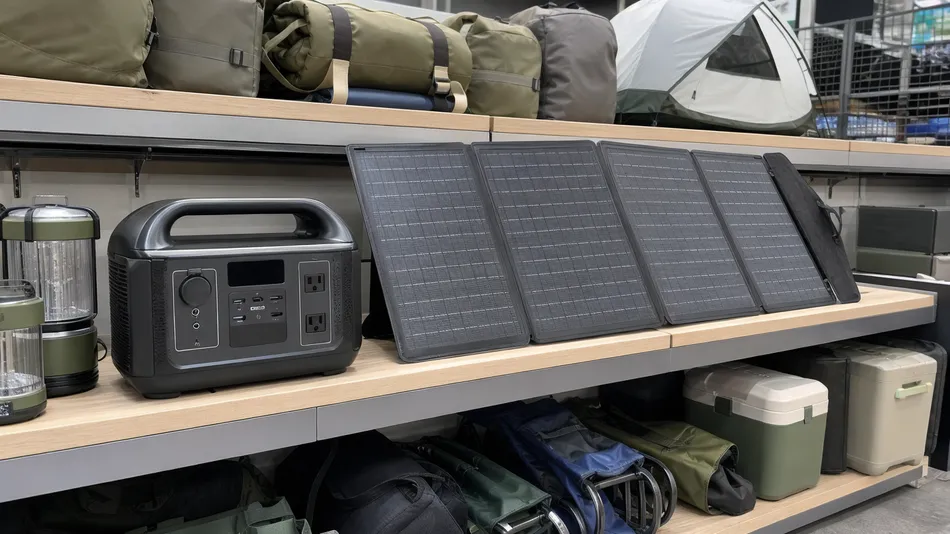
Outdoor retail is the highest-volume channel for portable solar generators in North America and Europe. The product sells as a seasonal SKU — spring and summer are the primary sell-in windows, with emergency preparedness spikes around storm seasons.
The bundle format (power station plus solar panel) is a natural fit for outdoor retail because it photographs well, justifies a higher price point than a standalone unit, and gives the buyer a complete solution rather than a component they need to pair themselves.
Standard Configuration for This Channel
Channel insight: We've seen outdoor retail programs fail not because the product was wrong but because the packaging didn't communicate the value clearly enough. The carton needs to communicate the product's capability clearly at shelf. OEM carton design is worth the investment for this channel.
Emergency Preparedness Distributors
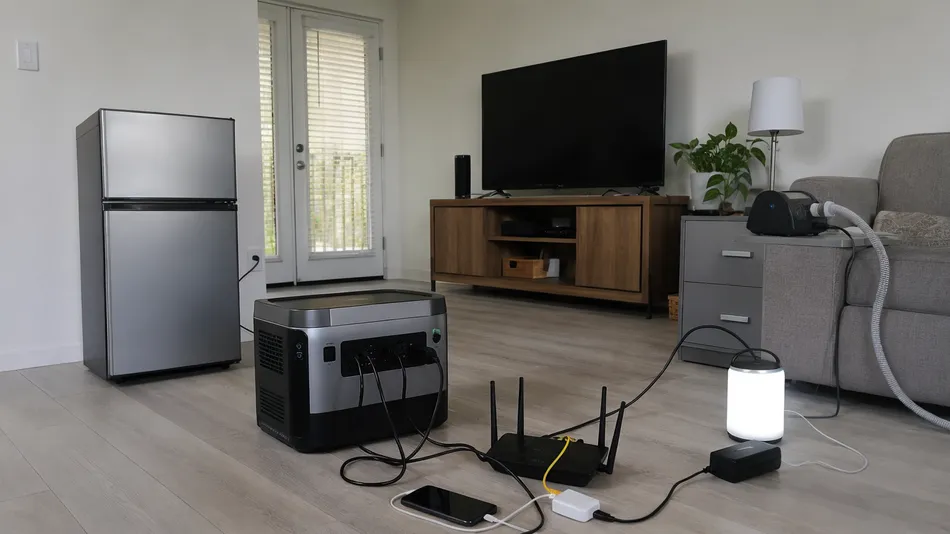
Emergency preparedness is a year-round channel with demand spikes around weather events and power grid reliability concerns. The buyer's customer is purchasing for peace of mind — they want to know the product will work when they need it, which means the product's reliability claims need to be credible and the output specs need to be clearly stated.
Buyers in this segment often want to include the product in emergency kit bundles alongside other preparedness products, so carton dimensions and weight matter for logistics planning.
Key Specs for This Channel
Defensible Spec Range
The 1,000–2,000 Wh range with 200W solar input is the more defensible spec for serious emergency preparedness positioning. This capacity supports critical loads through extended outages and recovers meaningfully within a single day of solar charging.
Off-Grid and Rural Retail
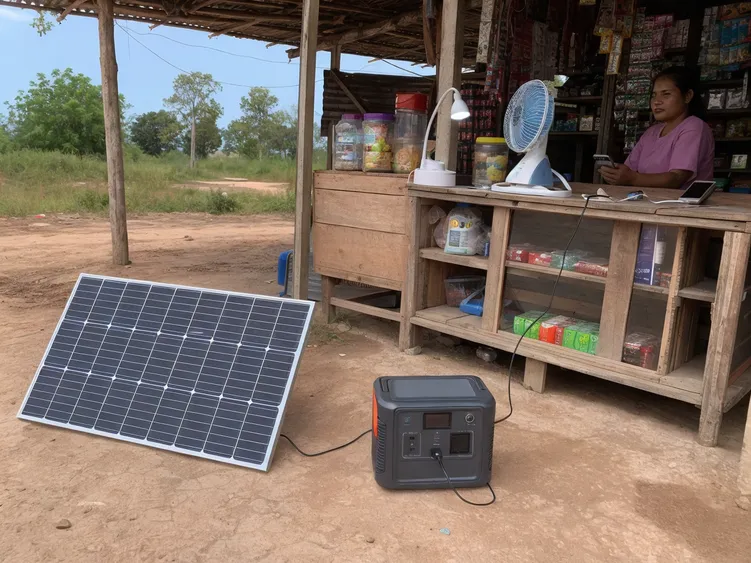
Off-grid and rural markets — particularly in Africa, Southeast Asia, and parts of the Middle East — represent a different commercial pattern. The buyer's customer is using the product as a primary power source, not a backup. That changes the spec priorities: cycle life matters more than peak output, solar charging efficiency matters more than AC charging speed, and durability in high-temperature environments matters more than weight.
For this channel, LiFePO4 chemistry is the right choice — the cycle life advantage over NMC is significant when the product is cycling daily rather than sitting on a shelf between emergencies. Panel wattage should be sized for the local irradiance conditions, which vary significantly between equatorial and higher-latitude markets. Buyers building off-grid programs in Africa or Southeast Asia should confirm panel sizing with our engineering team before finalizing the bundle spec.
This segment also generates repeatable accessory and replacement sales — a buyer who establishes a solar generator program in a rural retail network has a natural reorder cadence for cables, adapters, and eventually replacement units. Our core solar lighting catalog covers the solar street light and flood light products that often accompany solar generator programs in off-grid project deployments.
Key Spec Priority
LiFePO4 chemistry for daily cycling. Panel wattage sized to local irradiance. High-temperature durability over weight savings.
NGO, Field Service, and Small Project Kits
NGOs, field service organizations, and small infrastructure projects often need portable power kits that are consistent across a batch — same configuration, same accessories, same documentation — because the kits are deployed by field teams who need to troubleshoot and replace units without variation. This is a lower-volume but higher-margin segment because the buyer values consistency and documentation over price.
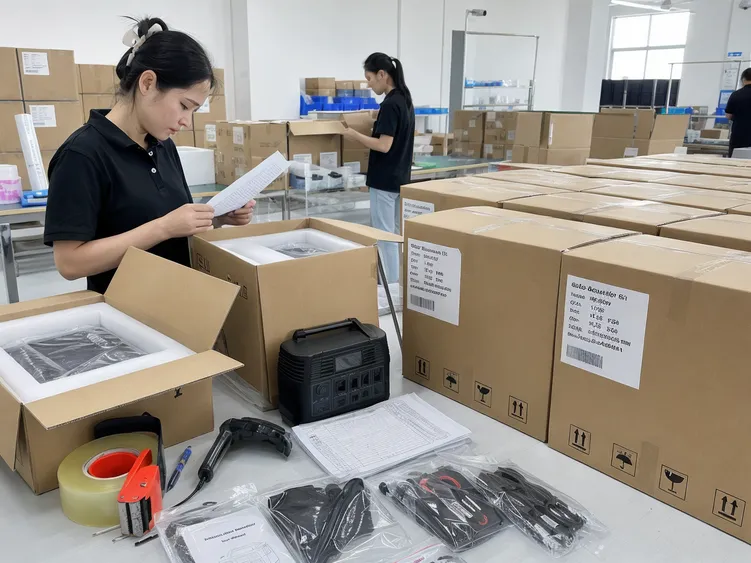
For this channel, packing consistency is as important as product quality. Every kit needs to be identical: same accessory pack, same manual language, same carton labeling, same batch code for traceability. We check accessory packs against a packing list before carton sealing, and batch codes are included on carton labels for field traceability. If your program requires specific documentation — CE Declaration of Conformity, RoHS test reports, UN38.3 — we provide them with the order.
Packing Controls Include
- Accessory packs verified against packing list before carton sealing
- Batch codes on carton labels for field traceability
- CE DoC, RoHS test reports, UN38.3 provided on request
Existing Solar Lighting Distributors Adding Adjacent SKUs
If you're already distributing JXSOL solar lighting products, adding a portable solar generator SKU is the lowest-friction catalog expansion available. The same factory relationship, the same engineering team, the same inspection standards, and the same reorder process. The commercial logic is straightforward: a buyer who already trusts your solar lighting supply can be offered a solar generator as a complementary product — outdoor lighting plus portable power is a natural bundle for off-grid and outdoor markets.
The starting point for this channel is typically a 200–500 unit trial order to test sell-through before committing to a larger program. We can suggest a starter configuration based on what's moving for our existing distributors in your region.
Same Supply Chain
- Same factory relationship and engineering team
- Same inspection standards and reorder process
- 200–500 unit trial order to test sell-through
- Starter configuration based on regional demand data
Battery, Controller, and Output Testing Before Shipment
We've been building battery testing discipline into our production system since 2012 — not because we added a battery product line, but because solar lighting products fail in the field when the battery pack fails. A solar street light that loses runtime after one rainy season is a battery matching problem, and we built our QC process around that failure mode before we ever sold a standalone battery product.
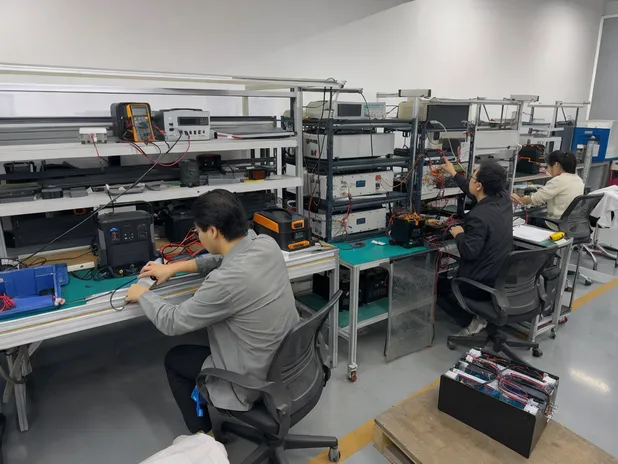
The same inspection lab that handles solar lighting battery pack matching and charge/discharge testing handles solar generator product inspection. It's not a separate setup — it's the same equipment, the same engineers, and the same pass/fail criteria applied to a different product format.
The 12,000 m² factory in Guzhen Town runs 6 production lines with 150 employees and an annual capacity of 1,200,000 units. The in-house R&D team includes 15+ optical and electrical engineers who work on both solar lighting and battery product development. See the JXSOL solar lighting factory for the full production overview.
Pre-Shipment Inspection Coverage for Solar Generator Products
Cell Matching
Battery cells are matched by capacity and internal resistance before pack assembly, grouped within defined tolerance bands. Mismatched cells degrade faster and generate heat unevenly — this is the most common source of early cycle-life failure in portable battery products.
BMS Function Verification
Overcharge, over-discharge, over-current, short-circuit, and over-temperature protections are tested on assembled units under load conditions, not just on the BMS board in isolation. A BMS spec that hasn't been tested under load is a marketing number.
Solar Charging Input Test
MPPT controller function is verified with a simulated solar input to confirm charging efficiency and voltage range behavior.
Inverter Load Test
AC output is tested under rated load to confirm output waveform, voltage stability, and peak output behavior.
Port Function Check
Every output port — AC, DC, USB-A, USB-C — is tested for correct voltage and current output.
Accessory Pack Verification
Every unit's accessory pack is checked against a packing list before carton sealing. Wrong cable, missing adapter, or incorrect plug type for the destination market generates returns that have nothing to do with product quality.
Carton and Label Inspection
Batch codes, watt-hour labeling, carton marks, and documentation are verified before the container closes.
100% Pre-Shipment Inspection — Standard Since 2012
Some buyers ask whether this is realistic at scale — it is, because it's a checkpoint system with defined pass/fail criteria at each stage, not a manual review of every component. Units that don't pass a checkpoint don't move forward.
The buyer outcome: fewer early failures in the field, fewer warranty claims from your downstream customers, and a cleaner reorder relationship because the first batch sets the right expectation.
OEM Solar Generator Options That Affect Channel Fit
Private-label solar generators give you control over retail positioning, after-sales handling, and margin protection. The OEM options we support cover both cosmetic and commercial dimensions — and the distinction between what's straightforward and what requires engineering review is worth understanding before you send an inquiry.
Straightforward OEM Options
Confirmed and quoted without engineering review
- Logo and brand name on the unit housing and packaging
- Custom retail carton design and packaging language
- Manual and documentation language (English, French, Spanish, Arabic, and others)
- Housing color options (within available tooling)
- Accessory kit composition — cable types, adapters, carry bag, solar panel connector type
- Barcode, SKU labels, and carton marks for your warehouse or retail system
- Solar panel bundle selection — wattage, foldable vs rigid, connector type
Options Requiring Engineering Review
Affect certification path, BMS configuration, or component sourcing
- Battery capacity changes (affects BMS parameters, cycle life claims, and potentially CE documentation)
- Inverter output changes (affects AC output spec, peak output behavior, and CE testing)
- AC output voltage or frequency changes (110V/60Hz vs 220V/50Hz — this is a fundamental product variant, not a cosmetic change)
- MPPT controller parameter changes
- Adding or removing charging inputs
Why the Engineering Review Exists
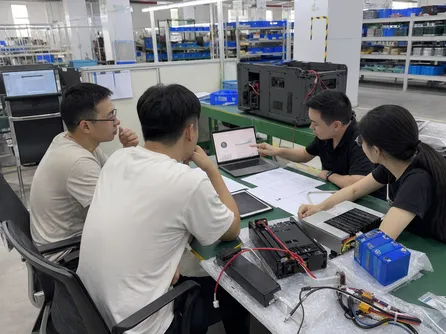
The engineering review isn't a gatekeeping step — it's how we confirm that the configuration you want is achievable, that the certification path is clear, and that there are no component sourcing surprises before production starts.
We've seen buyers skip this step to save time and then spend significantly longer resolving spec mismatches during production. The review is faster.
MOQ and Ordering
Standard catalog models are available from 100 units MOQ. Custom electrical configurations require engineering review before MOQ confirmation — the MOQ may differ depending on component sourcing requirements for the specific configuration.
Include your target market, capacity tier, AC output, panel bundle, and branding requirements. We'll confirm what's achievable and outline the engineering review process for your program.
Export Documentation and Kit Packing Controls
Solar generators are lithium battery products, and lithium battery shipments require more preparation than standard goods. The documentation requirements vary by carrier, route, and destination — and the consequences of a documentation gap discovered at the freight forwarder stage are more expensive than the time it takes to confirm requirements upfront.
What We Confirm Before Production Is Complete
Factory-Level Credentials
Apply to JXSOL as a manufacturer — available with every order
- ISO 9001:2015 quality management system certification
- CE Declaration of Conformity (where applicable to the product configuration)
- RoHS compliance documentation with component-level material declarations
- IP65/IP67 ingress protection certification where applicable to the product
Model & Destination-Specific Battery Documents
Depend on the specific product configuration and your destination market
- UN38.3 test reports (required for lithium battery air and sea freight in most markets)
- MSDS/SDS documentation
- Watt-hour labeling on units and cartons (required for lithium battery transport)
- Air transport declarations or sea freight battery declarations depending on shipment method
- CE test reports for specific product configurations (not a blanket claim — confirm per model)
Documentation confirmation is a pre-production step
A UN38.3 report that isn't ready when goods are packed is a shipment delay. A watt-hour label that doesn't match the product spec is a customs hold. Both are avoidable.
Kit Packing Controls
A solar generator kit combines multiple components — battery unit, solar panel, charging cables, AC adapter, DC car cable, solar panel cable, carry bag, and manual. Packing errors in a multi-component kit generate returns that have nothing to do with product quality, and they're disproportionately expensive because the buyer's customer has to repack and return the entire kit for a missing cable.
Our Kit Packing Process
Accessory pack checked against a packing list before carton sealing — every unit, every order
Solar panel and battery unit packed with internal cushioning appropriate to weight and fragility
Batch codes on carton labels for traceability back to production run
Pallet configurations available for buyers who need palletized delivery
Carton dimensions planned for container loading efficiency — exact loading quantities confirmed at order stage
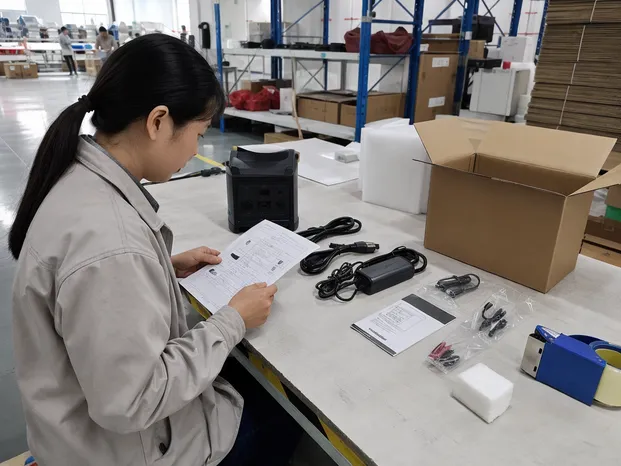
We added the accessory checklist step after a run of returns from a distributor whose customers were receiving kits with the wrong solar panel cable. The cable was in the carton — it was the wrong type for the panel connector. A packing list check would have caught it before the container closed. It's been a standard step since.
Choose the Right Product in the Portable Power Line
The solar generator sits alongside several related products in the Solar Battery & Portable Power family. The right product depends on your channel and what your buyers are actually purchasing — here's how the lines differ commercially.
Solar Generator
Panel-plus-power bundle; solar charging is the primary positioning
Best fit: Buyers building solar kit programs, outdoor retail bundles, or off-grid channel SKUs
Portable Power Station
Power unit-first product; solar charging is an option, not the primary story
Best fit: Buyers who want a broad-appeal portable power SKU; buyers whose customers source panels separately
Portable Solar Battery
Compact, battery-first solar rechargeable SKU; lighter and lower price point
Best fit: Entry-level portable solar power; buyers building a tiered portable lineup with a lower-cost option
Home Energy Storage Battery
Fixed residential solar storage; daily cycling for solar self-consumption
Best fit: Solar installer channels; residential solar programs
Home Battery Backup
Stationary backup; power security positioning
Best fit: Backup power dealers; outage-resilience markets
Wall Mounted Lithium Battery
Compact wall-mount residential storage
Best fit: Space-constrained residential installs; garage and utility room setups
Stackable Home Battery
Modular capacity expansion for home storage
Best fit: Higher-value home storage programs; buyers offering tiered capacity options
The Most Common Decision Point: Solar Generator vs Portable Power Station
If your buyers want a complete solar charging kit — panel included, ready to deploy — the solar generator is the right product. If your buyers are purchasing the power station as a standalone unit and sourcing or already own a solar panel separately, the portable power station is the cleaner SKU.
See the full commercial comparison: Portable Power Station vs Solar GeneratorBuyer FAQ for Solar Generator Orders
What is the difference between a solar generator and a portable power station?
The difference is positioning and bundle format, not just hardware. A portable power station is a standalone power unit — it has solar charging input capability, but the solar panel is not included or is sold separately. A solar generator is positioned as a complete kit: the power station and a compatible solar panel are sold together as a bundle.
For wholesale and distribution programs, this distinction affects your SKU structure, your average order value, your logistics (you're shipping two components per kit), and your retail merchandising. A solar generator program has higher complexity but higher average selling price. A portable power station program is simpler to manage but competes more directly on price-to-capacity ratio.
The right choice depends on whether your channel wants to sell a complete solution or a component.
Solar Generator (Kit)
Higher ASP, two components per SKU, complete-solution positioning. More complex logistics but stronger retail merchandising story.
Portable Power Station (Standalone)
Simpler SKU management, lower per-unit logistics cost. Competes on price-to-capacity ratio in the channel.
What solar panel wattage should be paired with a portable solar generator?
Match panel wattage to the battery capacity and your buyer's expected recharge time. A rough rule: divide the battery capacity (Wh) by the panel wattage to get approximate full-sun recharge hours, then add 20–30% for real-world efficiency losses.
Recharge Time Estimation
6–7 hrs
500 Wh battery + 100W panel
Good sun, real-world losses included
3–4 hrs
500 Wh battery + 200W panel
Good sun, real-world losses included
For outdoor recreation buyers, 100W is usually sufficient — they're topping up, not fully depleting and recharging daily. For off-grid and emergency preparedness buyers who may be cycling the battery daily, 200W or higher is the more defensible spec.
Voltage Compatibility Check
Confirm that the panel's Voc (open-circuit voltage) falls within the MPPT controller's input voltage range — a panel that's out of range won't charge efficiently regardless of wattage.
What battery capacity should a distributor import first?
Start in the 500–1,000 Wh range for most markets. This capacity tier covers the broadest range of use cases — outdoor recreation, emergency preparedness, light off-grid use — without the freight cost and retail price point challenges of larger units. It's also the range where sell-through data is most predictable, because it's the established market segment.
Once you have sell-through data from your first order, you can add a higher-capacity SKU for buyers who want more runtime, or a lower-capacity SKU for buyers who want a lower price point.
Common mistake to avoid
Launching with a 2,000 Wh unit as your first SKU is a common mistake — the higher landed cost and retail price point narrows your buyer pool significantly, and you're taking on more inventory risk before you understand your market's demand.
Is LiFePO4 better for solar generator products?
For most programs, yes — but the trade-off is worth understanding.
LiFePO4 Advantages
- 2,000+ cycles at 80% depth of discharge
- Better thermal stability
- Lower risk of thermal runaway vs NMC
- Fewer warranty claims over product life
NMC Consideration
- Higher energy density (more Wh per kg)
- Lighter unit at same capacity
- Better for weight-sensitive programs (backpacking, travel)
For a product that's cycling regularly — daily in off-grid use, weekly in emergency preparedness use — the cycle life advantage translates directly to fewer warranty claims and a longer product life that your downstream buyers can credibly claim.
Recommendation by channel
For most outdoor retail, emergency preparedness, and off-grid programs, LiFePO4 is the better long-term choice. For weight-sensitive programs (backpacking, travel), NMC may be the right choice. See LiFePO4 Battery for Solar Storage for the full chemistry comparison.
What export documents should be confirmed before shipping battery-powered solar generators?
At minimum, confirm: UN38.3 test report for the specific battery configuration (required for air and sea freight in most markets), MSDS/SDS documentation, watt-hour labeling on units and cartons, CE Declaration of Conformity where applicable, and RoHS compliance documentation.
Air Freight
Confirm whether the shipment falls under Section I or Section II of IATA Dangerous Goods Regulations based on the battery's watt-hour rating — units above 100 Wh per cell or 300 Wh per battery have additional requirements.
Sea Freight
Confirm the carrier's lithium battery declaration requirements.
The specific documents required depend on your carrier, your destination country's import regulations, and the battery capacity class.
Confirm all documentation requirements before production is complete — a document gap discovered when goods are ready to ship is a delay that costs more than the time it takes to confirm upfront.
Can JXSOL customize logo, carton, plug type, and solar panel bundle?
Yes — logo, carton design, manual language, plug/socket type, and solar panel bundle selection are all standard OEM options available from 100 units MOQ.
Cosmetic Options
- Logo placement
- Carton design
- Manual language
Engineering Options
- Plug/socket type
- AC output voltage
- Solar panel bundle
Important: Plug type and AC output voltage (110V/60Hz vs 220V/50Hz) require confirmation before production because they affect the inverter spec and the CE documentation path — these are not cosmetic changes.
Solar panel bundle selection (wattage, foldable vs rigid, connector type) is confirmed in the engineering review to ensure panel compatibility with the unit's MPPT input range.
Battery capacity changes and inverter output changes require an engineering review to confirm feasibility and certification impact.
Most OEM programs for new buyers start with a sample order to confirm the configuration before scaling to a full production run.
RFQ Checklist for a Solar Generator Quote
The more specific your inquiry, the faster our engineering team can respond with a useful configuration recommendation and pricing. Here's what to include when you submit your RFQ.
Target Battery Capacity
Wh range you're targeting (e.g., 500 Wh, 1,000 Wh, 1,500 Wh)
AC Output Requirement
Rated wattage and whether you need peak output for motor-start loads
Solar Panel Bundle
Panel wattage, foldable or rigid, and whether you want the panel included in the kit or sold separately
Destination Market & Plug Region
110V/60Hz (North America), 220V/50Hz (Europe, Middle East, most of Asia), or other
Battery Chemistry Preference
LiFePO4 or NMC, or ask us to recommend based on your use case
Documentation Requirements
CE, RoHS, UN38.3, MSDS, or market-specific certifications your import process requires
OEM/Branding Requirements
Logo, custom carton, manual language, accessory kit composition
Trial Order Quantity
And expected reorder volume once you've validated sell-through
Ready to Get a Configuration Recommendation?
Send your requirements through any of these channels. For buyers who want to discuss configuration before committing to an inquiry, contact us and we'll set up a review with the engineering team.