

Solar Battery & Portable Power Manufacturer
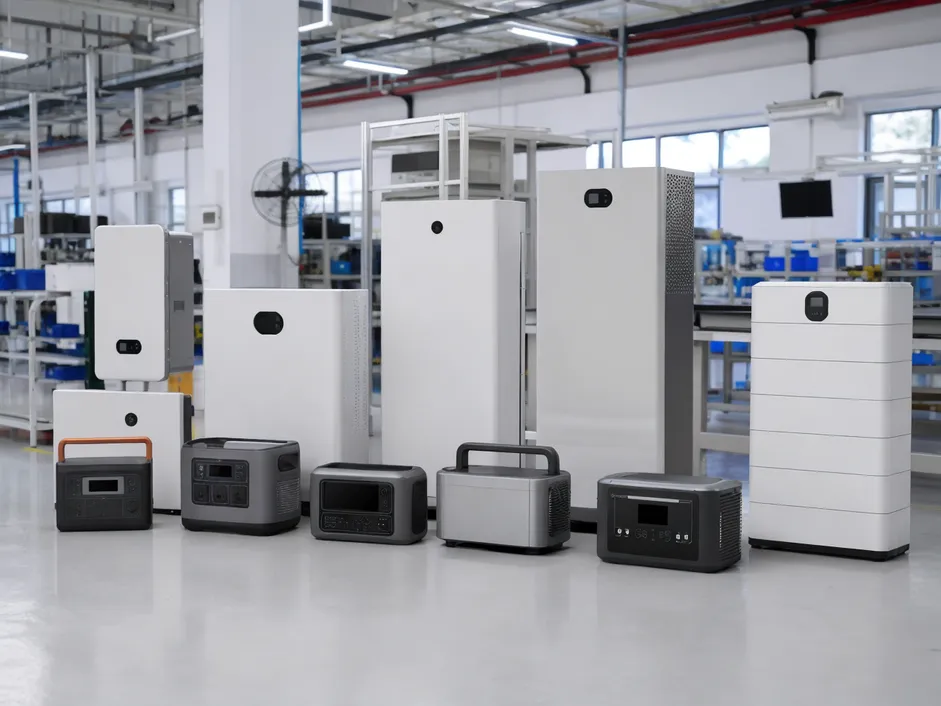
Home storage batteries, backup systems, portable power stations, and solar generators — manufactured by a solar-powered product factory with 13+ years of battery testing discipline.
Seven product lines covering fixed residential storage and portable channel SKUs. OEM/ODM from 100 units. Engineering review before production.
13+
Years in Solar Manufacturing
7
Battery & Power Product Lines
100
Unit Minimum OEM/ODM
ISO
9001:2015 Certified
Solar Battery Programs for Buyers Already Sourcing Solar Products
JXSOL is the export brand of Zhongshan Century Juxing Optoelectronics Technology Co., Ltd., a JXSOL solar lighting manufacturer based in Guzhen Town, Zhongshan — the center of China's lighting manufacturing industry. Our primary catalog is solar-powered outdoor lighting. Solar battery and portable power products are an adjacent line we support for buyers who want to expand a solar-powered catalog without adding a separate factory relationship.
The scope here is specific: home energy storage battery systems, home battery backup units, wall-mounted lithium batteries, stackable home batteries, portable power stations, solar generators, and portable solar batteries. We do not cover utility-scale storage, EV charging infrastructure, or broad commercial and industrial energy storage. If that boundary fits your sourcing program, this page covers what we can do.
The commercial logic is straightforward. Distributors and brand owners who already source solar lighting from us can add battery and portable power SKUs through the same engineering team, the same inspection lab, and the same reorder process. One supply relationship, cleaner SKU expansion, and an engineering review before any order goes to production. Request a quote for solar battery products and we'll confirm what's achievable for your program.
One Factory Relationship
Add battery and portable power SKUs through the same engineering team, inspection lab, and reorder process you already use for solar lighting.
Engineering Review First
Every order gets an engineering review before production. No blind runs.
Cleaner SKU Expansion
Expand your solar-powered catalog without managing a separate supplier for battery products.
Product Family Map: Home Storage vs Portable Power SKUs
The seven product lines split into two commercial groups. Fixed home and residential storage products are installed, inverter-paired, and sold through solar installers or residential energy dealers. Portable and channel products are retail-ready, mobile, and sold through outdoor, emergency preparedness, or general electronics distribution channels. Knowing which group fits your sales channel is the first decision — the child pages handle model-level specs from there.
Fixed Home & Residential Storage
Home Energy Storage Battery
Residential solar storage programs and solar installer channels. Pairs with home solar panel systems for daily cycling and grid backup.
View productHome Battery Backup
Backup power systems for residential use during grid outages. Integrated inverter and transfer switch options for seamless failover.
View productWall-Mounted Lithium Battery
Space-efficient wall-mount form factor for garages, utility rooms, and indoor installations. LiFePO4 chemistry, BMS integrated.
View productStackable Home Battery
Modular stackable units for scalable residential storage. Add capacity in increments without replacing existing hardware.
View productPortable & Channel Products
Portable Power Station
AC/DC output portable units for camping, job sites, and emergency use. Multiple capacity tiers from 300W to 3000W.
View productSolar Generator
Bundled power station + foldable solar panel kits. Retail-packaged for outdoor, RV, and off-grid channels.
View productPortable Solar Battery
Compact solar-rechargeable battery packs for personal electronics, lighting, and light-duty field use.
View productHow We Work: Engineering Review Before Production
Every battery and portable power order goes through an engineering review before production begins. This is not a formality — it's the step where we catch specification mismatches, confirm cell sourcing, validate BMS configuration, and align packaging with your channel requirements. The process is the same whether you're ordering 100 units or 5,000.
RFQ & Requirements
Submit your requirements — capacity, voltage, form factor, certifications needed, target market, and volume. We confirm feasibility within 48 hours.
Engineering Review
Our engineering team reviews cell selection, BMS parameters, thermal design, and enclosure specs. We flag risks and propose alternatives where needed.
Sample & Validation
Pre-production samples built and tested. Cycle testing, capacity verification, and safety checks completed before bulk approval.
Production & Inspection
Bulk production with in-line QC. 100% pre-shipment inspection on every order. Test reports and photos provided before dispatch.
Ready to start an engineering review for your battery or portable power program?
Submit your requirements and we'll confirm feasibility, MOQ, and lead time within 48 hours.
OEM/ODM Capabilities: What We Customize
From 100 units, we support full OEM and ODM programs. Below is what's adjustable at the factory level — not everything requires a new mold or extended lead time.
Branding & Packaging
Custom logo, color scheme, retail packaging design, user manuals, and warranty cards. Print-ready files reviewed by our design team.
BMS & Firmware
Battery management system parameters, charge/discharge profiles, low-temperature cutoffs, and communication protocols (CAN, RS485, Bluetooth).
Capacity & Voltage
Cell configuration adjustments for target capacity (kWh) and voltage ranges. LiFePO4 standard; NMC available for specific portable applications.
Enclosure & Form Factor
Enclosure material, dimensions, mounting options, IP rating, and color. New mold tooling available for ODM programs above 500 units.
Connectors & Ports
Output port configuration — AC outlets (region-specific), USB-A, USB-C, Anderson connectors, MC4 solar input, 12V DC, and custom connector options.
Certifications
CE, FCC, UL, UN38.3, MSDS, IEC 62619, and market-specific certifications. We coordinate with test labs and manage documentation.
Factory & Quality Infrastructure
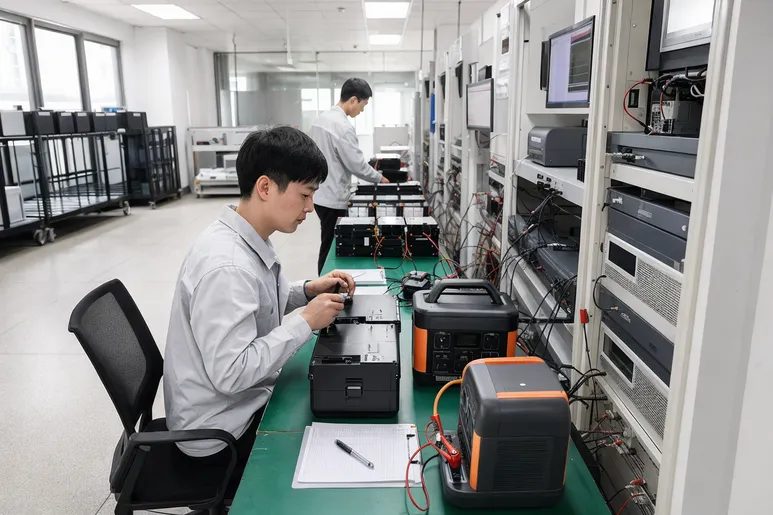
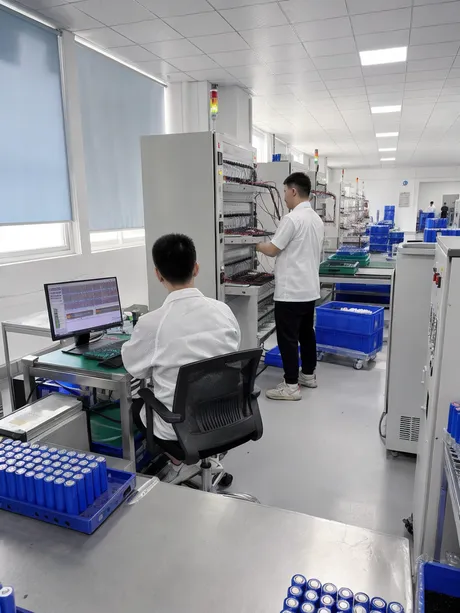
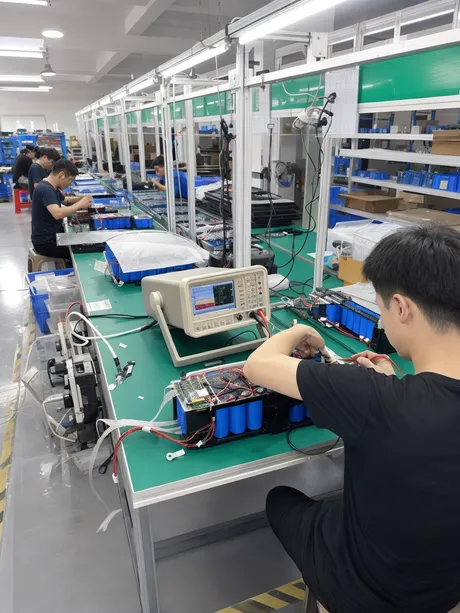
Our 12,000 m² facility in Zhongshan houses dedicated battery assembly lines, a cell testing lab, aging rooms, and a pre-shipment inspection area. The same quality infrastructure that supports our solar lighting production — ISO 9001:2015 processes, incoming material inspection, and 100% final inspection — applies to every battery and portable power order.
- Dedicated LiFePO4 cell testing and grading equipment
- Temperature-controlled aging room for cycle life validation
- In-line BMS functional testing at every assembly stage
- 100% pre-shipment inspection with photo documentation
- UN38.3 transport testing coordination for lithium battery shipments
Factory audits welcome. Contact us to schedule a visit or request a virtual factory tour.
Who This Is For
Our battery and portable power programs serve a specific buyer profile. If you recognize your business below, we're likely a good fit.
Solar Product Distributors
Already distributing solar lighting or panels and want to add storage and portable power to your catalog without a new supplier relationship.
Private Label Brand Owners
Building a branded energy product line for retail or e-commerce. Need OEM packaging, custom specs, and consistent reorder supply.
Solar Installers & Integrators
Installing residential solar systems and need a reliable storage battery supply with engineering support and competitive unit costs.
Regional Importers
Importing solar and energy products for a specific market. Need certification support, compliant packaging, and logistics coordination.
Outdoor & Emergency Retailers
Stocking portable power stations and solar generators for camping, overlanding, and emergency preparedness channels.
Existing JXSOL Lighting Buyers
Already sourcing solar lighting from us and want to expand into battery products through the same factory relationship and reorder process.
What We Cover — and What We Don't
Transparency about scope saves time for both sides. Here's a clear boundary of what falls inside our battery and portable power program and what doesn't.
Within Our Scope
- Home energy storage batteries (5kWh–30kWh)
- Home battery backup systems with inverter integration
- Wall-mounted and stackable lithium battery units
- Portable power stations (300W–3000W)
- Solar generators (power station + panel bundles)
- Portable solar batteries for personal electronics
- OEM/ODM from 100 units with full customization
Outside Our Scope
- Utility-scale energy storage (100kWh+)
- EV charging infrastructure or EV batteries
- Commercial & industrial (C&I) storage systems
- Grid-tied inverters sold separately (we integrate, not resell)
- Lead-acid battery products
- Single-unit retail orders (MOQ 100 units)
Not Sure If You Fit?
If your project sits near the boundary — for example, a 50kWh commercial installation or a hybrid system — reach out anyway. We'll tell you quickly whether we can help or point you in the right direction.
Ask us about your projectHow the Process Works
From first inquiry to delivered goods, here's what a typical battery or portable power project looks like with us. Timeline depends on customization level and order size.
Inquiry & Requirements
You share your target specs, volume, market, and timeline. We confirm feasibility and provide a preliminary quote within 2–3 business days.
Engineering & Sampling
We finalize technical specs, produce engineering samples, and share test data. You approve the sample before production begins. Typical sample lead time: 10–15 days.
Production & QC
Bulk production with in-line quality checks, BMS testing, aging validation, and 100% final inspection with photo reports. Production: 20–35 days depending on volume.
Shipping & Support
DG-compliant packaging, UN38.3 documentation, freight coordination (sea/air), and post-delivery technical support. We handle lithium battery shipping requirements.
Typical total timeline: 5–8 weeks from confirmed order to shipment for standard configurations. Custom mold or new certification projects may take 10–14 weeks. We'll give you a specific timeline in our first response.
Ready to Discuss Your Battery or Portable Power Project?
Tell us your target specs, volume, and timeline. We'll respond within one business day with feasibility, pricing guidance, and next steps.
Spec Range Buyers Should Confirm Before Quoting
These are category-level parameter checkpoints, not published model specs. Use them to prepare a useful RFQ — the child product pages and our engineering team handle model-level confirmation.
| Parameter | Home Storage Range | Portable Power Range | Notes |
|---|---|---|---|
| Capacity class | ~5 kWh–20+ kWh (system level) | ~100 Wh–3,000 Wh | Stackable systems can exceed base unit capacity |
| Battery chemistry | LiFePO4 (lithium iron phosphate) preferred for cycle life and thermal stability | LiFePO4 or NMC depending on energy density vs cycle life trade-off | Confirm per product line; chemistry affects certification path |
| BMS protections | Overcharge, over-discharge, over-current, short-circuit, temperature protection, cell balancing | Same core protections; portable units add drop/vibration tolerance | BMS spec should be confirmed in engineering review |
| Charging inputs | Solar panel input (MPPT), AC grid charging | Solar panel input, AC adapter, DC/car charging (12V), USB-C PD | Input voltage and connector type vary by region |
| AC output | Inverter-integrated or external inverter pairing depending on model | Pure sine wave inverter, 110V or 220V depending on destination market | Confirm output voltage for your target market before ordering |
| DC/USB output | Varies by model | DC 12V, USB-A, USB-C, Type-C PD common | Port configuration is an OEM customization option |
| Cycle life expectation | 3,000–6,000+ cycles at 80% DoD for LiFePO4 | 500–2,000+ cycles depending on chemistry and depth of discharge | Cycle life claims should be supported by test data |
| Certifications available | CE, RoHS, ISO 9001:2015 | CE, RoHS, ISO 9001:2015 | Battery shipping documents confirmed per order and destination |
| Installation format | Wall-mounted, floor-standing, stackable | Portable, handle-carry, wheeled for larger units | Confirm dimensions and weight for your logistics planning |
Capacity Class
~5 kWh–20+ kWh (system level)
~100 Wh–3,000 Wh
Stackable systems can exceed base unit capacity
Battery Chemistry
LiFePO4 (lithium iron phosphate) preferred for cycle life and thermal stability
LiFePO4 or NMC depending on energy density vs cycle life trade-off
Confirm per product line; chemistry affects certification path
BMS Protections
Overcharge, over-discharge, over-current, short-circuit, temperature protection, cell balancing
Same core protections; portable units add drop/vibration tolerance
BMS spec should be confirmed in engineering review
Charging Inputs
Solar panel input (MPPT), AC grid charging
Solar panel input, AC adapter, DC/car charging (12V), USB-C PD
Input voltage and connector type vary by region
AC Output
Inverter-integrated or external inverter pairing depending on model
Pure sine wave inverter, 110V or 220V depending on destination market
Confirm output voltage for your target market before ordering
DC/USB Output
Varies by model
DC 12V, USB-A, USB-C, Type-C PD common
Port configuration is an OEM customization option
Cycle Life Expectation
3,000–6,000+ cycles at 80% DoD for LiFePO4
500–2,000+ cycles depending on chemistry and depth of discharge
Cycle life claims should be supported by test data
Certifications Available
CE, RoHS, ISO 9001:2015
CE, RoHS, ISO 9001:2015
Battery shipping documents confirmed per order and destination
Installation Format
Wall-mounted, floor-standing, stackable
Portable, handle-carry, wheeled for larger units
Confirm dimensions and weight for your logistics planning
Why Chemistry Matters More Than Most Buyers Realize at the Quoting Stage
LiFePO4 costs more upfront but delivers significantly better cycle life and thermal behavior — for home storage programs where the product is cycling daily, that difference shows up in warranty claims within two years. We default to LiFePO4 for home storage lines and discuss the trade-off openly for portable products where energy density sometimes wins.
Battery Testing Discipline Built from Solar Lighting Manufacturing
We've been working around solar-powered products since 2012, and battery failure has been the most consistent field risk across the entire solar lighting category. A solar street light that loses 40% of its runtime after one rainy season isn't a lighting problem — it's a battery matching problem. We built our production system around that reality before we ever added standalone battery products to the catalog.
The 12,000 m² factory in Guzhen Town runs 150 employees across production, engineering, QC, and operations, with 6 dedicated production lines and an annual capacity of 1,200,000 units. The in-house R&D team includes 15+ optical and electrical engineers who work on both solar lighting and battery product development. The inspection lab that handles solar lighting battery pack matching, charge/discharge testing, and aging tests is the same lab that handles solar battery product inspection — it's not a separate setup built for a new product line.
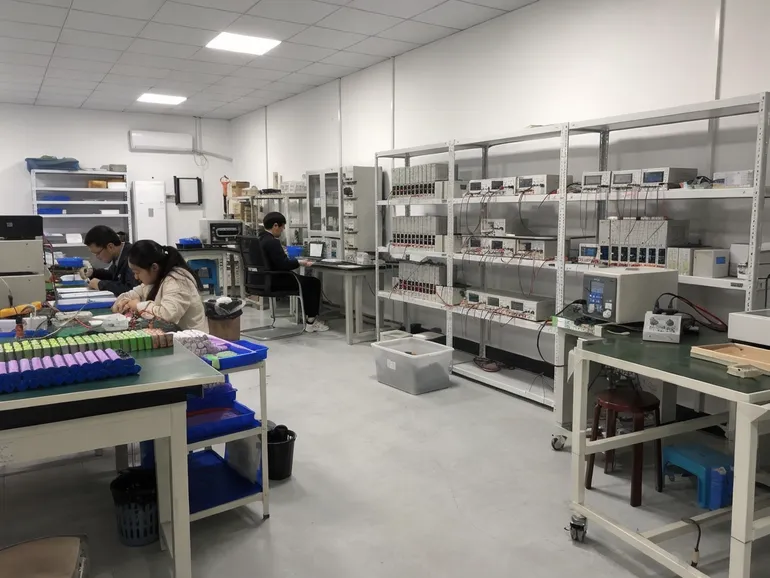
In-house inspection lab — same facility used for solar lighting battery matching since 2012
Battery Testing Process Coverage
Incoming Cell Inspection
Every incoming cell batch is inspected before entering production. Cells that don't meet capacity and internal resistance thresholds are rejected at intake.
Pack Matching
Cells are matched by capacity and internal resistance before pack assembly. Mismatched cells cause premature degradation and uneven discharge — this step prevents that at the source.
Charge/Discharge Cycle Testing
Assembled packs undergo charge/discharge cycle testing under load to verify real-world performance before BMS integration.
BMS Function Verification
Each BMS is tested for overcharge, over-discharge, over-current, short-circuit, and temperature protection response before the unit moves to final assembly.
Aging Tests
Units undergo accelerated aging tests to identify early-failure candidates before they reach the packing line.
100% Pre-Shipment Inspection
Every unit passes final inspection before packing. This is a checkpoint system with defined pass/fail criteria — units that don't pass don't move forward.
Is 100% inspection realistic at scale? It is — it's a checkpoint system, not a manual review of every solder joint. Each stage has defined pass/fail criteria, and units that don't pass don't move forward. This is the same standard we've held for solar lighting since 2012.
12,000 m²
Factory Floor Area
150+
Employees
6
Production Lines
1.2M
Annual Unit Capacity
What This Means for Battery Buyers
Batch Consistency
Fewer inconsistencies between reorders because the same matching and testing process runs on every batch.
Lower Field Failure
Multi-stage testing catches weak cells and BMS faults before they become warranty claims in your market.
Documented Traceability
Test records are retained per batch — useful for certification submissions and customer-facing quality documentation.
OEM & ODM Customization for Battery Products
Most battery buyers need more than a generic product with a logo swap. We support full OEM branding on proven platforms and ODM development for buyers who need specific electrical configurations, enclosure designs, or software integration. Here's what's adjustable and what requires development lead time.
OEM (Your Brand, Our Platform)
Start from a proven, tested product platform. Apply your branding, packaging, and documentation without re-engineering the core product.
- Logo, color, and surface finish on enclosure
- Custom packaging design and retail box artwork
- User manual and warranty card in your brand language
- Label and compliance marking placement
- App interface white-labeling (where applicable)
Typical lead time: 25–35 days from artwork approval
ODM (Custom Development)
When the standard platform doesn't fit your market requirements, we develop custom configurations with our in-house engineering team.
- Custom capacity, voltage, and cell configuration
- Enclosure redesign (dimensions, materials, IP rating)
- BMS parameter tuning and communication protocol integration
- Inverter compatibility matching for specific markets
- Certification support for target market (UL, CE, UN38.3, IEC)
Typical lead time: 45–90 days depending on scope (includes prototyping)
How the Customization Process Works
Requirements Brief
Share specs, target market, volume, and timeline expectations
Engineering Review
Our team confirms feasibility, identifies constraints, proposes solutions
Prototype & Sample
Working sample produced, tested, and shipped for your evaluation
Approval & Tooling
Final sign-off, production tooling prepared, pilot run scheduled
Mass Production
Full production run with QC checkpoints at every stage
What Buyers Most Commonly Customize
Capacity & Voltage
Match local grid standards or specific appliance loads
Connector & Port Layout
USB-C, Anderson, MC4, or proprietary connectors
Communication Protocol
CAN bus, RS485, Wi-Fi, Bluetooth for monitoring
Enclosure Color & Finish
RAL color matching, textured or smooth finishes
Certification Package
UL, CE, FCC, UN38.3, IEC 62619 as needed
App & Display Interface
LCD/LED display options, branded mobile app
MOQ expectations: OEM branding on existing platforms starts at 100–200 units depending on product. ODM custom development typically requires 500+ unit commitment to justify tooling and engineering investment. We're transparent about these thresholds early in the conversation so there are no surprises at quoting stage.
Certifications & Compliance Support
Battery products face stricter import and safety requirements than most electronics categories. We maintain factory-level certifications and support product-level certification for target markets — either using our existing certificates or working with you to obtain new ones for custom configurations.
Factory Certifications
- ISO 9001 Quality Management
- ISO 14001 Environmental Management
- BSCI Social Compliance
Transport & Safety
- UN38.3 Transport Testing
- MSDS / SDS Documentation
- DGM (Dangerous Goods) Packaging Compliance
Market Access
- CE Marking (EU)
- FCC (US)
- IEC 62619 (Stationary Storage)
- UL Listing Support (US Market)
How We Support Your Certification Needs
If we already hold the certificate:
We provide the certificate directly, along with test reports and supporting documentation for your import clearance or retail listing requirements.
If you need a new certificate for a custom product:
We coordinate with accredited testing labs, prepare samples, manage the submission process, and handle re-tests if needed. Timeline and cost are quoted upfront as part of the ODM development scope.
Shipping Lithium Batteries: What Buyers Should Know
Lithium battery shipments require UN38.3 test reports, proper DG packaging, and correct shipping declarations regardless of transport mode. We handle DG documentation and packaging compliance as standard — but if your freight forwarder isn't experienced with battery shipments, we can recommend logistics partners who specialize in this category.
Who We Work With
We work with buyers who need a manufacturing partner, not just a supplier. These are the profiles we serve most effectively — if your situation matches one of these, we're likely a good fit.
Brand Owners & Distributors
You sell under your own brand and need a reliable manufacturing source with consistent quality, branding flexibility, and certification support for your target markets.
- Private label with full branding control
- Consistent reorder quality across batches
- Market-specific certification packages
Solar Installers & System Integrators
You install residential or commercial solar systems and need battery storage products that integrate reliably with common inverter brands and meet local electrical codes.
- Inverter compatibility verification
- Technical documentation for permitting
- Warranty-backed products for end customers
Project Developers & EPC Firms
You're deploying energy storage as part of larger infrastructure projects and need volume supply with project-specific configurations and delivery scheduling.
- Volume pricing for project-scale orders
- Staged delivery aligned to project timeline
- Custom configurations for site requirements
E-commerce & Retail Sellers
You sell portable power products through Amazon, Shopify, or retail channels and need a supplier who understands packaging requirements, FBA prep, and fast iteration on product listings.
- Retail-ready packaging with custom inserts
- FBA labeling and prep services available
- Product photography and listing content support
OEM & Product Companies
You're building a product that requires an integrated battery solution — whether it's an EV, marine vessel, telecom backup, or industrial application — and need a cell-to-pack manufacturing partner.
- Custom cell selection and pack design
- BMS integration with your control systems
- NDA-protected development process
Trading Companies & Sourcing Agents
You source on behalf of end buyers and need a factory that communicates clearly, delivers on spec, and makes you look good to your clients with reliable execution.
- Transparent pricing for margin planning
- Direct communication with engineering team
- White-label documentation available
Not sure if we're the right fit?
We're transparent about what we do well and where we're not the best option. If your order is under our minimums or your timeline doesn't allow for proper quality processes, we'll tell you upfront rather than waste your time. Reach out and we'll give you an honest assessment within one business day.
From First Contact to Delivery
Whether you're ordering an existing product or developing something custom, here's what the process looks like. We keep it structured so nothing falls through the cracks, but flexible enough to adapt to your timeline and requirements.
Initial Inquiry & Requirements Discussion
Tell us what you need — product type, quantity, target market, timeline, and any specific requirements. We respond within one business day with initial feasibility feedback and questions to clarify scope.
Technical Review & Quotation
Our engineering team reviews your requirements and prepares a detailed quotation including unit pricing, tooling costs (if applicable), certification costs, lead time, and payment terms. For ODM projects, this includes a development timeline and milestone breakdown.
Sample & Prototype (If Applicable)
For new customers or custom products, we produce samples for your evaluation. You test performance, fit, and finish before committing to production quantities. Feedback is incorporated before mass production begins.
Order Confirmation & Production
Once you approve the sample and confirm the order, production begins. You receive a production schedule with key milestones. We send progress updates including photos at critical stages — cell matching, pack assembly, BMS testing, and final QC.
Quality Inspection & Shipping
Final QC inspection is completed with full documentation. We handle DG packaging, shipping declarations, and coordinate with your freight forwarder. All certificates, test reports, and customs documents are provided before shipment.
After-Sales & Reorder Support
Our relationship doesn't end at delivery. We provide technical support for your team, handle warranty claims efficiently, and maintain your product specifications on file for streamlined reorders. Repeat orders typically ship 20–30% faster.
Ready to Discuss Your Project?
Whether you need 500 portable power stations with your branding or a fully custom battery system designed from scratch, we're ready to talk specifics. No generic sales pitch — just a direct conversation about what you need and how we can deliver it.
Choosing the Right Battery Line for Your Sales Channel
The right product family depends on your sales channel, not on which battery has the highest spec sheet. Here's how we typically help buyers map their channel to the right starting SKUs.
Residential Solar Storage Installers
Homeowners with solar panel systems storing daytime generation for evening use or grid backup
The relevant product lines for this channel:
Capacity tier selection depends on your market's average household consumption and the solar panel system sizes your installers typically deploy. Share those inputs with our engineering team and we'll help map the sizing logic before you quote.
Backup Power Dealers
Customers wanting power security during outages, not necessarily solar self-consumption optimization
The Home Battery Backup is the primary SKU here, with stackable options for buyers who want to offer tiered capacity.
Key Spec to Confirm
Inverter compatibility and output power rating — backup buyers care about what loads the system can run, not just how many kWh it stores.
Retail & Wholesale Portable Power Channels
Camping, job sites, emergency kits, or travel applications
Core SKUs for this channel:
- Portable Power Station — core SKU
- Portable Solar Battery — lighter, lower-price-point entry option
Competitive Specs
Portable products compete heavily on price-to-capacity ratio and output port configuration — these are the two specs your retail buyers will compare first.
Solar Kit & Bundle Programs
Solar panel plus power station bundles for field-ready deployment
If you're building a solar panel plus power station bundle, the Solar Generator is positioned for that pairing.
Specs that determine whether the bundle works cleanly in the field:
- Solar input compatibility
- MPPT charging efficiency
- Panel connector type
For the portable product decision specifically, compare the commercial positioning of portable power stations and solar generators before building your bundle.
Mixed-SKU Distributors
If you're building a broad solar-powered catalog, start with two or three SKUs that match your strongest market segment, validate sell-through, then expand.
Overloading a new category with seven SKUs before you understand your market's demand pattern is the most common mistake we see.
We can help you map a starter SKU mix based on what's moving for our existing distributors in your region.
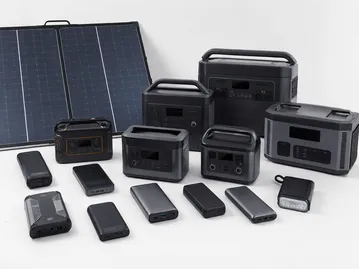
OEM/ODM Options That Affect Margin, Not Just Appearance
Private-label solar battery products give you control over retail positioning, after-sales handling, and margin protection. The customization options we support at the category level cover both cosmetic and commercial dimensions.
Low MOQ Entry
Standard catalog models are available from 100 units MOQ — low enough to test a new SKU with your market before committing to a larger program.
Cosmetic & Commercial
OEM/ODM programs typically involve:
- Logo and brand name on unit and packaging
- Custom carton design and retail packaging
- Market-specific plug and socket configuration
- Manual and documentation language
- Accessory kit composition (cables, adapters, carry bags)
- Color options on housing
- Capacity tier selection within the product line's design range
Electrical Changes
Adjusting inverter output, BMS parameters, battery capacity, or charger specifications requires an engineering review before we confirm feasibility. This isn't a gatekeeping step — it's because those changes affect the certification path, the BMS configuration, and the component sourcing.
A capacity change that looks simple on paper can require re-testing and updated CE documentation. We work through that review upfront so there are no surprises at the production stage.
The Commercial Value of a Well-Executed OEM Program
The commercial value is straightforward:
- Your brand on the product reduces price comparison pressure
- Your packaging reduces after-sales confusion
- Your accessory kit reduces the "wrong cable" support tickets that generate returns
We've seen buyers underestimate how much after-sales cost comes from accessory mismatches — a clearly labeled, market-specific accessory pack is worth more than it costs.
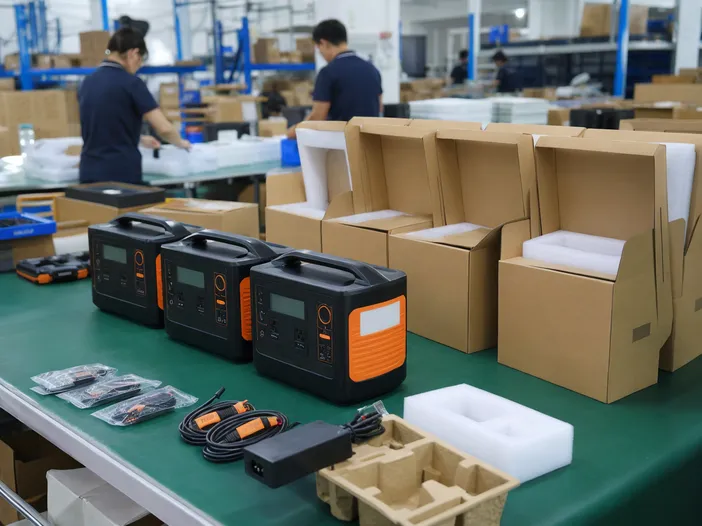
Include your target market, product family, and branding requirements when requesting a quote.
Failure Points We Screen Before Shipment
Battery products carry higher perceived risk than most product categories because the failure modes are less visible and the downstream consequences — returns, warranty claims, blocked shipments — are more expensive. These are the specific failure points we screen for, and how.
Overstated or Inconsistent Usable Capacity
Rated capacity and usable capacity are not the same number, and the gap between them varies by cell quality, BMS configuration, and depth-of-discharge settings.
We run charge/discharge testing on battery packs to confirm actual usable capacity against spec before units move to final assembly. A batch that doesn't hit the spec doesn't ship.
We've caught capacity shortfalls at this stage that would have generated significant warranty claims — the testing cost is a fraction of the return logistics cost.
Poor Cell Matching and Internal Resistance Inconsistency
Mismatched cells in a pack degrade faster, generate heat unevenly, and shorten cycle life.
Our battery pack matching process checks cell capacity and internal resistance before assembly, grouping cells within defined tolerance bands.
This is the same process we use for solar lighting battery packs, where field performance over multiple charge cycles is the measure that matters.
BMS Protection Failure
A BMS that doesn't reliably trigger overcharge, over-discharge, or over-temperature protection is a safety and warranty risk.
We test BMS function on assembled units — not just on the BMS board in isolation — to confirm protection triggers operate correctly under load conditions.
Port and Accessory Mismatch
Wrong plug type, missing adapter, or incorrect cable for the destination market generates returns that have nothing to do with product quality.
Every unit's accessory pack is checked against a packing list before carton sealing. For OEM orders with market-specific accessories, we confirm the accessory spec in the engineering review before production.
Documentation Gaps That Delay Shipment
Lithium battery products require specific shipping documentation, and the requirements vary by carrier, route, and destination.
We confirm required battery documents — UN38.3 test reports, MSDS, carton marks, watt-hour labeling — before production is complete, not after goods are ready to ship. A documentation gap discovered at the freight forwarder stage costs more than the time it takes to confirm requirements upfront.
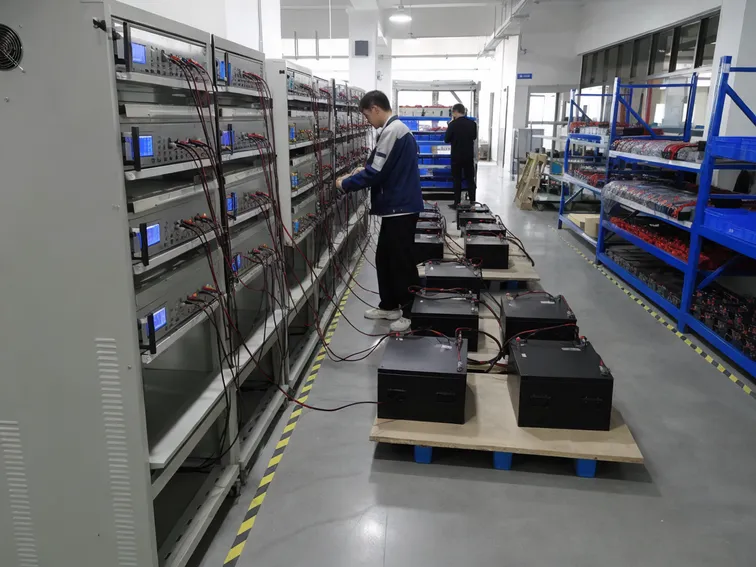
Related Resource
For buyers evaluating LiFePO4 chemistry specifically — cycle life expectations, thermal behavior, and depth-of-discharge characteristics — see our detailed technical guide.
Export Packing and Documentation for Lithium Battery Orders
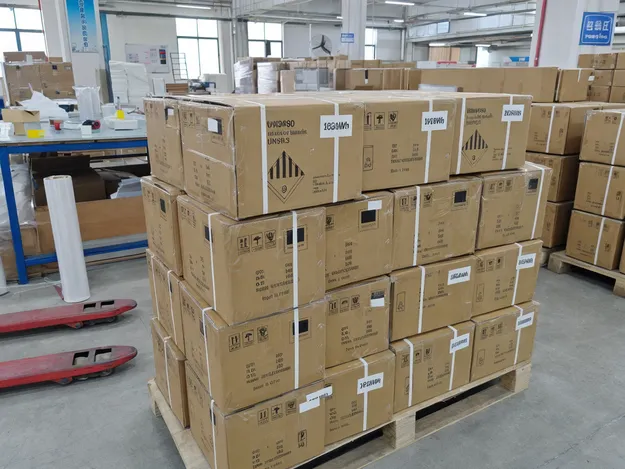
Lithium battery shipments require more preparation than standard goods, and the requirements vary enough by route and destination that we treat documentation confirmation as a pre-production step, not an afterthought.
Packaging
- Cartons designed for protective transit with internal cushioning appropriate to product weight and fragility
- Accessory separation to prevent cable and connector damage
- Consistent labeling including batch codes for traceability
- Pallet configurations available for buyers who need palletized delivery
- Carton dimensions planned for container loading efficiency — exact loading quantities confirmed at order stage based on product model and carton configuration
Documentation
Lithium battery products typically require the following. Specific requirements depend on your carrier, destination country's import regulations, and battery capacity class:
- UN38.3 test reports
- MSDS/SDS documentation
- Watt-hour labeling on cartons and units
- Air transport declarations (when applicable)
- Sea freight battery declarations (depending on shipment method)
We coordinate document preparation before production completion so your freight forwarder has everything needed when goods are ready.
Common Delay Scenario for New Importers
The documentation step is the one most likely to cause delays if left to the last minute.
We've seen shipments held at origin because a UN38.3 report wasn't ready, and we've seen shipments held at destination because carton watt-hour labeling didn't match the product spec. Both are avoidable with upfront confirmation.
Solar Battery Products Within the Core Solar Lighting Catalog
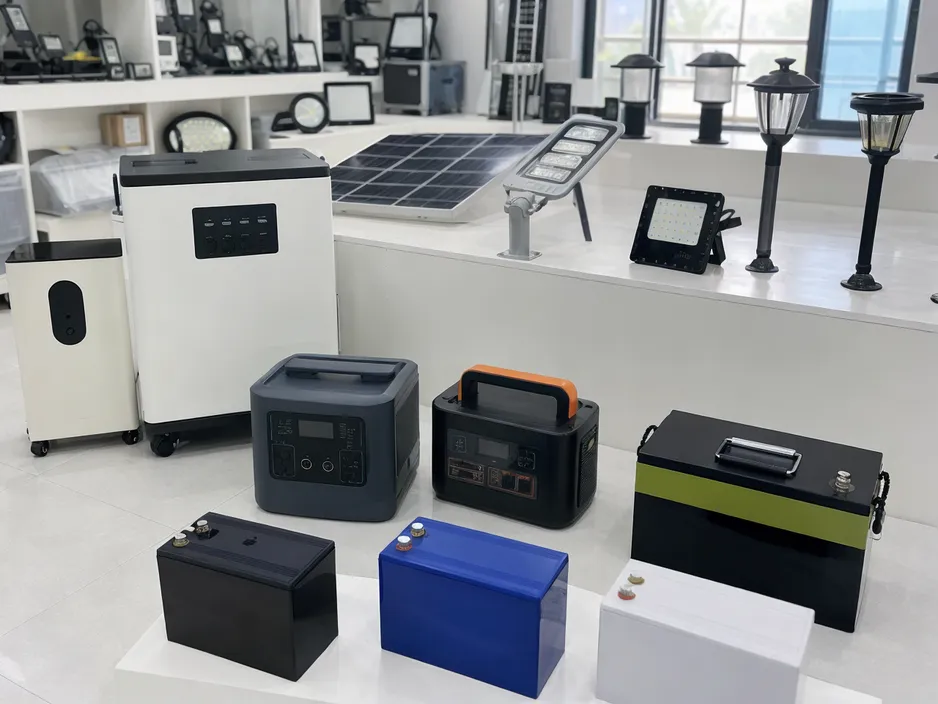
Solar battery and portable power products are an auxiliary line at JXSOL — they exist to support buyers who are already building solar-powered catalogs and want to consolidate sourcing without adding unrelated factory relationships.
The primary site theme remains solar lighting. Our core solar lighting catalog covers street and roadway fixtures, parking lot and area lights, flood and security lights, garden and landscape products, pathway and bollard lights, wall lights, and smart solar lighting systems with IoT control options. Buyers who source solar lighting from us and want to add home storage or portable power SKUs can do so through the same engineering team, the same inspection process, and the same reorder relationship.
This Boundary Matters for Your Sourcing Decision
Not the Right Fit
If your primary need is utility-scale storage, EV charging infrastructure, or broad commercial energy storage, this isn't the right factory.
The Right Place to Start
If your need is residential and portable solar battery products that fit alongside a solar lighting program, this is the right place to start.
Consolidation Benefits for Existing Solar Lighting Buyers
Same Engineering Team
Your battery SKUs are handled by the same engineers who manage your solar lighting projects — no new contacts, no onboarding friction.
Same Inspection Process
Quality control protocols carry over from your lighting orders. One QC relationship, consistent standards across product lines.
Same Reorder Relationship
Replenishment, lead-time coordination, and logistics consolidation — all managed through your existing account workflow.
FAQ: Solar Battery and Portable Power Sourcing
Direct answers to the positioning, channel, and product-selection questions we hear most from distributors and brand owners evaluating battery programs.
What is the difference between a home energy storage battery and a home battery backup for channel buyers?
The distinction is positioning, not just specs. A home energy storage battery is sold into solar self-consumption programs — the buyer's customer has solar panels and wants to store daytime generation for evening use. The product cycles daily and is sized around the household's solar system output.
A home battery backup is sold into power security programs — the buyer's customer wants protection against grid outages, regardless of whether they have solar panels. The backup product is sized around critical load runtime, not solar generation.
Both can use similar battery chemistry and hardware, but the sales conversation, the installer channel, and the sizing logic are different.
Channel guidance:
- If your distribution channel sells to solar installers, lead with home energy storage.
- If your channel sells to electricians or home security dealers, lead with home battery backup.
Should a distributor choose wall-mounted or stackable home batteries first?
Start with wall-mounted if your market is price-sensitive or if your installers are working with smaller residential setups — wall-mounted units have a lower entry price point and simpler installation.
Move to stackable when your market has customers who want to expand capacity over time without replacing the base unit. Stackable systems command a higher margin and create a natural upsell path, but they require installers who understand modular system configuration.
Wall-mounted first
- • Lower entry price point
- • Simpler installation
- • Best first SKU for new markets
Stackable second
- • Higher margin per system
- • Natural upsell path
- • Requires modular-capable installers
We typically recommend wall-mounted as the first SKU for a new market, with stackable added once you have installer relationships that can support the more complex product.
What information is needed to quote a solar battery order accurately?
Send us: your target market and sales channel, the product family you need (home storage, backup, portable station, generator, or portable battery), your capacity and output expectations, the AC voltage and plug/socket standard for your destination market, any branding or packaging requirements, and your trial order or reorder volume.
With that information, our engineering team can confirm the right configuration, flag any certification or documentation requirements for your market, and provide a detailed quote.
Common gap: Missing the voltage/plug region is the most frequent omission — it affects both the product spec and the CE documentation path.
Portable power station vs solar generator: which product line is better for a wholesale program?
It depends on whether your buyers are purchasing the solar panel separately or want a bundled solution.
A standalone unit — your buyers pair it with whatever solar panel they already have or source separately.
Wholesale advantage
Simpler to manage — you're selling one SKU.
Positioned as a bundle, with the power station and compatible solar panel sold together.
Wholesale advantage
Higher average order value but requires panel compatibility confirmation and more complex logistics.
See Portable Power Station and Solar Generator for the full commercial comparison.
What battery protection features should buyers confirm before ordering?
At minimum, confirm: overcharge protection, over-discharge protection, over-current protection, short-circuit protection, and over-temperature protection.
For home storage products, also confirm cell balancing and low-temperature charging protection (relevant for markets with cold winters — charging LiFePO4 below 0°C without protection degrades the cells).
For portable products, confirm drop and vibration tolerance if your channel sells into outdoor or job-site markets.
Ask for BMS test data, not just a spec sheet claim — a BMS spec that hasn't been tested under load conditions is a marketing number, not a quality guarantee.
What MOQ and OEM options does JXSOL support for standard solar battery products?
Standard catalog models start at 100 units MOQ. OEM/ODM programs covering logo, packaging, labeling, manuals, accessory kits, color, and market-specific plug configuration are available from that same starting point.
Electrical changes — capacity, BMS parameters, inverter output, charger spec — require an engineering review to confirm feasibility and certification impact before we commit to production.
Most OEM programs for new buyers start with a sample order to confirm the product configuration before scaling.
Include your requirements and we'll outline the OEM process for your specific program.
RFQ Guidance for Solar Battery and Portable Power Programs
The more specific your inquiry, the faster our engineering team can respond with a useful recommendation. Here's what to include:
Target Market & Sales Channel
Country or region, and whether you're selling through installers, retail, wholesale, or direct.
Product Family
Home storage, home backup, wall-mounted, stackable, portable power station, solar generator, or portable solar battery.
Capacity & Output Expectations
kWh range for home storage, Wh and AC output wattage for portable products.
Plug/Socket Region & Voltage Standard
110V/60Hz (North America), 220V/50Hz (Europe, Middle East, most of Asia), or other.
Documentation Requirements
CE, RoHS, UN38.3, MSDS, or market-specific certifications your import process requires.
Branding & Packaging
Private label, custom packaging, or standard JXSOL catalog.
Order Volume
Trial order quantity and expected reorder cadence.
Ready to Send Your Requirements?
Reach our team through any of these channels. For buyers who want to discuss configuration before committing to an inquiry, we'll set up a review call with the engineering team.