

Home Energy Storage Battery Solar-Compatible & Inverter-Ready
Fixed residential energy storage battery — solar-compatible, inverter-ready, OEM/ODM supported for wholesale and distribution programs.
Add a residential energy storage battery SKU to your solar product line without managing a second factory relationship. JXSOL supplies home energy storage batteries as part of the same solar-powered product program that covers lighting, fans, and portable power.
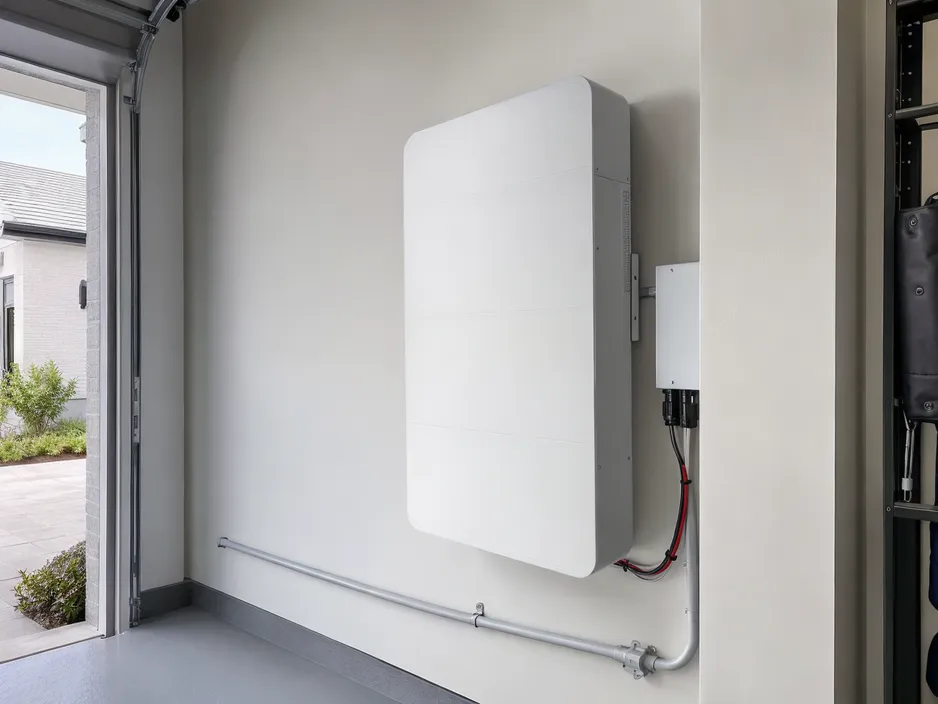
Residential Storage SKU for Solar Product Buyers
A home energy storage battery is a fixed residential battery system designed for solar charging, grid backup, and off-grid power supply. It is not a portable power station — it is a wall-mounted or floor-standing unit that connects to a residential inverter, stores energy from a rooftop or ground-mount solar array, and discharges on demand. If you are building a solar product catalog, adding a residential storage SKU, or sourcing batteries for a solar installation program, this is the product category you are evaluating.
JXSOL is a solar lighting manufacturer. We support home energy storage batteries as an adjacent solar-powered product line for buyers who want to expand their catalog without adding a new supplier. Our core production is solar outdoor lighting — street lights, flood lights, garden lights, and smart solar systems — and the battery expertise we built for those products carries directly into residential storage sourcing. Buyers already sourcing our Solar Battery & Portable Power range can add residential storage SKUs to the same order program.
The distinction from portable power matters for your catalog positioning. A home energy storage battery is a fixed installation product with inverter integration, higher capacity, and a longer cycle life target. It sells through solar installers, electrical contractors, and residential energy dealers — not through consumer electronics channels. If you need a movable power SKU, the Portable Power Station page covers that segment.
Fixed Installation
Wall-mounted or floor-standing. Connects to residential inverter and solar array. Not a portable consumer electronics product.
Inverter Integration
Higher capacity, longer cycle life, and direct inverter communication via CAN bus or RS485 protocol.
Same Supplier Program
Add residential storage SKUs to the same order program as solar lighting, fans, and portable power — no second factory relationship needed.
Sales Channel Distinction
Home energy storage batteries sell through solar installers, electrical contractors, and residential energy dealers. Portable power stations sell through consumer electronics channels. Position your catalog accordingly.
Specification Fields Buyers Need Before a Quote
Home energy storage batteries are configured products, not off-the-shelf commodities. The fields below are the ones that drive pricing, compliance documentation, and inverter compatibility. Confirm your required values before sending an RFQ, and we will return a configuration recommendation with pricing.
| Specification Field | Typical Range / Options | Notes |
|---|---|---|
| Usable Capacity | 5 kWh – 20 kWh per unit | Confirm target autonomy hours and load profile |
| Nominal Voltage | 48V (standard residential) | 24V available for smaller configurations |
| Battery Chemistry | LiFePO4 (lithium iron phosphate) | Standard for residential storage; safer thermal profile than NMC |
| Cycle Life Target | 3,000 – 6,000 cycles at 80% DoD | Affects warranty term and downstream customer expectations |
| Max Charge / Discharge Current | 50A – 100A (model-dependent) | Must match inverter input/output rating |
| Inverter Compatibility | Hybrid inverter, off-grid inverter | Communication protocol must be confirmed per inverter brand |
| Communication Protocol | CAN bus, RS485, dry contact | Confirm before production — protocol affects BMS firmware |
| Installation Format | Wall-mounted, floor-standing, stackable | Affects enclosure design and freight dimensions |
| Expansion Method | Parallel battery modules | Confirm max parallel units per inverter spec |
| Operating Temperature | Charge: 0°C – 45°C / Discharge: -10°C – 55°C | Relevant for Middle East, Africa, and cold-climate markets |
| Enclosure Rating | IP55 (indoor/sheltered outdoor) | Confirm installation environment before order |
| Warranty Term | 5 years standard; 10 years available on request | Affects after-sales documentation requirements |
| Certification Documents | CE, RoHS, UN38.3, MSDS, IEC 62619 | Confirm required documents per destination market before production |
Communication Protocol: The Field That Catches Buyers Most Often
CAN bus and RS485 are not interchangeable — if your inverter brand requires a specific protocol, that needs to be locked before BMS firmware is set. We've had orders delayed because this was confirmed after production started.
Inverter Compatibility Affects Your After-Sales Risk
The inverter compatibility and communication protocol fields directly affect your after-sales risk. A battery that doesn't communicate correctly with the installed inverter generates warranty claims and field service calls — costs that land on you, not on the end user. Confirm the inverter brand and model before placing an order.
Quote Specifications With Your Inverter Details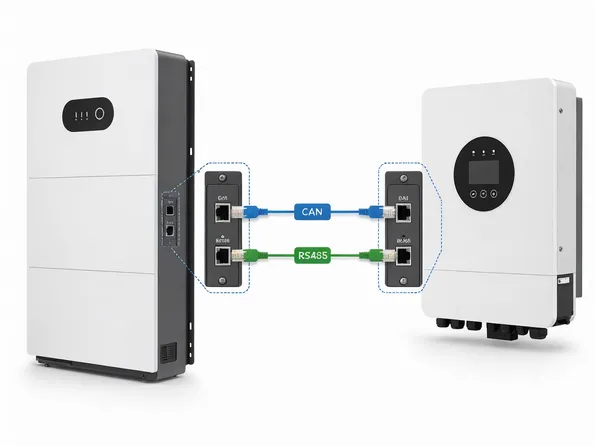
Market Segments Where This Battery Can Carry a Product Program
The commercial logic for stocking a residential energy storage battery depends on which segment you are selling into. These are the segments where this product category generates repeatable volume.
Solar Installer Resale Programs
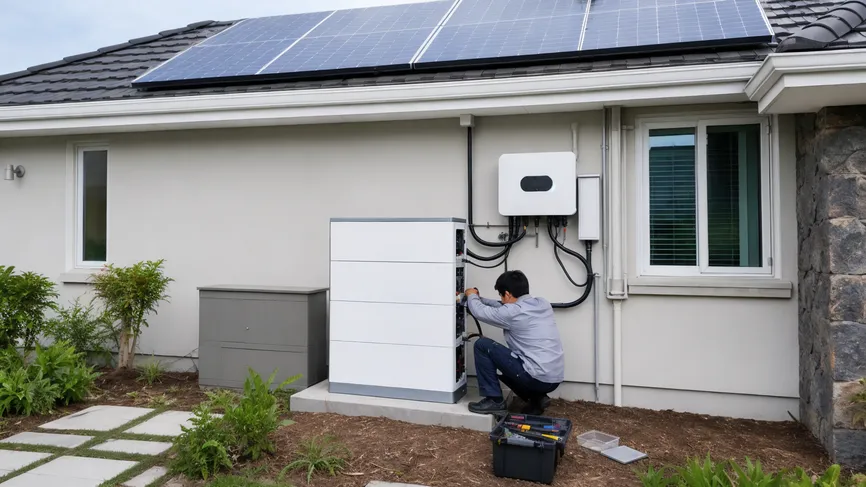
Residential solar installers need a battery to pair with every rooftop system they sell. A 5 kWh or 10 kWh LiFePO4 unit with clean documentation and a 5-year warranty is a standard add-on to a 5 kW – 10 kW solar installation.
Installers typically order in batches of 20–100 units per quarter, tied to their project pipeline. If you supply solar panels or inverters to this channel, a residential energy storage battery is a natural catalog extension — same buyer, same project, higher average order value.
Residential Backup Dealers
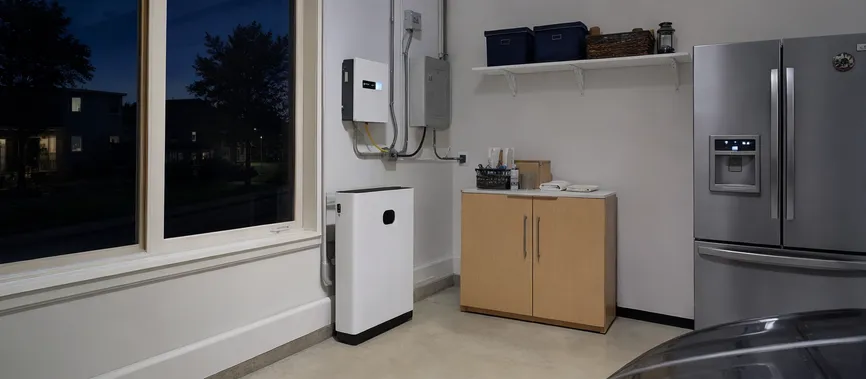
In markets with frequent grid outages — parts of Africa, Southeast Asia, and rural North America — backup power is a primary purchase driver, not a secondary feature.
A home energy storage battery with a 10 kWh capacity and a 48V/100A inverter-compatible BMS covers a typical household load for 8–12 hours. Dealers in this segment reorder based on seasonal demand patterns, and a well-documented product with CE and RoHS compliance reduces customs friction on repeat shipments.
This segment has grown significantly for solar-adjacent products in West Africa and Southeast Asia over the last three years — worth building into your SKU planning if you serve those markets.
Off-Grid and Weak-Grid Housing Markets
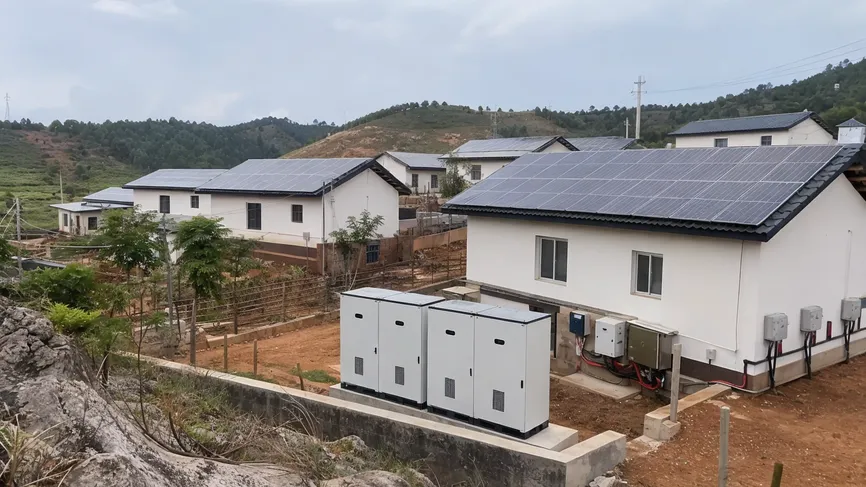
Rural electrification projects, island communities, and remote housing developments require battery storage as a core infrastructure component, not an optional upgrade.
Capacity requirements in this segment run higher — 10 kWh to 20 kWh per household — and buyers often need extended cycle life targets and robust operating temperature ranges.
The reorder pattern is project-based rather than continuous, but individual project volumes can run 50–500 units. If you supply solar lighting or solar systems to rural electrification programs, a solar home battery storage product fits the same procurement relationship.
Solar Product Distributors Expanding Their Catalog
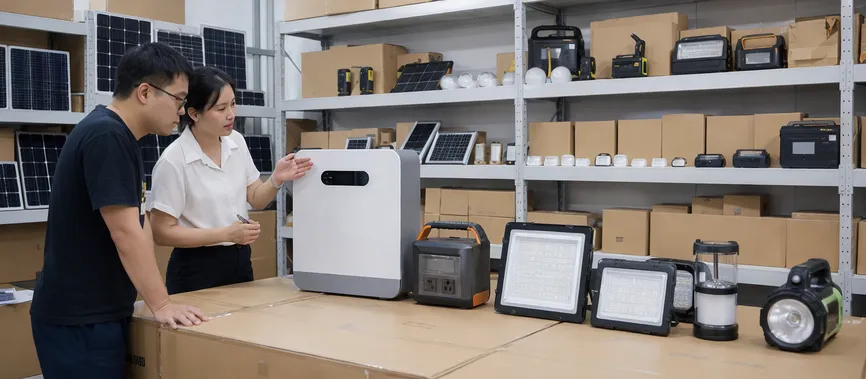
Distributors who already stock solar street lights, solar garden lights, or portable power stations can add a residential storage SKU without changing their logistics or compliance infrastructure.
The documentation overlap is significant — CE, RoHS, and export packing standards are consistent across the solar product range. A distributor adding a home energy storage battery to an existing solar lighting order consolidates freight, reduces per-unit landed cost, and gives their retail or installer customers a reason to consolidate purchasing.
Small Project Integrators
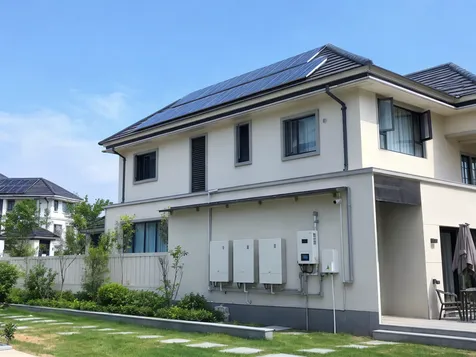
Villa developments, rural guesthouses, and small commercial sites with solar arrays under 20 kW are a growing segment for residential-grade storage. These buyers typically need 2–5 units per site, with consistent specs across the project.
The key requirement is inverter compatibility documentation and a clear warranty structure — both of which should be confirmed before the project specification is written.
Battery Sizing for Specific Load Profiles
For buyers sizing battery capacity for specific load profiles, the sizing guide covers the calculation logic in detail.
Battery Configuration Choices That Affect Margin and After-Sales Risk
The configuration decisions you make at the sourcing stage determine your margin, your after-sales exposure, and your inventory flexibility. These are not cosmetic choices.
Capacity Tiers and Modular Expansion
A 5 kWh entry unit and a 10 kWh mid-tier unit serve different buyer segments and carry different price points. Stocking both gives you coverage across the installer and backup dealer segments without requiring a single high-capacity SKU that ties up more capital per unit.
Modular expansion — where additional battery modules can be added in parallel — lets your downstream customers start with a smaller system and expand without replacing the inverter or BMS. This is a selling point for installers who want to offer a scalable solution.
Confirm Before Promoting
Confirm the maximum parallel configuration with the inverter spec before promoting this feature to your downstream customers.
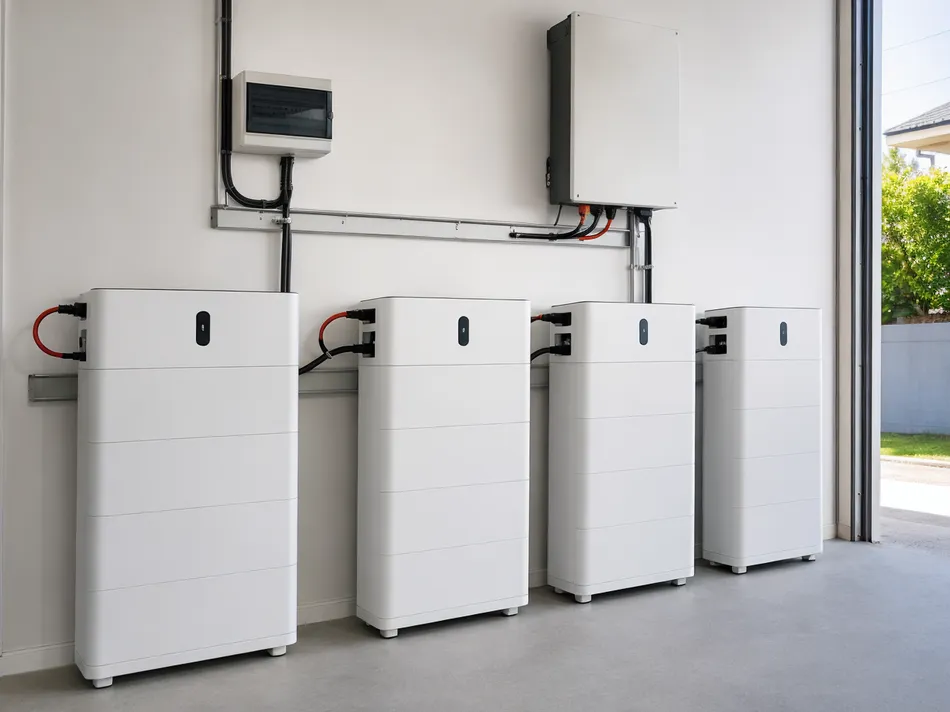
Installation Format as a Program Choice
Wall-Mounted
Suits urban apartments and compact utility rooms where floor space is limited.
Floor-Standing
Preferred for garages, basements, and rural installations where wall load capacity is uncertain.
Stackable
Allows capacity expansion in a single footprint without additional wall or floor area.
These formats are not interchangeable — the enclosure design, mounting hardware, and freight dimensions differ. Choose the format that matches your primary market's installation environment, not the one that looks best in a catalog photo.
OEM/ODM Options
We support private-label programs on residential energy storage batteries:
- Custom logo and label on the enclosure
- Branded carton and user manual
- Capacity configuration within the available module range
- Enclosure color or finish where the production run supports it
For buyers building a branded residential storage line, the engineering review covers BMS firmware labeling, communication protocol confirmation, and documentation package assembly.
Engineering Review Locks
- Spec confirmation
- Documentation package
- Prevents mid-production changes that delay shipments
Limitations to Confirm Before Ordering
These are not optional steps — skipping them creates customs holds, relabeling costs, and inverter compatibility failures that are expensive to resolve after the product is in your warehouse.
Certification Scope
Must be confirmed per model and destination market — not every certificate applies to every configuration.
Inverter Protocol
Communication protocol compatibility must be locked before BMS firmware is set.
Transport Documentation
UN38.3, MSDS, air/sea freight classification must be confirmed before freight booking.
Battery Testing Logic Borrowed from Solar Lighting Failures
We built JXSOL's production system around the failure modes that actually cost buyers money in the field — not because a certification required it.
The Three Solar Lighting Failures That Shaped Our QC
In solar lighting, the three failures that generated the most warranty claims were:
Battery inconsistency between cells in a pack
Causes premature capacity fade and uneven discharge
Charge/discharge behavior degrading faster than spec
Leads to early replacement and warranty exposure
Waterproof failures letting moisture reach electronics
Causes corrosion, short circuits, and total unit failure
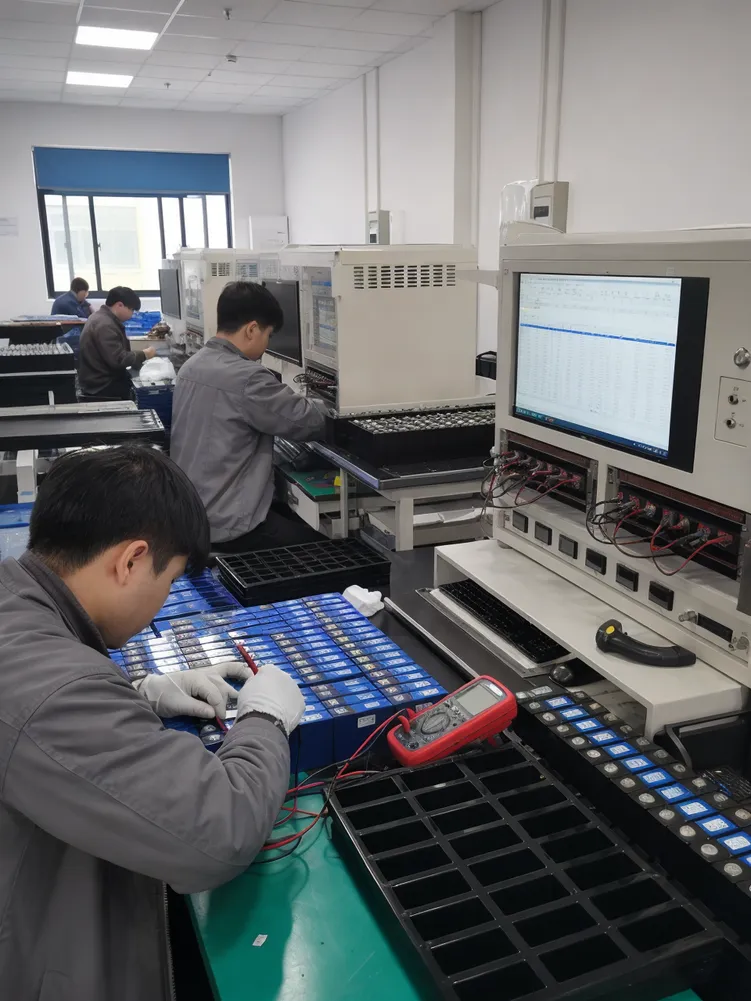
We built incoming inspection, battery matching, charge/discharge testing, and IP verification into every production stage because of those specific failures.
Equivalent Failures in Residential Energy Storage
The same logic applies to residential energy storage batteries. The failures that generate warranty claims and field service calls in this product category are:
Cell-Level Inconsistency
Within a battery pack — causes premature capacity fade
BMS Communication Errors
With the inverter — causes false alarms and system shutdowns
Documentation Gaps
Create customs delays or compliance failures at the destination market
Planned QC Sequence for Home Energy Storage Batteries
Incoming Inspection
Battery Cells & Modules
Capacity, internal resistance, and documentation review
BMS Units
Firmware version and communication protocol confirmation
Enclosures & Hardware
Mounting hardware dimensional check
Packaging Materials
Carton and protective material inspection
Battery Pack Assembly
Cell matching by capacity and internal resistance — mismatched cells are the primary cause of early capacity fade, and we don't skip this step to save time.
BMS Function Verification
Protection Functions
Overcharge, over-discharge, over-temperature, short circuit
Communication Protocol
Output verification against inverter spec
SOC Accuracy
State-of-charge reading calibration
Charge/Discharge Testing
Each unit runs through a full cycle under load before it moves to final assembly.
Final Inspection
Label accuracy, accessory pack completeness, carton condition, and documentation package checked against the order checklist.
100% Pre-Shipment Inspection
The 100% pre-shipment inspection we run on our core solar lighting catalog applies to battery products as well. Every unit, every carton, before the container closes.
This adds time to the production schedule — it also means defective units are caught before they are on a ship, not after they are in your warehouse generating return freight costs.
Production Infrastructure
12,000 m² factory, 6 production lines, 150 employees. The production infrastructure is in-house, the engineering team is on-site, and the inspection lab is in the same building where the product is assembled.
Pre-Shipment Inspection Rate
m² Factory Floor
Production Lines
Compliance Documents and Export Readiness Before Shipment
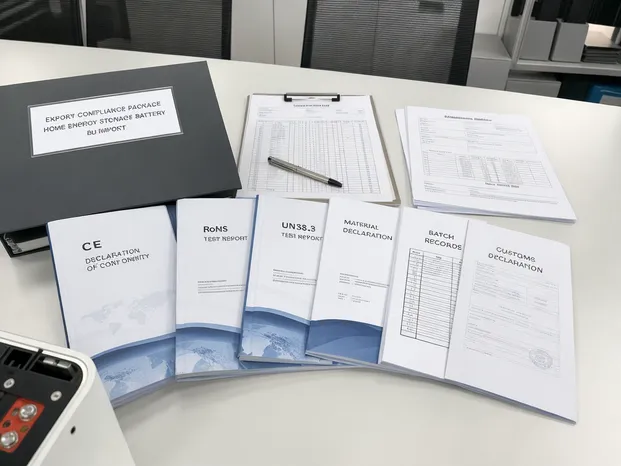
Battery products carry more compliance complexity than most solar lighting SKUs. The documents that matter depend on the destination market, the freight method, and the inverter integration requirements. Confirming the document package before production prevents the customs holds and relabeling costs that compress your margin on the first shipment.
Company-Level Credentials Confirmed for JXSOL
These apply to our production system and solar-powered product range. CE and RoHS documentation is available with orders where applicable.
- ISO 9001:2015
- CE
- RoHS
- IP65/IP67 Ingress Protection
- IEC 62124
Battery-Specific Documents to Confirm Per Model and Destination
- UN38.3 — Transport test report, required for air and sea freight of lithium batteries
- MSDS/SDS — Required by most freight forwarders and customs authorities
- IEC 62619 — Safety standard for stationary lithium battery systems; confirm applicability per model
- CE Declaration of Conformity — For the specific battery configuration
- Destination-market-specific — UL 9540 (North America), AS/NZS 5139 (Australia), local grid connection standards for regulated markets
We Do Not Claim Every Certificate Applies to Every Model
The correct approach is to confirm your destination market's requirements before the order is placed, then confirm which documents are available for the specific configuration you are ordering. We provide the document list with the quotation so you can verify compliance before committing to production.
EU Importers: RoHS Compliance at Component Level
For buyers importing into the EU, RoHS compliance traces to the component level — battery cells, BMS electronics, and enclosure materials are sourced from suppliers who provide material declarations, and we maintain records by batch. This matters for customs clearance and for your downstream customers' compliance requirements.
Packing, Labeling, and Battery Freight Planning
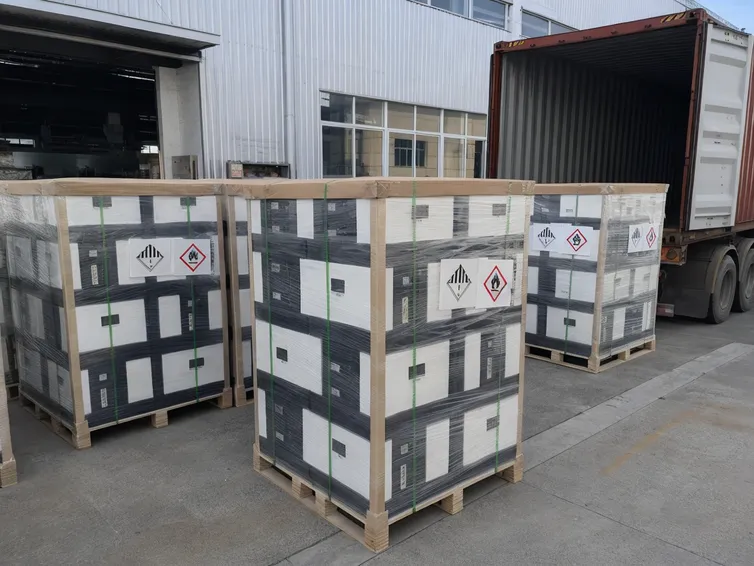
Home energy storage batteries are not standard freight. Lithium battery shipments require specific carton labeling, freight classification, and documentation that differs from ordinary solar lighting SKUs. Getting this wrong adds cost and delay — and it typically surfaces at the freight booking stage, not at the factory.
Carton and Product Labeling
Each unit ships with a product label covering model number, capacity, voltage, chemistry, serial number, and batch code for traceability.
- Outer carton labels include lithium battery handling marks, UN number, and shipping weight
- OEM/ODM orders include custom labels and carton printing in the documentation package
- Accessory packs — mounting hardware, communication cables, user manual — checked against packing list before carton sealing
Pallet and Container Planning
Residential storage batteries are heavy units. A 10 kWh wall-mounted unit typically weighs 40–60 kg. Palletized shipment is standard for most buyers.
- Carton dimensions planned for pallet efficiency
- Container loading quantities (20GP/40HQ) confirmed at quotation stage
- Specific pallet configurations for warehouse receiving or FBA-style labeling — confirm requirements before production
Freight Method and Documentation
Sea freight is the standard method for residential storage batteries in commercial volumes.
- Air freight requires UN38.3 certification and specific airline approval — confirm before booking
- Freight classification: Class 9 dangerous goods for lithium batteries — must be declared correctly on bill of lading and packing list
- Documentation package coordinated with freight forwarder; buyer's freight agent should confirm destination-market import requirements before shipment
Export Destinations and Import Documentation
We export to North America, Europe, the Middle East, Southeast Asia, and Africa. Each region has different import documentation requirements for lithium battery products.
Confirm Freight Method and Documentation Before Pricing — Not After Production
This prevents the cost surprises that compress your landed margin. The freight classification, documentation package, and destination-market import requirements should all be confirmed at the quotation stage, not discovered at the freight booking stage.
Choose the Right Battery or Portable Power Page
The Solar Battery & Portable Power range covers several overlapping product categories. Use this table to confirm you are on the right page before sending an RFQ.
| Product | Best Fit For | Key Differentiator |
|---|---|---|
| Home Energy Storage Battery (this page) | Fixed residential solar storage, installer resale, distributor catalog expansion | Inverter-integrated, higher capacity, fixed installation |
| Home Battery Backup | Backup-first residential programs, outage preparedness SKUs | Backup positioning, simpler grid-tie integration |
| Wall Mounted Lithium Battery | Space-constrained installations, urban apartment programs | Wall-mount format, compact enclosure design |
| Stackable Home Battery | Modular expansion programs, scalable capacity systems | Stackable modules, expandable without inverter replacement |
| Portable Power Station | Movable power SKUs, consumer and light commercial use | Portable, no installation required, AC/DC/USB outputs |
| Solar Generator | Portable power kits with solar charging emphasis | Integrated solar panel input, portable kit format |
| Portable Solar Battery | Smaller rechargeable solar battery programs | Compact, lower capacity, consumer-facing SKU |
Home Energy Storage Battery
Best fit: Fixed residential solar storage, installer resale, distributor catalog expansion
Differentiator: Inverter-integrated, higher capacity, fixed installation
Best fit: Backup-first residential programs, outage preparedness SKUs
Differentiator: Backup positioning, simpler grid-tie integration
Best fit: Space-constrained installations, urban apartment programs
Differentiator: Wall-mount format, compact enclosure design
Best fit: Modular expansion programs, scalable capacity systems
Differentiator: Stackable modules, expandable without inverter replacement
Best fit: Movable power SKUs, consumer and light commercial use
Differentiator: Portable, no installation required, AC/DC/USB outputs
Best fit: Portable power kits with solar charging emphasis
Differentiator: Integrated solar panel input, portable kit format
Best fit: Smaller rechargeable solar battery programs
Differentiator: Compact, lower capacity, consumer-facing SKU
If you are building a mixed solar product program — solar lighting plus residential storage plus portable power — our smart solar lighting systems page covers the IoT-connected lighting side of that catalog, and the Solar Battery & Portable Power range covers the storage and portable power side.
Most of our Southeast Asian and African distributors run mixed programs across both categories from a single factory relationship.
RFQ Checklist for Residential Battery Orders
A complete RFQ gets you a faster, more accurate quotation. Send us the following information and we will return a configuration recommendation, compliance document list, and pricing within one business day.
Required for Quotation
- Target usable capacity (kWh) and number of units per order
- Nominal voltage (48V standard, or specify)
- Inverter brand and model (or communication protocol: CAN bus / RS485 / dry contact)
- Installation format preference (wall-mounted / floor-standing / stackable)
- Destination market and import port
- Required certification documents (CE, RoHS, UN38.3, MSDS, IEC 62619, or market-specific)
- Freight method preference (sea / air — note: air requires UN38.3 confirmation)
Helpful for OEM/ODM Programs
- Logo and label requirements
- Custom carton and user manual needs
- Target retail or wholesale price point
- Expected reorder volume and frequency
Engineering Review Included
Engineering review is included for custom battery programs before production starts. This is not an optional step — it locks the spec, confirms the documentation package, and prevents mid-production changes that delay your shipment.
Procurement FAQ for Home Energy Storage Battery Buyers
Common questions from distributors, installers, and procurement teams evaluating residential storage battery programs with JXSOL.
What information is needed to quote a home energy storage battery?
What information is needed to quote a home energy storage battery?
At minimum: target capacity in kWh, nominal voltage, inverter brand or communication protocol (CAN bus or RS485), installation format, destination market, and required certification documents. With those fields confirmed, we can return a configuration recommendation and pricing.
Without the inverter protocol, we cannot confirm BMS firmware compatibility — that field is non-negotiable before production.
Can JXSOL support private-label residential energy storage batteries?
Can JXSOL support private-label residential energy storage batteries?
Yes. OEM/ODM support covers:
- Custom logo and label on the enclosure
- Branded carton and user manual
- Capacity configuration within the available module range
- Enclosure color or finish where the production run supports it
MOQ for standard models starts at 100 units. Custom OEM/ODM programs require an engineering review before production to lock the spec and confirm the documentation package.
Send your branding requirements and target market with the RFQ.
How is a home energy storage battery different from a portable power station?
How is a home energy storage battery different from a portable power station?
A home energy storage battery is a fixed installation product — it connects to a residential inverter, mounts to a wall or sits on the floor, and stores energy from a solar array or the grid for household use. It is not portable.
A portable power station is a self-contained unit with built-in AC/DC/USB outputs, designed for movable use without installation.
The two products sell through different channels (solar installers and electrical contractors vs. consumer electronics and outdoor retail) and carry different compliance documentation requirements.
If you need a movable power SKU, see the Portable Power Station page.
Can the battery work with my inverter brand?
Can the battery work with my inverter brand?
Inverter compatibility depends on the communication protocol. Most residential hybrid inverters use CAN bus or RS485 — confirm which protocol your inverter brand requires, and we will confirm BMS firmware compatibility before production.
We do not guarantee compatibility with all inverter brands without prior confirmation.
Send the inverter brand and model number with your RFQ and we will verify before quoting.
What compliance documents should be confirmed before importing?
What compliance documents should be confirmed before importing?
The required documents depend on your destination market and freight method. For most markets:
- CE Declaration of Conformity
- RoHS compliance records
- UN38.3 transport test report (required for all lithium battery shipments by sea and air)
- MSDS/SDS
For North America, UL 9540 may be required depending on the installation context. For the EU, IEC 62619 compliance is relevant for stationary battery systems.
Confirm your market's requirements before the order is placed — document gaps discovered after production create relabeling costs and customs delays.
For more on battery chemistry selection and compliance implications, see LiFePO4 Battery for Solar Storage.
What MOQ applies to standard and custom battery models?
What MOQ applies to standard and custom battery models?
Standard catalog models start at 100 units — consistent with our solar lighting MOQ policy. Custom OEM/ODM programs with modified capacity, enclosure, or documentation requirements are quoted on a project basis after engineering review.
Trial orders are supported; most new buyers in this category start with a 20–50 unit sample run to test with their installer or dealer network before committing to a larger program.
Can home storage batteries be supplied with solar lighting or portable power products in one order?
Can home storage batteries be supplied with solar lighting or portable power products in one order?
Yes. Buyers who source solar lighting or portable power products from JXSOL can add residential storage SKUs to the same order. The compliance documentation, export packing standards, and QC process are consistent across the solar-powered product range.
Consolidating freight across product categories reduces per-unit landed cost and simplifies the import documentation process.
Contact us with your full product mix and we will confirm what can be combined in a single shipment.