

Portable Solar Battery Direct From Factory
Solar-rechargeable portable battery — compact, configurable, and built for catalog programs, kit bundles, and field deployment.
LiFePO4 or lithium-ion chemistry, 100–1000Wh capacity range, solar input and multi-port output, OEM/ODM from 100 units. Factory-tested before shipment.
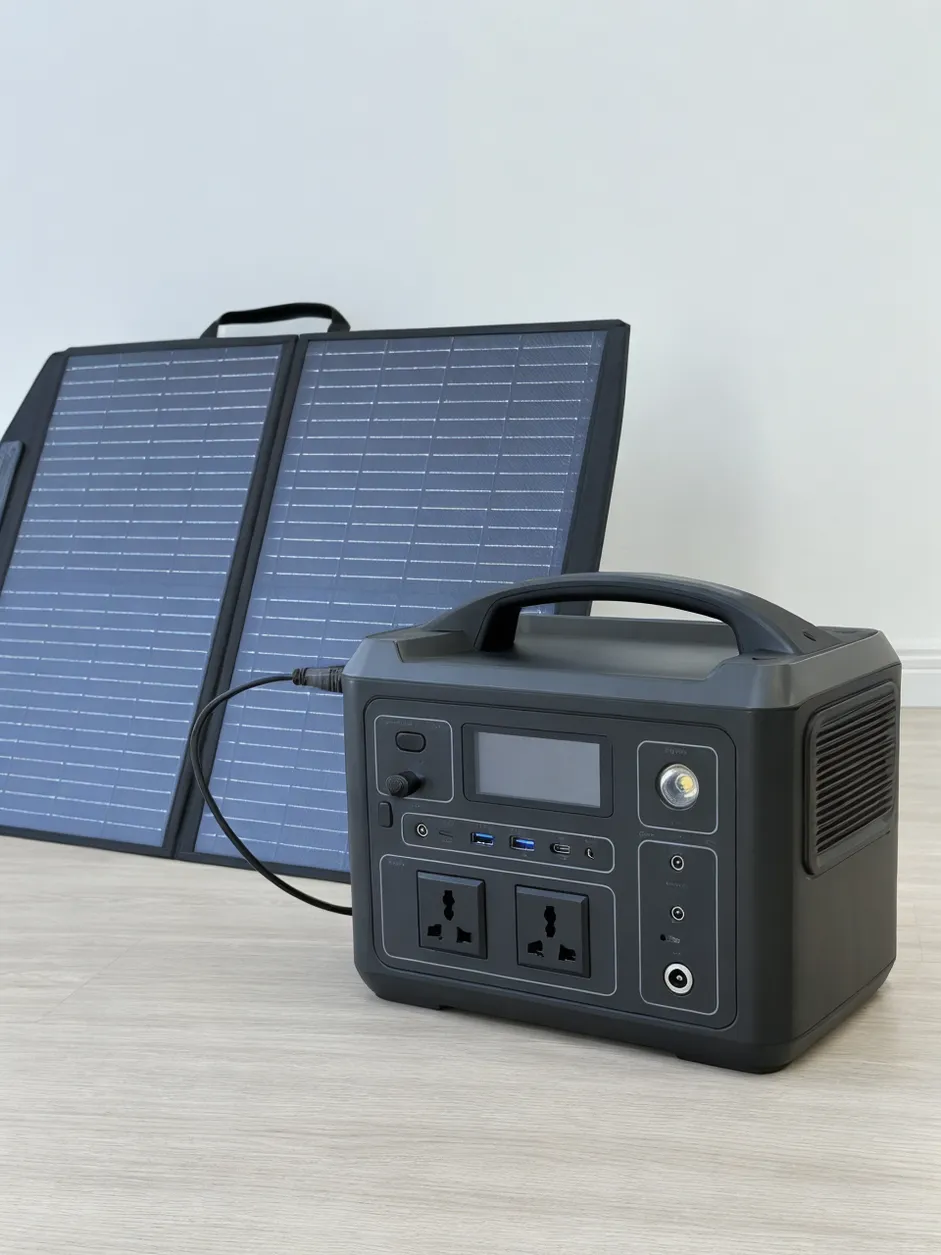
Portable Solar Battery for Solar Product Catalogs and Kit Programs
A portable solar battery is the battery-first SKU in the solar-powered portable power category: a compact, solar-rechargeable energy storage unit that pairs with portable solar panels, powers DC devices and small AC loads, and ships as a standalone product or inside a kit bundle. It is not a wall-mounted residential storage system, not a solar generator with a fixed panel array, and not a portable power station defined by its inverter output. The product identity is the battery — solar charging is the primary input method, and the output configuration is selectable based on your market.
We support this product line as an adjacent extension to JXSOL's core solar lighting catalog. Buyers who already source solar street lights, flood lights, or outdoor solar fixtures from us can add a portable solar battery SKU without opening a second factory relationship. The battery matching, charge/discharge testing, and SMT electronics assembly that underpin our solar lighting QC apply directly here — the production logic is the same, the product form factor is different.
For buyers building a solar-powered catalog from scratch, this page covers what you need to evaluate the product: typical specifications, QC controls, market segments, customization options, compliance documentation, and a comparison against sibling products in the same cluster. Send us your target capacity, output port requirements, solar panel wattage, and destination market — we'll respond with model options and a quote.
Quote Portable Solar BatteryProduct Identity
The product identity is the battery. Solar charging is the primary input method. Output configuration is selectable based on your market.
- Battery-first SKU — solar rechargeable
- Pairs with portable solar panels
- Ships standalone or inside kit bundles
Not This Product
- Not a wall-mounted residential storage system
- Not a solar generator with a fixed panel array
- Not a portable power station defined by its inverter output
Same Factory, Same QC
Battery matching, charge/discharge testing, and SMT electronics assembly from our solar lighting QC apply directly. The production logic is the same — the product form factor is different.
Capacity, Solar Input, and Output Specs Buyers Can Compare
The table below shows standard configuration ranges for our portable solar battery line. Values are typical or configurable — exact specifications depend on the selected model and any OEM adjustments. Use this for initial comparison and landed-cost estimation; request the model data sheet for procurement-level detail.
| Parameter | Standard Configuration Range |
|---|---|
| Battery Chemistry | LiFePO4 (preferred for cycle life) or Li-ion NMC (lower cost, higher energy density) |
| Capacity | 100Wh / 256Wh / 512Wh / 1000Wh (custom capacity available) |
| Solar Input | 12–24V DC, 30–200W (MPPT or PWM controller, model-dependent) |
| DC Output | 12V DC (cigarette lighter / Anderson connector, model-dependent) |
| USB Output | USB-A 5V/2.4A × 2; USB-C PD 18–65W (model-dependent) |
| AC Output | Optional 100–240V AC inverter, 150W–1000W (model-dependent) |
| Charging Methods | Solar panel input; AC wall charging; 12V car charging |
| BMS Protections | Overcharge, over-discharge, over-current, short circuit, over-temperature |
| Operating Temperature | Charge: 0°C to 45°C; Discharge: -20°C to 60°C |
| Cycle Life | LiFePO4: 2000+ cycles to 80% capacity; Li-ion NMC: 500–800 cycles |
| Display | LED indicator or LCD screen showing SOC, input/output wattage (model-dependent) |
| Casing Material | ABS + PC blend; optional rubberized grip panels |
| Weight | 1.2–9.5 kg (capacity-dependent) |
| Warranty | 12 months standard; 24 months available on confirmed OEM programs |
Specifications shown are standard configuration ranges. Actual values depend on selected model and OEM configuration. Contact us for model-specific data sheets.
LiFePO4 vs NMC
LiFePO4 costs more per Wh upfront but delivers 3–4× the cycle life of NMC. For a product your downstream customers will use daily, that difference shows up in warranty claims within 18 months.
AC Inverter Trade-off
The AC inverter option adds weight and cost. If your market is primarily DC device users (lighting, fans, phone charging), a DC-only configuration keeps the unit lighter and the price more competitive.
Solar Recharge Time
Solar input wattage determines how fast the unit recharges in the field. A 256Wh unit with a 60W panel input takes roughly 4–5 hours in good sun — a realistic expectation to set in your product documentation.
Battery Matching and Charge Testing Before Bulk Shipment
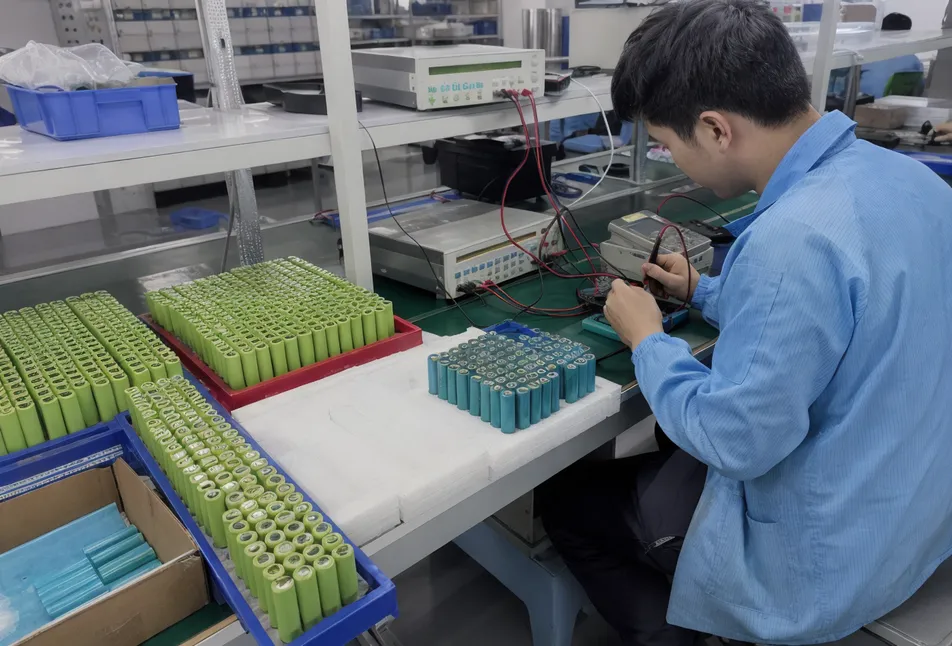
The most common failure mode in portable solar batteries isn't the BMS — it's cell inconsistency inside the pack. When cells with different internal resistance values are assembled into a pack, the weakest cell limits the whole pack's usable capacity and degrades faster under charge/discharge cycling. By the time your downstream customer notices reduced runtime, the pack is already past the point of easy warranty resolution.
Cell Incoming Stage: Resistance-Band Matching
Every batch of cells is tested for capacity and internal resistance before entering production. Cells are matched by resistance band before pack assembly — we don't mix cells from different resistance groups in the same pack.
This step adds time to the production schedule, but we've kept it as a non-negotiable since we saw the field failure pattern in our solar lighting battery packs early on. The same discipline carries over to the portable battery line.
Post-Assembly Test Sequence: Every Unit, Every Carton
BMS Function Check
Solar Charging Test
Simulated panel input
Load Discharge Test
Confirm rated capacity
Port Function Test
Every output verified
Aging Rack Cycle
Full charge/discharge
Why the Aging Test Matters at Volume
Units that pass the initial function check go to an aging rack for a full charge/discharge cycle under load before final assembly. The aging test catches early-life cell failures that pass the initial function check.
It's the difference between a 0.1% field return rate and a 2–3% rate, which matters when you're distributing at volume.
0.1%
Field return rate
with aging test
2–3%
Field return rate
without aging test
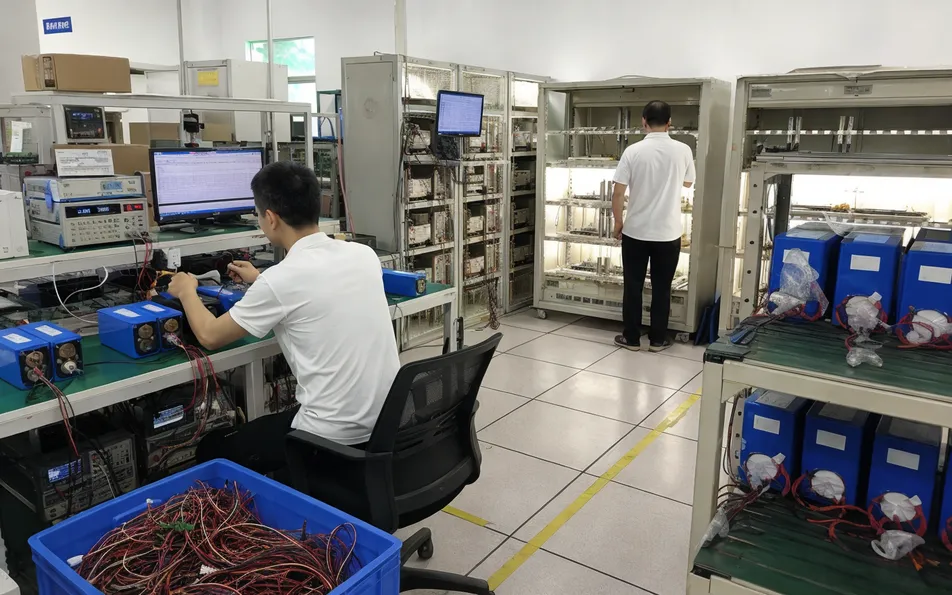
Shared Infrastructure, Consistent Protocols
Our integrated testing lab handles both battery pack testing and LED module testing for our solar lighting line — the equipment and protocols are shared infrastructure, not a separate setup for the portable battery product.
The same engineers who validate battery performance in our smart solar lighting systems are running the same charge/discharge protocols on portable battery packs.
The 100% pre-shipment inspection covers every unit, every carton, and every accessory pack before the container closes.
What This Means for Distributors
Fewer early-life returns, more consistent reorder quality, and lower after-sales cost per unit sold.
Market Segments Where a Portable Battery SKU Carries Margin
The commercial case for stocking a portable solar battery depends on which channel you're selling into. These are the segments where we see repeatable order patterns and margin-protective product fit.
Solar Lighting Distributors Adding Portable Backup Batteries
If you already distribute solar street lights, flood lights, or garden solar products from our core solar lighting catalog, a portable solar battery is a natural add-on SKU. Your existing customers — municipalities, contractors, rural electrification projects — often need a portable backup power source alongside fixed solar lighting installations.
A 256Wh or 512Wh unit with DC and USB output covers site lighting, tool charging, and communication device backup in one SKU.
The reorder pattern follows your lighting program, and you're not opening a new supplier relationship to fill the gap.
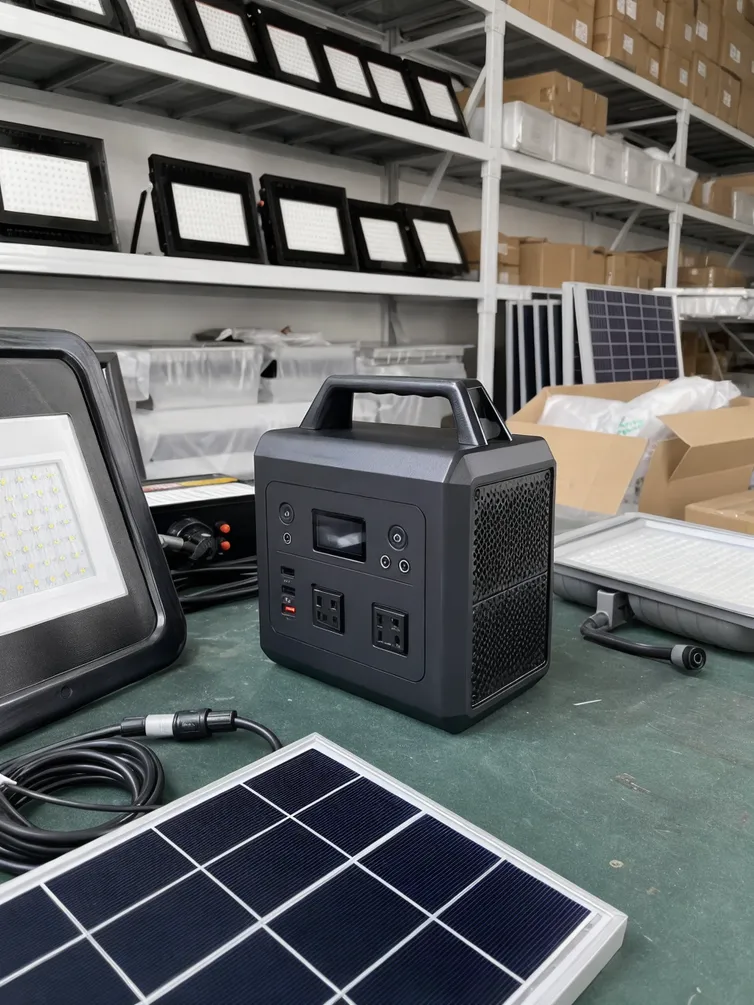
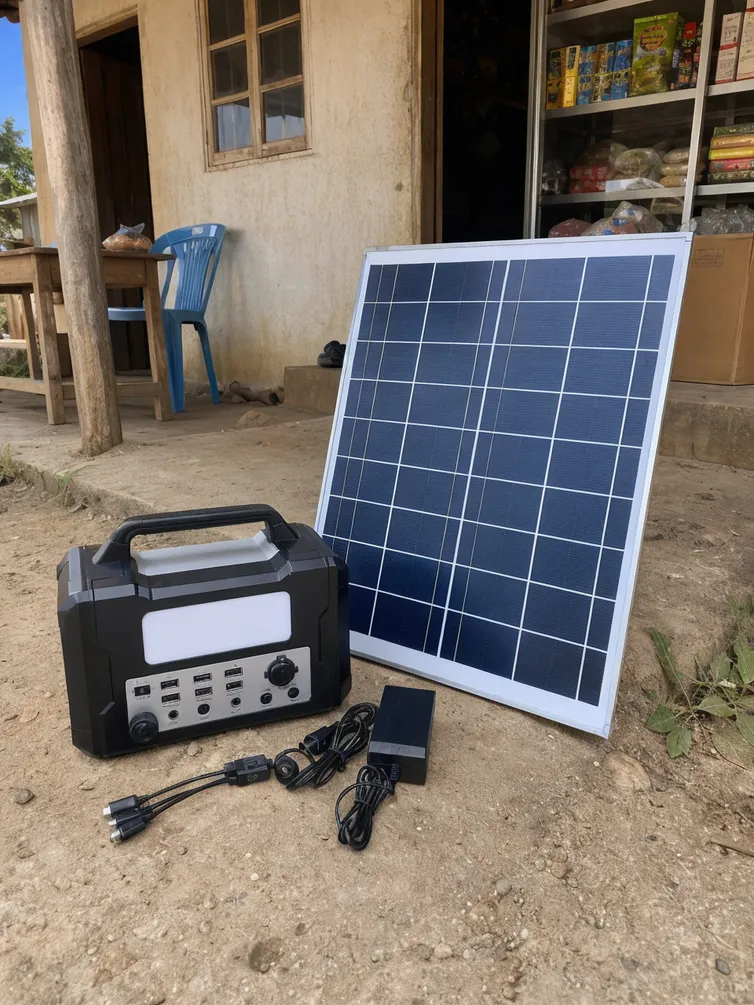
Rural and Off-Grid Retail Channels
Distributors serving markets with unreliable grid access — parts of Africa, Southeast Asia, and the Middle East — find that a solar rechargeable battery paired with a 30–60W portable panel is a complete off-grid power kit. The product sells as a system: battery plus panel, priced as a bundle.
Margins on bundled kits are typically higher than on individual components because the buyer is purchasing a solution, not a commodity.
Reorder frequency in this segment is driven by population growth and rural electrification program expansion — it's not a seasonal product.
Emergency Preparedness and Backup Power Distribution
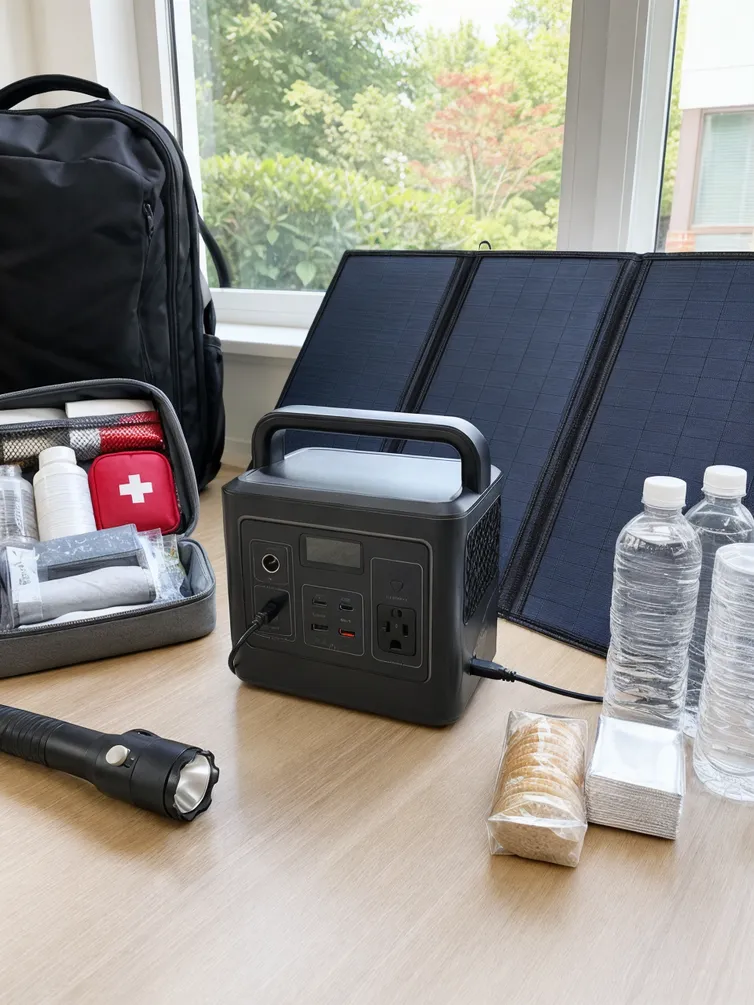
Compact portable solar batteries in the 256–512Wh range are a repeatable SKU for emergency preparedness retailers and distributors. The product is easy to explain, easy to store, and easy to ship. Solar rechargeability is a key selling point in this channel because it removes grid dependency during the scenarios where the product is actually needed.
Order volumes in this segment tend to be moderate (200–1000 units per run) but consistent, with seasonal spikes around storm season in North America and rainy season in tropical markets.
Outdoor Equipment and Mobile Work Channels
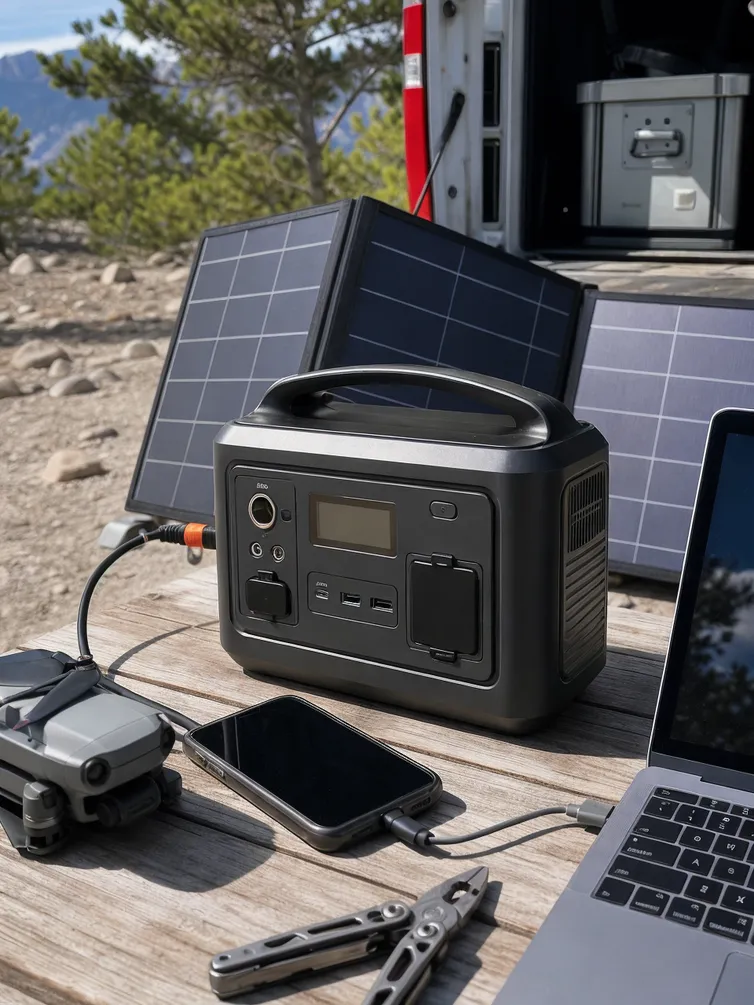
A portable battery for solar panel pairing sells well in outdoor retail, camping equipment distribution, and mobile work tool channels. The product needs DC output for 12V accessories, USB-C PD for laptops and devices, and a solar input connector compatible with standard portable panels.
Weight matters in this segment — buyers in outdoor retail will push back on anything over 4–5 kg for the mid-capacity range.
Recommended starting configuration: 256Wh LiFePO4 with rubberized grip panel and 60W solar input.
NGO, Field Service, and Project Kit Supply
NGOs and field service organizations running electrification or humanitarian programs need portable solar batteries with consistent documentation, reliable packing, and reorder stability. They typically specify capacity, output ports, and solar input wattage in a procurement brief, and they need MSDS, UN38.3, and CE/RoHS documentation with every shipment.
This segment values supply chain reliability over unit price — a supplier who delivers consistent quality and documentation on schedule is worth more than one who is 10% cheaper but inconsistent.
This segment has grown steadily for us over the past three years, particularly in Africa and Southeast Asia. Worth building into your product line if you have NGO or development program relationships.
Required Documentation
Typical order: 200–1000 units per run, consistent reorder cadence, documentation with every shipment.
OEM and ODM Options That Affect MOQ, Lead Time, and Retail Fit
A portable solar battery is more configurable than it looks from the outside. The decisions that affect your MOQ, lead time, and retail positioning break down into a few clear categories.
Capacity and Chemistry
These are the two decisions that define the product. LiFePO4 for cycle life and safety; Li-ion NMC for lower cost and higher energy density in a smaller form factor.
Capacity bands — 100Wh, 256Wh, 512Wh, 1000Wh — are available as standard configurations. Custom capacity requires engineering review and affects lead time.
For most distribution programs, starting with a standard capacity band and adjusting the output configuration is faster and lower-risk than specifying a custom Wh value.
Output Ports and Inverter Option
Port configuration — USB-A count, USB-C PD wattage, DC output connector type, AC inverter wattage — can be adjusted within the model's design range without changing the housing mold. This is the most common OEM adjustment we handle.
If your market uses a specific plug standard (Type A, Type C, Type G, or regional variants), we configure the AC output accordingly.
The inverter option adds cost and weight; confirm whether your target market actually needs AC output before specifying it.
Solar Input Connector
MC4 is the standard for compatibility with most portable solar panels. Anderson connector or XT60 are available for buyers whose panel kits use those standards.
If you're bundling the battery with a specific panel, confirm the connector match before finalizing the spec.
Logo, Casing Color, and Packaging
Custom logo on the casing and carton is standard OEM practice and doesn't affect MOQ significantly. Custom casing color is available on runs where the production schedule allows a color changeover — typically 200 units minimum for a non-standard color.
Custom carton artwork, user manual language, and accessory kit configuration (cables, adapters, carry bag) are all adjustable.
Custom housing molds require a higher commitment and a longer lead time; for most buyers, working within the existing housing design with logo and color customization is the practical path.
MOQ and Lead Time
Standard catalog models are available from 100 units — low enough to test a new SKU with your market before scaling. OEM configurations with port or connector changes typically require 200–500 units minimum depending on the adjustment scope.
Custom molds and new certifications add lead time; we confirm the timeline during the engineering review. For buyers who need CE or UN38.3 documentation for a specific model configuration, allow time for test report generation if the configuration differs from our standard tested models.
Choose the Right Product Type Before You Quote
The Solar Battery & Portable Power cluster contains several closely related product pages. Before requesting a quote, confirm you're on the right page — the product boundaries matter for pricing, documentation, and supply chain planning.
| Product | Best Fit For | Key Difference from Portable Solar Battery |
|---|---|---|
| Portable Solar Battery (this page) | Battery-first SKU, solar rechargeable, standalone or kit | — |
| Portable Power Station | Buyers who need a fuller outlet package and inverter as the primary product identity | Inverter-defined product; more output ports; heavier; higher price point |
| Solar Generator | Buyers who want a panel-plus-battery bundle as a complete system | Panel included in the product; less flexibility to separate battery and panel sourcing |
| Home Energy Storage Battery | Fixed residential installation programs | Wall-mounted or rack-mounted; not portable; higher capacity; installation required |
| Home Battery Backup | Household backup power distribution | Fixed installation; grid-tied or off-grid; different compliance requirements |
| Wall Mounted Lithium Battery | Installed storage for residential or light commercial | Permanent installation; not portable |
| Stackable Home Battery | Modular capacity expansion programs | Designed for stacking and scaling; fixed installation |
Portable Category
If your buyer is carrying the product to a location and using it there, a portable solar battery or portable power station is the right category. The portable solar battery sits at the lighter, more affordable end of the portable range — it's the entry point for buyers who want solar rechargeability without the full inverter package of a power station.
Fixed Installation Category
If the product is being installed at a location and left there, you're in the home storage or wall-mounted category. These products have different compliance requirements, higher capacity ranges, and are designed for permanent mounting.
If you're comparing portable power station and solar generator programs specifically, the Portable Power Station and Solar Generator product pages cover the product boundary in detail.
Export Compliance, Battery Shipping, and Carton Planning
Lithium batteries create documentation requirements that affect import clearance, air freight eligibility, marketplace listing, and downstream liability. Getting this right before the order ships is faster than resolving it at the port.
Factory-Level Credentials
JXSOL holds ISO 9001:2015, CE, and RoHS certifications at the factory level. These apply to our production system and to products within their applicable scope.
- CE covers electrical safety and EMC requirements relevant to portable battery products sold in the EU and markets that accept CE marking.
- RoHS compliance is built into component sourcing — battery cells, PCB components, and electronic assemblies are sourced from suppliers who provide material declarations, and we maintain records by batch.
- ISO 9001:2015 applies to the production system and quality management processes.
Model-Level Documentation
Not every portable battery configuration automatically carries every certification. Key distinctions:
- UN38.3 (lithium battery transport testing) is required for air freight and is model-specific — it must be confirmed for the selected configuration.
- MSDS (Material Safety Data Sheet) is required for most freight modes and customs clearance.
- If your destination market requires a specific CE Declaration of Conformity, IEC 62133 test report, or battery label format, confirm these requirements during the order process so we can provide the correct documentation package.
Battery Shipping Document Checklist
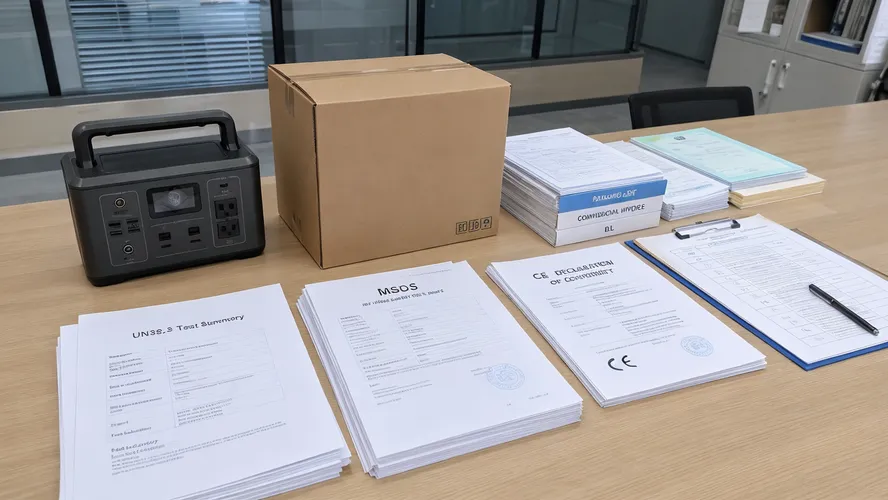
When you send your RFQ, include your documentation requirements alongside the product spec. The documents typically needed for a portable solar battery shipment:
-
1
UN38.3 Test Summary
Required for air freight; confirm for sea freight by destination
-
2
MSDS / SDS
Required for most freight modes
-
3
CE Declaration of Conformity
EU and CE-accepting markets
-
4
RoHS Compliance Declaration
Material restriction compliance for electronics
-
5
Battery Label Requirements
UN number, watt-hour marking, handling symbols
-
6
Destination-Market Requirements
Plug type and manual language requirements
Carton and Packing Planning
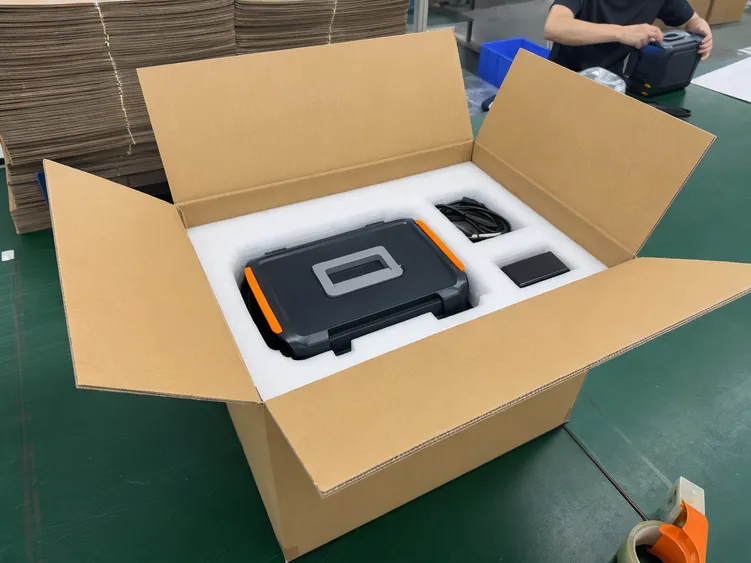
Drop-resistant carton construction is standard for battery products — we use double-wall corrugated with foam inserts for units above 256Wh.
Each carton includes a packing list with accessory verification. Carton dimensions and gross weight are provided with the order confirmation for freight planning.
Palletization is available for buyers who need palletized delivery to a warehouse or distribution center.
Pro tip: We've had buyers discover carton dimension issues after booking freight — send us your container type and we'll confirm the loading configuration before you book.
Protection
Double-wall + foam
Threshold
> 256Wh units
Include documentation requirements with your RFQ for a complete quote
FAQ for Portable Solar Battery Procurement
What capacity portable solar battery should I quote for a solar panel kit?
Match capacity to the expected daily load and the number of days of autonomy your market needs. A 256Wh unit covers a typical off-grid lighting and device charging load (2–3 LED lights, phone charging, small fan) for one to two days without solar recharge. A 512Wh unit extends that to two to four days or supports a small AC load.
Standard Panel-to-Battery Pairing
These combinations give a realistic 4–6 hour recharge time in average sun conditions, which is a defensible spec to put in your product documentation. If your kit targets a specific latitude or season, send us the location and we'll confirm the panel-to-battery sizing.
Is LiFePO4 or lithium-ion better for a solar rechargeable battery product line?
LiFePO4 is the better choice for most B2B distribution programs where after-sales cost matters. It delivers 2000+ cycles to 80% capacity versus 500–800 cycles for NMC lithium-ion, which means your downstream customers get 3–4× the usable life before capacity degrades noticeably.
| Attribute | LiFePO4 | NMC Lithium-Ion |
|---|---|---|
| Cycle Life (to 80%) | 2000+ cycles | 500–800 cycles |
| Thermal Stability | Higher — lower thermal runaway risk | Lower — more abuse-sensitive |
| Upfront Cost per Wh | Higher | Lower |
| Energy Density | Slightly lower (heavier unit) | Higher (lighter unit) |
| Best Fit | Long product life, warranty liability, compliance | Price-point priority, shorter life cycle OK |
LiFePO4 is also more thermally stable — lower risk of thermal runaway under abuse conditions, which matters for warranty liability and marketplace compliance. The trade-off is higher upfront cost per Wh and slightly lower energy density (heavier unit for the same capacity).
NMC makes sense when your target price point is the primary constraint and your market accepts a shorter product life cycle.
For a deeper comparison of LiFePO4 chemistry in solar storage applications, see our LiFePO4 battery for solar storage guide.
What solar panel wattage can charge a portable battery in a normal sales kit?
The practical range for a retail or kit-bundled portable solar panel is 30–200W. For a 256Wh battery, a 60W panel gives a 4–5 hour charge time in good sun (roughly 5 peak sun hours). For a 512Wh battery, a 100W panel gives a similar 5–6 hour charge time.
A 20W panel on a 256Wh battery takes 12+ hours to charge. This is a customer complaint waiting to happen for daily-use kits.
Panels above 200W are typically in fixed installation territory rather than portable kit territory.
Controller Type Matters
MPPT controllers extract 20–30% more energy from the panel than PWM controllers under partial shade or non-optimal angle conditions. Worth specifying for markets where panel placement isn't always ideal.
What outputs should a portable battery for solar panel buyers include?
The minimum viable output configuration for most markets includes:
USB-A 5V/2.4A × 2
Phone and small device charging
USB-C PD 18–45W
Laptop and tablet charging
12V DC Output
Cigarette lighter or Anderson connector for 12V accessories and lighting
AC Output — Add If Your Market Needs It
Specify the inverter wattage based on the largest load your downstream customer is likely to run. 150W covers most small appliances; 300–500W covers power tools and larger loads.
Don't Over-Specify the Inverter
A 1000W inverter on a 256Wh battery gives your customer 15 minutes of full-load runtime — a poor product experience. Match inverter wattage to realistic load and battery capacity.
What shipping documents are needed for lithium portable solar batteries?
At minimum: UN38.3 test summary, MSDS/SDS, and battery label with UN number and watt-hour marking.
EU Import
- •CE Declaration of Conformity
- •RoHS compliance declaration
Air Freight
- •UN38.3 mandatory
- •Some carriers require shipper's declaration for dangerous goods (Section II for small lithium batteries)
Marketplace Listing (Amazon, etc.)
- •UN38.3 and MSDS typically required at listing stage
- •Some platforms require IEC 62133 test reports
Confirm your destination market and freight mode when you send the RFQ — documentation requirements vary, and we'll confirm which documents are available for the selected model configuration.
Can JXSOL customize logo, carton, plug type, and output ports for distributors?
Yes, within the scope described in the OEM section above.
Logo on casing and carton — standard
Plug type and output port configuration — adjustable within the model's design range
Custom carton artwork and user manual language — standard OEM options
Custom casing color — available on runs of 200+ units for non-standard colors
Custom housing molds — require a higher commitment and longer lead time. For most programs, working within the existing housing with logo and configuration adjustments is the faster path.
MOQ guidance: Standard models start at 100 units. OEM configurations with port or connector changes typically require 200–500 units minimum.
What information should I send to get an accurate portable solar battery quote?
Include the following in your RFQ brief for the fastest, most accurate response:
The more specific your brief, the faster we can return a model recommendation and accurate pricing.
RFQ Checklist for a Quote You Can Compare
Send us the following and we'll return model options, a configuration recommendation, and pricing within one business day.
Product Specification
- Target capacity (Wh) or capacity range
- Battery chemistry preference: LiFePO4 or Li-ion NMC
- Output ports required: USB-A count, USB-C PD wattage, DC connector type, AC inverter wattage (or DC-only)
- Solar input connector type (MC4, Anderson, XT60, or other)
- AC plug standard for your destination market (Type A, C, G, or other)
Program Details
- Order quantity (initial order and expected reorder volume)
- OEM requirements: logo, casing color, carton artwork, user manual language, accessory kit
- Destination market and import port
- Documentation requirements: UN38.3, CE, RoHS, MSDS, IEC 62133, or other
Optional but Useful
- Target retail price point (helps us recommend the right chemistry and configuration)
- Solar panel wattage if bundling
- Timeline for first shipment
We respond to all inquiries within one business day. Send your brief now or contact us to discuss configuration options first.
Explore More Solar Battery & Portable Power
Home Energy Storage Battery
Residential storage solutions for solar self-consumption
Home Battery Backup
Backup power systems for grid outage protection
Wall Mounted Lithium Battery
Space-saving wall-mount battery units for residential installs
Stackable Home Battery
Modular stackable battery systems for scalable capacity
Portable Power Station
All-in-one portable power stations for outdoor and emergency use
Solar Generator
Solar-powered generators for off-grid and mobile applications