

Stackable Home Battery for Modular Residential Storage Programs
One modular battery platform — quote 5 kWh or 20 kWh from the same SKU family without stocking a separate model for every capacity tier.
LiFePO4 chemistry, scalable stack configuration, BMS with full protection suite. Designed for residential solar installers, energy storage distributors, and solar product resellers who need capacity flexibility without SKU proliferation.
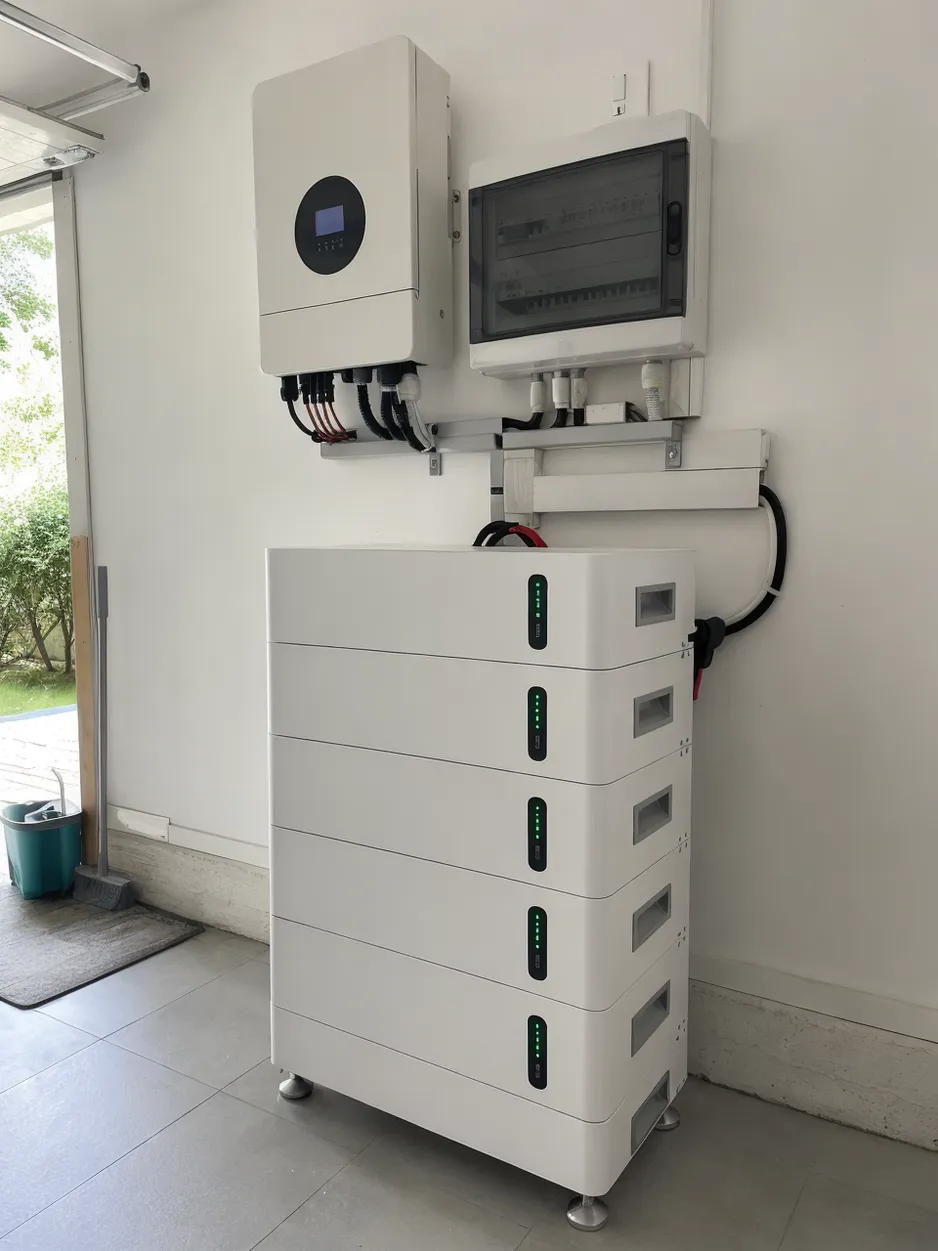
Stackable Home Battery for Modular Residential Storage Programs
A stackable home battery is a floor-standing modular lithium storage system where individual battery modules connect in series or parallel to build the total system capacity your project requires. The commercial logic is straightforward: instead of stocking a 5 kWh model, a 10 kWh model, and a 15 kWh model as three separate SKUs, you stock one module platform and configure the stack at the project level. Your installer quotes the right capacity for each job without you carrying dead inventory across three product lines.
This is part of JXSOL's Solar Battery & Portable Power auxiliary line — products we support for buyers who are already building solar-powered catalogs and want to consolidate sourcing. Our primary manufacturing base is solar lighting, and the battery testing discipline, electrical engineering team, and inspection lab that support this product line were built around that core.
If you're evaluating a stackable lithium battery for a residential solar storage program, get a quote for the stackable home battery and we'll confirm the configuration that fits your market.
Modular Platform
One SKU family covers 5–20 kWh. Configure at the project level, not the warehouse level.
Full BMS Protection
Over-charge, over-discharge, over-current, short-circuit, and thermal protection built in.
LiFePO4 Chemistry
Stable thermal profile, long cycle life, and proven safety record for residential environments.
Capacity Scaling That Reduces SKU Risk
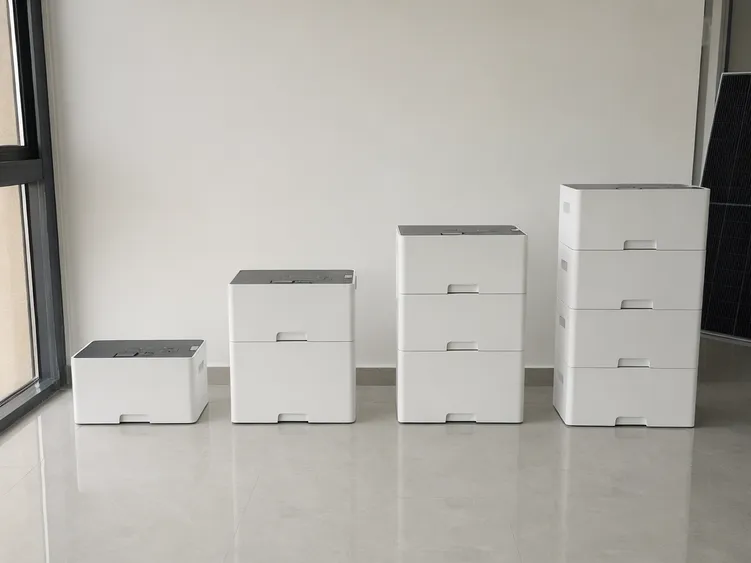
The stackable format's commercial value is in inventory planning, not just product specs. When your market has customers who want 5 kWh starter systems and customers who want 15 kWh full-home setups, a fixed-capacity product forces you to stock multiple models and predict demand for each. A modular home battery platform changes that equation: you stock modules, and the stack quantity determines the delivered capacity.
| Stack Configuration | Approx. System Capacity | Typical Application |
|---|---|---|
| 1 module | ~5 kWh | Small apartment or supplemental backup |
| 2 modules | ~10 kWh | Standard residential solar storage |
| 3 modules | ~15 kWh | Larger home or higher daily consumption |
| 4 modules | ~20 kWh | High-consumption household or small villa |
These are illustrative configurations based on a 5 kWh module. Exact capacity per module and maximum stack quantity depend on the confirmed model — confirm with our engineering team before quoting.
For Distributors
Fewer SKUs to manage, fewer slow-moving models to write down, and a cleaner reorder pattern. Once your installers are familiar with the platform, they reorder modules rather than complete units — and module reorders are smaller, more frequent, and easier to forecast.
For Installers
Quoting speed: size the system for the customer's consumption and solar panel output, then specify the stack count. No separate product catalog for each capacity tier.
For Program Builders
For buyers building a solar storage program from scratch, the home energy storage battery page covers related sizing logic before you commit to a module capacity.
Predictable Reorder Patterns
The reorder pattern for modular systems tends to be more predictable than fixed-capacity products. Once your installers are familiar with the platform, they reorder modules rather than complete units — and module reorders are smaller, more frequent, and easier to forecast. We've seen distributors cut their battery inventory carrying cost significantly after switching from a three-SKU fixed-capacity lineup to a single modular platform.
Contact JXSOL if you want to discuss how to structure a starter SKU mix for your market.
Technical Specification Points Buyers Should Confirm Before Quoting
The table below uses industry-typical values for LiFePO4 stackable home battery systems. Exact specifications depend on the confirmed model — contact us for the product data sheet before entering these numbers into a procurement comparison or project proposal.
| Parameter | Typical Value / Range | Notes |
|---|---|---|
| Battery chemistry | LiFePO4 (lithium iron phosphate) | Preferred for home storage: better cycle life and thermal stability than NMC |
| Module nominal capacity | ~5 kWh per module | Confirm per model; other module sizes available |
| Nominal voltage | 48V DC (typical) | Confirm for your inverter compatibility |
| Usable capacity | ~90% of rated capacity | Depends on BMS depth-of-discharge setting |
| Max stack quantity | 4 modules (typical) | Confirm per model; affects total system voltage and BMS configuration |
| Cycle life | 3,000–6,000+ cycles at 80% DoD | LiFePO4 chemistry; confirm with test data |
| BMS protections | Overcharge, over-discharge, over-current, short-circuit, over-temperature, cell balancing | Confirm low-temperature charging protection for cold-climate markets |
| Communication protocol | CAN bus / RS485 (typical) | Must match your inverter's BMS communication requirement |
| Inverter compatibility | Confirm per inverter brand and model | Not all inverters support all BMS communication protocols |
| Charging input | Solar MPPT, AC grid charging | Confirm input voltage range and connector type |
| Operating temperature | Discharge: -20°C to +60°C; Charge: 0°C to +45°C | Low-temperature charging protection required below 0°C |
| Enclosure format | Floor-standing, stackable tower | Indoor or protected-area installation required |
| IP rating | IP20 (indoor) typical | Confirm if your market requires higher ingress protection |
| Certifications | CE, RoHS, ISO 9001:2015 | Battery-specific certifications (UN38.3, IEC 62619) confirm per model and destination market |
| Warranty | Confirm per model | Typically 5–10 years for LiFePO4 home storage |
Specifications shown are industry-standard reference values for this product type. Actual specifications vary by model. Request a data sheet and quote for stackable lithium battery to confirm exact parameters before quoting.
Communication Protocol — The Most Common Pre-Order Question
CAN bus and RS485 are both common, but which one your inverter supports — and whether the BMS firmware is compatible with your specific inverter brand — needs to be confirmed before production. We work through inverter compatibility in the engineering review, not after goods are ready to ship.
Installer Handling and Site Cost Control
A stackable home battery system affects your installer's labor cost, site footprint, and after-sales access in ways that a wall-mounted unit doesn't. Getting these details right before your first project order saves field changes and warranty callbacks.
Floor Footprint and Placement
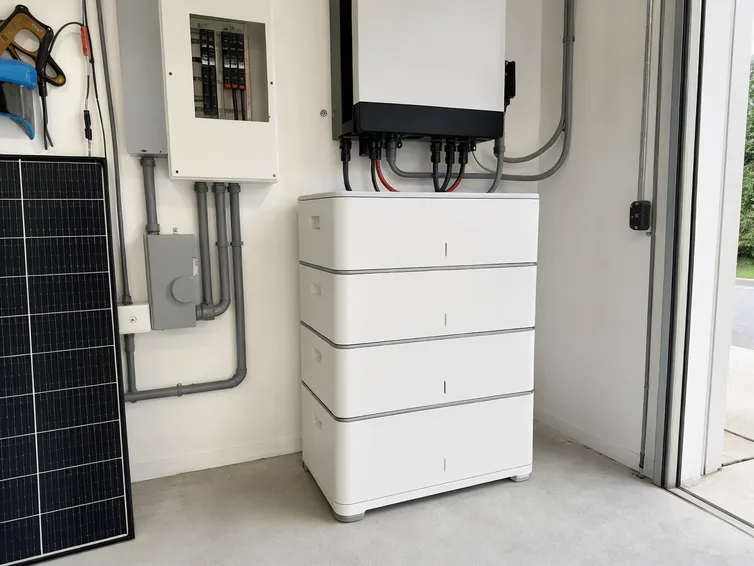
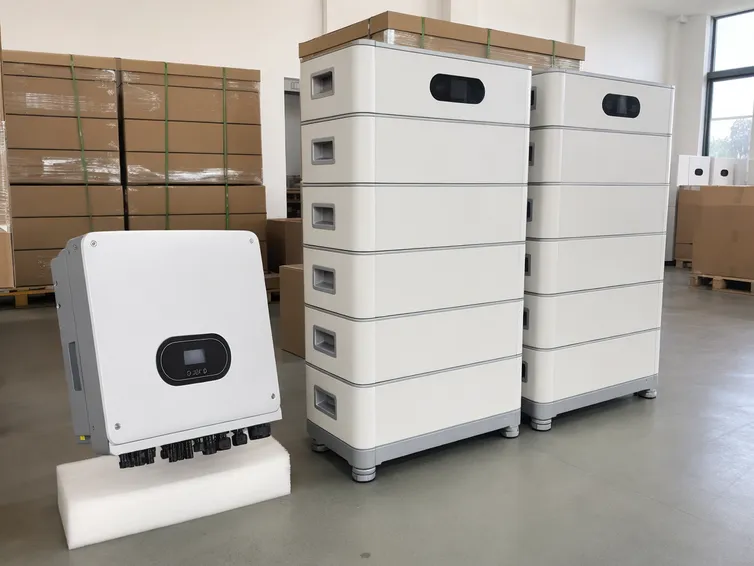
Each module adds height to the stack, so the system's floor footprint stays compact even as capacity scales. A 4-module stack occupies roughly the same floor area as a single module — the growth is vertical.
This matters for residential installations where floor space in utility rooms, garages, or dedicated battery enclosures is limited. The system needs a level, stable floor surface and clearance on all sides for ventilation and cable access.
Module Lifting and Assembly
Individual modules are heavy — typically 40–60 kg per module depending on capacity. Your installers need to plan for two-person lifts and appropriate handling equipment for upper modules in a tall stack.
We've seen single-person installation attempts on upper modules cause both safety incidents and housing damage. This is worth communicating to your installer network before the first deployment.
Cable Management and Inverter Proximity
DC cable runs between the battery stack and the inverter should be kept short to minimize voltage drop and heat buildup. Confirm the cable cross-section and maximum run length with the inverter manufacturer's installation guide.
For multi-module stacks, the inter-module cabling is typically included with the system — confirm what's in the accessory pack before your installer arrives on site.
Ventilation Clearance
LiFePO4 chemistry is significantly more thermally stable than NMC, but the BMS still generates heat under load and the enclosure needs airflow. Minimum clearance requirements vary by model — confirm before specifying a tight utility room installation.
Maintenance Access
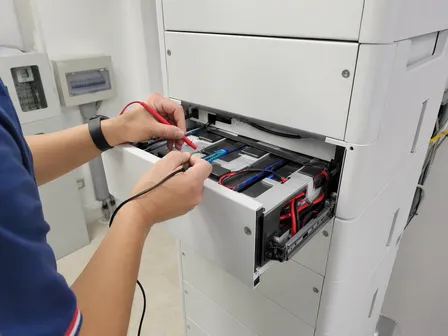
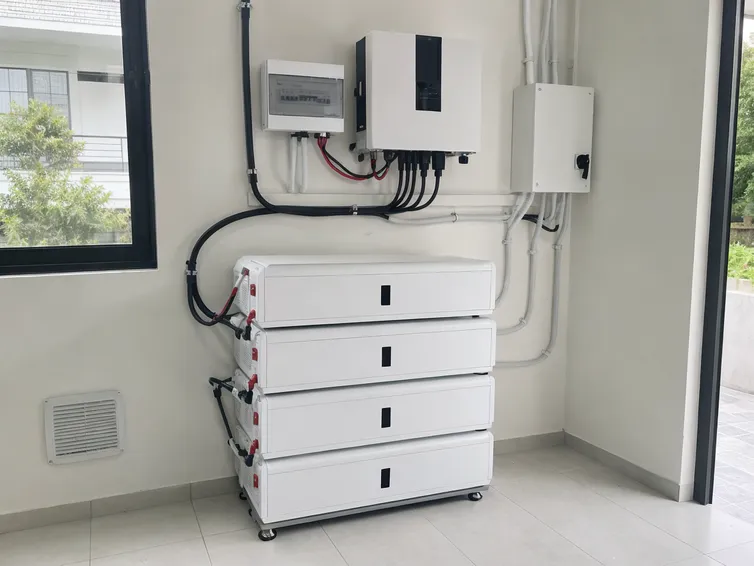
One advantage of the stackable format over a sealed wall-mounted unit is that individual modules can be accessed for inspection or replacement without removing the entire system. This reduces after-sales cost for your installer network and extends the serviceable life of the installation.
For buyers building a long-term residential solar storage program, that serviceability is worth factoring into the total cost of ownership conversation with your customers.
Wall Space the Constraint Instead of Floor Space?
If your market has projects where wall space is the constraint rather than floor space, the wall-mounted format is the relevant alternative — it's a more compact format for smaller residential setups where a floor-standing stack isn't practical.
Market Segments Where a Stackable Format Sells Cleanly
The stackable home battery's commercial value is clearest in four market segments. Each one has a different buying pattern, but the common thread is that capacity flexibility — the ability to quote different system sizes from one modular platform — is a direct commercial advantage.
Residential Solar Installers Quoting Tiered Capacity Systems
Your customers are homeowners with solar panel systems who want to store daytime generation. The system size depends on their panel output, daily consumption, and how many days of autonomy they want. A modular home battery platform lets your installers quote a 5 kWh starter system and expand to 10 or 15 kWh later without replacing the base unit.
That upsell path — "add a module when you're ready to expand" — is a retention tool as much as a product feature. Residential solar installers in markets with net metering changes or rising grid tariffs are actively looking for storage products that give their customers a clear expansion path.
This segment typically orders in the 50–200 unit range per quarter once the product is established in the installer's standard quote.
Backup-Power Distributors in Outage-Prone Markets
In markets where grid reliability is poor — parts of Africa, Southeast Asia, the Middle East, and rural North America — the sales conversation is about runtime, not solar self-consumption. Your customers want to know how many hours the system runs their critical loads.
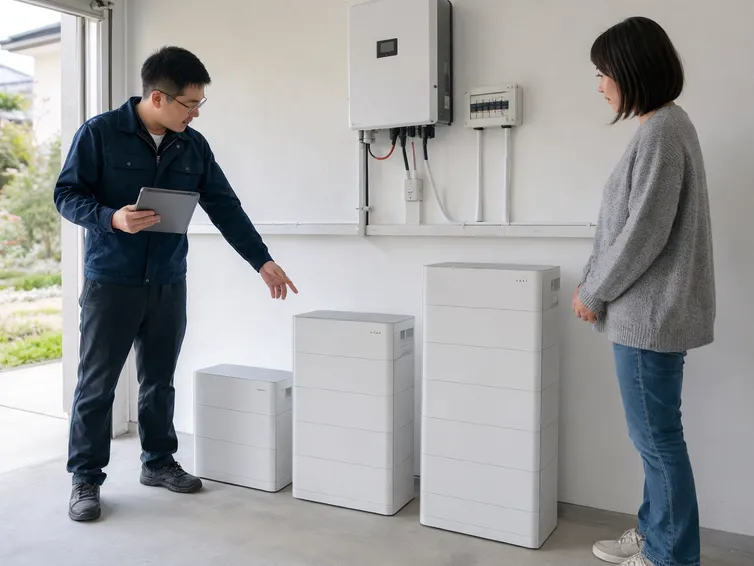
A stackable system lets you offer a tiered product line: a 1-module entry package for essential loads, a 2-module mid-tier for broader coverage, and a 3–4 module premium package for whole-home backup. One modular platform covers the full range without separate product certifications for each capacity tier.
We've seen distributors in West Africa build their entire residential storage program around a single modular platform for exactly this reason — the logistics simplicity alone justifies the format choice.
Solar Product Resellers Building Bundled Packages
If you're building a solar panel plus inverter plus battery bundle, the stackable format gives you a clean capacity ladder to present to your downstream buyers. A 5 kWh bundle, a 10 kWh bundle, and a 15 kWh bundle can all use the same battery module, the same inverter, and the same installation procedure — only the module count changes.
This simplifies your bundle documentation, your installer training, and your after-sales support.
Buyers in this segment who are also sourcing solar lighting can consolidate their supply relationship — our core solar lighting catalog and smart solar lighting systems are available through the same factory and engineering team.
Small Commercial and Villa Projects
Floor-stacked battery systems scale more naturally to higher kWh requirements than wall-mounted units, which are constrained by wall load ratings and available wall area. A small guesthouse, a villa with high air-conditioning loads, or a small commercial premises with modest storage needs can be served by a 3–4 module stack without the structural considerations of a wall-mounted system at the same capacity.
This segment tends to have higher average order values and less price sensitivity than standard residential — worth building into your product line if your distribution channel reaches small commercial buyers.
Customization Scope for Distributor and OEM Programs
Standard catalog stackable home battery models are available from 100 units MOQ — low enough to test the product with your market before committing to a larger program. OEM and private-label programs are available from the same starting point.
| Customization Option | Available | Notes |
|---|---|---|
| Logo and brand name on unit | Front panel and enclosure labeling | |
| Custom carton and retail packaging | Carton design, color, language | |
| User manual language | English standard; other languages on request | |
| Enclosure color | Standard colors available; custom RAL on larger runs | |
| Accessory kit configuration | Cables, adapters, mounting hardware | |
| Communication protocol selection | CAN bus or RS485; must match inverter requirement | |
| Module capacity configuration | Affects BMS spec, certification path, and component sourcing | |
| BMS parameter adjustment | Depth of discharge, charge/discharge rate, protection thresholds | |
| Destination-market plug/cable standard | Confirm connector type and cable spec for your market | |
| Battery cell chemistry change | LiFePO4 is standard; NMC available for specific energy-density requirements |
Why Electrical Changes Require Engineering Review
Electrical changes — module capacity, BMS parameters, communication protocol, inverter compatibility — require an engineering review before we confirm feasibility. This isn't a gatekeeping step; it's because those changes affect the certification path, the BMS firmware, and the component sourcing.
A capacity change that looks simple on paper can require updated CE documentation and re-testing. We work through that review upfront so there are no surprises at the production stage.
Commercial Value of a Well-Executed OEM Program
- Your brand on the unit reduces price comparison pressure from competing distributors
- Your packaging reduces after-sales confusion
- Your accessory kit reduces the "wrong cable" support tickets that generate returns
Ready to Start Your OEM Program?
Send your stackable home battery OEM requirements with your target market, module capacity, inverter brand, and branding requirements.
Compliance, Battery Testing, and Export Documentation
JXSOL holds ISO 9001:2015, CE, and RoHS certifications at the factory level. For stackable home battery products specifically, the applicable certifications and documentation depend on the destination market and the specific model configuration — confirm required documents before production, not after goods are ready to ship.
Battery Testing Process
Built around solar lighting battery packs since 2012
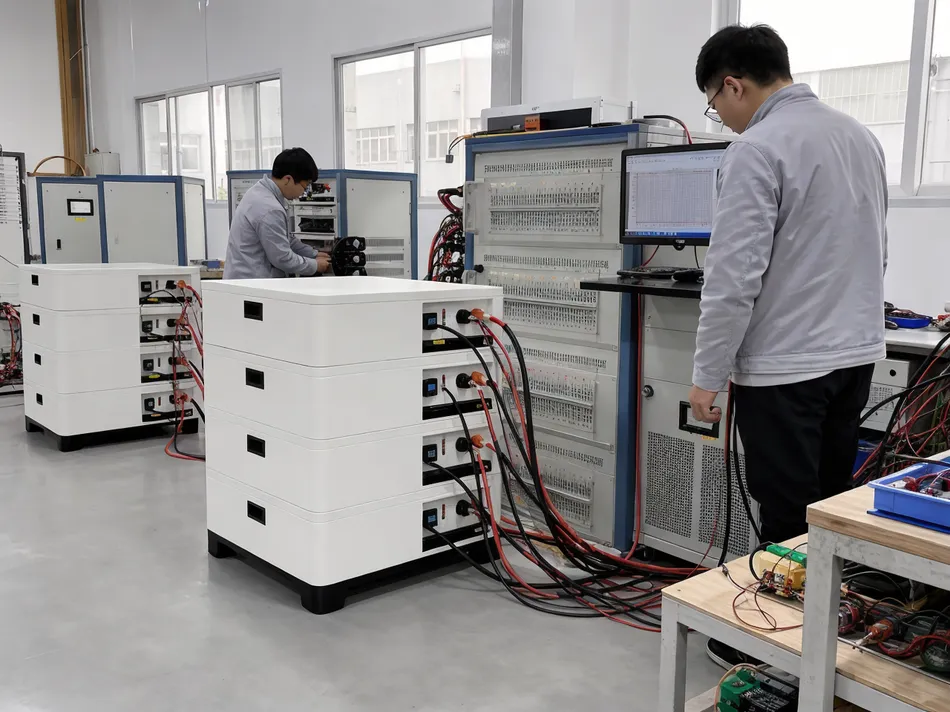
Our battery testing process covers the failure points that generate warranty claims and returns. The same lab, the same process — applied to standalone battery products.
Incoming Cell Inspection
Checks capacity and internal resistance before cells enter the pack assembly process.
Pack Matching
Groups cells within defined tolerance bands — mismatched cells degrade faster, generate heat unevenly, and shorten cycle life.
Charge/Discharge Cycle Testing
Confirms actual usable capacity against spec on assembled packs.
BMS Function Verification
Tests protection triggers under load conditions on assembled units, not just on the BMS board in isolation.
100% Pre-Shipment Inspection
Covers every unit before packing — no sampling, full coverage.
Most Common Warranty Claim
Overstated usable capacity — the rated number and the actual delivered number diverge because of cell quality variation or BMS configuration. Our charge/discharge testing catches that before the unit ships.
Export Documentation for Lithium Battery Products
Requirements depend on carrier, destination country, and battery capacity class
UN38.3 Test Reports
MSDS/SDS Documentation
Watt-Hour Labeling
Transport Declarations
The specific requirements depend on your carrier, your destination country's import regulations, and the battery capacity class. We coordinate document preparation before production completion — not as an afterthought at the freight forwarder stage.
Packaging and Lithium Battery Shipping Planning
Stackable home battery modules are heavy, fragile at the terminal connections, and subject to lithium battery shipping regulations. Packaging and documentation planning affects your landed cost, your damage claim rate, and your import clearance timeline.
Packaging Configuration
Module Packaging
Each module ships in a reinforced carton with internal cushioning appropriate to the module's weight — typically foam inserts and corner protection to prevent terminal and housing damage during transit.
Cabling & Accessories
Inter-module cabling and accessories ship in a separate inner pack within the same carton or in a dedicated accessory carton, depending on the configuration.
Carton Labeling
Includes batch codes for traceability, watt-hour markings as required for lithium battery shipments, and model identification for warehouse receiving.
Pallet Configurations
Available for buyers who need palletized delivery to a warehouse or distribution center. Container loading quantities depend on specific module dimensions and carton configuration — confirmed at the order stage.
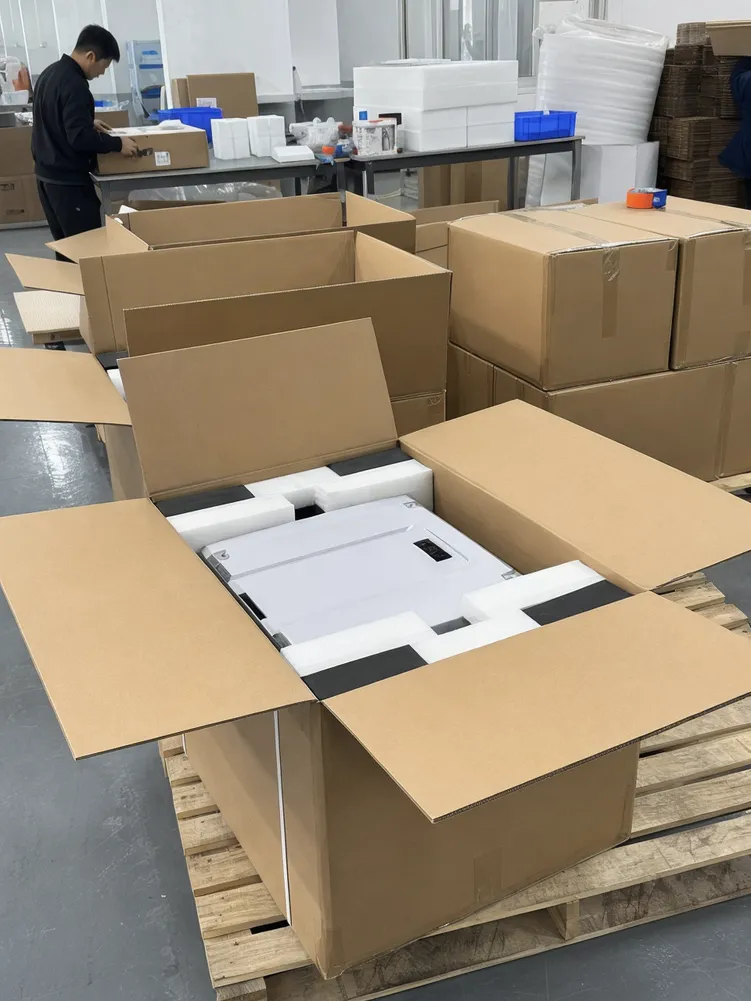
First container tip: Confirm carton dimensions and pallet configuration before finalizing your freight booking — battery module cartons are heavier than most consumer electronics and affect container weight distribution.
Shipping Documentation — A Pre-Production Step
A documentation gap discovered at the freight forwarder stage costs more than the time it takes to confirm requirements upfront.
UN38.3 Test Reports
MSDS/SDS
Watt-Hour Labeling
Carrier Declarations
The same lithium battery shipping requirements that apply to the broader product category apply here. We treat documentation confirmation as a pre-production step, not an afterthought — whether you're shipping by air or sea, the specific carrier-specific declarations are confirmed before your order enters production.
Get a quote with export packing requirementsChoose the Right Battery or Portable Power SKU
The stackable home battery is one of seven products in the Solar Battery & Portable Power line. Use this table to confirm you're on the right product page before requesting a quote.
| Product | Best Fit | When to Choose Instead |
|---|---|---|
| Stackable Home Battery (this page) | Modular residential storage programs; capacity flexibility from one platform; installer upsell path | You're here — confirm specs and request a quote |
| Home Energy Storage Battery | Broader residential solar storage programs where a fixed-capacity unit is sufficient and modular expansion isn't a priority | Your market doesn't need tiered capacity from one platform |
| Home Battery Backup | Outage-focused backup programs where the sales conversation is about runtime and critical load coverage, not solar self-consumption | Your channel sells to backup-power buyers, not solar installers |
| Wall Mounted Lithium Battery | Compact wall installations where floor space is the constraint; smaller residential setups; lower entry price point | Your market has wall space but limited floor area, or your installers prefer wall-mount format |
| Portable Power Station | Retail and wholesale portable AC/DC backup; camping, job site, emergency, and travel channels | Your channel is retail portable power, not residential solar storage |
| Solar Generator | Panel-and-power-station bundle programs; off-grid and outdoor markets | You're building a solar kit program, not a fixed home storage program |
| Portable Solar Battery | Smaller mobile solar-rechargeable backup; entry-level portable solar power | Your channel is lightweight portable solar, not home storage |
Stackable Home Battery
This PageBest Fit: Modular residential storage programs; capacity flexibility from one platform; installer upsell path
You're here — confirm specs and request a quote
Home Energy Storage Battery
Best Fit: Broader residential solar storage programs where a fixed-capacity unit is sufficient and modular expansion isn't a priority
Choose Instead When: Your market doesn't need tiered capacity from one platform
Home Battery Backup
Best Fit: Outage-focused backup programs where the sales conversation is about runtime and critical load coverage, not solar self-consumption
Choose Instead When: Your channel sells to backup-power buyers, not solar installers
Wall Mounted Lithium Battery
Best Fit: Compact wall installations where floor space is the constraint; smaller residential setups; lower entry price point
Choose Instead When: Your market has wall space but limited floor area, or your installers prefer wall-mount format
Portable Power Station
Best Fit: Retail and wholesale portable AC/DC backup; camping, job site, emergency, and travel channels
Choose Instead When: Your channel is retail portable power, not residential solar storage
Solar Generator
Best Fit: Panel-and-power-station bundle programs; off-grid and outdoor markets
Choose Instead When: You're building a solar kit program, not a fixed home storage program
Portable Solar Battery
Best Fit: Smaller mobile solar-rechargeable backup; entry-level portable solar power
Choose Instead When: Your channel is lightweight portable solar, not home storage
Stackable vs. Wall-Mounted: Quick Decision Guide
If you're deciding between the stackable format and the wall-mounted format specifically, the short version is: wall-mounted for smaller setups and wall-space-available installations, stackable for higher kWh requirements and markets where capacity expansion is a selling point.
The Wall Mounted Lithium Battery page covers the wall-mount format in detail.
FAQ for Procurement and Technical Pre-Qualification
Common questions from distributors, system integrators, and procurement teams evaluating stackable home battery platforms for their programs.
What is the difference between a stackable home battery and a wall-mounted lithium battery for a distribution program?
The format difference is commercial as much as physical. A wall-mounted lithium battery is a fixed-capacity unit — you stock the 5 kWh model and the 10 kWh model as separate SKUs. A stackable home battery is a modular platform — you stock one module and configure the stack count for each project.
Wall-mounted units have a lower entry price point and simpler installation, which makes them the right starting SKU for price-sensitive markets or installers working with smaller residential setups. Stackable systems command a higher margin, support a natural upsell path ("add a module when you're ready to expand"), and reduce your inventory risk across capacity tiers.
Bottom line: If your market has customers who want to start small and expand, the stackable format is the better commercial fit.
How do I size a stackable home battery system for a residential solar project?
Start with the household's daily energy consumption in kWh and the number of days of autonomy your customer wants (typically 1–2 days for grid-tied solar storage, more for off-grid). Then follow this sizing sequence:
Sizing Calculation Steps
- 1 Multiply daily consumption by autonomy days to get total required capacity.
- 2 Divide by the usable capacity percentage (typically 80–90% for LiFePO4 at standard depth of discharge).
- 3 Divide by the module capacity to get the stack count.
Worked Example
Result: three 5 kWh modules at 100% usable, or four modules if sizing conservatively for long-term cycle life.
The home energy storage battery sizing guide covers this calculation in detail with additional worked examples for different household profiles and autonomy requirements.
Is LiFePO4 the right chemistry for a stackable home battery program?
For residential home storage programs where the battery cycles daily, LiFePO4 is the standard choice. The cycle life advantage over NMC is significant at this use pattern — 3,000–6,000+ cycles at 80% depth of discharge versus 500–1,500 cycles for typical NMC. At one cycle per day, that's 8–16 years of daily cycling before the battery reaches 80% of its original capacity.
- 3,000–6,000+ cycles at 80% DoD
- 8–16 years daily cycling to 80% capacity
- No thermal runaway under standard abuse conditions
- Reduced insurance and liability concerns
- 500–1,500 cycles typical
- Higher energy density (lighter, smaller)
- Thermal runaway risk under certain conditions
The thermal stability advantage also matters for home storage: LiFePO4 doesn't enter thermal runaway under the same conditions that can affect NMC, which reduces insurance and liability concerns for your installer network.
The trade-off is lower energy density — LiFePO4 modules are heavier and larger for the same kWh than NMC. For home storage where weight and size are secondary to cycle life and safety, LiFePO4 is the right call.
See Home Energy Storage Battery for the full chemistry comparison.
How do I confirm inverter compatibility before ordering a stackable lithium battery?
Inverter compatibility has two layers: electrical compatibility (voltage range, charge/discharge current, communication protocol) and firmware compatibility (whether the inverter's BMS communication is configured to work with the specific battery's BMS).
Electrical Compatibility
Voltage range, charge/discharge current, communication protocol. Can usually be confirmed from the inverter's spec sheet and the battery's spec sheet.
Firmware Compatibility
Whether the inverter's BMS communication is configured to work with the specific battery's BMS. Requires confirmation from either the inverter manufacturer or from test data with the specific battery model.
Don't assume compatibility based on matching voltage and protocol alone. We've seen CAN bus mismatches between inverters and batteries that share the same nominal protocol but use different message formats.
Send us your inverter brand and model number — we'll confirm whether we have compatibility data for that combination or whether an engineering review is needed before production.
What is the maximum number of modules that can be stacked in a single system?
Maximum stack quantity depends on the specific model and the BMS configuration. Typical systems support 4 modules in a single stack, giving approximately 20 kWh from a 5 kWh module platform. Some configurations support higher stack counts or parallel string configurations for larger systems — confirm with our engineering team for your specific capacity requirement.
Exceeding the rated maximum stack quantity affects BMS function, cell balancing, and system safety — it's not a parameter to push without engineering confirmation.
What documents should I confirm before importing stackable home batteries?
At minimum, confirm:
- UN38.3 test report (required for most international lithium battery shipments)
- MSDS/SDS documentation
- CE Declaration of Conformity (for European market entry)
- RoHS compliance documentation
- Watt-hour labeling on cartons and units
Depending on your destination market, you may also need IEC 62619 test reports (safety requirements for stationary lithium battery systems), local electrical safety certifications, or grid-connection approval documentation.
Shipping note: Air freight has stricter lithium battery requirements than sea freight — confirm with your freight forwarder before booking. We prepare documentation before production completion; send us your destination market and import requirements and we'll confirm what's available and what needs to be arranged.
What MOQ and lead time should I plan for a first stackable home battery order?
Standard catalog models start at 100 units MOQ. OEM/ODM programs with logo, packaging, and labeling customization are available from the same starting point.
Lead time for standard catalog orders is typically 4–6 weeks from order confirmation; OEM programs with custom packaging or electrical changes add time for engineering review, tooling, and documentation updates.
Most new buyers start with a sample order of 2–5 units to confirm the product configuration and inverter compatibility before scaling.
Contact JXSOL for Lead Time ConfirmationRFQ Guidance for Stackable Home Battery Orders
The more specific your inquiry, the faster our engineering team can respond with a useful recommendation. Here's what to include when you reach out.
Target Market & Sales Channel
Country or region, and whether you're selling through solar installers, backup-power dealers, retail, or wholesale distribution.
Module Capacity & Stack Configuration
Your target system capacity in kWh and whether you need a specific module size or are open to our standard platform.
Inverter Brand & Model
Required for compatibility confirmation. Include the inverter's BMS communication protocol if known — CAN bus, RS485, or other.
Destination Voltage & Plug Standard
48V DC battery systems are common, but confirm the AC side voltage (110V/60Hz or 220V/50Hz) for inverter pairing.
Documentation Requirements
CE, RoHS, UN38.3, IEC 62619, or market-specific certifications your import process requires.
Branding & Packaging
Private label, custom packaging, or standard JXSOL catalog — specify your preference so we can scope artwork and tooling.
Order Volume
Trial order quantity and expected reorder cadence. This affects production scheduling and whether an engineering review is needed before the first run.
Ready to Start Your Inquiry?
Send your requirements through any of the channels below. Use the structured form for fastest turnaround, or contact us directly to discuss configuration before committing to a formal inquiry.
Explore More Battery & Portable Power Products
Related SKUs in the JXSOL solar battery and portable power catalog.