

Wall Mounted Lithium Battery Direct From Factory
Fixed LiFePO4 wall mount solar battery for residential solar storage, home backup, and compact installer programs — sourced from a solar product factory with 13+ years of battery testing discipline.
Industry-typical capacity range 5–20 kWh, BMS-protected, inverter-compatible, CE and RoHS certified. OEM/ODM from 100 units with engineering review before production.
2012
Founded
12,000 m²
Factory Area
ISO 9001
Certified
100%
Pre-Ship Inspection
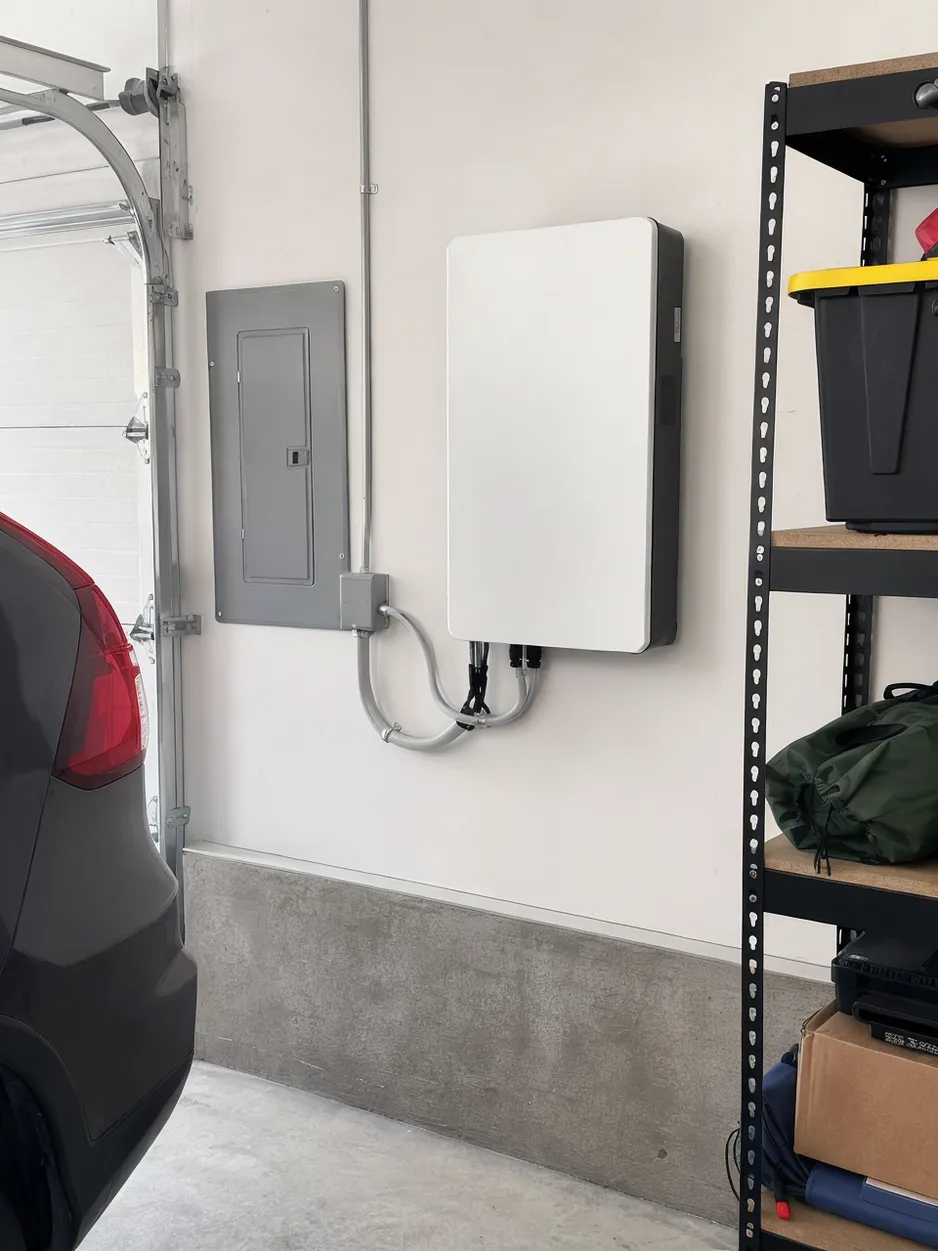
Wall Mounted Lithium Battery for Fixed Solar Storage Programs
A wall mounted lithium battery is a fixed LiFePO4 energy storage unit designed for residential solar storage, home backup, and small distributed solar programs where clean wall placement, predictable wiring, and compact indoor installation matter. It is not a portable power station, not a floor-stacked modular bank, and not a utility-scale system — it is a specific form factor for installers and distributors who need a battery that mounts cleanly on a garage or utility room wall, pairs with a residential inverter, and ships as a complete, inspection-ready unit.
JXSOL manufactures this product as part of the Solar Battery & Portable Power auxiliary line — an extension of our core solar-powered product catalog for buyers who want to add fixed battery SKUs without opening a separate factory relationship. Our background is solar lighting, and battery matching, charge/discharge testing, and BMS function verification have been part of our production process since 2012. That discipline carries directly into how we build and inspect wall-mounted battery units.
The wall-mounted format sits between the Home Energy Storage Battery — which covers broader residential storage system configurations — and the Stackable Home Battery, which is designed for floor-stacked modular expansion. If your market needs a compact, wall-fixed unit with a clean installation profile and a mid-range capacity tier, this is the product to quote.
What This Product Is
- Fixed LiFePO4 wall-mount unit
- Residential solar storage & home backup
- Complete, inspection-ready shipping unit
- Standard inverter communication interface
- 5–20 kWh capacity range, BMS-protected
What This Product Is Not
- Not a portable power station
- Not a floor-stacked modular bank
- Not a utility-scale system
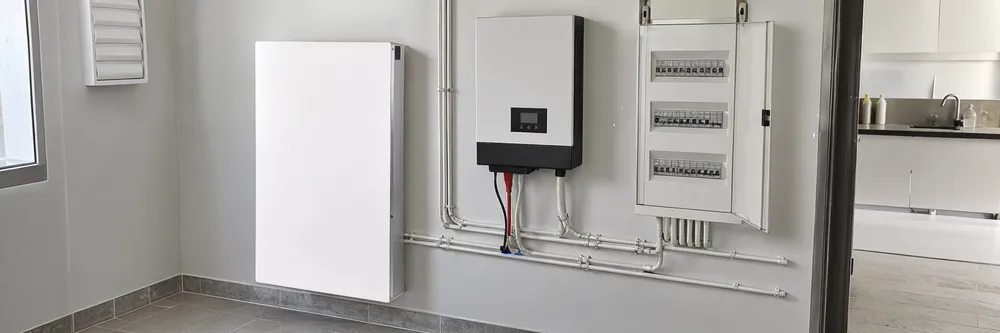
Where This Wall-Mounted Format Protects Your SKU Margin
The commercial case for a wall-mounted format is not just about aesthetics. It is about how the product fits into your buyer's installation workflow and how that fit protects your margin downstream.
Installer Workflow Fit
Residential solar installers work in garages, utility rooms, and mechanical spaces where floor area is already occupied by water heaters, HVAC equipment, and panel boards. A wall-mounted lithium battery keeps the battery off the floor, reduces the installer's site preparation work, and eliminates the "where does this go?" conversation that generates callbacks.
Margin argument: Fewer callbacks mean lower after-sales cost for your installer customers — and lower after-sales cost is a margin argument, not a convenience argument.
SKU Lineup Positioning
For distributors building a home storage SKU lineup, the wall-mounted format occupies a distinct price and complexity tier. It is more installation-ready than a portable unit, less complex than a multi-module stackable system, and easier to position as a mid-range fixed storage product for residential solar programs.
Sales cycle argument: That positioning clarity reduces the mismatch inquiries that slow down your sales cycle. A buyer who understands exactly what they are getting — a wall-fixed LiFePO4 battery with a defined capacity range, a standard inverter communication interface, and a clean enclosure — is a buyer who converts faster.
Capacity Boundary — Set Expectations Correctly
We've seen distributors try to position a wall-mounted battery as a direct substitute for a stackable system and end up with installer complaints about capacity limitations. The wall-mounted format has a defined capacity ceiling per unit — typically one or two units in parallel — and that boundary should be communicated clearly in your product literature.
We can help you set that expectation correctly in the OEM documentation we produce for your brand. If your program requires modular expansion beyond two parallel units, the Stackable Home Battery is the correct product to quote.
| Format | Complexity | Installation | Expansion | Best For |
|---|---|---|---|---|
| Portable Power Station | Low | None (plug-and-play) | None | Temporary / off-grid use |
| Wall Mounted Battery | Mid | Wall-fixed, clean wiring | 1–2 units parallel | Residential solar, mid-range capacity |
| Stackable Home Battery | Higher | Floor-stacked, modular | Multi-module | Larger capacity programs |
Ready to quote?
Include your target capacity, inverter brand, and market — we'll confirm the right configuration and pricing.
Procurement Specification Table for Comparison Sheets
These are industry-typical planning parameters for wall mounted LiFePO4 battery products in the residential solar storage segment. Use them to build your comparison sheet and RFQ. Final model specifications — including exact dimensions, weight, and electrical parameters — must be confirmed by product datasheet before ordering.
| Parameter | Typical Range / Options | Notes |
|---|---|---|
| Battery chemistry | LiFePO4 (lithium iron phosphate) | Standard for residential solar storage; better cycle life and thermal stability than NMC |
| Nominal voltage | 48V (standard); 24V available | 48V is the dominant platform for residential inverter compatibility |
| Usable capacity | 5 kWh – 20 kWh per unit | Confirm per model; usable capacity is lower than rated capacity depending on DoD setting |
| Energy range | 5 kWh – 20 kWh | Stackable or parallel configurations can extend total system capacity |
| Cycle life | 3,000 – 6,000+ cycles at 80% DoD | LiFePO4 chemistry; confirm test data per model |
| BMS protections | Overcharge, over-discharge, over-current, short-circuit, over-temperature, cell balancing | Low-temperature charging protection available; confirm for cold-climate markets |
| Communication protocol | CAN bus, RS485 (Modbus); protocol depends on inverter brand | Confirm inverter brand and protocol before ordering |
| Parallel expansion | Typically 2–4 units in parallel | Confirm maximum parallel units per model |
| Max charge current | Typically 0.5C–1C | Confirm per model and BMS configuration |
| Max discharge current | Typically 0.5C–1C continuous | Peak discharge current available; confirm per model |
| Installation method | Wall-mounted bracket; load-bearing wall required | Bracket hardware included; confirm wall material and load rating |
| Enclosure rating | IP55 typical for indoor/protected installation | Confirm IP rating per model; outdoor-rated enclosures available on request |
| Operating temperature | Charge: 0°C to 45°C; Discharge: -10°C to 55°C | Low-temperature charging protection recommended for markets below 0°C |
| Display / indicator | LED indicator standard; LCD display optional | Display configuration is an OEM customization option |
| Dimensions (typical) | Varies by capacity; confirm per model | Wall clearance and cable routing space must be planned at installation |
| Certifications | CE, RoHS; ISO 9001:2015 factory | UN38.3, MSDS, and shipping documents confirmed per model and destination |
| Warranty support | 3-year standard; confirm per model | Warranty terms confirmed at order stage |
Specifications shown are industry-standard planning values for this product type. Actual specifications vary by model and configuration. Request the wall mounted lithium battery datasheet for confirmed model parameters before finalizing your comparison sheet.
Inverter, BMS, and Parallel Expansion Questions to Settle Before Quotation
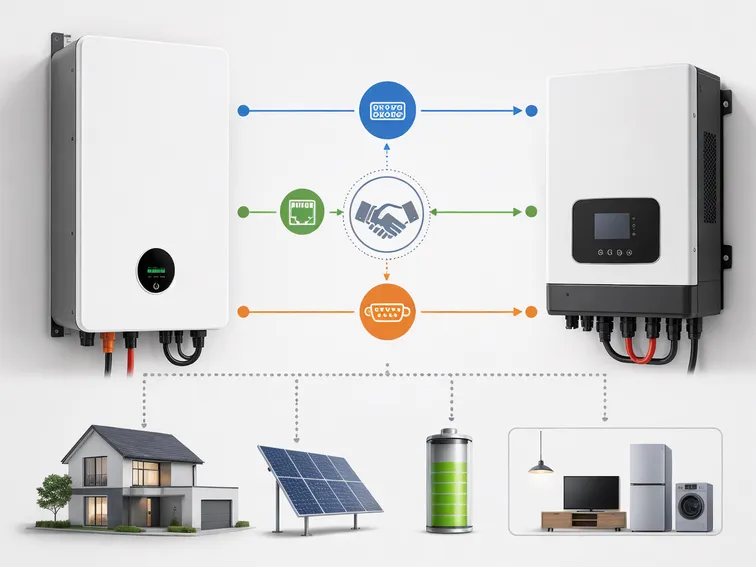
The most common reason a wall-mounted battery RFQ stalls is missing inverter information. The battery's BMS communication protocol must match the inverter's expected protocol — and that match is not universal. CAN bus and RS485 (Modbus) are the two dominant interfaces, but the specific implementation varies by inverter brand. A battery configured for one inverter's CAN protocol will not communicate correctly with a different brand's system, even if both claim CAN compatibility.
Before you send an RFQ, confirm these four things with your installer customers or end buyers:
Inverter Brand and Model
This determines the communication protocol, the voltage platform, and whether the inverter expects a specific BMS handshake sequence. We configure the BMS to match the inverter spec — but we need the inverter information before production, not after.
Voltage Platform
48V is the standard for most residential inverters in export markets. 24V systems exist in smaller or older installations. Mixing voltage platforms is not possible without a system redesign, so confirm this before quoting.
Parallel Expansion Requirement
If your buyers want to expand capacity later by adding a second unit, confirm the maximum parallel configuration the inverter supports and whether the battery model supports that configuration. Most wall-mounted units support 2–4 units in parallel, but the limit is set by both the battery BMS and the inverter's battery management input.
Target Autonomy and Load Profile
A buyer who wants to run a 3 kW load for 8 hours needs a different capacity than one who wants to cover overnight lighting and a refrigerator. Knowing the load profile upfront lets us recommend the right capacity tier and avoid an undersized unit that generates warranty complaints.
For buyers evaluating LiFePO4 chemistry specifically — cycle life, thermal behavior, and why it outperforms NMC for daily-cycling residential applications — see LiFePO4 Battery for Solar Storage. That article covers the chemistry trade-offs in detail so you can answer your buyers' questions confidently.
Market Segments That Can Carry a Wall Mount Solar Battery SKU
The commercial value of a wall mount solar battery depends on which market segment you are selling into. These are the four segments where we see consistent demand from distributors and installers in our export markets.
Residential Solar Installer Programs
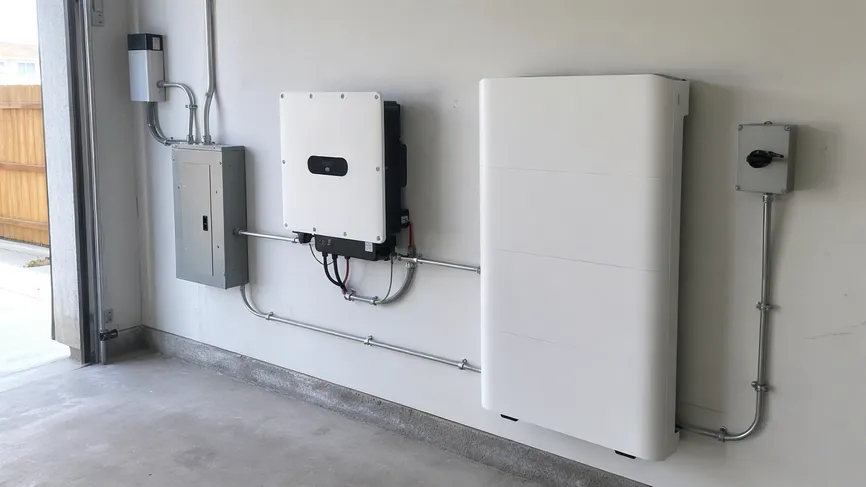
Installers who deploy rooftop solar panels for homeowners need a battery SKU that completes the system. The wall-mounted format is the right fit for single-family homes with a garage or utility room — it is compact enough to fit alongside existing equipment, clean enough for a finished interior space, and simple enough for a two-person installation crew.
Installers in this segment typically order in batches of 20–100 units per quarter as their project pipeline fills. For distributors supplying installer networks, a wall-mounted battery with a confirmed inverter compatibility list is a product that sells on specification, not on price alone.
We've seen distributors in Southeast Asia build their entire installer program around a single wall-mounted battery SKU paired with a compatible inverter brand — the compatibility guarantee is the margin protection.
Solar Product Distributors Expanding a Fixed Battery Line
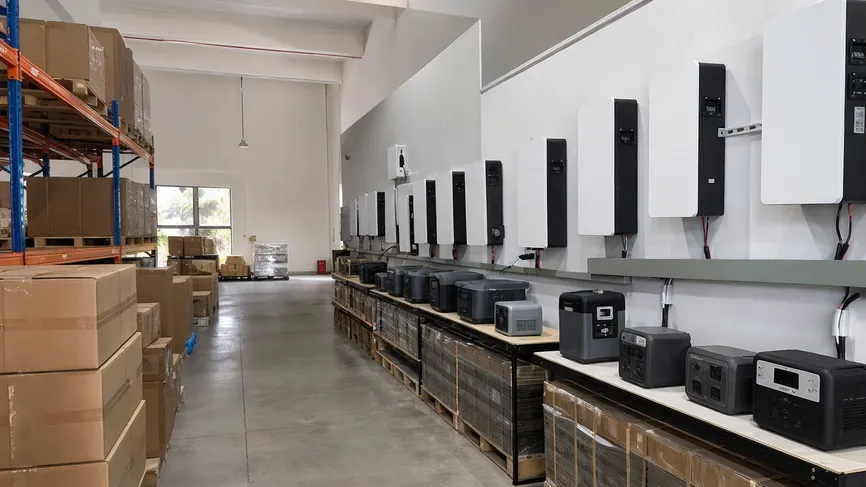
Distributors who already carry solar lighting, solar fans, or portable power stations from our core solar lighting catalog can add a wall-mounted battery as a natural catalog extension. The product fits the same solar-powered product positioning, uses the same import documentation process, and ships through the same freight relationship.
Adding a fixed battery SKU alongside portable power products gives your catalog a tiered offering — mobile backup at one price point, fixed residential storage at another — without requiring a separate factory relationship or a new compliance program.
Small Commercial and Institutional Backup Programs
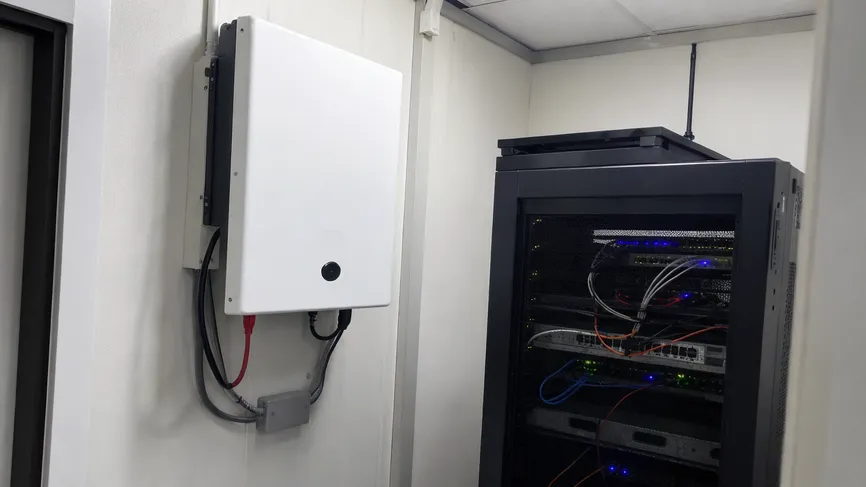
Clinics, small retail shops, security system operators, and small office buildings in markets with unreliable grid power need a fixed backup battery that can be wall-mounted in a server room or equipment closet. The wall-mounted format keeps the battery organized, accessible for maintenance, and out of the way of daily operations.
Orders in this segment tend to be smaller in unit count but higher in repeat frequency — a security system integrator who installs 10–20 units per month is a more reliable reorder customer than a one-time project buyer.
Key spec for this segment: discharge power rating and backup runtime, not just total capacity.
Regional Backup-Power Markets With Repeatable Stock Demand
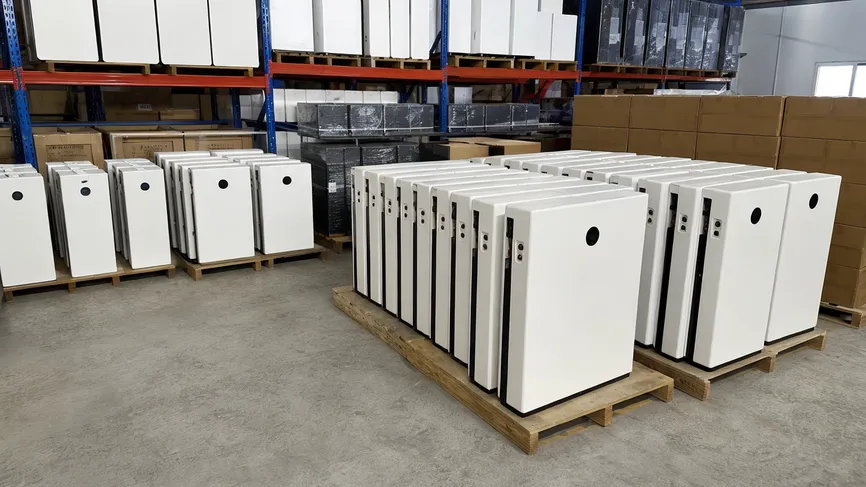
In markets where grid outages are seasonal or structural — parts of Africa, Southeast Asia, and the Middle East — distributors need a battery product they can stock and reorder predictably.
A wall-mounted LiFePO4 battery with a 3,000+ cycle life and a confirmed 3-year warranty is a product that generates fewer warranty claims and more reorders than a lower-cost NMC alternative.
The cycle life advantage of LiFePO4 is a commercial argument for your buyers: a battery that lasts twice as long at the same price point is a better value proposition for a homeowner who is cycling it daily, and that value proposition reduces your after-sales support burden.
Installation Details That Affect After-Sales Cost
Wall-mounted batteries generate more installer callbacks than most product categories when the installation requirements are not communicated clearly upfront. These are the details that matter.
Wall Load Rating
A fully charged wall-mounted lithium battery in the 10 kWh range typically weighs 80–120 kg depending on the model. The mounting wall must be load-bearing masonry or reinforced concrete — drywall or lightweight partition walls are not suitable.
The mounting bracket is designed for masonry anchors, and the installation guide specifies anchor type, spacing, and minimum embedment depth. If your installer customers are working in markets where lightweight construction is common, flag this requirement in your product documentation before the first installation.
Service Clearance
The battery enclosure requires clearance on all sides for ventilation, cable routing, and BMS access. Typical minimum clearances:
- •200 mm on the sides and top
- •300 mm at the front for cable management and display access
Installing the unit in a tight enclosure without adequate airflow will trigger the over-temperature protection and reduce effective capacity — a common source of "the battery isn't working" callbacks that have nothing to do with the product itself.
Cable Routing and Conduit Planning
DC cables from the battery to the inverter should be sized for the maximum discharge current and kept as short as practical to minimize resistive losses. The installation guide specifies cable cross-section recommendations by current rating.
For OEM orders, we can include market-specific cable sizing tables in the installation documentation.
Indoor or Protected-Area Installation
Standard wall-mounted battery enclosures are rated for indoor or protected-area installation — not direct outdoor exposure. If your market requires outdoor installation, confirm the IP rating and enclosure specification before ordering.
Outdoor-rated enclosures are available on request and affect the unit price and lead time.
Installer Documentation Package
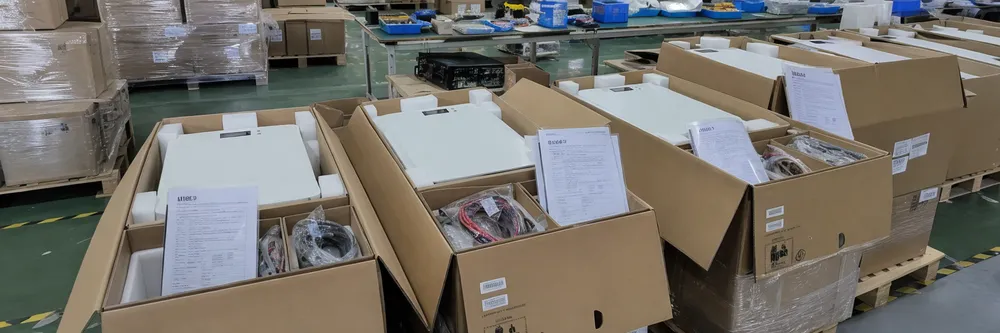
Each unit ships with an installation guide, wiring diagram, BMS parameter sheet, and warranty card. For OEM orders, we produce these documents in your brand and your target market's language.
A clear, market-specific installation guide reduces installer errors and reduces the support calls that come back to you.
We've had buyers underestimate how much after-sales cost comes from a poorly translated installation guide — a two-page wiring diagram in the wrong language generates more callbacks than a product defect.
Include your wall material, inverter brand, and target market so we can confirm the right mounting configuration and documentation package.
Battery Pack QC and Export Documentation from a Solar Product Factory
JXSOL has been building battery-dependent solar products since 2012. Battery failure — inconsistent capacity between batches, cell degradation after one season, BMS protection that doesn't trigger correctly under load — is the most consistent field risk in solar-powered products, and we built our production system around it before we ever added standalone battery products to the catalog.
Production Infrastructure
The 12,000 m² factory in Guzhen Town runs 150 employees across production, engineering, QC, and operations, with 6 dedicated production lines and an in-house R&D team of 15+ optical and electrical engineers.
The inspection lab that handles battery pack matching, charge/discharge testing, and aging tests for solar lighting products is the same lab that handles wall-mounted battery inspection. It is not a separate setup built for a new product line — it is the same equipment, the same process, and the same pass/fail criteria.
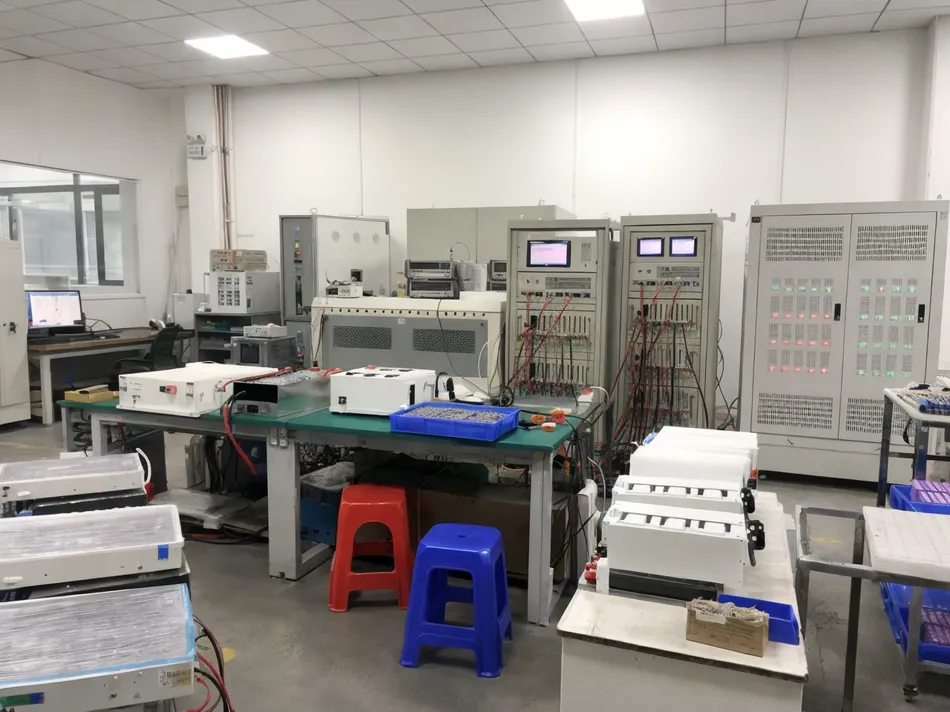
Wall Mounted LiFePO4 Battery QC Process
For wall mounted LiFePO4 battery products specifically, our QC process covers every stage from incoming materials to final shipment. A batch that doesn't hit the usable capacity spec doesn't ship. We've caught capacity shortfalls at the charge/discharge testing stage that would have generated significant warranty claims — the testing cost is a fraction of the return logistics cost.
Incoming Cell Inspection
Capacity and internal resistance testing on incoming cells before they enter the production line.
Pack Matching
Cells matched within defined tolerance bands to prevent uneven degradation across the pack over time.
Charge/Discharge Cycle Testing
Testing under load to confirm usable capacity against spec — not just nominal ratings.
BMS Function Verification
Verified on assembled units (not just on the BMS board in isolation) to confirm real-world protection behavior.
Aging Tests
Accelerated aging to identify early-life failures before units reach the shipping stage.
100% Pre-Shipment Inspection
Every unit inspected before packing — not statistical sampling on final output.
Export Documentation — Confirmed Before Production
Lithium battery exports require specific shipping documents that vary by carrier, route, and destination. We treat documentation confirmation as a pre-production step.
UN38.3 test reports, MSDS/SDS documentation, watt-hour labeling, and any destination-specific import documents are confirmed before production is complete, not after goods are ready to ship. A documentation gap discovered at the freight forwarder stage costs more than the time it takes to confirm requirements upfront.
UN38.3 Test Reports
MSDS/SDS Documentation
Watt-Hour Labeling
Destination-Specific Docs
CE and RoHS certifications are confirmed per model. ISO 9001:2015 covers our factory quality management system. For buyers who need specific certification documentation — CE Declaration of Conformity, RoHS test reports, UN38.3 reports — we provide them with the order.
See the full production and inspection overviewOEM/ODM Options, MOQ, and Branding Boundaries
Standard wall-mounted battery models are available from 100 units MOQ — low enough to test a new SKU with your installer network or distribution channel before committing to a larger program. OEM/ODM programs are available from the same starting point and cover both cosmetic and commercial customization dimensions.
No Engineering Review Required
These customizations can be confirmed directly during quoting:
- Brand name and logo on the enclosure and packaging
- Enclosure color (standard RAL options; custom colors available on larger runs)
- Carton design and retail or trade packaging
- User manual and installation guide language and branding
- Display style — LED indicator or LCD display
- Accessory kit composition — cable set, mounting hardware, documentation pack
- Watt-hour and safety labeling for your destination market
Engineering Review Required
These changes require feasibility confirmation before quoting:
- Battery capacity changes (affects cell count, BMS configuration, and enclosure sizing)
- Voltage platform changes (24V vs 48V affects BMS, cabling, and inverter compatibility)
- BMS parameter adjustments (charge/discharge current limits, protection thresholds, communication protocol)
- Communication protocol changes (CAN bus vs RS485 vs proprietary inverter protocols)
- Enclosure IP rating upgrades for outdoor installation
Electrical changes are not a gatekeeping step — they require an engineering review because they affect the certification path, the BMS configuration, and the component sourcing. A capacity change that looks simple on paper can require re-testing and updated CE documentation. We work through that review upfront so there are no surprises at the production stage.
Why OEM Branding Protects Your Margin
The commercial value of a well-executed OEM program is straightforward: your brand on the product reduces price comparison pressure from your buyers, your installation documentation reduces after-sales confusion, and your market-specific accessory kit reduces the "wrong cable" returns that erode margin.
For buyers building a private-label home storage line, the OEM program is where the margin protection happens — not in the unit price negotiation.
Your Brand
Reduces price comparison pressure
Your Documentation
Reduces after-sales confusion
Your Accessory Kit
Reduces "wrong cable" returns
Packaging and Shipping Planning for Lithium Battery Orders
Lithium battery shipments require more preparation than standard goods, and the packaging and documentation requirements are specific enough that we treat them as a pre-production confirmation step, not an afterthought.
Physical Packaging
Wall-mounted battery units are heavy and fragile at the terminal and BMS connection points. Cartons use foam or molded inserts sized to the unit's dimensions, with accessory separation to prevent cable and connector damage in transit.
- Carton labels include batch codes for traceability, watt-hour markings as required for lithium battery transport, and handling instructions
- Pallet configurations available for buyers who need palletized delivery to a warehouse or distribution center
- Carton dimensions planned for container loading efficiency — exact loading quantities depend on the specific model and carton configuration, confirmed at the order stage
Shipping Documentation
Wall-mounted lithium battery products typically require the following documentation set:
- UN38.3 test reports
- MSDS/SDS documentation
- Watt-hour labeling on cartons and units
- Air transport declarations or sea freight battery declarations (depending on shipment method)
The specific requirements depend on your carrier, your destination country's import regulations, and the battery capacity class of the product. We confirm document preparation before production completion so your freight forwarder has everything needed when goods are ready.
For Buyers New to Importing Lithium Battery Products
The documentation step is the one most likely to cause delays. We've seen shipments held at origin because a UN38.3 report wasn't ready, and we've seen shipments held at destination because carton watt-hour labeling didn't match the product spec. Both are avoidable with upfront confirmation.
Confirm Shipping Documents for Your MarketInclude your destination country, carrier preference, and any known import documentation requirements.
Choose the Right Battery or Portable Power Product in This Cluster
The wall-mounted format is the right choice when your market needs a fixed, wall-installed LiFePO4 battery for residential solar storage or home backup. If your buyers' needs point in a different direction, here is how the sibling products map to different commercial situations.
You are here: Wall Mounted Lithium Battery
Stay on this page when the buyer needs a fixed, wall-mounted LiFePO4 battery for a residential solar or backup installation program.
Home Energy Storage Battery
Choose this for broader residential storage system sourcing where the form factor is flexible and the buyer is sizing around a full solar system rather than a specific installation constraint. Covers a wider range of residential storage configurations.
View productHome Battery Backup
Choose this when outage backup messaging is the primary sales angle and your buyers are not necessarily pairing the battery with a solar panel system. The backup positioning is distinct from solar self-consumption, and the sales channel — electricians, home security dealers, backup power distributors — is different from the solar installer channel.
View productStackable Home Battery
Choose this when your market has buyers who want to start with a base capacity and expand over time without replacing the base unit. Stackable systems command a higher margin and create a natural upsell path, but they require installers who understand modular system configuration. We typically recommend wall-mounted as the first SKU for a new market, with stackable added once you have installer relationships that can support the more complex product.
View productPortable Power Station
Choose this for mobile AC/DC backup in retail, camping, job site, or emergency preparedness channels. This is a fundamentally different product category — portable, retail-packaged, and sold without installation.
View productSolar Generator
Choose this for bundled solar panel plus power station programs targeting off-grid or outdoor markets. The solar generator is positioned as a kit, not a fixed installation product.
View productPortable Solar Battery
Choose this for lightweight, entry-level portable solar backup programs where the buyer wants a compact, solar-rechargeable unit at a lower price point than a full portable power station.
View productWall Mounted Lithium Battery FAQ for Buyers
What capacity range is typical for a wall mounted lithium battery?
For residential solar storage programs, the practical range is 5 kWh to 20 kWh per unit. Most single-family home installations land in the 5–10 kWh range for daily solar self-consumption cycling. Larger homes or buyers who want extended backup runtime move toward 10–20 kWh.
Above 20 kWh per unit, a stackable or floor-standing system is typically more practical than a single wall-mounted unit because of weight and wall load constraints.
If your buyers are sizing for a specific load profile, the Home Energy Storage Battery page covers the sizing logic in detail.
Is LiFePO4 better than NMC for wall-mounted solar storage?
For a wall-mounted battery that is cycling daily — charging from solar during the day, discharging in the evening — LiFePO4 is the right chemistry. It delivers 3,000–6,000+ cycles at 80% depth of discharge, compared to 500–1,500 cycles for typical NMC.
It also has better thermal stability: LiFePO4 does not enter thermal runaway at the temperatures a residential installation will see, which matters for a battery mounted inside a garage or utility room.
LiFePO4 Advantage
- 3,000–6,000+ cycles at 80% DoD
- No thermal runaway at residential temps
- Ideal for fixed daily-cycling installs
NMC Trade-off
- 500–1,500 cycles typical
- Higher energy density (weight-sensitive use)
- Better suited for portable products
NMC has higher energy density, which is relevant for portable products where weight and volume are constrained. For a fixed wall-mounted installation where the battery stays in one place, the cycle life and safety advantages of LiFePO4 outweigh the energy density trade-off.
We default to LiFePO4 for all wall-mounted battery products and discuss the trade-off openly when buyers ask.
Can wall-mounted LiFePO4 batteries connect in parallel?
Yes, most wall-mounted LiFePO4 battery models support parallel connection to expand total system capacity. Typical configurations support 2–4 units in parallel, but the limit is set by both the battery BMS and the inverter's battery management input.
Before specifying a parallel configuration, confirm:
- The maximum parallel units the inverter supports
- Whether the BMS requires a master/slave configuration or supports peer-to-peer parallel
- Cable sizing requirements for the combined discharge current
Common installer callback source: Parallel configurations that exceed the inverter's battery input rating will trigger protection shutdowns. This is a system design issue, not a product defect — but it generates callbacks that erode your margin if not caught at the specification stage.
What inverter information should be provided before quotation?
Provide the inverter brand, model number, and communication protocol (CAN bus or RS485/Modbus). If you know the inverter's expected BMS handshake sequence or have the inverter's battery compatibility list, include that as well.
- Inverter brand & model number
- Communication protocol (CAN bus or RS485/Modbus)
- Voltage platform (48V or 24V)
- BMS handshake sequence
- Inverter battery compatibility list
The voltage platform (48V or 24V) must also be confirmed — this affects the battery cell configuration, the BMS parameters, and the cabling.
Why this matters: Missing inverter information is the most common reason an RFQ takes multiple rounds to resolve. If your buyers are still selecting their inverter, we can recommend compatible inverter brands based on the battery configuration you need.
What certifications or shipping documents should buyers confirm for lithium battery imports?
At minimum, confirm:
- CE Declaration of Conformity and RoHS test report for EU and most regulated market imports
- UN38.3 test report for all lithium battery shipments (required by most carriers and customs authorities)
- MSDS/SDS documentation for the battery chemistry
- Watt-hour labeling on cartons and units as required by IATA/IMDG regulations
Some destination markets require additional import permits or battery safety certifications — confirm your specific market's requirements with your freight forwarder before placing an order.
We prepare all standard shipping documents before production completion and confirm market-specific requirements at the order stage. Do not leave documentation confirmation to the week before shipment.
What MOQ does JXSOL support for standard wall-mounted battery models?
Standard catalog models start at 100 units MOQ. OEM/ODM programs covering logo, packaging, labeling, manuals, accessory kits, color, and display configuration are available from the same starting point.
Electrical changes — capacity, voltage platform, BMS parameters, communication protocol — require an engineering review to confirm feasibility and certification impact before we commit to production.
Most new buyers start with a sample order of 1–2 units to confirm the product configuration and inverter compatibility before scaling to a trial order.
Request a Quote With Capacity, Inverter, and Market Details
The more specific your inquiry, the faster our engineering team can respond with a useful recommendation. Send us:
Target Voltage and Capacity
48V or 24V, and the kWh range you need per unit.
Inverter Brand and Model
Determines communication protocol and BMS configuration.
Parallel Expansion Requirement
Number of units in parallel, if applicable.
Destination Market
Country or region, and AC voltage standard (110V/60Hz or 220V/50Hz).
Certification and Documentation
CE, RoHS, UN38.3, or market-specific documents your import process requires.
Branding and Packaging
Private label, custom packaging, or standard JXSOL catalog.
Order Volume
Trial order quantity and expected reorder cadence.
Ready to Send Your Requirements?
Reach our engineering team through any of these channels to start your wall mounted lithium battery inquiry.
For buyers who want to discuss configuration before committing to an inquiry, contact us and we'll set up a review with the engineering team.