

Solar Exhaust Fan Direct From Factory
A fixed solar ventilation fan for attic, greenhouse, warehouse, and agricultural channels — direct solar operation, no battery required.
Galvanized steel housing, IP44+ weather protection, and configurable panel wattage for daytime ventilation programs. OEM/ODM from 100 units.
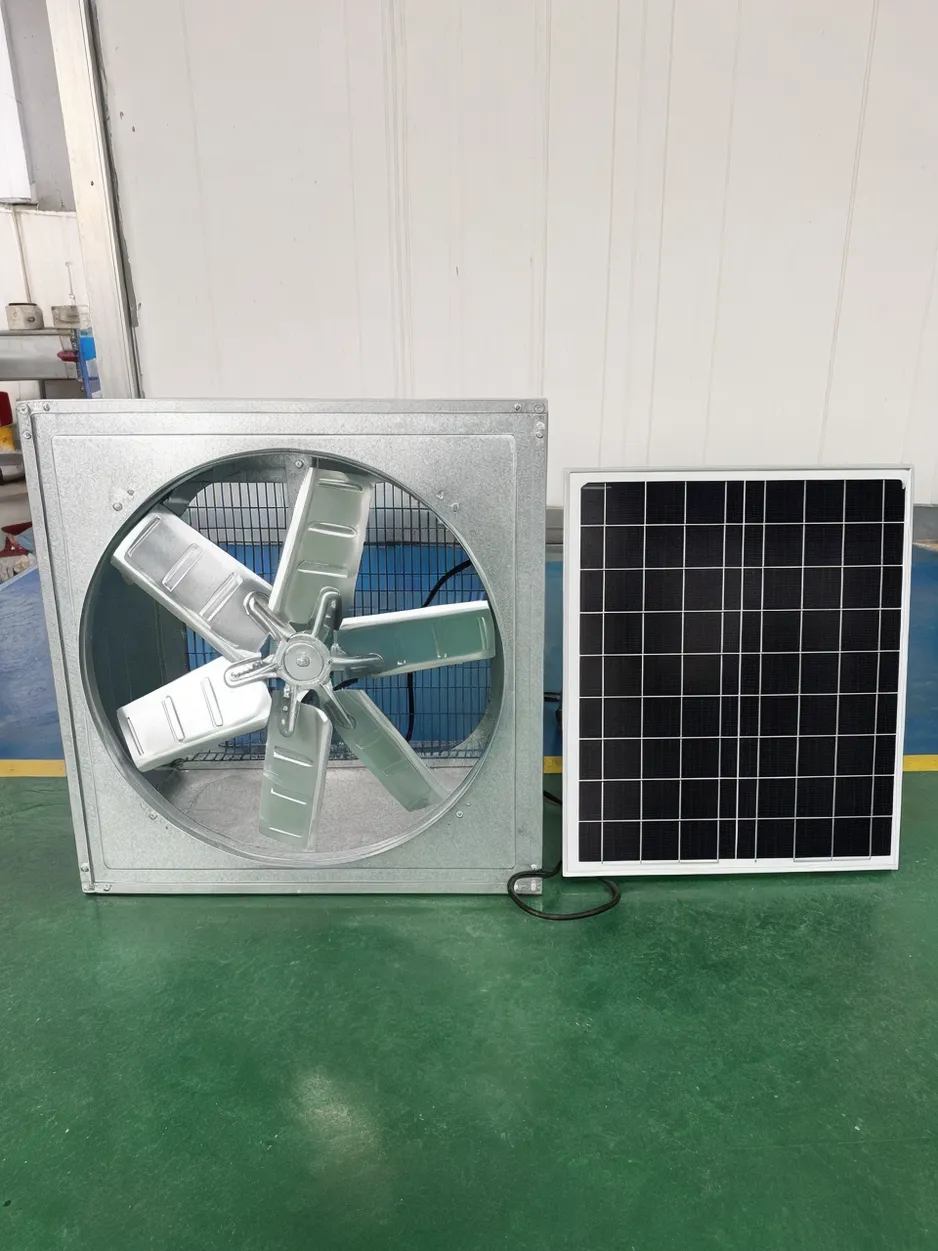
Solar Exhaust Fan for Fixed Daytime Ventilation Programs
A solar exhaust fan is a fixed ventilation product: a DC exhaust motor paired with a matched solar panel, designed for continuous daytime airflow in buildings and agricultural structures. It is not a portable cooling fan, a stand fan, or a solar fan with LED integration. The commercial case is straightforward — ventilation demand peaks during daylight hours, which is exactly when the panel is generating power. No battery, no charge/discharge cycle, no overnight runtime to manage.
For buyers building a solar-powered catalog, this is the SKU that covers the ventilation channel: attic heat extraction, greenhouse airflow, warehouse cooling, livestock sheds, and small building exhaust. It sits alongside solar lighting and other solar fan products as a fixed-installation item for channels that need a solar ventilation solution, not a portable or household fan.
The Solar Fans category page covers the full product family overview. This page focuses on the exhaust fan specifically — configuration logic, spec ranges, application segments, installation variables, and OEM/ODM options.
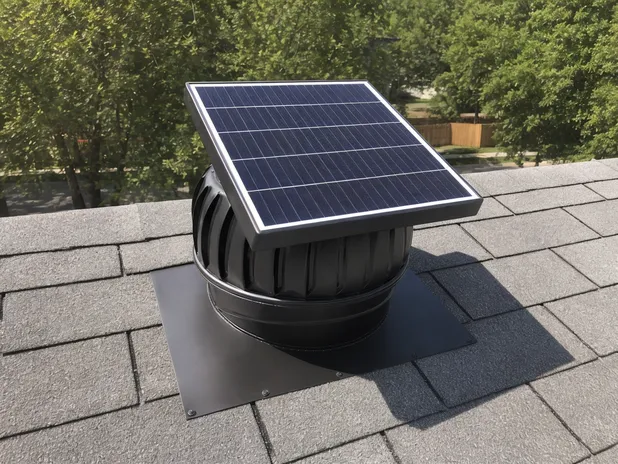
Attic Heat Extraction
Greenhouse Airflow
Warehouse Cooling
Livestock Sheds
Small Building Exhaust
Get a quote for solar exhaust fan or contact JXSOL to discuss your ventilation program.
Direct Solar Operation Keeps the SKU Simple
The reason most solar exhaust fans run direct solar — no battery — is not cost alone. It's that the use case and the power source are naturally synchronized. Heat builds in an attic, greenhouse, or warehouse during the day. The sun is up. The panel generates power. The fan runs. When the sun goes down, the heat load drops and the ventilation need drops with it. A battery adds cost, weight, and a charge/discharge cycle that the application doesn't require.
We've shipped direct solar exhaust fans to buyers in the Middle East, Southeast Asia, and North America. The feedback from attic and greenhouse channels is consistent: buyers who tried battery-backed exhaust fans first switched to direct solar because the battery added complexity without adding value for their customers. The ventilation need is a daytime problem. The direct solar configuration solves it cleanly.
Direct Solar vs Battery-Backed: When Each Applies
Direct Solar (Default)
- Use case synchronized with daylight
- No charge/discharge cycle to manage
- Lower unit cost, lower weight
- Simpler SKU for catalog programs
- Proven in Middle East, SE Asia, North America
Battery Backup (Project-Specific)
- Covered agricultural structures
- North-facing installations
- Extended overcast season markets
- Adds 20–30% to unit cost
- Panel wattage + battery sized to target runtime and motor load
That said, battery backup is available as a project-specific option. If your buyer's application requires ventilation during low-light periods — a covered agricultural structure, a north-facing installation, or a market with extended overcast seasons — we can configure a battery-backed version. The panel wattage and battery capacity are sized together based on the target runtime and the motor load.
We don't recommend battery backup as a default for exhaust fans; it adds 20–30% to the unit cost and introduces the charge/discharge management that direct solar avoids. But if the project requires it, we build it.
For buyers comparing direct solar and battery-backed configurations in detail, see Solar Powered Fan.
Ready to confirm your ventilation configuration?
Discuss panel wattage, motor specs, and battery options with our engineering team.
Specification Points Buyers Should Confirm Before RFQ
The table below covers typical specification ranges for our solar exhaust fan line. These are industry-standard ranges — exact values depend on the model and configuration selected. Confirm final specifications during quotation; we provide a detailed datasheet for the confirmed model.
| Specification | Typical Range | Notes |
|---|---|---|
| Fan diameter | 10 inch – 18 inch | 12 inch and 14 inch are the most common for attic and greenhouse use |
| DC motor type | Brushless DC (BLDC) | BLDC standard; brushed DC available for price-sensitive programs |
| Motor power | 10W – 30W | Matched to fan diameter and target airflow |
| Solar panel wattage | 15W – 40W | Sized to motor load; direct solar models do not require charging surplus |
| Airflow | 400 CFM – 1,200 CFM | Depends on fan diameter and motor power |
| Housing material | Galvanized steel; ABS + galvanized steel grille | Galvanized steel standard for outdoor and roof/wall mounting |
| Grille / louver | Fixed grille; motorized backdraft louver; gravity louver | Backdraft louver prevents reverse airflow when fan is off |
| IP rating | IP44 standard; IP55 available | IP55 for coastal, agricultural, or high-humidity installations |
| Mounting type | Roof curb mount; wall flange mount; ceiling mount | Mounting flange dimensions confirmed per model |
| Panel cable length | 2m – 5m | Longer cable available for rooftop panel placement away from the fan |
| Controller | On/off switch; thermostat controller; speed controller | Thermostat controller available for temperature-triggered operation |
| Accessory kit | Mounting hardware, panel bracket, cable clips, installation guide | Accessory contents confirmed per SKU at order stage |
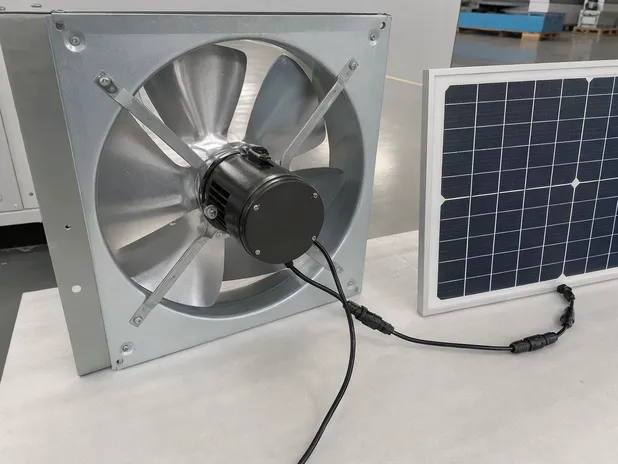
Specifications shown are industry-standard ranges for this product type. Actual specifications depend on the selected model and configuration. Contact us for detailed product datasheets.
Key Selection Points
- 12″ and 14″ diameters cover most attic and greenhouse programs
- IP55 upgrade available for coastal and high-humidity sites
- Thermostat controller enables temperature-triggered operation
- Backdraft louver prevents reverse airflow when fan is off
Include your target fan diameter, mounting type, and panel wattage requirement.
Ventilation Market Segments Where This Product Makes Commercial Sense
Solar exhaust fans move through specific commercial channels. The segments below are where buyers are actually placing orders — each one has a different order logic, a different repeat pattern, and a different set of spec requirements.
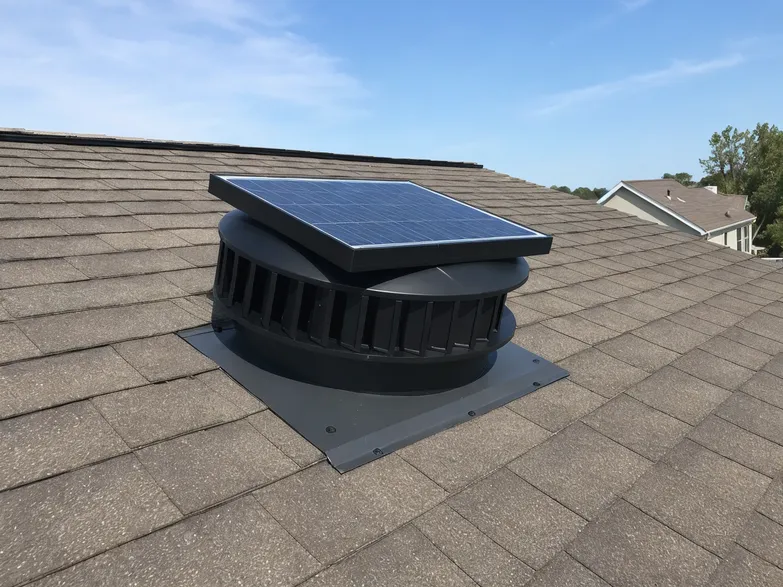
Attic Ventilation for Building Material and HVAC Distributors
Attic solar exhaust fans are a repeatable SKU for building material wholesalers and HVAC distributors. Residential and light commercial construction projects specify attic ventilation as a standard component, and solar-powered exhaust fans are increasingly specified over grid-connected models in markets where solar incentives apply or where electrical rough-in for a powered vent adds installation cost. A 12-inch or 14-inch solar attic fan with a 20W–25W panel covers the standard residential attic application.
Order patterns in this channel tend to be project-driven: a distributor supplies a builder or contractor who is working through a development of 50–200 homes. That's 50–200 units per project, with repeat orders as the builder moves to the next development. The spec is usually fixed once the contractor approves the first installation — which means getting the initial spec right matters more than price alone.
Field Note on Louver Function
We've had buyers in this channel tell us they lost a repeat program because the first batch had inconsistent louver operation. The louver is a small part, but it's the part the installer touches on every unit. We check louver function at outgoing inspection for exactly this reason.
Channel Quick Facts
Greenhouse Ventilation for Agricultural Supply Channels
Greenhouse operators need continuous daytime airflow to manage temperature and humidity. A solar ventilation fan is a natural fit: the heat load is highest when the sun is strongest, which is when the panel generates the most power. Agricultural supply distributors in Southeast Asia, the Middle East, and parts of Africa are active buyers in this segment.
The spec requirements for greenhouse use differ from attic use: higher airflow per unit (larger fan diameter, higher motor power), corrosion-resistant housing for humid environments, and sometimes multiple units per structure. A 16-inch or 18-inch solar exhaust fan with a 30W–40W panel is typical for mid-size greenhouse applications.
IP55 housing is worth specifying for high-humidity greenhouse environments — the standard IP44 handles rain exposure, but condensation and chemical spray in agricultural settings push toward IP55.
Orders in this segment often run 20–100 units per buyer per season, with reorders tied to new greenhouse construction or replacement cycles.
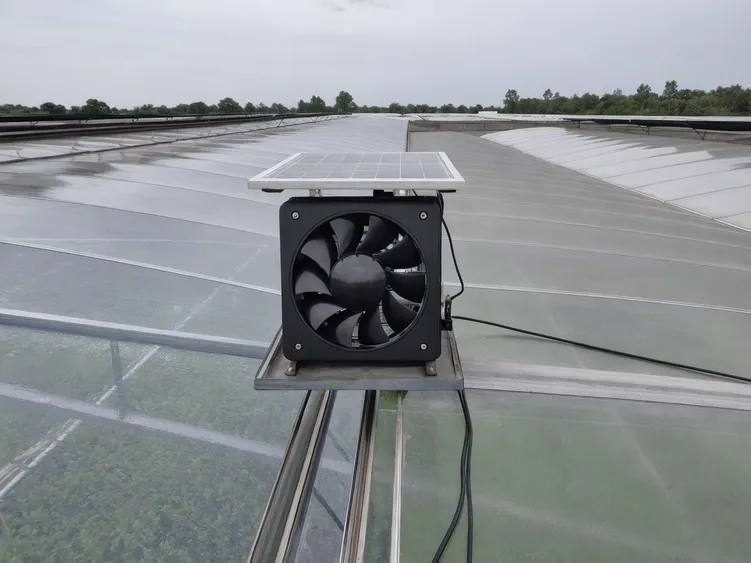
Greenhouse Segment Snapshot
- 16–18 inch fan diameter, 30W–40W panel
- IP55 housing recommended for humidity + chemical spray
- Typical order: 20–100 units per buyer per season
- Reorders tied to new construction or replacement cycles
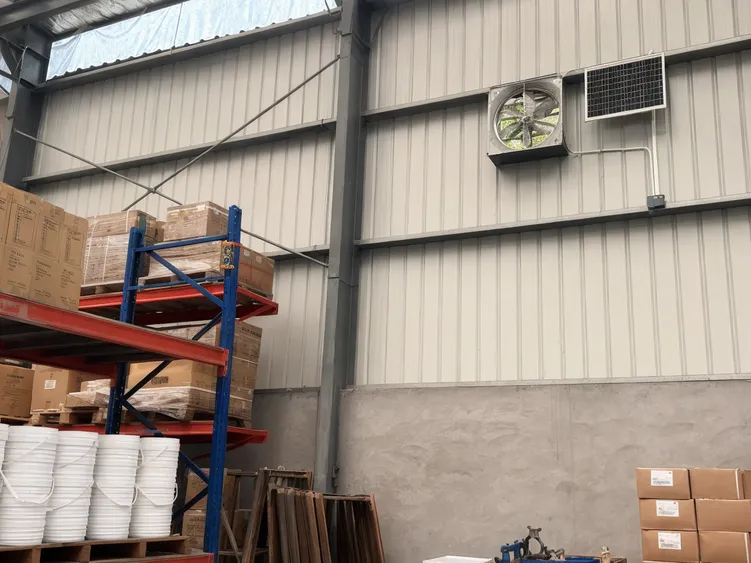
Warehouse Segment Snapshot
- 14–16 inch fan, 25W–30W panel
- Wall-mount common where roof access is limited
- Typical order: 5–50 units per facility
- Key selling point: zero electricity cost in high-rate markets
Warehouse and Small Workshop Heat Extraction
Warehouses and small workshops in hot climates accumulate heat during the day that reduces worker productivity and can damage stored goods. Solar exhaust fans installed on the roof or upper wall extract hot air without adding to the electricity bill — a selling point for buyers in markets where commercial electricity costs are high or supply is unreliable.
This segment is served by HVAC distributors, industrial supply companies, and solar product wholesalers. The typical order is 5–50 units for a single facility, with repeat orders as the buyer's customer base grows.
Wall-mount configurations are common for warehouses where roof access is limited. A 14-inch or 16-inch fan with a 25W–30W panel handles most small warehouse applications.
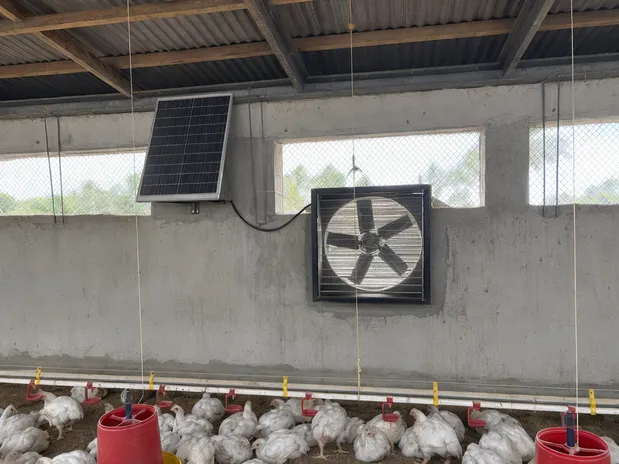
Livestock and Agricultural Shed Ventilation
Poultry houses, livestock barns, and agricultural storage sheds need ventilation to manage ammonia buildup, humidity, and heat. Solar exhaust fans are used in this application across Southeast Asia, Africa, and parts of the Middle East where grid power is unreliable or unavailable.
The spec requirements are demanding: IP55 or higher for ammonia and dust exposure, robust housing that survives rough handling during installation, and reliable motor operation in high-temperature environments.
Agricultural supply distributors and rural development program buyers are the main channel. Orders tend to be larger — 50–500 units for a regional program — and repeat demand is driven by new construction and replacement.
This segment is worth paying attention to if you're building a solar product line for agricultural markets. It's grown significantly for our buyers in Southeast Asia over the last three years — the combination of unreliable grid power and rising awareness of ventilation's impact on livestock productivity is driving adoption faster than most distributors expected.
Mixed Solar Catalog Programs
Distributors already sourcing solar lighting from our core solar street and roadway lighting catalog add solar exhaust fans to broaden their offering without adding a supplier.
The exhaust fan is a natural catalog extension for buyers who supply building contractors, agricultural operations, or industrial facilities — customers who already buy solar lighting and have a ventilation need.
Discuss Your Target MarketWe'll recommend the right configuration and suggest a starter SKU mix based on what's moving for our existing distributors in your region.
Catalog Extension
Add ventilation SKUs alongside your existing solar lighting orders — single supplier, combined logistics.
Installation Variables That Affect Field Performance and Claims
Installation decisions made before the product ships determine whether your buyers get the performance they expect or file warranty claims. These are the variables worth confirming during the RFQ stage, not after the first container arrives.
Mounting Position and Sun Exposure
The solar panel needs unobstructed sun exposure for the majority of the day. For roof-mounted exhaust fans, the panel is typically integrated into the fan housing or mounted on a short bracket above the fan — this works well on south-facing roof sections in the northern hemisphere.
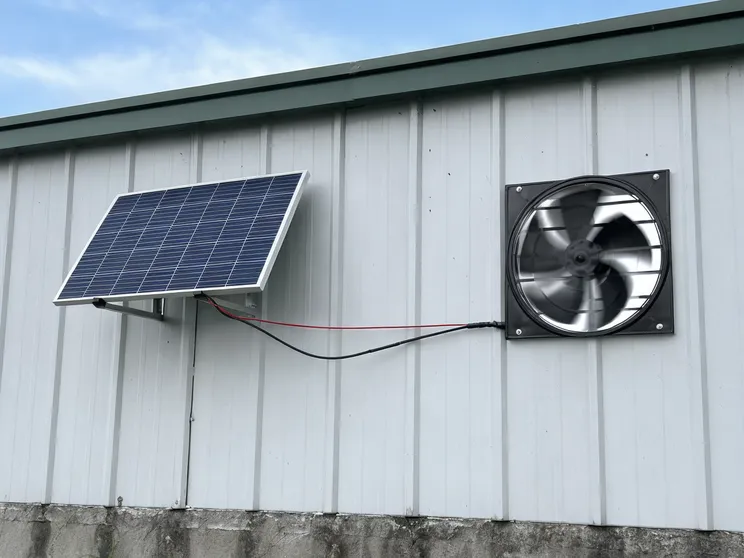
For wall-mounted fans, the panel may need to be mounted separately on a bracket that faces the sun, with a cable run to the fan. We offer panel cable lengths from 2m to 5m; longer cables are available for installations where the panel needs to be placed away from the fan to optimize sun exposure.
Exhaust Opening Size and Airflow Path
The fan opening in the roof or wall needs to match the fan's mounting flange dimensions. A mismatch between the opening and the flange is the most common installation problem we hear about from buyers in the building channel — it's not a product defect, but it creates a field problem that reflects on the product.
We provide mounting flange dimensions in the product datasheet; confirm these against your buyer's typical roof or wall construction before finalizing the spec.
Backdraft Louver Selection
A backdraft louver prevents outside air from entering through the exhaust opening when the fan is off — important for attic and greenhouse applications where reverse airflow would undermine the ventilation strategy.
Gravity louvers open under airflow and close when the fan stops. Motorized louvers are controlled by the fan's on/off circuit. For most applications, a gravity louver is sufficient and simpler to maintain. Motorized louvers add cost but provide a tighter seal.
Field note: We've seen buyers skip the louver entirely to reduce cost, then get warranty claims from customers whose attics were pulling in cold air at night. The louver is not optional for attic applications.
Rain Exposure and Housing Orientation
Wall-mounted fans facing prevailing rain directions need IP55 housing, not IP44. IP44 handles rain splash; IP55 handles direct water jets.
For roof-mounted fans, IP44 is generally sufficient because the housing geometry sheds water naturally. Confirm the installation orientation and local weather conditions with your buyer before specifying the IP rating.
Cable Routing and Panel Bracket
The panel cable needs to be routed to avoid UV degradation and mechanical damage. We supply cable clips with the accessory kit; for longer cable runs, conduit or cable trunking is recommended.
The panel bracket should be confirmed for the specific roof or wall material — tile roof, metal roof, and concrete wall installations each have different bracket requirements.
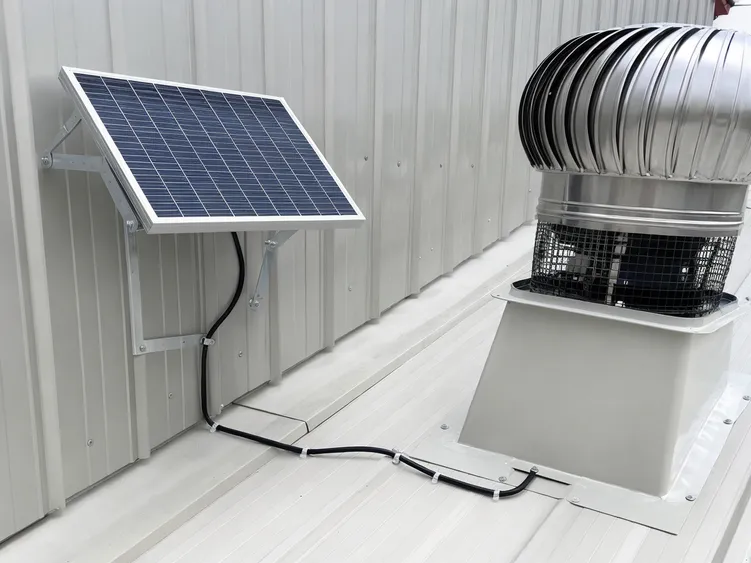
For guidance on selecting the right configuration for your market, see our selection guide. Or send your installation requirements and we'll confirm the right spec before you commit to an order.
Housing, Motor, and Panel Checks That Reduce Warranty Risk
The QC steps that matter for solar exhaust fans are different from those for battery-backed solar fans. There's no charge/discharge cycle to test, no combined load to verify. The failure modes are simpler: panel output below spec, motor that overheats or fails under continuous load, housing that corrodes or leaks, and accessories that are missing or wrong.
We run four checks on every solar exhaust fan batch before shipment.
Solar Panel Electrical Output Testing
Every panel is tested against its rated wattage under standard test conditions. We've seen panels from other suppliers rated at 20W that test at 14–15W — a 25–30% shortfall that shows up as weak airflow in low-irradiance conditions.
Our panel testing uses the same equipment and protocol we apply to solar street light panels. If a panel doesn't meet rated output within tolerance, it doesn't ship.
DC Motor Load Testing
The motor runs at rated load for a defined period before the unit is cleared for shipment. We check for overheating, abnormal noise, and speed consistency.
Brushless DC motors are the standard for exhaust fans because they run cooler and last longer under continuous operation — a brushed DC motor running 8–10 hours a day in a hot attic will show brush wear within 12–18 months. We flag this trade-off when buyers ask about brushed DC for cost reduction.
Housing and Weather Seal Inspection
Galvanized steel housings are checked for coating integrity, fastener tightness, and seal condition at the panel cable entry point.
The cable entry is the most common water ingress point on exhaust fans — a poorly sealed grommet lets water track along the cable into the motor housing. We inspect every cable entry point at outgoing inspection.
Accessory Pack Verification
Mounting hardware, panel bracket, cable clips, and installation guide are checked against the packing list for every carton.
A missing mounting bolt or the wrong bracket size creates a field problem that costs more to resolve than the part itself.
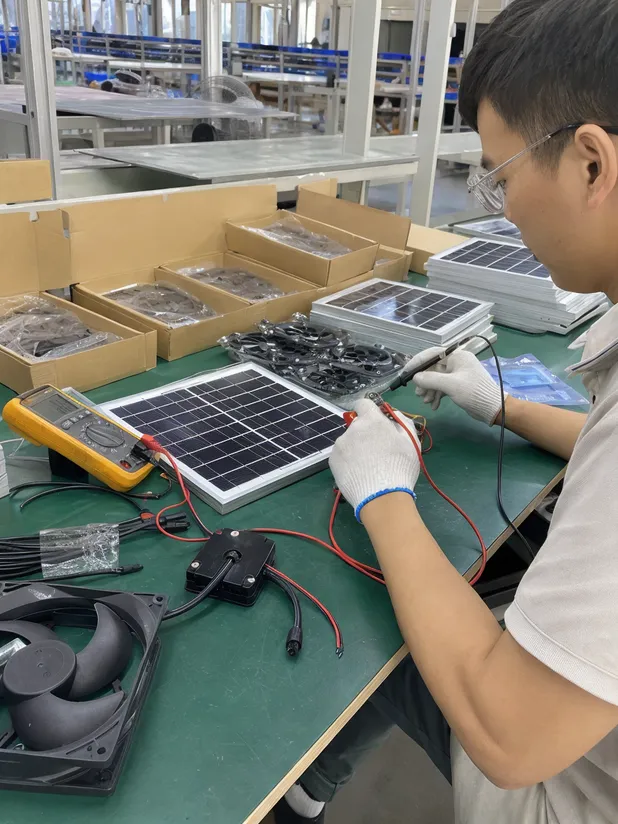
Four-Stage Inspection Process
The JXSOL factory quality system covers solar fans through the same four-stage inspection process as our solar lighting products:
Incoming
In-Process
Reliability
100% Outgoing
Confirm quality documentation requirements with our team if your market requires specific test reports or certificates.
OEM/ODM Options for Solar Exhaust Fan Orders
Standard models are available from 100 units. For buyers who need a private-label configuration or a spec that differs from our standard catalog, we handle that through our OEM/ODM program.
| Configurable Item | Options | Notes |
|---|---|---|
| Fan diameter | 10 inch – 18 inch | Standard tooling covers 10, 12, 14, 16, 18 inch |
| Motor wattage | 10W – 30W | Matched to fan diameter and airflow target |
| Panel wattage | 15W – 40W | Sized to motor load; confirm for direct solar or battery-backed |
| Panel cable length | 2m – 5m; longer on request | Longer cable for separate panel placement |
| Housing material | Galvanized steel; ABS + galvanized grille | Galvanized steel standard for outdoor use |
| Grille / louver | Fixed grille; gravity louver; motorized louver | Louver type affects cost and installation complexity |
| Mounting flange | Roof curb; wall flange; ceiling mount | Flange dimensions confirmed per model |
| Controller | On/off; thermostat; speed controller | Thermostat controller for temperature-triggered operation |
| Logo and branding | Housing, grille, panel, carton | Logo placement confirmed during sample stage |
| Carton format | Retail box; bulk export carton; mixed-SKU master carton | Retail box design available for branded programs |
| User manual | English, French, Spanish, Arabic, and others | Language confirmed at order stage |
| Accessory kit | Mounting hardware, panel bracket, cable clips, installation guide | Custom accessory additions available |
Limitations to Confirm Before RFQ
- Non-standard fan diameters outside the 10–18 inch range require new tooling, which affects MOQ and lead time.
- Custom housing colors are available on runs over 500 units — below that, the powder line changeover cost doesn't make sense for either side.
- Battery backup configurations require an engineering review to confirm panel wattage, battery capacity, and controller spec before production.
Standard Models
Ship within normal lead time from existing stock and tooling.
Engineering Review
OEM/ODM configurations go through engineering review — we confirm the spec is achievable and lock it.
Component Procurement
Custom specs must be finalized before we source components; changes after procurement affect lead time and cost.
Production
Locked spec proceeds to production. No spec changes accepted after component sourcing begins.
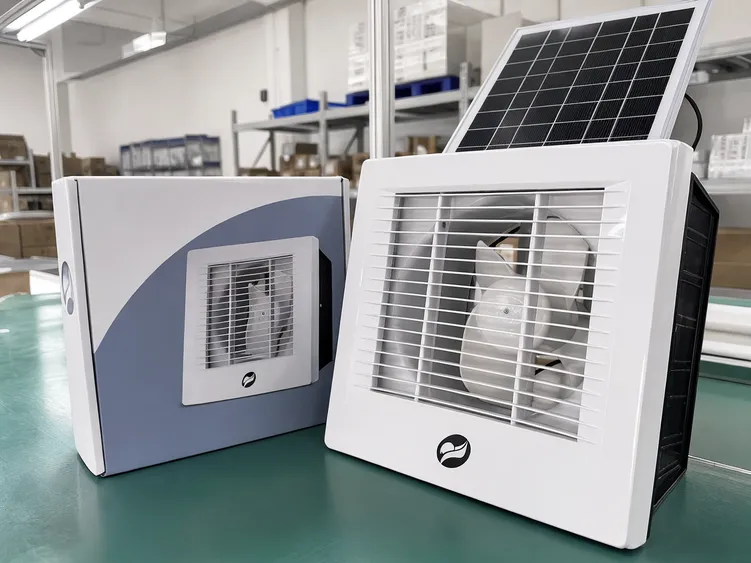
For buyers adding solar exhaust fans to an existing OEM solar lighting program, see our OEM and ODM solar product support page for the full scope.
When submitting your RFQ, include: fan diameter, motor wattage, panel wattage, housing requirement, controller type, order quantity, and branding needs.
Quote a Custom Solar Exhaust FanChoosing Between Solar Exhaust Fan and Other Solar Fan SKUs
The solar exhaust fan is one of six product families in our solar fan line. The right choice depends on your channel, your buyer's use case, and whether the application requires fixed installation or portable/household use.
| Product | Best Fit | Key Difference from Exhaust Fan |
|---|---|---|
| Solar Exhaust Fan | Fixed ventilation: attic, greenhouse, warehouse, agricultural shed | This page — fixed installation, direct solar, galvanized steel housing |
| Solar Fans | Broad solar fan SKU family for mixed-SKU distribution programs | General-purpose catalog coverage; not fixed-installation specific |
| Solar Powered Fan | Matched panel + battery fan kits with confirmed runtime specs | Battery-backed; suited for household and off-grid use where overnight runtime matters |
| Solar Stand Fan | Household pedestal fan for retail channels | Freestanding; consumer form factor; not for fixed building installation |
| Portable Solar Fan | Compact fan for outdoor, camping, and emergency kit channels | Lightweight and portable; not for continuous fixed-installation ventilation |
| Solar Fan With LED Light | Fan + light kit for solar home kits and rural electrification programs | Multi-function; battery-backed; not a ventilation-specific product |
Fixed Building Ventilation
If your buyer needs a fixed ventilation solution for a building or agricultural structure, the solar exhaust fan is the right SKU.
This pageHousehold / Overnight Runtime
If they need a household fan that runs overnight, the Solar Powered Fan or Solar Stand Fan is the better fit.
Portable / Emergency Use
If they need a portable fan for outdoor or emergency use, the Portable Solar Fan is the right choice.
Portable Solar FanExport Packing and Mixed-SKU Shipment Control
Solar exhaust fans ship with more components than most solar fan SKUs — the fan housing, solar panel, mounting hardware, panel bracket, cable, and installation guide all need to be packed and verified per unit. Accessory control is where packing errors happen, and a missing mounting bolt or the wrong panel bracket creates a field problem that costs more to resolve than the part.
Standard Export Carton Contents
Every carton ships with the following verified components:
- Fan housing with motor and grille/louver assembled
- Solar panel (flat-packed with foam protection)
- Panel mounting bracket
- Panel cable (length per spec)
- Mounting hardware (bolts, flange gasket, cable clips)
- Installation guide (language per order)
- Packing list inside every carton
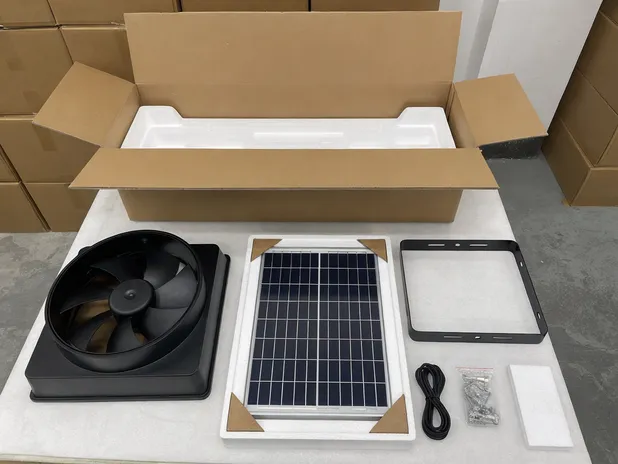
Damage risk: Glass cracking during transit is the most common damage claim for solar exhaust fans — the panel is the most fragile component and the most expensive to replace in the field.
Panel Protection
Solar panels are wrapped in foam and packed flat in a dedicated sleeve within the carton. For panels 25W and above, we use reinforced carton walls and corner protection to prevent glass cracking — the most common transit damage claim and the most expensive field replacement.
SKU Labeling
Every carton carries a label with product code, model number, batch number, quantity, and destination market. Batch codes trace back to production records for QC traceability and reorder consistency.
Mixed-SKU Shipments
If you're ordering solar exhaust fans alongside solar lighting products or other solar fan SKUs, we consolidate into a single container with a master packing list. CBM per carton and container loading quantities are confirmed during quotation based on your selected models and configurations.
CBM data, container loading quantities, and palletization options should be confirmed at the RFQ stage. For shipping and delivery details, see our shipping and delivery page, or confirm packing data directly with our team.
CBM per carton, container loading quantities, palletization options, and panel protection requirements for your selected models.
Get Packing DataSolar Exhaust Fan FAQ
What is the difference between a solar exhaust fan and a solar powered fan?
A solar exhaust fan is a fixed ventilation product designed for roof or wall installation in buildings and agricultural structures. It runs direct solar — no battery — because the ventilation need aligns with daylight hours.
A solar powered fan is typically a household or portable fan with a battery pack that stores energy during the day for use in the evening or overnight.
Channel Distinction
Solar Exhaust Fan Channels
- Building material distributors
- HVAC wholesalers
- Agricultural supply companies
Solar Powered Fan Channels
- Household retail
- Off-grid home use
Sourcing a solar powered fan for a ventilation channel (or vice versa) is a common spec mismatch that leads to returns.
Does a solar attic fan need a battery?
For most attic ventilation applications, no. Attic heat builds during the day and dissipates at night — the ventilation need is a daytime problem, and direct solar operation covers it without battery complexity.
Cost Impact
A battery adds 20–30% to the unit cost and introduces charge/discharge management that the application doesn't require.
When Battery Backup Makes Sense
- North-facing installations with limited direct sun
- Markets with extended overcast seasons
- Applications where the buyer's customers expect operation during low-light periods
If your project has one of those requirements, we can configure a battery-backed version — but we don't recommend it as a default for standard attic ventilation programs.
How do I choose panel wattage for a solar ventilation fan?
For a direct solar exhaust fan, panel wattage should match the motor's rated power with a 20–30% surplus to account for panel angle, dust accumulation, and temperature derating. A 15W motor fan needs at least an 18W–20W panel for reliable full-speed operation in most markets.
For installations in high-latitude markets or locations with frequent cloud cover, size toward the higher end — a 15W motor fan may need a 25W panel to maintain adequate airflow on overcast days.
JXSOL confirms panel sizing during quotation based on your target installation location and motor spec.
Don't accept a panel spec that exactly matches the motor wattage — there's no margin for real-world conditions.
What housing material should I specify for roof or wall exhaust use?
Galvanized steel is the standard for outdoor roof and wall exhaust applications. It handles UV exposure, rain, and temperature cycling better than ABS plastic over a multi-year installation life.
ABS plastic housings are suitable for indoor or sheltered installations where UV and weather exposure are limited.
Standard Outdoor Use
IP44 galvanized steel — handles rain but not chemical spray
Agricultural / Chemical Exposure
IP55 housing with galvanized steel body and sealed cable entry — required for ammonia or chemical spray environments
If your buyers are in coastal markets, ask about additional corrosion protection options during quotation. Standard galvanized steel performs well in most environments, but high-salinity coastal installations benefit from additional treatment.
Can JXSOL customize solar exhaust fans for private-label orders?
Yes. Standard OEM/ODM options include fan diameter (10–18 inch), motor wattage, panel wattage, cable length, housing material, grille/louver type, mounting flange, controller type, logo on housing and panel, carton design, and user manual language.
Custom fan diameters outside the standard range require new tooling and affect MOQ and lead time. Custom housing colors are available on runs over 500 units.
All OEM/ODM configurations go through an engineering review before production to confirm the spec is achievable and to lock it before component procurement.
Quote a custom solar exhaust fanWhat MOQ does JXSOL support for standard solar exhaust fan models?
Standard catalog models are available from 100 units — low enough to test a new SKU with your customers before committing to a larger program.
OEM/ODM configurations with custom specs have MOQ confirmed during the engineering review, based on the configuration and component sourcing requirements. Most standard exhaust fan configurations are available at 100 units; non-standard tooling or custom housing colors may require higher MOQ.
Request a quoteSend Your Ventilation SKU Requirements
If you're adding a solar exhaust fan to a solar product catalog, sourcing for a building or agricultural ventilation program, or building a private-label ventilation SKU, send us the details and we'll respond with a configuration recommendation and quote.
Useful Information to Include
-
Target market and channel Attic ventilation, greenhouse, warehouse, agricultural shed, mixed solar catalog
-
Mounting type Roof curb, wall flange, ceiling
-
Target fan diameter and airflow requirement
-
Panel wattage preference or target landed cost
-
Controller type On/off, thermostat, speed controller
-
Cable length requirement
-
Housing and IP rating requirement
-
Order quantity and reorder frequency
-
Branding and packaging requirements Private label, retail box, bulk export carton
What You'll Receive
- Configuration recommendation matched to your market and volume
- Datasheet for the relevant model
- Quote based on your volume and requirements
If you're already sourcing solar lighting or other solar fan products from us, we can consolidate your exhaust fan order into the same shipment.