

Solar Landscape Lighting Built to Hold Spec
Ground-level and low-profile outdoor solar fixtures in the 50–300 lumen range. IP65/IP67 construction, LED lumen binning for batch consistency, and flexible MOQ from 100 units for standard models.
Manufactured for contractor packages, developer projects, and distributor programs — built to hold spec across batches and seasons.
13+
Years Manufacturing
6
Production Lines
IP65/67
Waterproof Rated
100%
Pre-Shipment QC
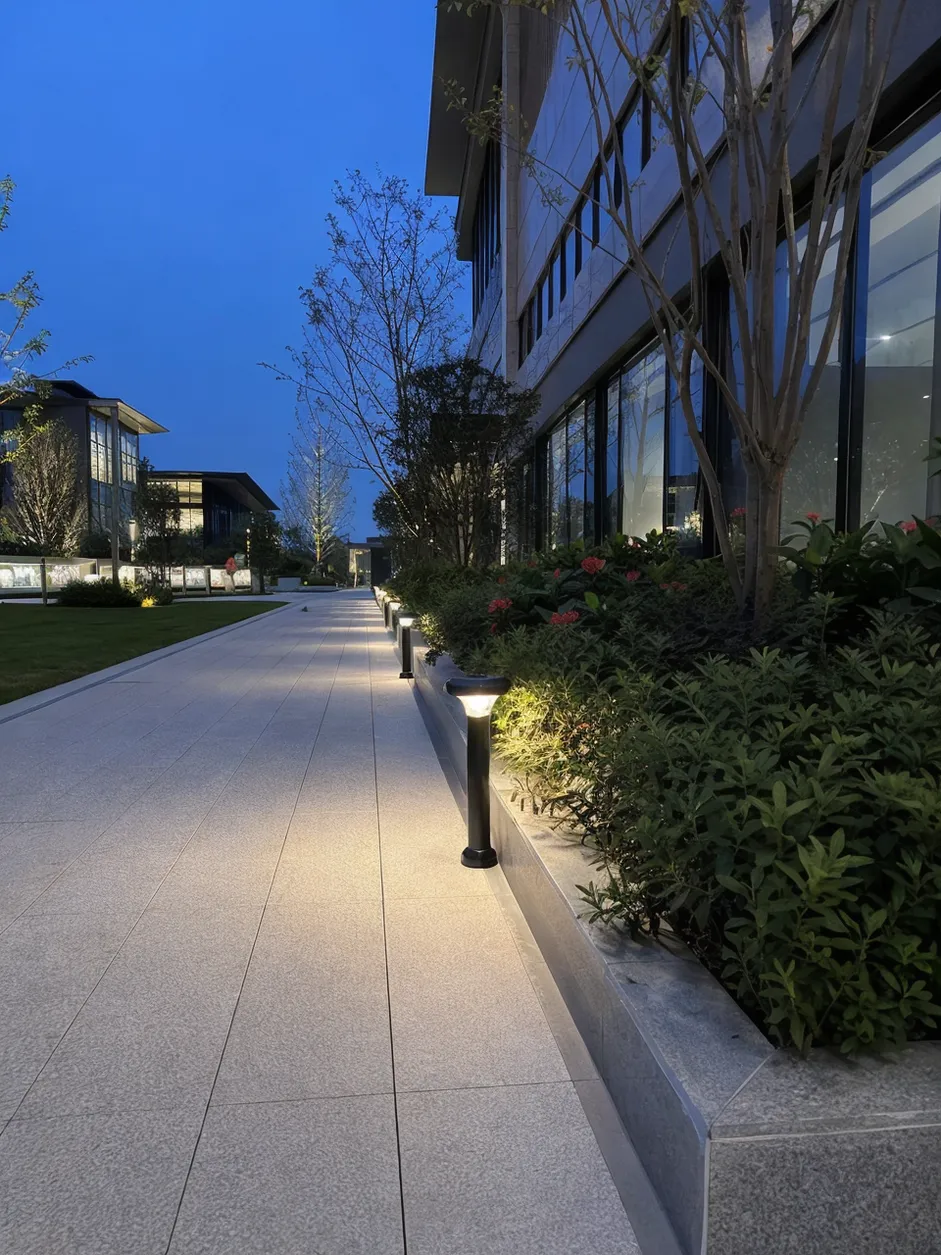
Solar Landscape Lighting for Project Supply and Distributor Programs
JXSOL manufactures solar landscape lighting for buyers who need outdoor fixtures that perform consistently across a full project installation — not just the first unit out of the box. We're a solar lighting factory based in Guzhen Town, Zhongshan, and we've been producing outdoor solar fixtures for export since 2012. This page covers our solar landscape lighting line: ground-level and low-profile fixtures designed for landscape contractor installations, residential developer common areas, commercial campus grounds, hospitality properties, and municipal parks.
The distinction between solar landscape lighting and the broader solar garden category matters commercially. Landscape lighting sits in the 50–300 lumen range with more controlled output than ambient garden lights, and it's specified by contractors and project buyers who need batch consistency, documented IP ratings, and reorder reliability — not just a product that looks good in a catalog photo.
If you're sourcing for a project, building a contractor supply program, or adding a landscape lighting SKU to a distributor catalog, send your RFQ or browse the full solar garden and landscape lighting range to see where this product fits.
Key Specifications
- 50–300 lm output range
- IP65/IP67 waterproof construction
- MOQ 100 units for standard models
- CE, RoHS, IEC 62124 certified
- LED lumen binning for batch consistency
Where Solar Landscape Lighting Fits in the JXSOL Garden and Outdoor Range
Solar landscape lighting is one of five product lines we produce under the solar garden and landscape category. Buyers evaluating this page are often comparing it against adjacent products — here's how to read the differences commercially.
| Product Line | Lumen Range | Primary Use Case | Best Fit For |
|---|---|---|---|
| Solar Landscape Lighting | 50–300 lm | Defined pathway, garden bed, and courtyard lighting for contractor and project supply | Landscape contractors, property developers, municipal buyers |
| Solar Garden Lights | 10–50 lm | Ambient garden illumination for distributor catalog programs and residential retail | Distributors, hardware retailers, e-commerce sellers |
| Solar Spotlights | 200–800 lm | Directional accent lighting for trees, signage, and architectural features | Landscape contractors, hospitality project buyers |
| Solar Tree Lights | Decorative | String and wrap lighting for trees and outdoor structures | Garden retailers, seasonal importers, hospitality buyers |
| Decorative Solar Garden Lights | 5–50 lm | Novelty and themed fixtures for retail shelf programs | Garden center chains, gift distributors, seasonal importers |
Solar landscape lighting is the working product in this range — it's what contractors specify when they need a fixture that defines a space rather than just decorates it. The lumen output is high enough to be functional, the beam control is tighter than ambient garden lights, and the housing specs are built for ground-level outdoor exposure rather than shelf display.
If your buyer needs directional accent output above 300 lumens for a specific feature, solar spotlights are the right move. If they need ambient fill lighting for a garden retail catalog, solar garden lights cover that tier. Solar landscape lighting sits between those two — it's the project specification product.
View the full solar garden and landscape lighting range for the complete product line overview.
Quick Selection Guide
Pathway & courtyard projects
→ Solar Landscape Lighting (this page)
Feature accent above 300 lm
Retail catalog ambient fill
Novelty & themed retail
Procurement Specs Buyers Should Confirm Before Ordering
The table below uses industry-standard values for this product type. Exact specifications vary by model and should be confirmed against the product datasheet before ordering. Contact us for detailed spec sheets on specific SKUs.
| Parameter | Typical Specification | Notes |
|---|---|---|
| LED Power | 1W – 5W | Varies by lumen target and fixture design |
| Lumen Output | 50 lm – 300 lm | Confirm target lumen output at RFQ stage |
| Color Temperature (CCT) | 2700K – 6500K | Warm white (2700-3000K), neutral white (4000K), cool white (5000-6500K) |
| Beam Angle | 90° – 120° (typical) | Adjustable on some models; confirm per SKU |
| Solar Panel Type | Monocrystalline silicon | Higher conversion efficiency vs polycrystalline |
| Solar Panel Wattage | 1W – 6W | Sized to battery capacity and target runtime; confirm for installation latitude |
| Battery Chemistry | LiFePO4 / Li-ion | LiFePO4 for 2000+ cycle life; Li-ion for cost-sensitive configurations |
| Battery Capacity | 1200mAh – 4000mAh | Matched to runtime target; cells tested and matched before pack assembly |
| Runtime (full charge) | 8 – 12 hours | Varies by mode; motion-sensor mode extends runtime vs constant-on |
| Autonomy Days | 2 – 5 days | Consecutive cloudy days at full output; confirm for target market latitude |
| Charge Time | 6 – 8 hours | Under standard test conditions (1000 W/m²) |
| IP Rating | IP65 / IP67 | IP65 standard; IP67 available and recommended for ground-level installation |
| Housing Material | ABS, PC, die-cast aluminum | Material selection by model; confirm for your application environment |
| Ground Stake | Stainless steel / coated steel | Stake length options available; confirm for soil type |
| Sensor / Mode Options | Constant-on, dusk-to-dawn, PIR motion sensor, dimming | Confirm mode requirements at order stage |
| Operating Temperature | -20°C to +50°C | Typical outdoor operating range |
| Finish / Color | Black, white, silver, bronze | Custom RAL available on OEM runs |
| Packaging | Retail color box / plain carton / OEM | Retail box dimensions confirmed per SKU |
| MOQ (standard models) | 100 units | OEM/ODM MOQ confirmed during engineering review |
| Warranty Support | 3 years | Standard warranty support on all export orders |
Specifications shown are industry-standard values for this product type. Actual specifications vary by model. Contact us for detailed product datasheets and confirm exact parameters before ordering.
Layout Choices That Affect Installed Cost and Warranty Risk
Solar landscape lighting decisions made at the sourcing stage directly affect what happens after installation. Getting the configuration wrong — wrong battery autonomy for the climate, wrong panel wattage for the latitude, wrong IP rating for the installation environment — generates callbacks and warranty claims that cost more than the unit price difference. Here's what to confirm before the order is placed.
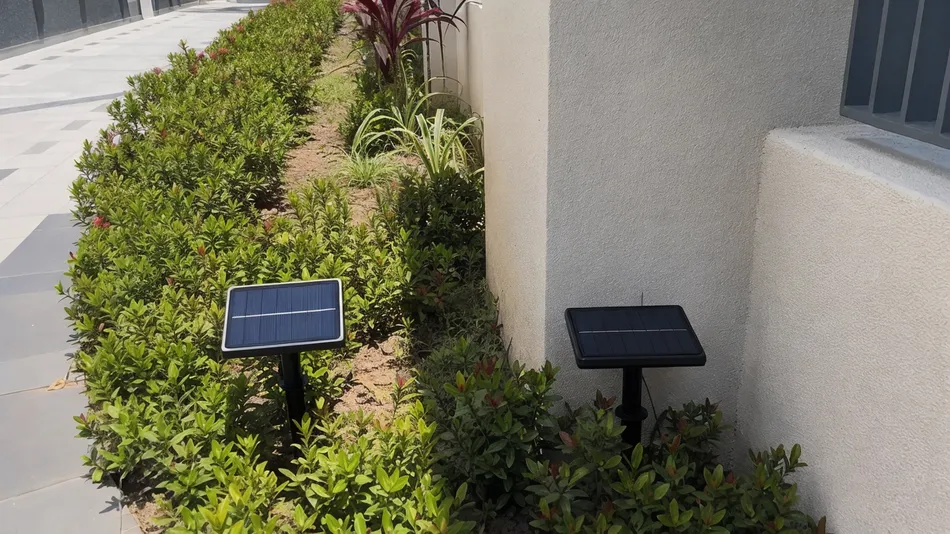
Solar Panel Placement and Shading
The most common installation mistake reported back from the field is fixtures placed where the solar panel gets partial shade from trees, walls, or adjacent structures. A panel that charges at 60% of rated output because of afternoon shade will deliver 60% of the specified runtime — and the end customer will report the light as defective.
Confirm Before Ordering:
- •Installation positions allow direct sun exposure for at least 6 hours per day
- •For shaded sites, battery capacity and panel wattage need to be upsized to compensate
- •Send site latitude and shading conditions — our engineering team can calculate the required configuration
Battery Autonomy for the Target Climate
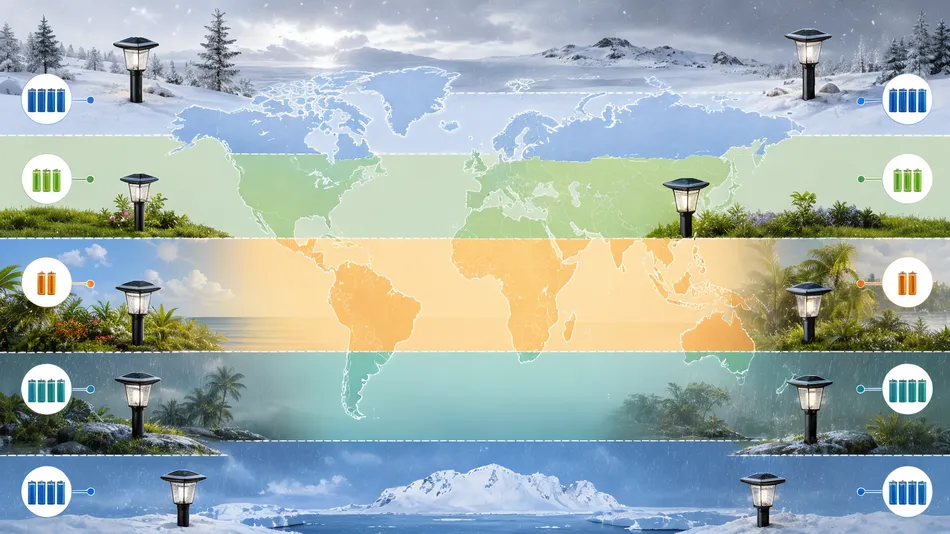
Autonomy days — the number of consecutive cloudy days the battery sustains full output — is the specification that separates a product that works year-round from one that fails in winter. The autonomy spec drives battery capacity, which drives unit cost — confirm the target before the RFQ to avoid a spec change after pricing is agreed.
Latitude Guidelines:
- •Above 45° latitude (northern Europe, Canada, northern US): specify at least 3 autonomy days
- •Tropical markets with monsoon seasons: 3–5 autonomy days is the right target
- •Confirm autonomy target before RFQ to lock pricing without post-agreement spec changes
IP Rating for the Installation Environment
IP65 covers rain and irrigation spray. IP67 covers temporary immersion — relevant for ground-level fixtures in areas with standing water after heavy rain or irrigation system runoff.
For landscape lighting installed in garden beds, along irrigation-fed planting areas, or in low-lying ground positions, IP67 is the right specification. The unit cost difference between IP65 and IP67 is small; the warranty claim difference in high-rainfall markets is significant.
Field experience: We've had buyers switch from IP65 to IP67 after one rainy season of returns. The conversation is easier before the order than after.
Color Temperature Consistency Across a Project
Mixing CCT across a landscape lighting installation — 3000K fixtures next to 4000K fixtures — is visible to the naked eye under installed conditions and generates end-customer complaints.
Specify a single CCT for the entire project and confirm it at the order stage. Our lumen binning process keeps CCT within ±150K of the target across a batch, so your 200-unit project order looks consistent from fixture to fixture.
JXSOL binning standard: CCT held within ±150K of target across the full production batch for visual consistency at installation.
Market Segments That Can Move Solar Landscape Lights in Volume
Solar landscape lighting serves commercial buyers who need outdoor fixtures for projects and programs — not individual homeowners. Here are the segments where this product moves in volume and what the commercial logic looks like for each.
Landscape Contractors
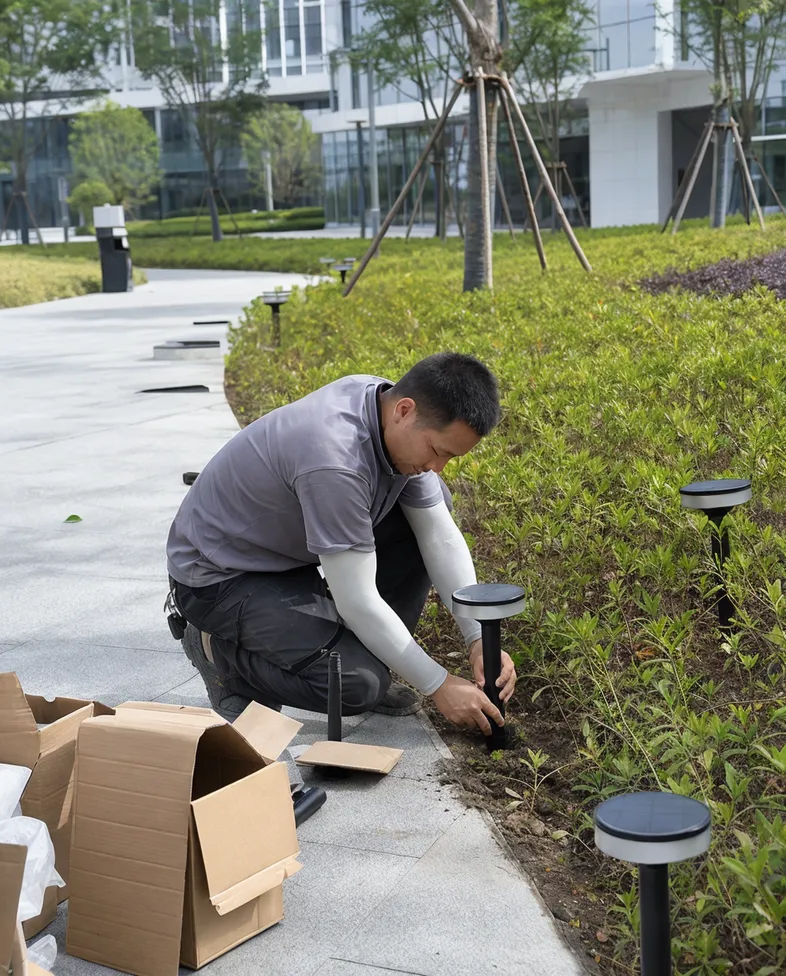
Landscape contractors installing solar landscape lighting on residential and commercial properties need fixtures that survive installation handling, hold lumen output across seasons, and don't generate callbacks. The commercial model is project-based: a contractor wins a job, specifies the fixture, and needs reliable supply for the project quantity plus a buffer for replacements.
Typical Project Quantities
50–500 units per site, with repeat orders as the contractor wins additional projects using the same specification.
The key sourcing requirement for this segment is batch consistency — the contractor needs every fixture in a project to look and perform the same. Our LED lumen binning and battery matching processes are specifically designed for this. A contractor who specifies our solar landscape lighting for a 200-unit project can reorder for the next project and get the same output, the same CCT, and the same runtime. That consistency is what builds a repeat supply relationship.
Repeat Order Pattern
We have contractors who've been reordering the same SKU for three or four consecutive project seasons — the spec is locked, the quality is consistent, and the reorder is straightforward.
Contractor Sourcing Priorities
- Batch-to-batch lumen and CCT consistency
- Survives installation handling without damage
- Reliable supply for project quantity + buffer
- Zero-callback performance across seasons
Residential Developers
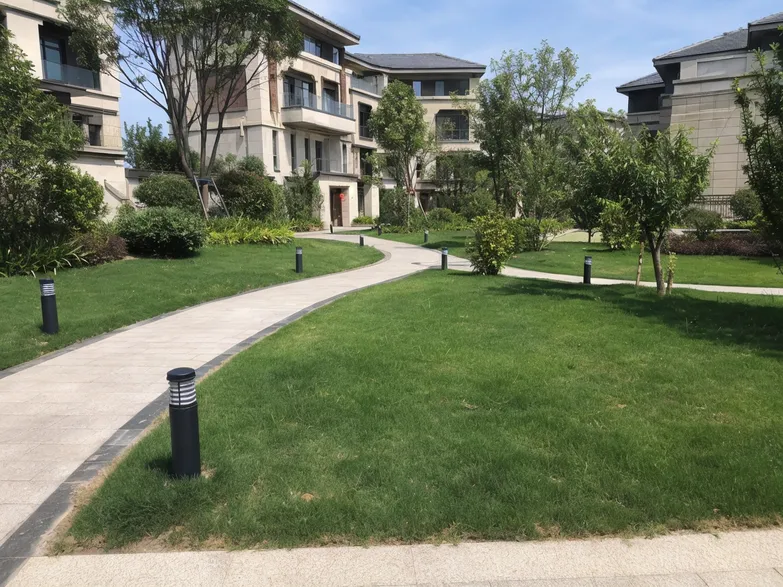
Property developers sourcing solar landscape lighting for new residential communities — villa developments, apartment complexes, gated communities — need consistent appearance across a large number of units, reliable reorder availability for phased project delivery, and documentation for project handover. Typical order quantities run 200–2000 units per development, with phased delivery as construction progresses.
The commercial concern for this segment is appearance consistency: when 500 fixtures are installed side by side in a development's common areas, any visible variation in brightness or color temperature is immediately noticeable and generates complaints from the developer's clients.
Lumen Binning Consistency
Our lumen binning process keeps output within ±10% of the target lumen level and CCT within ±150K across the batch. For developers who need matched warm white (3000K) across an entire community, that consistency is the specification that matters most.
Typical Project Parameters
Order Quantity
200–2,000
units per development
Delivery
Phased
matched to construction
Hospitality and Resort Grounds
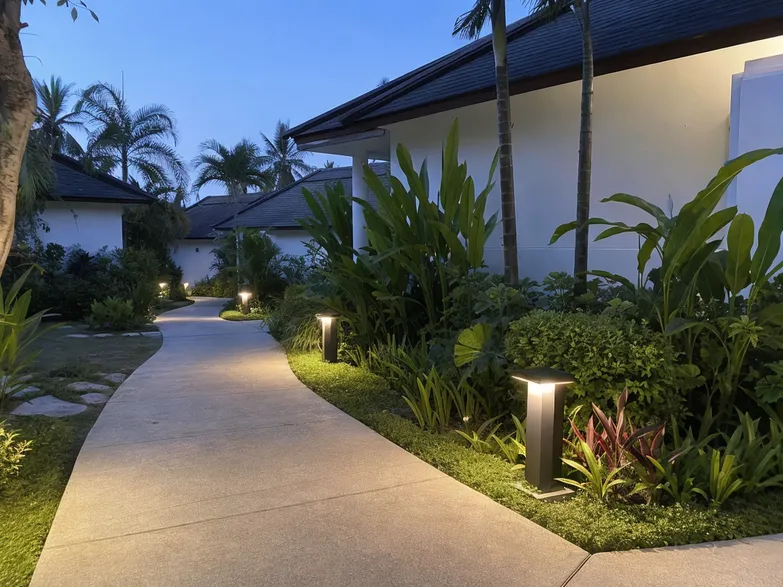
Hotels, resorts, and hospitality properties sourcing outdoor solar landscape lighting need fixtures that hold their appearance across a full season without maintenance callbacks. The commercial concern is replacement cost and guest-facing reliability — a fixture that fails mid-season in a resort garden requires a maintenance visit, a replacement unit, and a visible gap in the lighting scheme until it's fixed.
For hospitality applications, we recommend specifying 3+ autonomy days and confirming the solar panel wattage is sized for the installation latitude. A resort in Southeast Asia at 5° latitude charges differently than one in southern Europe at 40° — the panel sizing needs to match the local irradiance.
CCT Specification for Hospitality
Warm white (2700–3000K) CCT is the standard specification for hospitality grounds; it reads as intentional and premium rather than functional.
Typical Project Parameters
Order Quantity
100–500
units per property
Reorders
Ongoing
expansion & replacement
Latitude & Panel Sizing
Panel wattage must be sized to match local solar resource for reliable 3+ day autonomy.
Commercial Campuses and Business Parks
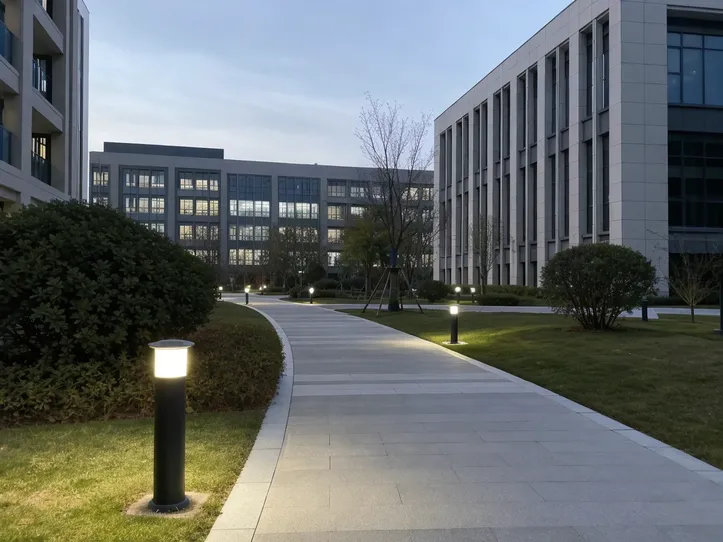
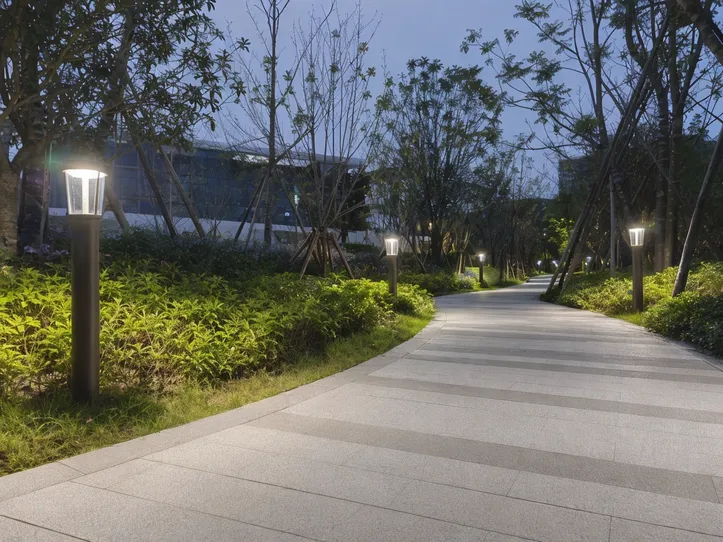
Commercial property managers sourcing outdoor solar landscape lighting for office campuses, business parks, and commercial grounds need fixtures that provide functional outdoor lighting without grid connection costs. The commercial case is straightforward: no trenching, no electrical contractor, no ongoing energy cost.
Typical Commercial Campus Specifications
Lumen Output
100–200 lumens per fixture
Color Temperature
Neutral white 4000K CCT — functional, not decorative
Order Quantities
100–500 units per site
Procurement Channel
Facilities management or property development budgets
Documentation requirements — CE certification, IP test certificates, product datasheets — are standard for this segment. We provide full export documentation with every order; see solar lighting certifications and quality standards for the document list.
Municipal Parks and Public Gardens
Municipal buyers sourcing outdoor solar landscape lighting for public parks, plazas, and garden spaces need IP67 construction, durable housing options, and documentation for procurement compliance and project approval. The procurement process for this segment typically involves tender submission, technical specification matching, and compliance documentation review.
Documentation Available for Tender Submission
- CE Declaration of Conformity
- RoHS test reports
- IP test certificates
- ISO 9001:2015 quality management certification
- IEC 62124 compliance documentation
Municipal Project Scale
Typical municipal project quantities run 200–1000 units per project, with multi-year supply relationships as municipalities expand or maintain their outdoor lighting programs.
CE certification and IEC 62124 compliance documentation are standard with our export orders. For municipal buyers who need specific documentation for tender submission, we provide them with the order.
Distributor Catalog Programs
Distributors adding solar landscape lighting to a catalog need a product that covers the contractor and developer market segments above — a fixture that their professional customers can specify with confidence. The commercial model is catalog volume: the distributor stocks the SKU, sells to contractors and developers, and reorders as stock depletes.
For distributors, the key sourcing requirements are consistent quality across reorders, flexible MOQ for SKU testing, and documentation for their own compliance requirements. Standard models are available from 100 units — low enough to test a new SKU with your contractor accounts before committing to a larger stocking program. For distributors building a branded solar landscape lighting line, OEM packaging and private-label options are available from the same factory.
Distributor Sourcing Essentials
- Consistent quality across reorders — same BOM, same factory line
- Flexible MOQ from 100 units for new SKU testing
- Full compliance documentation for distributor audit requirements
- OEM packaging and private-label options from the same production facility
Include your target market, required SKUs, and order quantities.
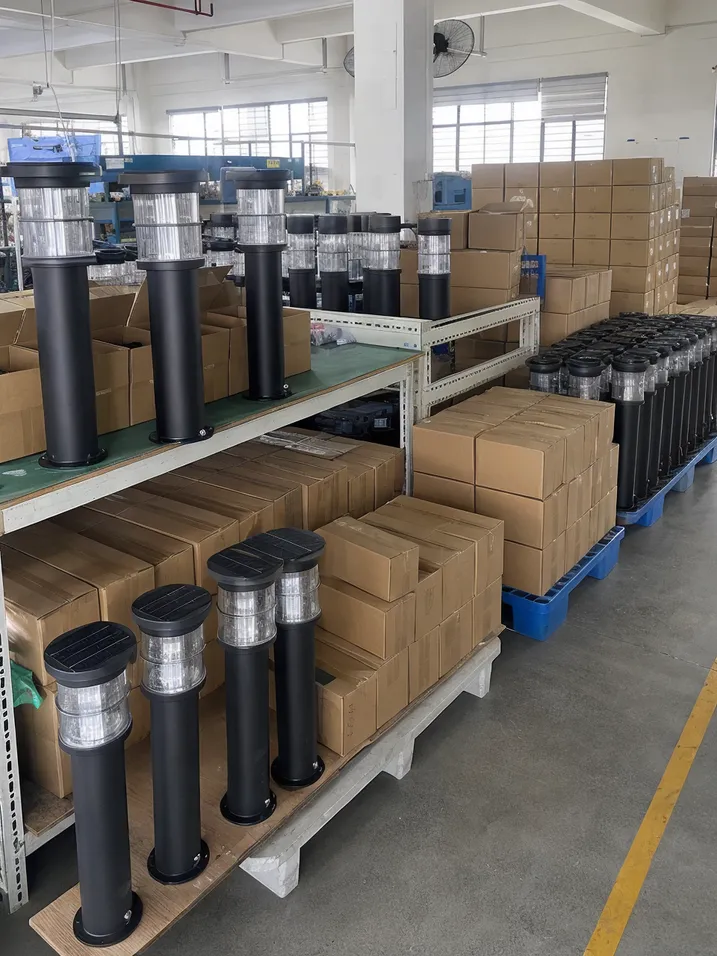
For deeper guidance on solar landscape lighting design and specification, see the solar landscape lighting design guide.
Battery, LED, and Waterproof Controls Behind Batch Consistency
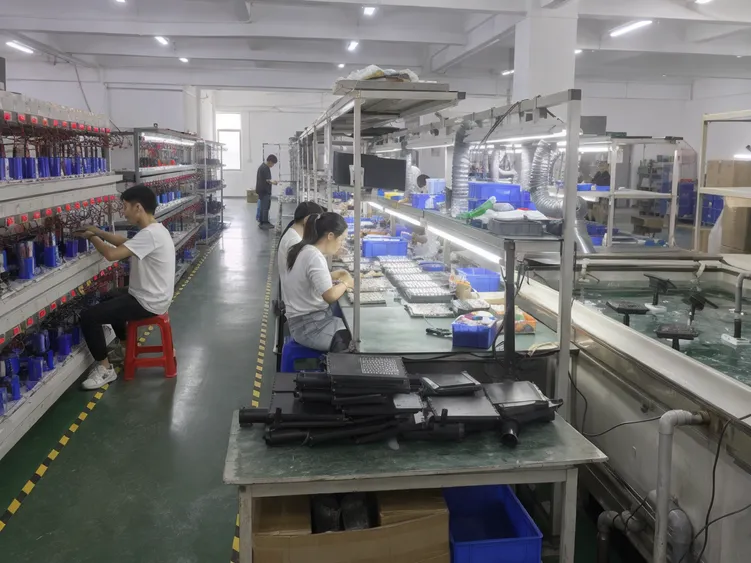
The commercial risks in solar landscape lighting — battery failure, water ingress, uneven brightness, inconsistent CCT — are predictable. We've been manufacturing in this category since 2012, and we've built our production controls around the failure modes that generate warranty claims and distributor complaints. Here's what we do at each stage.
Battery Matching and Charge/Discharge Testing
Every battery cell is tested for capacity and internal resistance before pack assembly, and cells are matched within a defined tolerance — we don't mix cells from different batches in the same pack.
After pack assembly, every battery pack goes through a charge/discharge cycle test on our aging racks before it's installed in a unit. The charge controller firmware is configured to match the battery chemistry and capacity of the specific product.
For our higher-spec landscape lighting models, we use LiFePO4 chemistry — 2000+ cycle life versus 300–500 cycles for standard Li-ion — because the battery needs to outlast the rest of the product in normal outdoor use.
Result: A product that holds its runtime across 2–3 seasons instead of degrading after the first winter.
LED Module Lumen Binning and CCT Matching
Every LED module is measured for lumen output and color temperature before assembly into a fixture, and modules are grouped within a defined tolerance band.
A 3000K warm white order ships with modules that are all within ±150K of the target CCT and within ±10% of the target lumen output.
This is the process that makes reorders look like the original order — and it's the process that prevents the visible brightness and color variation that damages distributor relationships when a reorder doesn't match the first batch.
We run this at the LED module assembly stage, not as a finished-product check, because catching a binning mismatch before assembly is faster and cheaper than catching it at final inspection.
IP65/IP67 Waterproof Structure Inspection
IP ratings are tested on every unit, not sampled. Our waterproof inspection station tests the assembled unit — housing seals, solar panel junction, cable entries, and any accessory connections — not the components in isolation.
Housing seals use UV-stable silicone gaskets; cable entries use compression glands with defined torque specs.
For ground-level landscape lighting fixtures, the solar panel-to-housing junction is the highest-risk water ingress point, and we test it specifically.
A product that passes a bench test at the factory but fails in the field after six months of UV and thermal cycling is a seal material problem — UV-stable silicone is the fix, and it's what we use across the landscape lighting line.
SMT and Controller Function Testing
The control board is assembled on automated SMT lines and tested for function before it's installed in the unit.
Controller and PIR sensor function checks run at a dedicated test bench — lighting mode verification, motion sensor trigger and timeout, dimming schedule confirmation.
A controller that's misconfigured for the wrong battery chemistry or has a sensor with incorrect trigger distance is caught at this stage, not in the field.
Production Certifications — Documented Baseline
The production controls above are what makes these certifications meaningful in practice. Learn more about JXSOL's factory inspection process or see solar lighting certifications and quality standards for the full documentation list.
OEM and ODM Options for Landscape Lighting Programs
Solar landscape lighting is a strong category for private-label development — landscape contractors, property developers, and outdoor lighting brands all run branded fixture programs, and the product has enough configuration range to support differentiated specifications for different markets.
Our in-house R&D team includes 15+ optical and electrical engineers who handle OEM and ODM projects for this category.
Optical & Electrical Configuration
- Lumen output adjustment within the LED module's design range (50–300 lm typical)
- Color temperature selection across 2700K–6500K
- Beam angle selection or adjustment (where the optical design supports it)
- Lighting mode configuration: constant-on, dusk-to-dawn, PIR motion sensor, dimming schedule
- Battery capacity sizing for target autonomy days and installation latitude
- Solar panel wattage sizing for target market irradiance conditions
Housing & Structural Options
- Housing color in standard options (black, white, silver, bronze) or custom RAL on qualifying run sizes
- Stake length and ground anchor configuration for different soil types
- Housing material selection (ABS, PC, die-cast aluminum) based on application environment and target price point
Brand & Packaging Customization
- Logo printing or embossing on housing
- Custom retail color box design and printing
- Custom inner carton labeling and batch coding
- Accessory pack configuration (mounting hardware, spare stakes, instruction language)
- Neutral carton for distributor private-label programs
MOQ and Project Start
MOQ for standard catalog models starts at 100 units. For OEM/ODM projects with custom specifications, we run an engineering review before production to confirm the configuration is achievable and to lock the spec before component procurement.
The engineering review covers:
- Lumen output feasibility
- Battery and panel sizing for the target market
- Housing modification scope
- Tooling requirements for any structural changes
Buyers who skip the engineering review to save time typically spend more time resolving spec mismatches during production than the review would have taken. We include it as a standard step for any OEM project.
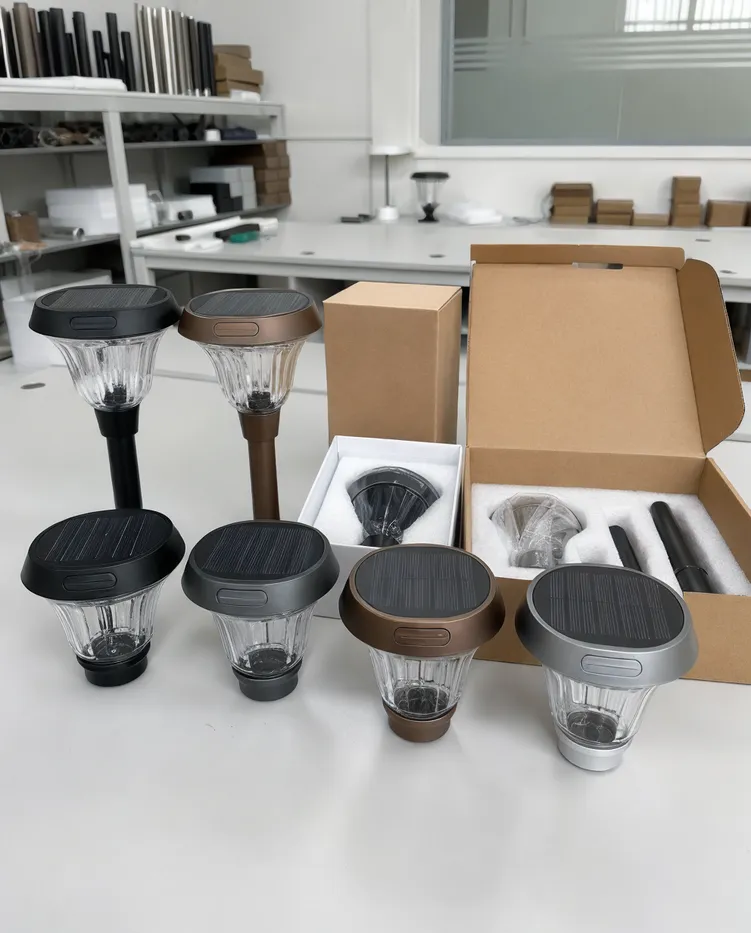
Ready to start a branded solar landscape lighting line or configure a project-specific specification?
Include target market, fixture quantity, lumen target, CCT, runtime/autonomy target, mounting method, and packaging format.
Packaging, Accessories, and Mixed-SKU Order Planning
Solar landscape lighting orders typically include more than just the fixture — stakes, mounting brackets, solar panel cables, installation hardware, and accessory packs all need to be packed correctly to arrive complete and undamaged. Here's how we handle it.
Accessory Pack Verification
Every carton is packed against a packing list that includes the main fixture, ground stake, mounting hardware, solar panel (if separate), cable, and any included accessories. Accessory packs are checked before carton sealing — missing hardware is the most common complaint on landscape lighting orders and it's a packing process issue, not a product issue. We catch it at the packing stage.
Carton and Inner Protection
Each SKU ships in a retail color box or plain carton sized to the product dimensions, with foam or EPE inner protection for the solar panel, fixture head, and stake assembly. For fixtures with separate solar panels and cable assemblies, the cable is coiled and secured to prevent connector damage during transit. We don't pack landscape lighting fixtures loose in a master carton.
Batch Codes and Reorder Traceability
Every carton carries a batch code that traces back to the production run, LED module batch, and battery pack batch. For distributors who need to track a warranty claim back to a specific production batch, the batch code is the reference. For reorders, the batch code confirms the production configuration matches the original order.
Mixed-SKU Orders
We handle mixed-SKU orders across the solar garden and landscape lighting range in a single shipment. Each SKU ships in its own labeled carton. Mixed-SKU container planning is done based on confirmed carton dimensions per SKU — we provide carton dimensions and weights so you can plan your 20GP or 40HQ loading before the order is placed.
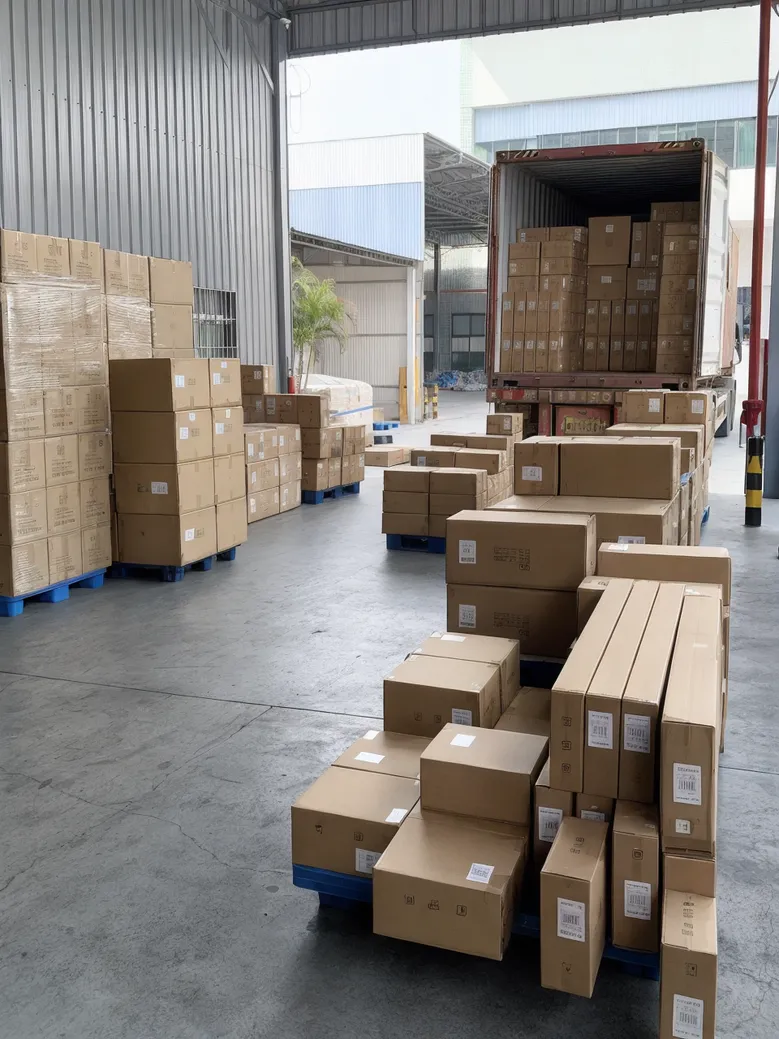
Single Factory, Single Shipment
For buyers combining solar landscape lighting with solar spotlights, solar garden lights, or other lines from the same category, a single factory and single point of contact covers the full order. This simplifies logistics coordination and reduces the number of supplier relationships you need to manage for a complete outdoor solar lighting program.
Export Compliance and Documentation Buyers Can Request
JXSOL holds ISO 9001:2015, CE, RoHS, IP65/IP67 Ingress Protection, and IEC 62124 certifications at the brand level. For solar landscape lighting specifically, the documents that matter most by market are listed below.
CE & IEC 62124
Required for European market entry and relevant for regulated markets globally. CE covers electrical safety and EMC requirements; IEC 62124 covers photovoltaic performance requirements for solar-powered lighting systems. Both are available as documentation with export orders.
RoHS Compliance
Required for EU import and increasingly relevant for other markets with restricted substance regulations. Our RoHS compliance traces back to the component level — LED chips, battery cells, and electronic components are sourced from suppliers who provide material declarations, and we maintain records by batch. Compliance documentation is available per order.
IP65/IP67 Test Certificates
Relevant for project tender submissions and distributor compliance requirements. IP ratings are tested on our own waterproof inspection equipment, not assumed from housing design. Test certificates are available per SKU.
ISO 9001:2015
Relevant for buyers who need quality management documentation for their own supplier qualification process or for project tender submission. Covers the full manufacturing and quality management system at the factory level.
Confirm Documentation at RFQ Stage
Exact documentation availability should be confirmed per SKU and destination market — not every document applies to every product configuration. For buyers who need specific documentation for tender submission, distributor onboarding, or import clearance, confirm the required documents at the RFQ stage and we'll confirm availability.
Choose the Right JXSOL Garden and Landscape Product
Solar landscape lighting is the right product when you need defined outdoor lighting for a project or contractor program — functional output in the 50–300 lumen range, controlled beam, and IP67 construction for ground-level installation. If your requirement is different, here's where to look.
Solar Garden Lights
Ambient garden illumination in the 10–50 lumen range for distributor catalog programs and residential retail. Lower lumen output, wider diffused beam, designed for general garden fill rather than defined pathway or feature lighting.
View product lineSolar Spotlights
Directional accent lighting in the 200–800 lumen range with adjustable beam angles. The right product when you need to illuminate a specific feature — a tree, a wall, a sign, an architectural element — rather than define a pathway or garden bed.
View product lineSolar Tree Lights
Decorative string and wrap lighting for trees and outdoor structures. Seasonal and decorative programs, not functional landscape lighting.
View product lineDecorative Solar Garden Lights
Novelty and themed fixtures for retail shelf programs and seasonal collections. Dandelion lights, firefly lights, lanterns — designed for retail visual appeal rather than project specification.
View product lineView All Solar Garden & Landscape Lighting
The full category overview with all five product lines, category-level specifications, and market segment guidance.
Browse full categoryCurrently viewing: Solar Landscape Lighting — functional output in the 50–300 lumen range, controlled beam, IP67 construction for ground-level installation in project and contractor programs.
FAQ for Solar Landscape Lighting Buyers
What IP rating should outdoor solar landscape lighting use for commercial projects?
IP67 is the right specification for ground-level outdoor solar landscape lighting in commercial projects. IP65 covers rain and water jets from any direction — adequate for wall-mounted or elevated fixtures. IP67 covers temporary immersion up to 1 meter, which matters for ground-level fixtures in areas with standing water after heavy rain or irrigation system runoff.
For landscape lighting installed in garden beds, along irrigation-fed planting areas, or in low-lying positions, the difference between IP65 and IP67 is the difference between a product that survives a wet season and one that generates warranty claims. The unit cost difference is small; the after-sales cost difference is not.
Regional guidance
For coastal and high-rainfall markets — Southeast Asia, the UK, Florida, the Gulf — specify IP67 across the landscape lighting range.
How do I choose lumen output for solar landscape lights?
The right lumen output depends on the application and the ambient light environment.
50–100 Lumens
Pathway definition and garden bed edge lighting in residential or hospitality settings. The goal is visual definition, not functional illumination.
100–200 Lumens
Commercial campus grounds, business park pathways, or municipal park lighting where functional visibility is required.
200–300 Lumens
Landscape lighting that needs to compete with ambient light from nearby street lighting or building facades. Upper end of the landscape lighting range.
Above 300 lumens, you're in solar spotlight territory — directional beam control becomes more important than raw output.
Next step: Confirm your target lumen level at the RFQ stage and we'll match the battery and panel configuration to deliver that output at your target runtime.
What causes LED solar landscape lights to fail early in rainy seasons?
The failure mechanism is almost always battery degradation, not LED failure. Solar landscape lights that work fine through summer and fail after the first extended cloudy period have a battery problem: either the cells were underspecified for the panel output, the cells were mismatched in capacity or internal resistance, or the charge controller was configured for the wrong battery chemistry.
After one winter of reduced solar charging and increased discharge cycles, the battery is at 40–60% of its original capacity and the light runs shorter and dimmer.
The fix — standard JXSOL production practice:
- Battery cell matching by capacity and internal resistance before pack assembly
- Charge controller firmware matched to the battery chemistry
- LiFePO4 chemistry for products where cycle life matters
For markets with extended rainy seasons — Southeast Asia, northern Europe, the Pacific Northwest — confirm the autonomy days specification before ordering: 3+ autonomy days is the minimum for year-round reliability in those climates.
How do I keep color temperature consistent across a landscape lighting project?
Specify a single CCT for the entire project and confirm it at the order stage. The production control that makes this achievable is LED lumen binning: every LED module is measured for CCT before assembly, and modules are grouped within a ±150K tolerance band.
A 3000K warm white order ships with modules that are all within ±150K of the 3000K target — visible consistency under installed conditions.
Where the problem occurs
- Mixing CCT across a project (3000K and 4000K fixtures installed side by side)
- Reorders from a supplier who doesn't bin — the second batch looks different from the first
For projects where CCT consistency is critical
Hospitality grounds, residential developer common areas, commercial campuses:
- Confirm the CCT at the order stage
- Specify that the reorder must match the original batch
- JXSOL maintains batch records so reorders can be matched to the original production configuration
Can JXSOL customize battery capacity and runtime for low-sun markets?
Yes. Battery capacity and solar panel wattage are both configurable as part of the OEM/ODM engineering review. For low-sun markets — northern Europe above 55° latitude, high-altitude locations, markets with extended monsoon seasons — the standard battery and panel configuration may not deliver the specified runtime year-round.
Our engineering team calculates the required battery capacity and panel wattage for the target installation latitude and autonomy day requirement. The inputs we need are:
- Target market and latitude
- Target runtime in hours
- Target autonomy days (consecutive cloudy days at full output)
- Installation environment (shading conditions, mounting height)
Send those details with your RFQ and we'll spec the configuration before pricing.
We've had buyers order a standard configuration for a northern European market and then come back after the first winter asking why the runtime dropped. The latitude calculation is straightforward — it just needs to happen before the order, not after.
What is the MOQ for standard solar landscape lighting models?
100 units per SKU for standard catalog models. This is low enough to test a new product with your contractor accounts or distributor customers before committing to a larger stocking program.
For OEM/ODM projects with custom specifications — housing color, packaging, lumen output, CCT, battery capacity — MOQ varies by customization type and is confirmed during the engineering review.
Mixed-SKU orders across the solar garden and landscape lighting range are handled from a single factory with a single point of contact.
What documents can JXSOL provide for export or project approval?
Standard export documentation includes:
For project tender submissions, we can provide product datasheets, lumen output test reports, and batch-level quality records.
EU importers: RoHS compliance documentation traces back to the component level — LED chips, battery cells, and electronic components — not just the finished product.
Exact document availability should be confirmed per SKU and destination market at the RFQ stage. See solar lighting certifications and quality standards for the full documentation list.
RFQ Checklist for Faster Solar Landscape Lighting Quotations
The more specific your inquiry, the faster we can respond with a useful quote. Include as many of the following details as possible.
Target Market & Climate
Country, latitude, and whether the installation environment has extended rainy seasons or low-sun winters.
Project Type
Landscape contractor project, residential developer package, hospitality property, commercial campus, municipal park, or distributor catalog.
Fixture Quantity
Total units required, and whether this is a one-time project order or a recurring catalog SKU.
Lumen Target
Required output in lumens (50–300 lm range for landscape lighting).
Color Temperature (CCT)
Warm white (2700–3000K), neutral white (4000K), or cool white (5000–6500K).
Runtime & Autonomy
Target runtime in hours and autonomy days (consecutive cloudy days at full output).
IP Rating
IP65 or IP67 (IP67 recommended for ground-level installation).
Mounting Method
Ground stake, surface mount, or other.
Packaging
Retail color box, plain carton, or OEM private-label packaging.
Logo & Labeling
Standard JXSOL, neutral (no logo), or OEM private-label.
Certification Documents
CE, RoHS, IP test certificates, IEC 62124, ISO 9001:2015, or other.
Destination Port
FOB Guangzhou, Shenzhen, or other.
Ready to Request a Quote?
Include as many of the above details as you have and we'll respond with a specific quote and configuration recommendation.
For questions before the RFQ stage, use the contact link above.
JXSOL is the export brand of Zhongshan Century Juxing Optoelectronics Technology Co., Ltd. Factory address: 9th Floor, Houda Industrial, No. 65 Pinghe Road, Guzhen Town, Zhongshan, Guangdong, 528421, China.
Email: [email protected] · WhatsApp: +8613627818806