

Home Battery Backup From a Solar Manufacturer
Stationary residential battery backup — sourced from a solar-powered product manufacturer with in-house battery testing and 100% pre-shipment inspection.
For buyers adding home battery backup to a solar catalog, installer program, or regional distribution line. Configurable capacity, BMS-protected, export-ready documentation.
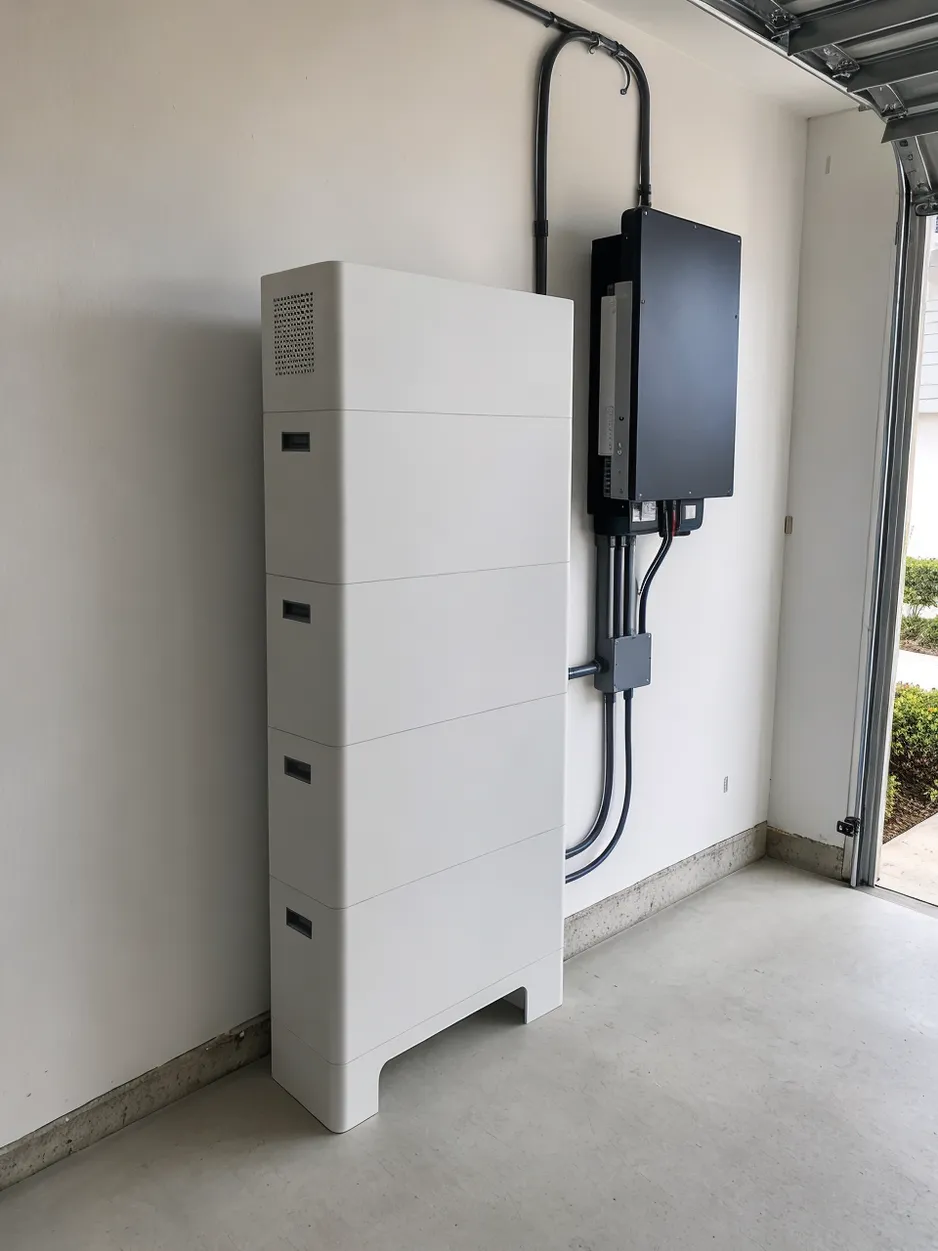
Home Battery Backup Supply for Residential Backup Programs
A home battery backup is a stationary residential battery system designed to power essential loads during grid outages and, when paired with compatible solar equipment, to support solar self-use and overnight discharge. It is not a portable power station, not a solar generator, and not a general home energy storage battery optimized for daily solar cycling — it is a backup-first product, sized and configured for outage coverage and installer-led residential programs.
JXSOL is a solar lighting manufacturer. Our core catalog is solar-powered outdoor lighting, and we've been building and testing battery-integrated solar products since 2012. Home battery backup sits in our adjacent solar-powered product line — we support it for buyers who want to broaden a solar catalog without adding a second factory relationship. The battery matching, charge/discharge testing, and pre-shipment inspection infrastructure we built for solar lighting applies directly to backup battery supply.
If you're sourcing residential battery backup for resale, for a solar installer add-on program, or to fill a gap in a regional distribution catalog, this page covers the product configuration, specification parameters, customization boundaries, compliance documentation, and RFQ process. For the broader Solar Battery & Portable Power product family, the parent category page covers the full cluster.
Get a quote for home battery backup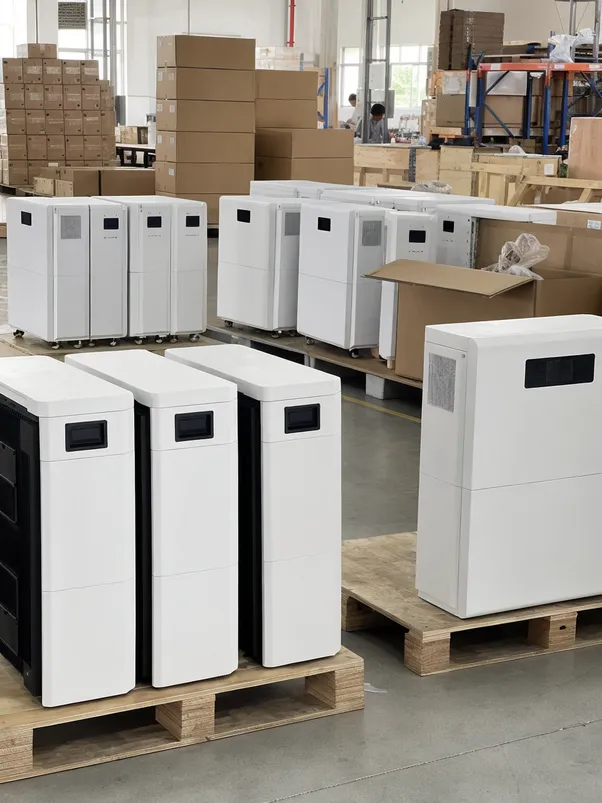
What This Product Is Not
- Not a portable power station
- Not a solar generator
- Not a daily-cycling home energy storage battery
- A backup-first product for outage coverage
Backup Capacity Is the Commercial Decision, Not the Headline Number
The most common sourcing mistake we see with home battery backup is leading with total kilowatt-hour capacity as the primary SKU differentiator. Capacity matters, but the commercial decision is more specific: what loads does the backup need to cover, for how long, and through what inverter?
A buyer sourcing for a residential backup dealer network needs to think in terms of program tiers, not single SKUs. A typical essential-load backup program covers refrigeration, lighting, phone charging, and a router — roughly 300–600 Wh of actual consumption per day for most households. A mid-range solar battery backup for home adds a small air conditioning unit or medical device to that list, pushing daily consumption to 1–2 kWh. A larger residential backup package covers partial-home loads for multi-day outage scenarios, typically 5–10 kWh usable capacity with solar recharge capability.
Essential-Load Tier
Refrigeration, lighting, phone charging, router
Covers basic outage essentials for most households
Mid-Range Tier
Essentials + small AC unit or medical device
Adds comfort or critical health loads to the backup set
Extended Backup Tier
Partial-home loads for multi-day outage scenarios
With solar recharge capability for sustained coverage
Each tier maps to a different buyer profile and a different inventory strategy. Stocking one SKU per tier — rather than a fragmented range of capacity options — reduces customer confusion, simplifies installer proposals, and makes reorder planning predictable. The inverter compatibility question is equally important: a battery that doesn't communicate with the inverter your installer base already uses creates a support problem that shows up after the sale, not before it.
Before placing an order, the practical planning checklist looks like this:
Critical Load List
Which appliances must run during an outage, and what is their combined wattage?
Target Runtime
How many hours or days of backup coverage does the end market expect?
Inverter Model
What inverter brand and model is already installed or specified for the project?
Solar Input
Is the battery expected to recharge from solar panels, and if so, what panel capacity?
Installation Environment
Indoor or outdoor placement, wall-mounted or floor-standing, ventilation requirements?
Local Compliance
What certifications or documentation does your market require for battery products?
Getting these answers before requesting a quote means we can recommend a specific configuration rather than sending a generic catalog. For buyers who need help working through the sizing logic, our Home Energy Storage Battery page covers related sizing considerations in detail.
Send your load list for a home battery backup quoteProcurement-Ready Specification Table for Home Battery Backup Models
The table below covers the typical configuration parameters buyers use when building comparison sheets or writing project specifications. These are industry-standard values for residential battery backup products in this class — actual specifications vary by model and order requirements. Request the data sheet before order confirmation.
| Parameter | Typical Specification | Buyer-Value Note |
|---|---|---|
| Battery chemistry | LiFePO4 (lithium iron phosphate) | Stable thermal profile, 3,000–6,000 cycle life range — lower warranty exposure than NMC alternatives |
| Usable capacity range | 5 kWh – 20 kWh (configurable) | Covers essential-load to partial-home backup tiers; confirm target runtime before selecting |
| Nominal voltage platform | 48V (standard residential) | Matches the majority of residential hybrid inverter platforms; 24V available for smaller configurations |
| Depth of discharge | ≥ 90% usable | Higher DoD means more of the rated capacity is accessible — affects real-world runtime vs. nameplate |
| Cycle life (typical) | 3,000–6,000 cycles at 80% DoD | At one cycle per day, 3,000 cycles = 8+ years of daily use before capacity degrades to 80% |
| BMS protections | Over-charge, over-discharge, over-temperature, short circuit, cell balancing | BMS quality determines field failure rate — confirm protection parameters before order |
| Communication ports | CAN / RS485 (inverter communication) | Must match your inverter's communication protocol; confirm inverter brand and model before quoting |
| Inverter compatibility | Hybrid inverter compatible (brand-specific confirmation required) | Compatibility is model-specific, not brand-generic — provide inverter model number in your RFQ |
| Installation type | Wall-mounted or floor-standing (model-dependent) | Wall-mounted suits space-constrained installations; floor-standing suits higher-capacity stacks |
| Operating temperature | Charge: 0°C to 45°C / Discharge: -10°C to 55°C | Outdoor or garage installations in cold climates need thermal management confirmation |
| Enclosure protection | IP55 (indoor/sheltered outdoor) | Confirm IP rating requirement for your installation environment |
| Warranty support | Typical 5-year product warranty (confirm by model) | Warranty terms affect your downstream customer commitment — confirm before catalog listing |
Specifications shown are industry-standard values for this product type. Actual specifications vary by model and project requirements. Contact us for detailed product data sheets and model-specific confirmation.
For buyers evaluating battery chemistry options, our LiFePO4 Battery for Solar Storage article covers the chemistry trade-offs in detail.
Request Data SheetBattery Testing and Inspection Controls That Reduce Warranty Exposure
The commercial risk in home battery backup is not the product failing on day one — it's the product failing at month 18, after your customer has already recommended it to three neighbors. That failure pattern comes from inconsistent cell matching, BMS behavior that drifts under real-world charge cycles, or connectors that pass a bench test but fail under thermal cycling in a garage installation.
Origin of Our Testing Infrastructure
We built our battery testing infrastructure for solar lighting products, where a battery failure after one rainy season was the most common field complaint we heard from buyers in our early years. The response was to add battery matching by capacity and internal resistance as a production checkpoint — not a sample check, a per-unit checkpoint — and to run charge/discharge cycle tests on aging racks before any battery-integrated unit ships.
That same infrastructure applies to home battery backup supply.
Engineering Support for OEM/ODM
The engineering team — 15+ optical and electrical engineers on-site — handles BMS configuration, communication protocol setup, and inverter compatibility verification as part of the OEM/ODM review process.
For buyers sourcing a private-label residential battery backup line, that engineering support is included in the project review, not billed separately.
4-Stage In-House Inspection Lab
Incoming Inspection
Cells, BMS boards, and connectors inspected before they enter production
In-Process Checks
Cell matching, BMS integration, and module assembly verified at each stage
Reliability Testing
Charge/discharge cycling and thermal checks on aging racks
100% Outgoing Inspection
Every unit inspected before the container closes — non-negotiable since 2012
The 100% outgoing inspection adds time to the schedule. It also means a defective batch gets caught before it's on a ship, not after it's in your warehouse.
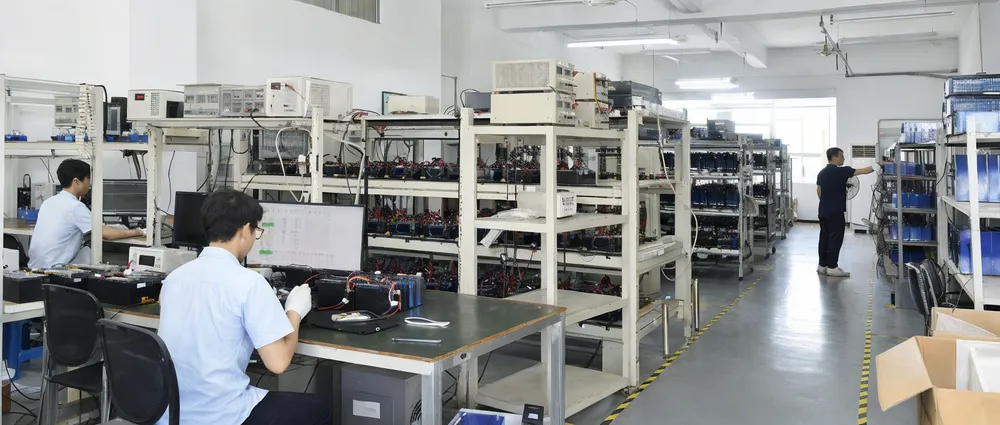
For a full picture of our manufacturing capabilities and quality system, see JXSOL manufacturing capabilities.
Request Inspection DocumentationMarket Segments Where Residential Battery Backup Can Carry Margin
Home battery backup is not a commodity product in most of the markets we export to. The margin opportunity is real, but it depends on which segment you're selling into and how the product is positioned in that channel.
Solar Installer Add-On Programs
Highest-margin entry pointA residential solar installer who already has a customer relationship and a roof-mounted system can add a battery backup package as a second-sale item — the customer is already sold on solar, the installation crew is already on-site, and the incremental labor cost is low.
Battery backup in this channel typically carries 30–50% higher margin than the solar panels themselves because the installer controls the specification and the customer has limited price comparison options.
Stocking two or three backup SKUs — essential-load, mid-range, and full-home — gives installers a proposal tool without requiring custom configuration on every job.
Regional Distributors in Outage-Prone Markets
Recurring demand driven by grid reliabilityMarkets in West Africa, Southeast Asia, and parts of Latin America have power cut patterns that make residential battery backup a near-essential product rather than a premium add-on.
Distributors in these markets benefit from standardized SKUs with predictable reorder cycles — a 5 kWh essential-load backup that sells through consistently is more valuable than a wide range that creates inventory fragmentation.
This segment has grown significantly for solar battery products in the last three years — worth building into your catalog planning if you're active in these regions.
Retail and Private-Label Solar Product Catalogs
Line extension alongside solar lightingA buyer who already stocks our solar street lights or flood lights can add a residential battery backup SKU under their own brand without adding a new factory relationship.
The OEM/ODM path covers enclosure branding, packaging, labeling, and manual localization — the same process we use for solar lighting private-label programs.
Housing Retrofit and Small Project Supply
Lower-volume, higher-specificationContractors supplying backup systems for residential renovation projects, off-grid cabin builds, or small housing developments.
These buyers need standardized backup kits with clear installation documentation and consistent batch quality — configuration confusion at the installation stage creates after-sales cost that erodes margin quickly.
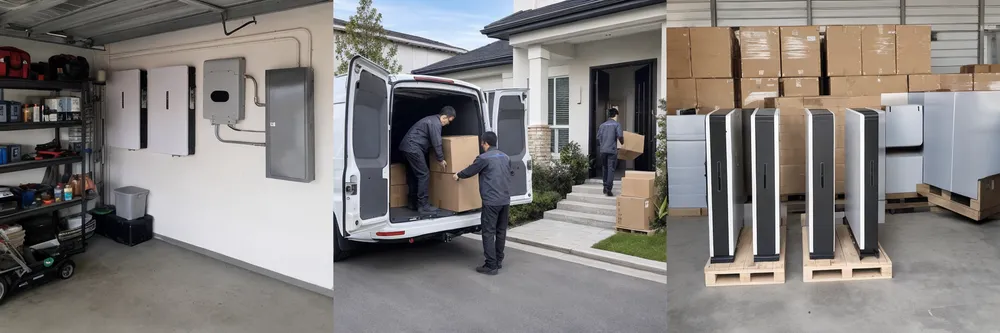
Custom Home Battery Backup Configurations Before Quotation
Most home battery backup orders involve some degree of configuration — capacity class, voltage platform, enclosure format, communication protocol, or branding. Understanding what can be customized and what requires engineering confirmation before quotation reduces back-and-forth and speeds up the RFQ process.
What Can Typically Be Configured
-
Capacity class
5 kWh, 10 kWh, 15 kWh, and 20 kWh are the standard tiers; intermediate capacities are available through cell count adjustment
-
Voltage platform
48V is standard for residential hybrid inverter compatibility; 24V configurations are available for smaller essential-load systems
-
Enclosure format
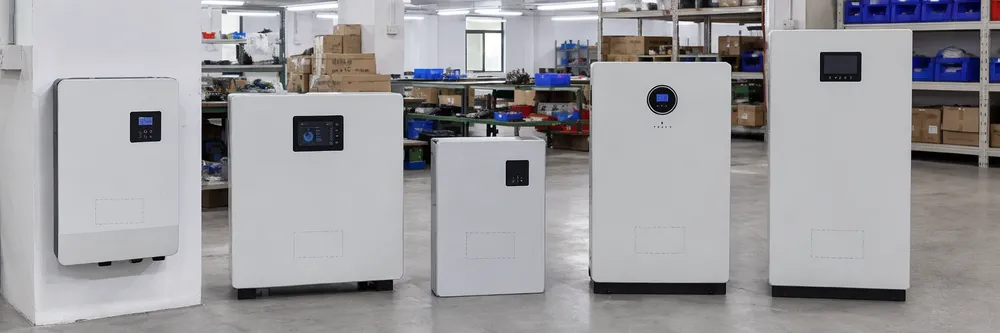
Wall-mounted or floor-standing cabinet; enclosure dimensions and mounting hardware can be adjusted for specific installation environments
-
Display and control interface
LCD status display, LED indicator panel, or app-connected monitoring depending on the target market's installer expectations
-
Connector layout
AC/DC connector positions, cable entry points, and terminal block configuration to match local wiring standards
-
Communication protocol
CAN or RS485 to match the inverter brand specified in your project; confirm the inverter model before this is locked
-
Branding and labeling
Logo, product name, model number, and regulatory label placement for private-label programs
-
Packaging
Retail-ready carton with product photography, or plain export carton for distributor stock; accessory pack contents and manual language
What Must Be Confirmed Before Quotation
-
Inverter brand and model number
Compatibility is model-specific, and we verify before committing to a configuration
-
Parallel expansion requirement
If the installation needs multiple units in parallel, the BMS and communication setup must be designed for it from the start
-
Local electrical code and certification requirements
Battery products face market-specific documentation requirements that affect the product configuration and documentation package
-
Target market and end-use environment
Outdoor or garage installations, high-temperature climates, and high-humidity environments affect enclosure and thermal management specifications
-
Sample quantity and timeline
OEM/ODM configurations require an engineering review before sample production; standard model samples can typically ship faster
Minimum Order Quantities
MOQ for standard catalog models starts at 100 units, consistent with our broader product line. OEM/ODM configurations with custom enclosures, branding, or communication protocol changes are subject to engineering review and minimum quantities that depend on the scope of customization.
Compliance, Documentation, and Export Packing for Battery Orders
Battery products carry more compliance complexity than most solar lighting products, and the documentation requirements vary significantly by destination market. Getting this right before the order ships is cheaper than resolving it at customs.
Confirmed JXSOL Certifications
Applicable to this product line
- ISO 9001:2015 — quality management system covering production, inspection, and documentation processes
- CE — applicable to products destined for European markets; covers electrical safety and electromagnetic compatibility requirements
- RoHS — restricted substance compliance for EU market entry and markets that mirror EU material requirements
- IP55/IP65 Ingress Protection — enclosure protection rating, tested on our own inspection equipment (IP rating depends on selected model and enclosure configuration)
- IEC 62124 — photovoltaic system standard applicable to solar-integrated configurations
Battery-Specific Documentation
Confirm by project before order placement
Battery products for residential installation typically require additional market-specific documentation beyond the certifications above. Common requirements depending on the destination:
- UN38.3 transport testing
- IEC 62619 safety standard compliance
- UL 9540 for North American markets
- Local grid-connection approval documentation
We do not claim these as already held for all models — they must be confirmed for the selected model and target market before order placement. We've had buyers discover a missing certification requirement after production. The fix is always more expensive than the confirmation call before the order. Ask us early.
Export Packing for Battery Orders
IATA and IMDG compliant transport packaging
Carton Construction
Reinforced double-wall corrugated construction with foam corner protection and internal cell-level cushioning. Lithium battery export packing follows IATA and IMDG requirements for transport classification.
Labeling & Traceability
Each carton carries batch labels with model number, serial number range, cell chemistry, and UN classification markings. Batch traceability codes on carton labels allow you to trace any field return back to the production batch and inspection records.
Container & Pallet Loading
Container loading is planned for 20GP and 40HQ efficiency. Pallet configurations are available for buyers who need palletized delivery to a warehouse or distribution center.
Accessory packs — cables, mounting hardware, installation guide, warranty card — are checked against a packing list before carton sealing.
Choose the Right Product in the Solar Battery & Portable Power Line
Home battery backup is one of several products in our Solar Battery & Portable Power cluster. The table below helps you identify which product fits your sourcing intent — the differences are meaningful for keyword targeting, buyer positioning, and inventory strategy.
| Product | Primary Use Case | Best Fit For |
|---|---|---|
| Home Battery Backup (this page) | Stationary residential backup power for outage coverage; installer-led programs | Solar installers, regional distributors in outage-prone markets, residential backup dealers |
| Home Energy Storage Battery | Daily solar self-consumption and energy shifting; broader residential storage intent | Solar self-use programs, daily cycling applications, buyers targeting solar ROI positioning |
| Wall Mounted Lithium Battery | Space-saving fixed installation; form-factor-led sourcing | Buyers whose customers prioritize compact wall installation over capacity flexibility |
| Stackable Home Battery | Modular capacity expansion; higher-capacity residential programs | Buyers building scalable backup programs where customers may expand capacity over time |
| Portable Power Station | Mobile AC/DC power; outdoor, emergency, and retail channels | Retail distribution, outdoor recreation, emergency preparedness product lines |
| Solar Generator | Portable power station bundled with solar charging panel | Buyers who want a complete portable solar power kit for retail or project supply |
| Portable Solar Battery | Compact rechargeable battery for smaller portable programs | Buyers targeting entry-level portable power or compact emergency backup retail |
Home Battery Backup (this page)
Use case: Stationary residential backup power for outage coverage; installer-led programs
Best fit: Solar installers, regional distributors in outage-prone markets, residential backup dealers
Use case: Daily solar self-consumption and energy shifting; broader residential storage intent
Best fit: Solar self-use programs, daily cycling applications, buyers targeting solar ROI positioning
Use case: Space-saving fixed installation; form-factor-led sourcing
Best fit: Buyers whose customers prioritize compact wall installation over capacity flexibility
Use case: Modular capacity expansion; higher-capacity residential programs
Best fit: Buyers building scalable backup programs where customers may expand capacity over time
Use case: Mobile AC/DC power; outdoor, emergency, and retail channels
Best fit: Retail distribution, outdoor recreation, emergency preparedness product lines
Use case: Portable power station bundled with solar charging panel
Best fit: Buyers who want a complete portable solar power kit for retail or project supply
Use case: Compact rechargeable battery for smaller portable programs
Best fit: Buyers targeting entry-level portable power or compact emergency backup retail
If you're not certain which product fits your program, send us your target market, end-use scenario, and order volume — we'll recommend the right configuration and connect you with the relevant product page.
FAQ for Buyers Comparing Home Battery Backup Supply
What capacity should a home battery backup cover for essential loads?
Plan around the actual load list, not a round number. Essential loads — refrigerator, lighting, phone charging, router — typically draw 300–600 Wh per day in a standard household. A 5 kWh usable capacity battery covers 8–16 hours of essential-load runtime at that consumption rate, which handles most single-day outage scenarios.
If your market has multi-day outage patterns or the customer wants to include a small air conditioning unit, move to 10 kWh. The sizing guide at Home Energy Storage Battery walks through the calculation in detail.
For sourcing purposes, stocking a 5 kWh and a 10 kWh SKU covers the majority of residential backup program inquiries without fragmenting your inventory.
Can a home battery backup work with solar panels?
Yes, when paired with a compatible hybrid inverter. The battery itself stores DC energy — the solar panels charge it through the inverter's charge controller, and the inverter manages the charge/discharge logic.
The key compatibility question is not solar panel wattage but inverter model: the battery's communication protocol (CAN or RS485) must match the inverter's battery communication port.
A solar battery backup for home that doesn't communicate with the inverter will still function as a backup battery, but you lose the solar self-use optimization and state-of-charge monitoring that makes the system useful for daily solar cycling. Confirm the inverter model before specifying the battery communication protocol.
What should be checked before matching a battery backup with an inverter?
Three things: communication protocol, voltage platform, and maximum charge/discharge current.
The inverter must support the battery's communication protocol (CAN or RS485) for managed charging.
The battery's nominal voltage (typically 48V for residential systems) must fall within the inverter's battery input range.
The inverter's maximum charge current must not exceed the battery's BMS charge current limit — overshooting this trips the BMS protection and causes the system to shut down under load.
Provide us with the inverter brand, model number, and firmware version when requesting a quote, and we'll verify compatibility before confirming the configuration.
Is LiFePO4 better for residential battery backup programs?
For stationary residential backup, LiFePO4 is the standard choice for good commercial reasons.
Lower fire risk in residential installations — relevant for liability exposure in markets where home battery fires have generated regulatory attention.
3,000–6,000 cycles at 80% DoD translates to 8–16 years of daily cycling before capacity degrades to 80%, which supports a 5-year warranty commitment without significant warranty claim exposure.
NMC Comparison
NMC chemistry offers higher energy density in a smaller enclosure, which matters for portable products but is less critical for a wall-mounted or floor-standing residential unit where space is not the primary constraint.
For a detailed chemistry comparison, see LiFePO4 Battery for Solar Storage.
What documents should importers confirm before ordering home battery backup products?
The minimum documentation set for most markets includes: CE Declaration of Conformity (EU and CE-required markets), RoHS test report, UN38.3 transport test report (required for air and sea freight of lithium batteries), and a product safety data sheet. North American markets typically require UL 9540 or equivalent listing for residential battery installations. Some markets require IEC 62619 compliance documentation for stationary battery safety.
The specific requirements depend on your destination market and the installation channel — residential grid-connected installations face stricter documentation requirements than off-grid or backup-only configurations.
Action step: Confirm your market's requirements before order placement; we'll advise on which documents are available for the selected model and which need to be arranged by project.
What MOQ and sample process should buyers expect from JXSOL?
Standard catalog models start at 100 units MOQ. For buyers new to this product category, we recommend starting with 2–5 sample units to verify inverter compatibility, enclosure fit, and documentation completeness before committing to a stocking order.
OEM/ODM configurations — custom enclosures, private-label branding, or non-standard communication protocols — require an engineering review before sample production; the review confirms the configuration is achievable and locks the spec before component procurement.
Typical new-buyer path:
We'll advise on the right starting point for your program.
RFQ Checklist for Home Battery Backup Orders
The more specific your inquiry, the faster we can recommend a configuration and return a quote. Generic inquiries — "I need a home battery backup, what's your price?" — require multiple rounds of clarification before we can quote accurately. The checklist below covers what we need to move directly to a configuration recommendation.
Send Us the Following
Target Market
Country or region, and whether the installation channel is grid-connected residential, off-grid, or hybrid
Order Volume
Initial order quantity and expected annual reorder volume
Capacity Target
Required usable energy (kWh) or the load list and target runtime if you need sizing help
Voltage Platform
48V standard or 24V for smaller configurations
Inverter Model
Brand and model number of the inverter the battery will be paired with
Solar Input
Whether solar charging is required, and if so, the panel capacity (kW)
Installation Format
Wall-mounted or floor-standing; indoor, garage, or outdoor sheltered
Certification Requirements
Which certifications or documentation your market requires (CE, UL, UN38.3, IEC 62619, others)
Branding Requirements
Standard JXSOL labeling, private-label branding, or OEM/ODM with custom enclosure
Packaging Requirements
Export carton, retail-ready packaging, or palletized delivery
Sample Timeline
Whether you need samples before the main order, and your target sample delivery date
Send your inquiry to [email protected] or reach us directly on WhatsApp at +8613627818806.
We respond to qualified inquiries within 24 hours with a configuration recommendation and indicative pricing.