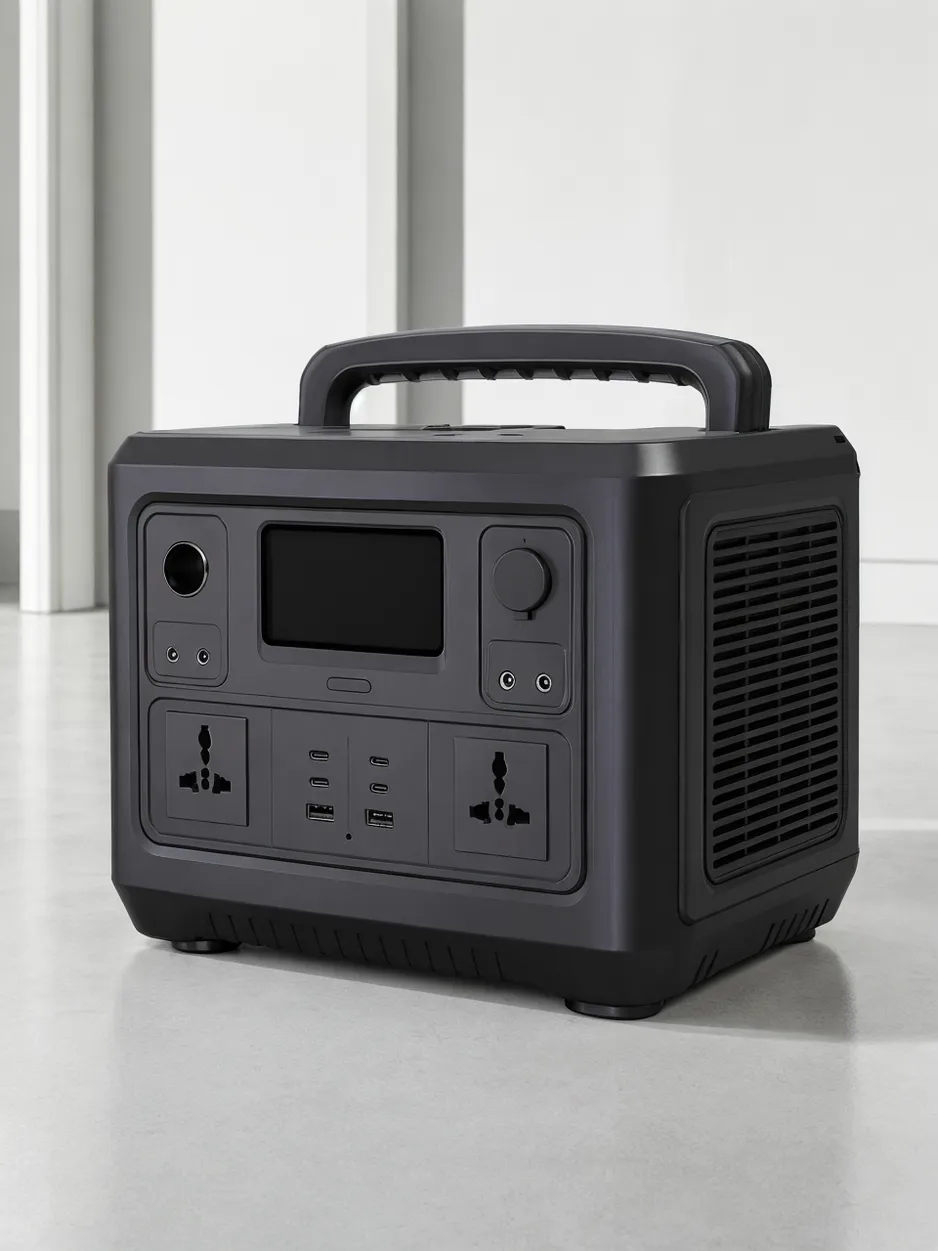
The Sourcing Problem Behind Home Energy Storage Battery Specifications
Most home energy storage battery specifications look identical when you compare them side by side. Three suppliers quote you 10 kWh nominal capacity, 48V systems, 6,000 cycle life. The data sheets use the same layout, the same terminology, and land at nearly the same price per kWh. You pick the supplier with the fastest lead time or the one your logistics partner already works with, and six months later you're fielding warranty claims because the battery delivers 20% less capacity than the spec sheet promised or dies after 3,000 cycles instead of 6,000.
The differentiation isn't in the headline numbers. It's in what most spec sheets don't show on the first page — the test conditions behind those numbers, the assumptions that turn a laboratory result into a field performance claim, and the validation protocols that separate a conservative spec from an optimistic one. When a supplier states 6,000 cycles, were those cycles tested at 80% depth of discharge (DoD) or 50%? When they list operating temperature as -20°C to 50°C, does that mean the battery survives those temperatures or performs at rated capacity? When efficiency is stated as 95%, does that include BMS standby losses or just cell-level round-trip?

We've tested batteries from 40+ suppliers over the last five years for our solar product lines (solar-powered lighting systems with integrated battery backup, portable solar stations for off-grid applications). The suppliers who publish complete test conditions — DoD for cycle testing, temperature range for capacity claims, BMS inclusion in efficiency specs — rarely have the highest headline numbers. But they have the lowest field failure rates, and that's what matters when your margin depends on warranty costs staying below 2%.
Comparing home energy storage battery specifications correctly is risk management. You're not just buying capacity and voltage; you're buying a supplier's validation rigor, their BMS quality, and their willingness to state what happens when real-world conditions diverge from the 25°C laboratory baseline. The spec sheet gaps cost you more than the sticker price difference ever will.
Battery Capacity and Usable Depth of Discharge — What the kWh Number Actually Delivers
A 10 kWh battery isn't always 10 kWh when you put it in the field. Home energy storage battery capacity has two numbers that matter for sourcing: nominal capacity (the total energy the cells can store) and usable capacity (the energy you can actually cycle without damaging the battery). A 10 kWh battery rated for 90% usable DoD delivers 9 kWh per cycle. One rated for 80% usable DoD delivers 8 kWh. That 1 kWh difference means 11% more cells for the same delivered capacity, and those cells cost money — so suppliers with higher usable DoD at the same cycle life claim have better cell economics, but only if the cycle life was actually tested at that DoD.
This is where most spec sheets break down. You'll see "6,000 cycles" stated prominently, sometimes with an asterisk, sometimes without. The footnote — if there is one — might say "tested at 50% DoD" or "under laboratory conditions." Fifty percent DoD means the battery was cycled between 50% full and 100% full, never dropping below half charge. That's gentler on the cells than 80% DoD (cycling from 20% to 100%), and it produces a higher cycle count in testing. But your buyers won't use the battery that way. They'll cycle it to 80% or deeper because that's what makes the system economics work for daily solar self-consumption or backup applications. When you test at 50% DoD and deploy at 80% DoD, real-world cycle life can drop 30-40% from the spec sheet number.
The sourcing implication: higher usable DoD at the same stated cycle life is only valuable if the supplier tested at that DoD. If one supplier offers 90% usable DoD with 6,000 cycles and another offers 80% usable DoD with 6,000 cycles, and both tested at 80% DoD, the first supplier has genuinely better cell chemistry or BMS management. If the first supplier tested at 50% DoD and the second at 80%, you're comparing apples to marketing. Ask every supplier the same validation question: "At what DoD were your cycle life numbers tested, and can you provide the test report?" Suppliers who can't answer that question either haven't tested thoroughly (procurement risk) or won't share the data (transparency risk). Either way, you're buying blind.
We rate our battery packs at 80% usable DoD because that's how they'll be used in solar applications — daily cycling to maximize solar harvest or deep discharge during extended grid outages. We test at 80% DoD before we publish the cycle count, so when we state 4,500 cycles for a LiFePO4 pack, that's the number you'll see in the field under normal conditions (temperature within 15-35°C, charge/discharge rates within spec). It's not the highest number you'll find on a spec sheet, but it's the one that matches your warranty exposure.
Voltage Architecture and System Compatibility — Why 48V Isn't Always 48V
Residential battery storage voltage looks simple on paper: you need a 48V battery, you buy a 48V battery, it works with your 48V inverter. In practice, nominal voltage is a classification label, not a compatibility guarantee. A 48V lithium battery operates across a voltage range during normal charge and discharge — typically 42V at the low end (discharged state) to 58V at the high end (fully charged). Your inverter has its own voltage acceptance window: it might charge the battery up to 57V and stop discharging at 44V. If the battery's charge voltage maximum is 58V and the inverter's charge voltage setpoint is 56V, the battery never reaches full charge. If the battery's discharge cutoff is 42V and the inverter's low-voltage disconnect is 46V, you lose 15-20% of the battery's usable capacity because the inverter stops drawing power before the battery is empty.
This matters when you're sourcing batteries and inverters from different suppliers — voltage compatibility isn't automatic just because both components are labeled 48V. You need the charge voltage range (the voltage window the battery accepts during charging, usually controlled by the BMS), the discharge cutoff voltage (the voltage at which the BMS stops allowing discharge to protect the cells), and ideally the voltage curve across the full DoD range so you can verify that the inverter's operating window matches the battery's performance window.
Voltage matching gets more complicated when you're building larger systems by connecting multiple batteries in parallel. Batteries in parallel need tight voltage tolerances to avoid current imbalance — if one battery is at 52V and another is at 50V when they're connected, current flows from the higher-voltage battery to the lower-voltage one until they equalize, and that equalization current can exceed safe charge rates if the voltage difference is large. Good BMS designs include active balancing to manage this, but the BMS can only balance so much. If you're paralleling batteries from different production batches or different suppliers, voltage tolerance becomes a field reliability issue. We've seen installations where three batteries in parallel worked fine for six months, then one battery's BMS failed because it was constantly fighting voltage drift from the other two units.
What to ask suppliers when you're evaluating residential battery storage voltage specs: "What's your charge voltage acceptance range?" "What's your discharge cutoff voltage?" "What's your voltage tolerance for parallel configurations?" and "Can I see the voltage curve across 0-100% state of charge?" If a supplier lists only nominal voltage without the operating range, you're guessing at compatibility. If they can't provide voltage tolerance for parallel operation, they either haven't tested it or they're selling you a product designed for single-unit installations only.
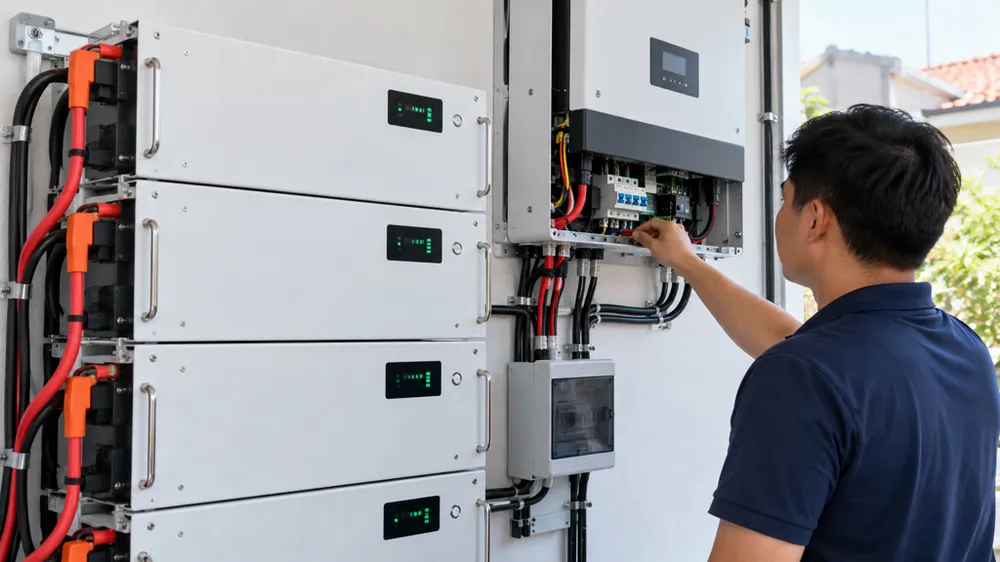
Cycle Life Rating and Chemistry — LiFePO4 vs NMC for Different Market Segments
LiFePO4 cycle life rating claims run from 4,000 to 6,000 cycles at 80% DoD for quality cells; NMC (nickel manganese cobalt) chemistry typically delivers 2,000 to 3,000 cycles at the same DoD. That's the headline difference, but the sourcing decision isn't just about cycle count — it's about which chemistry matches your target market's usage pattern, climate conditions, and cost tolerance. LiFePO4 costs 20-30% more per kWh at purchase but delivers twice the cycle life, so cost per cycle is lower. NMC is cheaper upfront, lighter per kWh (higher energy density), but degrades faster under high temperatures and deep cycling. If you're supplying distributors in hot climates or buyers who cycle daily for solar self-consumption, LiFePO4 is the risk-reduction choice. If you're supplying backup-only systems in temperate markets where the battery cycles 50 times per year, NMC's lower upfront cost makes more sense because you'll never reach the cycle life limit before the warranty period ends anyway.
The chemistry difference shows up in four ways that affect your sourcing decision. First, voltage curve: LiFePO4 has a flatter discharge voltage (stays near nominal voltage for 80% of the discharge cycle), which means more consistent power delivery and easier BMS design. NMC voltage drops steadily across the discharge cycle, so the inverter has to handle a wider voltage swing. Second, thermal stability: LiFePO4 has a higher thermal runaway temperature (safer under abuse conditions, better performance at high ambient temperature), which matters for outdoor installations or markets with weak electrical infrastructure where voltage spikes and improper charging are common. Third, calendar life: LiFePO4 degrades more slowly when sitting at partial charge (better for backup applications that cycle infrequently), while NMC degrades faster at high states of charge (storage at 100% for extended periods shortens life). Fourth, temperature performance: LiFePO4 works up to 50-60°C ambient without significant capacity loss; NMC starts derating above 35-40°C, and cycle life drops sharply above 45°C.
Here's the procurement framework: if your target market is off-grid daily cycling (solar self-consumption, rural electrification, telecom backup in hot climates), LiFePO4 is the lower-risk choice despite higher sticker price because field failure rates are 60-70% lower in our experience across Middle East and Africa installations. If your market is grid-tied backup for residential or light commercial (cycles 20-50 times per year, moderate climate), NMC's lower cost per kWh and smaller footprint (higher energy density) make it competitive, and you'll hit warranty end-of-life before you hit cycle life anyway. If your market is weight-sensitive (mobile applications, rooftop installations with load limits), NMC's 30% better energy density can be the deciding factor.
The cycle life testing gap is the same across both chemistries: many suppliers test at 25°C and 50% DoD, then extrapolate to 80% DoD and higher temperatures using theoretical models. Real-world performance in a 45°C outdoor cabinet at 80% DoD can be 40% lower than the spec sheet for both chemistries, but the gap is wider for NMC because it's more temperature-sensitive. When you're comparing suppliers, ask: "What DoD and temperature were your cycle life numbers tested at?" and "Do you have field data from installations that match my target application?" Suppliers with field validation data — not just lab testing — are rare, and that's a quality signal worth paying for.
We use LiFePO4 as standard chemistry for solar-powered products because outdoor installations in our export markets (Middle East, Africa, Southeast Asia) regularly see 40-50°C ambient, and the daily cycling pattern (solar charge during day, discharge at night) puts 300-350 cycles per year on the battery. Field failure rate for our LiFePO4 packs is under 1.5% after 18 months in service across those regions. We tested NMC alternatives in 2019-2020 for cost reduction, and field failure rates in the same applications were 4-6% — the upfront savings got consumed by warranty replacements and customer complaints. Chemistry choice isn't about the best cell; it's about which cell matches your application's stress profile.
Round-Trip Efficiency and BMS Losses — The Spec That Affects Operating Cost
Round-trip efficiency measures how much energy you lose when you store and retrieve power from the battery: (energy out) ÷ (energy in) × 100%. A 95% efficient battery loses 5% to heat during charging, internal resistance during discharging, and BMS overhead. A 90% efficient battery loses 10%. That 5 percentage point difference sounds small, but it compounds every cycle. If you're cycling the battery daily for solar self-consumption, a 5% efficiency gap means you need 5% more solar capacity to deliver the same stored energy, or you lose 5% of your arbitrage value if you're buying cheap grid power at night and using it during peak hours. For backup-only systems that cycle 30 times per year, efficiency matters less — the annual energy loss is tiny. For daily-cycling applications, efficiency directly affects ROI.
The spec sheet problem: stated efficiency often excludes BMS standby power. The battery cells themselves might achieve 96% round-trip efficiency, but the BMS draws 2-10W continuously for voltage monitoring, cell balancing, and communication. Over 24 hours, 5W standby power is 120 Wh per day. If you're cycling a 10 kWh battery daily, that's 1.2% of capacity lost to BMS overhead before you account for charge/discharge losses. Suppliers who state "95% efficiency" without specifying whether BMS losses are included are giving you cell-level efficiency, not system-level efficiency. System efficiency (what you actually get) is 2-4 percentage points lower than cell efficiency depending on BMS design quality.
The second efficiency gap: efficiency varies with power level. Most spec sheets state efficiency at rated power (the maximum continuous charge or discharge rate the battery supports). Efficiency drops at low power because BMS overhead becomes a larger percentage of total power. If you're charging a 10 kWh battery at 5 kW (rated power), efficiency might be 95%. If you're charging at 500W (10% of rated power, common during morning/evening shoulder hours in solar applications), efficiency might drop to 88-90% because the BMS still draws the same 5W but it's now 1% of total power instead of 0.1%. For applications where the battery frequently operates at partial power (solar systems with variable charge rates, backup systems with intermittent loads), low-power efficiency matters more than rated-power efficiency.
What to ask suppliers when evaluating solar home battery storage parameters for efficiency: "Does your stated efficiency include BMS standby losses?" "What's the BMS standby power draw?" and "What's efficiency at 25%, 50%, and 100% rated power?" If a supplier can only provide one efficiency number with no context, assume it's best-case (rated power, BMS excluded). Factor in 3-5 percentage points of real-world degradation when you're building system economics. If you're sourcing for daily-cycling applications (solar self-consumption, demand charge reduction, arbitrage), efficiency差异 between suppliers can shift break-even by 6-12 months over a 10-year system life.
For our battery packs in solar lighting products, we publish system-level efficiency (BMS included) at 50% and 100% rated power because that's the realistic operating range — solar charge rates vary with sun angle and cloud cover, and discharge rates vary with connected load. Our LiFePO4 packs run 92-94% system efficiency at 50-100% power, which isn't the highest number you'll find, but it's the number that matches field measurements. Stating cell-level efficiency or rated-power-only efficiency makes the spec sheet look better, but it sets the wrong expectation when your buyer builds their system economics and then discovers the real-world performance is 5% lower than projected.
Operating Temperature Range and Capacity Derating — The Spec No One Reads Until It's Too Late
Home battery backup specs usually state an operating temperature range: -20°C to 50°C is common for quality lithium systems, -10°C to 45°C for lower-cost ones. That range tells you the battery will survive those temperatures, not that it will perform at rated capacity across that range. Actual capacity derated outside a narrower optimal window — typically 15-35°C for most lithium chemistries. A 10 kWh battery at 25°C might deliver 8.5 kWh at -10°C or 9 kWh at 45°C. If the supplier doesn't publish a capacity derating curve, you're guessing at real-world performance in climates that spend significant time outside the 20-30°C sweet spot (which is most climates, if you're installing outdoors or in unconditioned spaces).
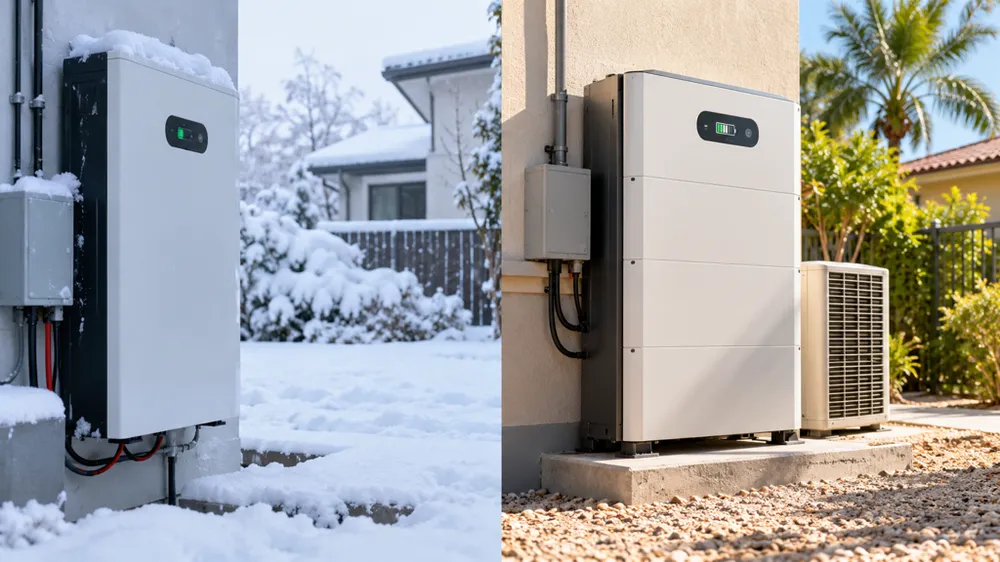
Temperature affects three battery performance parameters. First, capacity: chemical reactions inside the cells slow down at low temperatures and speed up at high temperatures, but high-temperature acceleration also increases side reactions that degrade the cells, so practical capacity peaks around 25-30°C and drops on both sides. Second, charge acceptance: cold batteries resist charging (higher internal resistance), so charge time increases or the battery stops accepting charge before reaching 100% if the charger can't increase voltage to compensate. Third, cycle life: every 10°C above 25°C roughly halves cycle life for most lithium chemistries because elevated temperature accelerates electrolyte decomposition and SEI layer growth. A battery rated for 5,000 cycles at 25°C might deliver 2,500-3,000 cycles if it spends most of its life at 40°C.
This is the hidden sourcing risk in hot-climate markets. You buy batteries rated for 5,000 cycles and 50°C operating temperature, install them in outdoor cabinets in the Middle East or North Africa where summer ambient is 45-50°C and cabinet internal temperature hits 55-60°C, and two years later you're seeing capacity fade and warranty claims because the batteries aged twice as fast as your economic model assumed. The supplier's spec sheet was technically correct — the battery survived 50°C and delivered 5,000 cycles — but those 5,000 cycles were tested at 25°C, and the capacity derating at 50°C wasn't documented, so your real-world performance was 40-50% lower than the spec suggested.
What buyers should validate before ordering for hot-climate applications: "What's the capacity derating curve across your stated operating temperature range?" "How does cycle life change at 40°C vs 25°C?" and "What's the maximum recommended continuous operating temperature for full warranty coverage?" If a supplier states a wide operating range but won't provide derating data, they either haven't tested it (you're the field test) or the derating is bad enough that publishing it would hurt sales. Either way, you're taking risk that should be the supplier's problem, not yours.
We publish temperature derating curves for all our battery specifications because outdoor solar installations don't have the luxury of climate control. Our LiFePO4 packs are rated to 50°C operating (survives without damage), 40°C maximum for full warranty coverage (cycle life and capacity meet published specs), and we provide a derating table that shows capacity and expected cycle life at 5°C intervals from -10°C to 50°C. At 45°C continuous operation, capacity drops to ~92% of nominal and expected cycle life is ~70% of the 25°C baseline. Those aren't the numbers you want to see on a spec sheet if you're trying to market the highest capacity and longest life, but they're the numbers your buyer needs to size the system correctly and set realistic warranty reserves. We'd rather lose a sale to a competitor with optimistic specs than deal with field failures because the buyer under-sized based on incomplete data.
Warranty Terms as Spec Validation — What the Supplier Actually Believes About Their Numbers
A battery's warranty structure tells you more about spec credibility than the specs themselves. When a supplier offers 10 years or 6,000 cycles (whichever comes first) with 80% retained capacity, they're signaling confidence that the battery will deliver at least 6,000 cycles at the application DoD before capacity drops below 80%. When a supplier offers 10 years or unlimited cycles with 70% retained capacity, they're hedging — either they expect fewer than 6,000 cycles before hitting 70% capacity (so they don't state a cycle count), or they expect significant capacity fade (so they set the threshold at 70% instead of 80%). Both warranties might sound similar at first read, but the second one transfers more performance risk to you.
Common warranty structures and what they signal: "10 years / 6,000 cycles / 80% capacity" — supplier is confident in cycle life and capacity retention, low risk. "10 years / 4,000 cycles / 70% capacity" — supplier is conservative or the cells are lower quality, moderate risk. "10 years / unlimited cycles / 70% capacity" — supplier expects you won't cycle enough to matter or they're avoiding a cycle count commitment, moderate to high risk depending on your application. "5 years / 3,000 cycles / 60% capacity" — weak warranty relative to typical lithium performance, high risk unless there's a compelling price advantage.
The warranty fine print is where spec sheet optimism meets reality. Look for these common loopholes: "Warranty void if operating temperature exceeds 45°C" — problem if your climate regularly hits that temperature; the spec sheet might claim 50°C operating range but the warranty doesn't cover it. "Capacity retention measured at 25°C" — problem if you're operating at 40°C; the battery might meet 80% capacity at 25°C but only deliver 70% at operating temperature. "Warranty void if DoD exceeds 80%" — problem if your application needs deeper discharge; the supplier's cycle life was probably tested at 50-80% DoD and they're not confident above that. "Cycle count based on 100% DoD equivalent" — complex calculation that lets the supplier discount partial cycles; your 6,000-cycle warranty might only cover 4,000 actual charge-discharge events if you cycle at 80% DoD.
What to ask suppliers when evaluating LiFePO4 cycle life rating against warranty: "What DoD and temperature conditions void the warranty?" "How is retained capacity measured — at what temperature and load?" "Do you have field return rate data for installations similar to my target market?" and "What's your actual warranty claim rate for the first three years?" Suppliers who can answer the last question with data (not estimates) have enough deployment volume to know their real-world failure modes, and that's valuable information. Suppliers who won't share field data might be protecting trade secrets, or they might not have enough field history to know whether their specs hold up.
Our battery warranty is 3 years / 4,500 cycles / 75% capacity for LiFePO4 packs, tested and warranted at 80% DoD, valid up to 40°C continuous operating temperature. It's not the longest warranty you'll find — some suppliers offer 5-10 years — but our warranty terms match our actual field performance data (1.5% return rate through 18 months, primary failure mode is BMS communication errors not cell degradation), and we don't have temperature or DoD loopholes that void coverage under normal use conditions. A shorter warranty with tight terms and low field return rates is less risky than a longer warranty with exclusions that apply to your operating conditions.
What to Ask When a Spec Sheet Is Incomplete or Non-Standard
Most battery spec sheets land somewhere between "complete technical documentation" and "marketing collateral with numbers." If you're comparing three suppliers and only one publishes test conditions, temperature derating, and BMS inclusion for every claim, that's a quality signal even if their headline specs are slightly lower. If all three suppliers give you single-number capacity, voltage, and cycle life with no context, you're flying blind — your sourcing decision comes down to price and delivery time because you don't have enough data to assess performance risk.
Baseline validation questions for any supplier: "What DoD were your cycle life numbers tested at?" "What temperature were your capacity and efficiency specs measured at?" "Does your efficiency spec include BMS standby losses?" "What's your voltage range during charge and discharge, not just nominal voltage?" "Can you provide a capacity derating curve across your operating temperature range?" and "What are the warranty exclusions related to operating conditions?" These aren't exotic questions — they're the minimum context you need to compare specs honestly.
If a supplier can't answer those questions, it doesn't automatically mean the product is bad. It might mean they're reselling someone else's battery without independent validation (you're trusting the cell manufacturer's data, not the supplier's testing). It might mean they tested the battery but didn't document test conditions rigorously (you're trusting their engineering process is good even though their documentation isn't). Or it might mean the product is optimistically spec'd and they don't want to provide data that contradicts the headline numbers (procurement risk). You can't tell which scenario you're in without asking, and if the answer is vague or defensive, that's information too.
Non-standard test conditions to watch for: "Cycle life tested at 50% DoD" — should be 80% minimum for applications that will use the battery's full usable capacity. "Efficiency measured at 100% rated power only" — should include 50% and 25% power for variable-load applications. "Capacity specified at 25°C only" — should include derating data for the full operating range. "Voltage specified as nominal only" — should include charge/discharge range for compatibility validation. If you're sourcing for an application with specific stress factors (hot climate, daily deep cycling, parallel configurations), tell the supplier your operating conditions and ask if their specs were validated under similar conditions. Suppliers with field experience in your target market can usually provide relevant data or reference installations; suppliers without that experience are guessing, and you're the field test.
When we provide battery specs to distributors or project buyers, we include test conditions in the same table as the performance numbers — not in footnotes, not in separate documentation. Cycle life is stated with DoD, temperature is stated with derating, efficiency is stated with BMS inclusion and power level. That makes the spec sheet longer and the numbers less impressive than a competitor who just lists "6,000 cycles" with no context, but it also means fewer field surprises and fewer warranty arguments about whether the battery met spec when operating conditions were disclosed upfront. We'd rather have buyers select our battery knowing exactly what they're getting than win a sale based on incomplete comparison.
How JXSOL Validates Battery Specs Before Rating — The Testing That Should Be Standard
Our in-house battery testing lab exists because we got tired of field failures that traced back to spec sheet numbers that didn't hold up under real-world conditions. We test every battery pack design — not just prototype validation but batch testing for every production run — at application-realistic conditions before we rate it. The testing protocol covers five areas that affect field reliability: capacity measurement at 15°C, 25°C, and 40°C to validate temperature derating; cycle life testing at 80% DoD to confirm the cells and BMS can deliver the stated cycle count under deep discharge; cell-to-cell voltage matching to verify that parallel configurations won't have imbalance problems; BMS balancing performance under parallel operation (critical for systems using multiple batteries); and charge/discharge efficiency measurement at 50% and 100% rated power with BMS overhead included.
The testing takes longer and costs more than accepting the cell manufacturer's data sheet, but it catches the gaps between cell specs and pack-level performance. Example: we tested a batch of LiFePO4 cells in 2023 that were spec'd for 5,000 cycles at 80% DoD by the cell manufacturer. Our pack-level testing (cells assembled into 48V pack with BMS) showed 4,200 cycles before hitting 80% capacity retention. The gap was BMS design — the voltage balancing algorithm was allowing cell drift that accelerated capacity fade. We redesigned the BMS logic, retested, and got back to 4,800 cycles (still under the cell spec, but close enough that we could rate the pack at 4,500 cycles conservatively). If we'd just published the cell manufacturer's 5,000-cycle number, we'd have had warranty claims at year three when packs started hitting 80% capacity at 4,000 cycles instead of 5,000.
Battery pack matching is the other validation step that separates stated specs from delivered performance. When you parallel multiple cells or multiple packs, voltage and capacity matching between units determines whether the system balances current properly or whether some cells work harder than others and age faster. We match cells within ±2% voltage and ±3% capacity before assembling packs, then test the assembled pack under parallel operation to confirm the BMS can maintain balance. Loose matching (±5% or worse) saves cost during assembly but creates field reliability problems — the weakest cell in a parallel string limits the whole system's performance, and if the mismatch is large enough, the BMS can't compensate. We've seen installations where three poorly-matched batteries in parallel delivered 85% of expected capacity because one battery was always lagging and the system couldn't fully charge or discharge without hitting that battery's limits.
Our spec sheet philosophy: state usable capacity at application DoD (80%), include BMS losses in efficiency, publish temperature derating, and define warranty at realistic operating conditions (not just best-case). That means our specs are 10-15% lower than some competitors on paper, but field performance matches or exceeds the spec because we're conservative in how we rate. A distributor comparing our 4,500-cycle battery to a competitor's 6,000-cycle battery might choose the competitor based on specs, but if that competitor tested at 50% DoD and we tested at 80% DoD, the field performance gap will be narrower than the spec gap — possibly reversed.
For buyers evaluating home energy storage battery specifications across suppliers, our testing approach is the baseline you should expect, not a premium feature. A supplier who validates pack-level performance under realistic conditions, publishes complete test context, and rates conservatively will have lower warranty claims and fewer field surprises than a supplier who passes through cell manufacturer specs and hopes for the best. We built the testing lab because the cost of doing it right is lower than the cost of doing it wrong and then fixing it in the field.