Stackable Home Battery vs Fixed Capacity — The Deployment Economics Decision
When you're quoting home battery projects, the stackable home battery vs fixed capacity decision isn't about features — it's about capital deployment timing and reorder predictability. Distributors and installers face this split across every residential solar + storage project: do you sell a right-sized fixed system today, or do you sell a conservative base with an expansion path for later?
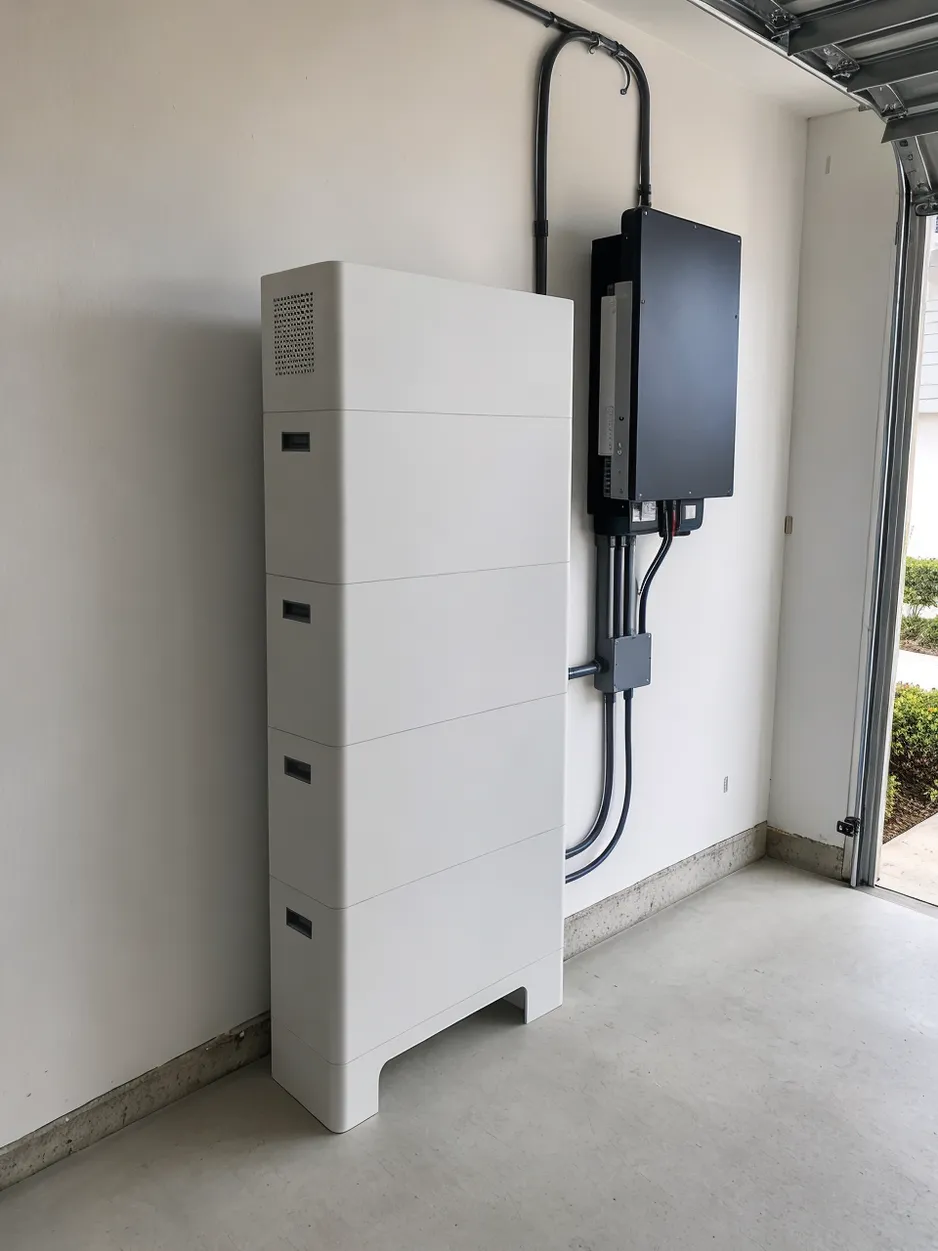
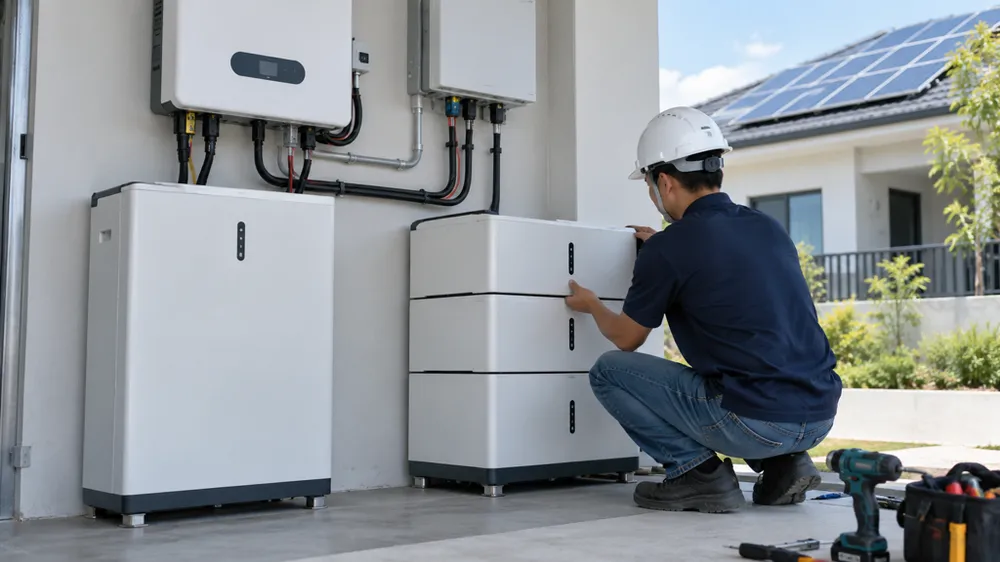
Stackable architecture lets you defer capacity commitment. Your buyer puts 10 kWh in the ground now, adds another 5 kWh module when they install an EV charger eighteen months later. That phased approach matches how project funding actually works — grant disbursements come in stages, homeowner budgets stretch across tax years, multi-building sites get commissioned one structure at a time. A modular home battery system turns capital availability into a deployment variable instead of a constraint.
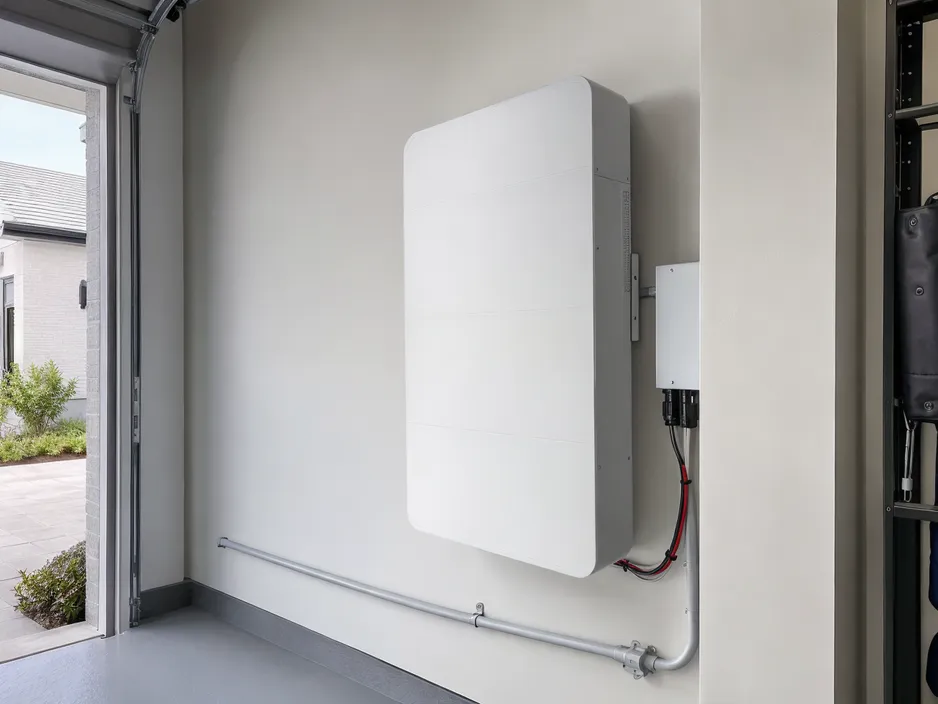
Fixed capacity simplifies everything else. One SKU per capacity tier, one installation visit, one warranty period, one landed cost calculation. Your inventory turns faster because you're not carrying base units and expansion units at different velocities. Installers quote it, order it, install it, and move to the next job without planning for a phase-two service call.
The commercial logic sits in your margin structure and reorder pattern. Stackable creates two revenue opportunities from one customer relationship — the base system sale and the expansion upsell — but it also doubles your SKU count and introduces field commissioning risk when expansion units integrate with base systems ordered months apart. Fixed capacity concentrates all the revenue in one transaction and eliminates the expansion logistics, but it forces your buyer to over-spec capacity at installation or accept an undersized system with no future path.
We manufacture both architectures at JXSOL, so we see how distributors split their catalogs. The buyers who run phased deployment programs — builders offering "starter + expansion" packages, retrofit specialists, multi-site commercial contractors — order stackable formats and carry the SKU complexity because their end customers can't commit full capital upfront. The buyers who serve single-site residential projects with defined load profiles order fixed capacity and use the inventory efficiency to compete on landed cost. Neither architecture is wrong; they serve different cash flow patterns in your downstream market.
How Stackable and Fixed Architectures Differ in Production and Sourcing
Manufacturing a stackable lithium battery for home use requires tighter cell-matching tolerances than fixed-capacity production. When your buyer orders expansion modules six months after the base system, those new cells must integrate with the original pack — voltage, impedance, and capacity need to match within the BMS's balancing range, or the system limits charge and discharge rates to protect the weakest module. That means we maintain batch records and test every expansion unit against the specification baseline we shipped for the corresponding base unit.
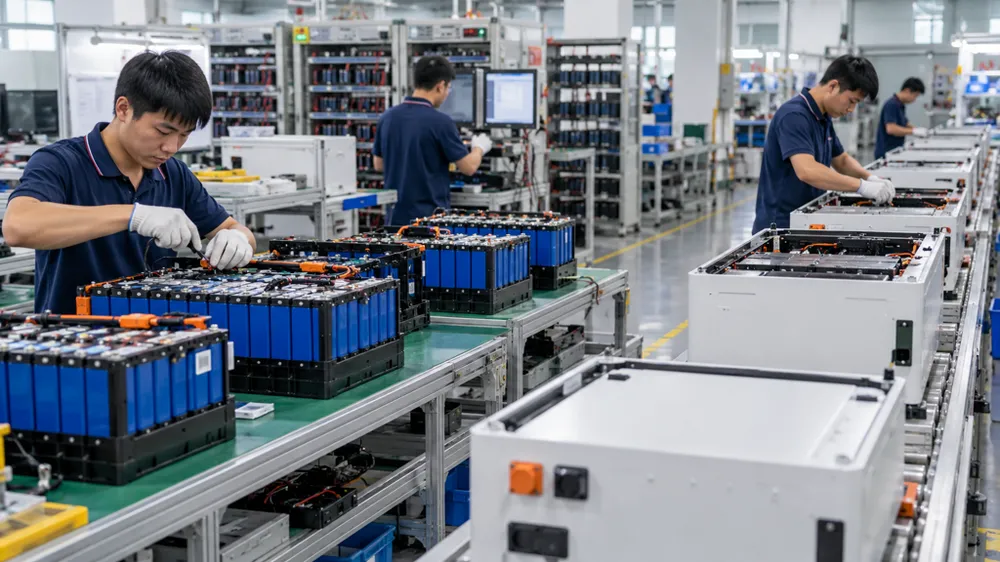
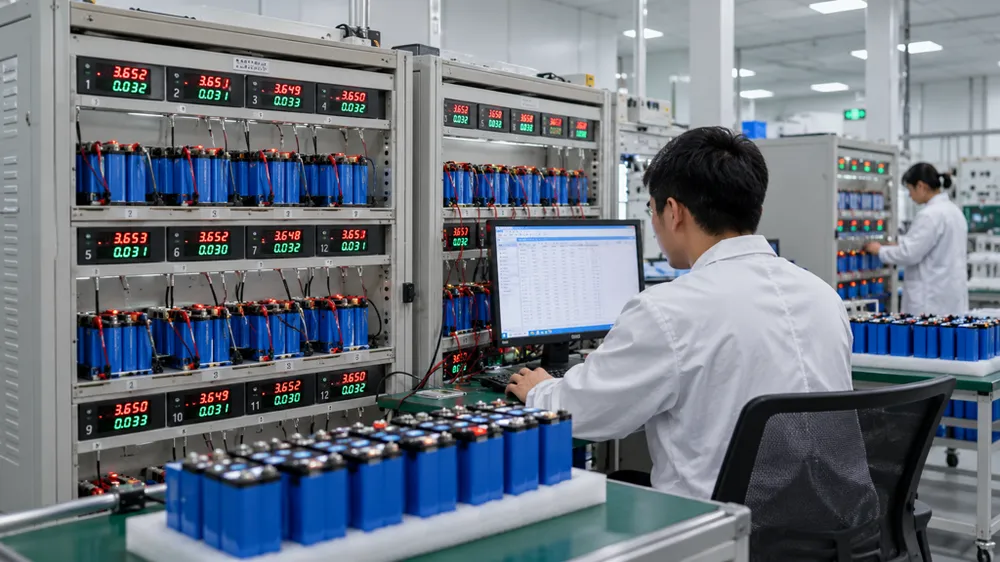
JXSOL's integrated battery testing lab runs 100% capacity verification before shipment. We cycle every cell through charge, discharge, and impedance measurement, then sort them into match groups. For stackable production runs, we document those groups so that expansion orders pull from compatible batches. Fixed-capacity systems batch-match cells within one enclosure — the QC is simpler because there's no cross-order dependency, and lead time is shorter for first orders because we're not maintaining reorder continuity protocols.
The SKU structure reflects this production difference. A stackable program adds at least two SKUs per capacity range: a base unit with the inverter and BMS, and expansion modules without redundant control electronics. Some architectures split it further — 5 kWh, 10 kWh, and 15 kWh base units, each with matching 5 kWh expansion blocks. That SKU multiplication complicates private-label buyers' product documentation and increases your inventory carrying cost, but it also enables market segmentation: you can sell a budget-conscious entry product and a high-margin expansion add-on through the same distribution channel.
Fixed capacity runs one SKU per tier. Your 10 kWh product is one part number, ships complete, and reorders don't reference prior batches. Distributors who want catalog simplicity and fast inventory turns prefer this model. We've seen OEM buyers choose fixed capacity just to avoid maintaining separate branding and packaging for base versus expansion SKUs — the sourcing simplicity outweighs the phased deployment flexibility for buyers serving markets where project funding is predictable.
OEM and ODM flexibility works across both architectures at JXSOL. Private-label buyers can specify stackable or fixed capacity without changing factory relationships, and our 100-unit MOQ applies to both formats. That MOQ threshold lets distributors test a modular home battery system in their market before committing to container-scale inventory — you can validate demand for phased deployment projects with a single pallet order, then scale up once the reorder pattern is clear.

BMS Architecture and Expansion Reliability Considerations
The BMS in a stackable lithium battery for home use manages communication across physically separate enclosures. Each module has its own cell monitoring board, and those boards coordinate through CAN bus or an equivalent serial protocol to balance charge rates, synchronize discharge, and share thermal data. That distributed topology introduces failure modes you don't see in fixed systems: communication protocol drift across firmware versions, connector reliability under field conditions, and module-priority logic when one expansion unit develops higher internal resistance than the others.
Fixed-capacity BMS architecture keeps all the cells within one enclosure and one control loop. The monitoring board has direct electrical contact with every cell group, there's no inter-module communication protocol to maintain, and thermal management stays within a single airflow path. Simpler topology means fewer failure modes, and installers treat it as plug-and-play: wire the DC bus, connect the inverter, commission the system in one visit.
LiFePO4 chemistry — which we use in both stackable and fixed formats — tolerates voltage variation better than NMC or NCA, but it's not immune to expansion mismatch. If an expansion module's cells have aged six months in warehouse storage while the base unit's cells have been cycling under load, the capacity delta shows up as early cutoff during discharge. The BMS sees one module hit its low-voltage threshold before the others and stops the discharge cycle to protect that weakest block, even though the rest of the capacity is still available. Your buyer paid for 15 kWh but the system delivers 12 kWh usable because the expansion module doesn't match the base unit's state of health.
We address that risk in production by controlling cell age and storage conditions. Expansion modules ship with cells from active production batches, not old warehouse stock, and we cycle-test them before shipment to confirm they match the capacity profile we documented for the original base unit order. It's a QC step that doesn't exist in fixed-capacity production, and it's one reason stackable systems cost more to manufacture even when the total kWh capacity is identical.
Installers see the BMS complexity difference in commissioning time. Stackable systems require firmware version checks across all modules, communication bus verification, and a full-cycle capacity test to confirm the expansion integrated correctly. Fixed systems power on, self-test, and start cycling. That labor difference matters when you're quoting installation service — stackable adds 30-60 minutes per expansion module, and if the commissioning test fails, you're dispatching a second service call to resolve the integration issue.
From a sourcing stability perspective, stackable programs require factories that maintain BMS firmware compatibility across production runs. If we change the communication protocol or cell-balancing algorithm in a firmware update, older base units might not recognize newer expansion modules. JXSOL's engineering team treats BMS firmware as a long-term commitment — we don't introduce breaking changes within a product generation — but not every factory has that discipline, and distributors who've dealt with orphaned expansion SKUs learn to ask about protocol stability before committing to a stackable program.
Deployment Scenarios — When Each Architecture Makes Commercial Sense
Phased residential projects are where modular home battery systems create measurable buyer value. Builders offering "solar + storage" packages to homebuyers can sell a 10 kWh base system in year one, capture the federal tax credit for that capacity, then upsell a 5 kWh expansion when the homeowner adds a pool pump or EV charger. That two-stage approach matches how residential budgets actually work — the initial solar installation is financed through the mortgage or a PACE loan, and the capacity expansion gets funded through a home equity line once the project proves its savings. You sell the same total capacity as a fixed 15 kWh system, but you split the revenue across two transactions and reduce the buyer's upfront capital requirement.
Retrofit expansions are the second natural fit for stackable architecture. When your customer already has a 10 kWh system in the ground and wants to add capacity, a stackable format lets them expand without replacing the entire installation. Fixed-capacity systems force a full swap — you pull out the old 10 kWh unit, install a new 15 kWh unit, and figure out what to do with a used battery pack that's halfway through its cycle life. Stackable architecture turns that into a clean add-on sale: ship a 5 kWh expansion module, install it in 90 minutes, commission the communication bus, and leave the original investment in place.
Multi-site commercial deployments flip the logic. When you're quoting twenty residential buildings in a planned community and every site gets the same load profile, fixed capacity simplifies procurement and field logistics. You order twenty identical 12 kWh systems, assign one serial number per building, and install them all in one mobilization. Stackable architecture would add complexity — you'd need to track which expansion modules pair with which base units, manage two SKUs through the supply chain, and plan staggered installation visits if phase-two capacity comes later. The phased deployment flexibility doesn't create value when you're installing everything in one project wave, so the SKU and logistics overhead just raises your landed cost.
Distributor inventory strategy is where stackable versus fixed capacity creates the clearest margin trade-off. Fixed systems let you concentrate working capital in three or four high-velocity SKUs — say, 8 kWh, 12 kWh, and 16 kWh — and you reorder them on predictable cycles because every sale consumes one full unit. Stackable programs require you to carry base units and expansion modules, and those two SKUs move at different velocities. Base units turn faster because every new customer needs one, but expansion modules sit in inventory until someone triggers an upsell. That working capital imbalance is fine if your market generates steady expansion demand, but it's a problem if your customers buy base units and never come back for phase two.
Project funding cycles are the last scenario that justifies stackable architecture even when it complicates sourcing. We've seen commercial solar contractors use modular home battery systems to match grant disbursement schedules — the customer gets approved for a three-phase renewable energy grant, so the contractor installs a 10 kWh base in phase one, adds 5 kWh in phase two when the next disbursement arrives, and completes the final 5 kWh in phase three. Fixed capacity wouldn't work because the grant structure requires demonstrable project progress at each milestone, and you can't split a single-unit installation across three funding events. Stackable architecture turns the bureaucratic funding process into a deployment plan instead of a barrier.
SKU Management and Reorder Predictability for Distributors
Fixed-capacity home battery systems deliver predictable reorder patterns because every sale consumes one complete unit. Your 12 kWh SKU turns every six weeks, your 16 kWh turns every eight weeks, and you can forecast reorder quantities from your sales velocity without tracking which customers might come back for expansion modules. That predictability simplifies inventory management and concentrates your working capital in SKUs that move at known rates.
Stackable programs create inventory imbalance. Base units move faster than expansion modules because every new customer needs a base system, but only a subset of those customers return for expansions. If your market generates strong phase-two demand — retrofit-heavy geographies, markets with time-of-use rate structures that reward capacity additions, installer networks that actively upsell expansions — then expansion modules turn adequately and the two-SKU model works. If your customers buy base units and stop there, you end up with slow-moving expansion inventory that ties up capital and eventually ages out before it sells.
We see this split play out in distributor reorder data. North American distributors serving markets with high EV adoption rates reorder expansion modules at 40-50% the velocity of base units, which keeps the working capital balanced. Distributors in regions where residential solar is mature but EV penetration is low reorder expansions at 15-20% base velocity, and they eventually drop the stackable SKU or carry expansions on a special-order basis only. The architecture doesn't fail; the downstream market just doesn't generate expansion demand at the rate required to justify carrying the SKU.
OEM and private-label buyers face a parallel trade-off. Stackable programs require separate branding, packaging, and documentation for base and expansion SKUs. You're printing two manuals, designing two box labels, and managing two part numbers in your sales system. Fixed capacity runs one SKU per capacity tier, which reduces your go-to-market cost and simplifies your catalog presentation. For buyers launching a new energy storage line, that simplicity often outweighs the phased deployment flexibility, especially when the target market hasn't demonstrated strong expansion demand yet.
JXSOL's 100-unit MOQ lets distributors test stackable architecture without committing container-scale inventory. You can order 100 base units and 50 expansion modules, validate the sell-through rate in your region, and scale up once the reorder pattern proves the two-SKU model works in your market. Fixed-capacity orders start at the same 100-unit threshold, so you're not penalized for choosing simpler SKU management — the MOQ supports either architecture, and you make the call based on what your downstream buyers actually demand.
The reorder continuity risk is real for stackable programs. If your factory changes the BMS communication protocol, updates the enclosure design, or discontinues a cell supplier, older base units might not integrate with newer expansion modules. That continuity risk doesn't exist with fixed-capacity systems because every order is self-contained. Distributors who commit to stackable programs need factories that treat backward compatibility as a contractual obligation, not a best-effort courtesy. At JXSOL we maintain BMS firmware stability across a product generation specifically to protect distributors who've sold base units and need to supply matching expansions two years later.
Capacity Planning Guidance for Installers Quoting Projects
When you're quoting a fixed-capacity home battery, you right-size at installation or you accept that the system will be undersized later. If your customer's current load is 8 kWh per day but they're planning to add an EV charger next year, you either spec a 12 kWh system today and over-invest relative to current need, or you install an 8 kWh system and live with the fact that it won't cover the EV load when it arrives. There's no future expansion path — the capacity decision is permanent.
Stackable architecture splits that decision. You install a conservative base system that covers current load, quote an expansion module as phase two, and defer the capacity commitment until the customer actually triggers the additional demand. That approach reduces upfront capital, keeps the initial project budget under the buyer's financing threshold, and preserves installation margin because you're booking two service visits instead of one. The trade-off is that you're betting the customer will actually buy the expansion — if they don't, you left revenue on the table by undersizing the base system.
Installer margin considerations make this a commercial decision, not just a technical one. A 12 kWh fixed system might generate $1,800 installation margin in one visit. A 10 kWh stackable base plus a future 5 kWh expansion generates $1,200 on the base installation and $900 on the expansion visit — $2,100 total margin if the customer buys phase two, but only $1,200 if they don't. Whether that trade-off makes sense depends on your phase-two conversion rate. If 60% of your base-system customers come back for expansions, the stackable model increases your average margin per project. If only 30% convert, you'd have made more money selling fixed capacity.
Warranty implications add a layer to this. When you install an expansion module two years after the base system, some manufacturers require a base-unit inspection before they'll honor the expansion warranty — they want to confirm the original system is still operating within spec before they cover the new module. That inspection adds labor cost to the expansion installation and introduces risk: if the base system has a degraded cell or a BMS fault, the warranty claim process delays the expansion commissioning and creates a customer-satisfaction problem. Fixed-capacity systems have one warranty period and one commissioning event, so you avoid that multi-phase warranty coordination.
Practical capacity planning works like this: expandable home energy storage makes sense when your customer has a clear expansion trigger — a planned EV purchase, a second building on the property, a future heat pump installation. You quote the base system to cover current load, document the expansion option in the proposal, and plan the phase-two installation around that known trigger event. If the customer's future needs are ambiguous — "we might expand, we're not sure" — fixed capacity is the safer bet because you're not counting on a phase-two sale that might never happen.
JXSOL's technical support team helps installers size base-plus-expansion combinations for common residential load profiles. If you're quoting a project and you're not sure whether to spec 10 kWh fixed or 8 kWh base + 5 kWh expansion, send us the daily load curve and the expansion trigger, and we'll model both scenarios with actual BMS charge/discharge behavior instead of theoretical kWh math. That sizing support reduces your quoting risk and gives you defensible numbers when your customer asks why you're recommending one architecture over the other.
Factory Quality Control — Why Cell Matching Matters for Stackable Systems
A stackable lithium battery for home use only delivers its rated capacity if the expansion modules match the base unit's voltage, impedance, and capacity within the BMS's balancing range. When those parameters drift too far apart, the BMS limits charge and discharge rates to protect the weakest module, and your customer ends up with less usable capacity than the sum of the rated kWh across all installed units.
Poor cell matching is the single most common failure mode we see in stackable systems from factories that don't maintain batch traceability. The base unit gets built with cells from production lot A, the expansion module ships six months later with cells from lot C, and those two lots have different impedance characteristics because the cell supplier changed an electrode coating process between batches. The BMS detects the mismatch during the first charge cycle, throttles the charge rate to avoid over-voltage on the higher-impedance module, and the system takes twice as long to reach full charge as the spec sheet promised. The capacity is there in theory, but it's not accessible in practice.
JXSOL's integrated battery testing lab addresses this by maintaining batch records for every production run. When you order expansion modules, we pull cells from a batch that matches the impedance and capacity profile we documented for your original base-unit order. We cycle-test those cells before assembly to confirm they're within tolerance, then we run a full charge/discharge cycle on the completed expansion module to verify it integrates with the base spec. That testing protocol adds two days to lead time and raises production cost, but it's the difference between a stackable system that actually expands and one that degrades performance every time you add capacity.
Fixed-capacity systems batch-match cells within one enclosure, so the QC is simpler. We test a sample from each production batch, confirm the cells meet the voltage and impedance spec, and assemble the packs knowing all the cells came from the same lot. There's no cross-batch matching requirement, no reorder traceability protocol, and no risk that an expansion module ordered later will mismatch the original installation. The cell-matching problem disappears because there's only one batch per system.
Distributor risk sits in the factory's commitment to batch traceability. If your supplier doesn't maintain records linking expansion SKUs to base-unit production lots, you're gambling that the cells they ship in month six will integrate with the cells they shipped in month one. Some factories treat cell sourcing as a commodity purchase — they buy from whoever offers the lowest price that week — and that purchasing model breaks stackable architecture. You need a factory that sources cells on long-term contracts, maintains lot traceability, and treats expansion-module matching as a QC gate, not an aspiration.
OEM buyers should specify the cell-matching protocol in the private-label contract, not assume it's standard practice. Request documentation showing the factory's batch record system, ask how they handle expansion orders when the original base-unit production run is no longer active, and confirm they'll notify you if a cell supplier change forces a specs update. Those protocols don't appear in fixed-capacity contracts because batch continuity doesn't matter, but they're non-negotiable for stackable programs where expansion reliability depends on cross-order cell consistency.
JXSOL's Dual-Architecture Manufacturing Capability
We manufacture both stackable and fixed-capacity formats from the same factory floor, so you don't have to choose between architecture flexibility and supplier consolidation. Our 6 production lines in Zhongshan handle both single-SKU fixed systems and multi-SKU modular programs, and the 1.2-million-unit annual capacity supports distributors running both architectures in parallel when their downstream markets demand it.
That dual capability matters when you're building an energy storage catalog and you're not sure which architecture your region will adopt. You can order fixed-capacity systems for single-site residential projects and stackable base-plus-expansion SKUs for phased deployment customers, then adjust the SKU mix as your market data comes in — all from one factory relationship, one quality standard, and one technical support contact. You're not managing two suppliers or reconciling different BMS platforms when a customer calls with an integration question.
Our in-house R&D team supports OEM and ODM customization across both architectures. If you want to private-label a stackable line with custom capacity increments — say, 8 kWh base + 4 kWh expansions instead of our standard 10 kWh + 5 kWh — we'll engineer the BMS and cell configuration to match your market requirements. Fixed-capacity OEM projects get the same engineering support: specify the kWh tier, the enclosure dimensions, and the communication protocol, and we'll deliver a production-ready design with your branding.
The 100-unit MOQ applies to both architectures, which removes the inventory risk from testing a new format in your market. You can order 100 units of a fixed 12 kWh system to validate demand in one geography, then add a stackable SKU in another region without committing to container-scale volume until you've confirmed the sell-through rate. That MOQ flexibility is unusual in battery manufacturing — most factories set minimums at 500 or 1,000 units per SKU — and it's one reason distributors use JXSOL to test market segments before scaling up.
ISO 9001:2015, CE, and RoHS certification covers both stackable and fixed production, so you're sourcing from the same quality management system regardless of which architecture you choose. Our integrated battery testing lab runs the same 100% pre-shipment capacity verification on both formats, and the three-year warranty applies equally to single-unit fixed systems and multi-module stackable installations. You're not accepting a quality trade-off when you choose stackable architecture — you're adding deployment flexibility within the same manufacturing and QC standard.
Factory-direct pricing eliminates distributor layers. When you order from JXSOL, you're paying production cost plus one margin — ours — not three markups from a trading company that sources from a contract manufacturer that outsources battery assembly. That direct structure matters most on stackable programs where the multi-SKU model already raises your landed cost. We're not claiming to be the lowest-cost supplier in China, but we are the factory that built the product, tested it, and will answer the phone when you have a field integration issue two years into a deployment program.
Our technical support team helps you choose between stackable and fixed based on your market profile, not based on which architecture is easier for us to produce. If your downstream buyers value phased deployment and your region generates strong phase-two conversion rates, we'll recommend stackable and help you size the base-plus-expansion SKU split. If your market prefers single-visit installations and predictable reorder patterns, we'll steer you toward fixed capacity and eliminate the SKU complexity. The factory makes both, so the recommendation is about your commercial success, not our production convenience.