Residential Solar Battery Chemistry Comparison: Cycle Life Under Real Duty Cycles
Most solar battery chemistry comparison content stops at datasheet maximums — 3000 cycles for NMC, 5000 for LiFePO4 — without connecting those numbers to calendar years or real residential use patterns. If you are specifying battery packs for a residential storage program, you need to know what those cycle counts mean when translated to your warranty term, your target market's climate, and your replacement risk budget.
Here is what matters for sourcing decisions:
| Parameter | LiFePO4 | NMC (811/622) |
|---|---|---|
| Cycle life at 80% DoD | 4,000–6,000 cycles | 2,000–3,000 cycles |
| Calendar lifespan (1 cycle/day) | 10.9–16.4 years | 5.5–8.2 years |
| Voltage per cell | 3.2V nominal | 3.6–3.7V nominal |
| Energy density (Wh/kg) | 90–120 | 150–220 |
| Thermal runaway threshold | >270°C | ~210°C |
| Capacity fade pattern | Flat degradation, >80% at 5000 cycles | Steeper after 70% retention |
| Cell sourcing lead time (China) | 45 days (CATL, BYD, EVE) | 45 days (CATL, BAK, EVE) |
The cycle count to calendar year conversion assumes one full charge/discharge cycle per day at 80% depth of discharge — typical for a residential system with solar charging during the day and grid backup at night. In practice, many residential systems run partial cycles (40–60% DoD) on days with light loads, which extends lifespan further. LiFePO4 handles partial DoD better than NMC because the flatter voltage curve means less stress per cycle when you do not fully discharge the pack.
A LiFePO4 pack rated for 5,000 cycles at 80% DoD translates to 13.7 years if you cycle it once per day, every day. That is longer than most residential warranty terms (10 years is standard). An NMC pack rated for 2,500 cycles translates to 6.8 years at the same duty cycle — acceptable for a 5-year warranty, but tight if your program offers 7 or 10 years.
The degradation curve shape matters as much as the total cycle count. LiFePO4 capacity fades linearly — you lose roughly 1–2% per 500 cycles, and the rate stays consistent until you hit 80% remaining capacity. NMC degrades faster once you cross 70% remaining capacity. The first 2,000 cycles might show only 15% capacity loss, but the next 500 cycles can drop another 10%. That nonlinear fade makes warranty planning harder because field performance becomes less predictable in years 6–8.
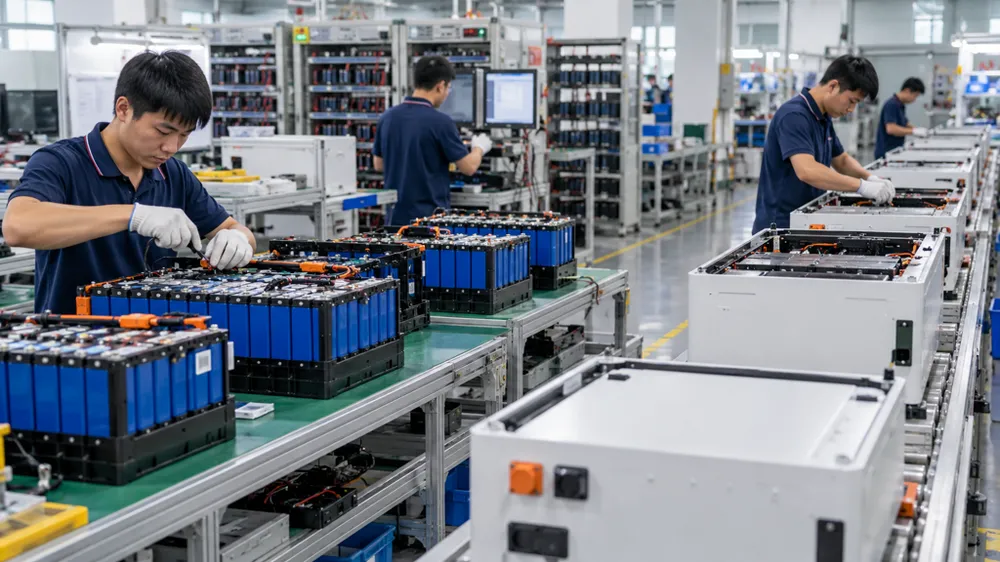
We manufacture both chemistries at JXSOL, and the charge/discharge test bench validates cycle life before every pack ships. The residential load profile test runs each pack through five simulated days (1 cycle per day at 80% DoD, 4-hour charge window, 8-hour discharge window). LiFePO4 packs show less than 1% capacity drift between Day 1 and Day 5. NMC packs show 1–2% drift, which is still within spec but reflects the higher stress from deeper voltage swings during discharge.
Cycle life advantage only matters if your warranty term and program economics support a longer service life. If you are running a 5-year builder program where upfront cost drives margin, NMC's shorter lifespan is not a liability — the warranty expires before degradation becomes a field issue. If you are specifying for a 10-year residential retrofit program where replacement service calls eat into profit, LiFePO4's longer cycle life reduces your backend risk.

Thermal Runaway Risk and Indoor Install Environment
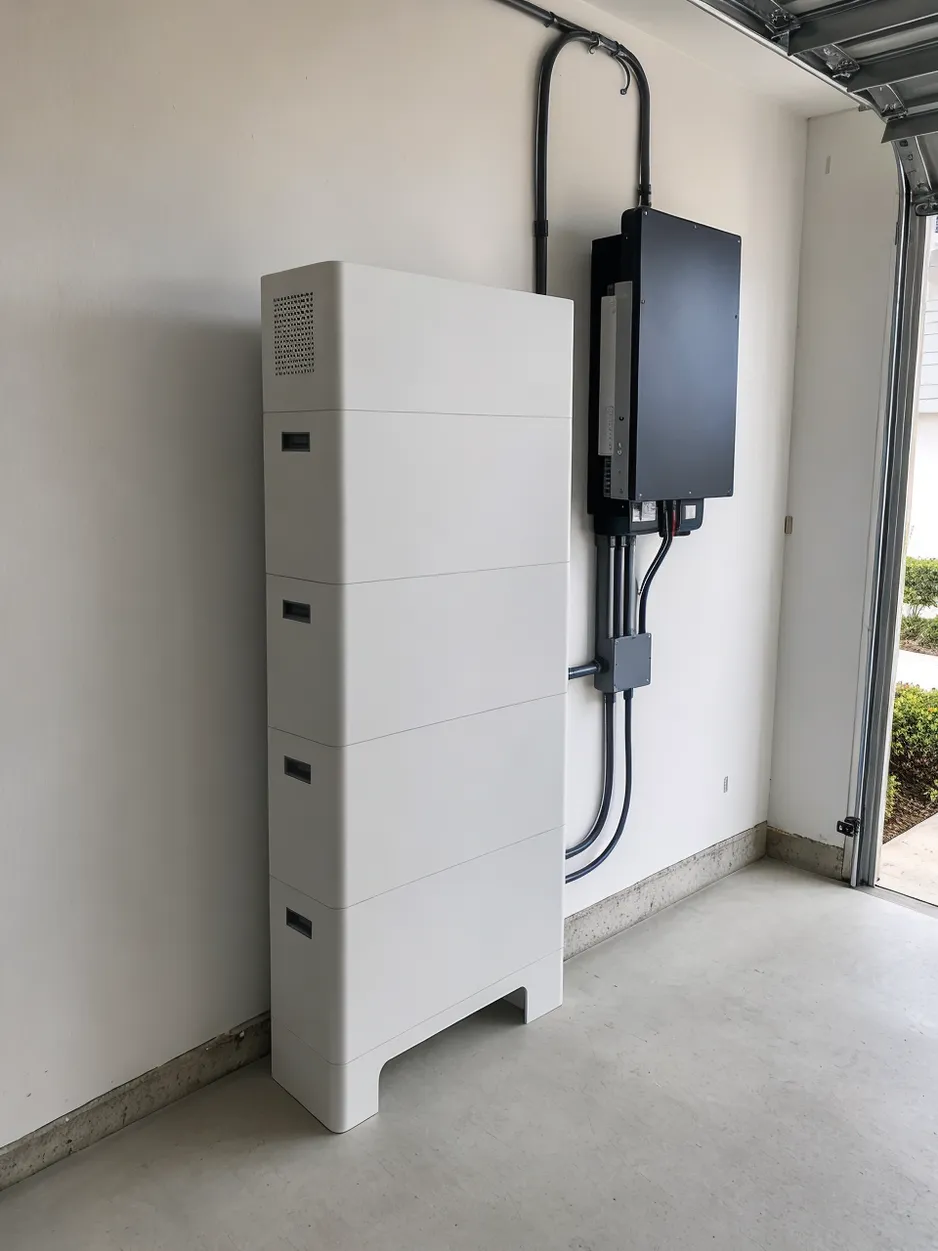
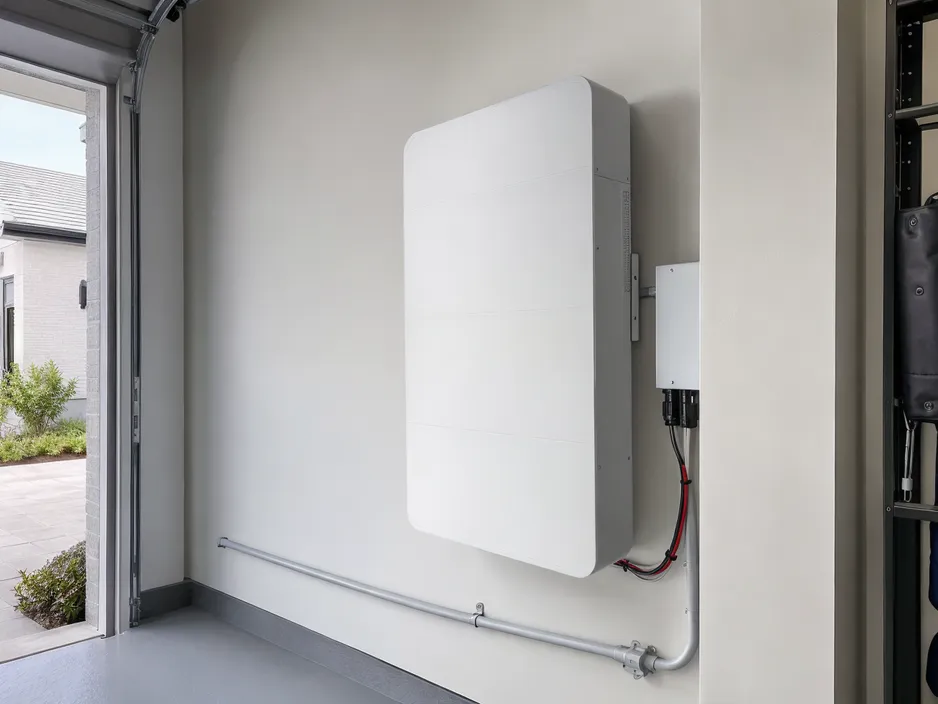
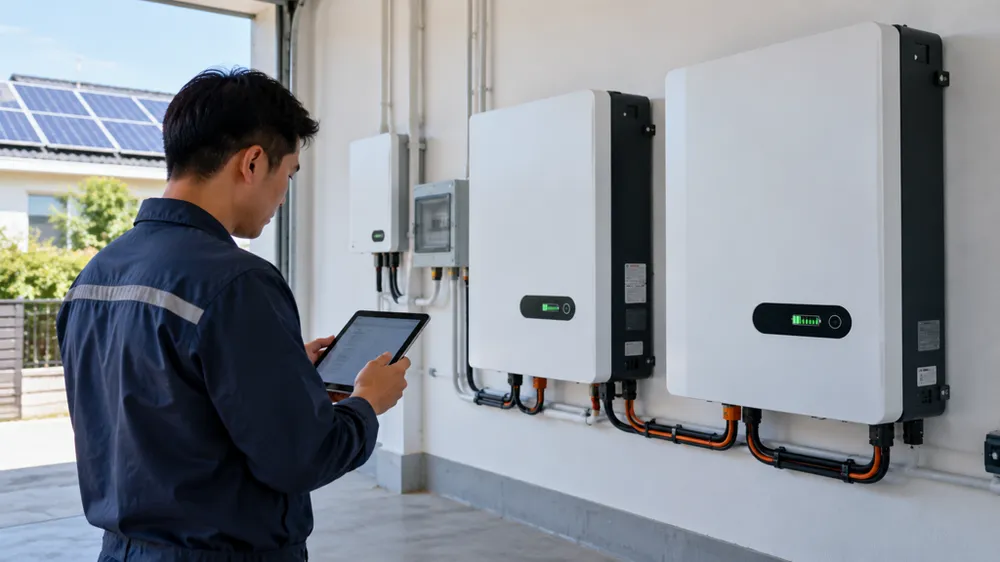
Most residential battery cabinets install indoors — garage, utility room, basement — or in semi-enclosed outdoor boxes with limited ventilation. That install environment changes the thermal safety calculation compared to utility-scale outdoor racks or automotive applications where airflow and fire suppression systems are designed into the enclosure from the start.
LiFePO4 thermal stability gives you more margin in residential installs. The runaway threshold is above 270°C, and the chemistry does not release oxygen during thermal decomposition. If a cell does go into thermal runaway (extremely rare with proper BMS protection), the reaction does not propagate to adjacent cells as easily because there is no oxygen release to feed combustion. That makes containment simpler and reduces the risk of a full pack fire.
NMC thermal stability sits around 210°C for the runaway threshold. The chemistry releases oxygen when it decomposes under high heat, which can sustain combustion even in an oxygen-limited environment. If one cell enters thermal runaway, adjacent cells can follow unless the BMS cuts power fast enough and the pack design includes thermal barriers between cell groups. NMC is safe when the BMS and enclosure design meet residential fire codes — UL 9540A testing validates that — but it requires tighter over-temperature monitoring and more robust cell-level fusing than LiFePO4.
The practical sourcing impact: if your program targets indoor installs or markets with stringent fire codes (California Title 24, Australian AS/NZS 5139, European EN 62619), LiFePO4 simplifies compliance and reduces the inspection burden. Your installer does not need to argue with the local fire marshal about ventilation requirements or thermal barrier specifications. If your installs are outdoor and naturally ventilated, NMC is defensible as long as the BMS and enclosure meet UL 9540A — the added cost and complexity are manageable when you are not fighting indoor fire code interpretation.
Our BMS design for both chemistries includes over-temperature cutoff at 60°C (well below the runaway threshold for either chemistry), cell-level fusing to isolate a fault, and contactor isolation to disconnect the pack from the inverter if any thermal sensor reads above the cutoff point. Both chemistries meet UL 9540A when tested in the same enclosure design, but LiFePO4 gives you margin if your buyer's local code enforcement is conservative or if the install site has poor ventilation that you cannot control.
One field issue we have seen with NMC in hot climates: installers sometimes place the battery cabinet in a garage with no air conditioning and poor airflow. Ambient temperature can hit 45–50°C in summer, and the BMS starts derating charge/discharge current to keep cell temperature below the 60°C cutoff. That derating reduces usable capacity during peak demand hours, which leads to customer complaints even though the system is operating as designed. LiFePO4 handles high ambient temperatures better — less derating, more consistent performance — so you have fewer service calls from installs where the site conditions are not ideal.
Cost Structure: Cell Pricing, BMS Complexity, and Total Pack Cost
Cell pricing in the China market as of Q4 2025: LiFePO4 prismatic cells land at $85–$95 per kWh for 100-pack orders from Tier 1 suppliers (CATL, BYD, EVE). NMC 811 cells land at $75–$85 per kWh at the same order volume. The $10–$15 per kWh delta is smaller than it was three years ago because LiFePO4 production capacity has scaled up to meet demand from the EV and stationary storage markets.
BMS cost differential offsets part of the cell cost advantage for NMC. NMC requires tighter voltage balancing — cell-to-cell voltage tolerance needs to stay within ±10 mV to avoid accelerated degradation, compared to ±20 mV for LiFePO4. That tighter tolerance adds $8–$12 per kWh in BMS component cost for residential pack sizes (5–15 kWh range). The BMS also needs more conservative over-temperature and over-voltage protection for NMC, which adds complexity to the firmware and raises the validation cost during pack commissioning.
Total pack cost after BMS, enclosure, assembly labor, and factory margin: LiFePO4 residential packs land at $140–$160 per kWh for buyers ordering 100+ units. NMC packs land at $130–$150 per kWh at the same volume. The cost delta narrows to $10–$15 per kWh at the pack level because the BMS and assembly differences eat into NMC's raw cell cost advantage.
Amortized cost over the pack's service life changes the calculation. A 10 kWh LiFePO4 pack at $1,500 that delivers 50,000 kWh over 5,000 cycles costs $0.03 per kWh cycled. A 10 kWh NMC pack at $1,350 that delivers 25,000 kWh over 2,500 cycles costs $0.054 per kWh cycled. If your warranty term is 10 years or longer, LiFePO4's upfront cost premium disappears when you account for the lower replacement risk and longer usable life.
The sourcing takeaway: NMC offers lower upfront BOM cost, which matters for programs with 5-year warranties or price-sensitive markets where the buyer's margin depends on hitting a specific landed cost target. LiFePO4 makes sense for longer warranty terms or buyers who want to minimize field service calls and warranty claims in years 6–10. If your program economics hinge on a $20 per unit BOM difference, NMC wins. If your field service cost for a warranty replacement is $300+ per site visit, LiFePO4's lower failure rate over 10 years saves more than the upfront premium.
Lead time and MOQ are the same for both chemistries when sourcing from China. Cell supply is 45 days from order confirmation, finished pack assembly adds another 15 days, so total lead time is 60 days for either chemistry. MOQ is 100 units for standard residential pack formats (5.12 kWh, 10.24 kWh, 15.36 kWh) regardless of chemistry choice. The only scenario where chemistry affects supply is orders above 1,000 units — LiFePO4 cell availability is deeper because the automotive EV market has driven capacity expansion at CATL and BYD, so large-volume orders for LiFePO4 have shorter lead times than equivalent NMC orders.
Charge/Discharge Performance by Climate: Cold-Weather Capacity Retention and Thermal Derating
Residential solar storage operates across wide temperature ranges depending on install location. A garage in Minnesota sees -20°C in January. A utility room in Phoenix sees 45°C in July. Chemistry affects how much usable capacity you have outside the 20–30°C comfort zone, which translates to field performance complaints if the buyer's market has extreme seasonal swings.
LiFePO4 cold performance: discharge capacity drops to roughly 70% of rated capacity at 0°C, and down to 50% at -10°C. Charge acceptance is more restrictive — charging below 0°C risks lithium plating on the anode, which permanently reduces capacity and can lead to internal shorts. Most BMS firmware locks out charging entirely below 0°C unless the pack includes an internal heating element. If your target market has sustained freezing temperatures (Canada, Northern Europe, high-altitude U.S. states), you need to spec a heated enclosure or accept that the pack will not charge during cold snaps.
NMC cold performance: discharge capacity drops to about 75% at 0°C and 60% at -10°C — slightly better than LiFePO4 in freezing conditions. Charge acceptance below 0°C has the same lithium plating risk, so the BMS still locks out charging or requires a heated enclosure. The 5–10 percentage point capacity advantage for NMC in cold weather is real but not large enough to eliminate the need for thermal management if your installs are in freezing climates.
High-temperature derating: LiFePO4 retains above 95% of rated capacity up to 45°C ambient temperature. The BMS may start derating charge/discharge current slightly above 50°C to protect cycle life, but the derating is gradual and does not noticeably affect performance unless the ambient temperature stays above 50°C for extended periods. NMC degrades faster above 35°C — the BMS typically starts derating charge/discharge current above 40°C to prevent accelerated capacity fade. In hot climates where the battery cabinet sits in direct sun or in a poorly ventilated garage, NMC installs will show reduced performance during peak summer months because the BMS is protecting the cells from thermal stress.
Climate-based sourcing guidance: if your program targets cold climates (Canada, Northern Europe, high-altitude U.S. markets), NMC offers a small winter capacity advantage, but you need heated enclosures for both chemistries if you want reliable charging below freezing. The cost and complexity of adding heating elements is the same regardless of chemistry, so the NMC advantage is minimal in practice. If your program targets hot climates (Middle East, Southeast Asia, Southern U.S., Australia), LiFePO4 reduces summer derating and slows capacity fade from thermal stress, which translates to fewer performance complaints and longer field life.
Our BMS firmware includes NTC temperature sensors on each cell group (typically 4 sensors per 10 kWh pack), and the derating curves are chemistry-specific. NMC packs use more aggressive current derating above 40°C to protect cycle life. LiFePO4 packs use gentler derating because the chemistry is more thermally stable. Buyers placing OEM orders can specify temperature sensor placement and derating thresholds based on their target market's climate — if you are shipping to Phoenix, we can relax the derating curve slightly to maximize summer performance; if you are shipping to Dubai, we keep the derating conservative to prioritize lifespan over peak power.
Sourcing Decision Matrix: Matching Chemistry to Program Type, Climate, and Warranty Structure
The comparison data above matters only if you can map it to your program requirements. Here is the decision framework we use when buyers ask which chemistry to specify for an OEM order:
| Program Type | Climate | Install Environment | Warranty Term | Recommended Chemistry | Rationale |
|---|---|---|---|---|---|
| Residential retrofit (homeowner direct) | Moderate (20–30°C year-round) | Indoor garage | 10 years | LiFePO4 | Longer cycle life reduces replacement risk during warranty period; indoor install favors thermal stability |
| Volume builder program (tract housing) | Hot (summer peaks >35°C) | Outdoor enclosure | 5 years | NMC | Lower upfront cost improves builder margin; outdoor install mitigates thermal risk; warranty expires before steep NMC degradation |
| Community solar + storage | Cold (winter lows <0°C) | Outdoor pad-mount | 10 years | LiFePO4 | Cold performance gap is small with heated enclosure; longer warranty term favors chemistry with better cycle life and thermal stability |
| Off-grid cabin or RV | Variable (wide seasonal swings) | Semi-enclosed battery box | No formal warranty (owner-maintained) | LiFePO4 | Thermal stability and cycle life reduce owner risk; no manufacturer warranty means reliability is more important than cost |
| Grid-tied + backup (utility incentive program) | Moderate | Indoor utility room | 7 years | Either | Both chemistries meet program requirements; decision comes down to cost sensitivity vs warranty risk tolerance |
After the matrix, here is the decision checklist: if your program has two or more of these factors, specify LiFePO4:
- Warranty term is 8 years or longer
- Install environment is indoor or semi-enclosed with limited ventilation
- Target market has hot climate (summer ambient temperatures above 35°C)
- Fire code compliance or thermal safety is a major buyer concern (California Title 24, Australian AS/NZS 5139, European EN 62619)
If your program has two or more of these factors, NMC is defensible:
- Warranty term is 6 years or shorter
- Install environment is outdoor or well-ventilated
- Cost sensitivity is primary (need to hit a specific BOM target to maintain margin)
- Cold climate where winter capacity retention matters (northern U.S., Canada, Northern Europe)
The matrix and checklist assume you are sourcing packs for a defined program with known install conditions and warranty terms. If you are a distributor stocking inventory for resale to multiple buyer types, LiFePO4 is the safer default because it handles a wider range of install environments and warranty expectations without field issues. The upfront cost premium is offset by lower warranty claim rates and fewer customer complaints about summer derating or early capacity fade.
JXSOL supports both chemistries in standard residential pack formats: 5.12 kWh (16S configuration, 3.2V LiFePO4 or 3.7V NMC), 10.24 kWh (parallel strings for higher capacity), and 15.36 kWh (three-string configuration). Buyers placing OEM orders of 100 units or more can specify chemistry, BMS derating curves, enclosure type (IP65 outdoor vs IP20 indoor), temperature sensor placement, and warranty documentation package. Lead time and MOQ are identical for both chemistries unless your order exceeds 1,000 units, where LiFePO4 cell supply is deeper and lead times are slightly shorter.
Factory Pack Assembly and Quality Validation: How Chemistry Choice Affects Production and Testing
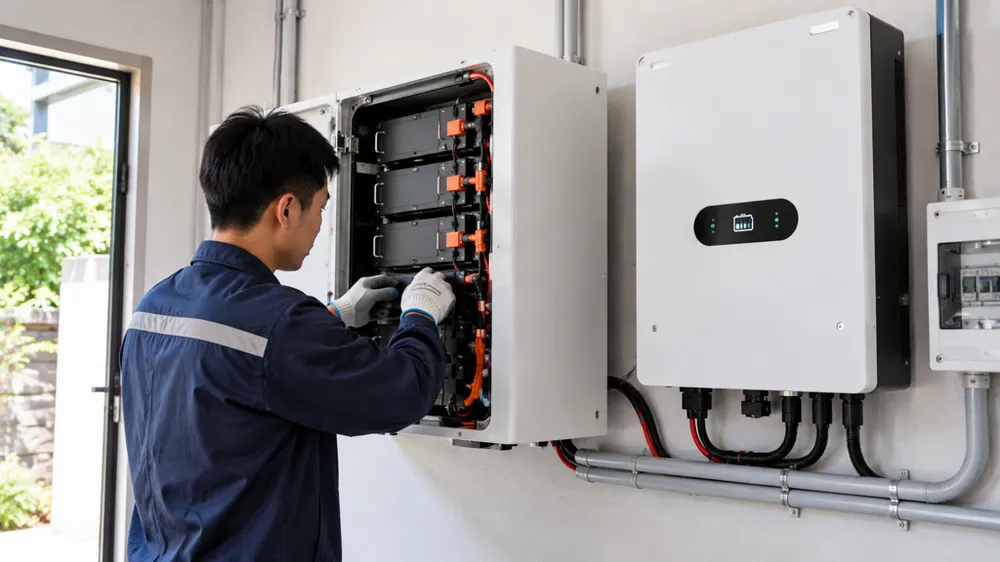
Most buyers never see what happens during pack assembly, but understanding the production differences between chemistries helps you evaluate lead time, cost drivers, and quality risks when you place an OEM order.
Cell matching requirements differ by chemistry because of the voltage curve shape. LiFePO4 cells have a flat voltage plateau during discharge — voltage stays between 3.2V and 3.0V for roughly 80% of the discharge cycle, then drops sharply at the end. That flat curve means small capacity mismatches between cells cause voltage imbalance over many cycles, so we match LiFePO4 cells to within ±2% capacity tolerance before assembly. NMC cells have a steeper voltage curve — voltage drops steadily from 4.2V to 3.0V during discharge — so capacity mismatches show up as voltage differences earlier in the cycle. The BMS can correct for that imbalance more easily, which allows a ±3% capacity matching tolerance without long-term imbalance risk.
BMS commissioning takes longer for NMC packs. After assembly, each pack goes through an initial balancing sequence where the BMS equalizes cell voltages and learns the capacity of each cell group. LiFePO4 packs typically need 2–3 full charge/discharge cycles to stabilize. NMC packs need 4–5 cycles because the BMS has to establish tighter voltage tracking to prevent accelerated degradation from cell-to-cell imbalance. That extra commissioning time does not affect your lead time — it happens during our standard 5-day burn-in test — but it explains why NMC packs have slightly higher QC reject rates during initial testing.
Charge/discharge validation uses a residential load profile that simulates one cycle per day at 80% DoD for five consecutive days. LiFePO4 packs show less than 1% capacity drift between Day 1 and Day 5 — the cells behave consistently across repeated cycles. NMC packs show 1–2% drift, which is still within spec but reflects higher internal stress from the steeper voltage swings during discharge. We adjust the QC acceptance threshold based on chemistry: LiFePO4 must stay within ±1% of rated capacity, NMC within ±2%. Both thresholds ensure the pack meets its datasheet rating, but the tighter tolerance for LiFePO4 reflects the more predictable behavior of that chemistry in the field.
Thermal testing runs every pack through a 45°C soak test — four hours at full charge while we monitor cell temperature rise above ambient. LiFePO4 packs show less than 5°C temperature rise, which confirms the thermal stability advantage we discussed earlier. NMC packs show 6–8°C temperature rise, which is acceptable but explains why the BMS firmware applies more conservative thermal derating for NMC above 40°C ambient.
The sourcing takeaway: chemistry choice does not affect your lead time or MOQ, but it does affect the depth of factory testing and the tightness of QC tolerances. If you are placing your first OEM order and want to minimize early-batch risk, LiFePO4 offers more production margin because the chemistry is less sensitive to cell-to-cell variation and thermal stress during commissioning. If you are reordering a proven design and cost is the primary driver, NMC's slightly higher QC complexity is manageable because we have validated the BMS firmware and cell matching process across thousands of packs.