Battery chemistry determines whether your solar lighting project runs for 10 years or fails after 18 months. We've been assembling battery packs for solar outdoor lighting since 2012, and the most common field failure we see in competitor products isn't the LED driver or the panel — it's the battery. The cell chemistry and pack assembly quality decide whether a solar street light survives 3,000 charge cycles or starts capacity fade at 800 cycles.
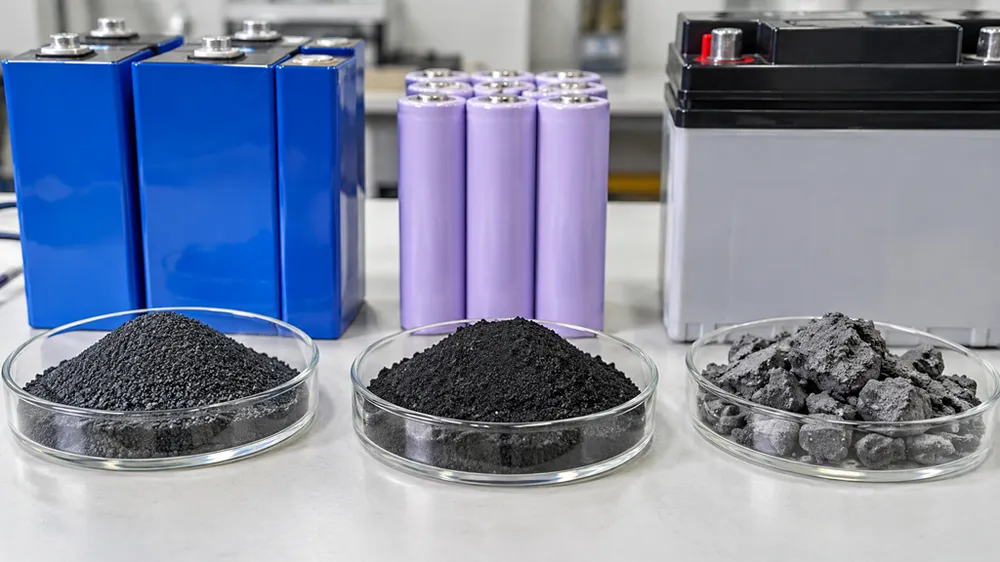
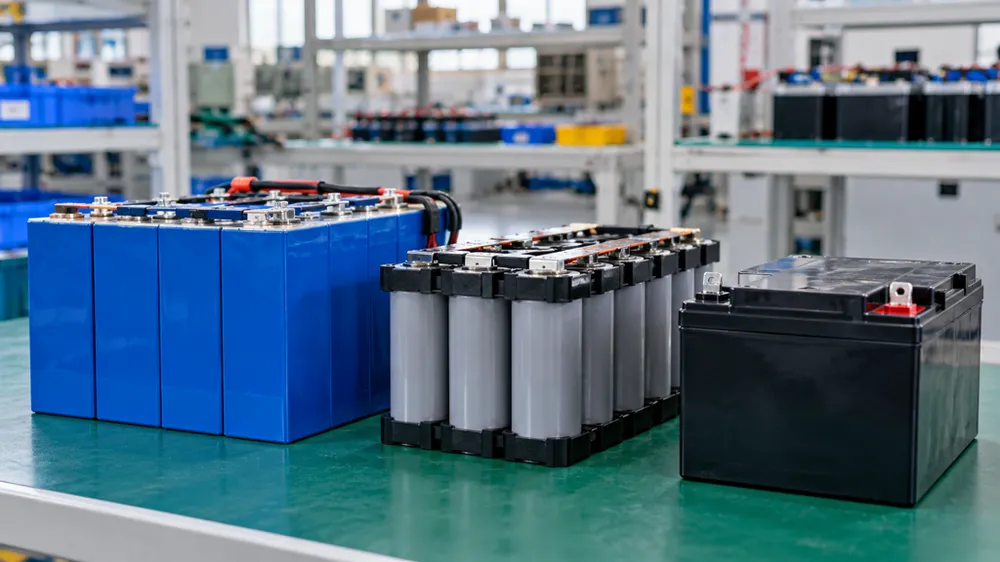
Three chemistries dominate solar storage sourcing in 2026: lithium iron phosphate (LiFePO4), nickel manganese cobalt oxide (NMC), and lead-acid. Each has different cycle life curves, thermal behavior, and cost structures. If you're sourcing solar lighting for commercial projects or building a branded solar product line, the chemistry you choose today determines your warranty exposure and replacement costs for the next decade.
| Chemistry | Cycle Life (80% DoD) | Thermal Runaway Threshold | FOB Cost per Wh (1,000+ units) | Cost per Cycle |
|---|---|---|---|---|
| LiFePO4 | 3,000–5,000 cycles | >270°C | $0.12–0.18 | $0.03–0.05 |
| NMC | 1,500–2,500 cycles | ~210°C | $0.10–0.15 | $0.05–0.08 |
| Lead-Acid | 500–800 cycles | N/A (hydrogen gassing risk) | $0.08–0.12 | $0.12–0.18 |
This article walks through the material science that drives those numbers, the real-world solar application conditions that spec sheets ignore, and the sourcing quality markers that separate A-grade cells from broker stock. We'll also cover BMS requirements specific to MPPT charge profiles and the factory validation infrastructure that turns cycle life claims into contract-defensible data.
Chemistry Fundamentals — What Separates LiFePO4, NMC, and Lead-Acid at the Cell Level
The cathode material determines energy density, thermal stability, and cycle life behavior. LiFePO4 uses an olivine phosphate structure (LiFePO4) where iron and phosphate ions form a stable crystal lattice. NMC uses a layered oxide structure (LiNi_x_Mn_y_Co_z_O2) where lithium ions shuttle between layers during charge and discharge. Lead-acid uses lead dioxide (PbO2) at the positive plate and sponge lead (Pb) at the negative plate, with sulfuric acid electrolyte.
Energy density is where NMC wins on paper: 150–220 Wh/kg vs. LiFePO4's 100–160 Wh/kg vs. lead-acid's 30–50 Wh/kg. For portable solar generators where weight and volume matter, that density advantage justifies NMC's higher thermal management cost. For stationary solar lighting and fixed storage installations, the energy density difference doesn't offset LiFePO4's cycle life and safety advantages — an extra kilogram of battery weight in a street light fixture doesn't impact installation cost or performance.

Voltage platform stability affects MPPT charge controller compatibility. LiFePO4 delivers a flat 3.2V nominal voltage per cell across most of its discharge curve — the voltage stays between 3.3V and 3.0V from 90% state of charge down to 20%. NMC has a sloped 3.6V nominal curve that drops steadily from 4.2V to 3.0V as the cell discharges. Lead-acid starts at 12.7V (for a nominal 12V battery) and sags to 10.5V under load.
For solar charge controllers using maximum power point tracking (MPPT), that flat LiFePO4 curve means more consistent charging efficiency across the battery's operating range. MPPT algorithms optimize panel output by matching panel voltage to battery voltage — when battery voltage changes slowly (LiFePO4), the controller spends more time at peak efficiency. When battery voltage drops rapidly under load (lead-acid), MPPT efficiency suffers because the algorithm constantly recalculates the operating point.
Thermal stability is the safety dividing line. LiFePO4's olivine phosphate structure is thermally stable up to 270°C — even if you heat a LiFePO4 cell past its rated temperature, it doesn't release oxygen and doesn't self-sustain a thermal runaway reaction. NMC's layered oxide structure begins releasing oxygen at approximately 210°C, which accelerates thermal decomposition and can propagate to adjacent cells in a pack. Lead-acid doesn't have lithium thermal runaway risk, but sealed lead-acid batteries can vent hydrogen gas if overcharged, creating explosion risk in enclosed battery boxes (a real concern for indoor solar backup systems or poorly ventilated outdoor enclosures).
We source cells for solar lighting products deployed across Middle East, Africa, and Southeast Asia markets where ambient temperature in an outdoor fixture can reach 50–60°C on a summer afternoon. LiFePO4's thermal margin matters in those applications — the cell chemistry tolerates higher operating temperatures without degradation acceleration or safety risk. NMC cells need active thermal management (heat sinks, forced air cooling) in high-temperature applications to prevent runaway, which adds cost and complexity to battery pack design.
Lead-acid's failure mechanism in solar applications is sulfation, not thermal runaway. When a lead-acid battery sits in a partial state of charge (common in solar systems during cloudy periods), lead sulfate crystals form on the plates and harden over time. Once sulfation progresses, the battery loses capacity permanently — you can't recover it by reconditioning or equalization charging. Lithium cells avoid sulfation entirely because the electrochemistry doesn't involve lead sulfate formation. The equivalent failure mode in lithium cells is dendrite formation (lithium metal plating during low-temperature charging or overcharge), but proper BMS protection eliminates that risk in normal operation.
Cycle Life Performance — Lab Claims vs. Real-World Solar Charge Profiles
Cell datasheets quote cycle life under ideal laboratory conditions: 100% depth of discharge (DoD), 0.5C charge and discharge rate, controlled 25°C temperature, and complete charge/discharge cycles with rest periods. Real solar storage applications operate under partial state-of-charge (PSOC) cycling, variable charge rates from MPPT controllers tracking cloud cover, outdoor temperature swings from -10°C to 60°C, and irregular discharge patterns based on load demand.
LiFePO4 cycle life under PSOC conditions typical in solar lighting: 3,000–5,000 cycles at 80% DoD before reaching 80% capacity retention (the standard end-of-life threshold for battery warranties). That 80% DoD scenario matches real solar street light operation — the battery charges during the day, discharges through the night, but rarely drops below 20% SoC before sunrise recharging begins. NMC cells under the same 80% DoD cycling deliver 1,500–2,500 cycles. Lead-acid manages 500–800 cycles at 80% DoD before sulfation and plate degradation reduce capacity below the 80% retention threshold.
The gap widens further under PSOC operation where the battery doesn't complete full charge cycles. During cloudy periods, a solar battery might cycle between 40% and 60% SoC repeatedly without reaching full charge. LiFePO4 tolerates PSOC cycling without significant degradation — the olivine phosphate structure doesn't develop memory effects or require periodic full discharge cycles to maintain capacity. Lead-acid accelerates sulfation under PSOC because the plates never fully convert lead sulfate back to active material during incomplete charge cycles. NMC sits between the two — PSOC cycling degrades NMC faster than full-cycle operation but not as severely as lead-acid.

Cell grade determines whether you get datasheet cycle life or half of it. A-grade LiFePO4 cells meet tight manufacturing tolerances: capacity matched within 20mAh across a production batch, internal resistance (IR) variance under 3mΩ, self-discharge below 3% per month. B-grade cells are functional but fall outside those tolerances — capacity spread 50–100mAh, IR variance up to 10mΩ, self-discharge 5–8% per month.
When you assemble a battery pack from B-grade cells, the weakest cell in a series string limits the pack's performance. High-IR cells overheat during charge and discharge, accelerating degradation. Capacity-mismatched cells cause overcharge on the smallest cell and overdischarge on the largest cell — both conditions shorten cycle life. A 12V 40Ah pack assembled from B-grade cells might quote 3,000 cycles based on the datasheet, but field performance often falls below 1,500 cycles because cell imbalance compounds over time.
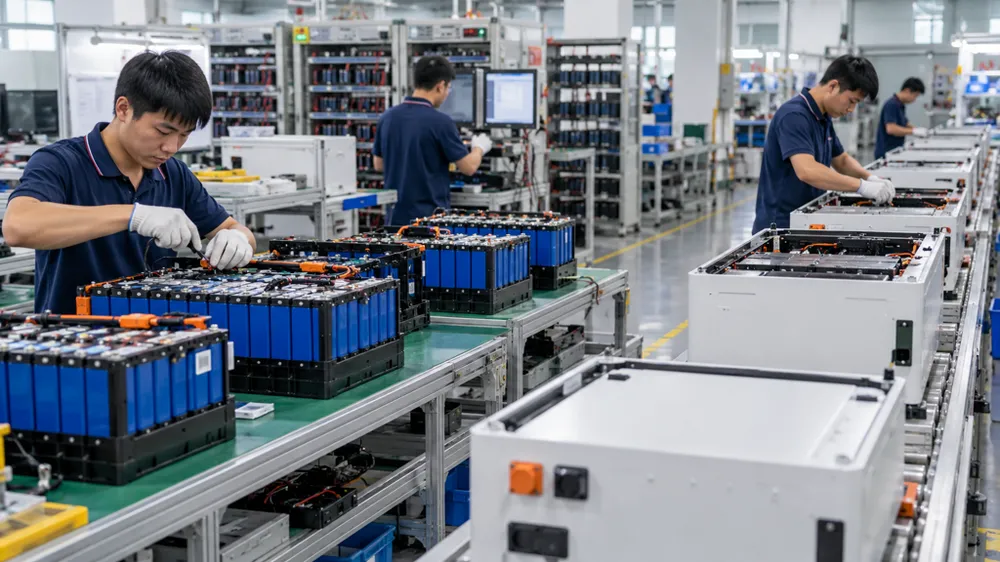
We test incoming cells before pack assembly — capacity measurement on a battery cycler, IR measurement with a milliohm meter, voltage matching to within 10mV. Cells go into packs only if they meet A-grade tolerances (capacity within 20mAh, IR within 2mΩ). That incoming inspection catches B-grade cells that suppliers sometimes mix into A-grade batches, and it gives us traceability data if a pack fails under warranty — we can pull the cell lot number and test results to determine whether the failure was cell quality, BMS malfunction, or application abuse.
Temperature coefficient affects cycle life in outdoor solar installations. LiFePO4 loses approximately 30% of its rated cycle life when operated continuously at 45°C vs. 25°C. NMC loses roughly 50% of rated cycle life at the same elevated temperature. Lead-acid loses 40–60% depending on whether it's flooded or sealed AGM construction. For solar street lights installed in hot climates, that temperature sensitivity compounds warranty risk — a LiFePO4 pack rated for 4,000 cycles at 25°C might deliver 2,800 cycles in a Saudi Arabia installation where fixture interior temperature averages 40–45°C. An NMC pack rated for 2,000 cycles drops to 1,000 cycles in the same application.
Our factory runs accelerated aging tests on sample packs from each production batch: 500 cycles at 1C charge/discharge rate in a 45°C environmental chamber. We compare end-of-test capacity retention against supplier datasheets to verify cell quality and validate cycle life projections. If a cell supplier's product degrades faster than spec, we switch suppliers or adjust warranty terms before the batch ships to buyers. That testing infrastructure costs money (50-channel battery cyclers, environmental chambers, testing labor), but it's the only way to convert datasheet claims into contract-defensible performance data when you're quoting warranty terms to a distributor placing a 10,000-unit order.
Calendar aging matters for solar applications with long standby periods. Security lighting, emergency backup systems, and seasonal installations often sit at full charge for weeks or months between discharge cycles. LiFePO4 ages slowly under float storage — roughly 2–3% capacity loss per year at 25°C when stored at 50% SoC. NMC ages faster — 5–8% per year under the same storage conditions. That calendar aging difference means LiFePO4 battery solar storage systems maintain higher capacity in low-utilization applications even if total cycle count is low.
Safety and Thermal Management — Why LiFePO4 Reduces Field Failure Risk
Thermal runaway propagation determines fire risk in outdoor battery enclosures. LiFePO4 cells require an external heat source above 270°C to initiate thermal decomposition — and even when one cell in a pack overheats, the reaction doesn't self-sustain or propagate to adjacent cells in typical small pack configurations (12V 20–100Ah range common in solar lighting). NMC cells begin thermal runaway at approximately 210°C, and once initiated, the reaction releases enough heat to trigger adjacent cells in a tightly packed configuration, leading to progressive pack failure.
The difference comes down to oxygen release. NMC's layered oxide structure releases oxygen during thermal decomposition, which feeds the combustion reaction and generates additional heat. LiFePO4's phosphate structure chemically binds oxygen even at elevated temperatures — no free oxygen means the thermal decomposition doesn't accelerate into a runaway event. For solar battery packs mounted in outdoor enclosures without active cooling, that chemical stability reduces fire risk even if a cell develops an internal short circuit or the MPPT controller malfunctions and overcharges the pack.
Real-world failure scenarios in solar applications include MPPT controller faults (overcharge from failed voltage regulation), short circuits from water ingress in improperly sealed enclosures, and high ambient temperature in tropical or desert installations. We've tested packs under simulated abuse conditions — overcharge to 20% above rated voltage, external short circuit through a 0.1Ω resistor, thermal exposure in a 70°C oven — and LiFePO4 packs vent gas and lose capacity but don't catch fire or rupture violently. NMC packs under the same abuse tests can progress to thermal runaway if the abuse is severe enough (though properly designed BMS protection prevents most real-world abuse scenarios from reaching runaway thresholds).
Lead-acid has a different safety profile: hydrogen gassing during overcharge. Sealed lead-acid batteries use a recombinant design that normally prevents gas venting, but if the charge voltage exceeds the gassing threshold (typically above 14.4V for a 12V battery), hydrogen accumulates inside the case and eventually vents through the pressure relief valve. In an enclosed outdoor battery box without ventilation, hydrogen can reach explosive concentration (4% by volume in air). We've seen field installations where contractors mounted sealed lead-acid batteries in waterproof enclosures to prevent water damage, creating hydrogen accumulation risk they didn't anticipate.
BMS thermal protection requirements differ between chemistries. LiFePO4 packs can use simple thermal cutoff switches (120°C or 140°C NTC thermistors that open the charge/discharge circuit if temperature exceeds threshold). NMC packs need more sophisticated thermal management in high-current applications — active balancing BMS with thermal sensors on each cell or cell group, and sometimes forced-air cooling or heat sinks in packs above 100Ah capacity. For solar lighting applications where pack size stays under 60Ah and discharge rates stay below 0.5C, passive thermal management works for both chemistries, but LiFePO4's higher thermal threshold provides additional safety margin.
Insurance and liability considerations affect commercial solar projects. UL 1973 (stationary battery energy storage systems) and IEC 62619 (lithium cells and batteries for industrial applications) are the primary safety certifications buyers request for solar storage installations in North America and Europe. LiFePO4 chemistry has a clearer certification path because the thermal stability data satisfies fire risk requirements without additional fire suppression systems. NMC installations sometimes trigger additional requirements — enclosure fire rating, smoke detection, thermal barriers between cells — depending on the authority having jurisdiction and the installation location (indoor vs. outdoor, occupied building vs. remote site).
For distributors selling into commercial solar projects, the safety profile affects warranty exposure and liability insurance premiums. A field failure that causes property damage or injury creates warranty claims plus potential product liability claims. LiFePO4's thermal stability doesn't eliminate risk entirely (any battery can fail), but it reduces the probability of fire-related failures that generate the highest-cost claims. When we quote battery pack pricing to distributors, we include the safety certification cost and liability insurance impact in our TCO analysis — LiFePO4's higher upfront cell cost sometimes disappears entirely when you account for reduced insurance premiums on large commercial projects.
Total Cost of Ownership — Cost Per Cycle Across Chemistries Using Factory Pricing
Upfront cost comparison using FOB cell pricing for 1,000+ unit orders in Q4 2026: LiFePO4 prismatic cells (3.2V, various capacities) run $0.12–0.18 per Wh depending on cell grade and supplier. NMC cylindrical cells (18650 or 21700 format) cost $0.10–0.15 per Wh. Lead-acid (sealed AGM or gel) costs $0.08–0.12 per Wh. Those are bare cell prices before BMS, enclosure, assembly labor, and testing.
BMS and enclosure costs vary by chemistry. A LiFePO4 pack for solar lighting (12V 20–40Ah range) needs a BMS with overcharge protection, overdischarge protection, short-circuit protection, and cell balancing. Passive balancing BMS (resistor-based, balances during charge only) costs $8–12 per pack for 12V 20Ah configuration. Active balancing BMS (capacitor or inductor-based, balances during charge and discharge) costs $15–25 but isn't necessary for low-rate solar applications.
NMC requires tighter voltage tolerance — each cell must stay within 4.2V ±50mV during charge vs. LiFePO4's 3.65V ±100mV tolerance. That tighter tolerance pushes NMC packs toward active balancing BMS to prevent cell voltage drift over hundreds of cycles. Active balancing BMS for NMC adds $15–22 per pack in the same 12V 20Ah configuration. NMC packs also need thermal sensors (NTC thermistors) on cell groups to monitor temperature during high-rate charging — adds another $3–5 in BMS cost. Lead-acid doesn't need BMS (just a basic charge controller), but sealed lead-acid requires a vented enclosure to prevent hydrogen accumulation, adding enclosure cost if the application requires waterproof housing.
Cycle life adjusted cost per kWh delivered: LiFePO4 at $0.15/Wh upfront and 3,500 cycles to 80% capacity retention delivers $0.043 per cycle per kWh of usable capacity (assuming 80% DoD cycling). NMC at $0.12/Wh and 2,000 cycles delivers $0.060 per cycle. Lead-acid at $0.10/Wh and 700 cycles delivers $0.143 per cycle. That cost-per-cycle calculation assumes you replace the battery when it reaches 80% capacity retention, which is standard practice in commercial installations because performance degradation accelerates past that point.
Replacement labor and logistics cost matters more in high-labor-cost markets. A 100-unit solar street light project in North America might have $50–80 per fixture labor cost for battery replacement (bucket truck rental, electrician labor, disposal fees for old batteries). If you install lead-acid batteries that need replacement every 2–3 years, you pay that labor cost three times over a 7-year project life. If you install LiFePO4 batteries that last 7–10 years, you pay labor cost once (initial installation) and avoid two replacement cycles.
Real TCO example for a 100-unit solar street light project (50W LED fixtures, 12V 40Ah batteries, 5-year evaluation period):
LiFePO4 option:
- Battery cost: $45 per pack × 100 packs = $4,500
- Installation labor: $60 per fixture × 100 = $6,000
- Replacement cycles in 5 years: 0 (7+ year life at typical cycling)
- Total 5-year cost: $10,500
- Cost per fixture per year: $21
NMC option:
- Battery cost: $38 per pack × 100 packs = $3,800
- Installation labor: $60 per fixture × 100 = $6,000
- Replacement cycles in 5 years: 1 (replace at year 3)
- Replacement cost: $3,800 + $6,000 labor = $9,800
- Total 5-year cost: $19,600
- Cost per fixture per year: $39.20
Lead-acid option:
- Battery cost: $28 per pack × 100 packs = $2,800
- Installation labor: $60 per fixture × 100 = $6,000
- Replacement cycles in 5 years: 2 (replace at year 2 and year 4)
- Replacement cost: ($2,800 + $6,000) × 2 = $17,600
- Total 5-year cost: $26,400
- Cost per fixture per year: $52.80
LiFePO4 breaks even against NMC at approximately 18 months when you include replacement labor, and breaks even against lead-acid in under 12 months. Those calculations use North America labor rates — in lower-labor-cost markets, the breakeven period extends but LiFePO4 still delivers lowest TCO over 5+ year timelines because cycle life advantage remains.
Warranty exposure for distributors translates to margin protection. When you sell solar lighting with a 3-year warranty, your warranty claim rate directly affects net margin. Lead-acid batteries generate 15–25% warranty claims in years 2–3 of typical solar lighting installations (based on our customer warranty data). LiFePO4 generates 2–5% warranty claims over the same period. That difference means a distributor with 10% gross margin on a solar lighting product can lose half their margin to warranty service costs if they use lead-acid, while LiFePO4 preserves margin by reducing field failures.
BMS Requirements for Solar Charge Profiles — MPPT Compatibility and Charge Termination
MPPT charge controllers default to lead-acid voltage profiles unless configured otherwise — typically 14.4V absorption voltage, 13.8V float voltage, 10.5V low-voltage disconnect for a nominal 12V system. LiFePO4 requires different charge parameters: 14.0–14.6V absorption (for 4S configuration), no float voltage (LiFePO4 doesn't need float charge), 10.0–11.0V low-voltage disconnect. If you connect a LiFePO4 pack to an MPPT controller still set for lead-acid, the 14.4V absorption voltage can overcharge LiFePO4 cells past their 3.65V per cell maximum, triggering BMS overcharge protection and shutting down the system.
We've seen field installations where contractors swapped lead-acid for LiFePO4 packs without reconfiguring the MPPT controller, then called claiming the battery was defective when it stopped charging after a few days. The BMS was doing its job — preventing overcharge — but the installer didn't understand that battery chemistry determines MPPT voltage settings. When we provide battery packs for OEM solar lighting products, we include charge voltage specifications on the pack label and in the installation documentation specifically to prevent that configuration error.
NMC charge voltage precision is tighter than LiFePO4. NMC cells charge to 4.2V ±50mV per cell, so a 3S NMC pack (nominal 10.8V, 12.6V max charge) requires charge voltage accuracy within ±150mV. LiFePO4 cells tolerate 3.65V ±100mV per cell, so a 4S pack (nominal 12.8V, 14.6V max charge) accepts charge voltage variance of ±400mV. That tighter NMC tolerance means the BMS needs more sophisticated balancing to prevent cell voltage drift — if one cell in a series string reaches 4.2V before the others, the BMS must stop charging even though the pack hasn't reached full capacity. Over hundreds of cycles, cell imbalance accumulates unless active balancing redistributes charge between cells.
For solar applications where charge current varies with sunlight intensity (MPPT continuously adjusts current based on panel voltage and battery state), passive balancing often can't keep up with cell drift in NMC packs. Passive balancing only operates when cells reach top-of-charge voltage (bleeding excess charge through resistors), so it's ineffective during partial charge cycles. Active balancing works during charge and discharge, moving charge from high-voltage cells to low-voltage cells continuously, which maintains better cell balance in variable-charge-rate solar applications.
Temperature-compensated charging adds complexity that LiFePO4 mostly avoids. Lead-acid requires charge voltage adjustment based on battery temperature — typically -30mV per °C deviation from 25°C. At 0°C, a 12V lead-acid battery needs 15.15V absorption voltage instead of the 25°C standard of 14.4V. At 40°C, it needs 13.95V. MPPT controllers with temperature compensation use a sensor mounted on the battery case and adjust voltage accordingly.
LiFePO4 can charge across a wider temperature range without voltage compensation — the same 14.4V charge voltage works from 10°C to 50°C without significant performance impact. The constraint is low-temperature charging: LiFePO4 cannot charge safely below 0°C because lithium metal plating occurs on the anode at low temperature, creating internal shorts. The BMS needs a thermal cutoff that disables charging when temperature drops below 0°C (or some manufacturers use 5°C as a more conservative threshold). That low-temperature charging limit matters for solar installations in cold climates — during winter, the battery might not charge until ambient temperature rises above freezing even if the panel generates power.
State-of-charge estimation accuracy affects battery monitoring in solar systems. Lead-acid and NMC have voltage curves that correlate with SoC — you can estimate remaining capacity by measuring open-circuit voltage and comparing to a lookup table. LiFePO4's flat voltage curve makes voltage-based SoC estimation unreliable (voltage stays around 3.2V per cell from 90% SoC down to 20% SoC). Accurate SoC for LiFePO4 requires coulomb counting — the BMS integrates charge and discharge current over time to track capacity remaining.
Coulomb counting accuracy depends on initial calibration and long-term drift compensation. When a new LiFePO4 pack enters service, the BMS must perform a full charge/discharge cycle to measure actual capacity and calibrate the coulomb counter. Over months of operation, small measurement errors accumulate — if the current sensor has 1% error, the coulomb counter drifts by 1% per full cycle. To prevent long-term drift, the BMS needs periodic recalibration by completing a full charge (charging until current drops to <0.05C, indicating cells are truly full) and resetting the coulomb counter to 100% SoC.
JXSOL's OEM/ODM BMS configuration service addresses compatibility at the factory level. When a distributor orders battery packs for a branded solar product line, we program the BMS parameters to match their MPPT controller specification — charge voltage, discharge cutoff voltage, temperature thresholds, balancing current. That factory configuration eliminates field setup errors and ensures the battery pack integrates correctly with the buyer's solar charge controller without requiring their installation contractors to understand BMS programming.
Cell Grade and Quality Assurance — Factory Validation vs. Spec-Sheet Sourcing
A-grade vs. B-grade cell specification defines the quality tier in the LiFePO4 market but most buyers don't know the numerical criteria. A-grade LiFePO4 cells meet tight manufacturing tolerances: capacity matched within 20mAh across a production lot, internal resistance variance below 3mΩ, self-discharge below 3% per month, no visible case damage or electrolyte leakage. B-grade cells are functional and safe but fall outside those tolerances — capacity spread 50–100mAh within a lot, IR variance up to 10mΩ, self-discharge 5–8% per month.
B-grade cells cost 20–30% less than A-grade cells from the same manufacturer, which tempts battery pack assemblers to use B-grade cells and quote lower prices. The problem surfaces 12–18 months into field operation when packs assembled from B-grade cells start failing to meet cycle life claims. High-IR cells overheat during charge and discharge, accelerating capacity fade. Capacity-mismatched cells cause overcharge on the smallest cell in a series string and overdischarge on the largest cell — both conditions shorten cycle life. A pack spec'd for 3,000 cycles using A-grade cells might deliver only 1,200–1,500 cycles if assembled from B-grade cells, even though the datasheet technically applies to both cell grades.
Factory cell matching and pack assembly determine whether you get datasheet performance or half of it. We test incoming cells before pack assembly — every cell goes on a battery cycler for capacity measurement (charge to 3.65V at 0.5C, rest 1 hour, discharge to 2.5V at 0.5C, record capacity). We measure internal resistance with a milliohm meter (1kHz AC resistance test at 50% SoC). We check open-circuit voltage after a 2-hour rest period to confirm cells are within 10mV.
Cells only go into packs if they pass matching criteria: capacity within 20mAh of group average, IR within 2mΩ of group average, voltage within 10mV. That incoming inspection catches B-grade cells that suppliers sometimes mix into A-grade batches (cell grading at factories isn't always perfect, and brokers sometimes relabel stock). The matching process also builds traceability — we record cell manufacturer, lot number, and test results tied to each pack serial number. If a pack fails under warranty, we pull the test data to determine whether failure was cell quality, BMS malfunction, or application abuse.
Charge/discharge cycle testing before shipment validates pack performance under real load conditions. After pack assembly, we run a 3-cycle formation sequence: charge to 14.4V at 0.2C, rest 1 hour, discharge to 10.0V at 0.5C, rest 1 hour, repeat. That formation process conditions the cells and verifies pack capacity matches design specification. If a pack measures 5% or more below target capacity, we disassemble and retest individual cells to find which cell failed matching criteria, then rebuild with replacement cells.
Most battery pack suppliers skip incoming cell testing and formation cycling — they assemble packs directly from supplier-provided cells, spot-check voltage, and ship. That process works if the cell supplier provides genuine A-grade cells with consistent quality, but it creates risk if cell quality varies batch to batch or if brokers substitute lower-grade stock. When we quote battery packs to distributors building branded solar product lines, we explain the difference: "cell testing and formation adds 3–5 days lead time and $2–3 per pack cost, but it eliminates 80% of early-life warranty failures."
Aging test infrastructure validates cycle life projections using accelerated stress testing. We maintain 50-channel battery cyclers that run sample packs from each production batch through simulated aging: 500 cycles at 1C charge/discharge rate in a 45°C environmental chamber. Real solar lighting applications cycle at 0.2–0.5C rate and average 30–35°C operating temperature, so the accelerated test represents roughly 1,500–2,000 real-world cycles in terms of stress.
After 500 accelerated cycles, we measure capacity retention and compare against supplier datasheets and our historical baseline. A-grade LiFePO4 cells should retain 90–92% capacity after 500 cycles at 1C/45°C. If retention falls below 88%, we flag the cell lot for quality investigation and potentially switch to a backup supplier. That aging data also feeds warranty analysis — we track capacity retention curves over time to predict field failure rates and adjust warranty reserves accordingly.
Traceability supports warranty investigation and quality improvement. Every pack ships with a QC label containing pack serial number, cell lot number, test date, and measured capacity. When a distributor reports a warranty failure, we request the pack serial number and pull the factory test data — measured capacity at shipment, cell lot number, aging test results for that cell batch. In most cases, warranty failures trace to application abuse (overcharge from faulty MPPT controller, overdischarge from undersized panel) rather than cell quality, but having the traceability data lets us diagnose root cause and recommend corrective action to prevent repeat failures.
That testing infrastructure costs money and slows production throughput, which is why not every battery pack supplier operates this way. A cell reseller can buy bulk cells from a broker, assemble packs without testing, and undercut factory-validated pack pricing by 15–20%. The cost difference shows up 18 months later when warranty claims start arriving, but by then the buyer has already committed to a product line and has inventory in their distribution channel. When you're evaluating LiFePO4 suppliers, ask: "Do you test incoming cells for capacity and IR matching? Do you run aging tests on production batches? Can you provide test data for a sample pack serial number?" Most resellers can't answer yes to all three questions.
Application-Specific Selection Framework — When to Choose Each Chemistry
LiFePO4 primary use cases map to daily-cycling applications with outdoor temperature exposure and long replacement intervals. Commercial solar street lighting cycles the battery every day (charge during day, discharge overnight), operates in outdoor enclosures without climate control (temperature range -20°C to 60°C depending on installation location), and economically justifies battery replacement every 7–10 years rather than every 2–3 years. Off-grid solar storage for telecom base stations or remote monitoring equipment has similar requirements — high cycle count, temperature extremes, and maintenance cost that justifies longer battery life. Backup power for residential solar systems fits the LiFePO4 profile when the application involves frequent cycling (daily self-consumption) rather than pure emergency standby.
NMC limited use cases in solar exist where energy density justifies thermal management complexity. Portable solar generators where weight and volume constraints matter (camping, RV, emergency kits) benefit from NMC's higher energy density — you get 40–50% more capacity per kilogram vs. LiFePO4. Grid-tied residential solar in climate-controlled environments where cycling stays below 500 full cycles over the system's lifetime also works for NMC — calendar aging becomes the limiting factor rather than cycle life, and the controlled temperature environment prevents thermal management issues. But for commercial solar applications where cycle count exceeds 1,000 and outdoor installation is standard, NMC's thermal sensitivity and shorter cycle life eliminate the cost advantage from lower upfront pricing.
Lead-acid remaining use cases shrink each year as LiFePO4 pricing falls, but low-budget solar applications where 2–3 year replacement cycle is acceptable still use lead-acid. Temporary solar installations (construction sites, events, seasonal applications) that only need to operate for 1–2 years don't benefit from LiFePO4's long cycle life. Existing solar systems with lead-acid-compatible MPPT controllers and enclosures where retrofit cost exceeds new LiFePO4 pack cost might stay with lead-acid for one more replacement cycle. Developing markets with very tight project budgets and low labor costs sometimes choose lead-acid despite higher TCO because upfront capital constraints outweigh lifecycle cost analysis.
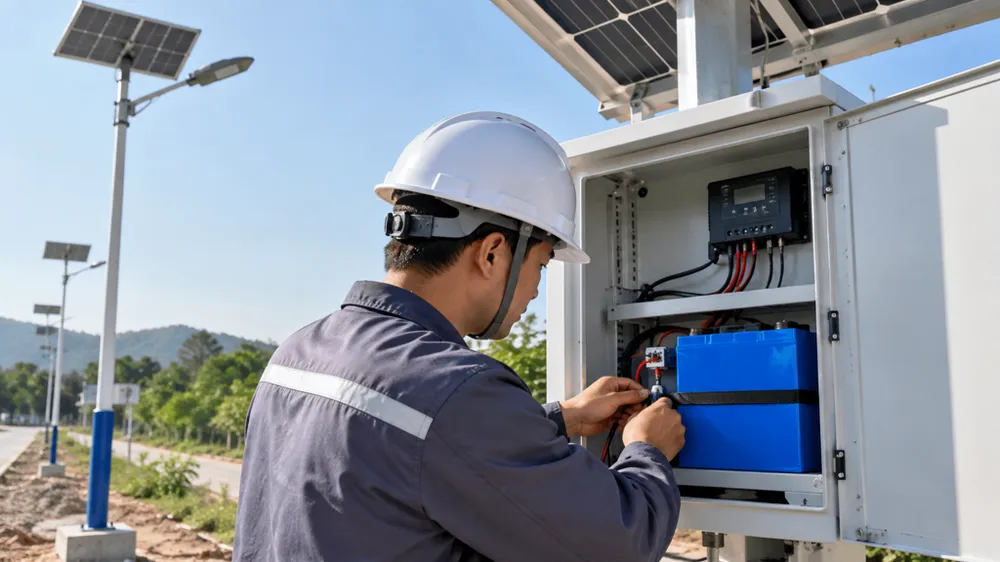
Decision tree for buyers starts with cycle count requirement. If you expect more than 1,000 full charge/discharge cycles over the application's lifetime, eliminate lead-acid — it won't reach 1,000 cycles at 80% DoD without capacity falling below usable range. Between LiFePO4 and NMC, assess temperature range: if outdoor/uncontrolled installation, favor LiFePO4 over NMC because thermal stability reduces fire risk and temperature-accelerated degradation. If climate-controlled installation and cycle count below 2,000, NMC becomes viable if energy density matters.
Calculate TCO using actual procurement pricing and installation labor rates in your target market. For North America and Western Europe, replacement labor cost often exceeds battery cost difference, which pushes TCO toward LiFePO4 for any application with 5+ year service life. For developing markets with lower labor costs, extend the breakeven period but run the calculation with real numbers rather than assuming lead-acid is cheaper — in most cases, LiFePO4 TCO is still lower over 5+ years.
Buyer segment mapping helps distributors choose chemistry based on their customer base. Distributors selling into commercial solar projects (street lighting, parking lots, security lighting) should default to LiFePO4 because their customers optimize for TCO and warranty exposure rather than upfront cost. Residential solar retailers serving climate-controlled installations with low cycle count can consider NMC if energy density helps reduce enclosure size or weight. Project contractors in developing markets with very tight budgets and low labor costs might still specify lead-acid for near-term installations, but even those buyers should transition to LiFePO4 for projects with 3+ year design life.
The chemistry selection isn't just technical specification — it affects warranty claims, field service costs, reputation risk, and repeat purchase rates. When a solar lighting distributor has 15% warranty claims in year 2 because they used lead-acid batteries, they lose customer confidence and their reorder rate drops. When they switch to LiFePO4 and warranty claims fall to 3%, customers notice the product improvement and increase order volume. That feedback loop is why we recommend LiFePO4 by default for any buyer sourcing solar storage products for commercial applications — the chemistry selection determines whether your product line builds loyalty or burns credibility.