

Motion Sensor Solar Lights Direct From Factory
Motion-triggered solar security lighting built for commercial distribution and project deployment — no wiring, no grid dependency, no compromises on outdoor durability.
IP65/IP67 rated, CE and RoHS certified, with 100% pre-shipment inspection on every unit. Standard models from 100 units MOQ; OEM/ODM configurations available with engineering review.
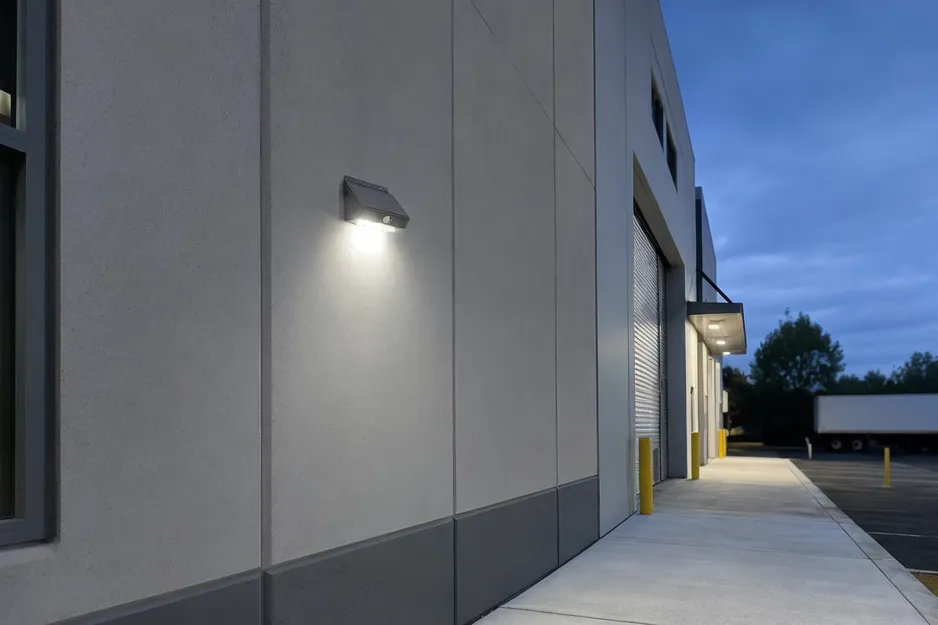
Motion Sensor Solar Lights Built for Reorderable Security Lighting SKUs
Motion sensor solar lights are outdoor solar-powered fixtures that hold at standby or low-brightness mode and switch to full output when the PIR sensor detects movement. For B2B buyers, the commercial case is straightforward: this is a security and area lighting SKU that installs without electrical wiring, fits a wide range of outdoor environments, and sells into multiple channels — property services, agricultural supply, construction and rental, and residential retail — without requiring a separate product line for each.
We've been manufacturing solar-powered outdoor lighting since 2012, and motion sensor solar lights sit at the intersection of two consistent buyer demands: security lighting that works off-grid and a product that's easy for downstream customers to install without an electrician. That combination keeps reorder rates high across our distributor accounts.
The full solar flood and security lighting range covers broader area and flood applications; this page focuses on motion-triggered configurations where sensor behavior, battery management, and detection coverage are the primary buying decisions.
Proven Channel Fit
Property Services
Strata, facilities, rental portfolios
Agricultural Supply
Farm sheds, gates, equipment yards
Construction & Rental
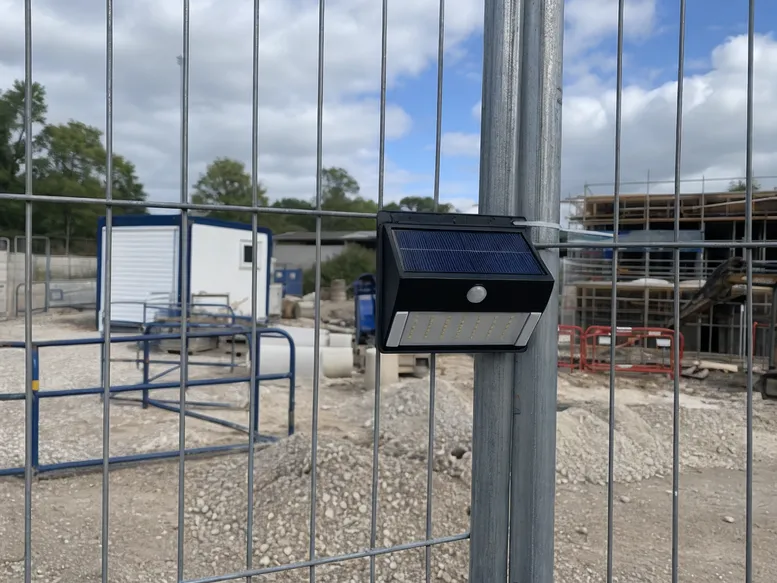
Temporary sites, perimeter security
Residential Retail
Driveways, garages, garden paths
Sensor Mode, Runtime, and Brightness: The Three Decisions Before You Order
Most buyer complaints about motion sensor solar lights trace back to three configuration mismatches, not product defects. Getting these right before you place an order protects your margin and reduces after-sales support.
Detection Range and Angle
Standard PIR sensors in this category cover 5–8 meters at detection angles of 90°–120°. That's adequate for a single doorway, a loading bay entrance, or a residential gate.
If your buyers are covering wider perimeters — warehouse yards, farm equipment zones, parking edges — you need to confirm the sensor spec matches the installation geometry. A unit with a 5-meter detection range mounted at 4 meters height on a 10-meter-wide driveway will generate complaints.
We can configure detection range and angle during OEM/ODM production; for standard models, confirm the spec against your target installation before ordering.
Standard: 5–8m range · 90°–120° angle
Lighting Mode and Battery Draw
Most outdoor solar motion sensor lighting products support three modes: always-on at low brightness, motion-triggered full brightness, and off-with-motion-trigger. The mode selection directly affects battery runtime.
A unit running always-on at 30% brightness draws battery continuously through the night; the same unit in standby-with-motion-trigger mode can extend runtime by 40–60% under the same solar charging conditions.
For buyers targeting markets with shorter winter daylight hours — Northern Europe, Canada, higher-latitude Middle East — the mode setting is a runtime variable, not just a feature. We configure default modes at the factory; custom mode defaults are available on OEM runs.
Standby mode extends runtime 40–60% vs. always-on
Integrated vs. Split-Panel Configuration
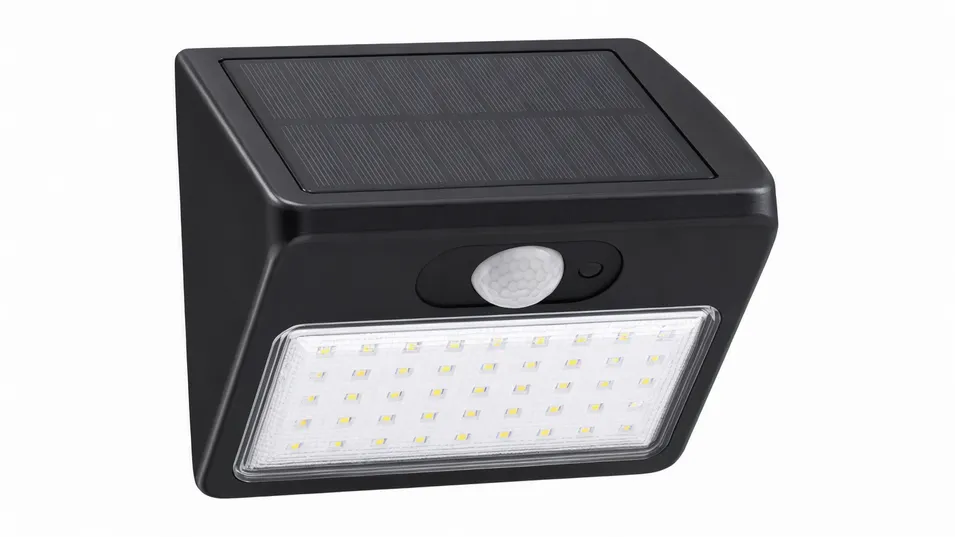
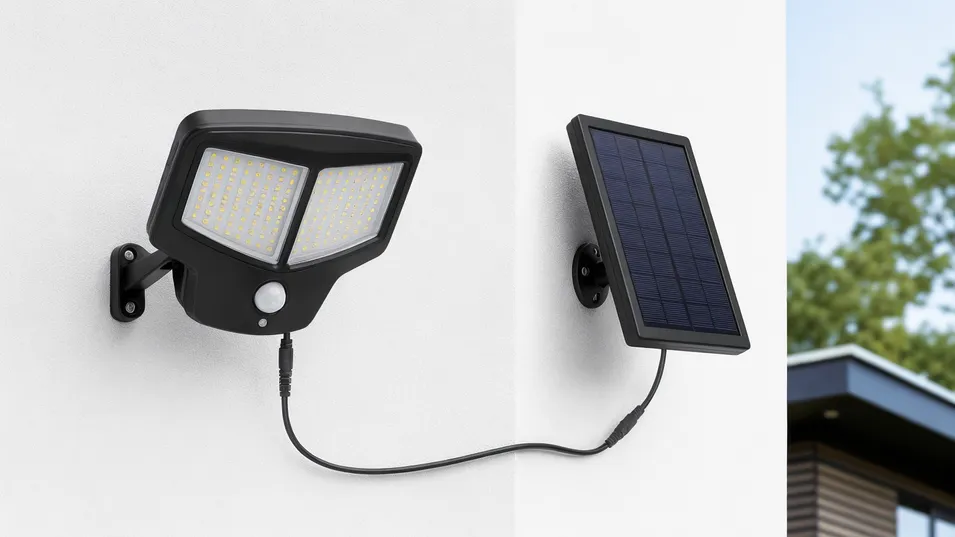
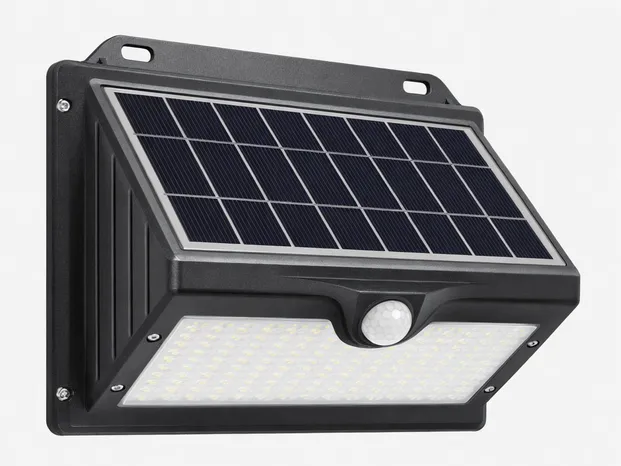
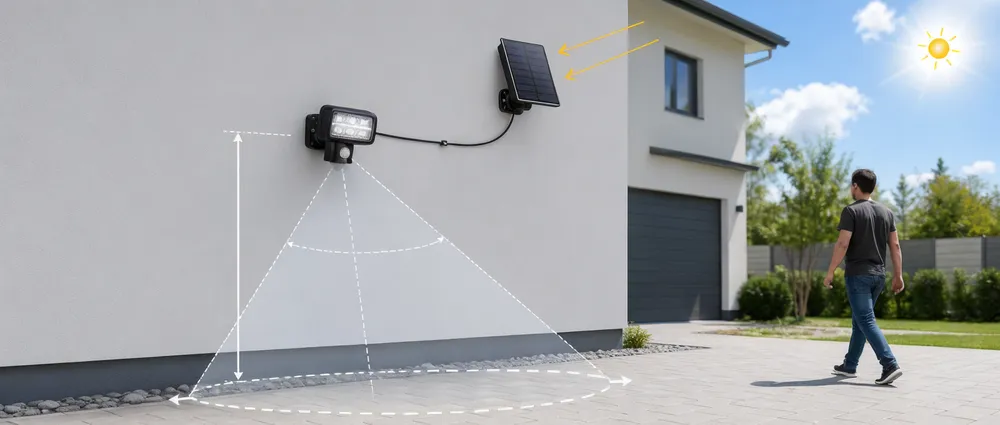
Integrated units have the solar panel built into the fixture housing — simpler installation, fewer components, lower per-unit cost. Split-panel models separate the panel from the light head, allowing the panel to face south (or optimal sun direction) while the light head points at the target area.
For buyers supplying markets where installation surfaces are shaded or north-facing — dense urban properties, tree-lined driveways, covered loading docks — split-panel models reduce the "it doesn't charge properly" complaints that drive returns.
The trade-off is a slightly higher unit cost and a cable connection that needs weatherproofing at installation.
Split-panel: higher cost, fewer return complaints
Need a configuration recommendation?
Send your target detection range, installation height, and regional sun conditions — we'll match the right spec to your market.
Specification Reference for Procurement Comparison
Specifications below represent industry-standard ranges for this product category. Exact values vary by model and configuration. Contact us for the current model specification sheet and confirmed values for your order.
| Parameter | Standard Range / Typical Value |
|---|---|
| Solar Panel Type | Monocrystalline silicon |
| Solar Panel Wattage | 5W – 20W (model-dependent) |
| LED Power | 10W – 50W (model-dependent) |
| Lumen Output | 800 lm – 5,000 lm (model-dependent) |
| Battery Type | Lithium iron phosphate (LiFePO4) |
| Battery Capacity | 5,000 mAh – 20,000 mAh (model-dependent) |
| Sensor Type | PIR (Passive Infrared) |
| Detection Distance | 5 m – 10 m (adjustable on select models) |
| Detection Angle | 90° – 120° |
| Lighting Modes | Standby + motion-trigger / Always-on / Off + motion-trigger |
| Motion Delay Time | 15 s – 120 s (adjustable) |
| Charging Time | 6 – 8 hours (full sun) |
| Runtime (motion mode) | 8 – 15 hours per charge cycle |
| IP Rating | IP65 / IP67 (model-dependent) |
| Housing Material | Die-cast aluminum / ABS+PC |
| Color Temperature | 4000K – 6500K (custom CCT available) |
| Working Temperature | -20°C to +60°C |
| Installation Height | 2.5 m – 6 m (recommended) |
| Certifications | CE, RoHS, IP65/IP67, IEC 62124 |
| Warranty | 3 years |
| MOQ (standard models) | 100 units |
Specifications shown are industry-standard values for this product type. Actual specifications vary by model and configuration.
Key Highlights
- LiFePO4 battery — 2,000+ cycle life
- IP65/IP67 rated for outdoor deployment
- PIR detection up to 10 m, 120° angle
- CE, RoHS, IEC 62124 certified
- Custom CCT available (4000K–6500K)
- MOQ from 100 units, 3-year warranty
Market Segments Where Motion Control Protects Margin
Motion sensor solar lights fit a wider range of commercial channels than most solar security products because the no-wiring installation removes the electrician requirement. Each segment below represents a repeatable order pattern, not a one-time project.
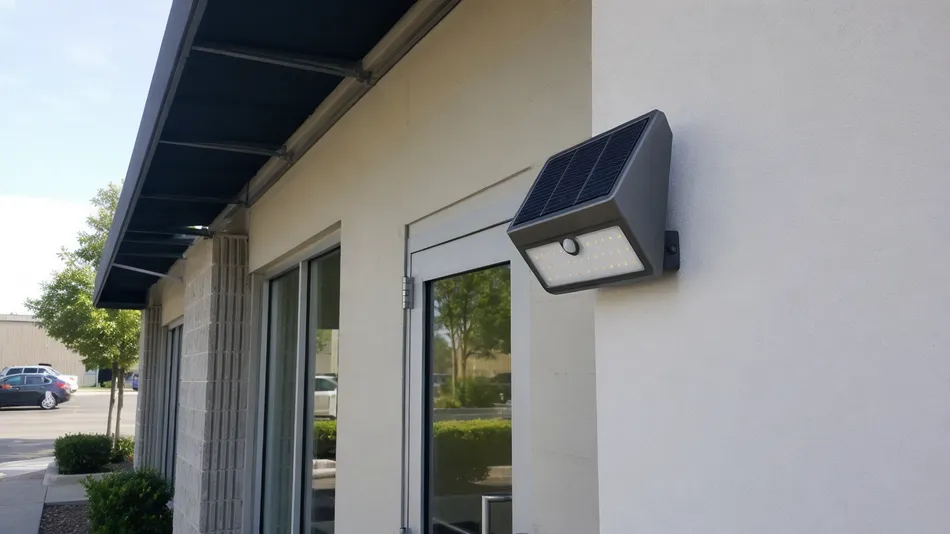
Small Commercial Properties and Property Service Channels
Entrances, delivery doors, parking edges, and perimeter walls on small commercial properties — retail units, light industrial units, storage facilities — are a consistent demand source for motion sensor solar lighting. Property management companies and facilities service contractors often supply and install these fixtures as part of maintenance contracts, which means repeat orders on 12–24 month replacement cycles.
A distributor supplying this channel can expect 20–100 unit orders per account, with reorder predictability tied to contract renewal schedules.
Key Product Requirement
A clean housing profile that doesn't look industrial — die-cast aluminum with a neutral finish moves better in this channel than utilitarian plastic housings.
20–100
Units per account
12–24 mo
Replacement cycle
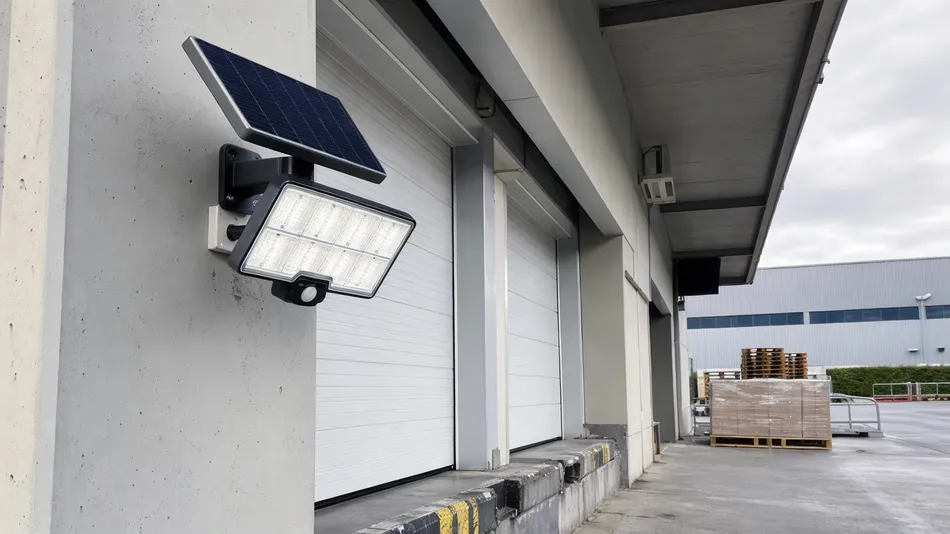
Warehouses and Loading Areas
Wiring avoidance is the primary driver in warehouse and loading zone applications. Retrofitting electrical wiring into an existing warehouse loading bay or external dock area involves conduit, permits, and electrician time that can cost more than the lighting itself. Solar powered motion sensor lighting eliminates that cost entirely.
Contractors supplying warehouse fit-outs and logistics facility upgrades order in quantities of 10–50 units per site, with multiple sites per project.
Key Product Requirement
Higher lumen output — 2,000 lm and above — and IP67 rating for environments with pressure washing or heavy rain exposure.
Field Note
We see a lot of IP65 units returned from loading dock applications because of pressure washing. If your buyers are in logistics or food processing, specify IP67 from the start.
10–50
Units per site
≥2,000 lm
Minimum output
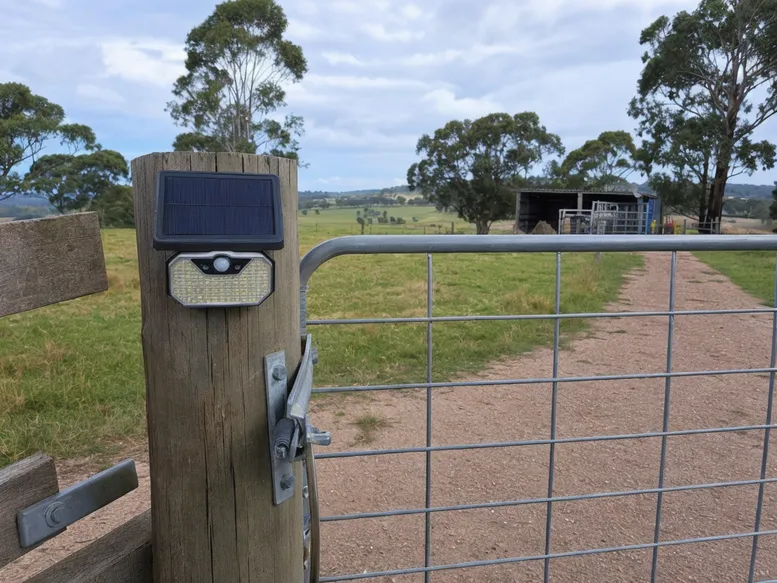
Farms, Rural Facilities, and Agricultural Supply Channels
Off-grid sheds, equipment storage areas, livestock gates, and perimeter fencing on farms and rural properties represent a large and underserved channel for outdoor solar motion sensor lighting. Agricultural supply stores and rural hardware distributors carry these products alongside fencing, irrigation, and equipment accessories.
Order patterns tend to be smaller per transaction — 5–20 units — but the customer base is broad and the reorder frequency is driven by farm expansion and equipment area additions rather than product failure.
Product Requirement
Extended battery autonomy (10+ hours runtime) and a housing that tolerates dust, mud, and temperature extremes.
LiFePO4 battery chemistry handles temperature cycling better than standard lithium-ion, which matters in markets with cold winters and hot summers.
Residential Retail and Private-Label Channels
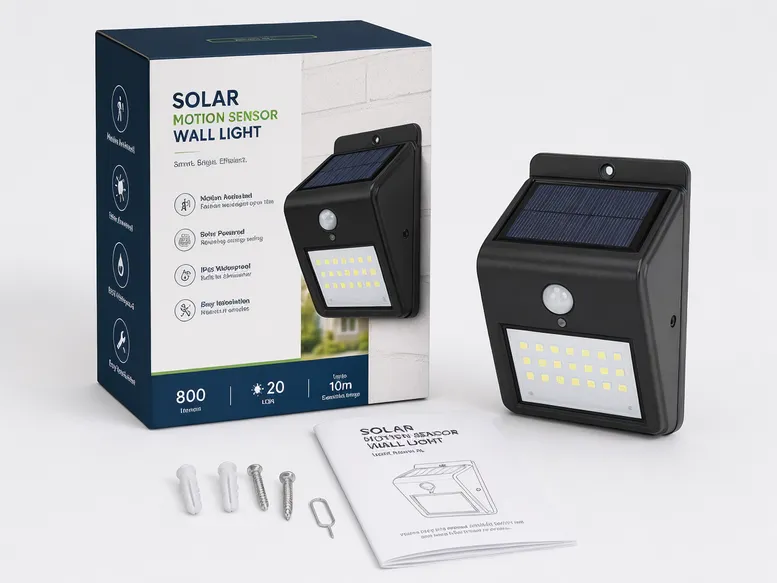
Wall-mounted and compact integrated motion sensor solar lights are a high-volume SKU in residential retail — hardware chains, home improvement stores, and e-commerce platforms. For buyers building a private-label solar lighting line, this is typically the entry SKU: low unit cost, broad consumer appeal, and a product that generates reviews and repeat purchases when it works reliably.
The margin structure in this channel depends on packaging quality and perceived product value — a well-packaged unit with clear installation instructions and a branded box commands a 20–30% premium over a generic equivalent.
Private-Label Support
Full private-label packaging, custom carton artwork, and accessory kit configuration for branded lines.
Order Volumes
Typically 500–1,000 units per SKU for initial stocking, with reorders triggered by sell-through data.
Temporary Sites, Rental Properties, and Construction
Low installation burden makes motion sensor solar lights a practical choice for temporary lighting on construction sites, rental properties between tenants, and event venues. Contractors and property managers in this segment value quick deployment and removal over long-term durability — the product needs to work reliably for 6–18 months without maintenance, not necessarily for 10 years.
This channel tends to order in smaller quantities (10–30 units) but with higher reorder frequency as projects turn over.
Looking for fixed-installation perimeter lighting without motion control? For broader security-lighting programs including permanent solar security fixtures, see Solar Security Lights.
Battery, Controller, and Sensor Testing Before Shipment
The failure modes that generate returns in motion sensor solar lights are predictable: battery capacity that doesn't match the spec sheet, controller faults that cause erratic triggering or no-trigger behavior, waterproof structure failures at the cable entry points, and lumen output that varies between units in the same batch. We've been tracking these failure patterns since 2012, and our production and inspection system is built around eliminating them before the container closes.
The production flow for solar powered motion sensor lighting runs through eight checkpoints. Incoming inspection covers solar panels (electrical output test), LED chips and modules (lumen binning and forward voltage check), battery cells (capacity and internal resistance matching), PIR sensors and controllers (function test on a sample basis), housings and fasteners (dimensional and surface check), and packaging materials.
Components that don't pass incoming inspection don't enter the production floor — this is where most batch inconsistency problems are caught, before they become assembly problems.
SMT assembly of the control board runs on automated lines with AOI (Automated Optical Inspection) after reflow to catch solder defects before the board is integrated into the fixture.
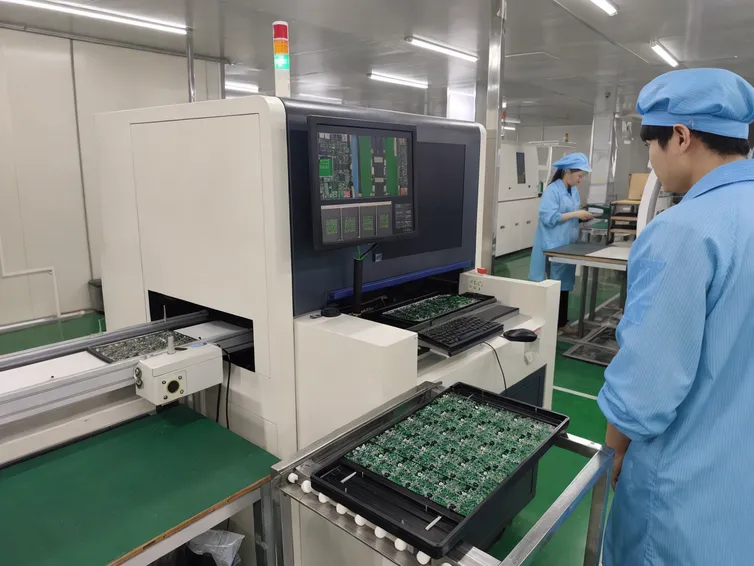
Eight-Checkpoint Production Flow
1. Incoming Inspection
Solar panels (electrical output), LED chips (lumen binning + forward voltage), battery cells (capacity + internal resistance), PIR sensors, housings, and packaging materials.
2. SMT Assembly + AOI
Automated SMT lines with Automated Optical Inspection after reflow. Catches solder defects before board integration into the fixture.
3. LED Module Assembly
Lumen-binned chips sorted by output and color temperature before assembly. Units within a batch land within a tight tolerance band.
4. Battery Pack Matching
Cells paired by capacity and internal resistance. Matched packs extend cycle life and keep runtime consistent across a batch.
5. PIR & Controller Test
Every unit tested: detection trigger, mode switching, delay time, and lighting output at each mode. No sample-basis shortcuts at this stage.
6. Aging Test
Assembled units run through full charge/discharge cycles under load before final assembly to surface early-life failures.
7. Waterproof Inspection
Cable entry points, housing seams, and lens seals checked against IP65 or IP67 requirements using in-house test equipment.
8. Final Packing Inspection
Accessory completeness, label accuracy, and carton integrity confirmed before sealing. Nothing ships without this sign-off.
Lumen Binning
The Step Most Factories Skip
LED module assembly uses lumen-binned chips — sorted by lumen output and color temperature before assembly so that units within a batch land within a tight tolerance band. The lumen binning step adds handling time. It's also the reason our buyers don't get complaints about "some lights are brighter than others" from their downstream customers.
Cell Matching
Why Runtime Stays Consistent
A pack built from unmatched cells will have one cell that charges and discharges faster than the others, shortening the effective pack life and causing runtime inconsistency between units. Battery pack matching pairs cells by capacity and internal resistance before assembly. Matched packs extend cycle life and keep runtime consistent across a batch.
The Result for Your Order
Fewer RMAs, consistent lumen output across the batch, and battery runtime that matches the spec sheet. For more on our factory and inspection system, see JXSOL factory and inspection system.
OEM/ODM Configuration Without Turning the SKU Into a Science Project
Most OEM/ODM requests for motion sensor solar lights fall into a predictable set of variables. Here's what we can configure without engineering review, what requires it, and where the practical limits are.
Standard Customization
Available from 100 units on most options
- Lumen output adjustment within the LED module's design range (typically ±30% without housing changes)
- Color temperature selection: 3000K warm white, 4000K neutral white, 5000K or 6500K daylight
- Battery capacity increase or decrease within the housing's battery compartment volume
- Solar panel wattage adjustment (within the controller's charge input range)
- Sensor delay time default (15 s, 30 s, 60 s, 120 s — set at firmware level)
- Default lighting mode (standby + trigger, always-on low, or off + trigger)
- Housing color: standard black, dark grey, white, or custom RAL color (minimum 500 units for custom color due to powder line changeover)
- Logo engraving or label on housing
- Custom carton artwork, private-label packaging, and accessory kit configuration
- Multi-language installation manuals
Engineering Review Required
Quoted separately with lead time
- Custom housing design or new tooling (new mold lead time: 25–35 days; tooling cost quoted separately)
- Detection range beyond the standard sensor module's specification (requires sensor module change)
- Extended battery autonomy targets for high-latitude or low-irradiance markets (requires solar panel and battery resizing calculation)
- High-temperature market configurations for ambient temperatures above 50°C (requires component derating review)
- Non-standard bracket or mounting configurations
- Integrated remote control or app connectivity (requires controller board change)
Practical Limits to Know Before You RFQ
Over-customizing a motion sensor solar light SKU can hurt your landed cost without adding proportional value. Adding a larger battery increases unit weight and shipping cost; adding a larger solar panel increases unit size and carton volume. Both affect container loading efficiency.
We'll flag these trade-offs during the engineering review — the goal is a configuration that works for your market and your margin, not the most technically impressive spec sheet.
Standard Catalog MOQ
100 units
OEM/ODM Typical MOQ
300–500 units
Lumen/CCT/battery + custom packaging
Engineering Review
Included
No additional charge
Installation Variables That Decide After-Sales Cost
Installation guidance on a product page is warranty-claim prevention, not a consumer manual. The variables below are the ones that generate the most post-sale support calls and return requests. Sharing this information with your downstream buyers before installation reduces your after-sales cost.
Mounting Height and Detection Geometry
PIR sensors have a fixed detection cone — the coverage area on the ground is determined by the sensor's detection angle and the mounting height.
Coverage Reference:
- 2.5m height, 120° angle: Coverage footprint roughly 5–6 meters wide at rated detection distance
- 5m height, same sensor: Wider footprint but may miss low-profile movement close to the wall
Practical recommendation: Mount between 2.5 and 4 meters for most residential and small commercial applications; confirm detection geometry against the installation layout before specifying to your buyers.
Solar Panel Orientation and Shade Exposure
This is the single most common cause of "the light doesn't stay on all night" complaints.
North-facing wall (Northern Hemisphere): Integrated unit charges at only 30–50% of rated capacity
Split-panel model (roof/south-facing): Charges at full rated capacity
For buyers supplying markets where north-facing installation is common — dense urban areas, covered walkways, shaded driveways — recommend split-panel models or include a note in the product documentation about panel orientation requirements.
Cable Routing and Connector Protection
For split-panel models, the cable between the solar panel and the light head needs UV-resistant conduit or cable clips if it runs along an exposed surface.
Most Common Waterproof Failure Point:
The connector junction — it should be positioned to avoid water pooling and secured against movement.
We supply weatherproof connector covers with split-panel models; confirm your buyers are using them.
Accessory and Documentation Planning for Distributors
If you're supplying motion sensor solar lights through a retail or e-commerce channel, the installation guide needs to be in the end-user's language and include a clear diagram of the sensor adjustment controls.
Key insight: Missing or unclear documentation is the second most common cause of returns in this category after panel orientation issues.
We can produce multi-language guides and include QR codes linking to video installation content for private-label orders.
For detailed installation guidance, see solar security lighting installation guidance.
Compliance and Documentation Buyers Can Actually Use
JXSOL holds ISO 9001:2015, CE, RoHS, IP65/IP67 Ingress Protection, and IEC 62124 certifications. Here's what each one means for your procurement and export process.
CE Declaration of Conformity
Covers the electrical safety and electromagnetic compatibility requirements for the European market.
For buyers importing into the EU or UK, CE documentation is required for customs clearance and retail distribution. We provide CE Declaration of Conformity with each order; test reports are available on request for the specific model.
RoHS Compliance
Covers restricted substance requirements (lead, mercury, cadmium, hexavalent chromium, PBB, PBDE) that apply to electrical and electronic equipment imported into the EU and increasingly into other regulated markets.
Our RoHS compliance traces to the component level — LED chips, battery cells, and electronic components are sourced from suppliers with material declarations, and we maintain batch records. For buyers importing into markets with restricted substance requirements, this means the compliance documentation is available and traceable, not just a checkbox on the product label.
IP65/IP67 Ingress Protection
Ratings are tested on our in-house waterproof inspection equipment, not assumed from housing design.
IP65: Dust-tight construction and protection against water jets — adequate for most outdoor wall-mount and area lighting applications.
IP67: Adds submersion protection to 1 meter for 30 minutes — matters for ground-level installations, loading dock environments, and markets with heavy rainfall or flooding risk.
Specify IP67 if your buyers are in coastal, tropical, or industrial environments. For buyers where IP rating is the primary project specification, see waterproof solar security lights for IP-focused projects.
IEC 62124
Covers photovoltaic standalone systems — the standard that governs solar charging system performance and reliability.
This is relevant for buyers supplying project tenders that specify solar system performance standards, particularly in European and regulated market infrastructure projects.
Documentation Provided Per Order
Test reports, declarations, and certificates are provided per order for the specific model.
If your destination market requires documentation beyond what's listed here — country-specific import certifications, safety marks, or tender-specific test reports — contact us before placing the order to confirm availability.
ISO
9001:2015
Protection
IP65/IP67
Safety
CE + RoHS
Solar
IEC 62124
Packaging and Reorder Details for Distributor Programs
Packaging for outdoor solar motion sensor lighting needs to survive export handling — a unit that arrives with a cracked lens or a bent bracket generates a return regardless of how well the product performs. Our export cartons use double-wall corrugated construction with foam inserts for the light head and solar panel (on split-panel models), and individual poly bags for accessories. Drop-test and compression-test standards are applied to carton design for new models.
Standard Export Packaging Details
Model-dependent specifications
- Individual unit in poly bag with foam protection
- Accessories packed separately in labeled bags: mounting hardware, cable clips (split-panel models), connector covers, installation guide
- Carton quantity: typically 4–10 units per carton depending on model size
- Carton dimensions and gross weight available for container loading calculation
- Batch code label on each carton for traceability
- Barcode and SKU label configurable for private-label programs
Distributor & E-commerce Programs
Channel-ready fulfillment
- Retail-ready packaging with product photography, feature callouts, and specification panel available for private-label orders
- FBA-compatible labeling (FNSKU, barcode placement) available on request
- Blind drop-shipping capability for e-commerce fulfillment programs
- Mixed-SKU orders across the solar flood and security lighting range are supported — you don't need to order each SKU separately
Reorder Consistency
Carton dimensions, accessory pack contents, and label formats are locked at the first production run and maintained across reorders. If a component or accessory changes between production runs, we notify you before production, not after shipment.
Ask for Carton Dimensions & Mixed-SKU Loading DetailsChoosing the Right Security Lighting SKU in the Same Range
Motion sensor solar lights cover the broadest range of motion-triggered outdoor solar lighting applications. If your project or channel has a more specific requirement, the sibling products below may be a better fit.
Motion Sensor Solar Lights
This Page
General motion-triggered solar security and area lighting; wall-mount, integrated, and split-panel configurations.
Solar Motion Sensor Flood Light
High-output flood-beam applications; wide-area coverage for large yards, sports areas, or commercial perimeters.
View productPIR Solar Security Lights
When PIR sensor type is the primary specification requirement; tender or project documents that specify PIR technology.
View productWaterproof Solar Security Lights
When IP67 rating is the dominant project requirement; coastal, industrial, or high-rainfall environments.
View productSolar Security Lights
Broader security lighting programs without motion-trigger as the primary feature; fixed-output perimeter and area lighting.
View productCommercial Solar Flood Lights
Larger-area project illumination; parking lots, sports facilities, commercial yards.
View productSolar Flood Lights
General solar flood lighting catalog SKUs; broad area illumination without motion control.
View productFAQ: Technical Selection and RFQ Readiness
What detection distance should I specify for motion sensor solar lights?
For most residential and small commercial applications — doorways, gates, single-bay entrances — a 5–8 meter detection distance is sufficient. At standard mounting heights of 2.5–4 meters, this covers the approach zone without generating false triggers from distant movement.
For wider coverage areas like warehouse yards, farm perimeters, or parking edges, specify 8–10 meter detection distance and confirm the sensor's detection angle covers the required width at the installation height.
If you're unsure, send us the installation layout dimensions and we'll recommend the sensor spec.
Are integrated or split-panel solar motion sensor lights better for outdoor projects?
It depends on the installation surface. Integrated units are simpler to install and lower in unit cost — they work well when the mounting surface gets direct sun for 5+ hours per day. Split-panel models are the right choice when the mounting surface is shaded, north-facing, or under a roof overhang. The split panel can be positioned independently for optimal sun exposure while the light head points at the target area.
For buyers supplying mixed installation environments, stocking both configurations reduces returns from "it doesn't charge" complaints.
We can supply both configurations from the same factory with consistent quality standards.
What IP rating is suitable for outdoor solar motion sensor lighting?
IP65 is the minimum for any outdoor application — it covers dust-tight construction and protection against water jets from any direction. IP65 is adequate for wall-mounted fixtures in standard outdoor environments.
Specify IP67 for:
- Ground-level or low-mount installations
- Loading dock environments
- Coastal locations with salt spray
- Tropical markets with heavy rainfall
- Any application where the fixture may be exposed to pressure washing
If your buyers are in industrial or agricultural environments, IP67 is the safer default.
Manufacturing note: We manufacture both IP65 and IP67 rated models. Confirm the rating requirement before ordering.
How do lighting modes affect battery runtime in solar powered motion sensor lighting?
The mode setting is the biggest variable in runtime performance.
LED draws minimal current at standby (typically 0.5–2W) and full current only during triggered periods.
Runtime (10,000 mAh pack)
10–15 hours standby
with multiple trigger events
LED draws continuously through the night at reduced output level.
Runtime (10,000 mAh @ 30%)
8–10 hours
before battery depletes
Procurement guidance: For markets with long winter nights or limited winter sun, standby-with-trigger mode is the configuration that keeps runtime complaints low.
We set the default mode at the factory — custom default modes are available on OEM runs.
Can JXSOL customize the sensor delay time, brightness mode, and color temperature?
Yes. Sensor delay time (15 s, 30 s, 60 s, 120 s), default lighting mode, and color temperature (3000 K–6500 K) are all configurable at the production stage. Delay time and mode defaults are set in firmware; color temperature is determined by LED chip selection at assembly.
These adjustments are available on standard OEM runs from 300–500 units depending on configuration.
For buyers who need field-adjustable delay time or mode switching, we can supply models with an external adjustment dial or remote control option — this requires a controller board change and engineering review.
Contact us with your configuration requirementsWhat is the MOQ for standard motion sensor solar lights?
Standard catalog models start at 100 units. This is low enough to test a new SKU with your customers before committing to a larger program.
OEM/ODM orders with custom lumen output, battery sizing, or packaging typically start at 300–500 units; orders requiring new tooling or custom housing design are quoted separately based on configuration.
Mixed-SKU orders across the solar flood and security lighting range are supported at the same MOQ thresholds.
What documents can JXSOL provide for export or project tender use?
We provide CE Declaration of Conformity, RoHS test reports, IP65/IP67 test certificates, and IEC 62124 documentation per order for the specific model. ISO 9001:2015 quality management system certificate is available for supplier qualification files.
For project tenders that require additional documentation — photometric test reports (LM-79), battery safety certifications, or country-specific safety marks — contact us before placing the order to confirm availability for the model you're specifying.
We maintain documentation by batch, so traceability records are available if your market requires them.
Get a Quote for the Exact Configuration
Send us the details that matter for your order and we'll come back with a configuration recommendation and pricing. The more specific you are, the faster we can turn around a useful quote.
Useful Information to Include
-
Target market and installation environment
Coastal, tropical, high-altitude, urban, rural
-
Required lumen output and detection range
-
Installation height and surface type
Wall, pole, integrated or split-panel preference
-
Order quantity and service type
OEM/ODM or standard catalog
-
Branding requirements
Private label, custom packaging, logo
-
Destination market and certification requirements
Production Capability
6 production lines, scheduled runs
Annual production capacity
Standard models from 100 units MOQ
OEM/ODM configurations go through engineering review before production — we confirm the spec is achievable and lock it before component procurement. Your order runs on a scheduled line, not in a queue.