

Waterproof Solar Security Lights Built for Exposed Positions
IP67-rated waterproof solar security lights for wet-environment supply, coastal projects, and exposed perimeter installations.
Built for mounting positions where standard IP65 models generate warranty claims — cable entry glands, lens seals, and housing joints tested under pressure before every container ships.
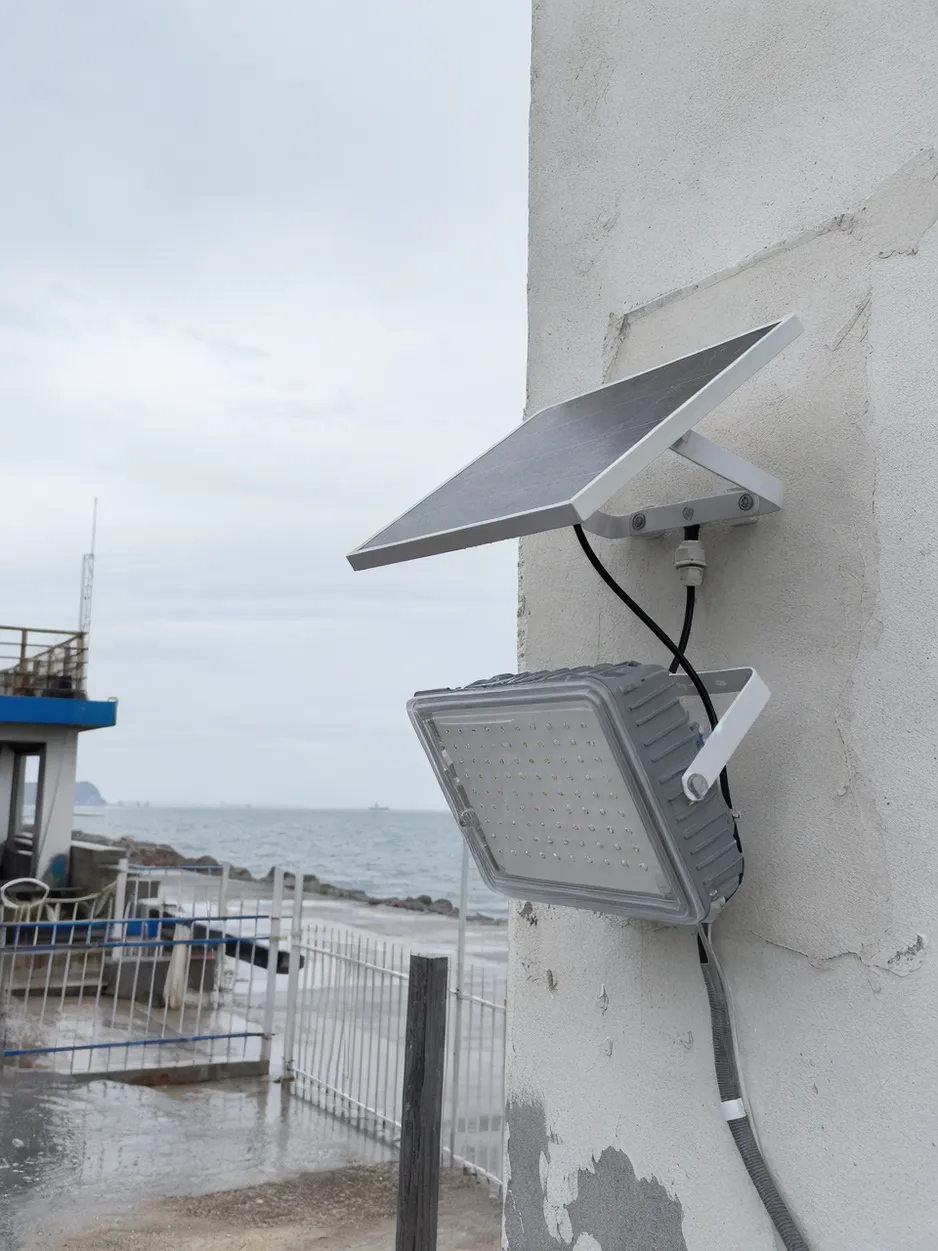
Waterproof Solar Security Lights for Wet-Environment Supply
Not every outdoor installation is the same. A wall-mounted security light on a sheltered building facade is a different procurement decision from a unit going onto a coastal property gate post, a ground-level parking entrance, or a farm compound in a region that gets 200mm of rain in a single month. The housing might look identical. The failure rate won't be.
Our waterproof solar security lights are the SKU for buyers whose accounts include those exposed positions — where water ingress at the cable gland, a failed lens seal, or a compromised housing joint turns a low-cost unit into a warranty claim and a credibility problem. IP67-rated construction, pressure-tested sealing, and 100% pre-shipment waterproof inspection are what separate this product from standard solar security lighting in our solar flood and security lighting range.
We've been manufacturing solar outdoor lighting since 2012. Waterproof failure was one of the three most common buyer complaints when we started, and we built our production system around it. The IP67 rating on these units is verified on our own test equipment — not assumed from housing design, not inferred from a supplier's spec sheet.
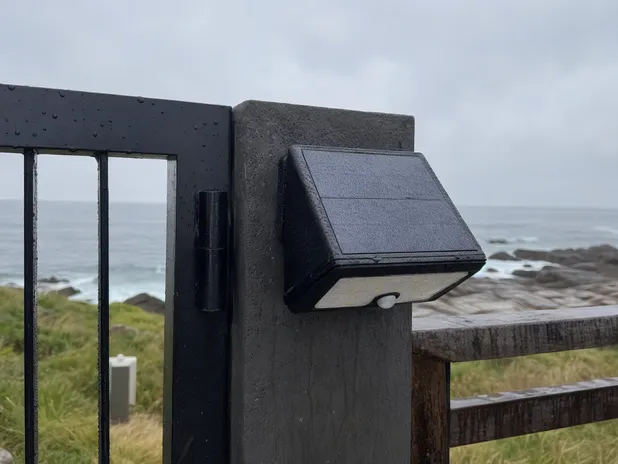
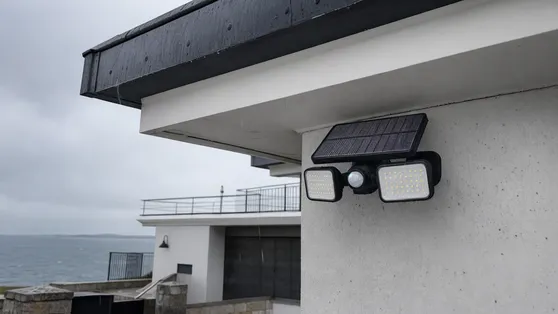
Exposed gate-post mounting — the position where standard IP65 units generate the most warranty claims.
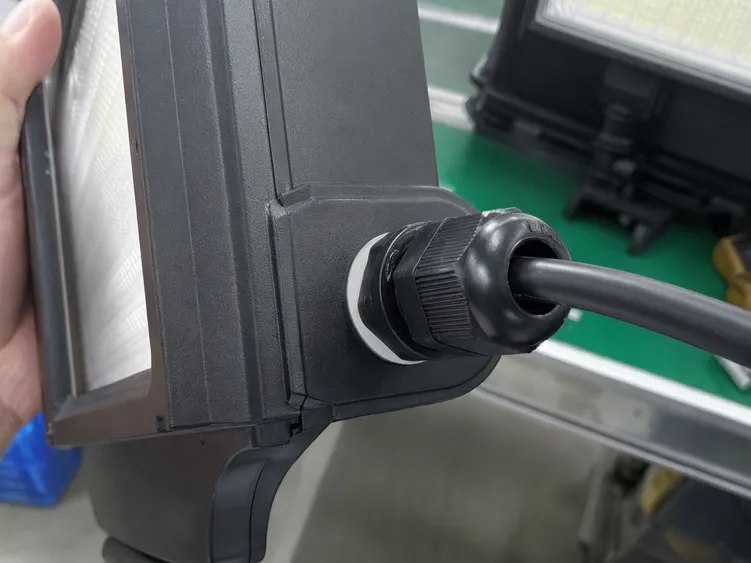
Cable Entry Glands
Torque-verified sealing at every cable penetration point — the #1 ingress failure location.
Lens Seals
Gasket material spec and seated-position inspection prevent assembly-stage failures.
Panel-Housing Joint
Junction between solar panel frame and housing sealed against pressure and UV degradation.
100% Pre-Shipment Test
Every unit tested on dedicated IP inspection equipment — not a post-assembly visual check.
Ready to source waterproof solar security lights?
Send your target market, IP requirement, lumen range, and order volume.
IP67 Waterproofing Is the Buying Reason, Not a Label
IP67 is a procurement safeguard, not a marketing claim. Understanding where solar security lights actually fail in wet environments is what makes the rating meaningful for your sourcing decision.
Where Wet-Environment Failures Actually Happen
The housing body almost never fails first. The failure points are the cable entry glands, the lens-to-housing seal, the junction between the solar panel frame and the housing, and any bracket penetration that creates a new path for water.
A unit can pass a visual inspection and still fail in the field if the gland torque is off by a fraction, if the gasket material degrades faster than expected in UV exposure, or if the lens seal wasn't seated correctly during assembly. These are assembly-stage failures, not design failures — which is why inspection at the end of the line matters more than the IP rating on the datasheet.
IP65 vs IP67: When the Difference Matters
Standard Protection
- Handles rain, dust, and direct water spray from any direction
- Sufficient for most wall-mounted or pole-mounted perimeter security lighting
- Appropriate for sheltered or elevated mounting positions
Submersion-Rated
- Submersion resistance to 1 meter for 30 minutes
- Ground-level mounting where water pooling is possible
- Coastal environments with salt-laden humidity
- Structures that get pressure-washed
- Survives storm drain overflow events
The difference between IP65 and IP67 isn't just a number on a spec sheet; it's the difference between a product that survives a storm drain overflow and one that doesn't.
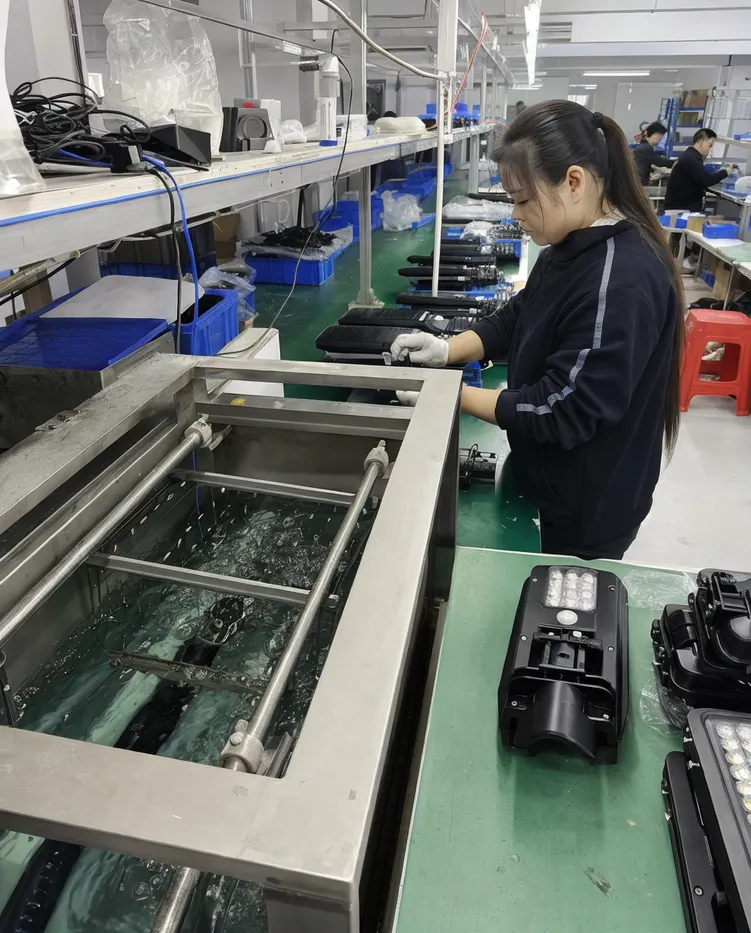
How We Test: Dedicated IP Inspection Equipment, Every Unit
We test waterproof structure on dedicated IP inspection equipment. Every unit. The gasket material spec, the gland torque checkpoint, and the lens seal inspection are part of the assembly process, not a post-assembly visual check.
Why we switched from visual-only inspection
We switched from visual-only waterproof inspection in our early years after a batch of units failed in the field despite looking correct on the line. The test equipment caught what the visual check missed.
For IP67 solar motion sensor lighting specifically, the sensor aperture and wiring harness add two more potential ingress points. Both are sealed and tested as part of the same waterproof inspection flow.
Need help choosing the right IP rating?
Send your IP rating requirement and installation environment — we'll confirm the right configuration.
Product-Level Specifications Buyers Can Put Into a Comparison Sheet
These are typical values for our waterproof solar security light range. Exact specifications vary by model and configuration — confirm the datasheet before quoting your accounts.
| Parameter | Typical Value / Range |
|---|---|
| LED Output | 800 lm – 4,000 lm (configurable within module design range) |
| LED Module | High-efficiency SMD LEDs, lumen-binned at assembly |
| Solar Panel Type | Monocrystalline silicon |
| Solar Panel Capacity | 6W – 20W (sized to battery and output requirements) |
| Battery Chemistry | Lithium iron phosphate (LiFePO4) |
| Battery Capacity | 5,000 mAh – 15,000 mAh |
| Lighting Modes | Always-on, motion-triggered, dim-to-bright, timer-based |
| PIR Detection Range | 5 m – 10 m (adjustable) |
| PIR Detection Angle | 90° – 120° |
| IP Rating | IP67 (verified on in-house test equipment) |
| Housing Material | Die-cast aluminum |
| Lens Material | Tempered glass or PC (model-dependent) |
| Color Temperature | 3,000K – 6,500K |
| Mounting Options | Wall bracket, pole mount (model-dependent) |
| Charging / Autonomy | 6–8 hours full sun → 2–5 nights autonomy (varies by mode and latitude) |
| Certifications | ISO 9001:2015, CE, RoHS, IP65/IP67, IEC 62124 |
| MOQ | 100 units (standard models) |
| OEM/ODM | Available — lumen, battery, panel, sensor, logo, packaging |
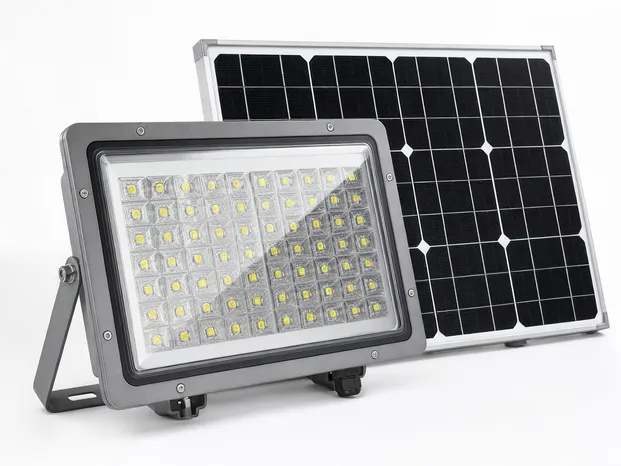
Specifications shown are typical for this product type. Actual values depend on model and configuration. Request the datasheet and quotation before finalizing your order.
Request Datasheet & QuoteCertification Documents
IP65/IP67 and export certification documents available per order — CE Declaration of Conformity, RoHS test reports, IP test certificates.
View CertificationsWhen to Specify IP67 Instead of Standard IP65 Models
The decision isn't about IP67 being better than IP65 across the board. It's about matching the waterproof spec to the installation environment. Speccing IP67 where IP65 is sufficient adds cost without adding value. Speccing IP65 where IP67 is needed generates returns.
Specify IP67 when:
- Mounting position is at or near ground level, where water pooling is possible
- Installation is in a coastal environment with salt-laden humidity and wind-driven rain
- The structure is pressure-washed periodically (loading docks, commercial yards, farm buildings)
- The region has heavy seasonal rainfall with standing water risk
- Your accounts have had water ingress complaints on standard solar security lights in the past
IP65 is sufficient when:
- The unit is wall-mounted at height on a sheltered building facade
- The installation is in a low-humidity inland environment
- The mounting position has natural drainage and no pooling risk
- Your accounts are in markets with moderate rainfall and no coastal exposure
Route Buyers to the Right SKU
The table below maps product types to typical use cases to help you route buyers to the right SKU:
| Product | Best Fit | IP Rating |
|---|---|---|
| Solar Security Lights | Standard outdoor perimeter, sheltered wall mounting | IP65 |
| PIR Solar Security Lights | Driveways, gates, building perimeters — motion-triggered | IP65 |
| Motion Sensor Solar Lights | Compact residential and small commercial resale | IP65 |
| Waterproof Solar Security Lights | Coastal, ground-level, high-humidity, exposed positions | IP67 |
| Commercial Solar Flood Lights | High-output warehouse yards, parking lots, large perimeters | IP65/IP67 |
If you're building a solar security lighting catalog that covers multiple account types, stocking both IP65 and IP67 SKUs gives you the range to cover standard and exposed installations without over-speccing every order.
Market Segments Where Waterproof Models Protect Your Margin
Waterproof solar security lighting sells into specific commercial segments where the IP67 spec is the reason the product moves — not a feature buyers have to be convinced of. These are the segments where returns on standard IP65 models are most likely, and where the waterproof SKU justifies a higher price point.
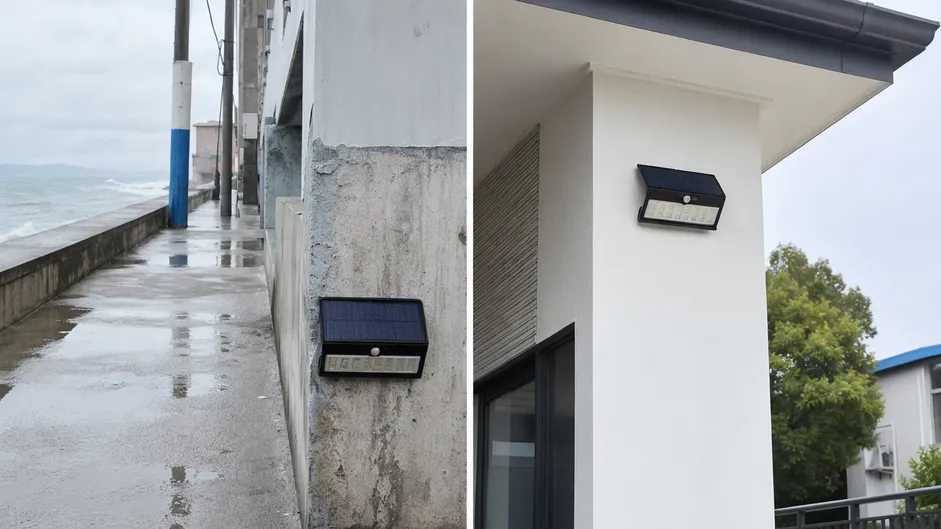
Coastal Property Maintenance & Management
Property managers and maintenance contractors serving coastal residential and commercial accounts deal with salt-laden humidity, wind-driven rain, and corrosive air year-round. Standard solar security lights generate disproportionate warranty claims in these environments.
IP67-rated waterproof solar security lighting is the correct spec for this segment, and buyers who stock it can position it as the right product for coastal accounts rather than a premium upsell.
Repeatable segment — same accounts reorder as properties expand or units reach end of life.
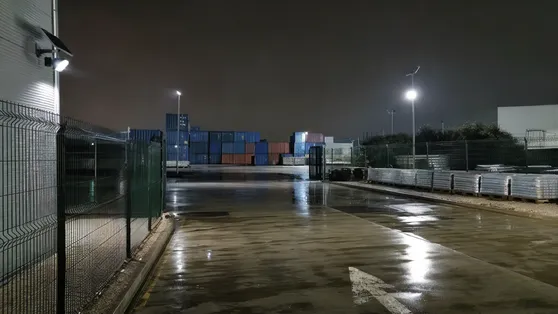
Outdoor Storage Yards & Logistics Facilities
Container yards, timber yards, agricultural storage, and logistics compounds need perimeter and access-point security lighting in environments where the fixtures get rained on, hosed down, and occasionally submerged in standing water during heavy weather.
The IP67 spec is a procurement requirement for facilities managers who've had failures before, not a nice-to-have.
Orders typically run 50–200 units per site, with repeat orders as facilities expand.
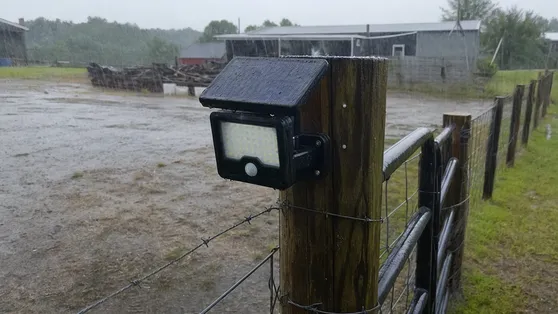
Farms & Rural Compounds
Agricultural buyers need perimeter lighting across large areas, often in regions with heavy seasonal rainfall. The combination of remote installation (no easy service access), wet conditions, and the need for reliable motion-triggered activation makes IP67 waterproof solar security lighting the practical choice.
Battery autonomy for low-irradiance seasons is the other key spec question for this segment — configurable through our OEM/ODM process.
Grown steadily in Southeast Asia and Africa over the last three years — worth building into your catalog if you cover those markets.
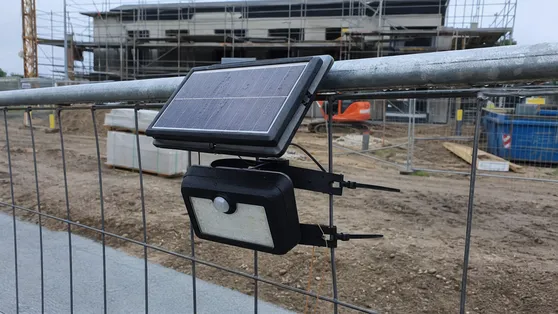
Construction Site Perimeters
Active construction sites need temporary security lighting that can be moved between sites, survives outdoor storage between projects, and works reliably in wet conditions.
Contractors who stock waterproof solar security lights as a standard site setup item reorder regularly — the product gets used hard and replaced on a project cycle. The IP67 spec reduces the failure rate on sites with poor drainage or exposed mounting positions.
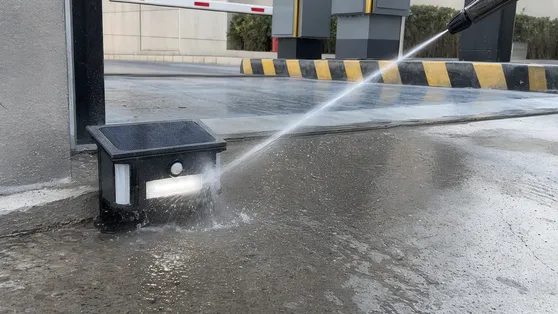
Parking Entrances & Loading Areas
Ground-level and low-mount security lighting at parking entrances, loading bays, and access control points is exposed to splash, standing water, and pressure washing. IP67 is the correct spec for these positions.
Property developers and facility contractors who specify solar security lighting for new builds increasingly require IP67 for any ground-level or low-mount position — it's becoming a standard project spec in markets with active building codes.
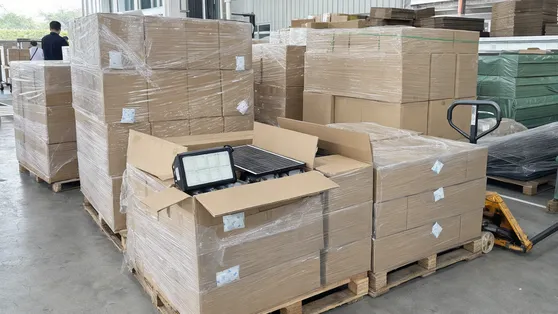
Distributors Covering Humid Regional Markets
If your distribution territory includes Southeast Asia, West Africa, the Gulf coast, or any market with a defined wet season, stocking IP67 waterproof solar security lighting as your standard security light SKU — rather than a specialty item — reduces your return rate across the board.
The cost difference between IP65 and IP67 models is smaller than the cost of processing warranty claims and managing customer complaints after a rainy season.
Build a Waterproof Security Light SKU for Your Market
Send your target region, volume, and account type — we'll configure the right IP67 model for your segment.
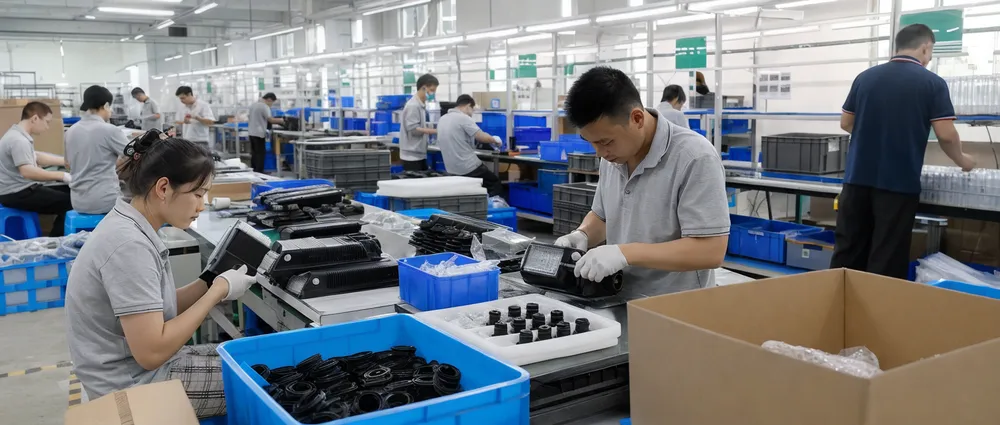
Waterproof Assembly Checks Before Your Container Ships
The IP67 rating is only as reliable as the assembly process behind it. Here's what happens on our production floor before a waterproof solar security light is packed into a carton.
Incoming Component Inspection
Inspection starts with the components that matter most for waterproof performance: gaskets, cable glands, lens seals, and housing castings.
Gasket material — checked against approved spec for hardness and material declaration. We've had batches from secondary suppliers that looked correct but had different compression characteristics, meaning the seal degraded faster under UV exposure. We check before the batch enters the line.
Housing castings — inspected for surface defects at sealing surfaces. A casting flaw at the lens groove or cable entry boss is a waterproof failure waiting to happen.
Assembly Line Controls
During assembly, critical waterproof checkpoints are defined and tooled — not visual-only steps.
Cable gland torque — a defined checkpoint with a torque tool calibrated to the gland spec value, not a visual step.
Lens seals — seated and inspected before the housing is closed.
Solar panel cable exit — one of the most common ingress points on poorly assembled units — sealed with a defined gland and inspected before the panel is attached to the housing.
Post-Assembly Waterproof Structure Inspection
After assembly, every unit goes through waterproof structure inspection on dedicated IP test equipment. This is not a sample check — it's 100% of units. The test confirms that the assembled unit meets the IP67 standard, not that the design is capable of meeting it.
Units that fail the waterproof test are pulled from the line, disassembled, the failure point identified, and the unit either reworked or scrapped.
We track the failure mode for every pulled unit. If a particular gland batch or gasket lot starts generating failures, we catch it before it becomes a container-level problem.
100%
Unit IP Test Rate
Tracked
Every Failure Mode
Controller & PIR Testing
Controller and PIR sensor function testing runs on a dedicated test bench — lighting modes, detection range, and sensitivity are verified before the unit moves to final assembly.
Battery Pack Matching
Battery packs are matched by cell capacity and internal resistance before assembly, and every pack goes through a charge/discharge cycle test on our aging racks.
LED Module Verification
LED module lumen output is confirmed against spec at the module stage, before installation into the housing.
Final Packing Inspection & Traceability
Final packing inspection covers every unit, every carton, every accessory pack, and every label. Batch codes are applied for traceability — if a quality issue surfaces in the field, you can trace it back to the production run and we can pull the inspection records.
OEM/ODM Configuration Without Breaking the Waterproof Design
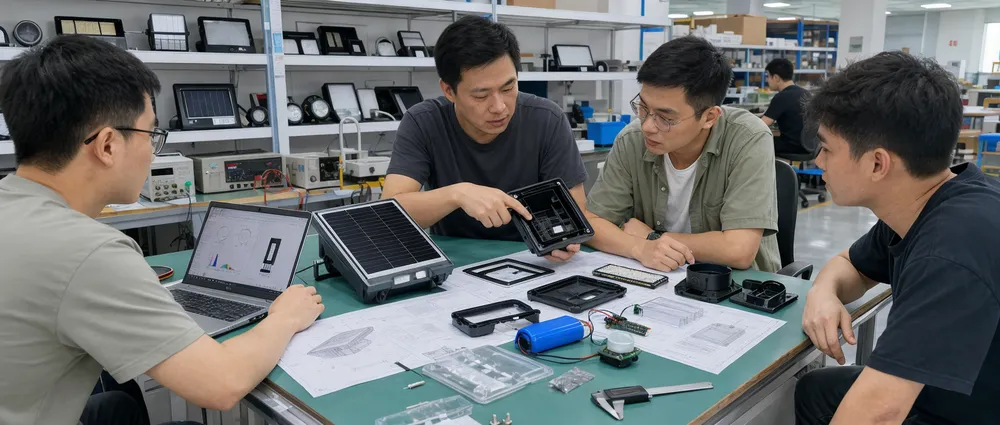
Most configuration requests for waterproof solar security lights are straightforward — lumen output, color temperature, battery capacity, sensor mode, logo, and packaging. These don't touch the waterproof structure and can be handled through our standard OEM/ODM process. Some requests do touch the structure, and those need engineering review before production.
Configurable Without Structural Change
Lumen output — adjusted within the LED module's design range. No housing change required for most adjustments.
Color temperature — 3,000K–6,500K, selectable per order.
Battery capacity — sized for target autonomy days based on your market's solar irradiance data. We've configured extended-autonomy packs for buyers in the Middle East and Africa who need 5–7 days of backup during low-irradiance seasons.
Solar panel capacity — sized to match battery and output requirements for your target latitude.
PIR detection range, sensitivity, and lighting mode sequences — configurable on sensor models.
Logo and packaging — custom packaging, labeling, and accessory configurations for private-label programs.
Housing color — custom colors available on runs over 100 units. Below that, the powder line changeover cost doesn't make sense for either side.
Requires Engineering Review & Waterproof Retest
Cable length changes that affect the cable entry gland spec
Panel relocation or new bracket penetrations that create additional housing openings
Housing modifications that change the sealing surface geometry
Sensor aperture changes on PIR models
Engineering review process: The review for waterproof models includes a waterproof performance check on the modified configuration before production is confirmed. We don't skip this step — a configuration that looks minor can change the sealing geometry in ways that aren't obvious until the unit is on a test bench. For IP67 solar motion sensor lighting with custom sensor configurations, the review typically adds a few days to the pre-production timeline but prevents a much larger problem downstream.
In-House R&D Team: 15+ Optical & Electrical Engineers
Our in-house R&D team handles OEM/ODM project support. The engineering review is included in the project process — not a separate charge.
Installation Details That Reduce After-Sales Claims
Installation decisions affect waterproof performance in the field. These are the points we flag to buyers who are supplying contractors or end-users who will install the product themselves.
Cable Entry Direction
Cable entries should face downward or sideways — never upward. An upward-facing cable entry creates a water collection point that can overwhelm the gland seal over time, even on IP67-rated units.
If the mounting position requires an upward cable entry, the installation guide should specify a drip loop in the cable before the entry point.
Mounting Angle and Drainage
The housing should be mounted so water drains away from the lens and cable entry points. Flat-mounted units on horizontal surfaces accumulate standing water around the seals.
A mounting angle of 5–10 degrees is enough to prevent pooling. Bracket design and mounting angle are part of the installation guide we provide with each order.
Solar Panel Placement and Exposure
The panel needs unobstructed southern exposure (northern hemisphere) or northern exposure (southern hemisphere) for the rated charging performance.
Partial shading from eaves, trees, or adjacent structures reduces charging efficiency and shortens battery autonomy — the most common complaint from end-users who installed the unit in a shaded position and then blamed the product for short runtime.
Ground Clearance
For ground-level or low-mount installations — the primary use case for IP67 waterproof solar security lighting — maintain clearance from soil and vegetation.
Direct contact with soil accelerates corrosion at the bracket and housing base, even on IP67-rated units. A minimum 100mm clearance from ground level is the standard recommendation.
Bracket Tightening and Seal Integrity
Bracket mounting screws should be tightened to the specified torque. Over-tightening can distort the bracket and change the housing seal geometry; under-tightening allows movement that fatigues the seal over time. The installation guide specifies torque values for bracket fasteners.
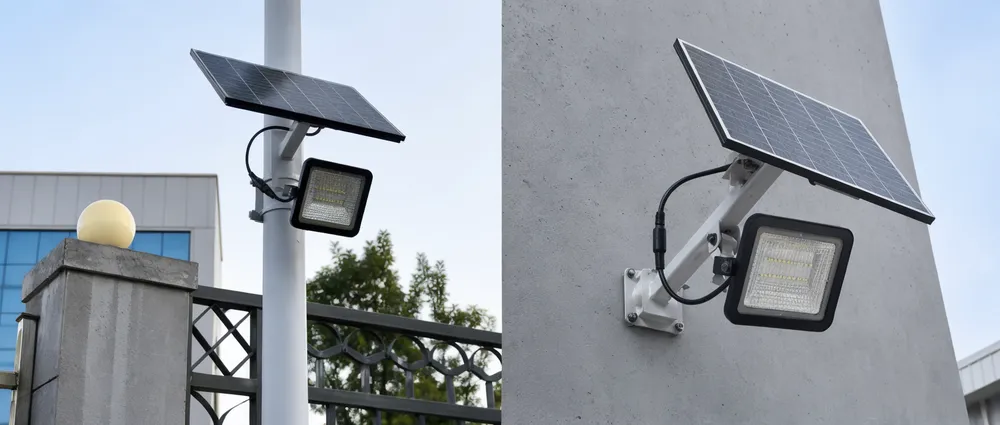
Providing clear installation guidance with your product reduces after-sales claims from installation errors — which are the most common source of warranty disputes in this category. For project supply, we can include project-specific installation notes in the documentation pack.
Export Packing, MOQ, and Reorder Planning
MOQ from 100 Units
MOQ for standard waterproof solar security light models starts at 100 units — low enough to test the SKU with your coastal or wet-environment accounts before committing to a larger program.
Mixed-SKU Orders
Mixed-SKU orders across our solar flood and security lighting range are standard; we consolidate at the carton level with a master packing list.
Private-Label Ready
For private-label programs, custom packaging, labeling, and accessory configurations are available on OEM/ODM orders. White-label readiness — including blind shipping and custom documentation — is standard for buyers building a branded solar lighting line.
Export Carton Packing for Waterproof Solar Security Lights
Solar panels are foam-cushioned in dedicated carton sections to prevent lens and cell damage during transit.
Mounting brackets and hardware are packed separately from the housing to prevent surface scratching.
Accessory packs — screws, anchors, cable ties, installation guides, and any market-specific documentation — are counted against a packing list before carton sealing. We count, not visually check.
Each carton carries a batch code for traceability. SKU labeling includes product code, lumen output, IP rating, and certification marks.
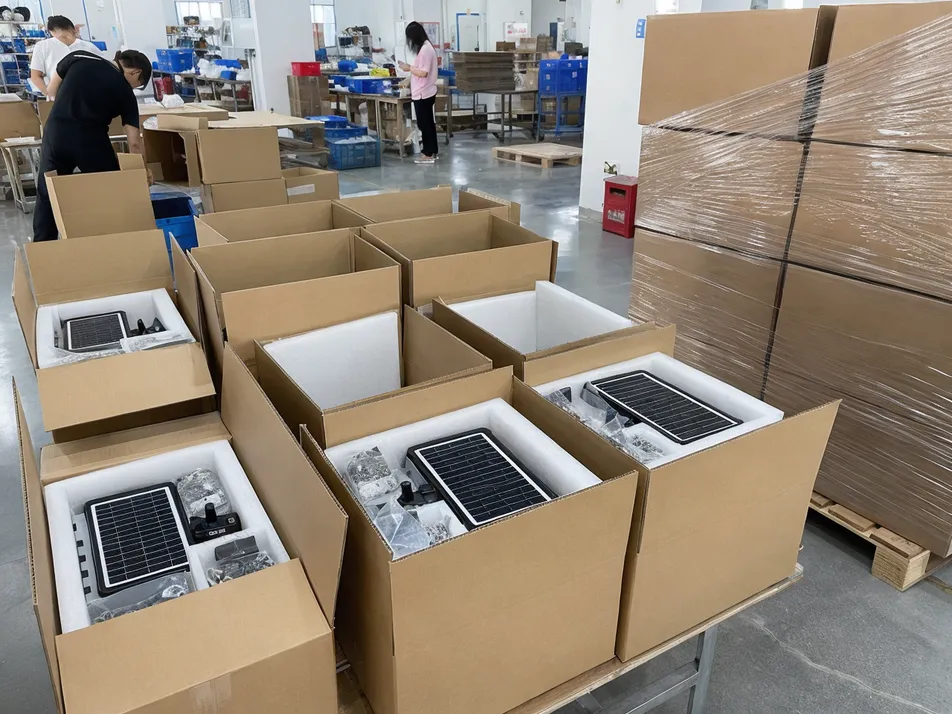
Pallet Configurations Available
Pallet configurations are available for buyers who need palletized delivery for warehouse receiving. Each pallet is stretch-wrapped and labeled with the master packing list for efficient goods-in processing.
FAQ for Waterproof Solar Security Light Buyers
What IP rating is best for outdoor solar security lights in rainy or coastal areas?
IP67 is the correct spec for coastal environments, ground-level mounting, and any installation where water pooling is possible. IP65 handles rain and direct water spray from any direction — it's sufficient for most wall-mounted or pole-mounted perimeter security lighting in standard outdoor environments.
The distinction matters when your accounts include coastal properties, flood-prone areas, or low-mount positions where standing water can accumulate around the unit. For those environments, IP65 units generate disproportionate warranty claims; IP67 units don't.
If you're building a catalog for a mixed market, stock both — IP65 for standard accounts, IP67 for exposed positions.
Is IP67 necessary for wall-mounted solar security lighting?
Not for most wall-mounted positions. A unit mounted at 2–4 meters on a sheltered building facade in a standard outdoor environment is well within IP65 capability.
IP67 becomes necessary when the wall-mounted position is exposed to wind-driven rain at high intensity, when the building is in a coastal environment with salt-laden humidity, or when the structure is periodically pressure-washed. The mounting height and exposure level matter more than the mounting method.
If you're unsure about a specific account's installation environment, IP67 is the lower-risk choice — the cost difference is smaller than the cost of a warranty claim.
What causes waterproof solar security lights to fail after one rainy season?
The two most common causes are water ingress at the cable entry gland and battery capacity drop from mismatched cells.
Water Ingress at the Gland
This is an assembly failure — the gland torque was off, the gasket material was wrong, or the seal wasn't seated correctly. A unit can pass a visual inspection and still fail in the field.
Battery Cell Mismatch
Mismatched internal resistance causes uneven degradation, and capacity drops faster than the rated cycle life — typically showing up as short runtime after 3–6 months in the field. Harder to detect before shipment.
How we address both: Dedicated waterproof structure inspection on test equipment (100% of units) and battery cell matching by capacity and internal resistance before pack assembly. See our certification and inspection documentation.
Can PIR motion sensor solar lights still be IP67 rated?
Yes. The PIR sensor aperture and wiring harness add two additional potential ingress points compared to a non-sensor model, but both are sealed and tested as part of the same waterproof inspection flow.
Our IP67 solar motion sensor lighting models carry the same IP67 rating as the non-sensor variants — the sensor integration doesn't compromise the waterproof structure when the assembly is done correctly.
Sensor aperture: Uses a sealed lens cover
Wiring harness: Exits through a dedicated gland with the same torque spec as the main cable entry
Sourcing guidance: If you're sourcing PIR solar security lights for coastal or wet-environment accounts, specify IP67 — the sensor doesn't change the waterproof requirement.
What should buyers check before ordering waterproof solar security lights in bulk?
Three things: confirm the IP rating is verified on test equipment (not assumed from housing design), confirm battery cells are matched by capacity and internal resistance (not just assembled from a bulk cell batch), and confirm lumen output is tested at the module stage (not quoted from the LED chip spec sheet). These are the three most common sources of field failures in this product category.
Ask for the IP test certificate, the battery matching process description, and the lumen test method. If a supplier can't answer those questions specifically, the IP67 claim is a label, not a production standard.
Request our certification and inspection documentationWhat is the MOQ for JXSOL waterproof solar security lights?
100 units for standard catalog models. This is low enough to test the SKU with your wet-environment or coastal accounts before committing to a larger program.
OEM/ODM projects with custom specifications — modified battery capacity, custom lumen output, private-label packaging — have higher MOQs depending on the configuration; the engineering review at the start of the project confirms the MOQ and lead time for your specific requirements.
Request a quoteInclude your target model, volume, destination market, and any customization requirements.
Send Your Installation Environment, IP Requirement, and Order Volume
Tell us your target market, installation environment (coastal, ground-level, standard outdoor), required lumen range, motion sensor needs, IP rating requirement, order volume, and whether you need private-label packaging or custom battery configuration. We'll come back with a specific configuration recommendation — not a generic catalog PDF.
Address
9th Floor, Houda Industrial, No. 65 Pinghe Road, Guzhen Town, Zhongshan, Guangdong, 528421, China