

Commercial Solar Street Lights Direct From Factory
Project-grade commercial solar street lights for industrial roads, logistics yards, and commercial campuses — factory-direct from JXSOL.
LiFePO4 battery, IP65/IP67 weatherproof construction, 100% pre-shipment inspection, and flexible MOQ from 100 units for standard models. OEM/ODM supported.
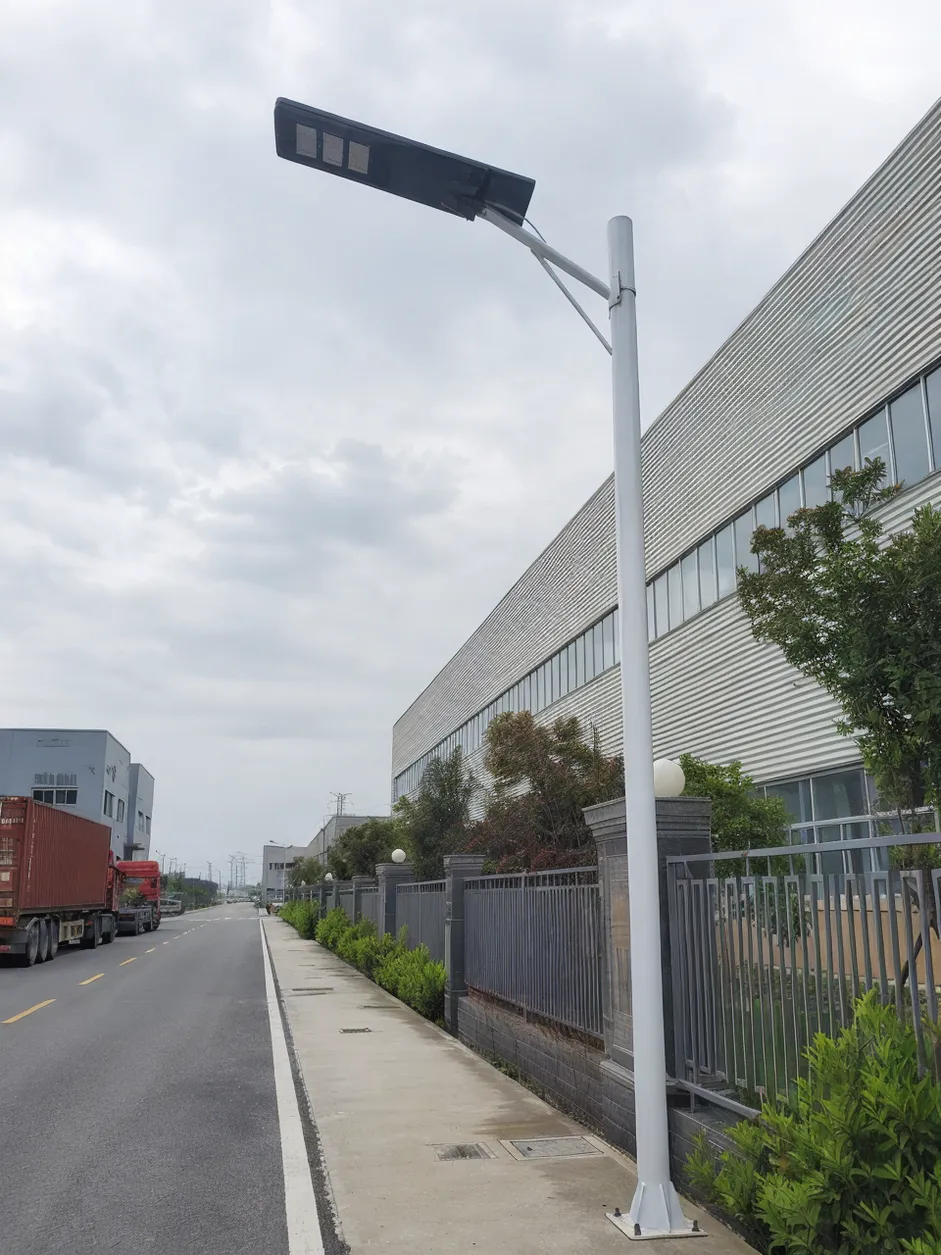
Commercial Solar Street Lights for Repeatable Project Supply
Commercial solar street lights are project-grade outdoor fixtures built for roads, access lanes, and site perimeters where grid connection is impractical, expensive, or simply not the right choice. The buyer profile for this product is different from residential solar lighting: you're sourcing for a commercial development, an industrial zone, a logistics facility, or a distribution program where the fixture needs to perform consistently across a full project deployment — not just in a sample test.
We've been manufacturing solar street and roadway lighting since 2012. Commercial solar lighting is a significant part of what we produce, and the requirements are specific: higher lumen output than residential fixtures, battery autonomy sized for the local climate, waterproof construction that holds up in field conditions, and batch consistency that lets you reorder six months later and get the same product. A fixture that passes a sample test but drifts in lumen output or battery performance by the third batch is a warranty problem, not a product.
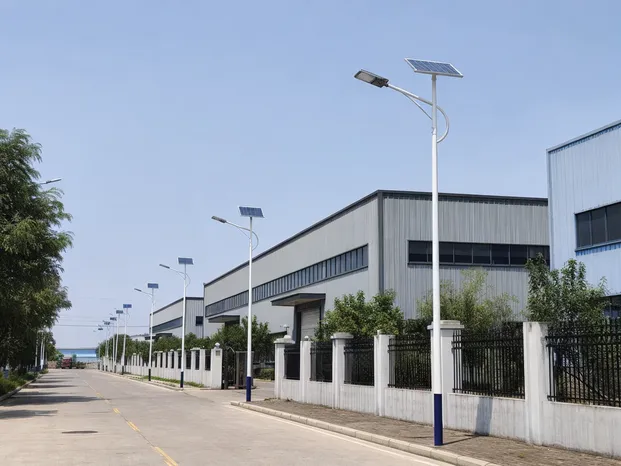
Production System Behind the Product
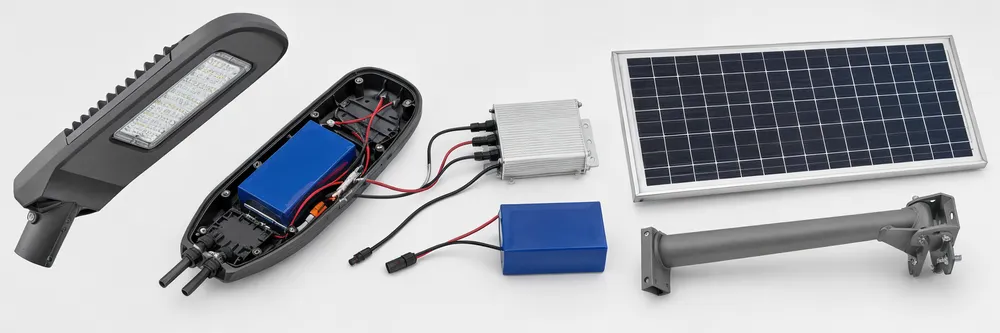
Our commercial solar street lights run on LiFePO4 battery chemistry, assembled with cell matching by capacity and internal resistance, and every unit goes through a full charge/discharge aging test before final assembly. Lumen output and color temperature are confirmed at the LED module stage — not assumed from the chip datasheet. IP65/IP67 waterproof structure is tested on our own inspection equipment, 100% per unit. That's the production system behind the product.
Evaluating Commercial Solar Lighting for a Project?
Send us your road width, pole height, target lumen output, and order quantity — we'll confirm the right configuration and send back a detailed quote.
Specs Buyers Can Put Into a Project Comparison Sheet
The table below covers the typical specification range for our commercial solar street lights. These are project-grade configurations — not the minimum-spec all-in-one fixtures that dominate the low end of the market. Use this table to confirm that our range covers your project requirements before sending an RFQ. Final specifications are confirmed per project design; contact us for a product data sheet matched to your exact parameters.
| Specification | Typical Range | Buyer Note |
|---|---|---|
| LED Power | 30W – 200W | Match to road width, pole height, and required lux level. Higher wattage alone doesn't guarantee coverage — beam angle and mounting height are equally important. |
| Lumen Output | 3,000 lm – 24,000 lm | Confirmed at the fixture level, not at the LED chip. We test and confirm lumen output at the module assembly stage before final assembly. |
| Solar Panel | 40W – 300W monocrystalline | Panel wattage is sized against battery capacity and daily operating hours. Oversizing the panel without matching battery capacity wastes cost without improving autonomy. |
| Battery Type | LiFePO4 (lithium iron phosphate) | Standard across our commercial range. 2,000+ cycle life, wider operating temperature range, and safer chemistry than lead-acid or standard lithium. |
| Battery Capacity | 30Ah – 150Ah | Sized for target autonomy days and daily operating hours. Confirm your autonomy requirement (typically 3–5 days) and operating hours (8–12 hours/night) before RFQ. |
| Autonomy Days | 3 – 7 days | Depends on battery capacity, panel wattage, and daily operating hours. Higher autonomy = larger battery and panel, which affects unit cost and housing size. |
| Color Temperature (CCT) | 3000K – 6500K | 4000K–5000K is standard for commercial road and industrial applications. 3000K warm white is available for resort or hospitality environments. |
| Beam Angle / Optics | Type II / Type III / Type V road optics | Road optics distribute light along the road surface rather than in a circular pattern. Confirm road width and pole spacing before specifying beam angle. |
| Pole Height Compatibility | 5m – 12m | Confirm pole height and arm length before specifying beam angle. We supply solar street lighting poles alongside fixtures. |
| Lighting Modes | Full power / 50% dim / motion-activated / scheduled dimming | Standard models include full power and 50% dim. Smart configurations add scheduled dimming and remote control. |
| Sensor Options | PIR motion sensor (standard) / no sensor / dual PIR | PIR motion sensing is standard on most commercial models. Sensor-free configurations available for sites with continuous traffic. |
| Controller Type | MPPT solar charge controller | MPPT maximizes panel energy harvest across varying light conditions — relevant for sites with partial shading or variable irradiance. |
| IP Rating | IP65 / IP67 | IP65 is standard for most commercial applications. IP67 is available for flood-prone or coastal installations. Both are tested on our own waterproof inspection equipment. |
| Operating Temperature | -20°C to +60°C | Covers most commercial deployment environments. Confirm if your installation site has extreme temperature conditions. |
| Charging Time | 6–8 hours (full sun) | Varies by panel wattage and battery capacity. Confirm against your target latitude's peak sun hours. |
| Housing Material | Die-cast aluminum, powder-coated | Standard colors: silver grey, black, dark green. Custom colors available on runs of 100+ units. |
| Certifications | CE, RoHS, IP65/IP67, IEC 62124 | Documentation provided with order. CE Declaration of Conformity, RoHS test reports, and IP test certificates available on request. |
| Warranty | 3 years | Covers manufacturing defects. Battery and LED module performance covered under standard warranty terms. |
LED Power
30W – 200WMatch to road width, pole height, and required lux level. Higher wattage alone doesn't guarantee coverage — beam angle and mounting height are equally important.
Lumen Output
3,000 – 24,000 lmConfirmed at the fixture level, not at the LED chip. We test and confirm lumen output at the module assembly stage before final assembly.
Solar Panel
40W – 300WPanel wattage is sized against battery capacity and daily operating hours. Oversizing the panel without matching battery capacity wastes cost without improving autonomy.
Battery Type
LiFePO4Standard across our commercial range. 2,000+ cycle life, wider operating temperature range, and safer chemistry than lead-acid or standard lithium.
Battery Capacity
30Ah – 150AhSized for target autonomy days and daily operating hours. Confirm your autonomy requirement (typically 3–5 days) and operating hours (8–12 hours/night) before RFQ.
Autonomy Days
3 – 7 daysDepends on battery capacity, panel wattage, and daily operating hours. Higher autonomy = larger battery and panel, which affects unit cost and housing size.
Color Temperature (CCT)
3000K – 6500K4000K–5000K is standard for commercial road and industrial applications. 3000K warm white is available for resort or hospitality environments.
Beam Angle / Optics
Type II / III / VRoad optics distribute light along the road surface rather than in a circular pattern. Confirm road width and pole spacing before specifying beam angle.
Pole Height Compatibility
5m – 12mConfirm pole height and arm length before specifying beam angle. We supply solar street lighting poles alongside fixtures.
Lighting Modes
4 modesFull power / 50% dim / motion-activated / scheduled dimming. Standard models include full power and 50% dim. Smart configurations add scheduled dimming and remote control.
Sensor Options
PIR standardPIR motion sensing is standard on most commercial models. Sensor-free configurations available for sites with continuous traffic. Dual PIR also available.
Controller Type
MPPTMPPT maximizes panel energy harvest across varying light conditions — relevant for sites with partial shading or variable irradiance.
IP Rating
IP65 / IP67IP65 is standard for most commercial applications. IP67 is available for flood-prone or coastal installations. Both are tested on our own waterproof inspection equipment.
Operating Temperature
-20°C to +60°CCovers most commercial deployment environments. Confirm if your installation site has extreme temperature conditions.
Charging Time
6–8 hoursVaries by panel wattage and battery capacity. Confirm against your target latitude's peak sun hours.
Housing Material
Die-cast aluminumPowder-coated finish. Standard colors: silver grey, black, dark green. Custom colors available on runs of 100+ units.
Certifications
CE, RoHS, IECCE, RoHS, IP65/IP67, IEC 62124. Documentation provided with order. CE Declaration of Conformity, RoHS test reports, and IP test certificates available on request.
Warranty
3 yearsCovers manufacturing defects. Battery and LED module performance covered under standard warranty terms.
Specifications shown are typical configuration ranges for this product family. Final specifications depend on project design inputs (road width, pole height, target lux, installation latitude, autonomy days). Contact us for a project-specific data sheet.
Get Matching Data SheetBattery, LED, and Waterproof Controls That Protect Reorders
The three failure modes that generate the most warranty claims in commercial solar street lighting are battery capacity degradation after one or two seasons, lumen output inconsistency across batches, and waterproof structure failure in field conditions. We built our production system around those three points — not because they're the only things that matter, but because they're the ones that turn a first order into a warranty dispute instead of a reorder.
Battery Matching and Aging Tests
Battery failure in solar street lighting is almost never a single-cell defect. It's a matching problem. When cells with different internal resistance values are assembled into a pack, the weaker cells discharge faster and degrade faster, pulling down the whole pack within one or two seasons.
We match battery cells by capacity and internal resistance before pack assembly. Every completed pack then goes through a full charge/discharge cycle test on our aging test racks — not a continuity check, a full cycle under load.
Packs that don't hold their rated capacity within tolerance are pulled before they reach the fixture.
This step adds time to the production schedule. It also means we don't ship battery packs that will fail after one rainy season. We've kept it as a non-negotiable since the early years — the cost of a field replacement is higher than the cost of the test.
LED Module Assembly and Lumen Confirmation
Lumen inconsistency across batches shows up as a field problem: your customer installs 80 fixtures and notices that some are visibly brighter or cooler than others. The root cause is LED chip binning — chips from the same production run can vary in lumen output and color temperature if they're not sorted before assembly.
We run lumen binning at the LED module assembly stage. Chips are sorted by lumen output and color temperature bin before assembly into modules, and lumen output is confirmed at the module level before the module moves to final assembly.
Color temperature is confirmed against the specified CCT range, not assumed from the chip datasheet. This is the step that keeps your batches consistent across reorders — which matters when your customer is expanding a site in phases and expects the new fixtures to match the ones already installed.
IP65/IP67 Waterproof Inspection
Waterproof claims in solar lighting are easy to make and hard to verify without the right equipment. Housing design alone doesn't guarantee IP performance — seal integrity depends on gasket compression, fastener torque, cable entry sealing, and assembly consistency.
We test waterproof structure on our own IP inspection equipment, 100% per unit. IP65 units are tested for dust ingress protection and water jet resistance. IP67 units are tested for temporary immersion.
Units that fail are pulled, the failure mode is identified, and the assembly process is corrected before the batch continues.
Four-Stage Quality System
The full quality system runs four stages from incoming materials to sealed container. ISO 9001:2015 governs the system.
Incoming Inspection
Components verified against specifications before entering production. Cells, chips, housings, and connectors checked at intake.
In-Process Inspection
SMT and LED module assembly monitored at critical control points. Lumen binning and solder quality verified during production.
Reliability Checks
Aging tests on battery packs, lighting mode verification, and IP waterproof testing. Full charge/discharge cycles under load conditions.
100% Outgoing Inspection
Every unit inspected before the container is sealed. Certifications and documentation prepared per order requirements.
Market Segments Where Commercial Solar Lighting Sells
Commercial solar street lights serve a range of project types with different volume profiles, specification requirements, and buying patterns. The segments below are the ones where we see consistent repeat orders — not one-off projects, but programs where the buyer comes back because the product performed and the supply chain held.
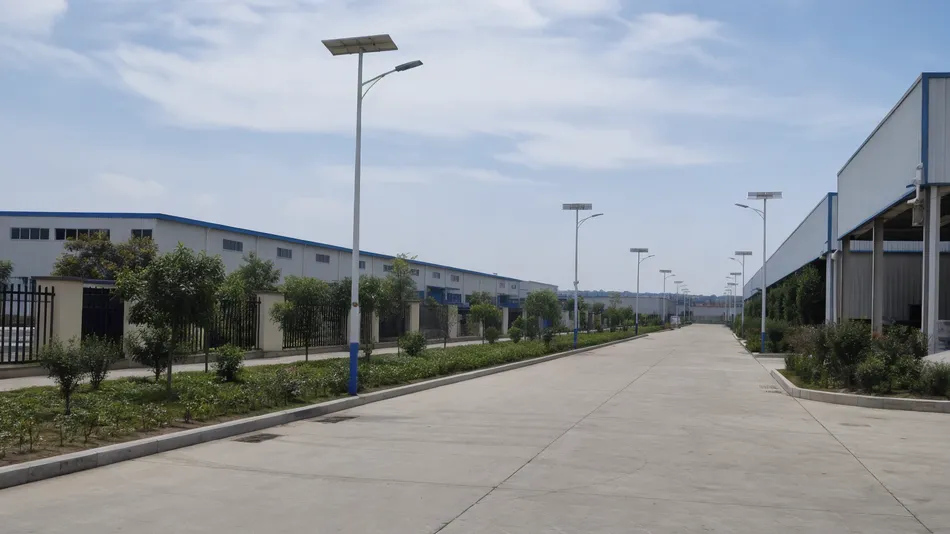
Industrial Parks and Warehouse Roads
Industrial park developers and warehouse operators install commercial solar street lights on internal roads, loading access lanes, and perimeter paths as part of site infrastructure. These buyers are cost-sensitive on a per-unit basis but value installation simplicity and low maintenance — all-in-one configurations are the most common choice for standard internal roads.
Key Specifications for This Segment
- Lumen output: 8,000–16,000 lm for main access roads — higher than residential street lighting
- Operating hours: Extended to cover early-morning and late-evening logistics activity
- Order volumes: 100–500 units per phase, with repeat orders as development expands
Industrial solar lighting for this segment has grown steadily for us in Southeast Asia and the Middle East — infrastructure investment in both regions is driving demand for off-grid site lighting as an alternative to grid extension.
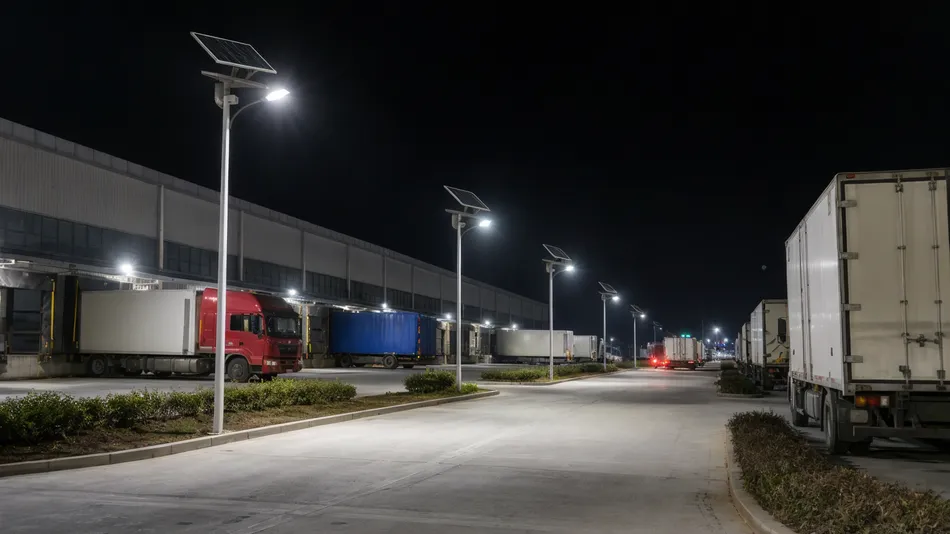
Logistics Yards and Loading Access Roads
Logistics facilities — distribution centers, port access roads, freight yards — require durable lighting for vehicle movement and site safety. Fixtures in this environment take more physical stress than standard road installations — vibration from heavy vehicles, dust, and occasional pressure washing.
Key Specifications for This Segment
- Operating hours: 10–12 hours/night for 24-hour operations
- Lumen output: Sufficient for vehicle navigation and site safety
- Battery autonomy: Sized for local climate conditions
- IP rating: IP67 worth specifying for sites with regular water exposure
Reorder cycle: Buyers in this segment typically run repeat orders on 6–12 month cycles as facilities expand or replace aging fixtures.
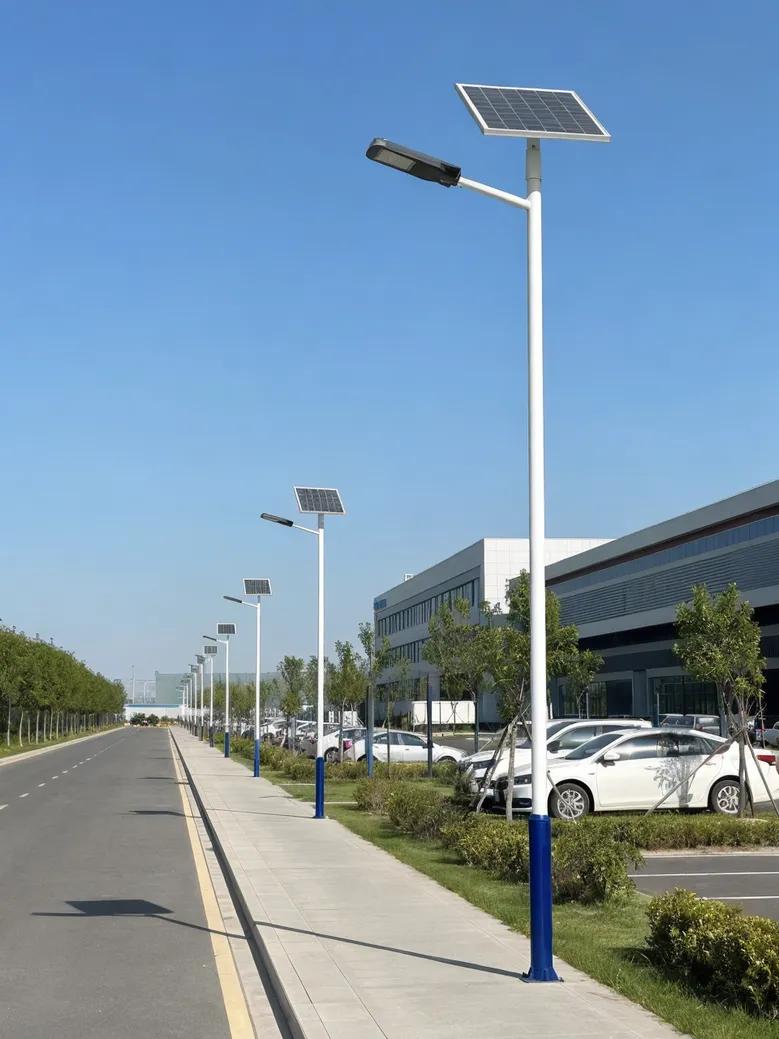
Business Campuses and Commercial Complexes
Commercial developers and property managers installing solar street lights on campus roads, parking access lanes, and pedestrian paths have a different priority: fixture appearance and CCT consistency across the site. A mixed batch of fixtures with different color temperatures or housing finishes is a visible quality problem for a commercial property.
We address this through lumen binning and CCT confirmation at the module assembly stage — the same process that protects reorder consistency for distributors.
Key specifications for this segment:
- Custom housing colors and private-label packaging available
- MOQ from 100 units — practical for site-specific color runs
- Lumen binning and CCT confirmation at module assembly stage
Resorts, Private Roads, and Gated Communities
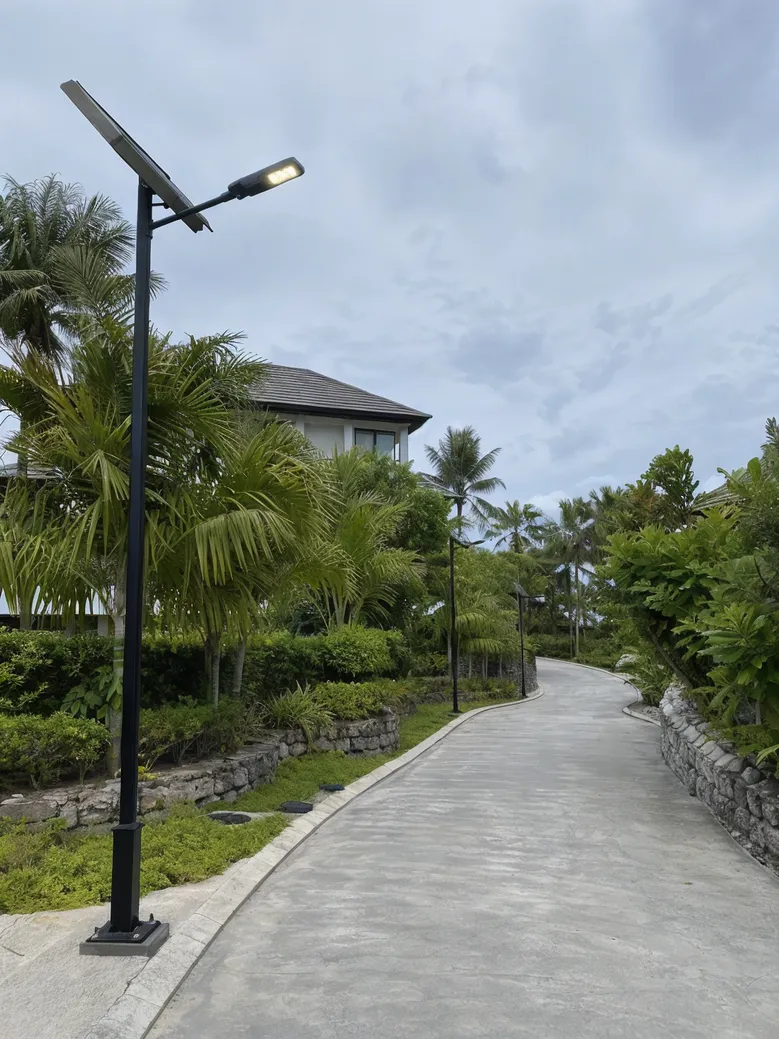
Off-grid installation value is highest where grid trenching cost is significant — resort developments, private road networks, and gated communities in areas without reliable grid access. Solar street lighting eliminates the trenching cost entirely, which is often the largest line item in a road lighting project.
For this segment, warm color temperatures (3000K–4000K) and lower pole heights (5–6m) are common specifications, and fixture aesthetics matter more than in industrial applications.
3000K–4000K
Warm CCT Range
5–6m
Pole Height
5–7 Days
Battery Autonomy
Battery autonomy of 5–7 days is worth specifying for resort locations in tropical regions with monsoon seasons.
Municipal Pilot Roads and Rural Public Roads
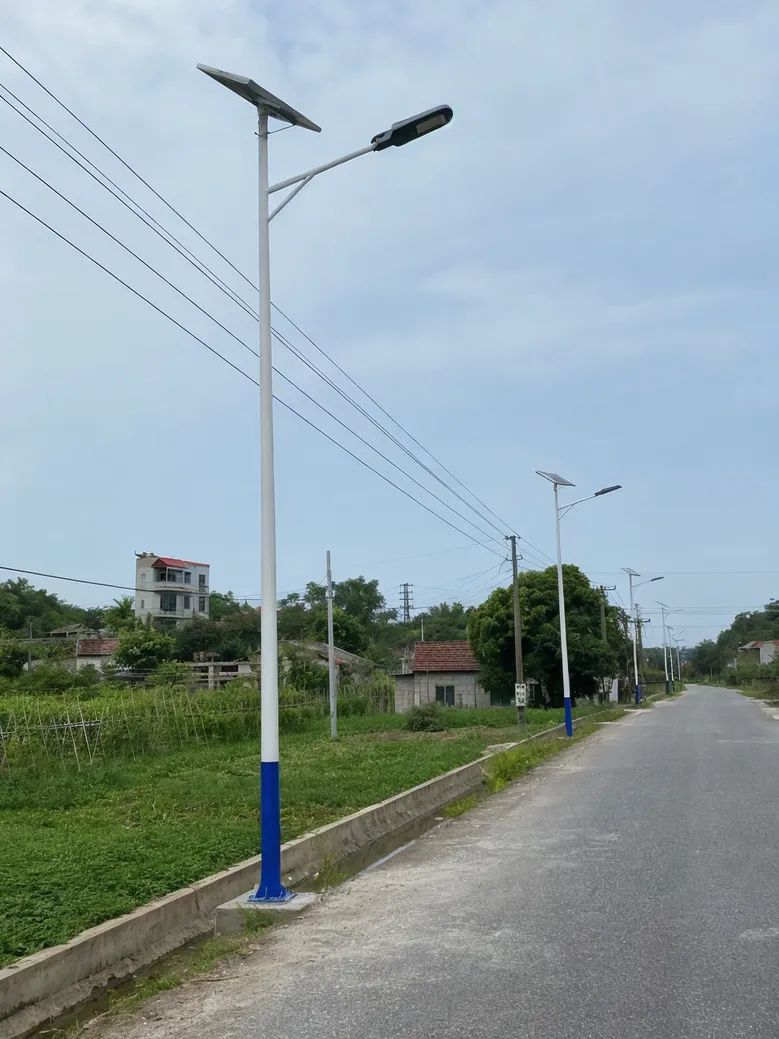
Municipal governments running pilot solar street lighting programs and rural road projects represent a high-documentation segment. CE, IEC 62124, and IP certification documentation are standard requirements for project submittals.
Battery autonomy is a primary specification input — rural roads in lower-irradiance regions or with monsoon seasons need 5+ autonomy days to avoid dark periods.
Typical project parameters:
Having the compliance documentation ready at RFQ stage shortens the procurement review cycle for these buyers. Order volumes for municipal pilots typically run 200–1,000 units, with larger follow-on orders if the pilot performs.
Ready to Discuss Your Target Segment?
Share your target market segment and expected annual volume. We'll confirm which product configurations, certifications, and MOQ tiers apply to your project pipeline.
Send Your Target Segment and Expected Annual VolumeSizing by Road Width, Pole Height, and Autonomy Days
Getting the configuration right before production is the step that prevents the most expensive problems in commercial solar street lighting. A fixture that's undersized for the road width generates complaints. A battery sized for 3 autonomy days in a region with 5-day monsoon stretches generates dark periods. Both are preventable if the right inputs go into the configuration before the order is placed.
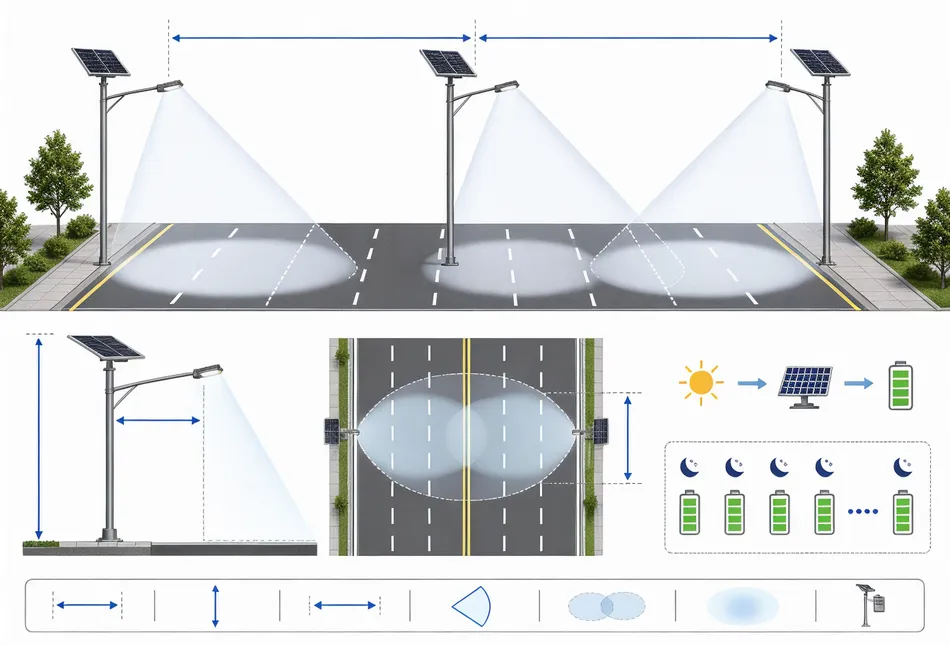
Here's what we need to confirm the right specification for your project:
Road Width & Pole Spacing
Determines required beam spread and fixture overlap between poles.
Pole Height & Mounting Arm
Affects beam spread and required lumen output for road coverage.
Target Lux Level or Lumen Output
Commercial road lighting typically targets 10–30 lux at road surface level.
Road Width & Pole Spacing
Road width determines the required beam spread. Pole spacing determines the overlap between fixtures. For a standard two-lane commercial road (7–8m wide) with poles on one side at 25–30m spacing, a Type III road optic at 8–10m pole height typically covers the requirement. Wider roads or single-sided pole layouts need wider beam angles or higher pole heights — send us the road cross-section and we'll confirm.
Pole Height & Mounting Arm
Pole height affects both the beam spread and the required lumen output. A 60W fixture at 8m pole height covers a different road area than the same fixture at 6m. We supply solar street lighting poles alongside fixtures — if you're sourcing poles and fixtures together, confirm the arm length and tilt angle at the same time.
Target Lux Level or Lumen Output
Commercial road lighting typically targets 10–30 lux at road surface level, depending on road classification and local standards. If you're working from a project brief with a lux requirement, send it — we'll run the photometric calculation and confirm the fixture spec. If you're working from a wattage budget, we can work backward from the road geometry.
Installation Latitude & Peak Sun Hours
Panel wattage is calculated against the peak sun hours at your installation location. A 100W panel in a high-irradiance location (Middle East, equatorial Africa) charges a larger battery than the same panel in a lower-irradiance location (Northern Europe, high-latitude Asia). We ask for the installation location or target latitude as part of the configuration review — it's the input that determines whether the system performs as specified year-round, including in the lowest-irradiance month.
Autonomy Days & Daily Operating Hours
Three days is the standard minimum for most commercial road lighting applications. Five days is common for projects in monsoon regions or markets with variable solar irradiance. Seven days is specified for critical infrastructure or locations where maintenance access is difficult. More autonomy days require a larger battery bank, which increases unit cost and, for all-in-one configurations, may require moving to a split solar street light to accommodate the larger panel and battery.
Dimming Schedule
Standard commercial models include full power and 50% dim modes with PIR motion activation. If your project requires a scheduled dimming profile — for example, full power from dusk to midnight, 50% dim from midnight to dawn — confirm the schedule at order placement. Custom controller configurations are available through our OEM/ODM process.
Autonomy Days Reference
| Autonomy | Typical Application | Battery Impact |
|---|---|---|
| 3 days | Standard minimum for most commercial road lighting | Base battery sizing |
| 5 days | Monsoon regions, variable solar irradiance markets | Larger battery bank, moderate cost increase |
| 7 days | Critical infrastructure, difficult maintenance access | Largest battery bank, may require split configuration |
Custom Commercial Solar Lighting Without Losing MOQ Control
Standard catalog models cover most commercial project requirements. When they don't, our in-house engineering team of 15+ optical and electrical engineers handles the customization. OEM and ODM work is a significant part of what we do — not a side service added to fill catalog gaps.
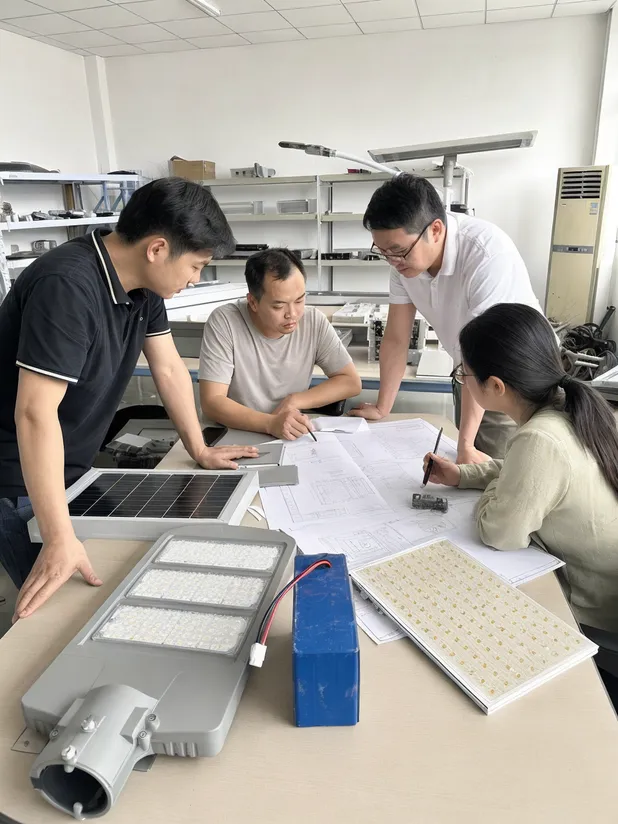
Lumen Output & CCT
Lumen output can be adjusted within the LED module's design range without changing the housing. Color temperature covers the standard range from 3000K warm white through 6500K daylight. For commercial road applications, 4000K–5000K is the most common specification; we can confirm the exact CCT against your project requirement.
Battery Capacity & Autonomy
Battery capacity is sized to your target autonomy days and daily operating hours. If your market is in a lower-irradiance region or requires 5+ autonomy days, we size the battery and panel together — increasing battery capacity without matching panel wattage is a common spec error that leads to underperformance in the field.
Solar Panel Sizing for Target Latitude
Panel wattage is calculated against the peak sun hours at your installation latitude. We ask for the installation location or target latitude as part of the OEM/ODM engineering review — it's the input that determines whether the system will perform as specified year-round.
Sensor Logic & Controller Modes
Standard models include PIR motion sensing and 50% dim mode. Custom controller configurations can include scheduled dimming profiles, dawn-to-dusk timing, multi-level dimming, and smart network integration for municipal projects.
Housing Color & Finish
Standard colors are silver grey, black, and dark green. Custom colors are available on runs of 100+ units — below that, the powder line changeover cost doesn't make sense for either side.
Private Label & Packaging
Custom logo, brand labeling, packaging design, and accessory configuration for buyers building a branded commercial solar lighting line. We handle the packaging engineering alongside the product engineering.
MOQ & Engineering Review Process
MOQ for standard catalog models starts at 100 units — low enough to test a new SKU with your market before scaling.
OEM/ODM projects with custom specifications go through an engineering review before production to confirm the configuration is achievable and to lock the spec before component procurement. The review prevents spec mismatches during production, which cost more time to resolve than the review takes.
Not every housing can accept every battery and panel combination — there are physical limits to what fits inside a given housing, and we'll flag those constraints during the engineering review rather than after production starts. If your project requires a configuration outside our standard range, we'll tell you upfront.
Certifications and Export Documents That Reduce Import Risk
Commercial solar street light orders for regulated markets require documentation at the project submittal or import clearance stage. Here's what we hold and what we can provide with an order.
CE Marking
Covers the Low Voltage Directive and EMC Directive requirements for the electrical components. Required for European market entry and referenced in project specifications across the Middle East and Africa.
CE Declaration of Conformity is provided with orders for CE-required markets.
RoHS Compliance
Covers restricted substance requirements for EU import and affects import clearance in an expanding list of markets. Our RoHS compliance is built into component sourcing — we source LED chips, battery cells, and electronic components from suppliers who provide material declarations, and we maintain records by batch.
RoHS test reports are available on request.
IP65/IP67 Ingress Protection
Both ratings are tested on our own waterproof inspection equipment, not assumed from housing design. IP test certificates are provided with orders.
For commercial projects in coastal, flood-prone, or high-humidity environments, IP67 is worth specifying — the test certificate documents the rating against a recognized standard, which matters for project submittals and warranty claims.
IEC 62124
Covers photovoltaic system performance requirements and is increasingly referenced in project specifications for solar street lighting, particularly in municipal and infrastructure tenders.
IEC 62124 documentation is available with orders.
ISO 9001:2015
Governs our quality management system across production, inspection, and documentation.
Available for review as part of supplier qualification.
North American Markets
Requirements vary by state and application — some projects specify UL listing, others accept CE with test reports. Confirm your market's documentation requirements at order placement so we can prepare the right package.
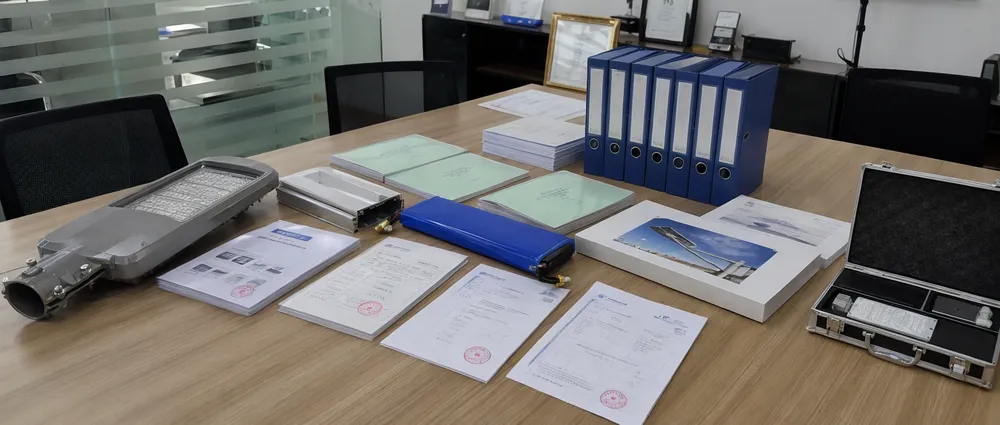
Packaging, Labeling, and Container Planning for Bulk Orders
Commercial solar street light orders involve more than the fixture itself — poles, mounting arms, accessory packs, installation guides, and spare parts all need to be packed, labeled, and loaded in a way that protects your landed cost and simplifies receiving at your end.
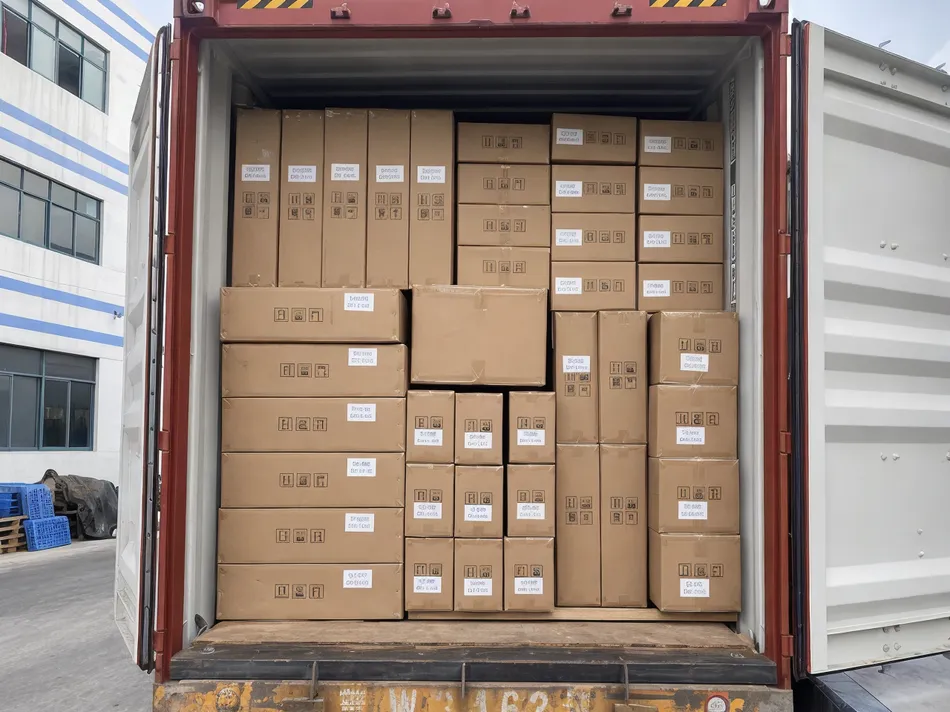
Export Cartons
Carton dimensions are sized for standard 20GP and 40HQ container loading. Container loading plans are confirmed by model and accessory set at order placement — we don't estimate loading quantities, we confirm them. Mixed-SKU orders are organized by product family and labeled by batch code so your receiving team can sort and verify without unpacking everything.
Accessory Pack Verification
Every carton includes a packing list, and accessory packs — mounting brackets, fasteners, installation guides, remote controls for smart models — are checked against the packing list before carton sealing. Missing accessories are one of the most common causes of installation delays on project sites. We check them before the container closes.
Batch Traceability
Every carton carries a batch code that traces back to the production run, component lot, and QC records. If a field issue surfaces after installation, the batch code lets us identify the production window and pull the relevant inspection records. For buyers running large commercial deployments, this traceability is the foundation of any warranty claim process.
Private-Label Cartons
Custom carton design, logo printing, and labeling are available for buyers building a branded commercial solar lighting line. Carton engineering is handled alongside product engineering for OEM/ODM orders.
Palletized Packing
Available for buyers who need palletized delivery for warehouse receiving or project site logistics. Pallet configurations are confirmed at order placement.
Choosing Between JXSOL Solar Street and Roadway Products
Commercial solar street lights sit in the middle of our solar street and roadway lighting range — higher output and longer autonomy than standard residential fixtures, but not specialized for highway configurations or smart network integration. The table below maps each sibling product to its primary use case so you can identify the right starting point.
| Product | Best Fit | Link |
|---|---|---|
| Solar Street Lights | Standard residential and secondary road replacement; distributor stock SKUs at lower wattage steps | View |
| Commercial Solar Street Lights Current Page | Commercial developments, industrial zones, logistics roads, and private infrastructure requiring higher lumen output and repeatable supply | — |
| All-in-One Solar Street Light | Compact integrated design for standard road projects where installation simplicity and lower per-unit cost are the priority | View |
| Split Solar Street Light | Projects requiring larger solar panels or battery banks than an integrated housing allows — higher latitudes, longer autonomy, or high-wattage output | View |
| Smart Solar Street Light | Municipal projects with remote monitoring, dimming schedules, fault reporting, or IoT integration requirements | View |
| Solar Road Lights | Arterial roads and urban road projects where pole height, beam angle, and road width coverage are specified in the project brief | View |
| Solar Highway Lights | High-speed roads and expressways requiring high-mast configurations, wide beam distribution, and extended nightly operation | View |
| Solar Park Lighting | Parks, pedestrian paths, and recreational areas where lower pole heights, decorative housing, and warm CCT are specified | View |
| Solar Street Lighting Pole | Galvanized steel poles in standard heights for projects sourcing poles alongside fixtures | View |
Solar Street Lights
Standard residential and secondary road replacement; distributor stock SKUs at lower wattage steps
Commercial Solar Street Lights
CurrentCommercial developments, industrial zones, logistics roads, and private infrastructure requiring higher lumen output and repeatable supply
All-in-One Solar Street Light
Compact integrated design for standard road projects where installation simplicity and lower per-unit cost are the priority
Split Solar Street Light
Projects requiring larger solar panels or battery banks than an integrated housing allows — higher latitudes, longer autonomy, or high-wattage output
Smart Solar Street Light
Municipal projects with remote monitoring, dimming schedules, fault reporting, or IoT integration requirements
Solar Road Lights
Arterial roads and urban road projects where pole height, beam angle, and road width coverage are specified in the project brief
Solar Highway Lights
High-speed roads and expressways requiring high-mast configurations, wide beam distribution, and extended nightly operation
Solar Park Lighting
Parks, pedestrian paths, and recreational areas where lower pole heights, decorative housing, and warm CCT are specified
Solar Street Lighting Pole
Galvanized steel poles in standard heights for projects sourcing poles alongside fixtures
Not sure which configuration fits your project?
Send us the road width, pole height, required lumen output, and installation location — we'll recommend the right product family and configuration before you commit to an RFQ.
Commercial Solar Street Lights FAQ
What information do I need to provide to get a quote for commercial solar street lights?
The most useful RFQ includes:
- Road width
- Pole height
- Pole spacing
- Target lumen output or lux level at road surface
- Required operating hours per night
- Target autonomy days
- Installation location or latitude
- Destination market
- Order quantity
- Branding or private-label requirements
With those inputs, we can confirm the right configuration, provide a detailed quote, and flag any spec considerations before production. If you're earlier in the process — comparing configurations or evaluating us as a supplier — send what you have. We'll work from there.
How many autonomy days should commercial solar street lights be designed for?
Three days is the standard minimum for most commercial road lighting applications — it covers a typical sequence of overcast days without the system going dark.
Days — Standard Minimum
Covers typical overcast sequences for most commercial road lighting applications.
Days — Monsoon / Tropical
Common for monsoon regions, tropical markets with extended rainy seasons, or higher-latitude locations with consecutive low-irradiance days.
Days — Critical Infrastructure
Specified for critical infrastructure or locations where maintenance access is difficult.
Trade-off: More autonomy days require a larger battery bank, which increases unit cost and, for all-in-one configurations, may require moving to a split system to accommodate the larger panel and battery. We size battery capacity against your target autonomy days and daily operating hours as part of the configuration process.
What IP rating is suitable for commercial solar lighting?
IP65 is the minimum for any outdoor commercial solar lighting application — it covers dust ingress protection and water jet resistance from any direction, which handles rain, road spray, and pressure washing.
IP67 adds temporary immersion protection and is worth specifying for installations in:
- Flood-prone areas
- Coastal locations with heavy salt spray
- Logistics yards with regular pressure washing
- Any site where standing water is a regular condition
Both ratings are tested on our own waterproof inspection equipment — not assumed from housing design.
For most commercial road and industrial applications, IP65 is sufficient. If you're unsure, send us the installation environment and we'll confirm the right rating.
All-in-one vs. split solar street lights: which is better for commercial projects?
The decision comes down to three factors: required LED output, installation latitude, and target autonomy days.
All-in-one practical range:
- Up to ~150W LED output
- Installations between roughly 15°N and 45°N latitude
- 3-day autonomy
Beyond those parameters — higher output, higher latitude, or longer autonomy — the panel and battery sizing required exceeds what an integrated housing can accommodate, and a split solar street light is the right choice.
Split systems cost more per unit and require more installation labor, but they're the only configuration that can reliably deliver performance at the edges of the spec range.
Quick guidance:
- Most commercial parks and logistics sites in tropical or subtropical regions → all-in-one covers the requirement
- Higher-latitude markets or projects with 5+ autonomy day requirements → start with split
Can commercial solar street lights be customized for different markets?
Yes. Lumen output, color temperature, battery capacity, solar panel wattage, sensor logic, housing color, private-label packaging, and project documentation can all be configured for specific market requirements.
Standard MOQ for catalog models is 100 units. OEM/ODM projects with custom specifications go through an engineering review before production to confirm the configuration is achievable and to lock the spec before component procurement.
Custom housing colors are available on runs of 100+ units. For buyers building a branded commercial solar lighting line, we handle packaging engineering alongside product engineering.
What certifications does JXSOL hold for commercial solar street lights?
CE, RoHS, IP65/IP67 Ingress Protection, IEC 62124, and ISO 9001:2015.
CE Declaration of Conformity, RoHS test reports, IP test certificates, and IEC 62124 documentation are provided with orders for markets that require them.
For North American markets, requirements vary by state and application — confirm your market's documentation requirements at order placement.
For European, Middle East, and African project tenders, CE and IEC 62124 are commonly accepted. See our solar lighting certifications page for the full documentation list.
What is JXSOL's MOQ for standard commercial solar street light models?
100 units for standard catalog models. That's low enough to run a market test with your customers before committing to a larger program.
Most new buyers in this category start with a 2–5 unit sample order across configurations to test with their own customers or confirm project fit before placing the first production order. We can ship samples ahead of a production order.
For OEM/ODM projects with custom specifications, MOQ depends on the customization scope and goes through an engineering review before production.
Get a Quote for Commercial Solar Street Lights
Send us your project inputs and we'll confirm the right configuration, provide a detailed quote, and flag any spec considerations before production.
Useful Inputs for Your Quote
Include as many of these as you have available — we'll work with whatever stage your project is at:
- Road width, pole height, pole spacing
- Target lumen output or lux level
- Required operating hours per night
- Target autonomy days
- Installation location or latitude
- Destination market and order quantity
- Packaging or OEM/ODM requirements
Building a Distribution Catalog?
If you're building a distribution catalog rather than quoting a specific project, tell us your target market and volume expectations — we'll suggest a starter SKU mix based on what's moving for our existing distributors in that region.
Contact JXSOL Directly
+8615398807118
9th Floor, Houda Industrial, No. 65 Pinghe Road, Guzhen Town, Zhongshan, Guangdong, 528421, China