Why Decorative Solar Garden Light Styles Matter Beyond Appearance for B2B Buyers
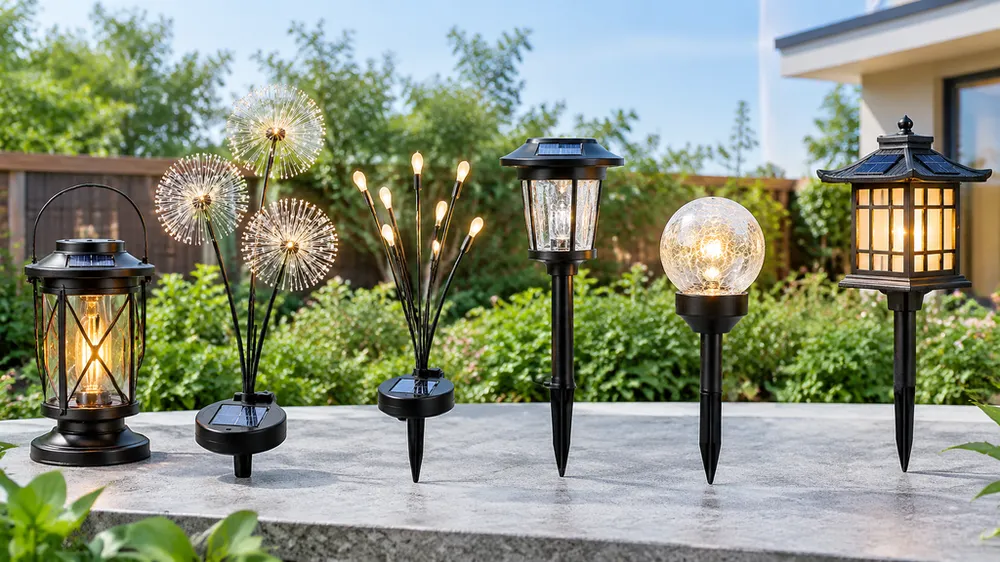
Aesthetic appeal drives consumer preference, but for buyers sourcing decorative solar garden lights, style classification determines catalog structure, inventory risk, and margin potential. Each style category — lantern, dandelion, firefly, stake, globe, pagoda — represents a different fixture architecture with distinct spec ranges, cost structures, and application suitability. When you treat decorative styles as interchangeable novelty items, you face inconsistent reorder availability and customer complaints when fixtures underperform in field conditions.
Factory-level style classification connects appearance to sourcing-relevant attributes: IP rating, lumen output range, battery configuration, and typical autonomy. A solar lantern with polycarbonate panels and a 2200mAh battery delivers predictable 8-hour autonomy and survives impact better than a decorative dandelion fixture with exposed fiber-optic strands and a 600mAh cell. Both might sell as "decorative solar garden lights," but they serve different project types, carry different failure modes, and require different inventory strategies.
We've supplied decorative solar garden light styles to distributors in 40+ countries since 2012, and the pattern is consistent: buyers who source based on appearance alone end up with warranty claims or dead inventory when the style goes out of production. Buyers who classify decorative styles by fixture specs, project-type fit, and reorder consistency build profitable catalog lines. The commercial difference is whether you're selling novelty items or building a repeatable lighting category.
This guide translates decorative solar garden light styles into fixture categories with sourcing-relevant specs, maps styles to project types so you can pre-qualify SKUs for your customer segments, and covers what to confirm with a factory before adding a decorative style to your catalog.
Decorative Solar Garden Light Fixture Categories with Sourcing-Relevant Specs
Most decorative solar garden light content describes styles by appearance without connecting to specs. For B2B buyers, fixture classification means knowing which styles translate to catalog SKUs with predictable performance and which are seasonal novelty runs. Here's how the main decorative solar garden light styles break down as fixture categories.
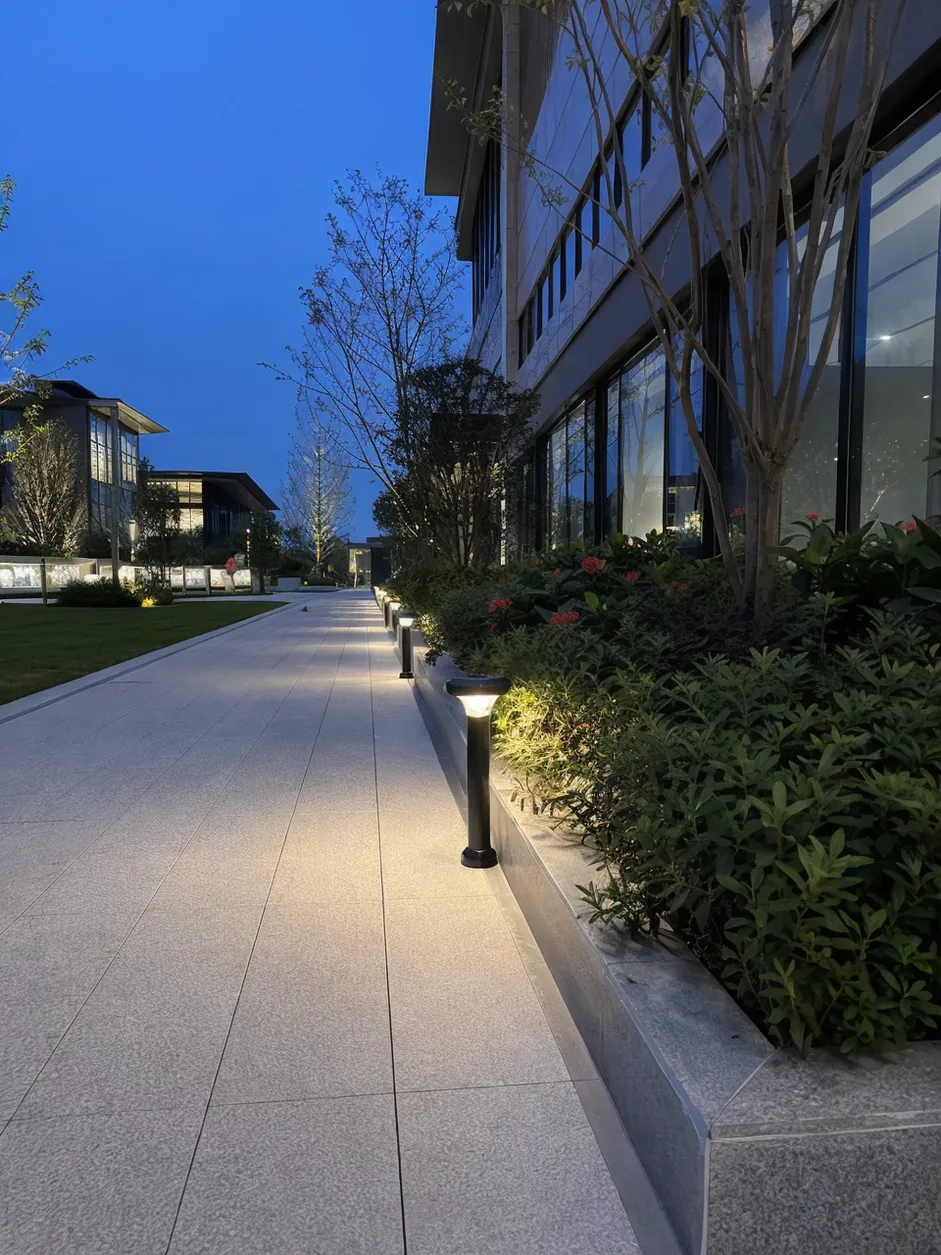
Solar Lantern Garden Lighting: Traditional enclosed fixture with diffuser panels — glass, acrylic, or polycarbonate. Typical spec range: 20–80 lumens, IP44–IP65, 3.7V 1200–2200mAh battery, 6–10 hour autonomy. The enclosed design protects the LED module and battery compartment, so solar lantern garden lighting survives impact and moisture exposure better than open-frame decorative styles. Application fit: pathway accent lighting in hospitality projects and residential landscaping where you need predictable reorder availability and moderate visual impact. OEM options include panel material (affects both light diffusion and durability), finish color, and mounting hardware — stake-mount for garden beds, post-mount for pathway borders, hanging variants for entryway accents. When sourcing solar lantern garden lighting, confirm whether the stated IP rating applies to the entire fixture assembly or just the solar panel enclosure, because some lantern styles have decorative cutouts that compromise waterproof performance.
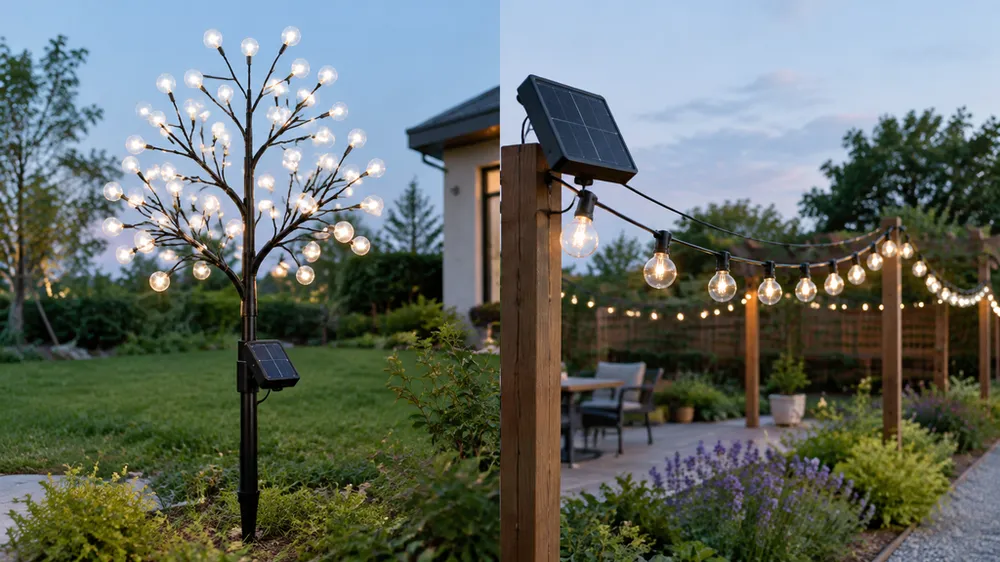
Solar Dandelion Lights: Multi-strand fiber-optic or LED wire fixtures that mimic dandelion seed heads. Typical spec range: 10–30 lumens (decorative accent, not functional lighting), IP65 for the base and solar panel, 3.7V 600–1200mAh battery, 8–12 hour autonomy. Solar dandelion lights deliver visual interest in low-traffic residential garden areas, but the exposed strands don't survive contact with landscaping equipment or high wind. The lumen output is too low for pathway lighting or security applications — this is pure decorative accent. Application fit: residential subdivision common areas, hotel courtyards with low foot traffic, display gardens. OEM options include strand count (affects visual density and unit cost), LED color (warm white, cool white, RGB), and stake height. When sourcing solar dandelion lights, ask whether replacement strands are available as spare parts, because customers will break strands and expect field repair rather than full fixture replacement.
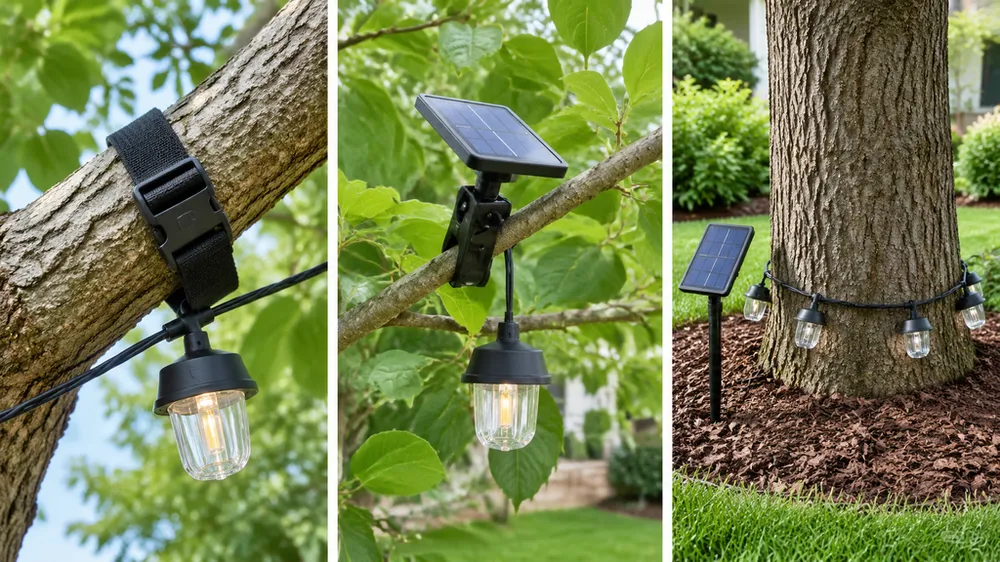
Solar Firefly Lights: Flexible wire or string fixtures with dispersed micro-LEDs along the length. Typical spec range: 5–15 lumens per meter, IP65 for the wire construction / IP44 for the solar panel enclosure, 3.7V 1200–1800mAh battery, 8–12 hour autonomy. Solar firefly lights wrap around shrubs, tree branches, or fence posts to create ambient accent lighting in residential and hospitality landscaping. The flexible wire makes installation easier than rigid fixtures, but it also means higher failure rates from UV degradation and physical damage over time. Application fit: resort properties with dedicated landscape maintenance, residential projects where aesthetic impact justifies shorter fixture lifespan compared to aluminum-frame solar lights. OEM options include wire length (affects both coverage area and unit price), LED spacing (tighter spacing = higher lumen density but shorter autonomy), and color temperature. When sourcing solar firefly lights, confirm the wire jacket material — PVC degrades faster under UV exposure than TPU or silicone.
Solar Stake Lights (Globe, Crackle Ball, Sculpture): Single-point decorative fixtures on ground stakes. Typical spec range: 15–50 lumens, IP65, 3.7V 800–1500mAh battery, 6–10 hour autonomy. This category includes globe lights with frosted or textured acrylic spheres, crackle-ball fixtures with decorative glass patterns, and sculptural shapes (butterflies, flowers, abstract forms). The stake-mount design makes installation simple — no wiring, no mounting hardware — so these work well for residential subdivision landscaping where buyers need low-skill installation and predictable visual impact. Application fit: pathway borders, garden bed accents, residential entryways. The main sourcing risk is fragile globe materials that crack under impact or thermal cycling. OEM options include globe material (glass for visual clarity, acrylic for impact resistance, resin for custom shapes), stake height (taller stakes for better sun exposure in dense plantings), and finish (powder-coated metal, brushed stainless, painted resin). When sourcing solar stake lights, verify that the globe attachment mechanism is replaceable — customers will break globes and expect to swap them without replacing the entire fixture.
Solar Pagoda / Tiered Fixtures: Multi-level architectural fixtures, usually with 2–4 stacked tiers. Typical spec range: 30–100 lumens, IP65, 3.7V 2000–3000mAh battery, 8–12 hour autonomy. Solar pagoda fixtures are statement pieces — they're taller, heavier, and more expensive than other decorative solar garden light styles, so they work best in locations where the fixture itself becomes a landscape focal point. Application fit: hospitality entryways, public park installation sites, high-end residential landscaping. The larger battery capacity supports higher lumen output and longer autonomy, but it also means these fixtures need more direct sun exposure to charge fully. OEM options include tier count (more tiers = higher visual impact and higher unit cost), panel material (affects light diffusion and weather resistance), and finish (powder-coated aluminum for corrosion resistance, painted steel for cost reduction). When sourcing solar pagoda fixtures, confirm the weight and ground stability — taller decorative fixtures tip over in high wind if the stake or base isn't engineered for the form factor.

Matching Decorative Solar Garden Light Styles to Project Types
Style selection isn't just aesthetic preference — it's a project-type decision that affects warranty claims, reorder frequency, and customer satisfaction. Distributors who match decorative solar garden light styles to project characteristics avoid mismatch problems (fixtures that look right but fail in the application) and build catalog lines that customers reorder. Here's how the main decorative styles map to project types.
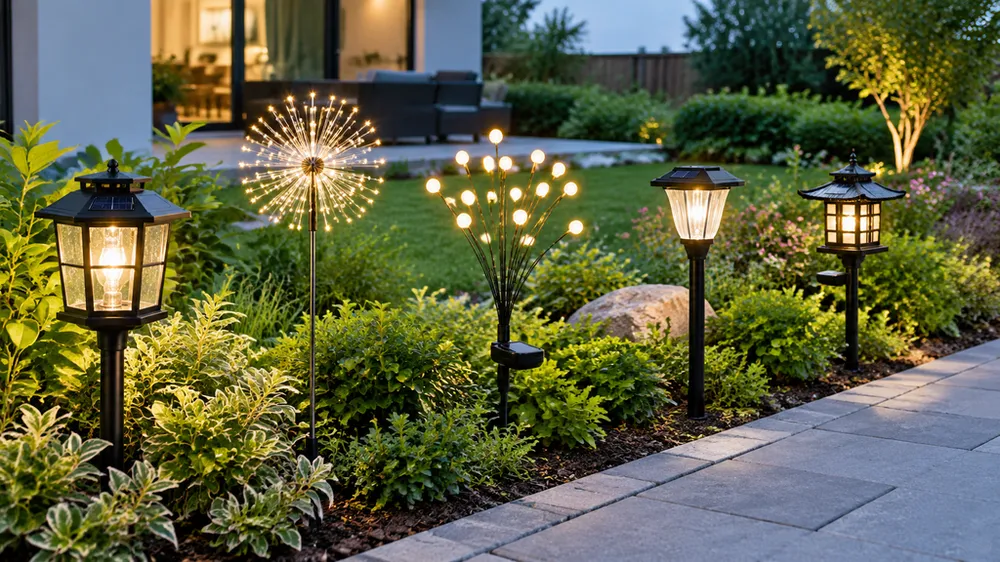
Residential Subdivision Landscaping: Your buyers in this segment prioritize reorder consistency (they're building dozens or hundreds of identical homes), low maintenance (HOAs don't want landscaping crews replacing fixtures every quarter), and styles that appeal to homeowner boards without controversy. Best fit: solar lantern garden lighting delivers classic visual appeal and predictable availability — most factories keep traditional lantern styles in continuous production because they're evergreen designs. Solar stake lights work well for pathway borders and garden bed accents where buyers need low-profile fixtures that don't compete with architectural elements. Avoid: solar firefly lights create tangles when landscaping equipment contacts the wires, and the failure rate is too high for subdivision-scale deployments. Solar dandelion lights work visually but carry reorder risk — if the style goes out of production, you can't match the original fixture when phase 2 of the subdivision starts construction. When sourcing for residential subdivision projects, ask the factory whether the decorative style is part of the core catalog (predictable reorder) or a seasonal limited run (one-time buy).
Hospitality & Resort Projects: Your buyers prioritize visual impact (fixtures that enhance guest experience), brand alignment (styles that match property aesthetic), and fixtures that deliver ambiance without ongoing operational cost. Best fit: solar pagoda fixtures work as statement pieces in entryways and courtyard focal points where the fixture itself becomes part of the landscape design. Solar lantern garden lighting creates ambient pathway lighting that guests notice without being harsh. Solar firefly lights add tree and shrub accent lighting in low-traffic zones where the delicate appearance fits resort aesthetic and maintenance crews can avoid contact damage. Confirm: IP rating becomes critical in coastal or high-humidity resort locations — solar garden light fixture types rated IP65 survive better than IP44 fixtures in salt-air environments. When sourcing for hospitality projects, verify that replacement parts (solar panels, batteries, LED modules) are available as separate SKUs so maintenance teams can field-service fixtures rather than replacing entire units.
Municipal Parks & Public Spaces: Your buyers prioritize durability (fixtures that survive vandalism and seasonal weather extremes), vandal resistance (materials that don't shatter or detach easily), and fixtures with predictable multi-year lifespan. Best fit: solar lantern garden lighting with polycarbonate panels instead of glass — polycarbonate survives impact without shattering, so you avoid both injury liability and frequent replacement. Solar pagoda fixtures with metal construction (aluminum or powder-coated steel) rather than resin or painted plastic, because metal withstands tampering and physical abuse better. Avoid: solar dandelion lights and delicate globe stakes have high breakage rates in public settings where fixtures are accessible to tampering. Solar firefly lights with exposed wires get pulled or cut, creating both aesthetic damage and electrical safety concerns. When sourcing for municipal projects, ask whether the fixture design includes tamper-resistant hardware (security screws, locked battery compartments) and whether replacement components are stocked for multi-year availability.
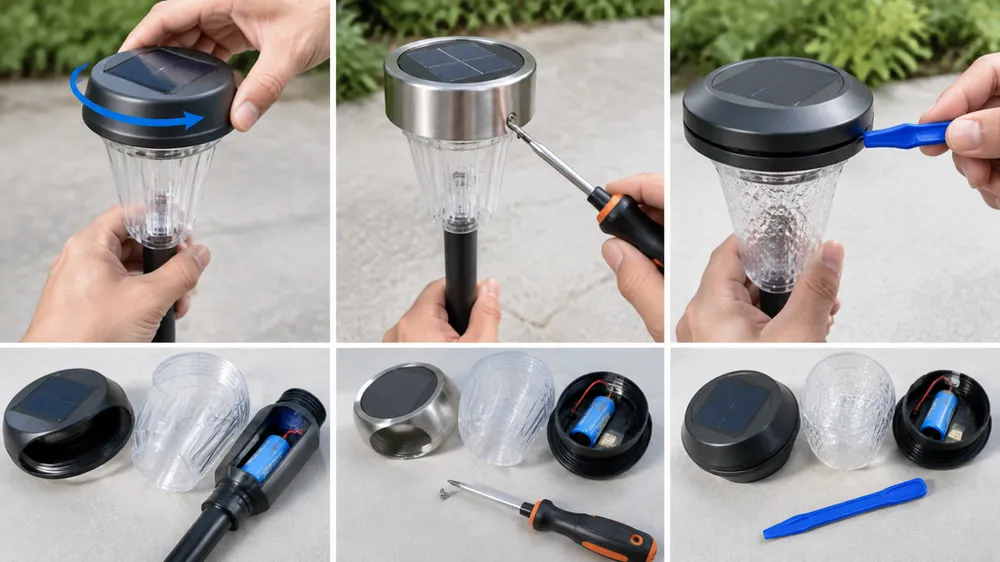
Commercial Property Landscaping: Your buyers prioritize cost-per-fixture (they're deploying at scale across multiple properties) and maintenance intervals (property management companies bill maintenance, so shorter fixture lifespan = lower profitability). Best fit: solar stake lights deliver the lowest unit cost in the decorative solar garden light category, so they work for commercial properties where aesthetic impact is secondary to coverage and cost control. Solar lantern garden lighting provides moderate unit cost with predictable lifespan, making the total cost of ownership more calculable than novelty decorative styles. Confirm: battery replacement accessibility matters — fixtures with tool-free battery access reduce labor cost when cells reach end-of-life after 2–3 years. When sourcing for commercial property projects, verify spare part availability and lead time from the factory, because property managers need to maintain consistent appearance across multiple sites without long procurement cycles.
What to Confirm with a Factory Before Adding Decorative Styles to Your Catalog
Decorative solar garden lights carry higher sourcing risk than standard functional fixtures because style trends change, novelty designs go out of production, and decorative materials often compromise waterproof performance. Before committing to a decorative style for your catalog, confirm these points with the factory.
Reorder Consistency & Seasonal Availability: Not all decorative solar garden light styles remain in production year-round. Factories introduce seasonal novelty designs (butterflies for spring, snowflakes for winter, themed shapes for holidays) that sell for one production cycle and then disappear. If you're building a catalog line that customers will reorder, you need decorative styles that the factory keeps in continuous production. Confirm: Is this decorative style part of the factory's core catalog or a seasonal limited run? What is the minimum reorder quantity after the initial order, and does that MOQ change if you're reordering 12 months later? How far in advance do you need to commit to reorder volumes — 30 days, 60 days, or longer? Some factories stock components (solar panels, batteries, stakes) but assemble decorative styles only when orders reach MOQ thresholds, so lead time for reorders can stretch to 45–60 days even for "in-stock" styles.
IP Rating Verification: Decorative solar garden lights often have design features that compromise waterproof performance — exposed wiring for firefly-style fixtures, decorative cutouts in lantern panels, fragile globe attachment points on stake lights. The stated IP rating might apply only to the solar panel enclosure and battery compartment, not the entire fixture assembly. Confirm: How is the stated IP rating tested — factory lab, third-party certification, or component-level spec sheet from a supplier? Which specific fixture components (solar panel enclosure, battery compartment, LED module, wiring junction, decorative element attachment points) meet the stated IP rating? Request IP test reports for the specific decorative style you're sourcing, not generic reports for the factory's product line. We've tested decorative solar garden lights from multiple factories, and the most common failure mode is water intrusion at decorative element junctions — the points where fiber-optic strands enter the base housing, where globe attachments create gasket compression points, where panel cutouts create drainage paths. Factory labs often test only the enclosure, not the assembled fixture under spray or submersion conditions.
Battery Configuration & Autonomy: Decorative styles with small form factors or lightweight designs often use undersized batteries that don't meet catalog autonomy claims. A solar dandelion light with a 600mAh battery might claim 10-hour autonomy, but that assumes ideal charge conditions (full sun, clean solar panel, new battery) and low LED current draw. In real-world conditions — partial shade, dusty panel, six months of charge/discharge cycling — autonomy drops to 4–6 hours. Confirm: What is the actual battery capacity (mAh) and cell type (lithium-ion, LiFePO4, NiMH)? What is the tested autonomy in real-world conditions, not lab-bench ideal scenarios where the battery is fully charged and the LED runs at minimum current? Does the factory provide charge/discharge test data for sample units that shows battery voltage curves over time? Request test reports that include temperature, charge duration, discharge duration, and battery voltage at start/end of the cycle. Factories that test rigorously will have this data; factories that copy spec sheets from component suppliers won't.
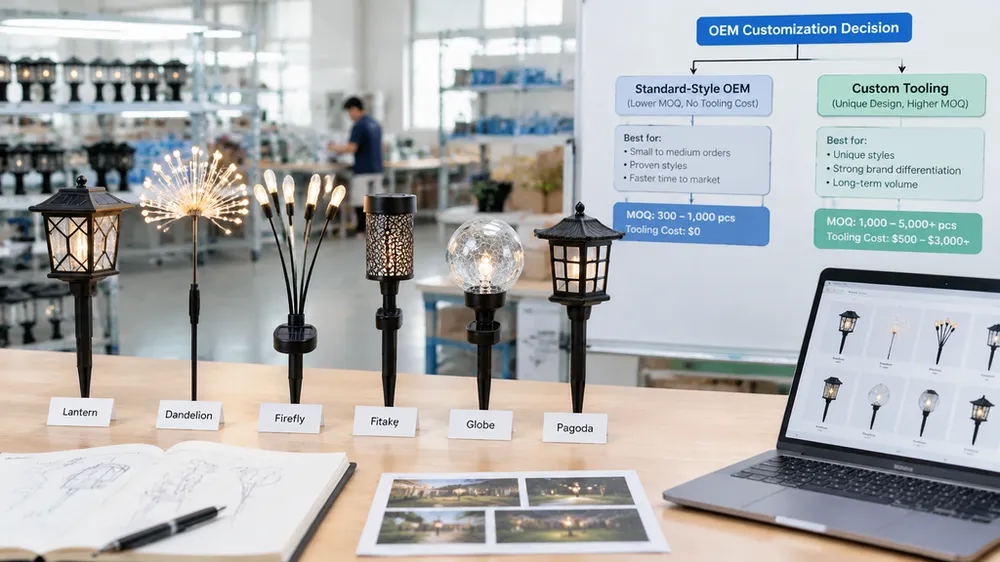
OEM Customization Boundaries: Not all decorative solar garden light styles support full OEM customization. A standard lantern fixture with flat panels might accept custom finish colors and logo placement at low MOQ (100–200 units), but a sculptural decorative style with complex curves requires custom molding or hand-finishing that pushes MOQ to 1,000+ units and adds tooling costs. Confirm: Which elements of the decorative style can be customized — finish color, panel material, LED color temperature, logo placement, packaging? What is the MOQ for custom configurations vs. standard factory configurations? What is the tooling cost and lead time for custom molds, decorative elements, or finish treatments that aren't part of the factory's standard production? Some factories claim full OEM capability but then reveal during order negotiation that "custom" means choosing from three pre-approved finish colors and adding a logo to the packaging, not actual fixture customization.
Spare Part Availability: Decorative fixtures with unique shapes, materials, or assembly methods may not have accessible spare parts. A solar lantern with standard components (replaceable solar panel, battery, LED module) costs less to maintain over time than a decorative sculpture where the LED is embedded in a resin casting and can't be field-replaced. Confirm: Are replacement solar panels, batteries, and LED modules available as separate SKUs? What is the lead time and MOQ for spare parts — can you order 10 replacement batteries or does the factory require 100-unit minimum? Can the fixture be field-serviced (battery swap, panel replacement) or does it require factory return for repair? For decorative solar garden lights deployed in commercial or municipal projects, field serviceability determines whether the fixture is a long-term asset or a disposable item.
OEM Options for Building a Branded Decorative Solar Garden Light Line
If you're building a private-label decorative solar garden light catalog, the main decision is whether to start with standard-style OEM (low tooling cost, faster time-to-market) or invest in custom decorative designs (higher differentiation, higher upfront cost). Here's how the OEM options break down.
Standard vs. Custom Decorative Styles: Standard decorative styles — lantern, stake, globe — are already in factory production, so OEM customization focuses on finish color, logo placement, and packaging rather than fixture engineering. MOQ for standard-style OEM typically starts at 100–500 units depending on the level of customization. Custom decorative shapes — unique sculpture designs, branded architectural elements, proprietary decorative patterns — require tooling investment (mold fabrication, fixture engineering, production line setup) and higher MOQ (1,000–3,000 units). Lead time for standard-style OEM is 30–45 days; lead time for custom tooling is 60–90 days plus production time. Decision framework: Start with standard-style OEM to test market demand and build customer relationships, then move to custom tooling for differentiated SKUs if reorder velocity justifies the tooling investment. We've worked with distributors who spent $15,000 on custom decorative molds before confirming market demand, then found that standard lantern fixtures with custom finish colors delivered the same margin at one-tenth the risk.
Finish & Material Options: Common OEM options for decorative solar garden lights include powder-coated metal (custom color matching, rust-resistant finish for coastal or high-humidity installations), textured or frosted globe materials (controls light diffusion and visual softness), and wood-grain or stone-texture surface treatments (aesthetic differentiation without structural engineering). Confirm with the factory: Which finishes are available for which decorative style categories — not all finishes work on all materials. What is the durability impact of decorative finishes on IP rating and corrosion resistance? Powder coating adds thickness that can affect gasket compression and waterproof sealing, so fixtures with complex curves or tight tolerances may not support all finish options without engineering review.
LED Color Temperature & RGB Options: Warm white (2700–3000K) is standard for residential decorative styles because it matches incandescent bulb aesthetics; neutral white (4000–4500K) works better for commercial settings where the lighting needs to align with building exterior lighting. RGB or color-changing LEDs add visual interest for hospitality and entertainment applications, but they also add cost (15–30% higher unit price compared to single-color LEDs), complexity (longer lead time, higher MOQ for custom programming), and failure risk (RGB controllers have higher component count and more failure modes than simple current regulators). Confirm: Does RGB require app control, remote control, or does it auto-cycle through colors? What is the failure rate for RGB controllers in outdoor conditions with temperature cycling and moisture exposure? If you're sourcing RGB decorative solar garden lights, request sample units for 30-day field testing before committing to production orders, because RGB controller failures are the most common warranty claim in decorative solar lighting.
Packaging & Brand Presentation: Decorative solar garden lights are often sold in retail channels (hardware stores, garden centers, e-commerce) where packaging influences purchase decisions, so OEM packaging becomes part of product differentiation. OEM packaging options include branded color boxes with product photography (replaces plain brown carton), instruction manuals with brand identity and QR codes linking to installation videos or warranty registration, and retail-ready packaging with hang tags or display-friendly box design. Confirm: What is the MOQ for custom packaging — some factories require 500–1,000 units before they'll run custom print jobs. Does the factory provide graphic design support or do you need to supply print-ready files in specific formats (AI, PDF with bleed and crop marks)? For distributors building retail presence, custom packaging is often the highest-ROI OEM investment because it's visible at point of sale and costs less per unit than fixture customization.
Quality Validation: Verifying Decorative Solar Garden Light Performance Before Catalog Launch
Decorative solar garden lights have higher variation in quality and performance than standard functional fixtures because decorative elements (fiber-optic strands, decorative panels, sculptural shapes) introduce assembly complexity and materials that aren't standard in outdoor lighting. Before adding a decorative style to your catalog, run these validation steps.
Sample Testing Protocol: Order 10–20 sample units for each decorative style before committing to production orders. Test the solar panel charge rate in real-world sunlight conditions (not lab-bench testing with calibrated light sources), battery autonomy over a 7-day charge/discharge cycle, IP rating performance (spray test for IP65 claims, submersion test for IP67 claims), and lumen consistency across the sample batch (measure output from each unit to verify that production tolerances don't create visible brightness differences). The most common failure we see in decorative solar garden lights is inconsistent lumen output — five units from the same batch might show 20%, 30%, or 40% variation in brightness because the factory doesn't calibrate LED current during assembly. That variation is invisible in individual fixture testing but obvious when you deploy multiple units in the same project.
Field Trial Before Bulk Order: Deploy sample units in conditions that match your target project type — residential landscaping for subdivision buyers, coastal environment for resort buyers, high-traffic public area for municipal buyers. Track fixture survival rate after 30 days (how many units still function without intervention), visible corrosion or material degradation (finish peeling, panel discoloration, structural cracking), and customer feedback on aesthetic appeal vs. catalog imagery (decorative styles often look different in field conditions than in factory photography with controlled lighting). For decorative solar garden lights, the 30-day field trial catches problems that sample testing misses: UV degradation of decorative materials, wind-induced mechanical stress on stakes or hanging hardware, dirt and debris accumulation in decorative cutouts or textured surfaces.
Factory Audit for Decorative Styles: Decorative solar garden lights often involve hand assembly — attaching fiber-optic strands, installing decorative panels, positioning sculptural elements — and hand assembly quality varies between trained production workers and inconsistent contract labor. Audit focus: Are decorative elements assembled by trained workers with defined quality checkpoints or by contract labor without process documentation? What is the factory's rework rate for decorative styles vs. standard fixtures (higher rework rate = less stable production process)? Request production line photos and assembly process documentation. Factories with mature decorative production will have photo-illustrated assembly instructions, work instruction cards at each station, and go/no-go gauges for decorative element positioning. Factories that treat decorative styles as low-volume side products won't have documented processes, and quality will drift between production runs.
Certification Verification: Decorative solar garden light styles may not carry the same certifications as core catalog items because factories sometimes introduce decorative designs without putting them through full certification testing. Confirm: Does the specific decorative style have CE, RoHS, IP test reports that match the SKU you're ordering? Many factories share generic certifications across product families without per-SKU validation, so a solar lantern might carry the factory's CE certificate even though that specific lantern style was never submitted for testing. Request certification documents with model number, test date, and issuing body that match your order. If the factory can't produce SKU-specific certifications, that's a signal that the decorative style is a recent introduction or a rebadged product from another supplier.
JXSOL's Decorative Solar Garden Light Range: Factory-Level Sourcing Reference
JXSOL's decorative solar garden light catalog includes solar dandelion lights (fiber-optic multi-strand design, IP65 base and solar panel, 8–12 hour autonomy with 3.7V 1200mAh lithium-ion battery), solar firefly lights (flexible TPU-jacketed wire with micro-LEDs, IP65 wire construction, 3.7V 1500mAh battery, available in 2-meter and 3-meter lengths), solar lantern garden lighting (traditional enclosed fixture with polycarbonate or glass panel options, IP65, 20–60 lumen output range depending on LED configuration), and solar globe stake lights (15–40 lumen output, impact-resistant acrylic globe, 3.7V 1200mAh battery, powder-coated aluminum stake with rust-resistant finish).
All decorative styles in JXSOL's catalog go through the same charge/discharge testing and IP rating validation as our core solar street light and area light products. We run battery matching (pairing cells within 50mV voltage tolerance before assembly), lumen confirmation (measure output from each assembled fixture before packaging), and spray test for waterproof claims (IP65 fixtures tested under 12.5 L/min spray for 3 minutes from all angles). Decorative solar garden lights don't get lower quality standards just because they're accent lighting rather than functional fixtures.
OEM options for JXSOL decorative styles: finish color for metal components (powder-coated in custom RAL colors with 500-unit MOQ), LED color temperature (2700K warm white, 3000K soft white, 4000K neutral white, RGB auto-cycle on request with 500-unit MOQ), logo placement (solar panel top surface or fixture base, screen printing or laser engraving depending on material), and custom packaging with brand identity (color box, instruction manual, hang tag — 500-unit MOQ for custom print run). Standard decorative styles support color and logo customization starting at 100-unit MOQ; custom decorative shapes require engineering review and 1,000-unit MOQ.
Spare parts are available as separate SKUs for all JXSOL decorative solar garden light styles: replacement solar panels (monocrystalline, 5V 1–2W depending on fixture battery capacity), replacement batteries (3.7V 1200–2200mAh lithium-ion cells), replacement LED modules (match original color temperature and lumen output). Lead time for spare parts is 15–30 days with no MOQ for buyers who have active production orders. For distributors building long-term decorative solar garden light catalogs, spare part availability means you can support customers through battery replacement cycles without stocking complete fixture inventory.