What Is a Smart Solar Lighting System — Component Architecture for Procurement
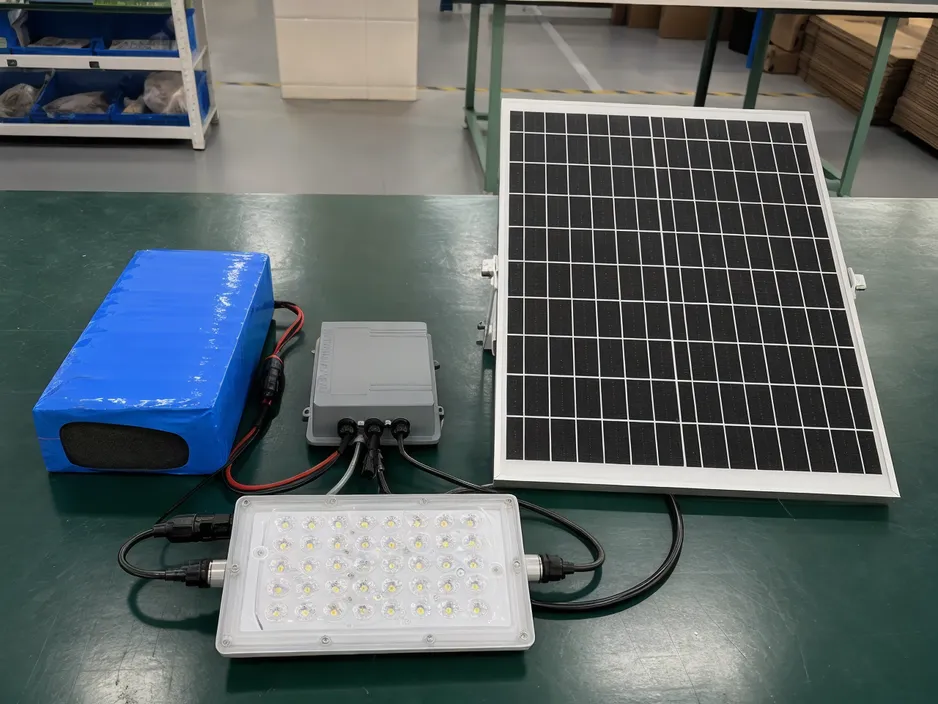
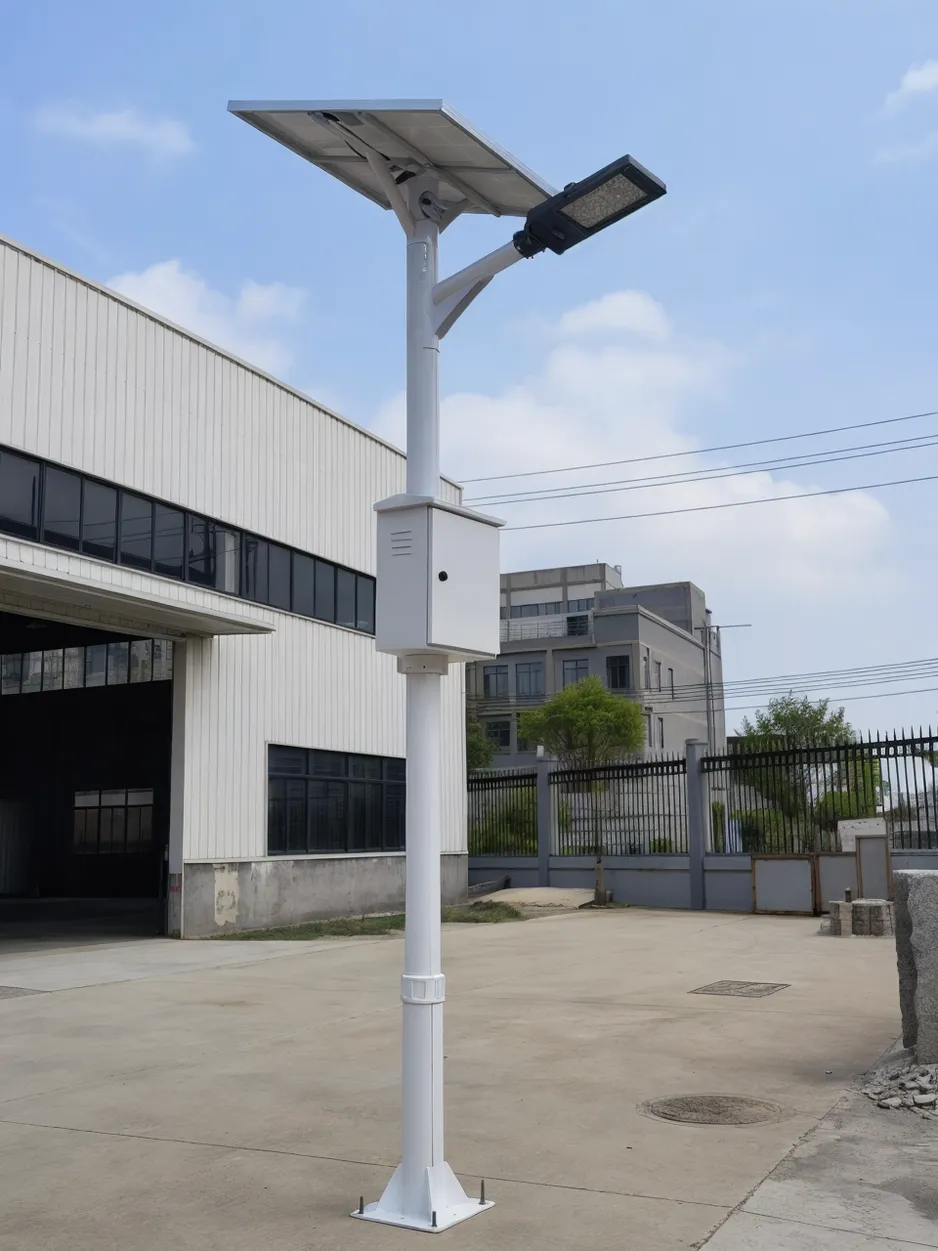
A smart solar lighting system is a solar-powered fixture with programmable logic, motion detection, or networked control capability built into the charge controller. The base components are the same as any solar fixture: panel, battery, LED module, and controller. What separates "smart" from "standard" is the controller's ability to execute dimming schedules, respond to PIR or microwave sensors, log performance data, or communicate with a central monitoring platform via LoRa, Zigbee, or cellular wireless modules.
Calling a fixture "smart" because it has a motion sensor is technically incomplete. Sensor-only fixtures are semi-automated — they dim or brighten in response to movement, but they don't store data, accept remote commands, or adjust behavior based on historical patterns. True smart solar lighting systems include at least one of these: programmable dimming curves you can modify after installation, fault alerts transmitted to your management dashboard, or group control where multiple fixtures respond to one command.
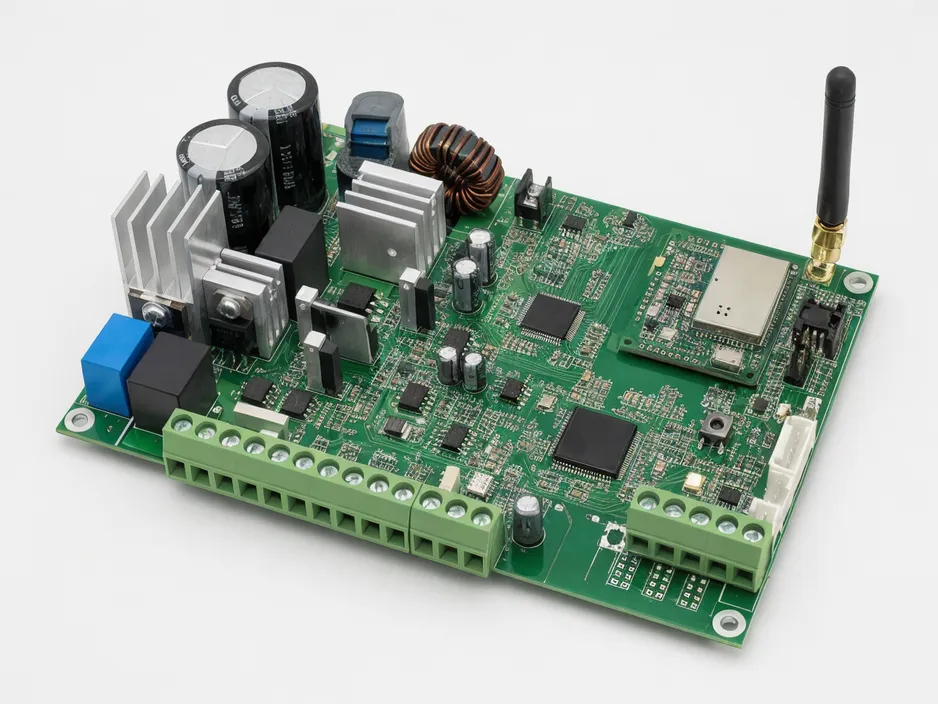
The controller is where most differentiation happens. Standard MPPT (maximum power point tracking) controllers optimize battery charging but don't touch the LED driver after dark. Smart controllers integrate the LED driver with dimming logic, sensor input, and sometimes a wireless transceiver. When you're comparing quotes, ask whether the controller firmware is updatable in the field — if the supplier says "no," you're locked into the initial programming for the life of the fixture.
Why this matters for sourcing: RFP compliance increasingly requires remote diagnostics or energy reporting, both of which need controller-level data logging. Warranty scope differs: hardware failures (battery, LED, panel) are covered by most suppliers, but firmware bugs or sensor calibration drift sit in a gray zone unless your PO specifies that the controller is part of the covered system. Spare parts availability also depends on whether the controller is a generic component or a custom board — generic parts mean faster replacement; custom boards mean you're tied to one supplier for the product's lifecycle.
Battery autonomy sizing is tighter with smart controllers. A standard fixture with 3-night autonomy assumes 100% LED output from dusk to dawn. A smart fixture with 50% motion-detection dimming stretches that 3-night rating to 5 nights in real deployment, or lets you spec a smaller battery and hit the same reliability target at lower landed cost. This changes how you read quotes: two fixtures with the same panel wattage and battery capacity are not equivalent if one has dimming and the other doesn't.
Smart vs. Standard Solar Lighting — Spec Comparison Table for Distributors
| Feature | Standard Solar Fixture | Smart (Sensor Only) | Smart (IoT-Enabled) |
|---|---|---|---|
| Upfront cost per fixture | Baseline (100%) | +8–12% | +15–25% |
| Lead time from order | 2–3 weeks | 2–3 weeks | 4–6 weeks (first order), 3–4 weeks (reorders) |
| MOQ flexibility | 50–100 units | 50–100 units | 100–200 units (controller setup cost) |
| Warranty coverage | Hardware only (battery, LED, panel) | Hardware + PIR sensor | Hardware + controller firmware + wireless module |
| Maintenance access | Manual site visit for diagnostics | Manual site visit | Remote diagnostics via app or dashboard |
| Battery autonomy (nights) | 3–5 nights (continuous output) | 5–7 nights (with motion dimming) | 5–7 nights + usage logging |
| Lumen output control | Fixed (100% dusk to dawn) | PIR-triggered dimming (e.g., 30%→100% on motion) | Programmable schedules + motion + manual override |
| Suitable project scale | <100 fixtures, budget retrofits | 100–500 fixtures, parking lots, pathways | >200 fixtures, municipal, campus, perimeter security |
Standard fixtures are still the right choice for simple retrofits where your client's RFP doesn't require remote monitoring and upfront cost is the only decision variable. Lead time is fastest, MOQ is lowest, and there's no learning curve for installers — wire the panel and battery, mount the fixture, done.
Sensor-only smart fixtures add motion detection without lengthening lead time or raising MOQ much. Warranty covers the PIR hardware but not the dimming logic (because there's no updateable firmware). These work well for parking lots and pathways where you want to cut power draw overnight but don't need centralized control. The upfront cost premium is 8–12%, but battery autonomy stretches by 40–60% in typical installations, which means you can quote a smaller battery and still meet the client's reliability spec.
IoT-enabled smart fixtures raise upfront cost 15–25% and add 1–2 weeks to first-order lead time because the controller needs programming and full-function testing before shipment. The commercial tradeoff: remote diagnostics cut maintenance cost 30–40% over a 3-year project lifecycle (you're dispatching service only after confirming root cause via the dashboard, not chasing "fixture doesn't work" calls). Warranty includes firmware updates, so if a sensor calibration issue appears six months after deployment, the supplier pushes a fix remotely instead of scheduling truck rolls.
MOQ for IoT fixtures runs 100–200 units because controller programming and wireless module integration have setup costs — factories absorb that at scale but pass it through on small pilot orders. If you're testing demand for smart street lights in a new market, look for suppliers who offer 100-unit pilots (JXSOL does; many competitors require 200–500 units minimum).

IoT Control Features That Affect Distributor Margin and Project Risk
Dimming schedules are the first IoT feature buyers ask about, and they directly change your quote math. A fixture programmed to run 100% brightness from dusk to 10 PM, then 40% until dawn, uses 60% of the energy of a continuous-output fixture over the same night. That 40% energy savings translates to either longer battery autonomy (3 nights becomes 5 nights) or smaller battery size at the same autonomy target. Smaller battery means lower per-fixture cost and tighter packing density in your container — both improve your landed cost per unit.
PIR and microwave motion sensors cut power draw by 50–70% overnight when traffic is low, but the exact savings depend on detection range and sensitivity settings. A parking lot fixture with a 10-meter PIR range configured for high sensitivity will stay at full brightness most of the night if cars pass every few minutes. The same fixture with an 8-meter range and medium sensitivity drops to 30% standby brightness between detection events. The difference is 40% energy savings in a low-traffic lot vs. 15% savings in a busy lot — and that affects whether you can quote a 60Ah battery or need to go to 80Ah to meet autonomy specs.
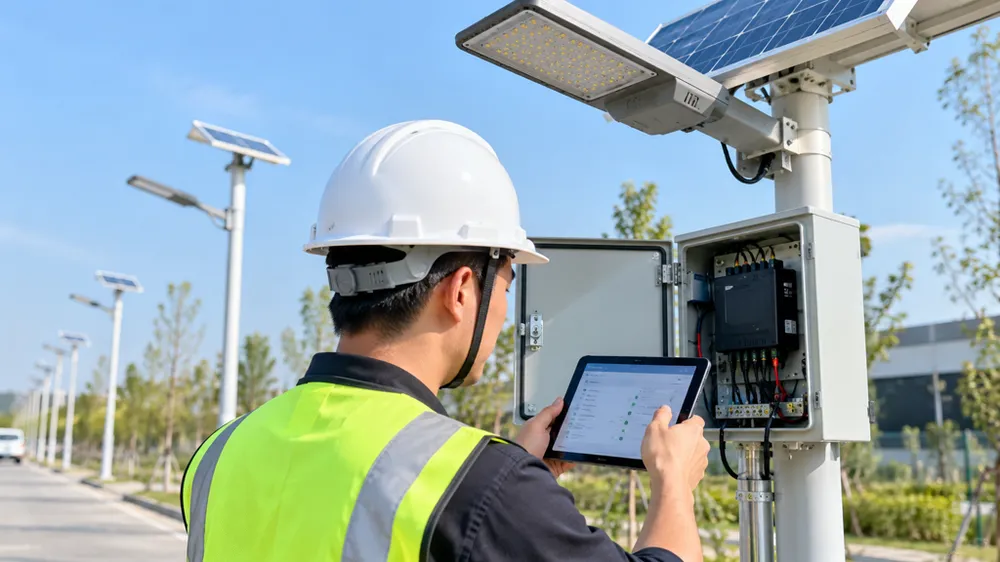
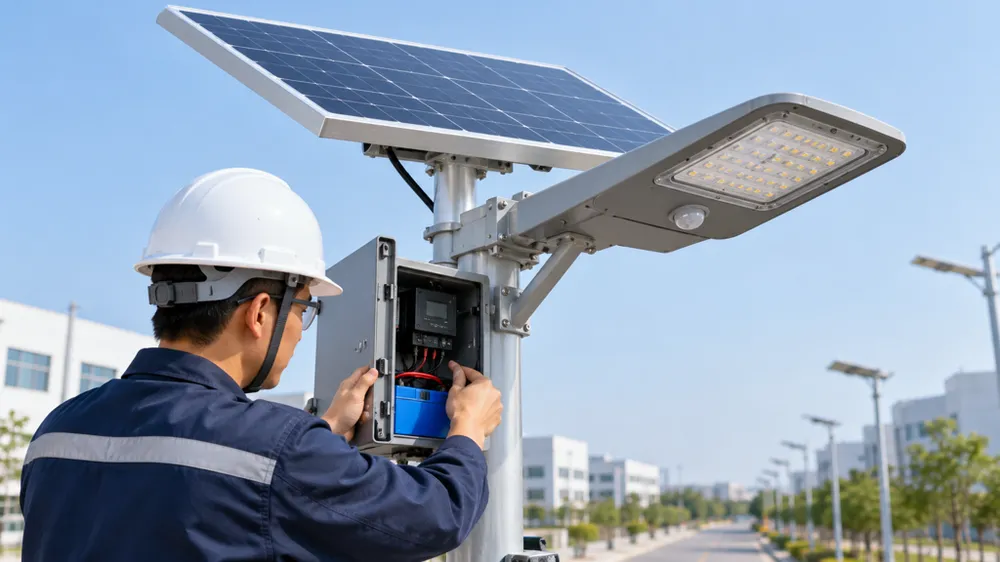
Remote monitoring is where IoT features start affecting warranty claim costs. Standard fixtures generate "doesn't work" service calls, and you're dispatching a tech without knowing whether the issue is a dead battery, a blown LED driver, or installer error (panel wired backward, mounting angle blocks sunlight). IoT fixtures with fault logging tell you "battery voltage dropped below threshold on day 12, panel input normal" — that's a defective battery under warranty, and you're shipping a replacement part instead of paying for a diagnostic visit. Over a 500-fixture municipal project, remote diagnostics typically cut your warranty service cost by $8,000–$12,000 across three years.
Group control via LoRa mesh or Zigbee changes your sales positioning from "fixtures" to "systems." A parking lot with 80 smart solar street lights on a Zigbee mesh can be controlled as zones: entrance fixtures stay at 100% all night, interior fixtures dim to 40% after midnight, perimeter fixtures respond to PIR only. Your client sees this as a turnkey smart campus package, and you're selling design services alongside hardware — typical margin goes from 12–15% on fixtures alone to 18–25% on a configured system with commissioning support.
The sourcing angle on IoT features: lead time increases because controller programming and wireless module integration require validation testing before shipment. First IoT orders take 4–6 weeks; reorders drop to 3–4 weeks once the controller configuration is saved in the factory's system. If your client needs delivery in under 4 weeks, IoT fixtures are off the table unless the supplier has pre-programmed stock (rare outside of high-volume standard configs). Plan your proposal timeline accordingly — IoT adds technical value but tightens schedule flexibility on first orders.
Sourcing Checklist — Evaluating Smart Solar Lighting Manufacturers
Certification Documentation
CE marking is mandatory for EU imports and increasingly required by clients in the Middle East and parts of Africa even when not legally enforced. Smart fixtures need three CE directives: EMC (electromagnetic compatibility, covering interference from the controller and wireless module), LVD (low voltage directive, covering the LED driver and charge controller), and RED (radio equipment directive, covering LoRa/Zigbee/cellular transceivers). Request test reports, not just certificates — a certificate confirms the supplier paid the notified body, but the test report shows which product variant was actually tested. If the report lists a 30W fixture and you're buying 60W, that's not valid coverage.
RoHS compliance restricts hazardous substances in electronics: lead, mercury, cadmium, hexavalent chromium, and brominated flame retardants. Battery chemistry matters here — lithium iron phosphate (LiFePO₄) is RoHS-compliant; some older lithium-ion chemistries are not. Request the RoHS declaration and the battery datasheet together. If the supplier provides a generic "all our products are RoHS compliant" letter without batch traceability, you have no documentation for customs clearance if an inspector questions the shipment.
IEC 62124 covers photovoltaic system safety — specifically the charge controller's handling of panel input and battery output under fault conditions (overvoltage, reverse polarity, short circuit). Buyers in the EU, Middle East, and parts of Southeast Asia require this for grid-tied solar installations, and increasingly for off-grid solar lighting as well. If your client's RFP lists IEC 62124, confirm the test report covers the exact controller model in your quote, not a similar variant from the same supplier.
IP65 and IP67 ingress protection ratings define dust and water resistance. IP65 is dust-tight and protected against water jets (suitable for most outdoor installations). IP67 is dust-tight and protected against immersion up to 1 meter for 30 minutes (required for flood-prone areas or fixtures installed at ground level where standing water is expected). Smart fixtures need IP65 minimum for the controller enclosure because the electronics are more vulnerable to moisture ingress than passive LED drivers. If the fixture housing is IP67 but the controller compartment is only IP54, the fixture will fail in the field — request separate IP ratings for the main housing and the controller enclosure.
MOQ Flexibility for Pilot Orders
Standard solar lighting MOQs typically run 50–100 units because tooling costs (driver board setup, battery matching) are low and assembly is mostly manual. Smart solar street lights with IoT control start at 100–200 units because controller programming has fixed setup costs: the factory's engineer writes the firmware logic, tests sensor response curves, validates wireless communication, and logs the configuration for reorders. Spreading that labor over 50 units makes per-fixture cost uncompetitive; 100+ units brings it into range.
If you're testing demand for smart solar lighting systems in a new market, look for suppliers who absorb controller setup costs at 100 units. JXSOL's standard MOQ is 100 units for both standard and IoT SKUs — the factory treats smart fixtures as a core product line, not a custom job, so controller programming is already systematized. Competitors who specialize in standard fixtures and outsource IoT modules typically require 200–500 units to justify coordination with the third-party control system provider.
Lead time is the hidden MOQ cost. A 100-unit pilot order for standard fixtures ships in 2–3 weeks. The same 100-unit order for IoT fixtures takes 4–6 weeks on first order because controller programming, wireless module integration, and full-function testing (PIR response, dimming curves, connectivity validation) happen before production starts. Reorders drop to 3–4 weeks because the controller configuration is saved. If your client's project schedule can't absorb the longer first-order lead time, plan the pilot 6–8 weeks before the main deployment window opens.

Lead Time & Production Capacity
Standard solar lighting lead time runs 2–3 weeks from PO to container loading: 3–5 days for component procurement (LEDs, batteries, panels are stock items), 7–10 days for assembly, 3–5 days for testing and packing. Smart fixtures with IoT control add 1–3 weeks for controller programming and validation testing. First orders take 4–6 weeks because the factory's engineering team writes custom firmware logic, tests sensor calibration, validates wireless connectivity, and logs the configuration. Reorders drop to 3–4 weeks because controller programming is already validated.
Daily production capacity tells you whether the supplier can scale with your orders. A factory with one production line running 8 hours/day outputs 200–400 units depending on fixture complexity. Six production lines running two shifts output 5,000+ units/day. If you're quoting a 10,000-unit municipal project with a 6-week delivery window, a single-line factory can't hit the schedule without delaying other customers' orders (which means your order gets delayed when someone else's larger PO arrives). JXSOL runs six production lines with 5,000+ daily output — a 10,000-unit order fits into two weeks of production capacity without displacing other jobs.
Ask for production line photos and batch records from recent large orders. If the supplier sends generic stock photos or refuses to show batch documentation, they're either very small or aggregating from multiple subcontractors. Neither is disqualifying, but you need to know: small factories have lead time risk when your order size jumps; aggregators have consistency risk because batch 1 and batch 2 might come from different sources.
Warranty Scope & Parts Availability
Standard warranty for solar lighting covers hardware failures: battery capacity loss beyond specified degradation (typically 80% capacity at 2 years), LED lumen depreciation beyond L70 rating, panel output drop, and physical defects in housing or mounting hardware. Coverage is usually 3 years, with the supplier replacing defective components or crediting your account if you self-repair.
Smart fixture warranty must explicitly cover the controller and wireless module, or you're left with a gap: if the battery fails, it's covered; if the battery is fine but the controller's charge algorithm is miscalibrated and kills the battery in 18 months, that's not covered under a hardware-only warranty. Request warranty terms that include "controller firmware and sensor calibration" alongside hardware coverage. JXSOL's 3-year warranty covers controller replacement and firmware support — if a sensor drift issue appears after deployment, the factory pushes a remote firmware update or ships a replacement controller board without charging for the diagnosis.
Remote diagnostic access changes warranty claim handling. Standard fixtures generate "doesn't work" claims, and the supplier asks you to ship the fixture back for testing (or sends a replacement and absorbs the cost). IoT fixtures with fault logging let the supplier pull diagnostic data remotely: battery voltage history, panel input log, LED runtime hours, sensor trigger count. If the log shows "panel input dropped to zero after 3 weeks," that's installer error (panel wired backward or mounting angle blocks sunlight), not a warranty claim. If the log shows "battery voltage normal but LED driver failed to activate," that's a hardware defect covered under warranty. Remote diagnostics cut false claims by 30–40%, which reduces your admin overhead and speeds up replacement part delivery.
OEM/ODM Customization Scope
Standard OEM customization covers lumen output, color temperature (CCT), battery capacity, and panel wattage. Most smart solar lighting manufacturers can adjust these within the existing product platform: if the standard model is 5,000 lm at 5000K with a 60Ah battery, you can request 6,000 lm at 4000K with an 80Ah battery, and the factory swaps components without redesigning the fixture. Lead time for standard OEM is 3–4 weeks (same as stock SKUs) because no tooling changes.
IoT customization is deeper: dimming curves (e.g., 100%→60%→40% in three stages vs. continuous ramp-down), motion sensor sensitivity and detection range, wireless protocol selection (LoRa vs. Zigbee vs. NB-IoT), and fault alert thresholds (e.g., trigger low-battery alert at 30% SOC vs. 20% SOC). This level of customization requires engineering input: the factory's firmware team reprograms the controller logic, validates sensor response, and tests connectivity under your specified conditions. Lead time for IoT OEM is 5–7 weeks on first order because firmware changes go through internal QC before production starts. Reorders ship in 3–4 weeks once the custom config is saved.
JXSOL's 15+ optical and electrical engineers handle both standard and IoT customization in-house. Lumen and battery sizing happens during the quote phase (free); IoT logic customization requires a paid engineering sample (one fixture programmed to your spec, shipped for your approval before production starts). If the sample meets your requirements, the engineering fee is credited against the PO; if you cancel, the fee covers the factory's programming time. Competitors who outsource IoT modules can't offer firmware-level customization without coordinating with the third-party control system provider, which adds 2–4 weeks and splits accountability when issues arise.
Pre-Shipment Testing Protocol
Standard solar lighting testing covers battery charge/discharge cycle (1–2 full cycles to confirm capacity matches spec), lumen output (integrating sphere measurement for total flux and CCT), and visual inspection (housing integrity, waterproof gasket seating, mounting bracket alignment). These tests are usually sampled: 5–10% of the batch gets full testing, 100% gets visual inspection. If you're ordering 1,000 units and the factory tests 50, you're trusting batch consistency for the other 950.
Smart fixture testing adds controller function validation (dimming logic, sensor response, wireless connectivity) and firmware version confirmation. PIR sensors need live testing: the factory tech waves a hand in front of the fixture and confirms the LED ramps from standby to full brightness within the programmed delay (typically 1–2 seconds). Wireless modules need pairing tests: the fixture joins the mesh network or connects to the cellular backend, transmits a test data packet, and receives an acknowledgment. These tests can't be sampled — a non-functional controller or wireless module turns a $200 fixture into a $180 standard fixture with no recovery path.
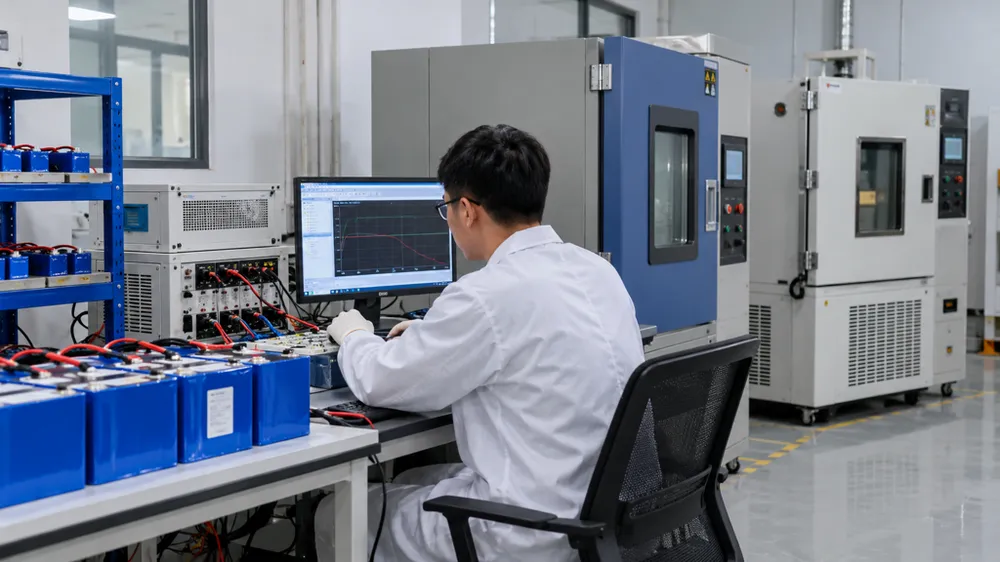
Request photos of the testing lab and 100% inspection SOP before placing large orders. If the supplier provides generic descriptions ("we test all products before shipment") without showing equipment or procedures, you're relying on QC claims you can't verify. JXSOL's integrated battery and LED module testing lab is in the same building as the assembly lines — every smart fixture goes through PIR function testing, controller connectivity validation, and lumen output confirmation before packing. The inspection data (serial number, test date, pass/fail status) is logged and available on request for warranty claims or client audits.
Application Scenarios Framed as Project Types for Distributors
Municipal street lighting retrofits are multi-kilometer projects covering 200–2,000 fixtures per phase, with RFPs that prioritize total lifecycle cost over upfront per-fixture price. LoRa mesh networking is standard because cellular connectivity gets expensive at scale (each fixture needs a SIM card and monthly data plan). Group control lets the city adjust brightness citywide or by zone — full brightness from dusk to 10 PM during high-traffic hours, 40% standby overnight, automatic return to 100% if PIR detects movement. Your margin on municipal projects runs 18–25% when you're selling configured systems with commissioning support, vs. 12–15% on fixtures alone. Lead time is 6–8 weeks for first phase (includes engineering site survey and controller programming), 4–5 weeks for follow-on phases once the config is locked.
Parking lot and campus area lighting projects cover 50–300 fixtures per site, with repeat orders from facility management buyers who maintain multiple properties. PIR motion sensing cuts battery size 30–40% because traffic is predictable: high activity during business hours, low activity overnight. Smaller battery lowers your landed cost per fixture without sacrificing reliability — a 60Ah battery with motion dimming delivers the same effective autonomy as an 80Ah battery at continuous output. Zigbee group control is common at this scale: entrance and perimeter zones stay at 100% all night, interior zones dim to 40% after midnight, and the facility manager overrides individual fixtures via mobile app when needed. Your margin on parking lot packages is 15–20%; lead time is 3–4 weeks because campus projects rarely require custom firmware (standard PIR sensitivity and dimming curves work for most buyers).
Perimeter security and industrial site lighting demands high lumen output (8,000–15,000 lm), microwave motion sensors (faster detection response than PIR, better performance in extreme temperatures), and cellular connectivity (NB-IoT or LTE-M) for remote sites without mesh network coverage. These fixtures cost 20–30% more than standard smart solar street lights because the sensor and wireless module are upgraded components, but maintenance access cost drops even further: you're monitoring 100+ remote fixtures from one dashboard instead of dispatching security patrols to check each light manually. Industrial buyers tolerate higher upfront cost because their alternative is trenching for grid power (which runs $8,000–$15,000 per kilometer). Your margin on perimeter security projects is 20–28%; lead time is 5–7 weeks because high-output fixtures require custom battery and panel sizing to maintain autonomy under higher power draw.
The sourcing angle across all three project types: MOQ economics and lead time sensitivity vary by application. Municipal projects tolerate 6–8 week lead times because procurement cycles are long and budget approval takes months — optimize for lowest lifecycle cost. Parking lot retrofits need 3–4 week turnaround to fit property management budget windows — standard configs with minimal customization. Perimeter security projects have the highest per-fixture budget and shortest decision cycle — quote delivery speed and remote monitoring capability over price.
Battery Autonomy Sizing for Different Latitudes — Cost vs. Reliability Tradeoff
Standard battery autonomy sizing assumes continuous LED output from dusk to dawn: 3-night autonomy for equatorial regions (12 hours/night, consistent year-round), 5-night autonomy for temperate zones (10 hours/night in summer, 14 hours in winter), and 7-night autonomy for high latitudes above 50° (8 hours/night in summer, 16+ hours in winter). Panel wattage scales with autonomy target: a 3-night system in equatorial regions uses a 40W panel and 60Ah battery; the same fixture sized for 5-night autonomy in temperate zones needs a 50W panel and 100Ah battery to compensate for shorter winter sun exposure.
Smart solar lighting systems with dimming cut battery capacity requirements by 30–50% without reducing effective autonomy. A fixture programmed for 100% output until 10 PM, then 40% until dawn, uses 60% of the energy of a continuous-output fixture. In temperate zones, that 60% energy savings turns a 5-night autonomy spec into a 3-night battery requirement — you're quoting an 80Ah battery instead of 100Ah, which lowers per-fixture cost $18–$25 and improves container packing density. The client still gets 5-night reliability because the battery drain is lower.
Panel wattage adjustment is the other half of latitude sizing. Equatorial regions average 5–6 peak sun hours/day year-round; temperate zones drop to 3–4 peak sun hours in winter; high latitudes drop to 2–3 hours. A 40W panel generates 200Wh/day in equatorial sun but only 120Wh/day in temperate winter sun. To maintain the same battery recharge rate, you need a 60W panel in temperate zones and an 80W panel in high latitudes. Larger panels affect shipping cost: a container holds 800 fixtures with 40W panels vs. 600 fixtures with 80W panels (panel dimensions drive cubic meter calculations, not just weight).
The cost vs. reliability tradeoff: buyers often over-spec battery capacity to avoid field failures, which raises per-fixture cost and cuts container efficiency. Smart lighting with motion dimming lets you hit the same reliability target (e.g., 5-night autonomy in temperate winter) with a smaller battery, improving landed cost without cutting performance. If your client insists on 7-night autonomy "just to be safe," run the numbers: 7-night continuous output requires a 120Ah battery and 70W panel; 7-night with 50% motion dimming requires an 80Ah battery and 50W panel. The dimming config saves $30–$40 per fixture and fits 25% more units per container.
JXSOL's engineering team sizes battery and panel based on your deployment latitude, required autonomy, and dimming schedule. The quote includes sun-hour calculations (using NASA solar irradiance data for your city) and autonomy simulation under worst-case winter conditions. If the client changes the latitude or autonomy spec mid-project, the factory recalculates and adjusts component sizing before production starts — no guesswork, no field failures from undersized batteries six months after deployment.
How JXSOL's In-House IoT Development Reduces Distributor Lead Time Risk
Most suppliers who advertise "smart solar lighting systems" or "IoT solar lighting" are outsourcing the control system to third-party module providers. The fixture housing, battery, and panel are manufactured in-house, but the IoT controller and wireless transceiver are purchased as finished modules, integrated during assembly, and tested for basic function (does it power on, does the app connect). Customization requests — dimming curve adjustments, sensor sensitivity tuning, wireless protocol changes — require the fixture manufacturer to coordinate with the module provider, which adds 1–2 weeks to lead time and splits warranty responsibility. If a sensor calibration issue appears after deployment, you're negotiating between the fixture supplier and the control system vendor to determine who covers the fix.
JXSOL develops IoT logic and controller firmware in-house. The engineering team (15+ optical and electrical engineers) writes the charge controller firmware, programs dimming schedules, calibrates PIR and microwave sensors, and validates wireless connectivity protocols (LoRa, Zigbee, NB-IoT) before the controller board goes into production. On-site programming and testing means first IoT orders ship in 4–5 weeks vs. 6–8 weeks industry average, and reorders drop to 3 weeks because the controller configuration is saved in the factory's system. No coordination lag with third-party vendors, no split accountability on firmware issues.
MOQ advantage: 100-unit pilot orders for IoT SKUs are standard at JXSOL because controller programming is a systematized process, not a one-off custom job. Industry norm is 200–500 units for smart solar street lights because suppliers who outsource IoT modules need to absorb the third-party setup fee across a larger batch. If you're testing demand for smart fixtures in a new market, 100-unit pilots let you validate sales traction before committing to 500–1,000 unit inventory.
Engineering customization scope is broader when IoT development is in-house. Standard requests (lumen, CCT, battery capacity) are component swaps with no lead time impact. IoT customization (dimming curves, motion sensor detection range and sensitivity, wireless protocol selection, fault alert thresholds) happens during the controller programming phase. JXSOL's process: you specify requirements during the quote phase, the factory produces one engineering sample programmed to your spec, you test the sample and confirm it meets field conditions, then production starts with the validated config. If the sample doesn't meet your requirements, the factory reprograms and ships a second sample before you commit to the PO. Competitors who outsource IoT can't iterate on firmware without going back to the module provider, which adds 2–4 weeks per revision cycle.
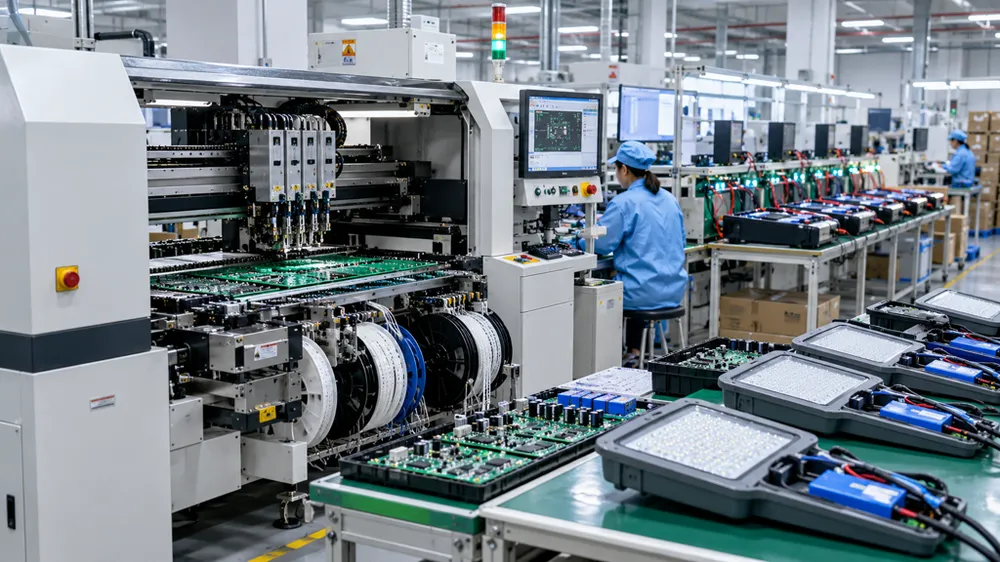
Factory proof points that affect your sourcing decision: 12,000 m² facility with integrated production and testing under one roof (assembly lines, SMT controller production, battery testing lab, PIR/controller function validation, integrating sphere for lumen measurement). Six production lines with 5,000+ daily output mean your 1,000-unit order doesn't displace other customers' jobs or extend lead time. ISO 9001:2015 certification covers the full production process from component procurement through final inspection. CE, RoHS, and IEC 62124 test reports are provided with every shipment, not just on request. 3-year warranty includes controller replacement and firmware updates — if a sensor drift issue appears 18 months after deployment, the factory pushes a remote update or ships a replacement board without charging for diagnostics.
Certification & Import Clearance — What Distributors Need Before First Container
CE marking is the EU's conformity declaration for products sold in the European Economic Area, and increasingly required by clients in Middle East and African markets even when not legally enforced. Smart solar lighting systems need compliance with three directives: EMC (electromagnetic compatibility, ensuring the controller and wireless module don't interfere with other devices), LVD (low voltage directive, covering electrical safety of the LED driver and charge controller), and RED (radio equipment directive, covering wireless transceivers). Request the full test report, not just the certificate. The test report specifies which product model was tested, at what configuration (wattage, battery size, wireless frequency), and lists the standards applied (e.g., EN 55015 for EMC, EN 62368-1 for LVD). If the report lists a 30W fixture and you're importing 60W units, customs may reject the shipment even if the supplier claims "all models are CE certified."
RoHS (Restriction of Hazardous Substances) limits lead, mercury, cadmium, hexavalent chromium, PBB, and PBDE in electronics. Enforcement is strict in the EU and parts of Southeast Asia; customs will pull samples for XRF (X-ray fluorescence) testing if documentation is incomplete. Battery chemistry is the common failure point: lithium iron phosphate (LiFePO₄) is RoHS-compliant; some lithium-ion chemistries contain restricted substances. Request both the RoHS declaration and the battery datasheet showing chemical composition. If the supplier provides a generic "RoHS compliant" statement without batch-specific documentation, you have no defense if an inspector questions the shipment.
IEC 62124 is the photovoltaic system safety standard covering charge controller fault handling: overvoltage protection (panel input exceeds rated voltage), reverse polarity protection (installer wires panel backward), short-circuit protection (load side shorts to ground), and overcharge/overdischarge protection (controller cuts off battery at specified SOC thresholds to prevent damage). Buyers in the EU and Middle East increasingly require IEC 62124 for off-grid solar lighting, not just grid-tied PV systems. Confirm the test report covers the exact controller model in your quote — if the supplier uses three different controller types across their product line, a test report for controller A doesn't validate controller B.
IP65 and IP67 ingress protection ratings are defined by IEC 60529. IP65 is dust-tight (first digit = 6) and protected against water jets from any direction (second digit = 5). IP67 is dust-tight and protected against immersion up to 1 meter for 30 minutes (second digit = 7). Smart solar street lights need IP65 minimum for the controller enclosure because electronic components are vulnerable to moisture ingress. If the fixture housing is rated IP67 but the controller compartment is only IP54, the fixture will fail in coastal or high-humidity environments. Request separate IP ratings for the main housing, the controller enclosure, and the cable entry glands. A fixture with IP67 housing and IP54 cable glands will leak water through the gland even though the housing is technically waterproof.
Documentation checklist before you release the PO deposit: CE test reports (EMC, LVD, RED if wireless-equipped), RoHS declaration with batch traceability, IEC 62124 test report showing the specific controller model, IP rating test reports for housing and controller enclosure separately, and CE Declaration of Conformity signed by the manufacturer. JXSOL provides full test report PDFs (not scanned certificates) with every quote, and batch traceability labels are applied to each fixture's serial number plate so you can cross-reference shipment documentation with the test reports during customs clearance. If an inspector pulls your container for inspection, you hand over the test reports and batch labels, and clearance proceeds without delays.