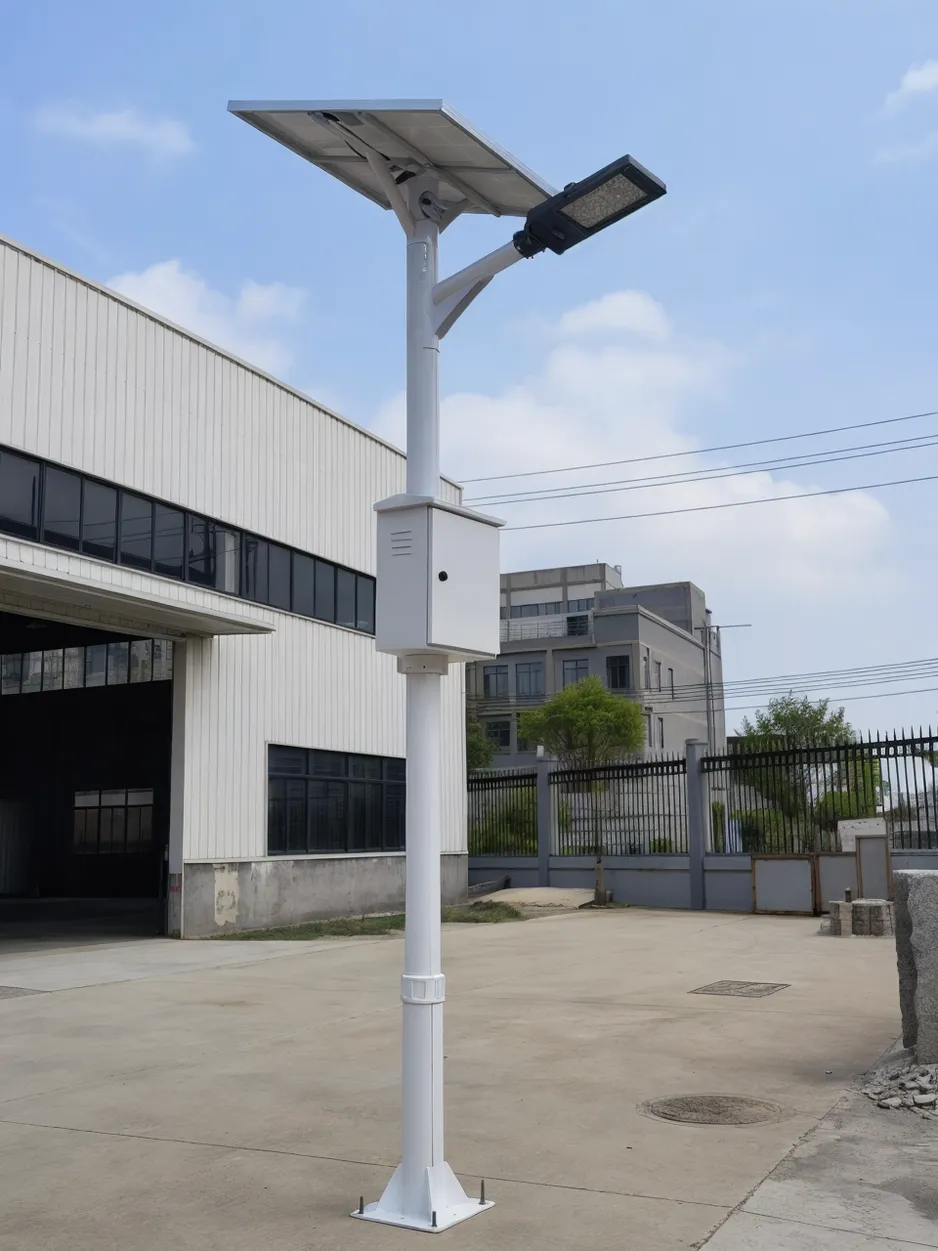
When you're screening smart solar lighting system suppliers for a US distribution program or municipal project, the list of options on Alibaba or ThomasNet doesn't tell you what you actually need to know: which ones are factories and which ones are trading companies forwarding your specs to someone else's production line. That distinction matters more for smart solar systems than for passive fixtures — IoT firmware updates, sensor calibration support, and remote diagnostics all require direct engineering access that trading companies can't deliver.
We've spent the last 13 years manufacturing solar lighting in Zhongshan, where most of China's lighting export volume originates. We've seen buyers lose months of lead time because their "supplier" was actually coordinating three different factories for panels, batteries, and fixtures. We've also seen US distributors walk away from factory-direct import because they didn't know how to verify capacity or compare MOQ structures against their market entry timeline. This guide explains the evaluation framework we use when buyers ask us how to screen smart solar lighting system suppliers usa — and where factory-direct sourcing becomes commercially smarter than local distributor markup.
Why Factory-Direct Sourcing Matters for Smart Solar Lighting Projects in the US Market
Trading companies exist because they solve a coordination problem — they consolidate small orders, translate between languages, and manage logistics. For simple commodity products, that service has value. For smart solar lighting systems with IoT controllers, remote management platforms, and sensor integration, trading companies add a layer between you and the engineering team that actually configured your firmware. When a sensor calibration issue surfaces after installation, or you need a firmware patch for a specific dimming protocol, you're waiting for the trading company to forward your request to the factory, wait for the factory's response, translate it back, and relay it to you. We've seen that loop take 5-7 days for questions that take our engineers 20 minutes to answer directly.
The batch consistency problem hits harder with smart systems. Trading companies often source from multiple factories to fill large orders — your first 1,000 units might come from Factory A with firmware version 2.3, and your next 2,000 units from Factory B with version 2.5. The lighting output and battery specs match your PO, but the IoT controller behavior is inconsistent across installations. For a municipal rollout where all fixtures need to respond uniformly to a central management platform, that inconsistency isn't a minor annoyance — it's a failed deployment.
Warranty claim efficiency is the third commercial consequence. When a fixture fails in the field and you're working through a trading company, they coordinate with the factory for root cause analysis, wait for a replacement decision, and manage the shipment back to you. That process typically runs 3-4 weeks. Factory-direct warranty claims go straight to the engineering team that designed the product, and replacement units ship from the same production line that made your original order — our standard turnaround is 7-10 days from failure report to replacement shipment.
JXSOL operates as a factory-direct manufacturer — 12,000 m² facility in Zhongshan with 6 production lines running 1,200,000 units annually. Our IoT engineering team (15+ optical and electrical engineers) sits in the same building where we assemble fixtures, so firmware customization requests, sensor integration questions, and remote diagnostics support don't route through an intermediary. For US distributors testing smart solar SKUs before scaling or commercial developers running multi-phase projects, that direct engineering access reduces specification risk and accelerates problem resolution when field conditions don't match lab assumptions.
How to Verify Manufacturing Capacity When Evaluating Smart Solar Lighting System Suppliers USA
Most supplier directories and Alibaba storefronts show facility photos, employee counts, and production capacity claims. Those numbers mean nothing without verification context. A trading company can rent a factory for a photo shoot or claim a partner factory's capacity as their own. The verification checklist below separates manufacturers from intermediaries:
Business license with manufacturing scope verification: Request a copy of the supplier's business license and check the scope of operations. Chinese business licenses explicitly list whether the company is authorized to manufacture products or only to trade/distribute. If "manufacturing" doesn't appear in the scope, you're talking to a trading company regardless of what their website claims.
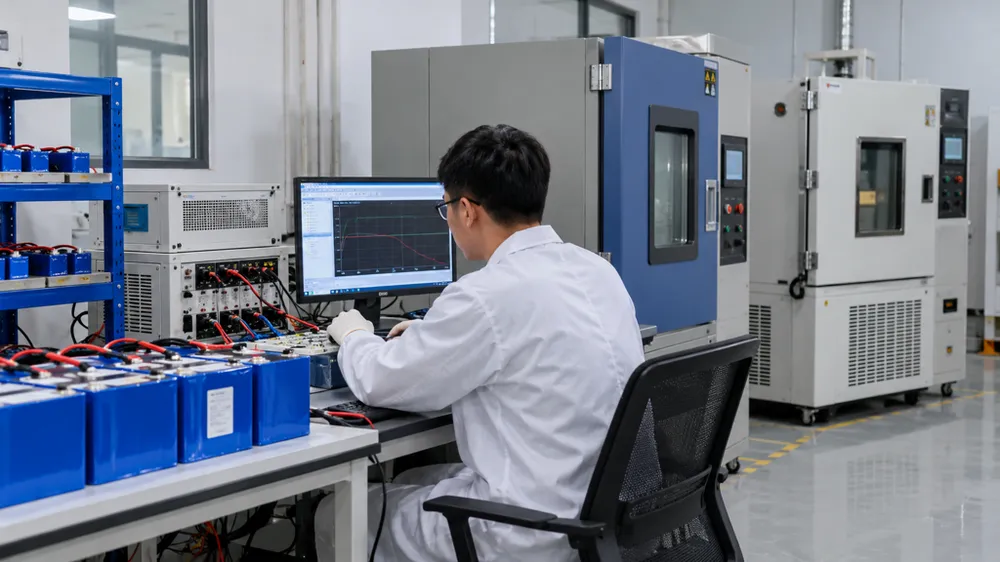
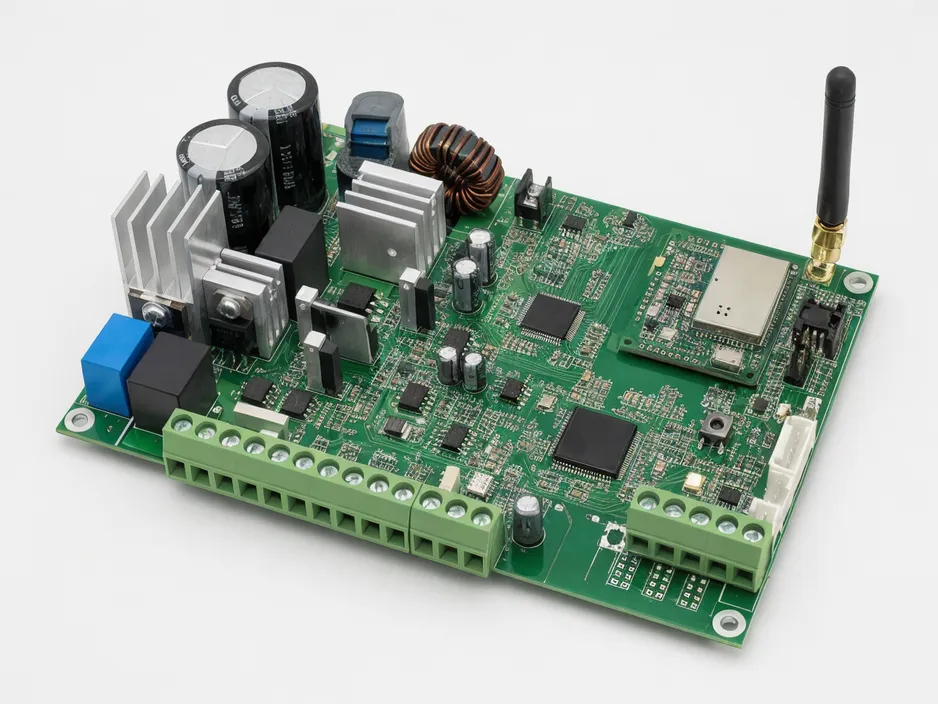
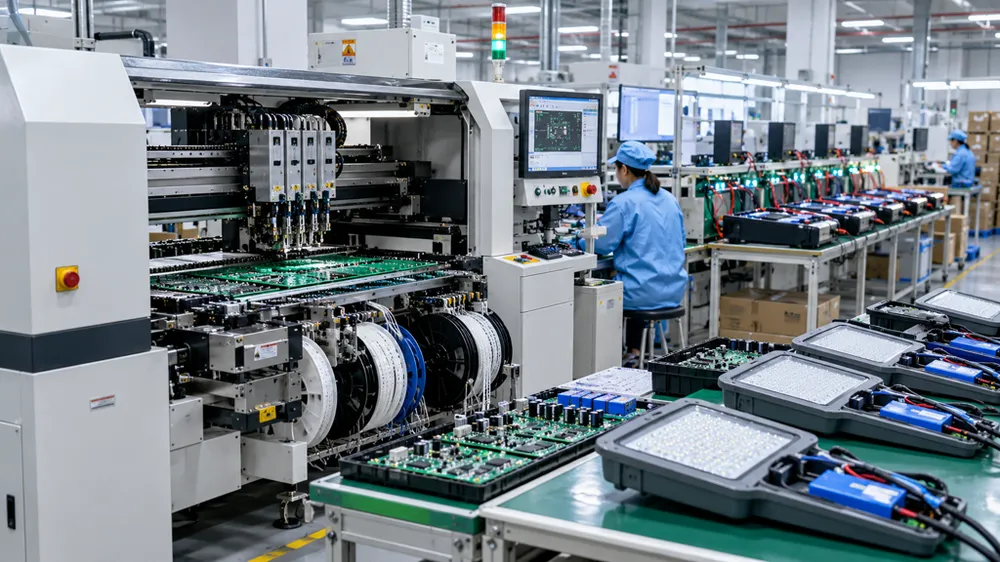
Production equipment visibility: Ask for video factory tours with identifiable production equipment visible — SMT lines for control board assembly, LED module integration stations, battery pack matching equipment, solar panel testing benches, aging test racks, and waterproof inspection chambers. Generic warehouse shots with packaged cartons don't verify manufacturing capacity. We've given hundreds of video tours to US buyers, and the consistent request is "show me the SMT line and the battery testing equipment" — those two stations are hard to fake and expensive to maintain if you're not actually producing at volume.
Third-party audit reports: ISO 9001, BSCI, or equivalent audit reports from SGS, TÜV, or Intertek include facility size verification, employee counts, production line counts, and QC process documentation. These reports are renewed annually and require on-site audits, so they're harder to fabricate than a company profile. If a supplier claims factory status but can't provide a recent third-party audit report, that's a red flag.
MOQ variance between quote and actual: Trading companies often quote low MOQs to win the inquiry, then revise upward during order confirmation because they're assembling your order from multiple factories with their own minimums. If a supplier quotes 50-unit MOQ but asks for 500 units when you try to place the order, they're likely coordinating external production. Factory-direct suppliers set MOQs based on their own production line efficiency — our 100-unit MOQ reflects the point where setup time and material procurement become economical for a single production run.
Project reference verification: Request installation photos from existing US projects with verifiable details — project location (city/state), installation date, fixture count, and client type (municipal, commercial, residential). Contact those references directly if possible. We maintain a reference list of municipal and commercial projects across North America with contact information for buyers who want to verify our production consistency and post-installation support responsiveness.
JXSOL verification baseline: We operate 6 dedicated production lines across 12,000 m² in Guzhen Town, Zhongshan — the center of China's lighting export industry. Annual capacity runs 1,200,000 units with daily output above 5,000 units. ISO 9001:2015 certified with SGS audit reports available on request. Our 100-unit MOQ holds firm from quote through order confirmation because we control the entire production schedule, and we don't coordinate with external factories to fill orders. Video factory tours are scheduled within 48 hours of request, and we show the SMT line, battery testing lab, and aging test area every time — those are the stations US buyers use to verify manufacturing authenticity.

Supplier Evaluation Framework: What to Compare Beyond Price
The search term "smart solar lighting system suppliers usa" returns a mix of US-based distributors, China-based factories with US sales offices, and trading companies positioned as manufacturers. Rather than ranking suppliers by invented criteria, we'll explain the evaluation framework that matters for commercial buyers — then position JXSOL transparently within that framework.
Supplier Model Categories You'll Encounter
US-based distributors and integrators: Companies like Carmanah Technologies (Canada, with strong US presence), Sol Inc., and regional distributors who import from overseas factories, stock inventory locally, and provide installation support. These suppliers solve the convenience problem — you get faster delivery, local warranty support, and easier communication. The trade-off is price: distributor markup typically adds 30-50% to landed cost, and customization options are limited to what their supplier factories already offer. For small orders (under 100 units), urgent replacements, or projects where local support justifies the premium, this model makes sense.
China-based factories with verified production capacity: Manufacturers like JXSOL (Zhongshan), Yangzhou Brightsolar (Jiangsu), and Zhongshan Tianyu (Guangdong) operate dedicated solar lighting production facilities with in-house engineering teams and third-party audit verification. These suppliers offer direct pricing, full OEM/ODM customization, and engineering support for IoT configuration. The trade-off is lead time (4-6 weeks typical) and minimum order quantities (100-500 units depending on customization depth). For distributors building a solar lighting SKU mix, commercial developers running multi-phase projects, or municipal buyers ordering at volume, the economics favor factory-direct import.
Trading companies positioned as manufacturers: The largest category on Alibaba and B2B directories. These companies maintain sales offices, display professional websites, and claim factory capacity — but their business model is order consolidation and supplier coordination, not manufacturing. Red flags include generic product catalogs with inconsistent branding across SKUs, reluctance to schedule live factory tours, and MOQ increases between quote and order confirmation. We're not including specific company names in this category because verification status changes as companies pivot business models — use the verification checklist from Section 2 instead.
Key Evaluation Criteria Across All Supplier Types
IoT and smart control capabilities: The features that define "smart" solar lighting vary widely. Basic systems offer 0-10V dimming and PIR motion sensors — industry-standard components that most factories can integrate. Advanced systems add DALI addressability, wireless protocols (Zigbee, LoRa), cloud-based management platforms, OTA firmware updates, and multi-sensor integration (daylight harvesting, weather response). Compare suppliers by protocol specificity: if they list "smart control" without naming dimming protocols or wireless standards, they're likely sourcing controllers from a third party and can't customize the firmware.
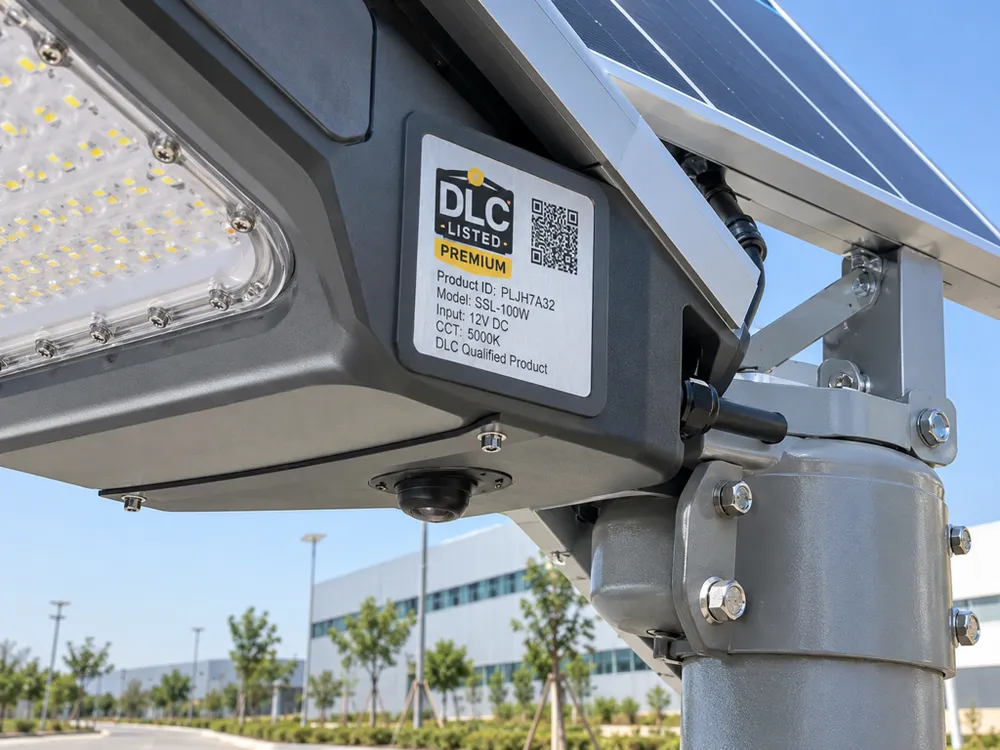
US compliance certifications: DLC qualification enables utility rebate eligibility for commercial and municipal projects — rebates often offset 20-40% of fixture cost, so DLC QPL status directly affects your project economics. UL or ETL certification is required for insurance compliance on most commercial installations. IP65 is minimum weatherproofing for most US climates; IP67 is necessary for coastal installations and regions with heavy precipitation. Ask for third-party test reports, not just certification claims — we provide CE, RoHS, IP65/IP67, and IEC 62124 documentation with every order, and DLC qualification is in progress for our US-market smart solar models.
OEM/ODM capability and engineering support depth: US distributors typically can't customize specifications beyond finish color or mounting brackets — they resell what their upstream factory produces. Factory-direct suppliers with in-house engineering teams handle lumen output adjustment (±20% from base model), color temperature tuning (2700K-6500K range), battery capacity sizing for target autonomy days (3-7 days typical), and IoT controller configuration. The engineering support difference matters most for multi-phase projects: if your Phase 1 deployment reveals that your dimming schedule needs adjustment for local lighting ordinances, a factory can implement that change in Phase 2 production without changing suppliers.
MOQ structure and payment terms: Distributor MOQs start low (often 10-50 units) because they're selling from stock. Factory MOQs reflect production line efficiency — 100-500 units typical depending on customization depth. Payment terms vary: distributors often accept net-30 or net-60 terms after credit approval, while factory-direct orders typically require 30% deposit and 70% before shipment. For your commercial analysis, compare total landed cost (unit price + shipping + duties + financing cost) rather than unit price alone — sometimes factory-direct pricing with 30% deposit lands cheaper than distributor net-60 terms with higher unit cost.
Lead time reliability and reorder consistency: This is where factory-direct suppliers gain long-term advantage. Trading companies source from multiple factories, so your reorder might come from a different production line than your initial order — component suppliers change, firmware versions drift, and lighting performance shifts between batches. Factory-direct suppliers maintain component supplier relationships and production procedures across years, so your reorder specifications stay consistent. We've supplied the same commercial parking lot fixture to a US distributor for 6 years — same LED chip supplier, same battery cell source, same firmware version with incremental updates that don't break backward compatibility. That consistency protects your brand reputation when you sell the same SKU year over year.
JXSOL as Your Factory-Direct Baseline for Comparison
Rather than pretending to rank competitors we haven't audited, we'll position JXSOL transparently within the supplier landscape and explain where we fit commercially.
Manufacturing verification: Zhongshan Century Juxing Optoelectronics Technology Co., Ltd., operating since 2012. 12,000 m² facility in Guzhen Town, Zhongshan, Guangdong — verifiable via business license, ISO 9001:2015 certification, and third-party audit reports from SGS. Six dedicated production lines with daily output above 5,000 units and annual capacity of 1,200,000 units. We manufacture on-site; we don't coordinate with external factories to fill orders.
IoT and smart control capabilities: In-house R&D team of 15+ optical and electrical engineers handles smart system configuration. Standard features include 0-10V dimming (compatible with most US commercial lighting control systems), PIR and microwave radar motion sensor integration, daylight harvesting sensors with programmable lux thresholds, and remote monitoring via mobile app (iOS/Android). We support custom dimming schedules, sensor logic adjustments, and firmware modifications for OEM projects. Wireless protocols (Zigbee, LoRa) are available for large-scale municipal deployments — implementation cost depends on infrastructure requirements and we'll review that during engineering consultation.
US compliance status: CE, RoHS, IP65/IP67 Ingress Protection, and IEC 62124 certified with documentation provided per order. DLC qualification is in progress for select smart solar models targeting the US commercial market — current timeline is Q3 2026 for QPL listing. UL certification is not standard on our export models (most China-based factories hold CE rather than UL), but we support buyers who need UL testing through our relationship with third-party labs — testing cost and timeline depend on model complexity and we coordinate that during order confirmation.
OEM/ODM terms: 100-unit MOQ for standard catalog models, 300-500 units for custom specifications involving housing modifications or new tooling. Customization scope includes lumen output adjustment (standard range 3,000-15,000 lumens depending on application), color temperature tuning (2700K-6500K), battery capacity sizing (target 3-7 autonomy days based on your climate zone), solar panel wattage matching, and IoT controller configuration. Lead time runs 4-6 weeks for standard orders, 6-8 weeks for custom specs. Payment terms are 30% deposit at order confirmation, 70% before shipment. We don't require 50% deposit like some factories — 30% covers material procurement and production setup without locking up your capital unnecessarily.
Engineering support and communication: Our engineering team responds to specification questions within 24 hours (Shanghai timezone, so expect responses during US evening/night hours). We provide photometric IES files for lighting design software, CAD drawings for custom mounting configurations, and battery sizing calculations for your target latitude and seasonal irradiance patterns. For US buyers new to smart solar systems, we offer configuration consultation before order placement — send us your project type (municipal street lighting, commercial parking lot, residential development), target lumen output, installation environment, and any specific IoT requirements, and we'll recommend a configuration that matches your application without over-specifying features you won't use.
Quality control and warranty: 100% pre-shipment inspection is non-negotiable — every unit undergoes lumen output verification, color temperature confirmation, battery charge/discharge cycle testing, waterproof structure inspection (IP65/IP67), controller function checks, and aging tests before packing. Three-year warranty standard, with field failure replacement protocol: you ship the failed unit back, we perform root cause analysis, and replacement units ship within 7-10 days. We document field failure rates by model and climate zone — that data is available on request because we're confident in our QC process and we use failure analysis to improve production procedures.
Who we serve best: US distributors testing smart solar SKUs before committing to large inventory programs (100-300 unit trial orders let you validate market fit before scaling). Commercial property developers running multi-phase projects where specification consistency matters across years. Municipal buyers ordering at volume (500+ units) where factory-direct economics justify longer lead times. We're not the right fit for urgent small orders (under 50 units with 2-week delivery requirements) or buyers who need local warehouse stock — a US distributor serves those needs better, and we can recommend distributors who carry smart solar inventory if that's your situation.
IoT and Smart Control Features to Compare Across Suppliers
The "smart" label on solar lighting means different things to different suppliers. Before comparing price, compare what you're actually buying — the gap between basic remote monitoring and full building management system integration can represent 2-3x cost difference with corresponding functionality differences that matter for your specific application.
Dimming protocols and control interfaces: The most common smart control protocol in US commercial buildings is 0-10V analog dimming — simple, reliable, compatible with most existing lighting control systems. DALI (Digital Addressable Lighting Interface) adds individual fixture addressability and two-way communication, but it costs 30-40% more and requires compatible controllers. Wireless dimming (Zigbee, LoRa, or proprietary RF protocols) eliminates control wiring but adds infrastructure cost — you need gateway devices, network configuration, and ongoing connectivity management. For municipal street lighting and large parking lot deployments, wireless makes economic sense because trenching conduit for control wiring costs more than gateway infrastructure. For smaller commercial projects (under 100 fixtures), 0-10V wired dimming lands cheaper and eliminates wireless network maintenance.
Sensor integration and environmental response: PIR (passive infrared) motion sensors are standard on most smart solar security and area lights — detection range runs 5-12 meters depending on sensor quality, with adjustable sensitivity to reduce false triggers from vegetation movement. Microwave radar sensors cost more but handle longer detection ranges (15-20 meters) and work better in extreme temperatures. Daylight harvesting sensors adjust lighting output based on ambient light levels — useful for parking structures and covered walkways where solar panel positioning might create inconsistent charging patterns. Weather sensors (wind, rain) trigger protective modes on smart poles with integrated accessories — our Gulf region buyers specify this feature because high winds can damage solar panels on poorly secured installations.
The commercial value of sensor integration varies by application. For municipal street lighting on residential roads, adaptive dimming based on traffic detection can reduce battery draw by 40-50% while maintaining safety lighting during low-activity hours. For commercial parking lots with security requirements, dimming below 30% lumen output creates liability risk even during off-hours — full-output dusk-to-dawn operation makes more sense. Match sensor integration to your project's actual operational requirements, not to feature lists.
Remote management platforms and data access: Cloud-based management dashboards let you monitor fixture status, adjust dimming schedules, and review performance data from anywhere with internet access. Local gateway systems keep data on-premises but require network infrastructure on-site. Mobile app control (iOS/Android) works for small installations (under 50 fixtures) where dedicated management software isn't justified. The platform selection depends on who operates the lighting system: municipal facilities departments often prefer on-premises systems to avoid ongoing cloud service fees, while commercial property management companies favor cloud platforms that integrate with existing building management systems.
Data export matters for utility rebate documentation. US utilities offering performance-based rebates require energy consumption logs, operational hour records, and dimming pattern data to verify that your smart controls actually delivered promised savings. Ask suppliers whether their management platform exports CSV or API data in formats compatible with utility reporting requirements — we've seen buyers lose rebate eligibility because their management system couldn't generate the required documentation format.
Firmware update capability and lifecycle support: OTA (over-the-air) firmware updates let you patch bugs, add features, or adjust control logic without site visits to every fixture. That capability matters most for large deployments (200+ fixtures) where manual updates aren't practical. The trade-off is dependency on the supplier's ongoing support — if the supplier discontinues the product line or exits the market, your smart features become static and you lose update capability. Before committing to a smart solar system, ask about the supplier's firmware support timeline and backward compatibility policy. We maintain firmware compatibility across hardware generations so your Phase 1 fixtures integrate with Phase 3 additions — breaking compatibility would fragment your deployment and we avoid that deliberately.
US Project Compliance Requirements — DLC, UL, and Buy America Considerations
US buyers operate in a more regulated environment than most export markets. Compliance requirements affect project eligibility, insurance coverage, and total project cost through utility rebates. Compare suppliers by certifications they actually hold with documentation available, not by compliance claims on their website.
DLC qualification and utility rebate eligibility: The DesignLights Consortium (DLC) maintains a Qualified Products List (QPL) for commercial and industrial lighting fixtures that meet performance standards for utility rebate programs. US utilities offering lighting rebates typically require DLC QPL listing as qualification criteria — fixtures not on the list don't qualify regardless of performance. DLC qualification involves third-party photometric testing, lumen maintenance verification over 6,000+ hours, and color stability documentation. The testing process takes 4-6 months and costs $15,000-25,000 per fixture configuration, so smaller suppliers often skip it.
The commercial impact: DLC-qualified fixtures can access utility rebates worth 20-40% of installed cost on commercial and municipal projects. For a 500-fixture parking lot lighting project, that rebate difference might represent $40,000-80,000 in project savings that offset the higher upfront cost of DLC-qualified fixtures. If your projects target utility rebate funding, verify supplier DLC QPL status during initial screening — we're pursuing DLC qualification for our US-market smart solar models with expected QPL listing in Q3 2026.
UL/ETL safety certification and insurance compliance: UL (Underwriters Laboratories) and ETL (Intertek) safety certification verifies that fixtures meet US electrical safety standards. Most commercial property insurance policies require UL or ETL listed fixtures for coverage — installing non-listed fixtures can void insurance claims if a fire or electrical incident occurs. UL and ETL are functionally equivalent for insurance purposes; ETL testing typically costs 15-20% less and follows the same UL standards.
The certification gap: most China-based solar lighting factories hold CE (European) certification rather than UL because European export volume exceeds US volume historically. CE certification uses different testing standards (EN instead of UL) and doesn't satisfy US insurance requirements. Buyers sourcing from China-based factories have three options: (1) work with suppliers who already hold UL/ETL (rare for solar lighting), (2) coordinate third-party UL testing through independent labs (adds 8-12 weeks and $8,000-15,000 per model), or (3) accept CE certification and verify that your specific project doesn't require UL listing. Municipal projects and commercial installations on properties with strict insurance requirements typically mandate UL/ETL; smaller commercial projects and residential developments often accept CE.
IP rating verification and climate zone matching: IP (Ingress Protection) ratings indicate waterproof and dustproof performance. IP65 is minimum for outdoor lighting in most US climates — protected against water jets from any direction. IP67 adds submersion resistance (up to 1 meter depth for 30 minutes), necessary for coastal installations where storm surge might reach fixtures, and for regions with severe weather where standing water accumulates around pole bases. IP68 (continuous submersion) is overkill for solar lighting unless you're installing in flood zones.
Third-party IP testing costs $2,000-5,000 per model and most buyers don't verify claims independently — you're relying on supplier documentation. Ask for IP test reports from recognized labs (SGS, TÜV, Intertek) rather than supplier self-certification. We provide IP65/IP67 test reports from SGS with every order because waterproof failures are the most common field complaint in solar lighting and we want buyers to have third-party verification before installation.
Buy America Act and domestic content requirements: Federal infrastructure projects funded through IIJA (Infrastructure Investment and Jobs Act) or other federal programs may require domestic content compliance under the Buy America Act. The law requires that iron, steel, and manufactured products be produced in the United States, with "produced in the United States" defined as final assembly in the US and component sourcing that qualifies under "substantial transformation" rules.
Solar lighting sourced from China-based factories typically doesn't meet Buy America requirements unless you coordinate final assembly and domestic content sourcing in the US. That's a specialized supply chain setup beyond what most solar lighting buyers need — it applies primarily to federal highway projects, transit authority installations, and other federally funded infrastructure. For state and local projects without federal funding, Buy America doesn't apply. If your project requires Buy America compliance, identify that requirement during RFQ and work with suppliers who have US assembly operations or established domestic content programs.
OEM/ODM Capability and MOQ Comparison for Smart Solar Lighting
Customization depth and minimum order quantities create the clearest separation between distributors, trading companies, and factories. Understanding which supplier type serves your commercial model helps you avoid mismatched expectations during order confirmation.
MOQ tiers and what they reveal about supplier type: Distributors selling from stock quote MOQs of 10-50 units because they've already purchased inventory — you're buying what's available, not what's manufactured to order. Trading companies quote 100-300 units typical, but MOQs often increase during order confirmation because they're consolidating your order with other buyers to meet factory minimums. Factory-direct suppliers set MOQs based on production line efficiency: 100-500 units depending on whether you're ordering standard catalog models or custom specifications. Our 100-unit MOQ for standard models reflects the point where material procurement and line setup become economical — below 100 units, per-unit cost increases sharply because fixed costs spread across fewer units.
For US distributors building a solar lighting SKU mix, 100-300 unit trial orders let you test market reception before committing to larger inventory programs. Commercial developers running multi-site projects often start with 200-unit Phase 1 orders to validate installation procedures and fixture performance before scaling to 500-1,000 unit regional rollouts. Municipal buyers ordering for street lighting upgrades typically run 500-2,000 unit programs per phase, where factory-direct economics justify longer lead times.
Customization scope by supplier type: Distributors can modify finish color (powder coat RAL colors) and sometimes mounting brackets — that's the limit of their customization because they're modifying purchased inventory, not manufacturing to specification. Trading companies offer more flexibility because they coordinate with factories, but customization decisions route through the intermediary rather than directly to engineers — expect 3-5 day response times for technical questions and limited ability to adjust specifications after order confirmation.
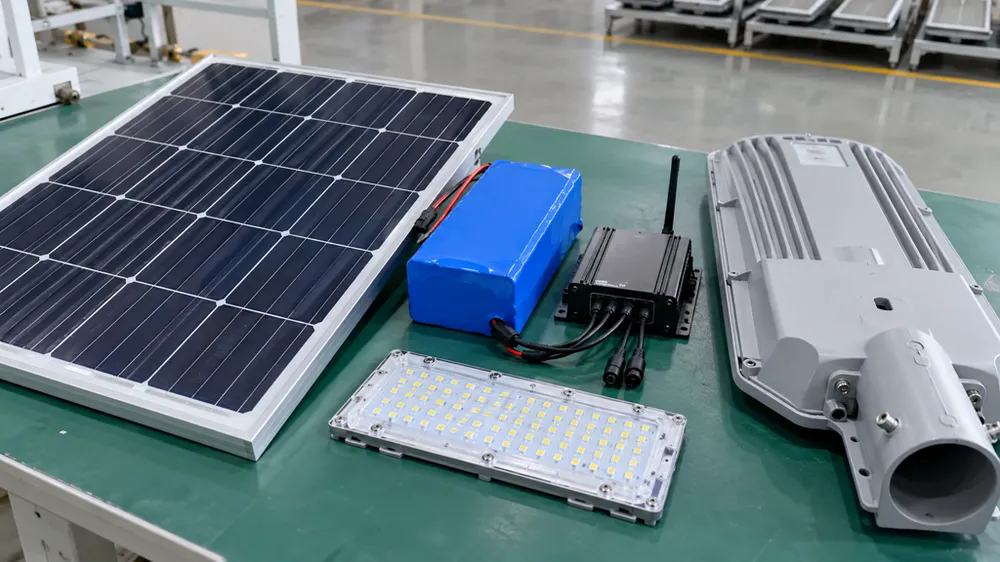
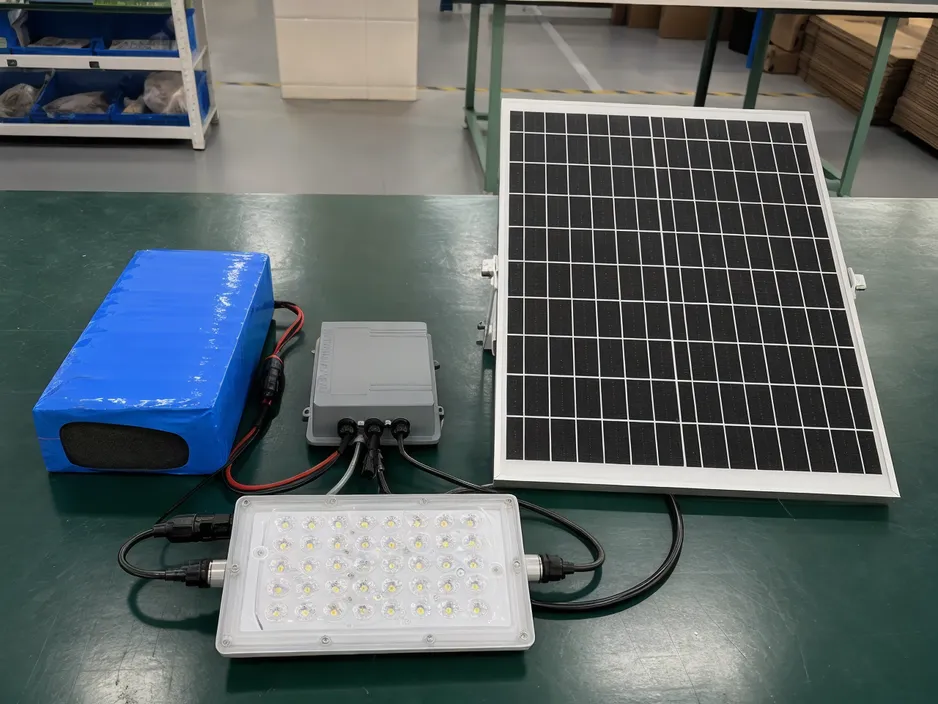
Factory-direct suppliers with in-house engineering teams handle specification-level customization: lumen output adjustment within LED module design range (typically ±20% from base model without changing housing), color temperature selection across the standard warm-white to daylight range (2700K-6500K), battery capacity sizing for target autonomy days based on your climate zone's seasonal irradiance patterns, solar panel wattage matching, IoT controller configuration (dimming schedules, sensor sensitivity, remote management platform integration), and housing layout modifications for custom mounting requirements.
The engineering review before production matters for OEM/ODM projects. We've seen buyers skip the review to save time, place orders based on catalog specs, then discover mid-production that their requested configuration creates performance trade-offs they didn't anticipate (example: requesting higher lumen output and longer autonomy days simultaneously without increasing battery capacity or solar panel wattage). The engineering review catches those conflicts before production and proposes solutions — typically 2-3 business days for standard customization, 1-2 weeks for projects requiring new tooling or significant housing changes.
Lead time structure and deposit requirements: Standard catalog models from factory-direct suppliers typically ship 4-6 weeks from deposit receipt — 2 weeks for material procurement, 2 weeks for production and QC, 1-2 weeks for container loading and port clearance. Custom specification orders add 2-4 weeks depending on whether new tooling is required. Trading companies quote similar lead times but add coordination delays — we've seen orders extend to 10-12 weeks when the trading company had to switch factories mid-production due to capacity constraints.
Payment terms separate amateurs from established suppliers. Factory-direct suppliers with stable operations typically require 30% deposit to cover material procurement and production setup, with 70% balance before shipment. Trading companies often request 50%+ deposit because they need capital to pay their own supplier factories upfront. Distributors selling from stock might extend net-30 or net-60 terms after credit approval, but you're paying distributor markup for that payment flexibility — evaluate total landed cost including financing cost rather than comparing unit prices in isolation.
JXSOL OEM/ODM baseline: 100 units for standard models, 300-500 units for custom specifications involving housing modifications. Engineering review included at no charge before order confirmation — we want to catch specification conflicts before production, not after you receive the container. Lead time runs 4-6 weeks for standard orders, 6-8 weeks for custom specs. 30% deposit standard, 70% before shipment. Our engineering team handles custom lumen/CCT requests, battery capacity calculations, and IoT controller configuration directly without routing through sales intermediaries — technical response time averages 24 hours.
Quality Control Protocols and Warranty Structure to Evaluate
Quality control separates suppliers who maintain production standards from suppliers who inspect samples and hope the batch matches. The difference surfaces in field failure rates — and field failures cost you more than the unit replacement cost when you factor in truck rolls, customer complaints, and brand reputation damage.
Pre-shipment inspection depth: 100% functional testing means every unit undergoes lumen output verification, color temperature confirmation, battery charge/discharge cycle testing, waterproof structure inspection, controller function checks, and aging tests before packing. Sample-based inspection (typically 10-20% of batch) catches catastrophic production failures but misses intermittent defects that only surface under extended testing. For smart solar systems, 100% testing matters more than for passive fixtures because controller firmware bugs and sensor calibration errors don't surface during visual inspection — they require powered testing under simulated operating conditions.
Our 100% pre-shipment inspection protocol includes: lumen output verification using integrating sphere equipment (target ±5% from specification), color temperature confirmation (±200K from specification), battery charge/discharge cycle testing (minimum 3 full cycles to verify capacity matches specification), waterproof structure inspection (IP65/IP67 spray chamber testing on sample units from each batch), controller function checks (dimming response, sensor trigger verification, remote management platform connectivity), and 24-hour aging tests (full charge, full discharge, lighting output stability verification). That protocol adds 2-3 days to production time, but it reduces field failure rates to below 2% — industry average for solar lighting runs 5-8% field failures in first year.
Factory inspection lab equipment investment: Suppliers confident in their QC process invest in on-site testing equipment rather than outsourcing to third-party labs. Key equipment for solar lighting includes integrating spheres for lumen measurement (cost: $15,000-40,000 depending on diameter), battery cycle testers for charge/discharge verification (cost: $8,000-15,000 per station), IP rating spray chambers or submersion tanks for waterproof verification (cost: $10,000-25,000), and environmental chambers for temperature/humidity aging tests (cost: $20,000-50,000). Total QC lab investment for a credible solar lighting factory runs $100,000-200,000 — trading companies don't make that investment because they don't control production.
When you tour a factory (video or in-person), ask to see the QC lab and request explanations of testing procedures. Factories with established QC protocols explain their process in detail and show testing data from recent production runs. Suppliers without proper QC infrastructure either decline the lab tour or show generic equipment that doesn't match the product category.
Warranty structure and claim process: Standard warranty terms for solar lighting run 2-3 years covering manufacturing defects, battery capacity degradation beyond normal range, and waterproof integrity failures. The warranty claim process reveals whether you're working with a factory or an intermediary: factory-direct claims go to the engineering team that designed the product, replacement units ship from the same production line that made your original order, and turnaround typically runs 7-10 days from failure report to replacement shipment. Trading company warranty claims route through the intermediary to the factory, adding coordination delays — 3-4 weeks typical for replacement shipment.
Field failure rate transparency is the ultimate QC confidence signal. Suppliers confident in their quality document failure rates by model, application type, and climate zone — that data helps buyers make informed specification decisions and proves the supplier tracks performance post-sale. We maintain field failure rate documentation by model line and climate zone (coastal, desert, temperate, cold climate) because we use that data to improve production procedures and material sourcing decisions. Failure rate data is available on request — if we're confident enough to ship the product, we're confident enough to document its field performance.
Application-Specific Sourcing Guidance — Matching Supplier Capabilities to Project Types
Different project types create different supplier requirements. Municipal buyers need DLC qualification and volume pricing. Commercial developers need flexible OEM terms and phased delivery. Residential developers need aesthetic options and simple installation. Match supplier type to project requirements rather than defaulting to factory-direct for everything.
Municipal street lighting projects: Your priorities are DLC qualification for utility rebates, multi-year warranty support, large-volume pricing (500-2,000+ units per phase), remote management platforms that reduce labor cost for manual scheduling, and engineering support for specification compliance with local lighting ordinances. Supplier profile: factory-direct manufacturers with DLC QPL status (or in-progress qualification), established municipal reference projects in similar climate zones, engineering teams that respond to specification questions during bid preparation, and production capacity to deliver 1,000+ units per order without multi-month lead time extensions.
We serve municipal buyers in the Midwest and Gulf regions with smart solar street lighting configurations optimized for those climate patterns — battery sizing for seasonal irradiance variation, housing materials that handle temperature extremes, and remote management integration for adaptive dimming based on traffic patterns. Our DLC qualification is in progress with expected QPL listing Q3 2026, and we maintain municipal project references with contact information available for performance verification calls.
Commercial parking lot and area lighting: Your priorities are UL/ETL certification for insurance compliance, motion sensor integration for security and energy management, moderate MOQ (200-500 units) for multi-site rollout, and responsive lead times for phased expansion as your development pipeline progresses. Supplier profile: flexible OEM/ODM for property branding requirements (custom finish colors, logo placement on housing), engineering support for photometric calculations to meet IES lighting standards, and production scheduling that accommodates phased orders without requiring full project commitment upfront.
Commercial property developers typically start with 200-unit Phase 1 orders to validate fixture performance and installation procedures across 2-3 properties, then scale to 500-1,000 unit regional rollouts as the development program expands. We support that phased approach with consistent specifications across order cycles — your Phase 3 fixtures match Phase 1 lighting output, color temperature, and IoT controller behavior because we maintain component supplier relationships and firmware versions across years.
Residential development lighting: Your priorities are aesthetic housing options that match architectural styles, lower upfront cost to fit residential construction budgets, simple installation procedures that don't require electrical contractors, and homeowner-friendly warranty terms. Supplier profile: distributors with local service networks for warranty claim handling, or factories with established US partnerships that provide installation support documentation and homeowner operation guides.
Residential developers typically order 100-300 units per development phase with emphasis on aesthetic consistency (matching finish colors, cohesive design language across pathway, wall, and area lighting), plug-and-play installation (pre-wired connectors, tool-free mounting brackets), and clear warranty documentation for homeowner handoff. We provide residential-market support through installation guides with photo-illustrated procedures and homeowner operation manuals in English, but residential buyers often get better local support from US distributors who maintain service networks for warranty claims.
Industrial and logistics facility lighting: Your priorities are high lumen output (10,000-20,000 lumens typical for warehouse and loading dock applications), rugged IP67 construction to handle forklift impact and harsh environments, integration with existing building management systems, and custom mounting solutions for non-standard installation conditions. Supplier profile: IoT platform compatibility with major building automation systems (BACnet, Modbus), engineering teams that handle custom bracket design and structural load calculations, and field service support for commissioning and troubleshooting.
Industrial buyers typically order 300-800 units per facility with custom specifications around lumen output, mounting height (8-15 meters typical for warehouse applications), and control system integration. We've supplied logistics facilities in the Southwest US with smart solar area lighting for outdoor yard storage — the key specification trade-offs were balancing lumen output against battery capacity (higher output requires larger battery packs and solar panels) and selecting wireless control protocols compatible with the facility's existing Honeywell building management system.
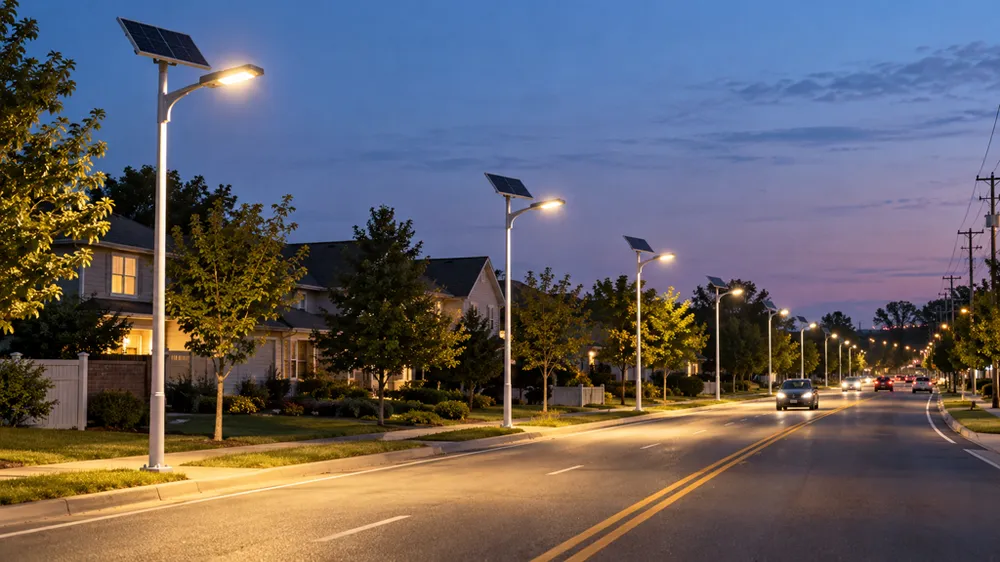
Factory-Direct Advantages Beyond Price — Why JXSOL Serves as the Verifiable Baseline
We position ourselves transparently: JXSOL is not the cheapest smart solar lighting supplier you'll find. US distributors selling commodity fixtures land cheaper on small orders where factory-direct MOQs don't justify container shipment. Trading companies sometimes quote lower unit prices because they're sourcing from multiple factories and can shop for bottom-dollar component suppliers batch by batch. The factory-direct value proposition isn't price — it's engineering access, production control, and reorder consistency that protect your long-term commercial interests.
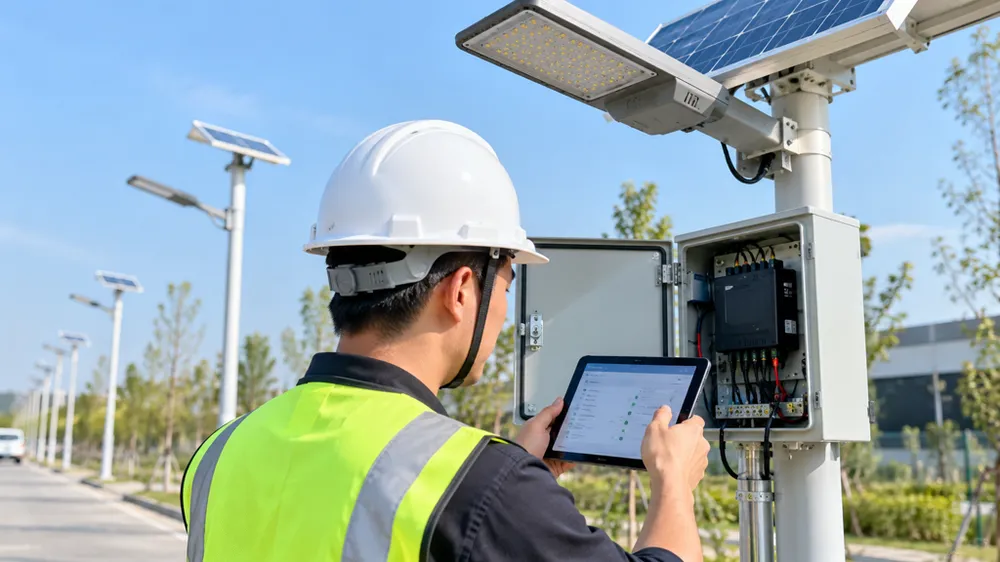
Direct engineering access eliminates coordination delays: When you work with a factory, specification questions go directly to the engineers who configured your product. Firmware troubleshooting, sensor calibration adjustments, and custom integration requests don't route through sales intermediaries who forward messages and translate responses. Our engineering team responds to technical questions within 24 hours (Shanghai timezone) — questions that take 20 minutes to answer when posed directly to engineers can take 5-7 days when routed through a trading company coordinator.
That responsiveness matters most during project deployment. You've installed 200 fixtures and discovered that the motion sensor sensitivity needs adjustment for your specific site conditions — tree coverage creates false triggers or pavement reflectivity affects detection range. With factory-direct support, you send a description and photos, our engineers analyze the situation and propose a sensor sensitivity adjustment, and we implement the change in your next production batch without waiting for a trading company to coordinate with their supplier factory.
Single-site production ensures batch consistency: We manufacture smart solar lighting on 6 dedicated production lines in one 12,000 m² facility. Your Phase 1 order and your Phase 3 order come from the same production lines with the same component suppliers, the same calibration equipment, and the same firmware version control procedures. Trading companies sourcing from multiple factories create specification drift risk — Factory A might source LED chips from Supplier X while Factory B uses Supplier Y, and color temperature consistency suffers across batches even though both meet your specification on paper.
For buyers running multi-phase projects where lighting uniformity matters (municipal street lighting, commercial parking lot networks, residential development installations), batch consistency protects your brand reputation. We've supplied the same smart solar parking lot fixture to a US commercial developer for 4 years across 12 properties — same lumen output, same color temperature, same IoT controller behavior, same housing finish. That consistency comes from controlling the entire production process in one location with stable component supplier relationships.
Long-term reorder reliability reduces supplier exit risk: Trading companies enter and exit product categories based on order flow — if smart solar lighting demand shifts, they reallocate resources to other product lines and your reorder options disappear. Factories invested in production equipment, engineering talent, and facility infrastructure don't exit product categories casually because the sunk cost is high. We've operated solar lighting production since 2012 with continuous facility and equipment investment — we're not diversifying into unrelated product categories or shifting to trading company operations because our entire infrastructure is built around solar lighting manufacturing.
For buyers who need to reorder the same specification years later to expand existing installations or replace aging fixtures, factory continuity matters. If your supplier exits the market or discontinues your product line, you're sourcing a replacement specification that doesn't match your existing installation — light output differs, color temperature shifts, housing dimensions change, and your lighting uniformity breaks. We maintain product lines across years for exactly that reason (and because retooling production for entirely new products costs more than incremental improvements to existing lines).
Root cause analysis and corrective action close the failure loop: When a fixture fails in the field and you return it under warranty, what happens next reveals supplier accountability. Trading companies forward failed units to their factory partners, wait for a replacement authorization, and ship you a new unit — but they don't control the production process, so they can't implement corrective action to prevent the same failure in future batches. Factory engineering teams analyze failed units, identify root causes (component defect, assembly procedure gap, specification mismatch with operating environment), and implement production changes to prevent recurrence.
We perform root cause analysis on every returned warranty unit and document findings by failure mode, climate zone, and application type. Common failure modes in smart solar lighting include battery capacity degradation beyond normal range (often caused by temperature extremes exceeding specification), waterproof seal failures (often installation error rather than manufacturing defect), and IoT controller connectivity issues (often site infrastructure limitations rather than hardware problems). That analysis drives production improvements — we switched battery cell suppliers in 2019 after seeing elevated failure rates in desert climate installations, and field failure rates dropped from 4% to under 2% in those regions within one year.
How to Structure Your Supplier RFQ for Smart Solar Lighting Projects
Most supplier RFQs focus on price and lead time, then discover mid-production that critical specification details weren't addressed. An effective RFQ for smart solar lighting systems captures enough technical detail for suppliers to quote accurately and for you to compare quotes on equivalent specifications.
Essential RFQ elements: Project scope (fixture quantity, installation timeline, geographic location with climate zone context), specification requirements (target lumen output at fixture level, color temperature preference, mounting height for photometric calculations, pole compatibility if fixtures mount on existing infrastructure), smart control features needed (dimming protocol preference, sensor types required, remote management platform requirements including mobile app or cloud dashboard access), compliance requirements (DLC qualification if utility rebates are relevant, UL/ETL if insurance mandates, IP rating for your climate zone, Buy America if federally funded), and budget context (target unit price range helps suppliers recommend configurations that fit your project economics).
Supplier qualification questions: Factory verification (facility size, production capacity, willingness to schedule video factory tour), IoT engineering capability (in-house vs. outsourced firmware development, examples of custom sensor integration or dimming schedule configuration), existing US project references with verifiable installations (municipal, commercial, or residential projects in similar climate zones), and pre-shipment inspection protocol details (100% functional testing vs. sample-based, specific QC checkpoints for smart systems).
Commercial term clarifications: MOQ for standard catalog models vs. custom specifications, deposit percentage and payment terms (30% vs. 50% deposit affects your capital requirements), lead time breakdown (material procurement, production, QC, shipping, customs clearance), and warranty claim process with expected response times. For large projects, request phased delivery terms — 500-unit project delivered as 200 units Phase 1, 300 units Phase 2 spreads your cash flow and lets you validate fixture performance before committing to full project completion.
Quote comparison framework: Normalize quotes by total landed cost rather than FOB unit price — FOB + shipping + duties + compliance testing (if needed) + financing cost (deposit timing) gives you apples-to-apples comparison. Evaluate warranty structure differences (2-year vs. 3-year terms, replacement vs. repair authorization, response time commitments). Assess engineering support access (direct factory contact vs. sales intermediary, technical response time commitments). Verify component specifications explicitly (battery capacity in Wh or Ah, solar panel wattage, LED chip manufacturer or luminous efficacy specification) because generic "high-quality components" claims don't let you compare performance objectively.
JXSOL RFQ response capability: Send us your project scope, specification requirements, smart control features, and compliance needs — our engineering team responds within 24 hours with configuration recommendations, photometric calculations if you provide mounting height and spacing requirements, CAD drawings for custom mounting conditions, and detailed component specifications (battery Wh, solar panel wattage, LED efficacy, controller brand and model). Sample production available for evaluation orders (2-10 units) before full production commitment — we'd rather you test the fixture in your target environment and confirm performance than place a large order based on datasheet specs alone. Transparent component sourcing documentation available for Buy America evaluation if your project requires domestic content assessment.