Why Solar Lighting Specs Fail Between Quote Stage and Field Deployment
A spec sheet promises 12-hour autonomy. Your field deployment delivers 6 hours after two rainy weeks. The factory didn't lie — they calculated battery capacity at 25°C, and your installation site runs at -10°C in winter. The autonomy number was accurate for laboratory conditions, meaningless for procurement decisions.
This gap between quoted specifications and field reality is the most expensive blind spot in solar lighting procurement. Battery capacity calculated without temperature derating, lumen output measured at junction points that don't match operating conditions, waterproof ratings tested on empty housings instead of fully assembled fixtures — these aren't quality failures, they're methodology mismatches that procurement teams can't see from a spec sheet alone.
We've been manufacturing solar lighting since 2012, and the pattern repeats: buyers compare spec sheets, place orders based on the highest numbers, then manage warranty claims when the product underperforms. The root cause isn't dishonest suppliers — it's that most spec sheets describe component capability, not system performance under field conditions. Procurement teams need to verify how specifications were derived, not just what the numbers say.
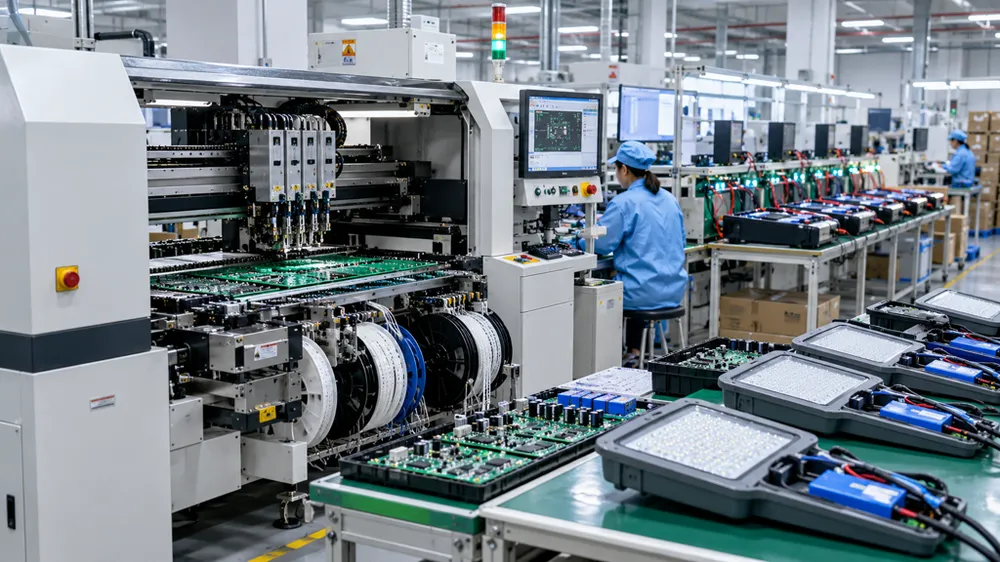
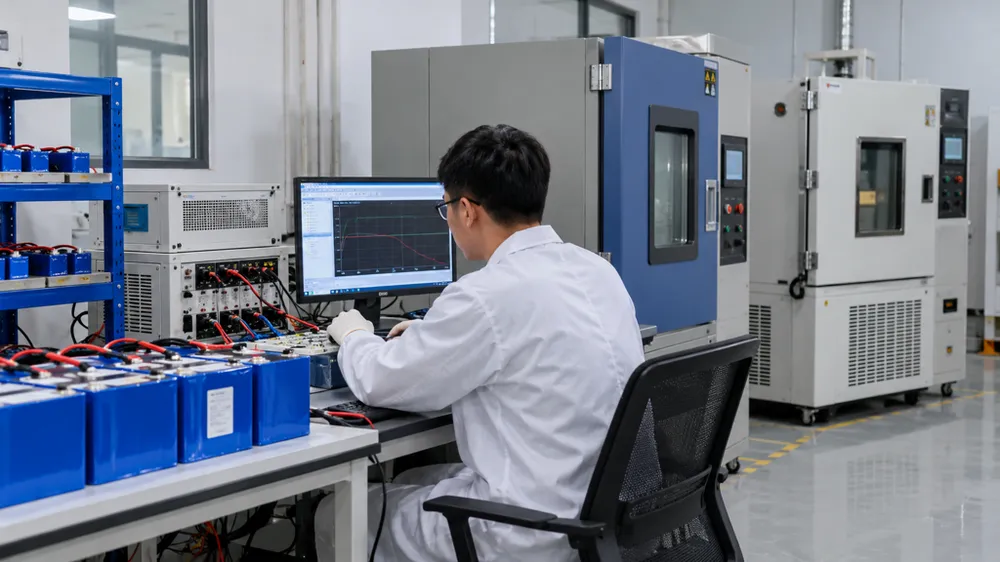
At JXSOL, our 100% pre-shipment inspection catches spec-reality gaps before shipping because we test at deployment temperature ranges, measure lumens after thermal cycling, and verify waterproof ratings on fully assembled fixtures with all wiring installed. That testing infrastructure exists because we've seen what fails. This article walks through each critical parameter category, explains the field failure mode that makes it matter, and lists the verification questions you should ask your factory before signing a purchase order.
Battery Capacity and Autonomy Days — The Most Common Spec Mismatch
Autonomy days follow a simple formula: battery capacity ÷ daily load ÷ depth-of-discharge safety margin. Most spec failures trace to unrealistic DoD assumptions (80% instead of 50% for longer cycle life) or missing temperature derating. A 50Ah lithium battery rated for 3 rainy days at 25°C delivers only 1.8 days at -10°C if the factory didn't adjust the calculation for cold-weather capacity loss. That's not a manufacturing defect — it's a spec that didn't account for deployment reality.
Ask your factory: "What temperature range is your autonomy calculation based on?" and "What depth of discharge are you using?" If they can't answer immediately, the autonomy number is theoretical. Battery chemistry determines how much capacity survives temperature swings — LiFePO₄ holds performance better in cold climates, ternary lithium offers higher energy density but degrades faster under thermal stress. Your factory should be sizing the battery for your deployment region, not quoting a universal number.
The second failure point is charge/discharge cycle testing. A battery that meets capacity specs when new might drop to 70% after 200 cycles if the cells aren't properly matched or the charge controller allows overcharging. We test battery packs through full charge/discharge cycles at the target deployment temperature before batch approval, because a 10% capacity variance between cells compounds over time and kills autonomy faster than any other variable. (Most factories test cells individually, then assemble packs without validating the combined performance — that's where mismatches hide.)
Real example from field data: a project specified 3 rainy days autonomy using 50Ah batteries at 80% DoD. Deployment site was northern Europe, winter temperatures averaged 5°C, occasional lows hit -5°C. Actual autonomy was 2.1 days because the factory calculated at 25°C and didn't derate for cold. The fix required battery replacement across 400 fixtures. If the procurement team had asked for temperature-adjusted specs and requested charge/discharge test data at 0°C, that failure would have been caught at the quote stage.
Verify with your factory: request the autonomy calculation formula with all variables stated (battery capacity in Ah, load in watts, DoD percentage, temperature derating factor). Ask if they perform charge/discharge cycle testing at deployment temperature, and request test data from a recent production batch. If the factory ships batteries from a third-party supplier without in-house testing, they can't guarantee the autonomy spec — they're relaying someone else's claim.

Lumen Output and LED Degradation Specs — What 'Initial Lumens' Hides
Spec sheets list initial lumens (L0), measured when the LED is new. What procurement teams need is L70 — the operating hours until output drops to 70% of initial — and the degradation curve between installation and replacement. A fixture rated at 5000 lumens might deliver 3500 lumens after 12 months if the LEDs were low-bin grade or the thermal management is inadequate. That's a compliance issue if your lighting project has minimum illumination requirements, and it's invisible from an L0 spec.
LED binning tolerance is the second hidden variable. Same LED model, same fixture design, but batch-to-batch lumen variance can reach ±7% if the factory doesn't specify bin grade when sourcing LEDs. For a 500-fixture project, that variance means some lights are noticeably dimmer than others, and your end client sees inconsistency instead of quality. Ask your factory: "What is your LED bin grade?" and "Do you lock bin specifications in the bill of materials?" If they source LEDs based on price instead of bin control, you'll see the variance in the field.
Junction temperature matters more than most buyers realize. LEDs are tested at 25°C in lab conditions, but installed fixtures run at 60-80°C depending on ambient temperature and heatsink design. Lumen output drops as junction temperature rises — a fixture might measure 5000 lumens in the factory but deliver 4200 lumens installed in a 40°C climate. Verify with your factory: "Do you measure lumens at junction temperature or at 25°C?" The honest answer requires an integrating sphere and a thermal chamber, which means the factory has in-house testing capability, not just spec sheets copied from component suppliers.
Color temperature drift is the failure mode that shows up after 6-12 months. Cheap LEDs shift from 5000K (neutral white) to 4200K (warm white) as the phosphor coating degrades under UV exposure and thermal cycling. That drift is invisible at the purchase stage but obvious once half your installation is warmer-toned than the rest. We test LED modules for color stability by running them through accelerated aging cycles (1000 hours at elevated temperature, equivalent to 3 years outdoor exposure), then measure color shift. Factories without aging test equipment can't predict this failure — they ship based on component datasheets and hope the field performance holds.
Procurement verification checklist for lumen specs: request L70 data, not just L0. Ask for LED bin grade documentation. Confirm the factory measures lumens on assembled fixtures using an integrating sphere, not calculated values from LED datasheets. Request color temperature tolerance spec (±200K is realistic, ±500K means poor binning control). If the factory can provide recent test data from their own lab, they're manufacturing. If they forward supplier datasheets without independent verification, they're trading.
IP65/IP67 Waterproof Rating — The Test Method Gap Buyers Miss
IP65 and IP67 ratings mean dust-tight and water-resistant (IP65: protected against water jets; IP67: protected against temporary immersion). The standard is IEC 60529, and testing requires a certified third-party lab. The problem: some factories test only the empty housing, then claim the rating applies to the fully assembled fixture. Gasket compression changes after the LED module is installed, cable glands can be undertorqued during assembly, and thermal cycling can crack seals that passed the initial test. A housing that tests IP67 in the lab might leak in the field after three months of temperature swings and vibration.
Ask your factory: "Do you test waterproofing after final assembly or just the empty housing?" and "Can you provide an IEC 60529 test report with the assembly serial number?" If the test report predates the current product revision, it's not valid for what you're buying. We test waterproofing after full assembly including all wiring and cable terminations, then run the fixture through thermal shock cycles (20 cycles between -20°C and +60°C), then retest waterproofing. That's the only way to catch gasket failures that develop after assembly.
IP65 vs. IP67: for street lights and area lights mounted overhead, IP65 is sufficient — rain and dust are the threats, not submersion. For flood lights and landscape fixtures installed near grade or in low-lying areas, IP67 adds protection against temporary flooding during storms. We've seen projects over-spec to IP67 for all fixtures when IP65 would have worked, adding cost without functional benefit. Match the rating to the installation risk — your factory should explain which rating is appropriate for your application, not default to the highest number.
Cable gland quality determines long-term waterproof performance as much as the housing seal. The gland must maintain compression on the cable jacket across the product's temperature range, which requires specific elastomer grades and metal compression fittings. Cheap glands use standard rubber that hardens in UV exposure and loses compression after 12-18 months. We specify UV-resistant TPE (thermoplastic elastomer) for cable glands and test compression retention after accelerated aging. That detail doesn't appear on most spec sheets, but it's the difference between a fixture that stays waterproof for 5 years vs. one that starts leaking after the warranty expires.
Verification request for procurement: ask for IP65/IP67 test reports that include the full assembly with wiring. Check the report date against the current product revision date. Ask which gasket material and cable gland type the factory uses, and whether they test waterproofing after thermal cycling. If the factory can't provide post-assembly test data, they're relying on component specs instead of system validation — and that's where waterproof failures originate.
Solar Panel Efficiency and Charge Rate — The Winter Performance Wildcard
Panel efficiency specs are measured at Standard Test Conditions (STC): 1000W/m² irradiance, 25°C cell temperature, AM1.5 solar spectrum. Winter reality in most deployment regions is 300W/m² on cloudy days, 5°C ambient temperature, and lower sun angles that reduce effective irradiance further. A panel rated at 22% efficiency under STC might deliver 14-16% efficiency under winter conditions, which cuts charge current and extends the time needed to recover battery capacity after rainy days.
Charge rate determines whether your autonomy spec is meaningful. If the solar panel can't recharge the battery from 20% to 80% within 3 sunny days after a rainy period, the rated autonomy days are irrelevant — the system never recovers full capacity before the next weather cycle. Ask your factory: "What charge current does the panel deliver at 500W/m² irradiance?" (that's a cloudy-day proxy), and "Is MPPT built into the charge controller?" Maximum power point tracking extracts 20-30% more charge current from the same panel compared to PWM (pulse-width modulation) controllers, which matters most in low-light conditions.
Monocrystalline vs. polycrystalline silicon: monocrystalline panels hold efficiency better under low-light and high-temperature conditions, which makes them the better choice for deployments in cloudy climates or hot regions. Polycrystalline panels cost less but lose proportionally more output when irradiance drops below 600W/m². We default to monocrystalline for export projects because the efficiency advantage in real-world conditions outweighs the 10-15% price premium, and buyers don't want performance complaints six months post-installation.
Panel wattage should be sized to recharge the battery from minimum state-of-charge to operational capacity within the expected sunny-day recovery window for your region. We calculate panel size based on recharging from 20% to 80% capacity in 5 hours of 500W/m² irradiance — that's a conservative baseline that works in most climates without oversizing. If your deployment site has reliable sun, you can reduce panel size. If it's a high-latitude or frequently overcast region, increase panel wattage by 20-30% to compensate for lower average irradiance.
Verification checklist: request the charge current calculation at 500W/m² and 1000W/m² irradiance. Confirm the charge controller uses MPPT, not PWM. Ask whether panel wattage is sized for STC performance or derated for real-world conditions. If the factory can explain the sizing methodology and show you the charge rate calculation, they're engineering the system. If they quote panel wattage without explaining how it matches battery capacity and load, they're guessing.
Smart Features and IoT Parameters — When Connectivity Adds Failure Points
Dimming schedules, remote monitoring, motion sensors, and network connectivity all draw parasitic power. A smart solar fixture might consume 0.3W continuously for the IoT module, 0.8W during active sensing, and 1.2W during data transmission. That load must be budgeted separately from the lighting load, because it runs 24/7 and reduces the effective battery capacity available for illumination. Ask your factory: "What is the standby power draw of the IoT module?" and "How does communication failure affect lighting operation?" If the fixture stops working when it loses network connection, you've added a failure mode that didn't exist in standalone solar lights.
Communication protocol determines infrastructure requirements and operating cost. NB-IoT (narrowband Internet of Things) works in remote areas with cellular coverage but requires a data plan for each fixture. LoRaWAN offers longer range and lower power consumption but needs a gateway within 2-5 km of the installation. Zigbee and Bluetooth are short-range protocols (10-100m) suitable for dense installations like parking lots but not for spread-out street lighting. We've seen projects specify LoRa for highway lighting where fixtures are 50m apart but the nearest gateway was 8 km away — the system never connected because no one mapped the gateway coverage before procurement.
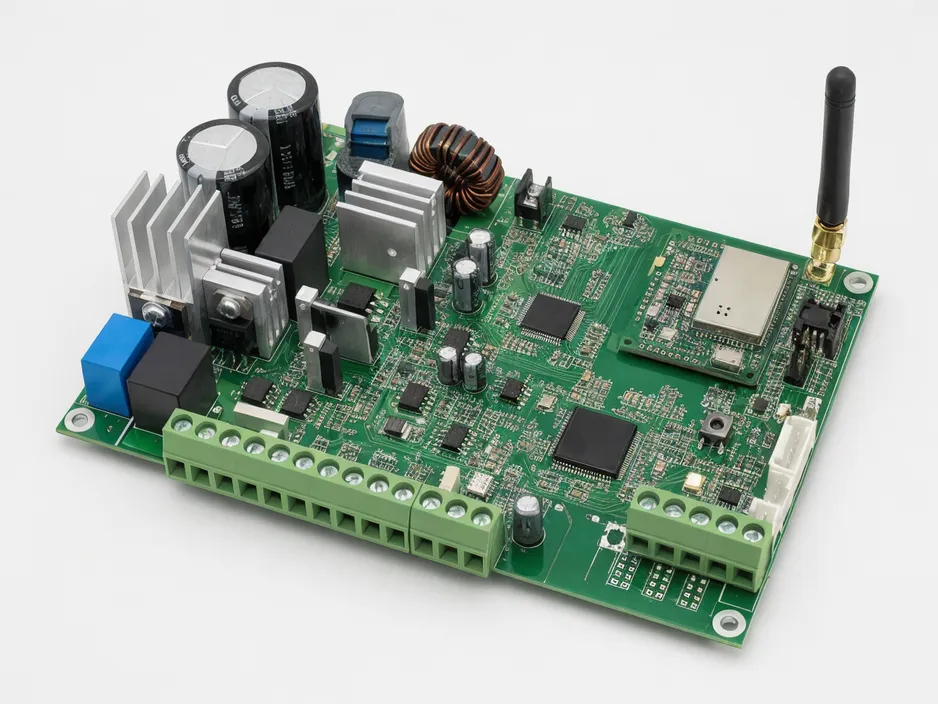
Antenna placement matters more than buyers expect. Smart solar fixtures have metal housings, and metal shields RF signals. An internal antenna mounted inside the housing loses 60-80% of its signal strength compared to an external antenna, which means reduced communication range and higher power consumption as the module retries transmissions. Cheap implementations put the antenna inside to save cost, then blame poor coverage on the network. We mount the antenna external to the housing with proper RF grounding, which adds $3-5 per fixture but eliminates connectivity failures traced to shielding.
Real failure case: a municipal parking lot project deployed 200 smart solar lights with internal Zigbee antennas and one gateway. After 3 months, 40% of the fixtures lost connectivity. Root cause was antenna shielding by the aluminum housing combined with gateway placement at ground level behind a concrete pillar. The fix required external antenna retrofits on 80 fixtures and relocating the gateway to rooftop mounting — $6,000 in field labor that could have been avoided by testing RF performance during procurement. If the spec sheet doesn't mention antenna placement and RF testing, your factory hasn't thought about connectivity in real installations.
Verification questions for smart solar lighting: ask for standby power consumption of all smart features (communication module, sensors, controllers). Confirm the lighting operates autonomously if network connection is lost. Request antenna type (internal vs. external) and ask if the factory has tested RF signal strength with the antenna installed in the housing. Ask which gateway infrastructure is required and what the maximum fixture-to-gateway distance is under real-world conditions (not free-space range from the datasheet). If the factory sells you smart features without explaining infrastructure requirements and failure modes, you're buying spec-sheet promises instead of deployed functionality.
Mounting and Structural Specs — The Overlooked Deployment Risk
Wind load rating determines whether the fixture stays mounted or becomes a liability. A street light rated for 150 km/h wind load is adequate for most urban installations; coastal and high-altitude sites need 180-200 km/h ratings. The fixture weight, mounting bracket design, and pole attachment method all contribute to wind resistance. Ask your factory: "What is the maximum wind load rating with your standard bracket?" and "Do you provide structural load calculations for the mounting system?" If they quote a wind speed without showing how the bracket and fixture assembly were tested, the number is speculative.
Pole diameter compatibility is the trivial failure that delays deployments. Some fixtures ship with brackets designed for 60mm poles, and the installation site has 76mm poles already installed. Bracket adapters exist, but they're an aftermarket fix that adds cost and weakens structural integrity compared to a bracket sized correctly from the start. Verify pole diameter at the design stage and confirm your factory can supply brackets matched to your infrastructure. JXSOL manufactures custom brackets at 100-unit MOQ, and we provide structural load testing on request for projects where wind load or seismic requirements exceed standard specs.
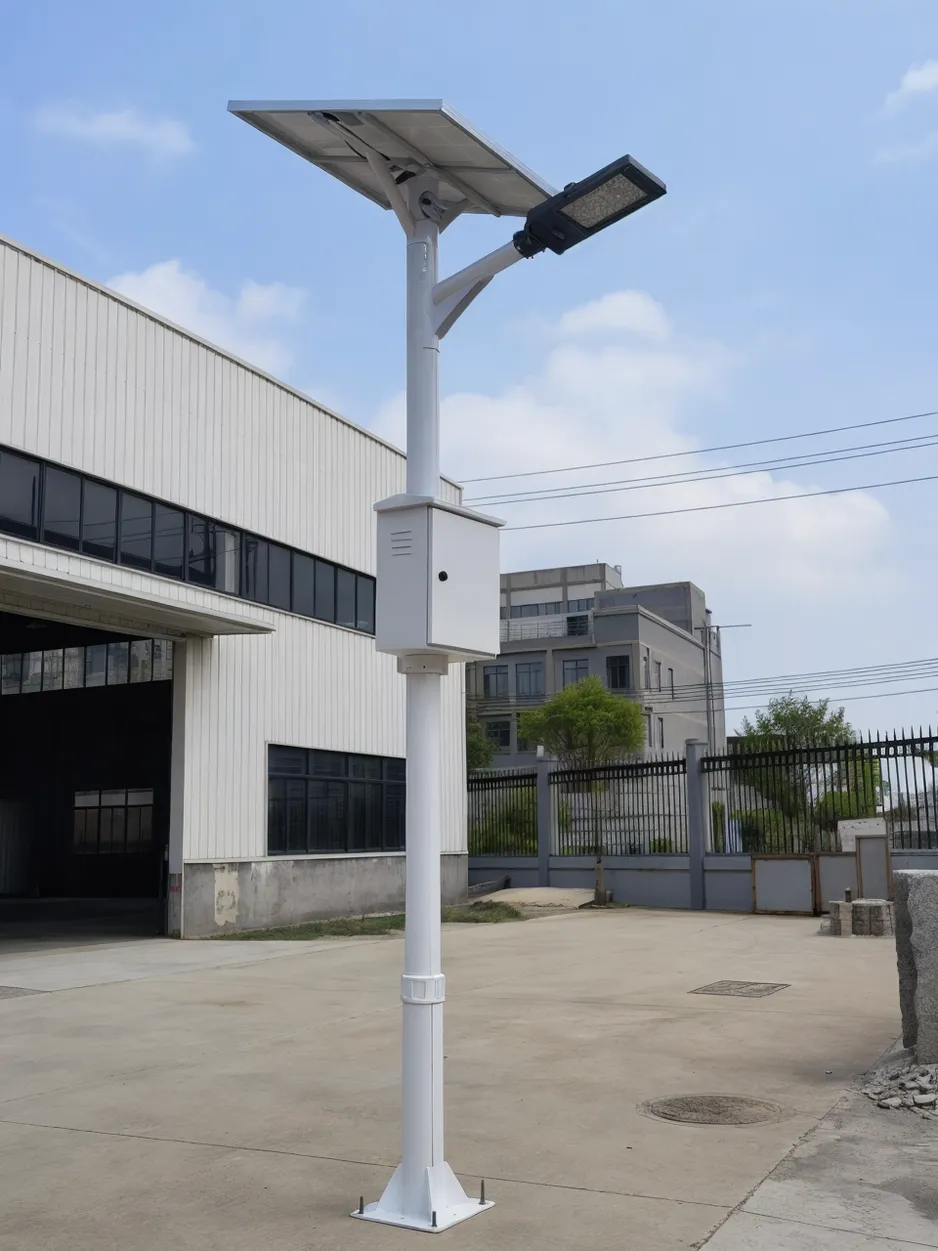
Weight distribution affects installation labor and long-term stability. Top-heavy fixtures (solar panel and battery mounted high on the pole) create higher bending moment in wind, which requires guy wires or heavier poles in exposed locations. Integrated designs where the panel is part of the fixture housing reduce wind resistance but limit panel orientation options. Split designs (panel separate from luminaire) allow optimized solar angle but add mounting complexity. Your factory should explain the tradeoff and recommend a configuration based on your site conditions, not just quote the product they have in stock.
Bracket corrosion resistance matters in coastal and industrial environments. Standard zinc-plated steel brackets corrode within 2-3 years in salt air; stainless steel or hot-dip galvanized brackets last 10+ years. The bracket cost difference is $8-15 per fixture, but replacement labor after premature corrosion is $50-80 per fixture. We default to hot-dip galvanized brackets for export projects because most buyers don't specify corrosion resistance until they've replaced brackets twice. If your deployment site is within 5 km of the ocean or in a chemically aggressive environment, specify stainless steel or HDG brackets in the purchase order.
Verification checklist for structural specs: request wind load test data or structural calculations for the mounting system. Confirm bracket pole diameter matches your installation infrastructure. Ask about weight distribution and whether the design requires guy wires or reinforced poles in high-wind areas. Specify bracket material and corrosion resistance appropriate for your deployment environment. If the factory can't provide structural load data or custom bracket options, they're relying on generic hardware that might not fit your site conditions.
Certification and Standards Mapping — What Each Certificate Actually Validates
CE marking indicates compliance with EU safety and EMC directives (LVD 2014/35/EU, EMC 2014/30/EU). It does NOT validate lumen output, battery capacity, autonomy days, or any performance specification — CE is an electrical safety and electromagnetic compatibility declaration. Procurement teams sometimes assume CE certification means the product meets all advertised specs, but CE scope is limited to safety and interference. Performance claims are outside CE testing boundaries.
IEC 62124 is the photovoltaic stand-alone system standard, covering charge controller function, battery protection circuits, overcharge/over-discharge prevention, and reverse-current protection. It validates system electrical design but does not test luminaire performance, waterproof rating, or mechanical durability. A fixture can be IEC 62124 compliant and still fail lumen output specs or leak water, because those parameters are outside the standard's scope.
IP65/IP67 ratings per IEC 60529 validate ingress protection (dust and water resistance) but do not certify electrical safety, lumen output, or battery performance. The tests are independent of CE and IEC 62124 — a product needs all three certifications to validate different aspects of functionality. Many buyers assume one certification covers everything; the reality is each standard addresses a specific risk category.
RoHS (Restriction of Hazardous Substances) certifies material compliance for lead, mercury, cadmium, hexavalent chromium, PBB, and PBDE. It's a material safety standard, not a performance standard. RoHS tells you the product is legally importable into RoHS-regulated markets; it doesn't validate that the product works as advertised.
| Certification | What It Validates | What It Doesn't Cover | How to Verify |
|---|---|---|---|
| CE | Electrical safety, EMC compliance | Lumen output, waterproofing, battery capacity, structural strength | Request LVD and EMC test reports, check notified body number |
| IEC 62124 | Charge controller, battery protection, PV system electrical design | Luminaire performance, waterproof rating, mechanical durability | Request IEC 62124 test report with system schematic |
| IP65/IP67 | Dust and water ingress protection | Electrical safety, lumen output, battery performance | Request IEC 60529 test report on fully assembled fixture |
| RoHS | Material compliance (hazardous substance restrictions) | Product performance, safety, durability | Request RoHS test report or material declaration |
| ISO 9001:2015 | Quality management system process controls | Product specifications, test results, individual batch quality | Request ISO certificate and audit date |
JXSOL holds ISO 9001:2015 (manufacturing process control), CE (electrical safety), RoHS (material compliance), IP65/IP67 (waterproofing), and IEC 62124 (PV system design). That combination validates electrical safety, process consistency, material compliance, waterproof integrity, and system electrical design — but you still need to verify performance specs (lumen output, battery capacity, autonomy days) through test data, because no certification directly measures those parameters. Certifications reduce regulatory risk; performance testing reduces field failure risk. You need both.
Verification approach: request copies of all relevant certificates and check issue dates (expired certificates are invalid). For CE, verify the notified body number if the product falls under a directive requiring third-party assessment. For IP ratings, confirm the test report references the full assembly, not just components. For ISO 9001, check the audit date and scope statement. If a factory claims certification but can't provide documentation within 2 business days, the claim is suspect.
Spec Sheet Red Flags — Patterns That Signal Unverifiable Claims
Red flag 1: Autonomy days listed without battery capacity, daily load wattage, or depth-of-discharge specified. The autonomy calculation requires all three inputs — if the spec sheet only lists the output (e.g., "3 rainy days"), the factory either didn't calculate it or is hiding assumptions that don't match field conditions. Legitimate specs show the formula: battery capacity (Ah) × voltage (V) × DoD (%) ÷ daily load (Wh) = autonomy days.
Red flag 2: Lumen output without junction temperature or test standard reference. "5000 lumens" means nothing without knowing the measurement conditions. Was it measured at 25°C or at operating temperature? Was an integrating sphere used, or is it a calculated value from LED datasheet specs? Verifiable lumen specs cite test method (e.g., "5000 lm measured per LM-79 at Tj=65°C") and include measurement uncertainty (±5%). If the spec sheet just lists a number, it's not testable.
Red flag 3: Waterproof rating without test report reference number or test date. "IP67 rated" without an IEC 60529 test report number means the factory is claiming the rating without third-party validation. Ask for the test report reference and check that the report date is after the current product revision date — a test report from 2019 doesn't validate a 2025 product design if components or assembly methods changed.
Red flag 4: "CE certified" without notified body number or test standard reference. CE is a self-declaration for some product categories, but lighting products typically require third-party testing under LVD and EMC directives. If the spec sheet shows a CE mark but no notified body number (four-digit code identifying the test lab), the factory might be self-certifying without proper testing. Verify by requesting the CE Declaration of Conformity and checking the notified body against the EU database.
Red flag 5: Charge time listed without irradiance level specified. "Charges in 6 hours" is meaningless without knowing the sunlight intensity. 6 hours at 1000W/m² (bright midday sun) is very different from 6 hours at 400W/m² (overcast morning). Verifiable charge specs state irradiance: "Battery recharges from 20% to 80% in 5 hours at 500W/m² irradiance." If the spec omits irradiance, it's not reproducible.
These patterns indicate the factory is listing specifications without testing or validation infrastructure. If they can't provide the underlying data when asked, they're reselling or assembling components without verifying system performance. Procurement due diligence: when you see any of these red flags, request the missing data before placing the order. A factory that manufactures in-house can provide test data within 2-3 business days. A trading company will delay, deflect, or forward supplier datasheets that don't match the actual product.
Requesting a Verifiable Spec Package from Your Factory
A verifiable spec package includes: full specification sheet with test methods and measurement conditions stated for every parameter, third-party test reports (IP rating, CE, IEC 62124, RoHS), bill of materials with component model numbers and supplier names, and assembly quality control checklist showing inspection points and acceptance criteria. This package should be available within 3 business days for standard models, 7 days for custom configurations — if the factory needs longer, they're gathering information they don't routinely track, which means their QC process isn't mature.
Request access to pre-shipment inspection photos or video for your first order. Reputable factories document every batch with photos of the completed assembly, packaging, and test results. If your factory resists sharing inspection documentation, they either don't inspect systematically or they're hiding quality issues. We provide time-stamped inspection photos to first-time buyers as standard practice because it demonstrates process transparency and catches packaging or labeling errors before the shipment leaves the factory.
Ask for component traceability on critical parts: LED module manufacturer and bin grade, battery cell brand and model number, solar panel brand and efficiency grade, charge controller IC part number. Factories that manufacture in-house can trace components to specific suppliers and production batches; trading companies often can't because they're aggregating parts from multiple sources. Traceability matters when you need to reorder — you want consistent performance across batches, not variance because the factory switched suppliers to save $2 per unit.
Sample validation before bulk order: JXSOL's minimum order quantity is 100 units for standard models, which allows buyers to validate specs at small scale before committing to container-load purchases. We support spec adjustments (lumen output, color temperature, battery capacity, panel wattage) before the bulk order at no tooling charge for changes within our standard component range. That flexibility exists because we manufacture in-house with direct supplier relationships — trading companies can't adjust specs without renegotiating with their upstream suppliers, which adds lead time and cost.
Timeline expectation: verifiable spec package delivery within 3 business days indicates the factory maintains organized technical documentation and test records. Pre-shipment inspection photos available within 24 hours of production completion shows systematic QC photography, not ad-hoc documentation created when a buyer asks. Component traceability provided immediately means the factory tracks BOMs and supplier data in their ERP system, not in scattered spreadsheets. Fast, complete documentation is a signal of manufacturing maturity — slow, incomplete documentation suggests the factory is scrambling to assemble information they should already have.
Procurement-side value: verifiable specifications reduce field failure risk, cut warranty claim rates, and eliminate project budget overruns from underperforming equipment. A $15,000 purchase order with complete spec verification costs the same as a $15,000 PO with vague specs, but the verified purchase delivers predictable field performance and lower total cost of ownership. The time you invest in spec verification at the procurement stage — 2-3 hours reviewing test data and asking technical questions — prevents the 20-40 hours you'd spend managing field failures, warranty claims, and customer complaints after deployment.