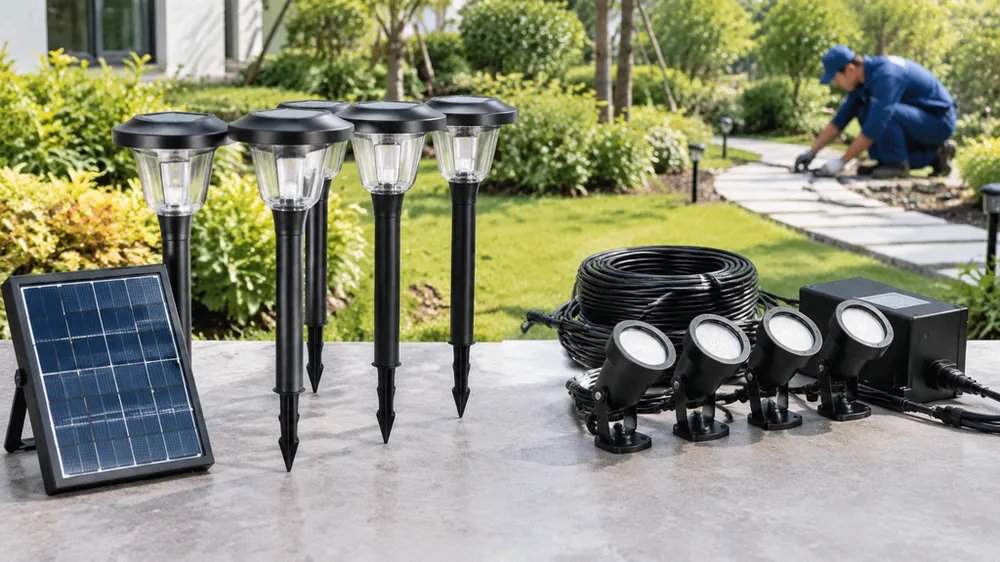
A landscaping contractor bidding a 20-fixture garden lighting project sees a $10-per-fixture price gap between solar and low-voltage options — but that gap reverses when labor, transformer, and trenching costs land on the invoice. For projects where installation speed and labor cost determine margin, the system choice matters more than the fixture price. Most comparison content online focuses on retail purchase price for homeowners. This analysis breaks down the total installed cost structure, technical specifications that predict field performance, and procurement considerations that matter when you're bidding commercial landscape projects or sourcing fixtures for resale.
Total Installed Cost Breakdown — Why Purchase Price Tells Half the Story
When you compare solar garden lights vs low voltage systems on fixture price alone, low-voltage appears cheaper. A typical solar garden light runs $20–$30 per unit; a comparable low-voltage fixture costs $12–$18. But total project cost includes material, labor, permits, and infrastructure — and that's where the math flips.
Take a standard 20-fixture residential garden lighting project. Here's the real cost structure:
Solar system installed cost:
- 20 solar fixtures at $25 each = $500
- Installation labor: 0.5 hours per fixture × $50/hour = $500
- Total installed: $1,000
Low-voltage system installed cost:
- 20 low-voltage fixtures at $15 each = $300
- 12-gauge landscape wire (200 feet) = $80
- 300-watt transformer = $180–$280
- Trenching and wire-laying labor: 1.5 hours per fixture × $50/hour = $1,500
- Electrician for transformer hookup = $200–$300
- Electrical permit (jurisdiction-dependent) = $0–$500
- Total installed: $2,260–$2,460
The solar option costs roughly half the installed price despite higher fixture cost. The labor multiplier is the driver. Low-voltage systems require trenching the entire cable run — typically 6 to 12 inches deep around the garden perimeter — then laying wire, connecting each fixture, sizing and installing a transformer near a building power source, and hiring a licensed electrician to tie the transformer into the building circuit. That's 30 to 40 crew hours for a 20-fixture project. Solar fixtures install in 10 crew hours: mark locations, insert stakes, attach fixture heads, confirm panel orientation. No trenching, no transformer, no electrician.
Permit costs vary by jurisdiction, but many areas require an electrical permit for low-voltage lighting when the transformer connects to building power. Solar systems are exempt in most regions because they don't tie into the electrical grid. That's an additional $100 to $500 saved on commercial and municipal projects where permitting is enforced.
For landscaping contractors, lower installed cost translates directly to margin protection. You can bid more competitively without sacrificing profit, or you can maintain your standard bid price and capture the labor savings as additional margin. Either way, solar shifts the cost structure in your favor on projects where installation speed matters.
We manufacture solar garden lights with ISO 9001:2015 and IEC 62124 certifications, so your landed cost stays consistent across repeat projects. No surprise transformer compatibility issues, no mid-project wire gauge recalculations. Our standard models ship from 100-unit MOQ, which supports landscaping companies running multiple concurrent projects without tying up working capital in excess inventory.
Technical Specifications That Predict Field Performance
Fixture price and installation cost matter, but field reliability determines whether a project generates callbacks or referrals. The technical specifications that predict long-term performance differ significantly between solar and low-voltage systems.
| Specification | Solar Garden Lights | Low-Voltage Wired Systems |
|---|---|---|
| Power source | Integrated battery (LiFePO4 or Li-ion), 3–5 day autonomy after full charge | 12V or 24V transformer connected to building electrical system, grid-dependent |
| IP rating | IP65/IP67 standard for outdoor fixtures (dust-tight, submersion-resistant) | IP44–IP54 typical for fixtures; transformer itself often IP44 or lower (weak point for water ingress) |
| Lumen output | 50–200 lumens per fixture, LED with 50,000-hour rated life, gradual lumen decline over time | 100–300 lumens per fixture, LED with 60,000-hour rated life, stable output as long as power is consistent |
| Battery cycle life | 1,200–1,500 charge/discharge cycles (3–4 years) for quality LiFePO4 cells | N/A (wired system has no battery) |
| Transformer sizing | Not required | Must calculate total wattage + 20% overhead; undersized transformer causes voltage drop and flicker at far end of wire run |
| Failure mode | Fixture-level failure (single unit stops working, replace that fixture) | Cascade failure risk (transformer fault or wire break can kill entire string) |

The IP rating difference is more significant than it appears. IP65 means dust-tight and protected against water jets from any direction. IP67 adds temporary submersion protection up to 1 meter. Most solar garden lights meet IP65 or IP67 because the fixture houses the battery and solar panel — water ingress kills the battery immediately, so manufacturers design around that failure point. Low-voltage fixtures often carry IP44 (splash-resistant) or IP54 (limited dust protection, splash-resistant) because only the LED and wiring need protection. The transformer, which sits in a separate enclosure, is frequently IP44 or lower. If the transformer floods or corrodes, the entire lighting system fails.
Battery autonomy matters for commercial and municipal projects. A quality solar garden light with a 3-day autonomy rating will continue operating through three consecutive cloudy days after a full charge. Cheap solar fixtures use undersized batteries or low-grade cells that fail within one season. We run charge/discharge cycle testing on every battery pack before shipment — that's a factory-level quality control step most solar importers skip. Our testing lab cycles batteries through 50 charge/discharge rounds to verify capacity retention before the fixture leaves the production floor.
Transformer sizing is a common mistake in low-voltage installations. You calculate total wattage (number of fixtures × watts per fixture), then add 20% overhead to account for wire resistance over distance. If you undersize the transformer, fixtures at the far end of the wire run receive insufficient voltage and either flicker or fail to light. If you oversize, you've added unnecessary cost. Wire gauge also matters: 12-gauge is standard for runs up to 100 feet, but longer runs require 10-gauge to minimize voltage drop. Solar eliminates that calculation entirely — each fixture is self-contained.
Failure modes differ structurally. When a solar fixture fails, it's isolated to that unit. You swap the fixture and move on. When a low-voltage system fails, the troubleshooting process is longer: Is it a transformer fault? A wire break somewhere in the trench? A corroded connector? A voltage drop issue at the far end? You're diagnosing a series circuit, not a standalone unit. For landscaping contractors juggling multiple service calls, solar reduces diagnostic time and parts inventory complexity.
Installation Process Comparison — Labor Hours by System Type
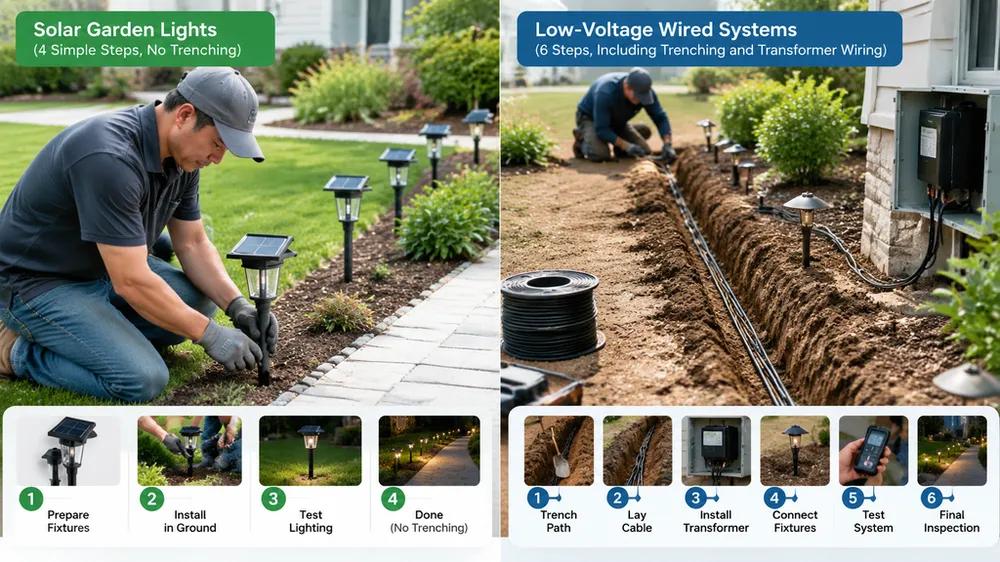
The installation process difference between solar and low-voltage systems explains the labor cost gap shown earlier. Here's the step-by-step breakdown for each system on a typical 20-fixture garden lighting project.
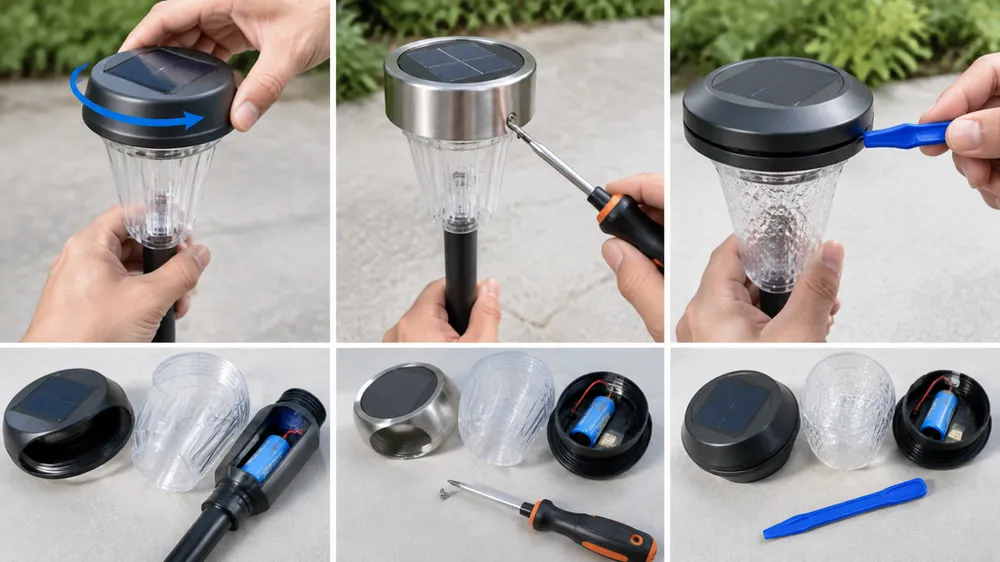
Solar garden light installation process (0.5 hours per fixture, 10 crew hours total):
- Mark fixture locations — Walk the site, mark each fixture position with spray paint or flags (no trenching layout required)
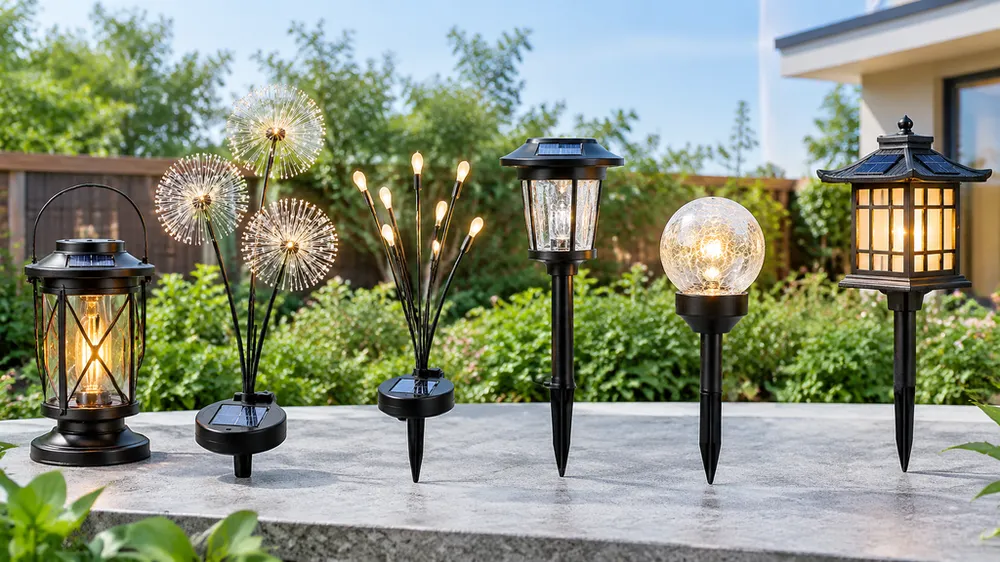
- Insert ground stakes or mount brackets — Push stake into soil or attach bracket to hardscape, depending on fixture type
- Attach solar fixture head — Snap or screw fixture head onto stake or bracket (most models are pre-wired from factory)
- Confirm solar panel orientation — Ensure panel faces south (northern hemisphere) or north (southern hemisphere) for maximum sun exposure
- Test fixture — Cover solar panel to simulate dusk, verify LED turns on (some models have a manual test switch)
No trenching, no wire runs, no transformer installation, no electrician. A two-person crew can install 20 solar fixtures in a single afternoon. Fixtures are install-ready from the factory — we pre-wire the solar panel, battery, and LED module so your crew isn't assembling components on-site.
Low-voltage wired system installation process (1.5–2 hours per fixture, 30–40 crew hours total):
- Trench cable run — Dig or cut a trench 6–12 inches deep along the entire garden perimeter where fixtures will be placed (most time-consuming step)
- Lay 12- or 14-gauge wire — Run low-voltage cable through trench, leaving slack at each fixture location for future maintenance
- Connect each fixture to wire — Use wire nuts, quick-connectors, or piercing connectors (depending on fixture design) to tap into the cable at each fixture point
- Size and install transformer — Calculate total wattage, select appropriate transformer (typically 100W–300W for garden lighting), mount transformer enclosure near building power source
- Electrician connects transformer to building circuit — Licensed electrician ties transformer into indoor or outdoor electrical panel (required in most jurisdictions; this step adds $200–$300 to project cost)
- Test entire string — Power on, check for voltage drop at far end of run, troubleshoot any flicker or dim spots (common issue with undersized wire or transformer)
The trenching step is the labor killer. In established landscapes, you're working around existing plants, irrigation lines, and hardscape. In frozen or heavily compacted soil, trenching requires mechanical equipment. If the client's landscaping includes decorative mulch or groundcover, you're removing and replacing that material after the wire is laid. Low-voltage installation is disruptive and time-intensive in a way that solar isn't.
Seasonal factors also affect installation feasibility. Solar fixtures install in frozen ground because you're only penetrating the top few inches with a stake. Low-voltage requires trenching to 6–12 inches, which is difficult or impossible in frozen soil without mechanical trenching equipment. For landscaping contractors in northern climates, solar extends the installation season by several weeks in fall and spring.
Our solar garden lights ship with integrated stakes and pre-wired assemblies, so your crew doesn't need electrical expertise. A general landscaping team can deploy solar fixtures without subcontracting an electrician. That reduces project coordination overhead and keeps labor costs predictable across different job sites.
Application Scenarios — Matching System Type to Project Profile
Both solar and low-voltage systems have optimal use cases. The right choice depends on site conditions, project timeline, and the client's long-term maintenance expectations. Here's how we see landscaping contractors and project specifiers matching system type to project profile.
When solar garden lights vs low voltage tilts toward solar:
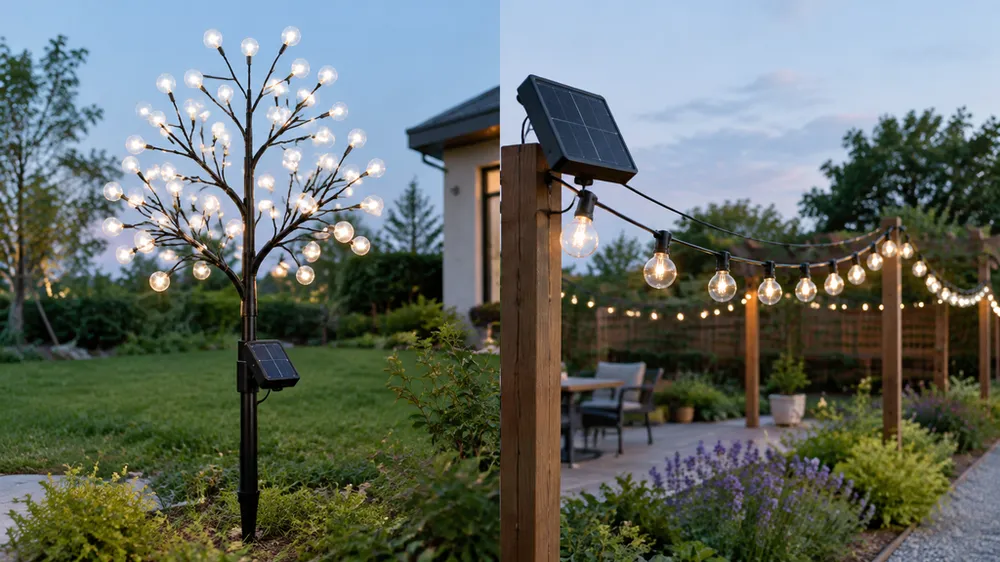
Residential retrofit projects — When a client wants garden lighting added to an established landscape, trenching disrupts existing plants, irrigation, and mulch. Solar eliminates tearup. We see this most often in high-end residential work where the client values installation speed and minimal landscape disturbance over absolute lumen output.
Remote or perimeter areas — Low-voltage systems suffer from voltage drop beyond 100 feet of wire run. If the garden beds are far from the building's electrical panel, you need heavier wire gauge or a secondary transformer, which adds cost. Solar performs identically whether the fixture is 10 feet or 300 feet from the building. Landscaping contractors use solar for property perimeter lighting, entry monuments, and outlying garden beds where wire runs would be impractically long.
Fast-turnaround projects — Model home staging, event venue preparation, and pre-sale landscaping upgrades often have tight deadlines. Solar installs in a fraction of the time. A crew can light an entire property in one day without waiting for electrician availability or permit approval.
Seasonal or temporary installations — Holiday lighting, seasonal displays, and temporary event lighting are easier with solar because removal is non-destructive. Pull the stakes, and the site returns to its original condition. Low-voltage requires removing wire or leaving it buried (which complicates future landscaping changes).
Maintenance-averse clients — Homeowners associations, rental properties, and municipal parks often have limited maintenance budgets. Solar has no transformer to service, no wire connections to corrode, no electrical panel tie-ins to inspect. Battery replacement is the only scheduled maintenance (every 3–4 years), and it's a fixture-level task that doesn't require an electrician.
When low-voltage wired systems make more sense:
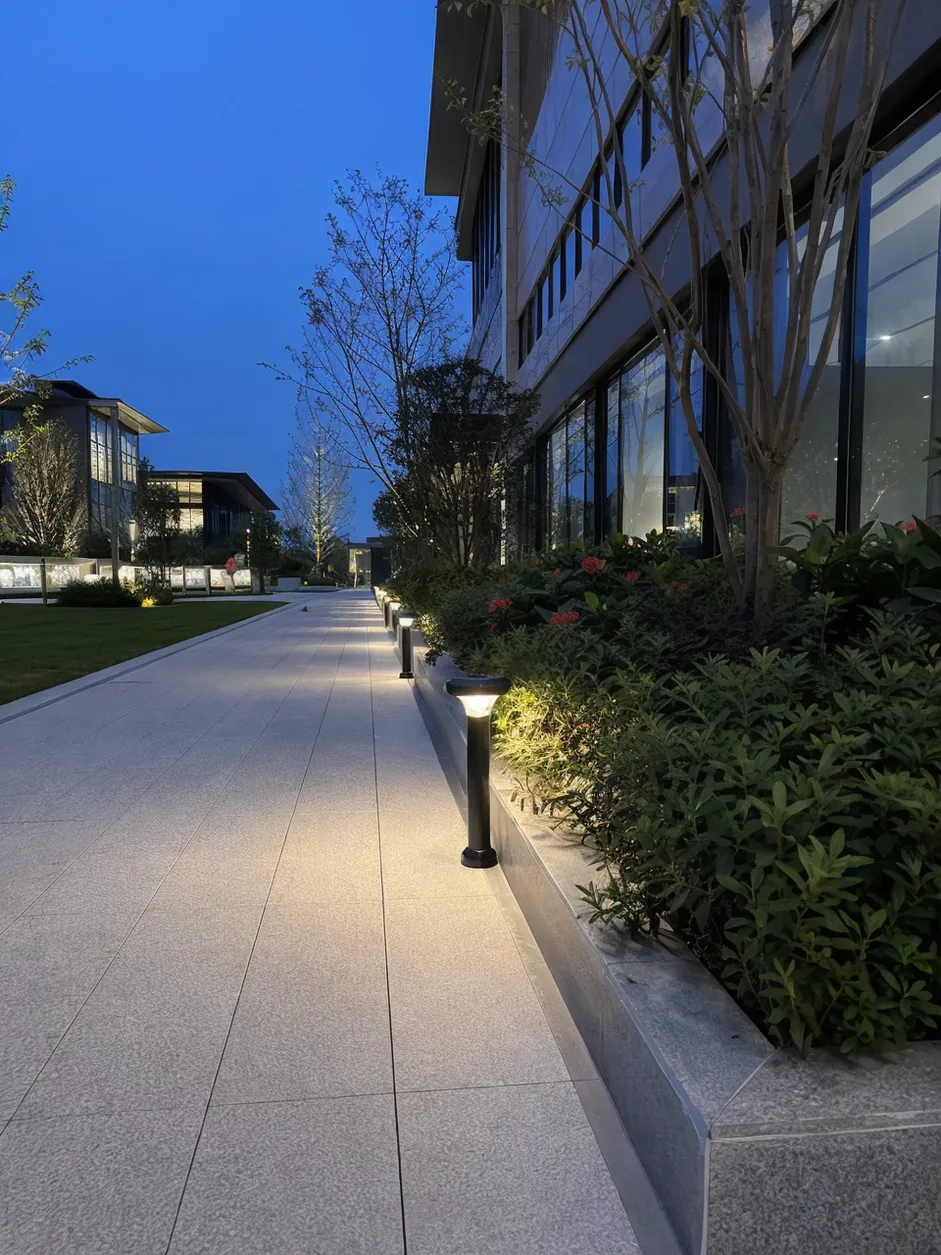
High-density architectural lighting — When you need consistent, bright accent lighting along a building facade, hardscape feature, or architectural detail, low-voltage provides stable lumen output independent of weather. Solar brightness varies with battery state of charge and recent sunlight exposure. For applications where consistent illumination is critical (commercial building entries, restaurant patios, retail exteriors), low-voltage is more reliable.
Projects with existing transformer infrastructure — If the site already has a functioning low-voltage landscape lighting system with available transformer capacity, adding fixtures to that system is cost-effective. You're only paying for fixtures and wire, not a new transformer or electrician visit.
Heavily shaded sites — Solar panels need direct sunlight during the day to charge batteries. Properties with dense tree canopy, north-facing slopes, or shading from adjacent buildings don't provide enough solar exposure for reliable operation. Low-voltage works in any light condition because it draws power from the grid.
Ultra-bright accent lighting — Low-voltage fixtures can deliver 20 watts or more per fixture, producing 300+ lumens for spotlighting trees, water features, or architectural elements. Solar garden lights typically range from 3 to 10 watts (50–200 lumens), which is adequate for pathway and ambient garden lighting but insufficient for dramatic accent effects.
Hybrid approach for large projects — Many landscaping contractors deploy solar for perimeter and pathway lighting, then use low-voltage for high-visibility accent and feature lighting near structures. This hybrid strategy captures solar's labor savings where it makes sense while preserving low-voltage's brightness and consistency for focal points.
We manufacture solar garden lights with flexible MOQ starting at 100 units, which supports split orders for hybrid projects. If you're bidding a subdivision or commercial landscape contract with 60 solar pathway lights and 40 solar garden lights, you can source both from one factory order without separate supplier relationships or mismatched lead times.
Procurement and Supply Chain Considerations for Landscaping Contractors
Solar vs low voltage landscape lighting isn't just a technical decision — it's a supply chain decision. How you source, stock, and reorder fixtures affects your working capital, project flexibility, and ability to offer private-label products to differentiate your landscaping business.
MOQ and lead time — Most low-voltage fixture manufacturers require 500-unit minimum orders for factory-direct purchases. Below that, you're buying through distributors, which reduces your margin. Our solar garden lights ship from 100-unit MOQ on standard models, so landscaping contractors can buy direct without tying up cash in excess inventory. Lead time for standard solar models is 15–20 days from order confirmation to container-ready. Custom lumen output or color temperature (OEM orders) adds 7–10 days for tooling and testing.
OEM and private labeling — Solar fixtures are easier to brand than low-voltage systems because there's no transformer compatibility constraint. You're not locked into a specific transformer manufacturer's voltage or connector standard. We support custom packaging, laser-etched logos on fixture heads, and private-label spec sheets from 100 units. Landscaping companies that want to build a branded product line (selling fixtures to homeowners or other contractors) find solar more flexible for differentiation.
Certifications for commercial projects — Municipal bids and commercial landscape contracts often require IEC 62124, CE, or RoHS compliance for outdoor lighting. Our solar garden lights carry IEC 62124 (photovoltaic system components), CE (European safety and environmental standards), and RoHS (restriction of hazardous substances) certifications, so you can submit product spec sheets with bid packages without additional testing or documentation. Low-voltage systems require UL or ETL listing for the transformer, and some jurisdictions require listed fixtures as well. That adds cost if you're sourcing from factories that don't carry those certifications.
Inventory and storage — Solar fixtures are standalone units. You stock by fixture type and quantity — no need to match transformers, wire gauges, or connector types. Low-voltage inventory includes fixtures, transformers in multiple wattages, wire in different gauges, and connectors. That's more SKU complexity and more working capital tied up in parts inventory. For small to mid-size landscaping contractors, solar simplifies inventory management.
Warranty structure — We provide a 3-year warranty on solar garden lights covering the LED module, battery, and solar panel. Battery is the wear component; we warranty capacity retention to 80% of rated capacity after 1,200 cycles. Low-voltage warranties often split between the fixture manufacturer (LED and housing) and transformer manufacturer (transformer components), which creates finger-pointing when something fails. A single-source warranty from the fixture factory reduces claim hassles.
Landed cost predictability — Solar fixture pricing is per-unit. Your landed cost is straightforward: fixture cost × quantity + freight + duty. Low-voltage projects have variable transformer cost depending on total wattage, which creates bid risk. If you estimated 200 watts and the client adds three more fixtures mid-project, you might need to upsize the transformer or add a second one. Solar scales linearly — each fixture is priced and sourced independently.
For landscaping contractors building long-term client relationships, solar offers cleaner economics and simpler reordering. You quote per-fixture pricing, install quickly, and reorder the same SKUs for future projects without recalculating transformer capacity or wire gauge for each new site.