

Solar Area Lights Direct From Factory
Factory-direct solar area lights for broad outdoor site coverage — configured for your project, built for repeat orders.
IP65/IP67 construction, LiFePO4 battery with cell-matched packs, and 100% pre-shipment inspection on every unit. Standard models from 100 units MOQ; OEM/ODM configurations supported.
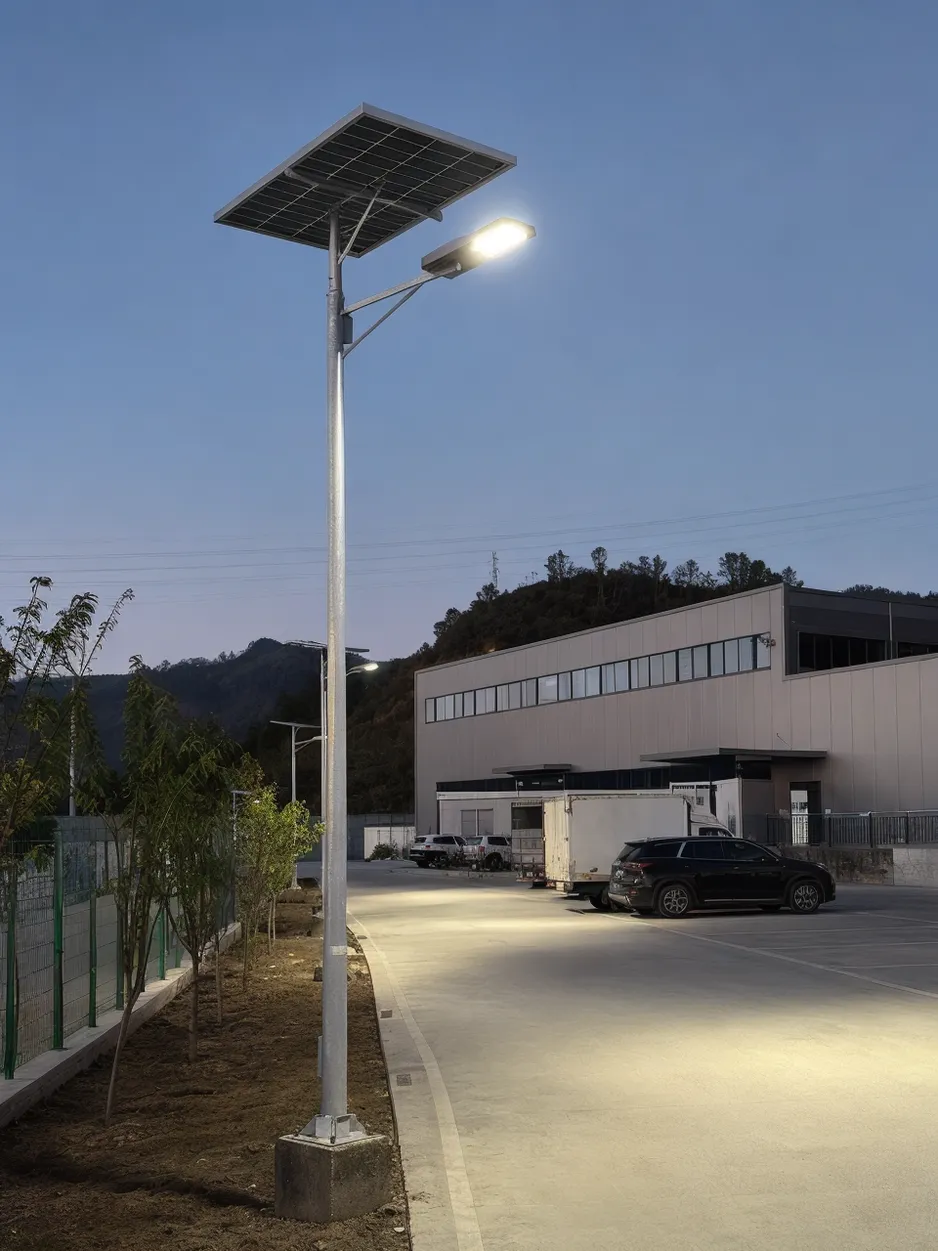
Solar Area Lights for Site-Wide Outdoor Coverage
Solar area lights are pole-mounted solar-powered fixtures designed to illuminate broad outdoor zones — open yards, perimeter areas, parking extensions, community spaces, and distributed commercial sites where running grid wiring is expensive, slow, or commercially unattractive. They are not decorative garden lights, not small yard fixtures, and not portable towers. The product is built for permanent or semi-permanent installation on poles at 5–10 meters, covering large ground areas from a single fixture head.
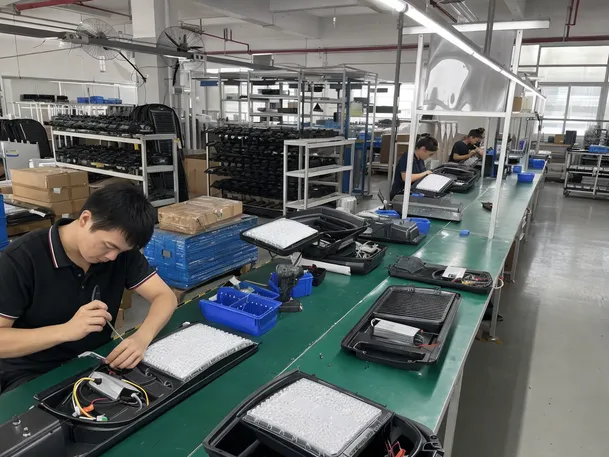
We've been manufacturing solar area lighting at our 12,000 m² factory in Guzhen Town, Zhongshan since 2012. The production system was built around the failure modes that matter in this category: battery packs that degrade after one rainy season, lumen output that drifts between batches, and waterproof housings that don't hold in the field. Every solar area light that leaves our line has passed battery cell matching, LED module lumen confirmation, and IP65/IP67 waterproof inspection — not as spot checks, but as checkpoints every unit clears.
For distributors building a solar lighting catalog, contractors sourcing for project bids, or overseas buyers looking for a factory they can reorder from, the full solar parking lot and area lighting range covers six product types from this facility. Solar area lights sit in the middle of that range — broader coverage than solar yard lights, more flexible deployment than parking-lot-specific fixtures, and a lower output ceiling than our commercial solar area lights for heavy industrial use.
100% Unit-Level Inspection
Every unit passes three mandatory checkpoints before shipment: battery cell matching, LED module lumen confirmation, and IP65/IP67 waterproof seal verification. These are not sample-based spot checks — they are line-level gates every fixture clears.
We'll come back with a configuration recommendation.
Where This Product Sits
- Commercial solar area lights — higher output, heavy industrial
- Solar area lights — broad coverage, flexible deployment
- Solar yard lights — smaller zones, lower output
Factory Snapshot
- 12,000 m² facility, Guzhen Town
- Manufacturing since 2012
- N. America, Europe, ME, SE Asia, Africa
- 1,200,000 units annual capacity
RFQ-Ready Specification Table for Solar Area Lights
The values below are typical for this product type and cover the range we produce in standard and configurable models. Use them to pre-qualify whether our production capability covers your project specs. Exact datasheets — confirmed lumen output, battery capacity, solar panel wattage, and dimensional drawings — are provided before order placement.
Specifications shown are typical values for planning purposes. Actual specifications vary by model and configuration. Contact us for confirmed datasheets before order placement.
LiFePO4 Standard
Cell-matched packs for consistent cycle life. Li-ion available for weight-sensitive configurations.
3,000–10,000 lm
Covers mid-range area lighting. Higher output available on request for large-zone projects.
2–5 Day Autonomy
Battery capacity and control mode determine backup days. Programmable dimming extends runtime.
-30°C to +60°C
Wide operating range suits desert heat and northern winters without derating.
Need a Custom Spec?
Send your project requirements and we'll confirm exact specifications within 24 hours.
Request DatasheetHow Solar Area Lights Work
Solar area lights operate as self-contained power systems. Understanding the energy cycle helps you specify the right panel-to-battery-to-LED ratio for your site conditions.
Solar Harvesting
Monocrystalline panels convert sunlight to DC power. Panel wattage is sized to fully recharge the battery within one day of average local irradiance.
MPPT Charge Control
An MPPT controller maximizes energy harvest by tracking the panel's optimal voltage point, then regulates current into the battery to prevent overcharge.
Energy Storage
LiFePO4 batteries store harvested energy with high cycle life (2,000+ cycles at 80% DoD). Capacity is sized for 2–5 nights of autonomy depending on project requirements.
Intelligent Output
At dusk, the controller activates LEDs at programmed output levels. Motion sensors, dimming schedules, and adaptive modes extend runtime while maintaining safety illumination.
Panel Sizing Logic
We size panels at 1.5–2× the nightly energy consumption to account for cloudy days and seasonal variation. For high-latitude sites, we increase the ratio or add panel wattage.
Battery Management
Built-in BMS handles cell balancing, over-discharge protection, and temperature compensation. LiFePO4 chemistry maintains stable voltage across the discharge curve for consistent light output.
Control Modes
Standard modes include dusk-to-dawn, split-timing (full power then dimmed), and motion-activated boost. Custom profiles can be programmed via remote or app for fleet management.
Application Scenarios for Solar Area Lights
Solar area lights serve mid-to-large open zones where grid connection is impractical, costly, or undesirable. Below are the primary deployment contexts our buyers specify.
Parking Lots & Garages
Commercial and retail parking areas requiring uniform illumination for vehicle and pedestrian safety. Typical mounting at 8–10m with wide-area optics.
- 5,000–10,000 lm per fixture
- Motion-activated boost mode
- No trenching required
Access Roads & Driveways
Internal roads in industrial parks, gated communities, and campus environments. Spaced at 25–35m intervals for continuous coverage.
- Asymmetric beam distribution
- 4000K–5000K for visibility
- Dusk-to-dawn operation
Industrial Yards & Depots
Loading bays, storage yards, and logistics hubs where 24/7 security lighting is needed without grid dependency or diesel generators.
- High-output 80W–150W models
- IP67 for harsh environments
- 3–5 day autonomy
Parks & Public Spaces
Municipal parks, walking trails, and recreational areas. Lower CCT options (3000K–4000K) reduce light pollution and ecological impact.
- Warm white options
- Dark-sky compliant optics
- Vandal-resistant housing
Commercial Campuses
Office parks, university campuses, and hospital grounds requiring reliable perimeter and pathway lighting with minimal infrastructure.
- Uniform spacing layouts
- Smart dimming schedules
- Aesthetic pole options
Construction & Temporary Sites
Temporary lighting for construction zones, event venues, and emergency deployments. Relocatable mounting and rapid installation.
- Portable pole mounts
- Quick-disconnect wiring
- Reusable across projects
Buyer Considerations When Specifying Solar Area Lights
Selecting the right solar area light involves balancing site conditions, performance requirements, and total cost of ownership. These are the factors experienced buyers evaluate.
Site Solar Resource
Peak sun hours (PSH) at your installation latitude determine panel sizing. Sites with 4+ PSH daily work well with standard configurations. Below 3 PSH, we increase panel wattage or battery capacity to maintain autonomy targets.
Mounting Height & Spacing
Higher mounting increases coverage area but requires more lumens to maintain ground-level lux. We provide photometric layouts showing spacing recommendations for your target illuminance (typically 10–30 lux for area lighting).
Wind Load & Structural
Solar panels add wind load to the pole assembly. We calculate effective projected area (EPA) and confirm pole/foundation specs for your local wind zone. Coastal and high-wind sites may require reinforced brackets or split-panel designs.
Temperature Extremes
LiFePO4 batteries perform well from -20°C to +60°C. For sites regularly below -20°C, we specify insulated battery compartments or heating elements. High-temperature sites benefit from ventilated housings to extend battery cycle life.
Runtime Requirements
Define whether you need full-power all night or can accept dimmed output during low-traffic hours. Split-timing modes (100% until midnight, 50% after) can reduce battery and panel requirements by 30–40% while maintaining safety lighting.
Total Cost of Ownership
Solar area lights eliminate electricity costs and reduce maintenance visits. Factor in battery replacement (typically at year 5–7 for LiFePO4), panel cleaning frequency, and the avoided cost of trenching and grid connection.
Procurement tip: Share your site coordinates, required lux level, and nightly operating hours. We'll run a solar resource check and recommend the optimal panel/battery/LED configuration — no charge, no obligation.
Battery, Panel, and Optics Decide the Real Project Risk
Comparing solar area lights by lumen output alone is the most reliable way to end up with an under-specified project. The three decisions that actually determine whether a fixture performs in your market — and whether your downstream customer calls you six months after installation — are battery autonomy, solar panel sizing, and optical distribution.
Battery Autonomy
Where most solar lighting failures originate
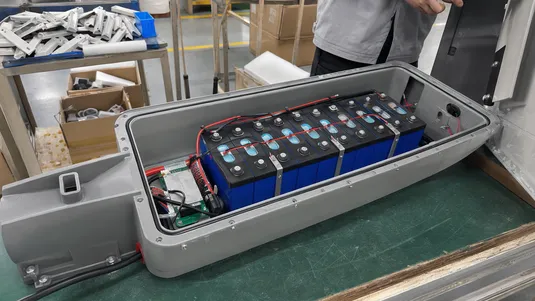
Autonomy days measure how many consecutive cloudy days the battery sustains full or partial output without recharging. This is where the price difference between a good and a bad configuration is most visible.
Regional Recommendations
- Equatorial SE Asia, West Africa, monsoon South Asia: 3–5 autonomy days for commercial area lighting
- North America & Europe: 2–3 days covers most commercial applications
Control mode matters: A fixture running at 50% output after midnight draws half the battery energy of a full-night fixture. The autonomy spec and the dimming schedule need to be confirmed together.
Solar Panel Sizing
Tied to lumen output and target latitude
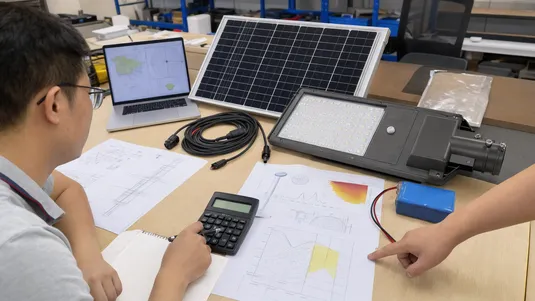
A 60W panel sized for Southern California needs a different charge cycle calculation than the same panel deployed in Northern Europe or Central Africa. Undersized panels are the second most common cause of early field failure after battery mismatch.
Why This Matters
- Panel and battery configuration must be sized for the buyer's target deployment region
- Undersized panels are invisible in a spec sheet comparison — they only show up as field failures
Our process: Send us the country or latitude and we'll run the charge cycle calculation before quoting.
Optical Distribution
Affects pole spacing, uniformity, and project quality
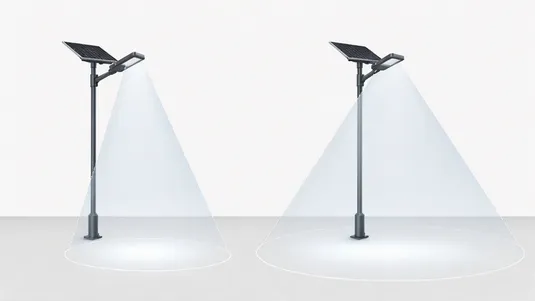
Wide-area solar area lighting typically uses 120° or 150° beam angles with asymmetric road optics to push light outward rather than straight down.
The Narrow-Beam Problem
A fixture with a narrow beam angle on a 7-meter pole will create a bright spot directly below and dark zones between poles — a problem that's difficult to explain to a project owner and expensive to fix after installation.
Our process: We confirm the beam angle and optics for the mounting height and pole spacing before production.
Field Experience Note
We've had buyers in equatorial markets order 2-day autonomy units because the price was lower, then come back after the first wet season. The battery sizing conversation is worth having before production, not after.
Spec the Right Configuration Before You Commit
Send your target runtime, mounting height, and destination market — we'll spec the battery and panel configuration before you commit to a sample order.
Commercial Segments Where Solar Area Lighting Becomes Repeat Business
The commercial value of solar area lights is not the same in every market segment. Some segments generate repeatable volume; others are project-driven with higher per-unit margins. Understanding which segment you're selling into shapes which configuration is worth stocking and what documentation your buyer needs.
Parking Extensions and Overflow Lots
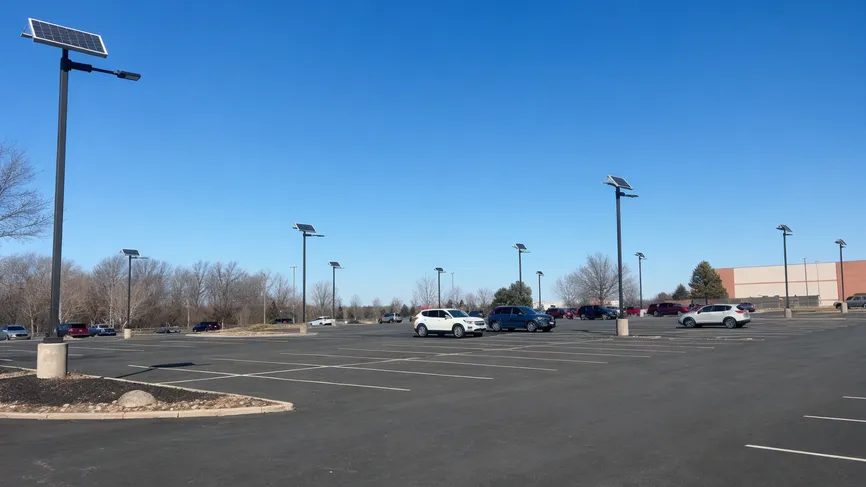
One of the highest-volume repeatable segments for this product. Retail chains, commercial property developers, and municipal parking authorities regularly add overflow capacity to existing lots where grid trenching is cost-prohibitive. A solar area light on an existing pole — or a new pole with no electrical work — is the fastest deployment path.
Typical Order Profile
- 20–100 units per site
- Sites replicated across a portfolio
- Recurring account base built on consistent batch quality
Logistics Yards and Loading Zones
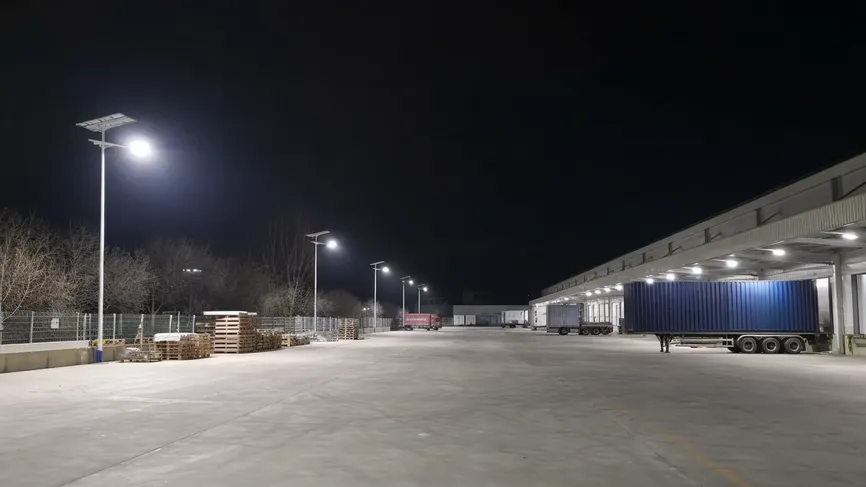
Needs wider coverage and stronger battery autonomy than standard parking applications. Warehouse perimeters, container yards, and loading dock areas typically operate through the night — full-night mode at adequate lumen output, not dimming after midnight.
Key Requirements
- Mounting heights: 8–10 meters
- Lumen output: 6,000–10,000 lm (upper range)
- 50–200 unit orders per facility
- Facilities in the same network replicate the same specification
These buyers are less price-sensitive than retail buyers and more focused on reliability and documentation.
Factory Compounds and Perimeter Security Zones
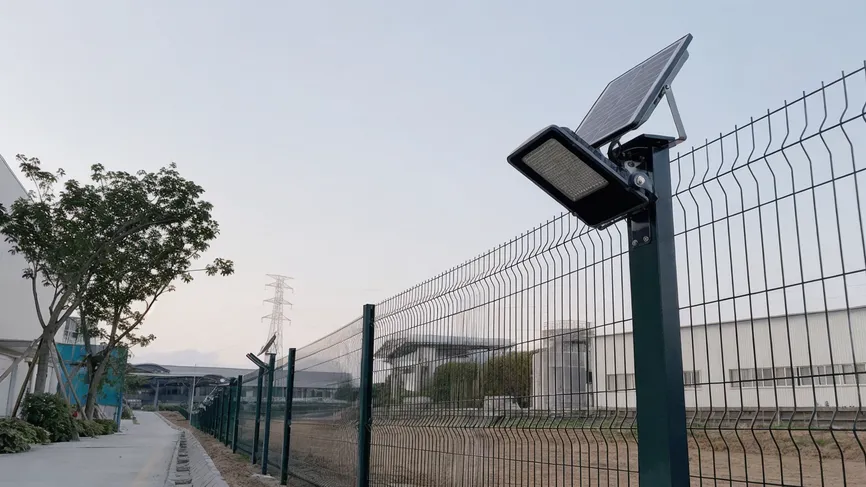
A natural fit for large outdoor solar lighting where grid infrastructure is absent or where adding electrical circuits to a perimeter fence line is impractical. Dusk-to-dawn operation is the standard requirement, and IP67 construction is worth specifying for sites with regular pressure washing or flood-prone low points.
Buyer Profile
- Facilities managers or contractors on security upgrades
- Need CE, RoHS, IP test certificates for procurement approval
- Consistent quality across batch — fixtures visible from same vantage point
Schools, Campuses, and Municipal Open Spaces
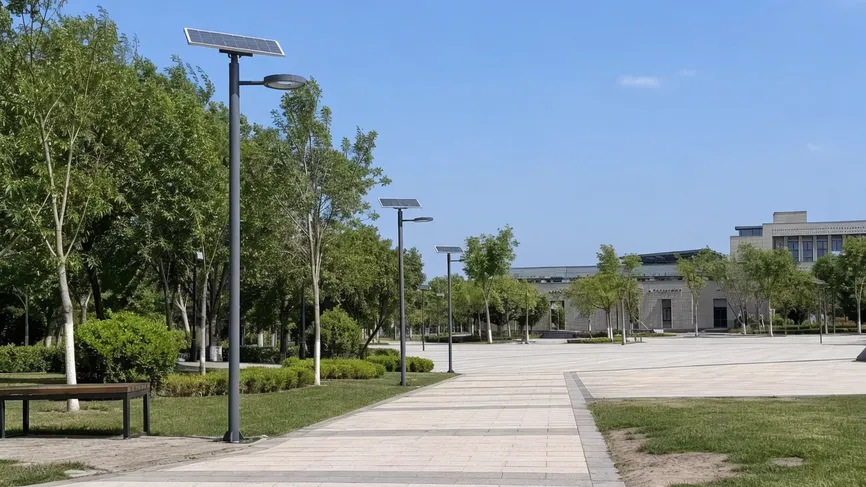
Standardized procurement programs. Once a specification is approved — often through a tender process — the same fixture gets ordered across multiple sites on annual or multi-year contracts. Solar area lights are a common specification for campus pathways, open plazas, sports field perimeters, and park areas where grid wiring is absent.
What Keeps You on the Approved Vendor List
- Consistent lumen output across reorders
- Consistent color temperature across reorders
- Getting on an approved vendor list is the entry point
This segment has grown significantly over the last three years — worth building into a catalog if you're not already covering it.
Rural Commercial Sites, Farms, and Remote Compounds
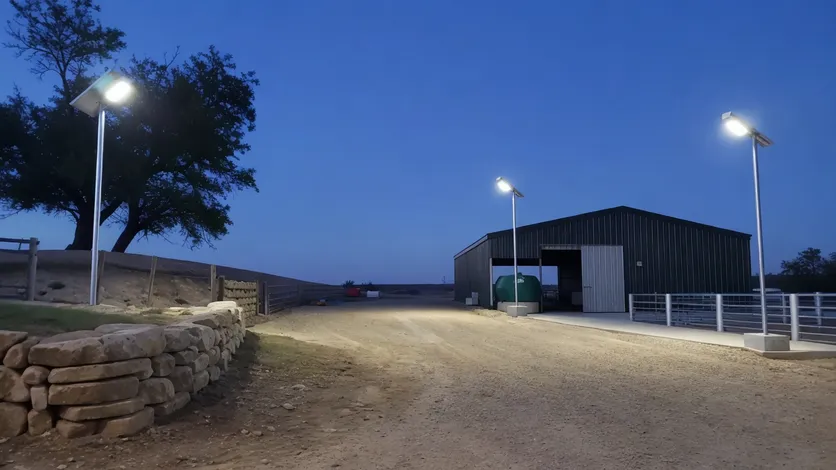
A segment where the absence of grid infrastructure is the primary driver, not a cost consideration. Agricultural operations, border crossings, off-grid industrial sites, and rural community facilities all need outdoor lighting where a grid connection is months away or permanently unavailable.
Solar area lights with 3–5 day autonomy configurations and robust IP67 construction are the right product here. The buyer's alternative is a generator or a grid extension project — solar wins on total cost of ownership in most cases, and the margin on a well-specified configuration reflects that.
Segment Characteristics
- Grid absence is the primary driver
- 3–5 day autonomy is a common specification
- Higher per-unit margins than urban commercial segments
- Orders are project-driven, not portfolio-driven — less repeat but higher value per transaction
Choosing Which Segments to Prioritize
Not every distributor or integrator should chase every segment. The decision depends on your existing customer base, your ability to hold inventory, and whether your sales cycle is transactional or consultative.
High Volume, Lower Margin
Parking extensions, campus/municipal — requires inventory depth and consistent batch quality
Medium Volume, Higher Margin
Logistics yards, factory perimeters — requires technical documentation and longer sales cycles
Project-Driven, Highest Margin
Rural/remote sites — requires autonomy configurations and site-specific engineering support
Solar Area Light Specifications That Matter for Commercial Procurement
Specification sheets are where commercial buyers make decisions. The numbers below represent the configuration range available across our solar area light product line — not a single SKU, but the envelope within which we configure fixtures to match site requirements.
| Parameter | Range / Value | Why It Matters |
|---|---|---|
| Lumen Output | 3,000 – 10,000 lm | Determines coverage area per fixture and pole spacing |
| Solar Panel Wattage | 40W – 120W monocrystalline | Drives recharge rate and autonomy in low-irradiance conditions |
| Battery Capacity | 150Wh – 600Wh LiFePO4 | Determines nights of autonomy at rated output |
| Battery Chemistry | LiFePO4 (Lithium Iron Phosphate) | 2,000+ cycle life, stable in heat, no thermal runaway risk |
| Autonomy (Full Output) | 2 – 5 nights | Critical for sites with consecutive overcast days |
| Color Temperature | 4000K – 5700K | 4000K for campus/residential adjacency; 5700K for security/logistics |
| IP Rating | IP65 – IP67 | IP65 standard; IP67 for coastal, flood-prone, or wash-down environments |
| Wind Resistance | Up to 150 km/h (design dependent) | Panel and bracket design determines wind load tolerance |
| Mounting Height | 4m – 10m | Higher mounting = wider coverage but lower lux at ground level |
| LED Lifespan | 50,000 – 80,000 hours | At 12 hours/night = 11–18 years before L70 depreciation |
| Control Modes | Dusk-to-dawn, motion-adaptive, timed dimming | Extends effective autonomy; motion mode can double battery life |
| Operating Temperature | -20°C to +60°C | LiFePO4 handles heat better than NMC; cold affects charge acceptance |
How Configuration Works
We don't sell a single fixed SKU. Solar area lights are configured based on site latitude, required autonomy, mounting height, and coverage area. This means your buyer gets a fixture matched to their site — not an over-specified unit they're overpaying for, or an under-specified unit that fails in winter.
- Higher latitude = larger panel + larger battery for same lumen output
- Higher mounting = wider beam angle optic selection
- Longer autonomy = larger battery capacity, not larger panel
- Motion-adaptive mode = smaller battery acceptable for same autonomy target
What Documentation Ships with Every Order
Commercial buyers need more than a product. They need documentation that satisfies procurement, facilities management, and sometimes regulatory review. Every solar area light order includes:
- IES photometric file (for lighting design software)
- Product datasheet with measured (not theoretical) lumen output
- CE, RoHS, and IP test certificates
- Installation manual with torque specs and wiring diagrams
- Battery MSDS (Material Safety Data Sheet) for shipping compliance
- Warranty terms document (component-level, not blanket)
Understanding Autonomy Claims: The Math Behind the Nights
Autonomy is the most misrepresented specification in solar lighting. A fixture claiming "5 nights autonomy" might be calculating at 30% dimmed output — which is not useful for a parking lot that needs consistent illumination. Here's how to read autonomy claims honestly:
Honest Calculation
Battery Capacity (Wh) ÷ Nightly Consumption (Wh) = Nights of Autonomy
Example: 400Wh battery ÷ 100Wh/night (at full output, 12hr) = 4 nights
What to Watch For
- Autonomy calculated at dimmed output (not full rated lumens)
- Autonomy calculated at 8-hour nights (not 12–14 hour winter nights)
- No derating for battery aging (capacity drops 10–20% over 3 years)
We publish autonomy at full rated output for the longest night in the deployment latitude. If a buyer needs 3 nights autonomy in Stockholm (18-hour winter nights), the battery is sized for that — not for 8-hour equatorial nights.
Three Configuration Tiers: Match the Fixture to the Application
Rather than a single product with optional upgrades, we structure solar area lights into three configuration tiers. Each tier is a complete, tested configuration — not a base unit with add-ons. This simplifies quoting, reduces configuration errors, and gives your buyer clear options at different price points.
Standard Area Light
Parking lots, pathways, campus areas
- 3,000 – 5,000 lm output
- 40W – 60W monocrystalline panel
- 150 – 250Wh LiFePO4 battery
- 2–3 nights autonomy (full output)
- IP65 rated
- 4–6m mounting height
- Dusk-to-dawn + optional motion dimming
Best For
High-volume parking and pathway projects where cost per unit drives the decision and grid-equivalent lux levels are not required.
Enhanced Area Light
Logistics, commercial lots, security perimeters
- 5,000 – 8,000 lm output
- 70W – 100W monocrystalline panel
- 300 – 450Wh LiFePO4 battery
- 3–4 nights autonomy (full output)
- IP66 rated
- 6–8m mounting height
- Dusk-to-dawn + motion-adaptive + timed dimming
- Adjustable beam angle optics
Best For
The workhorse configuration. Covers most commercial applications where full-night operation at meaningful lumen output is non-negotiable. This is the tier most distributors should stock.
High-Output Area Light
Remote sites, high-security, extended autonomy
- 8,000 – 10,000 lm output
- 100W – 120W monocrystalline panel
- 450 – 600Wh LiFePO4 battery
- 4–5 nights autonomy (full output)
- IP67 rated
- 8–10m mounting height
- Full dusk-to-dawn at rated output (no dimming)
- Heavy-duty bracket and wind-rated panel mount
Best For
Sites where grid is permanently unavailable, security requirements demand full-night illumination, and the buyer's alternative is a generator or grid extension project.
A Note on Tier Selection
These tiers are starting points, not rigid packages. If a project needs Tier 2 lumen output with Tier 3 autonomy, we configure that. The tier structure exists to simplify initial quoting and give your buyer a clear framework — not to limit what's possible. Custom configurations are standard practice for orders above 50 units.
Installation Inputs That Prevent Under-Specified Projects
A solar area light that's correctly specified for the site performs reliably and generates no after-sales calls. One that's under-specified for the battery autonomy or over-specified for the pole height creates problems that are difficult to resolve after the container is open. The inputs below are what we need to configure correctly — and what your downstream buyer or project owner needs to confirm before the order is placed.
Site Dimensions & Pole Spacing
Determines how many fixtures are needed and what lumen output each one requires. A rough site plan or dimensions (length × width in meters) is enough to calculate fixture count and spacing. Without this, any lumen recommendation is a guess.
Mounting Height
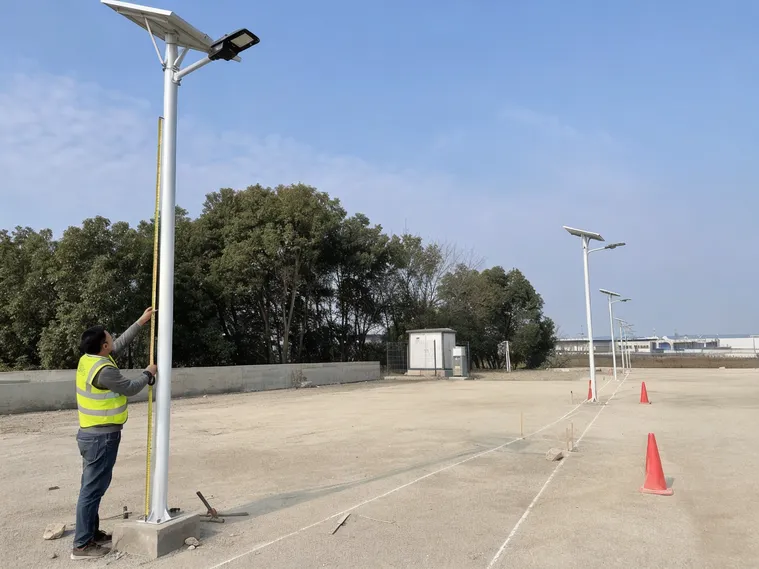
The single most important input for lumen output selection. A 5-meter pole covering a 10m × 10m area needs a different fixture than a 9-meter pole covering a 20m × 20m area. If existing poles are being reused, confirm the pole diameter and bracket compatibility before ordering.
Target Brightness Level
Whether the project needs to meet a specific lux level (common in tender specifications) or a general "well-lit" standard — affects both lumen output and beam angle selection. For projects with a formal photometric requirement, send us the lux target and we'll confirm whether the configuration meets it.
Average Sun Hours & Seasonal Weather
Determines solar panel sizing and battery autonomy requirements. A site in the UAE with 6+ peak sun hours per day needs a different panel-to-battery ratio than a site in the UK with 3–4 peak sun hours. If you're not sure of the sun hours for your target market, send us the country and we'll use standard irradiance data.
Wind Exposure & Pole Condition
Matters for bracket and mounting hardware selection. Sites in coastal or high-wind zones need confirmed wind-load ratings on the bracket and pole. If existing poles are being reused, their structural condition should be assessed before adding a solar panel and fixture head — the combined wind load is higher than a standard luminaire.
Control Mode Preference
Dusk-to-dawn full output, 50% dimming after midnight, motion-activated boost, or a programmable schedule — affects battery sizing and should be confirmed before production. For sites with late-night traffic, full-night mode at reduced output is often the right balance. For perimeter security zones, dusk-to-dawn full output is the standard.
Need a Photometric Layout?
For a detailed photometric layout and pole spacing calculation, see the solar parking lot lighting design guide. Or send your site plan or dimensions directly for configuration support — we'll confirm fixture count, lumen output, and battery autonomy for your deployment region.
Customization Boundaries for OEM, Tender, and Regional Programs
Standard catalog models cover most commercial applications. When they don't — because your market has a specific lumen requirement, your tender spec calls for a custom battery autonomy configuration, or you're building a private-label solar lighting line — our in-house engineering team handles the customization. Knowing what can be adjusted without tooling changes and what requires an engineering review saves time on both sides.
Adjusted Without New Tooling
Lumen Output
Adjusted within the LED module's design range by changing the driver current. Does not require a new housing mold. Confirm the target lumen output and we'll advise on feasibility.
Color Temperature
Full range from 3000K warm white through 6500K daylight. CCT selection is made at the LED module assembly stage.
Battery Capacity & Autonomy
Battery pack capacity can be increased or decreased within the housing's physical limits. Larger capacity packs increase the unit price and shipping weight — we'll confirm the trade-off for your target autonomy days and deployment region.
Solar Panel Wattage
Panel size can be adjusted for the target irradiance region. Larger panels increase the bracket footprint and wind load — confirm the pole specification if you're increasing panel size significantly.
Control Mode & Sensor Logic
PIR sensitivity, trigger distance, dimming percentage, dimming schedule timing, and remote control options are configured at the controller stage. Adjusted per order without tooling changes.
Housing Finish
Standard powder coat colors (black, dark grey, silver, white) available from stock. Custom RAL colors available on runs over 100 units — below that, the powder line changeover cost doesn't make sense for either side.
Logo, Labeling & Packaging
Private-label carton printing, custom accessory kit configuration, and installation guide language are available for OEM programs. Minimum quantities for custom packaging vary by configuration.
Requires Engineering Review
Custom housing geometry or mounting interface for non-standard pole diameters
Wind-load-sensitive structures for high-wind coastal or typhoon-zone deployments
Configurations outside the standard LED module's design range (very high lumen output in a compact housing)
Smart control integration (IoT, remote monitoring, group dimming via app)
OEM/ODM projects go through an engineering review before production to confirm the configuration is achievable and to lock the spec before component procurement.
For buyers building a branded solar lighting line, see our OEM & ODM solar lighting services. Send your requirements — lumen target, battery autonomy, CCT, control mode, packaging, and destination market — and we'll scope the engineering review.
Factory Controls That Keep Reorders Consistent
The most common complaint we hear from buyers who've switched suppliers is batch inconsistency — the reorder arrives and the color temperature is visibly different, or the autonomy performance is shorter than the first shipment. Both failures are predictable and preventable. Here's what we run to prevent them.
One Product Category, One Factory, 13+ Years
We've been manufacturing solar-powered outdoor lighting since 2012 — one product category, one factory. The 12,000 m² facility in Guzhen Town runs 150 employees across production, engineering, QC, and operations.
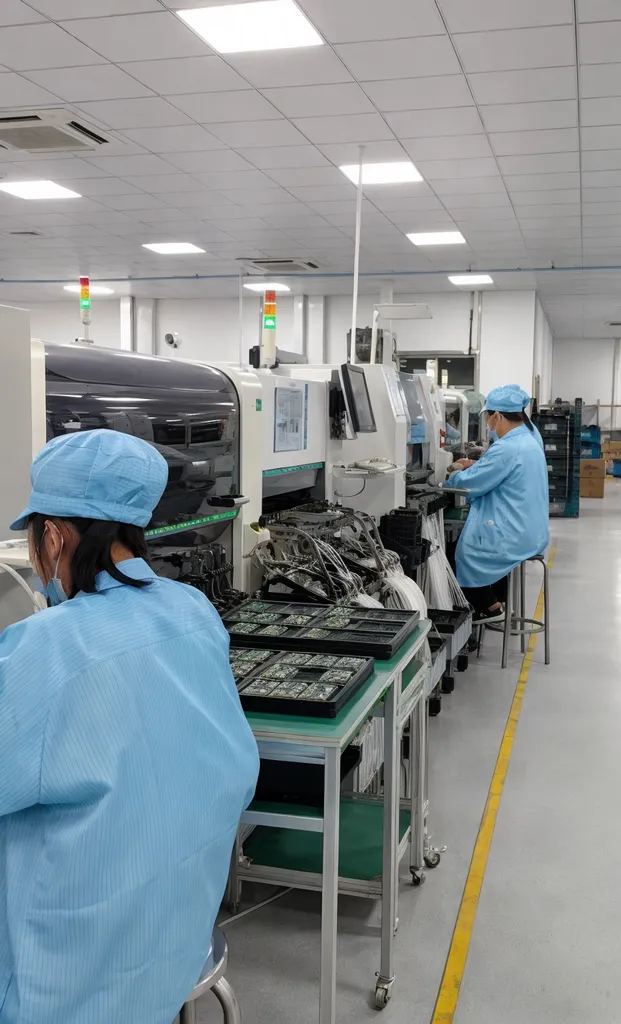
Six production lines handle automated SMT assembly for control boards, LED module integration with lumen binning, battery pack matching, solar panel electrical testing, and final assembly. Annual capacity is 1,200,000 units. That capacity means your reorder runs on a scheduled line, not in a queue behind a new customer's first run.
LED Module Lumen & Color Temperature Confirmation
Runs at the assembly stage, not at final inspection. We bin LED chips by lumen output and color temperature before module assembly, and confirm the assembled module's output before it moves to final assembly.
The tolerance we hold is tighter than what most buyers specify in their purchase orders — buyers who don't specify a CCT tolerance often don't realize they need one until they see two batches side by side. For solar area lights, where multiple fixtures are visible from the same vantage point, CCT consistency across the batch is not optional.
Battery Cell Matching by Capacity & Internal Resistance
The control that prevents autonomy degradation. A battery pack assembled from unmatched cells will perform at the weakest cell's capacity, and that degradation accelerates with each charge cycle.
We match cells by capacity and internal resistance at the pack assembly stage — every pack, not a sample. Packs that fall outside tolerance are pulled before they reach final assembly. The result is consistent autonomy performance across your batch and across reorders.
Aging Tests & Waterproof Inspection
Run before final packing. Aging tests put assembled units through a full charge/discharge cycle under load to confirm that the control logic, dimming schedule, and sensor function hold through a complete operating cycle.
Waterproof inspection uses our own IP test equipment — not assumed from housing geometry. Units that don't pass don't move to final packing.
100% Pre-Shipment Inspection
Covers every unit, every carton, every accessory pack, and every label before the container is sealed. It adds time to the production schedule. It also means defective units are caught before they're on a ship, not after they're in your warehouse.
We've kept it as a non-negotiable since 2012. Learn more about our production and inspection process at the JXSOL solar lighting factory page.
Quote a repeat-order solar area light program
Include your target lumen output, battery autonomy, CCT, and order volume.
Compliance and Export Documentation Buyers Can Clear With
Solar area lights exported to regulated markets need documentation that clears customs, satisfies tender requirements, and protects the buyer from downstream liability. We hold the certifications below and provide documentation per order — not on request after a problem surfaces.
ISO 9001:2015
Factory Quality Management
Covers our factory quality management system. It's the baseline that regulated market buyers use to pre-qualify suppliers before requesting product-level certifications.
CE Marking
European Market
Covers the electrical safety and electromagnetic compatibility requirements for the European market. The CE Declaration of Conformity is available per order. For buyers importing into the EU or markets that accept CE as a compliance reference, this is the primary document.
RoHS Compliance
Restricted Substances
Built into our component sourcing, not added at the documentation stage. We source LED chips, battery cells, and electronic components from suppliers who provide material declarations, and we maintain records by batch. The compliance documentation traces back to the component level.
IP65 / IP67
Ingress Protection
Tested on our own waterproof inspection equipment — not assumed from housing design or gasket specification.
- IP65Dust ingress and water jet resistance — handles rain, cleaning, and standard outdoor exposure.
- IP67Adds submersion protection to 1 meter for 30 minutes — relevant for flood-prone sites, low-lying installations, or sites with regular pressure washing.
IP test certificates provided with the order.
IEC 62124
PV Standalone Systems
Covers photovoltaic standalone systems performance — the standard that addresses solar panel and charge controller performance under real-world conditions. For buyers selling into markets where solar lighting performance claims are scrutinized (European tenders, government procurement programs), IEC 62124 documentation adds credibility to the product specification.
Documentation Confirmed Before Production
For buyers importing into North America, Europe, the Middle East, Southeast Asia, or Africa, we confirm the documentation package before production — not after a problem surfaces.
Request compliance documents for your target market
Send your project inquiry and we'll confirm the documentation package for your import requirements.
Packaging and Logistics for Distributor Programs
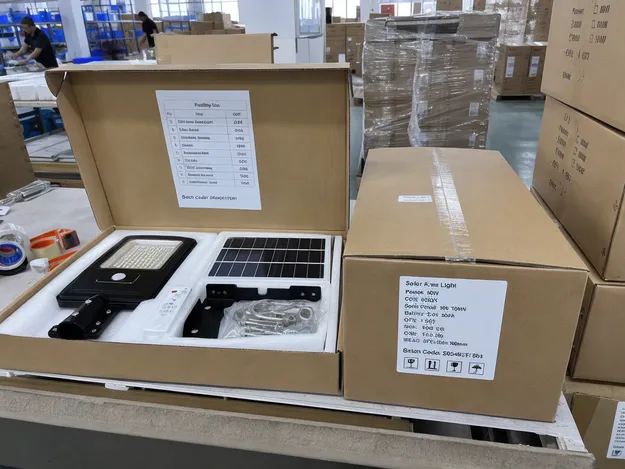
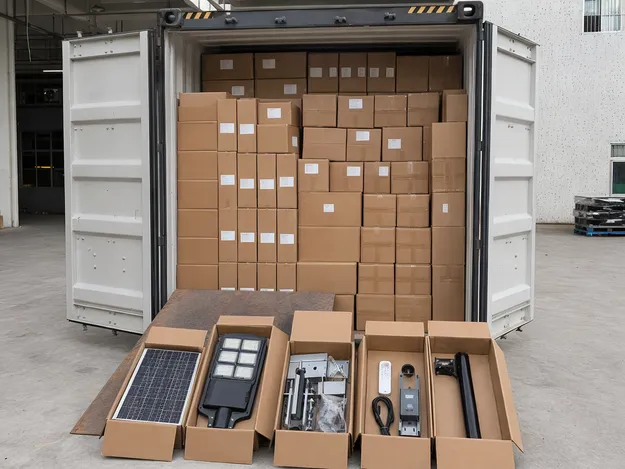
Solar area lights ship as multi-component orders: fixture head, solar panel, mounting bracket, hardware kit, controller (where separate), remote control (where applicable), and installation guide. A missing bracket or an unlabeled accessory pack creates a receiving problem at your warehouse and a delay on the installation site. We treat packing completeness as part of the QC process.
Carton-Level Traceability
Each carton is packed with the fixture and its corresponding accessories, and a packing list inside the carton matches the carton label. Batch codes on carton labels trace back to the production run.
If a question comes up after delivery about a specific unit's test record or a batch's certification documentation, we can pull the records by batch code. For OEM programs with custom packaging, carton printing and accessory kit configuration are confirmed before production.
Container Loading Optimization
Carton dimensions are sized for standard 20GP and 40HQ container loading. For specific container loading quantities by model and order mix, include your destination port and pallet preference in your RFQ — we'll provide the loading data with the quote.
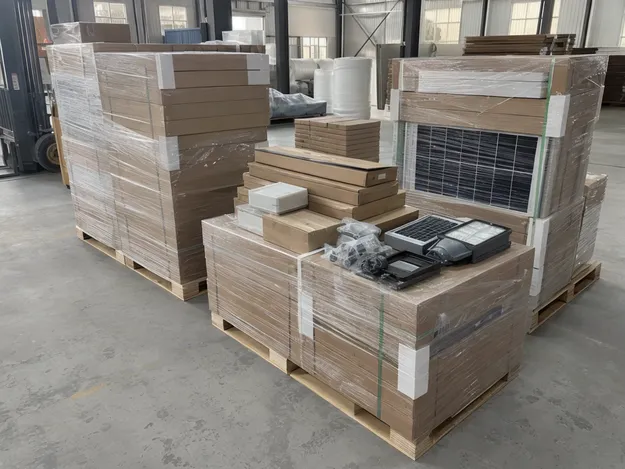
Pallet configurations are available for buyers who need palletized delivery to a project site or distribution warehouse.
Mixed-SKU Orders for Distributor Programs
For distributor programs combining solar area lights with other SKUs from this category — solar parking lot lights, solar pole lights, or solar yard lights — mixed-SKU orders are managed with a consolidated packing list that maps each carton to its SKU, quantity, and batch code.
This makes warehouse receiving straightforward and simplifies reorder tracking when you're restocking individual SKUs at different rates.
Choosing the Right Product in This Lighting Family
Solar area lights cover broad open-site coverage for flexible project use. If the product type below describes your application more precisely, the link takes you directly to that product page.
If your project needs: Marked parking bay layouts, drive lanes, and standard parking lot pole spacing
Solar Parking Lot Lights — optimized for parking-specific layouts and pole configurations.
If your project needs: Higher output for industrial yards, logistics parks, or facility security zones with sustained all-night operation
Commercial Solar Area Lights — heavier-duty configurations for stricter project specs.
If your project needs: Pole-mounted lighting as the primary product format — pathways, campus roads, compound perimeters
Solar Pole Lights — fixture-and-pole format with integrated design options.
If your project needs: Smaller outdoor spaces, lower mounting heights, or a mid-range catalog SKU
Solar Yard Lights — lower-height area lighting for smaller sites.
If your project needs: Portable or temporary lighting — construction sites, emergency response, outdoor events
Solar Lighting Tower — mobile deployment with rapid setup.
If none of the above fits precisely, solar area lights are the most flexible product in this category for open-site coverage.
FAQ for Solar Area Light Procurement
Answers to the specification and planning questions that come up most often during quoting, tendering, and project design for solar area lighting.
What mounting height is typical for solar area lights?
The standard commercial range is 5–8 meters for most open-area applications.
Typical for smaller sites, parking extensions, and community spaces where coverage per fixture is 10 m × 10 m to 15 m × 15 m.
More common for logistics yards, factory compounds, and larger open areas where coverage per fixture extends to 20 m × 20 m or more.
Lumen output requirements push toward the upper end of the solar area light range or into commercial solar area light territory.
Key principle: Confirm the mounting height before specifying lumen output — the two are inseparable in a coverage calculation.
How many autonomy days should a solar area light project specify?
The standard commercial recommendation is 3 autonomy days for most markets — enough to cover a typical cloudy period without visible dimming.
| Climate / Market | Recommended Autonomy | Examples |
|---|---|---|
| Extended rainy seasons | 4–5 days | Equatorial Southeast Asia, West Africa, monsoon-affected South Asia |
| Standard markets | 3 days | Most global markets with mixed weather patterns |
| High irradiance, predictable weather | 2–3 days | Middle East, Southern Europe, Southwest US |
Autonomy days are determined by battery capacity relative to nightly energy consumption — a fixture running at 50% power after midnight needs less battery than one running at full output all night.
Specification dependency: The control mode and the autonomy spec need to be confirmed together, not specified independently.
Is IP65 sufficient for outdoor solar area lighting, or should buyers specify IP67?
IP65 is the minimum for any outdoor solar lighting application — it covers dust ingress and water jet resistance, which handles rain, cleaning, and standard outdoor exposure. IP67 is worth specifying for fixtures installed in flood-prone areas, low-lying sites, or locations with regular pressure washing.
If your project is in a coastal environment with salt spray exposure, confirm that the housing material and hardware are also rated for corrosion resistance — IP rating covers water ingress, not salt corrosion.
We test both IP65 and IP67 on our own waterproof inspection equipment and provide test certificates with the order.
What information is needed to quote large outdoor solar lighting accurately?
The minimum we need: target lumen output or mounting height, required autonomy days, destination country or latitude, order quantity, and any certification requirements for your market.
If you have a site drawing or an existing fixture spec you're trying to match, that speeds up the configuration review.
Without the autonomy and latitude data, any quote we provide is based on assumptions that may not match your deployment conditions — and the price difference between a 2-day and a 5-day autonomy configuration can be 30–50% on the battery alone.
For a detailed breakdown of solar area lighting cost factors, see the solar area lighting cost guide.
Solar area lights vs solar parking lot lights: which is better for a project?
The distinction is about site layout, not output level. Solar parking lot lights are optimized for marked parking bay layouts — specific pole spacing, drive lane coverage, and bracket configurations that match standard parking lot geometry. Solar area lights are more flexible: they work for open yards, perimeter zones, community spaces, and any site where the coverage requirement is broad-area illumination rather than parking-specific layout.
If your project has marked bays and drive lanes, solar parking lot lights are the more precise fit. If the site is an open area without a defined parking layout, solar area lights are the right product.
When in doubt, send us the site dimensions and we'll recommend the product type.
Can lumen output, CCT, battery capacity, and packaging be customized?
Yes, within the limits described in the customization section above. Lumen output can be adjusted within the LED module's design range without a new housing mold. CCT is selectable across the standard range (3000K–6500K). Battery capacity can be increased or decreased within the housing's physical limits.
Custom packaging, private-label carton printing, and accessory kit configuration are available for OEM programs. MOQ for standard models is 100 units; OEM/ODM projects go through an engineering review before production.
Send your OEM solar area light requirements and we'll scope the review.
What is the MOQ for standard JXSOL solar area lights?
100 units for standard catalog models. This is low enough to test a new SKU with your customers before committing to a larger program.
For OEM/ODM projects with custom specifications — lumen output, battery autonomy, CCT, housing color, packaging — MOQ and lead time depend on the configuration and are confirmed after the engineering review. Most new buyers in this category start with a 100–200 unit sample program to validate the product with their market before scaling to a full distribution order.
Get a Quote for Solar Area Lights
Send us the details below and we'll respond with a configuration recommendation and pricing.
Project Details We Need
Site Dimensions
Length × width in meters, or number of fixtures needed
Pole Height
Existing or required mounting height
Target Brightness
Lux level if specified, or site type for our recommendation
Working Hours
Full night, dimming after midnight, motion-activated, or other
Sun-Hour Region
Country or latitude of deployment
Order Quantity
Total units for this order or program
Destination Market
For certification and documentation requirements
OEM/ODM Requirements
Custom lumen, CCT, battery, packaging, or branding
We'll come back with a configuration recommendation, confirmed specifications, and pricing based on your actual project or SKU program — not a generic catalog price.