

Solar Road Lights Engineered for Your Road Spec
Solar road lights engineered for road width, pole height, and required lux — not generic outdoor fixtures.
Factory-direct from JXSOL. Configurations for arterial roads, collector roads, urban roads, rural access roads, and private development roads. All-in-one, split, and smart options available.
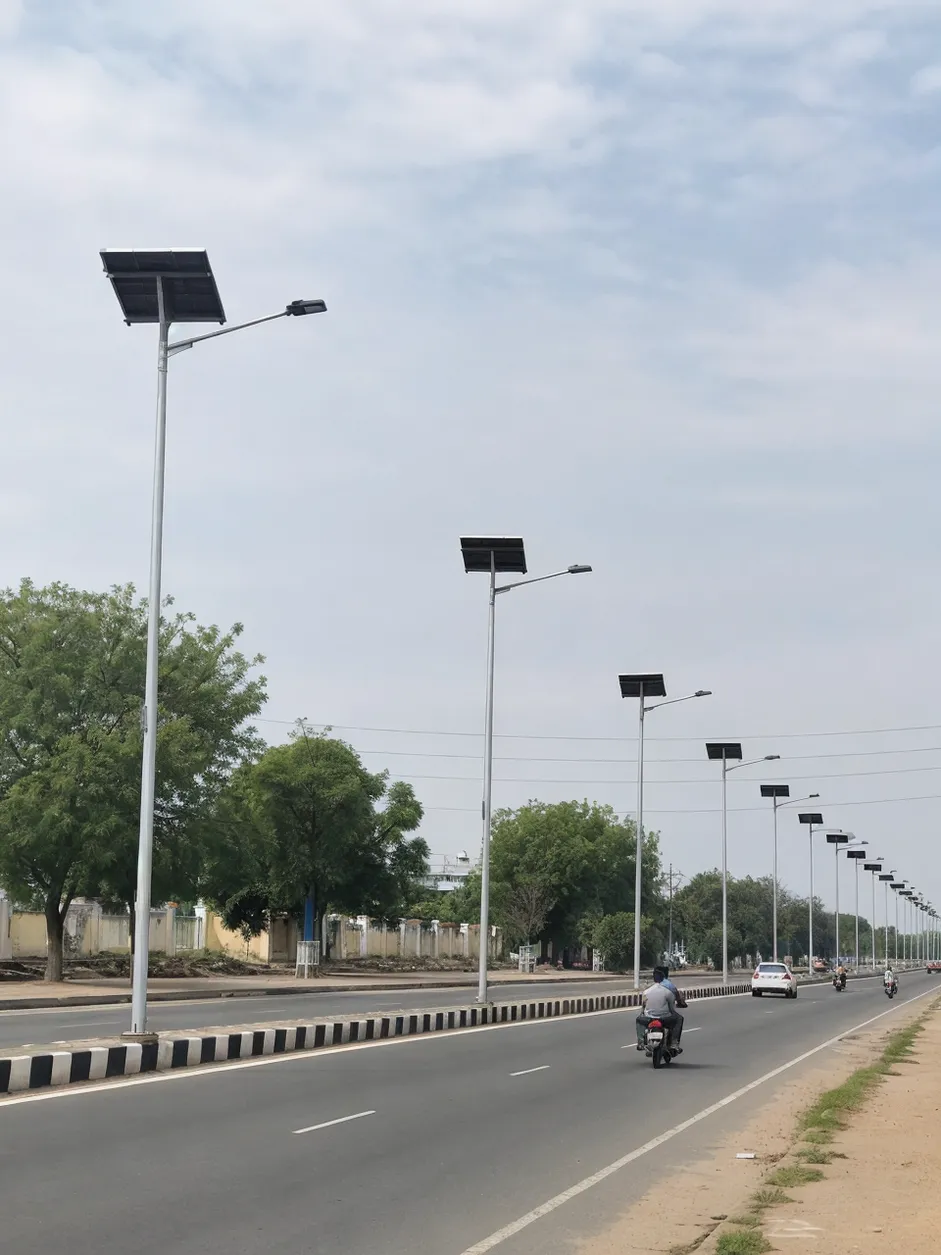
Solar Road Lights for Projects Defined by Road Width, Pole Height, and Required Lux
Solar road lights are roadway-focused solar lighting systems where the project brief drives the configuration — road width, pole height, pole spacing, required illuminance level, nightly operating hours, and autonomy days are the inputs that determine what you actually need to order. That's a different starting point from stocking a general-purpose solar street light for residential or secondary roads.
This page covers JXSOL's solar road lights for arterial roads, collector roads, urban roads, rural access roads, industrial estate roads, and private development roads. If your project has a road classification, a lux requirement, or a pole layout specified in the brief, you're in the right place.
If you're working from a highway expressway spec with 12m+ masts and high-speed traffic requirements, see our solar highway lights. If you need standard residential or secondary road stock SKUs, see our solar street lights.
We've been manufacturing solar lighting since 2012, and road projects are a significant part of what we ship — particularly to the Middle East, Southeast Asia, and Africa, where solar roadway lighting is often the practical alternative to grid extension. Our in-house engineering team handles configuration matching from project inputs, so you're not guessing at wattage and hoping the coverage works out on site.
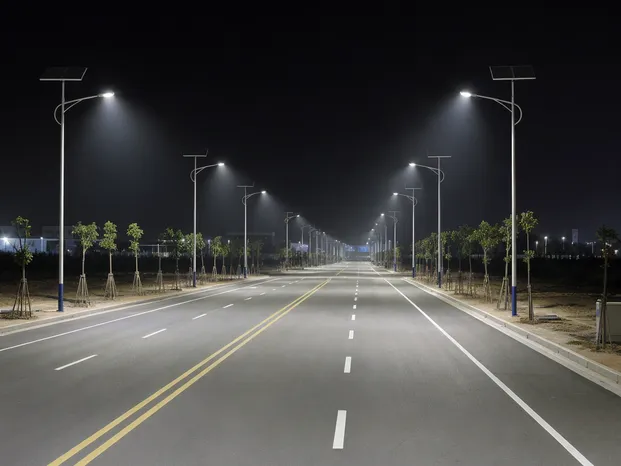
Road Types Covered
- Arterial roads
- Collector roads
- Urban roads
- Rural access roads
- Industrial estate roads
- Private development roads
Roadway Specification Inputs That Decide Your Quote
The most common sourcing problem in solar road lighting is quoting on wattage alone. A 100W fixture on a 10m pole covering a 9m-wide road performs completely differently from a 100W fixture on a 6m pole covering a 6m-wide road — same wattage, different beam angle, different mounting height, different coverage result. Before you send an RFQ, the inputs below are what actually determine the right configuration.
Project Inputs Checklist
| Input | Why It Matters |
|---|---|
| Road width (m) | Determines required beam spread and lumen output for lane coverage |
| Number of lanes | Affects uniformity requirements and whether single-side or staggered layout is needed |
| Pole height (m) | Sets the mounting height that determines beam angle and coverage radius |
| Pole spacing (m) | Combined with pole height, determines the overlap between adjacent fixtures |
| Arm length and angle | Affects the horizontal offset of the fixture from the pole centerline |
| Mounting side | Single-side, staggered, opposite-side, or center-median — each has different spacing logic |
| Target lux level (lux) | The illuminance requirement from the road classification standard or project brief |
| Uniformity requirement (Uo) | Minimum uniformity ratio — typically 0.4 for collector roads, 0.35 for local roads |
| Operating hours per night (h) | Directly sizes the battery capacity needed |
| Autonomy days | Number of consecutive overcast days the system must operate without recharging |
| Installation location / latitude | Determines peak sun hours for panel sizing |
| Order quantity | Affects MOQ, lead time, and whether custom configurations are practical |
Sending these inputs with your RFQ eliminates the back-and-forth that delays quotes. We run the configuration against your road geometry and confirm the fixture spec — lumen output, beam angle, panel wattage, battery capacity — before you commit to a price. Fewer revisions means faster project submission for you.
For a deeper look at photometric planning and layout logic, see our solar street lighting design planning resource.
Why Wattage Alone Fails
A 100W fixture on a 10m pole covering a 9m-wide road performs completely differently from a 100W fixture on a 6m pole covering a 6m-wide road.
- Same wattage
- Different beam angle
- Different mounting height
- Different coverage result
Typical Solar Road Light Specification Table for Procurement Sheets
The table below covers the typical planning ranges for JXSOL solar road lights. These are industry-standard values for this product type — use them to build your comparison sheet or confirm that our spec range covers your project requirements. Final specifications depend on your project layout and are confirmed on the product datasheet.
| Specification | Typical Range | Planning Notes |
|---|---|---|
| LED Output | 40W – 200W | Road applications typically run 60W–150W; higher wattage for wider roads or longer pole spacing |
| Lumen Output | 5,000 lm – 24,000 lm | Confirm at fixture level, not chip level; we test and confirm at module assembly stage |
| Pole Height Compatibility | 6m – 12m | Standard road poles; 8m–10m is the most common range for arterial and collector roads |
| Road Width Coverage | 6m – 16m | Depends on pole height, beam angle, and layout; single-side layout covers narrower roads |
| Solar Panel | 60W – 300W monocrystalline | Sized to battery capacity and daily operating hours; confirm installation latitude |
| Battery Type | LiFePO4 | Standard across our range — 2,000+ cycle life, stable in high-temperature environments |
| Battery Capacity | 40Ah – 150Ah | Sized for autonomy days × operating hours; 3-day autonomy is the standard minimum |
| Autonomy Days | 3 – 5 days | 3 days for standard road projects; 5 days for lower-irradiance regions or monsoon climates |
| Color Temperature | 4000K – 5000K | Standard for roadway applications; 4000K neutral white is the most common road spec |
| IP Rating | IP65 / IP67 | IP65 standard; IP67 for flood-prone or coastal installations |
| Controller Modes | Full power / 50% dim / motion-activated / scheduled dimming | Smart models add remote monitoring and programmable dimming profiles |
| Housing Material | Die-cast aluminum, powder-coated | Standard colors: silver grey, black, dark green; custom colors on 100+ unit runs |
| Mounting Options | Side-entry arm mount, top mount | Arm length and angle confirmed against pole height and road width |
| Certifications | CE, RoHS, IP65/IP67, IEC 62124 | Documentation provided with order |
Specifications shown are typical planning values for this product type. Actual specifications depend on project layout and are confirmed on the product datasheet. Contact us for detailed configuration data.
Beam Distribution and Pole Matching That Prevents Site Rework
Road lighting failures that show up after installation — bright spots under the pole, dark gaps between poles, uneven lane coverage — are almost always a mismatch between the fixture's beam distribution and the pole geometry. Getting this right before the order is placed is cheaper than fixing it on site.
Single-Side Layout
All poles on one side of the road. Works for narrower roads (typically up to 8m) where the beam can reach the far lane from one side.
Staggered Layout
Alternates poles on both sides. Improves uniformity on medium-width roads (8m–12m) without the cost of opposite-side installation.
Opposite-Side Layout
Poles placed directly across from each other. Used for wider roads where staggered spacing would leave gaps in the center.
Center-Median Layout
Poles mounted in the median of divided roads. Reduces pole count but requires a wider beam angle to cover both carriageways.
Pole Height, Arm Length, and Beam Angle — Where Most Spec Errors Happen
The relationship between pole height, arm length, and beam angle is where most spec errors happen. A fixture with a Type II road beam (designed for a mounting height of 9m on a 9m-wide road) will produce bright spots and poor uniformity if it's mounted at 6m on the same road — the beam is designed for a specific mounting height, and changing the height without changing the beam angle breaks the coverage geometry.
We confirm beam angle against your pole height and road width before production, not after.
Real-world note: We've had buyers come to us after receiving fixtures from another supplier that didn't match their pole height. The fix was either replacing the fixtures or adding extension arms to raise the mounting height — both options cost more than getting the spec right the first time.
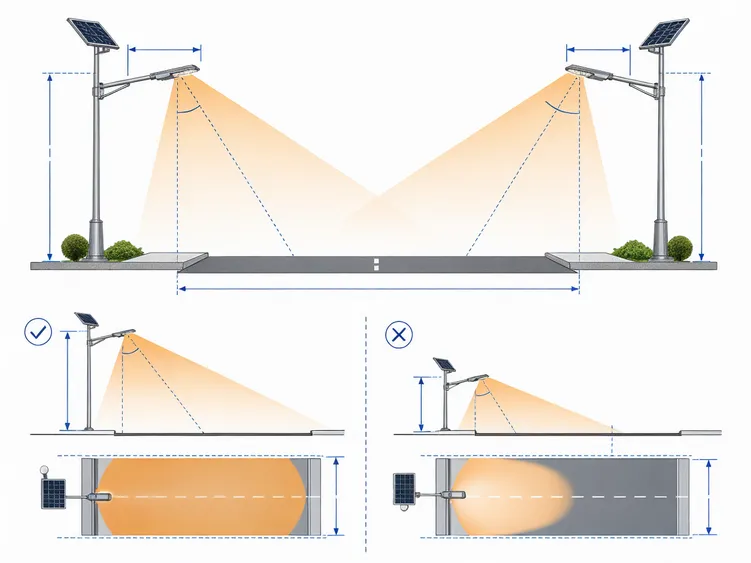
Poles and Fixtures Confirmed Together
When pole supply is part of your project scope, our solar street lighting poles are sized to match our road light fixtures — pole height, arm length, and bracket configuration are confirmed together. Sourcing poles and fixtures separately from different suppliers and hoping they match is a common source of site rework.
For layout planning guidance, see our solar street lighting design planning resource.
Project Segments Where Solar Road Lights Move in Real Volume
Road lighting projects follow predictable buying patterns by segment. Understanding which segment your buyers operate in helps you stock the right configurations and position the product correctly for your market.
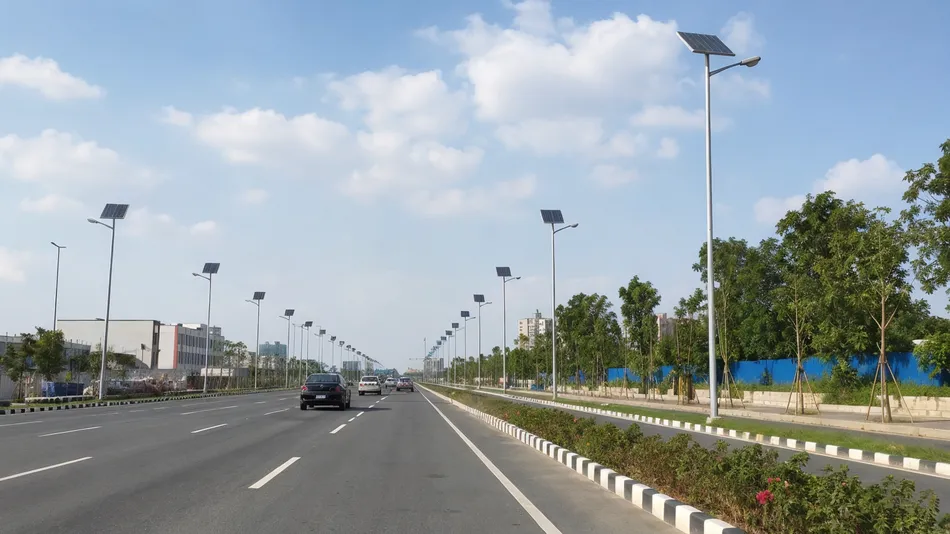
Municipal Arterial and Collector Road Upgrades
Municipal road lighting upgrades are the highest-volume segment for solar road lights in most markets. A single district upgrade can run 500–2,000 fixtures, and phased city programs repeat across multiple budget years.
Municipal buyers work from a road classification standard — they have a lux requirement, a pole height, and a spacing spec before they issue the tender. What they need from a supplier is a fixture that matches the spec, compliance documentation for the procurement process (CE, IEC 62124, IP test certificates), and a factory that can deliver consistent quality across multiple phases of the same project.
Batch Consistency Matters
If Phase 1 installs 800 fixtures and Phase 2 orders 600 more a year later, the new fixtures need to match the ones already in the ground.
Rural and Off-Grid Road Programs
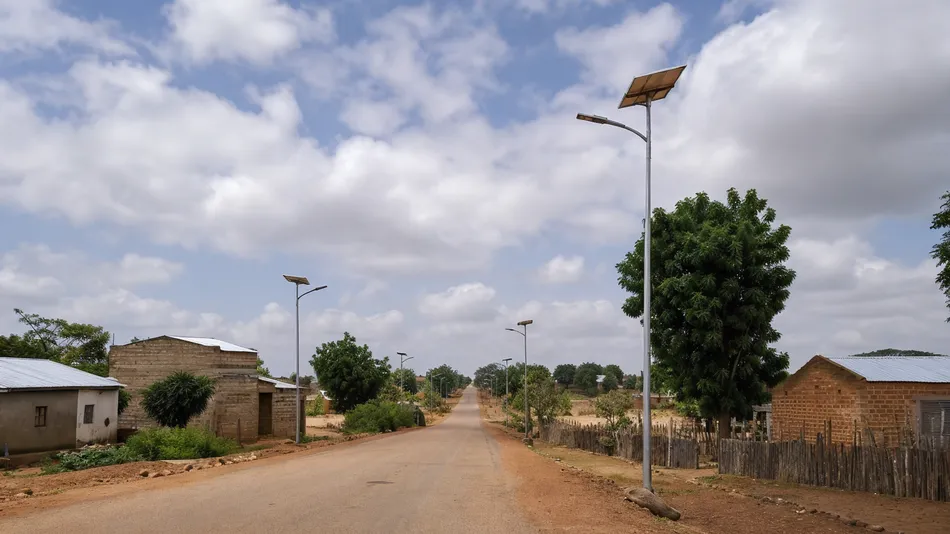
Rural access roads, village connector roads, and off-grid infrastructure projects in Africa, Southeast Asia, and parts of the Middle East represent a high-volume segment where solar roadway lighting is often the only practical option. Grid extension to rural roads is expensive and slow; solar road lights eliminate the infrastructure dependency entirely.
Buyers in this segment prioritize battery autonomy and robustness over advanced features — a 5-day autonomy configuration with a robust LiFePO4 battery pack and IP65 housing is the standard spec. Split configurations with larger battery banks are common for higher-latitude or lower-irradiance locations.
Typical Order Scale
Order volumes for rural programs often run 1,000–5,000 units per phase, with repeat orders as the program expands to additional roads.
Industrial Estate and Logistics Access Roads
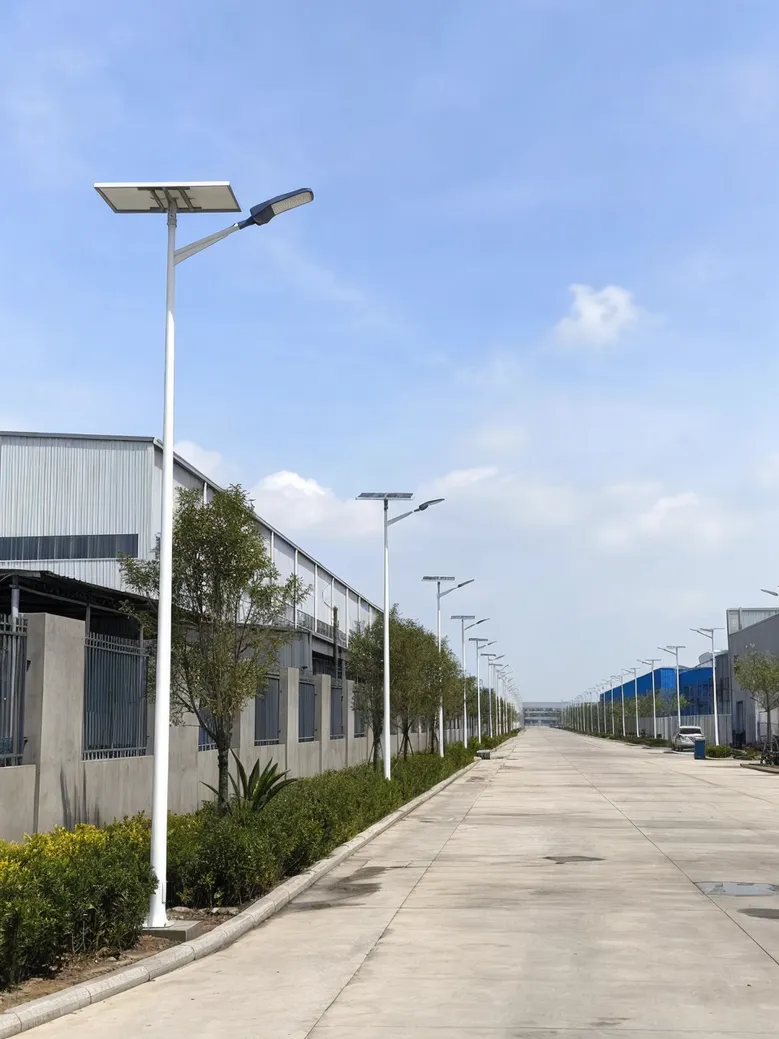
Industrial parks, logistics hubs, and manufacturing estate developers install solar road lights as part of site infrastructure. The road geometry is predictable — straight access roads with consistent pole spacing — and the buyer is typically a developer or facilities contractor who needs a reliable fixture with low maintenance requirements.
All-in-one configurations at 80W–120W cover most industrial access road specs. Order volumes run 100–500 units per project, with repeat orders as the estate expands.
Commercial logic for this segment:
- No trenching required
- No grid connection cost
- Fixture runs independently of the site's power supply
Typical Wattage
80W–120W
Order Volume
100–500 units
Residential Development and Community Roads
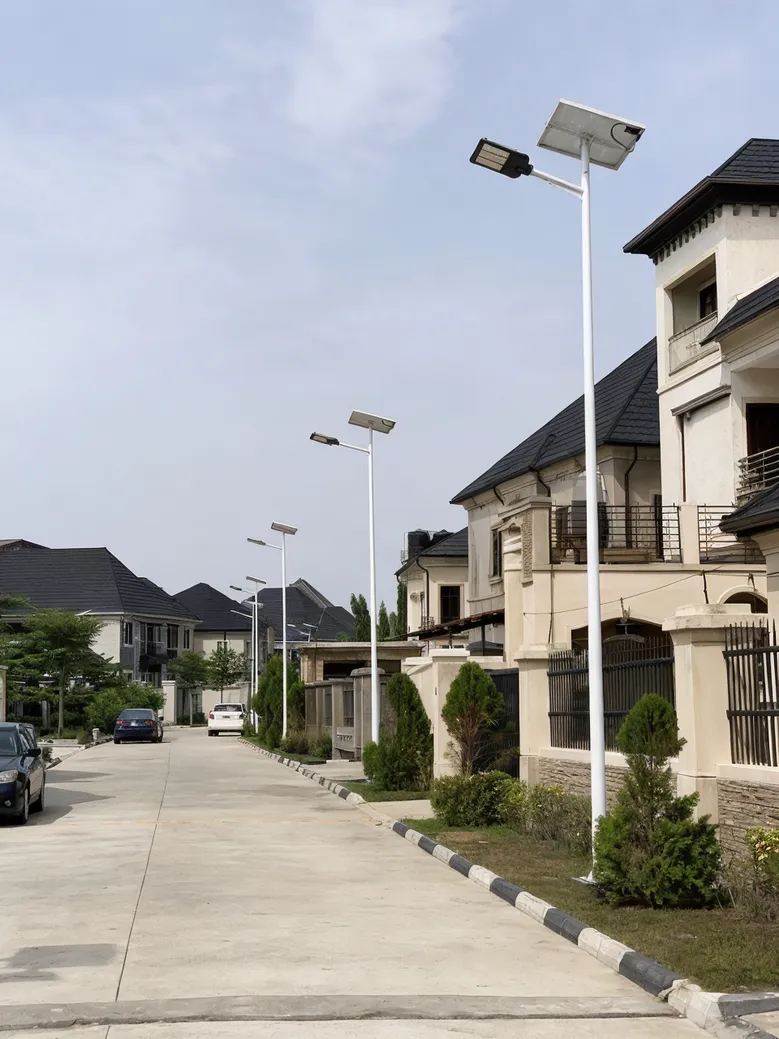
Private residential developments, gated communities, and new township roads need road lighting that meets local road standards without the cost of highway-grade systems. Mid-spec solar road lights at 60W–100W on 6m–8m poles cover most residential road classifications.
Developers in this segment are cost-sensitive on a per-unit basis but value installation simplicity — all-in-one configurations reduce installation labor and eliminate the need for electrical contractors on the lighting circuit. Order volumes typically run 200–800 units per development, with the developer or their contractor placing the order as part of the site infrastructure package.
Wattage
60W–100W
Pole Height
6m–8m
Volume
200–800
Campus, Resort, and Private Road Networks
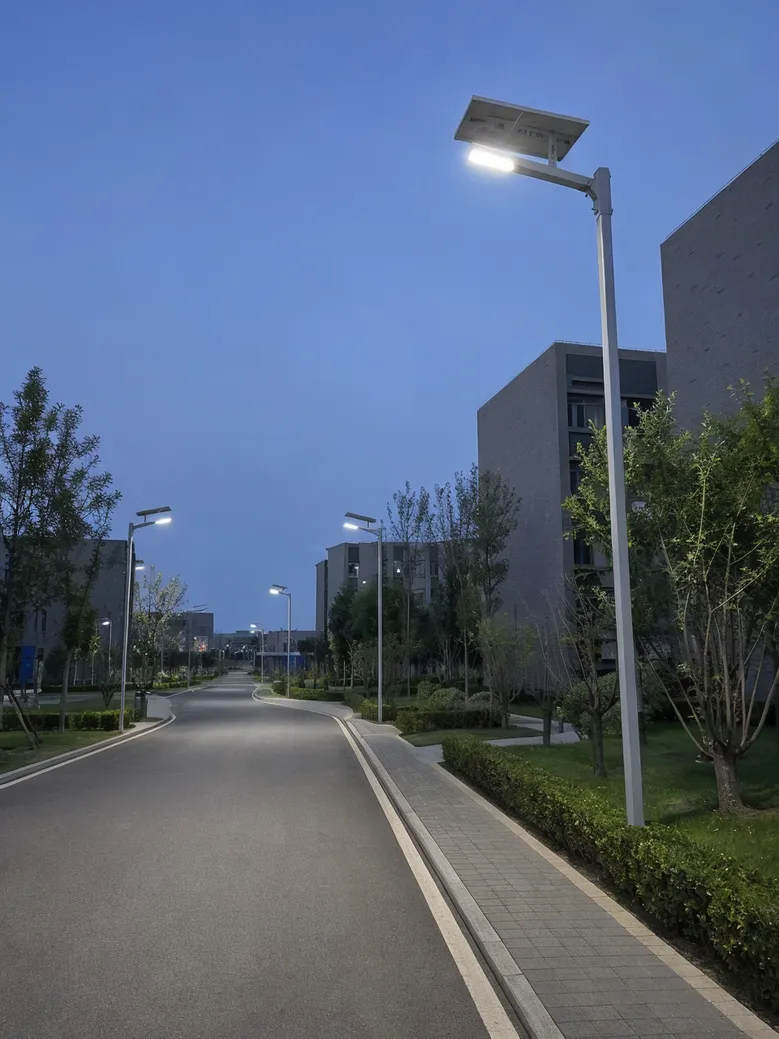
Universities, resorts, industrial campuses, and private road networks are a smaller but consistent segment. These are controlled roads — the operator owns the infrastructure and manages maintenance — so the buying decision is made by a facilities manager or procurement team rather than a public tender process.
Solar road lights reduce trenching and wiring cost on new roads and eliminate the ongoing electricity cost on existing ones. Smart configurations with dimming schedules are increasingly common in this segment, particularly for resorts and campuses that want to reduce energy consumption during low-traffic hours.
Typical specification for this segment:
Wattage
60W–100W
Pole Height
6m–8m
CCT
4000K–5000K
IP Rating
IP65
Have a target market and volume requirement? Get a factory quote matched to your project segment.
Contact JXSOL With Your RequirementsIntegrated, Split, or Smart Configuration for Roadway Orders
The structure choice for a solar road light project — all-in-one, split, or smart — is a project fit decision, not a product tier decision. Each configuration has a specific range of road projects it's suited for.
All-in-One for Standard Road Projects
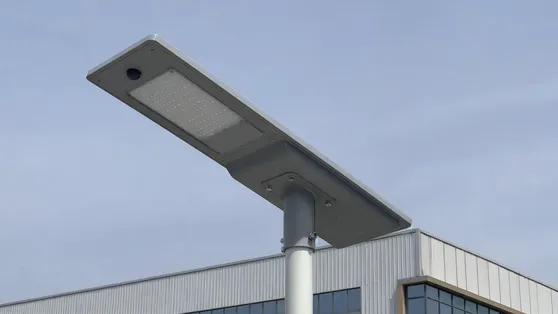
All-in-one solar street lights integrate the panel, battery, LED module, and controller into a single housing. For road projects at latitudes between roughly 15°N and 45°N, with LED output up to around 120W and 3-day autonomy requirements, all-in-one configurations cover the spec without the installation complexity of a split system.
Installation is straightforward — one component, one mounting point — which reduces labor cost and simplifies logistics for multi-pole road projects. For distributors stocking road light SKUs, all-in-one configurations are easier to warehouse and ship.
Best fit parameters:
- Latitude 15°N – 45°N
- LED output up to ~120W
- 3-day autonomy requirement
- Single mounting point
Split for Larger Panel and Battery Requirements
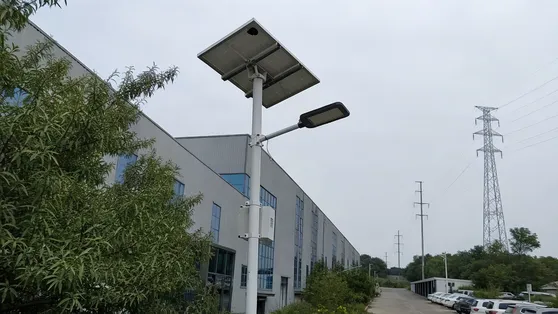
Split solar street lights separate the panel from the fixture, which is necessary when the panel or battery sizing required exceeds what an integrated housing can accommodate.
If your road project is at higher latitude (above 45°N), requires 5+ autonomy days, or specifies LED output above 120W–150W, split is the right configuration. The panel can be sized independently of the fixture housing, and the battery bank can be scaled to the autonomy requirement without changing the fixture.
The trade-off is installation complexity and a higher per-unit cost — two mounting points, a wiring run between panel and fixture, and more components to manage on site. For the right project, that cost is justified by the performance margin.
Best fit parameters:
- Latitude above 45°N
- 5+ autonomy days required
- LED output above 120W–150W
- Independent panel/battery scaling
Smart for Monitored Road Networks
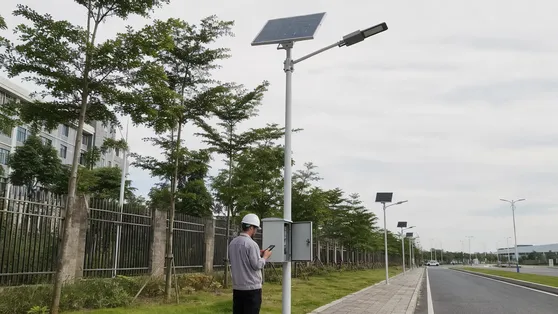
Smart solar street lights add remote monitoring, programmable dimming schedules, and fault reporting to the base road light configuration.
For municipal road projects where the tender includes a network management requirement, smart is increasingly a bid specification rather than an optional upgrade. For distributors, smart road lights open a higher-margin product tier — the per-unit cost is higher, but so is the selling price, and the differentiation from commodity all-in-one fixtures is clear.
Dimming schedules reduce battery consumption during low-traffic hours, which can allow a smaller battery bank for the same autonomy requirement.
Best fit parameters:
- Network management in tender
- Remote monitoring & fault reporting
- Programmable dimming schedules
- Higher-margin distributor tier
Send us your project conditions — road classification, pole height, latitude, operating hours, autonomy requirement, and whether network monitoring is in scope — and our engineering team will recommend the right structure and confirm the configuration before you quote.
Customization Boundaries Before You Promise a Tender Spec
Road lighting tenders often include specific requirements that standard catalog models don't cover exactly — a particular lux level, a specific CCT, a custom dimming profile, or a private-label requirement. Here's what we can configure, and where the boundaries are.
What Can Be Customized
Lumen Output
Adjustable within the LED module's design range without changing the housing. If your tender specifies a minimum lux level at road surface, send us the road geometry and we'll confirm the lumen output needed to meet it.
Color Temperature
Full range from 3000K warm white through 6500K daylight. For road applications, 4000K–5000K is the standard spec; we can confirm the exact CCT against your project requirement. We've had buyers specify 5700K for road projects in markets where cooler white is preferred for visibility — we can match it.
Battery Capacity and Autonomy Days
Battery capacity is sized to your target autonomy days and daily operating hours. We ask for the installation location or latitude as part of the configuration process — it's the input that determines whether the system performs as specified in the lowest-irradiance month, not just the average month.
Solar Panel Wattage
Sized against peak sun hours at your installation latitude and the battery capacity. Increasing battery capacity without matching panel wattage is a common spec error that leads to underperformance in the field — we size both together.
Controller Modes and Dimming Profiles
Standard models include full power and 50% dim. Custom configurations can include scheduled dimming profiles (e.g., 100% from dusk to midnight, 50% from midnight to dawn), dawn-to-dusk timing, multi-level dimming, and smart network integration for municipal projects.
Sensor Logic
PIR motion sensing is standard on most models. Custom sensor logic — detection range, sensitivity, hold time — can be configured for specific road environments.
Housing Color
Standard colors are silver grey, black, and dark green. Custom RAL colors are available on runs of 100+ units — below that, the powder line changeover cost doesn't make sense for either side.
Private Label and Packaging
Custom logo, brand labeling, and packaging design for buyers building a branded solar road lighting line. Accessory pack configuration (bracket type, fastener spec, installation guide language) can be customized for your market.
Limitations to Confirm Before Promising a Spec
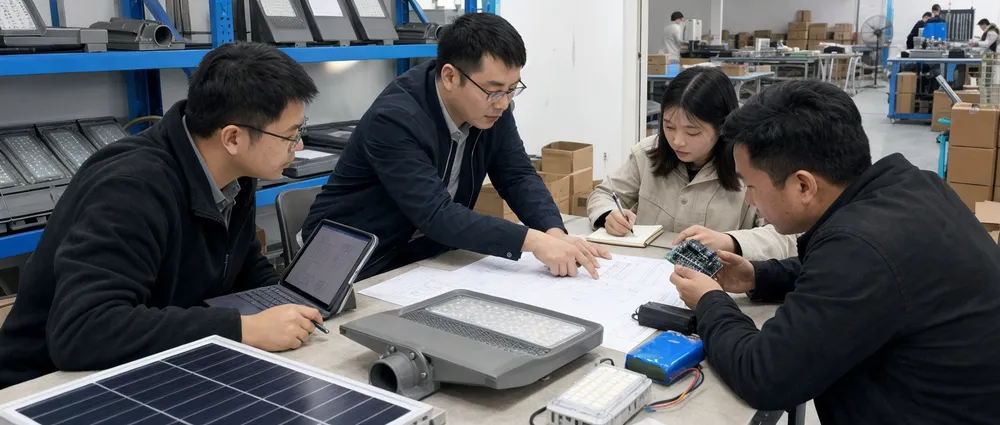
Not every custom request fits every housing. Panel wattage above a certain threshold requires a split configuration — the integrated housing has a physical limit on panel size. Battery capacity above the housing's internal volume requires a split or external battery box configuration.
Custom sensor logic and dimming profiles require an engineering review to confirm the controller firmware can support the specification.
We run an engineering review on all OEM/ODM projects before production to confirm the configuration is achievable and lock the spec before component procurement — this prevents spec mismatches during production, which cost more time to resolve than the review takes.
MOQ for standard catalog models starts at 100 units. OEM/ODM projects with custom specifications are confirmed through the engineering review process.
Testing and Compliance Evidence for Roadway Projects
Road lighting projects — particularly municipal tenders and regulated market imports — require compliance documentation before the order ships. Here's what we hold and what we can provide.
Confirmed Certifications
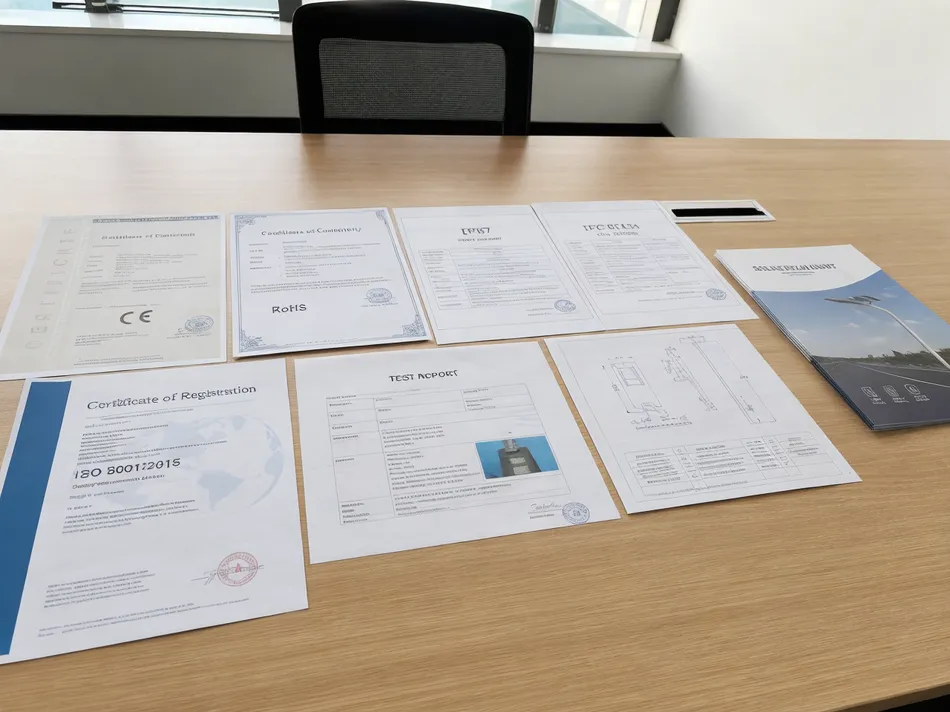
JXSOL solar road lights carry CE, RoHS, IP65/IP67 Ingress Protection, IEC 62124, and ISO 9001:2015 certification.
CE marking covers the Low Voltage Directive and EMC Directive requirements for the electrical components — required for European market entry and referenced in project specifications across regulated markets.
IEC 62124 covers photovoltaic system performance requirements and is increasingly specified in solar road lighting tenders.
RoHS compliance covers restricted substance requirements that affect import clearance in the EU and a growing list of other markets.
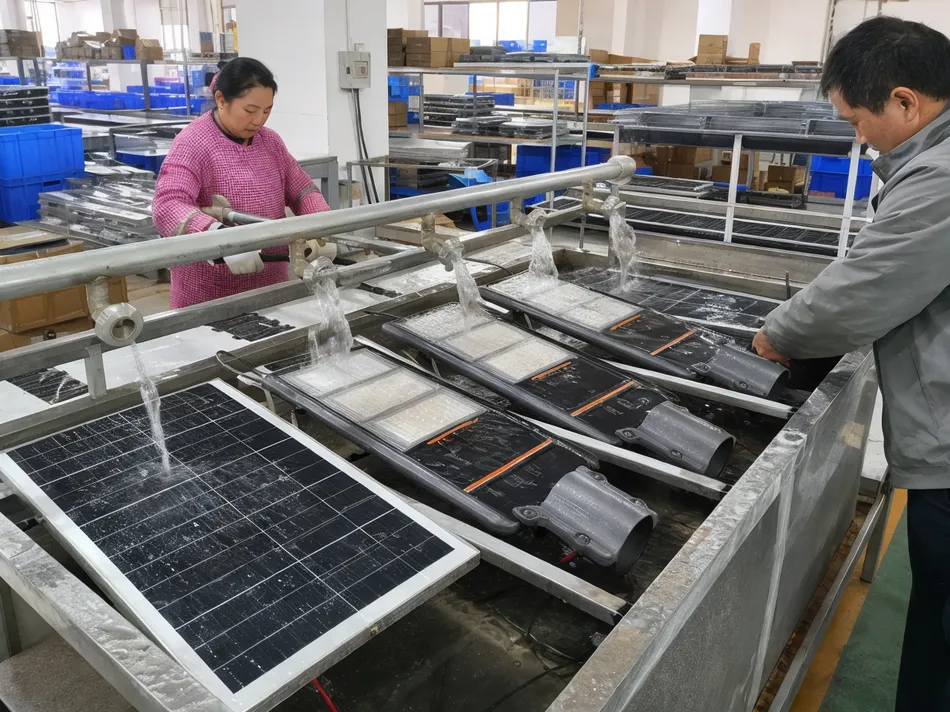
IP65/IP67 ratings are tested on our own waterproof inspection equipment — not assumed from housing design.
CE Declaration of Conformity, RoHS test reports, IP test certificates, and IEC 62124 documentation are provided with orders for markets that require them. If your tender or import process requires specific documentation formats, confirm at order placement.
Road-Relevant QC Controls
The quality controls that matter most for road projects are the ones that prevent field failures after installation — battery capacity mismatch, lumen inconsistency across batches, and waterproof structure failure. We address all three at the production stage.
Battery Capacity Matching
Battery cells are matched by capacity and internal resistance before pack assembly. Every completed battery pack goes through a full charge/discharge cycle test on aging test racks — not a continuity check, a full cycle under load.
Packs that don't hold rated capacity within tolerance are pulled before they reach the fixture. This is the step that prevents the battery failures that show up after one rainy season.
Lumen Output Consistency
Lumen output is confirmed at the LED module assembly stage, with chips sorted by lumen output and color temperature bin before assembly.
This keeps your batches consistent across reorders — which matters when a road project is delivered in phases and the Phase 2 fixtures need to match Phase 1.
Waterproof Structure — 100%
Waterproof structure is inspected on 100% of units before final packing, using our own IP inspection equipment. IP65 units are tested for dust ingress and water jet resistance. IP67 units are tested for temporary immersion.
Units that fail are pulled and the assembly process is corrected before the batch continues.
Outgoing Inspection — 100%
Every unit, every carton, every accessory pack, every label — before the container is sealed.
For road projects where a missing bracket or incorrect label creates a site problem, this is the control that prevents it.
Our 12,000 m² factory runs six production lines with 1,200,000-unit annual capacity — your road project order runs on a scheduled line, not in a queue behind new customer onboarding.
Learn more about the JXSOL manufacturing and inspection systemPacking, Accessories, and Batch Control for Multi-Pole Road Orders
Road projects receive fixtures across multiple cartons, often with poles, brackets, and accessories packed separately. How the order is packed and labeled affects how cleanly it arrives on site.
Accessory Pack Planning
Every solar road light ships with a standard accessory pack:
- Mounting bracket
- Fasteners
- Installation guide
- Remote control (for models with remote dimming)
Accessory packs are checked against a packing list before carton sealing — missing accessories are one of the most common causes of installation delays on road project sites, and we check them before the container closes.
For projects sourcing poles alongside fixtures, bracket type and arm length are confirmed against the pole specification before packing. Poles and fixtures are packed separately with clear labeling so your receiving team can sort and verify without unpacking everything.
Batch Code Traceability
Every carton carries a batch code that traces back to the production run, component lot, and QC records.
Phased Road Projects
Where Phase 2 arrives six months after Phase 1 — the batch code lets you confirm that the new fixtures are from a production run with the same component specifications.
Field Issue Resolution
If a field issue surfaces after installation, the batch code lets us pull the relevant inspection records and identify the production window.
Warranty Claims
This is the foundation of any warranty claim process on a multi-pole road project.
Mixed-SKU & Project-Site Receiving
For road projects with multiple fixture configurations — different wattages for different road sections, or a mix of all-in-one and split configurations — cartons are organized by SKU and labeled by batch code.
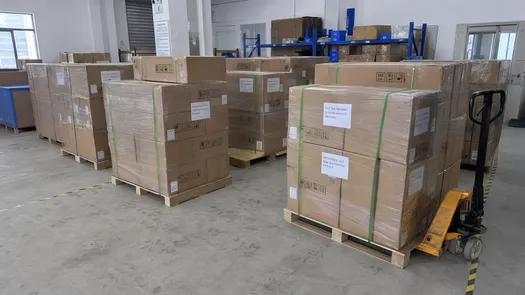
Palletized Packing
Available for buyers who need palletized delivery for project-site receiving or warehouse logistics. Pallet configurations are confirmed at order placement.
Road Lights vs Nearby JXSOL Product Families
Solar road lights sit in the middle of the solar street and roadway lighting range — above standard residential street lights, below highway-grade systems. The table below maps each sibling product to its primary use case so you can confirm you're in the right place, or find the right exit if this product isn't the match.
Solar Street Lights
Standard residential and secondary road stock SKUs; lower pole heights, lower lumen output.
ViewCommercial Solar Street Lights
Commercial developments and private sites; higher lumen output, longer nightly hours.
ViewAll-in-One Solar Street Light
Compact installation for standard road projects; single-component mounting.
ViewSplit Solar Street Light
Larger panel and battery sizing for higher latitude, longer autonomy, or higher wattage.
ViewSmart Solar Street Light
Municipal road networks with remote monitoring, dimming schedules, and fault reporting.
ViewSolar Highway Lights
Expressways and high-speed roads; 12m+ masts, wide beam, extended nightly hours.
ViewSolar Park Lighting
Pedestrian paths, parks, and recreational areas; lower poles, softer beam, warm CCT.
ViewSolar Street Lighting Pole
Matching poles for road light installations; galvanized steel, standard heights.
ViewWhere Solar Road Lights Sit in the Range
Solar road lights are positioned above standard residential street lights and below highway-grade systems. They cover arterial, collector, and urban road classifications where pole heights typically range from 6m to 10m and lux requirements follow national road lighting standards.
Not sure which product family fits your project?
Send us the road classification, pole height, and required lux level — we'll point you to the right configuration.
FAQ for Solar Road Light Buyers
Are solar road lights different from solar street lights?
Yes, in terms of how they're specified and configured. Solar street lights are typically stocked as general-purpose outdoor fixtures for residential and secondary roads, where the buyer selects a wattage and installs it. Solar road lights are specified from project inputs — road width, pole height, pole spacing, required lux level, and operating hours — and the configuration (lumen output, beam angle, panel wattage, battery capacity) is matched to those inputs.
The physical product may look similar, but the specification process is different. Using a general-purpose street light on a road project without confirming beam distribution and mounting height compatibility is the most common cause of post-installation coverage problems.
What information do you need to quote solar road lights?
The most useful inputs are:
- Road width
- Pole height
- Pole spacing
- Arm length
- Mounting layout (single-side, staggered, opposite, or median)
- Target lux level
- Uniformity requirement
- Operating hours per night
- Target autonomy days
- Installation location or latitude
- Destination market
- Order quantity
With those inputs, we can confirm the fixture spec, run the configuration, and provide a detailed quote. If you don't have all of these yet, send what you have — we'll work from there and flag what's missing.
When should a road project use split solar roadway lighting instead of all-in-one?
Three conditions push a road project toward split:
LED output above 120W–150W — the panel required to support higher output exceeds what an integrated housing can accommodate.
Installation latitude above roughly 45°N — lower peak sun hours require a larger panel than an all-in-one housing allows.
Autonomy requirements above 3–4 days in lower-irradiance regions.
If any of these apply to your project, a split solar street light is the right starting point. The per-unit cost is higher and installation is more complex, but the performance margin is the reason — an all-in-one configuration pushed beyond its design range will underperform in the field.
How many autonomy days should solar road lighting be designed for?
Three days is the standard minimum for most road lighting applications — it covers a typical sequence of overcast days without the system going dark. Five days is common for projects in regions with monsoon seasons, variable solar irradiance, or high-latitude winters where consecutive low-irradiance days are more frequent. Seven days is specified for critical infrastructure or locations where maintenance access is difficult.
More autonomy days require a larger battery bank, which increases unit cost and may require moving from an all-in-one to a split configuration. We size battery capacity against your target autonomy days and daily operating hours as part of the configuration process.
What IP rating and certifications matter for roadway projects?
IP65 is the standard minimum for road lighting — it covers dust ingress protection and water jet resistance from any direction. IP67 adds temporary immersion protection and is worth specifying for flood-prone or coastal installations.
For compliance documentation, CE and IEC 62124 are the most commonly required for regulated market entry and project tenders. RoHS compliance is required for EU import and affects clearance in a growing list of markets.
We hold CE, RoHS, IP65/IP67, and IEC 62124 certifications, with documentation provided per order. If your tender requires specific documentation formats or additional certifications, confirm at order placement.
What is the MOQ for solar road lights, and can I order samples first?
MOQ for standard catalog models is 100 units. For OEM/ODM configurations with custom lumen output, battery sizing, CCT, or private label, MOQ depends on the customization scope and is confirmed through the engineering review process.
Most new buyers in this category start with a 2–5 unit sample order to confirm project fit or test with their own customers before placing the first production order. We can ship samples ahead of a production order — send us your project spec and we'll confirm sample availability and lead time.
Have a project spec ready? Request a quote or sample to confirm fit before your production order.
Send Roadway Project Specs for a Factory Quote
The most useful inquiry includes: road width, pole height, pole spacing, required lux level, operating hours per night, target autonomy days, installation location or latitude, destination market, and order quantity. With those inputs, we confirm the right configuration, provide a detailed quote, and flag any spec considerations before production.
If you're earlier in the process — comparing configurations, evaluating us as a supplier, or building a distributor catalog — send what you have. We'll work from there and recommend a starting configuration based on what's moving for our existing buyers in your region.
What to Include in Your Inquiry
Contact Details
Start Your Quote
Whether you have a full spec sheet or just a project outline, we'll respond with a configuration recommendation and pricing within one business day.