

Solar Walkway Lights Built for Repeated Spacing
Self-contained, grid-free fixtures for campus paths, commercial landscape routes, public parks, and property developments. Standard models from 100 units. OEM/ODM with engineering review included.
Where every unit in the run must match.
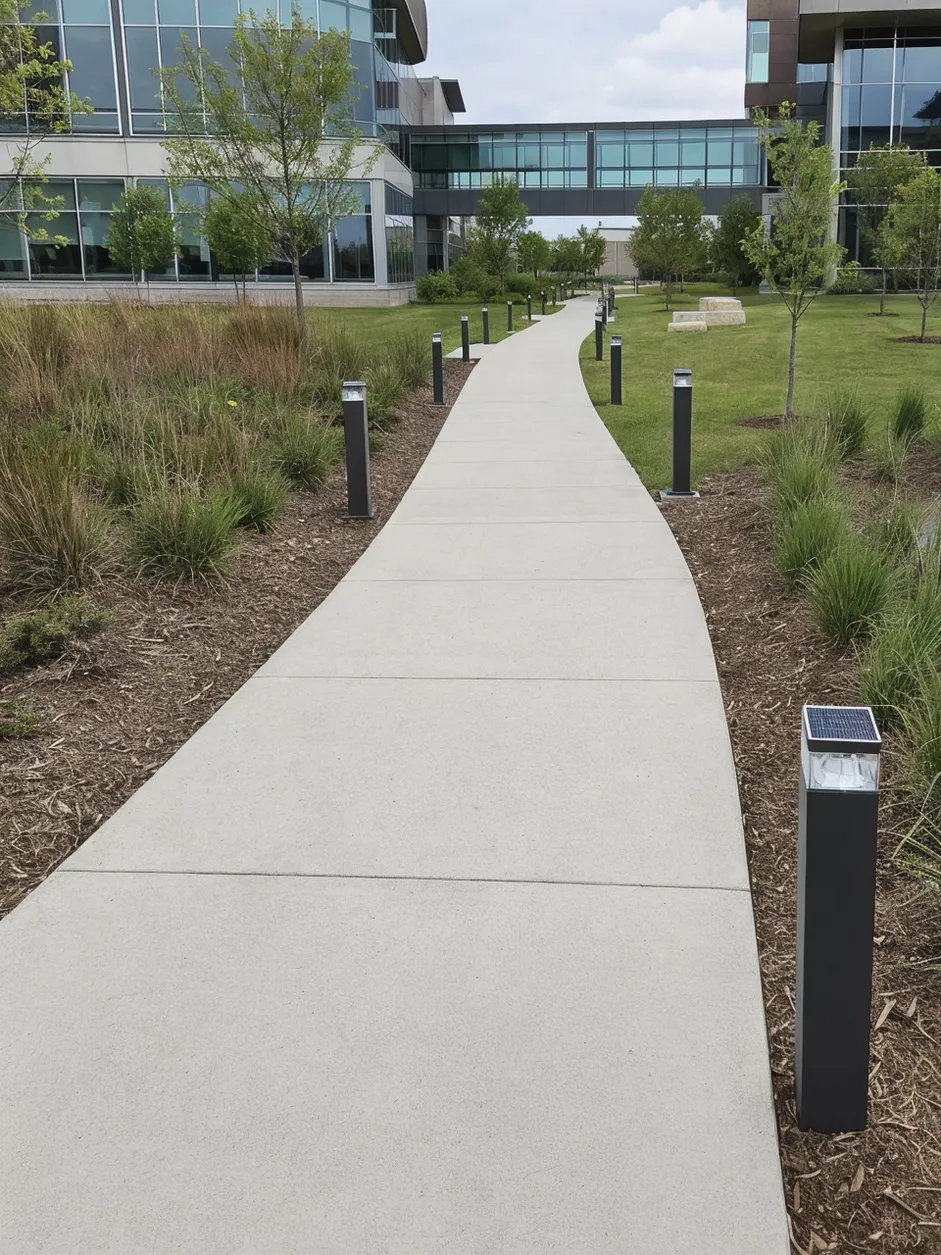
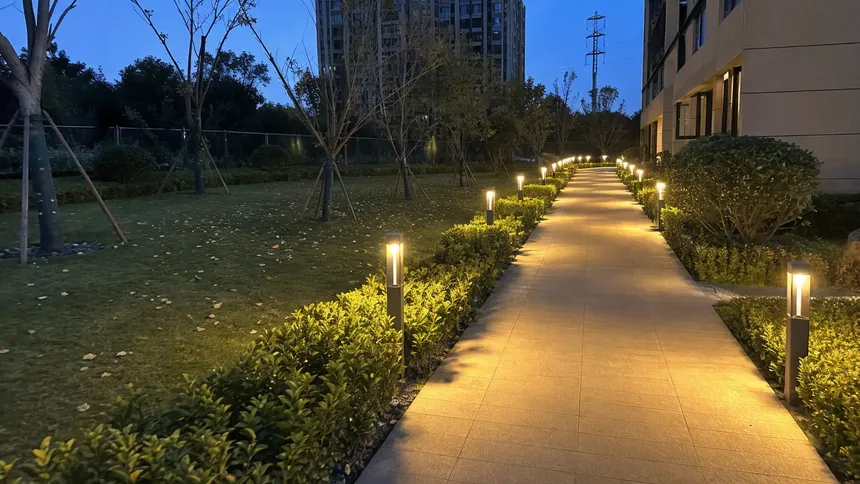
Solar Walkway Lights for Long Runs Where Every Unit Must Match
Solar walkway lights are not the same sourcing decision as a garden pathway light. When a project installs 80 or 200 or 500 fixtures along a pedestrian route at consistent spacing, the commercial risk shifts from a single unit failing to the entire run looking inconsistent — different brightness levels, mismatched color temperatures, or one dark fixture in a lit corridor. That's the problem this product is built to solve.
We've been manufacturing solar-powered outdoor lighting since 2012, and walkway lights are one of the product types where batch consistency matters most. A distributor who sells 50 pathway lights to a homeowner can absorb a lumen variation between units. A contractor who installs 300 walkway lights on a university campus cannot. The spec requirements are different, the QC controls need to be tighter, and the factory needs to understand that distinction before production starts.
JXSOL solar walkway lights are low-height, self-contained solar fixtures designed for pedestrian route illumination without grid connection. The solar panel, battery, LED module, and controller are integrated into a single housing. No trenching, no licensed electrician, no ongoing energy cost. For project contractors, that removes the main installation barrier. For distributors, it means the product can be sold into markets where wired outdoor lighting is expensive or impractical — which covers most of the growth markets in this category.
Standard models are available from 100 units per SKU. OEM/ODM programs with custom lumen output, color temperature, housing color, packaging, and branding are supported with engineering review included.
Send Your Walkway Light RequirementsBatch Consistency
Tighter QC controls ensure uniform brightness and color temperature across every unit in a production run — no dark spots in a lit corridor.
Zero Grid Connection
Solar panel, battery, LED module, and controller integrated into a single housing. No trenching, no electrician, no energy cost.
MOQ 100 Units
Standard models from 100 units per SKU. OEM/ODM with custom lumen output, CCT, housing color, packaging, and branding.
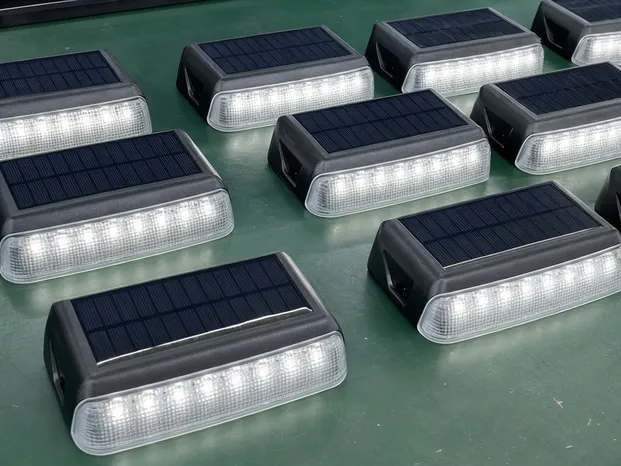
Specification Table Buyers Can Use for Project Comparison
The values below are industry-typical ranges for solar walkway lights in this product class. Use them to confirm whether our production scope covers your requirements. Exact model data sheets — including specific lumen output, battery capacity, solar panel wattage, and autonomy confirmation for your target latitude — are provided on request.
| Parameter | Typical Range / Options | Notes |
|---|---|---|
| Lumen Output | 50–300 lm | 50–100 lm for residential and landscape routes; 100–300 lm for commercial and campus paths with wider spacing |
| Color Temperature | 2700K, 3000K, 4000K, 5000K, 6500K | 3000K and 4000K are the most common; recommend limiting a product line to two CCTs |
| LED Power | 1W–5W | Scales with lumen output and target autonomy |
| Solar Panel Type | Monocrystalline silicon | Standard; panel size scales with battery capacity and target autonomy |
| Solar Panel Output | 2W–6W | Sized per model to meet autonomy targets in the buyer's target latitude |
| Battery Type | LiFePO4 or Li-ion 18650 | LiFePO4 preferred for longer cycle life and thermal stability; Li-ion available for cost-sensitive SKUs |
| Battery Capacity | 1200mAh–4000mAh | Sized to target autonomy; confirm per model |
| Autonomy (cloudy days) | 2–4 days | Depends on battery capacity, lumen output, and lighting mode; confirm per model and target latitude |
| IP Rating | IP65 standard / IP67 available | IP65 for standard outdoor installation; IP67 for ground-level or flood-prone environments |
| Housing Material | ABS/PC, die-cast aluminum, stainless steel | ABS/PC for cost-sensitive lines; die-cast aluminum or stainless for commercial positioning |
| Surface Finish | UV-stabilized paint, powder coat | UV-stabilized finish standard; powder coat on metal housings |
| Mounting Type | Ground stake, surface mount, anchor base | Ground stake for landscape soil; surface or anchor base for paved commercial paths |
| Sensor / Control | PIR motion sensor, dusk-to-dawn, dimming modes | PIR and dusk-to-dawn standard; multi-mode dimming available |
| Certifications | CE, RoHS, IP65/IP67, IEC 62124, ISO 9001:2015 | CE and RoHS required for EU market entry; IEC 62124 covers solar system performance |
| Warranty | 3 years | Standard |
Specifications shown are industry-typical values for this product type. Actual specifications vary by model. Contact us for detailed product data sheets and autonomy confirmation for your target market.
Spacing, Mounting, and Solar Exposure Before You Quote the Project
The most common quoting error on solar landscape lighting walkway projects is specifying fixture quantity without confirming spacing against lumen output. A 100 lm walkway light at 2-meter spacing delivers a very different result than the same fixture at 5-meter spacing — and the second scenario will generate complaints from the end client about dark gaps between fixtures. Getting this right before the order is placed protects your margin and your relationship with the project owner.
Spacing and Lumen Output
Plan spacing based on lumen output, fixture height, beam pattern, and route width. For pedestrian walkways where the goal is safe navigation, a minimum average illuminance of 5–10 lux at ground level is a reasonable target.
At 100 lm per fixture with a typical wide-beam distribution, 3-meter spacing on a 1.5-meter-wide path will meet that threshold. At 50 lm per fixture, tighten spacing to 2 meters or accept lower illuminance.
For commercial routes where safety lighting standards apply, confirm the local standard before specifying — some municipal projects require documented illuminance calculations.
Mounting Method and Ground Conditions
Ground stake mounting is the fastest installation method for landscape soil — no tools, no civil work, no concrete.
For paved commercial paths, concrete plazas, or any surface where a stake can't penetrate, surface mount or anchor base is the right choice. Surface mount requires a flat, stable base and typically uses four anchor bolts into the paving.
Anchor base mounting involves a small concrete footing — more work upfront, but the fixture is more stable and less vulnerable to being knocked over in high-traffic areas.
Confirm the mounting method before ordering. The housing base design differs between stake-mount and surface-mount models, and switching after the order is placed adds lead time.
Solar Exposure and Shade
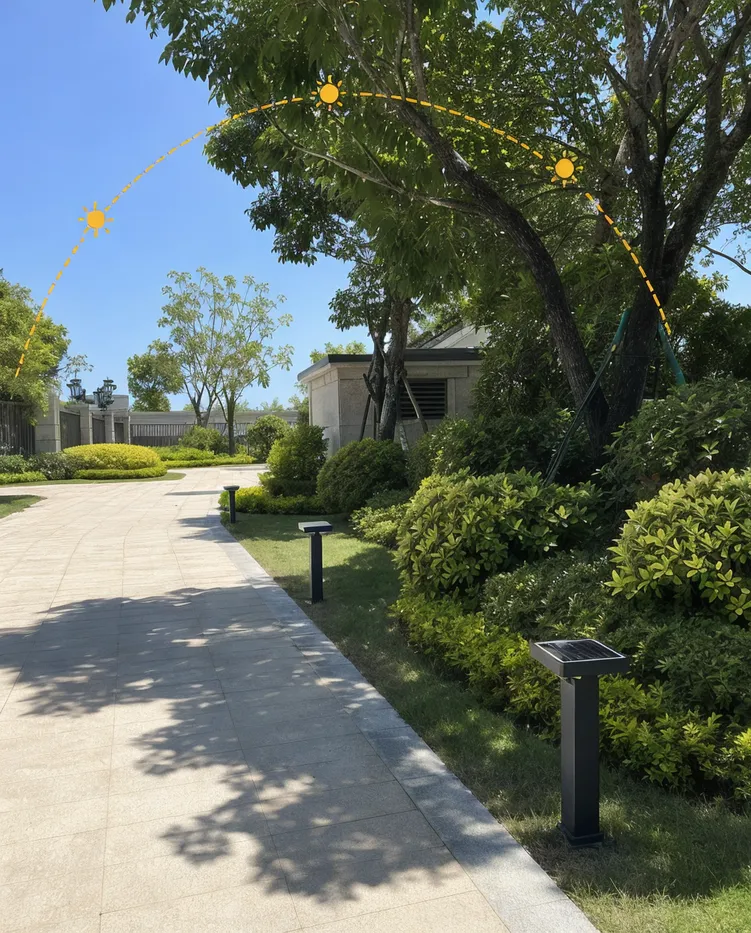
Solar walkway lights need direct sun exposure for at least 6 hours per day to meet their rated autonomy. Shade from trees, walls, building overhangs, or adjacent structures reduces charging time and shortens the effective autonomy.
For projects where shade is unavoidable, specify a higher battery capacity to compensate — or flag the shade condition to us during the engineering review and we'll size the battery and panel combination against the actual charging window.
Route photos or a simple sketch showing the path orientation, surrounding structures, and any obvious shade sources are the most useful inputs for a configuration recommendation.
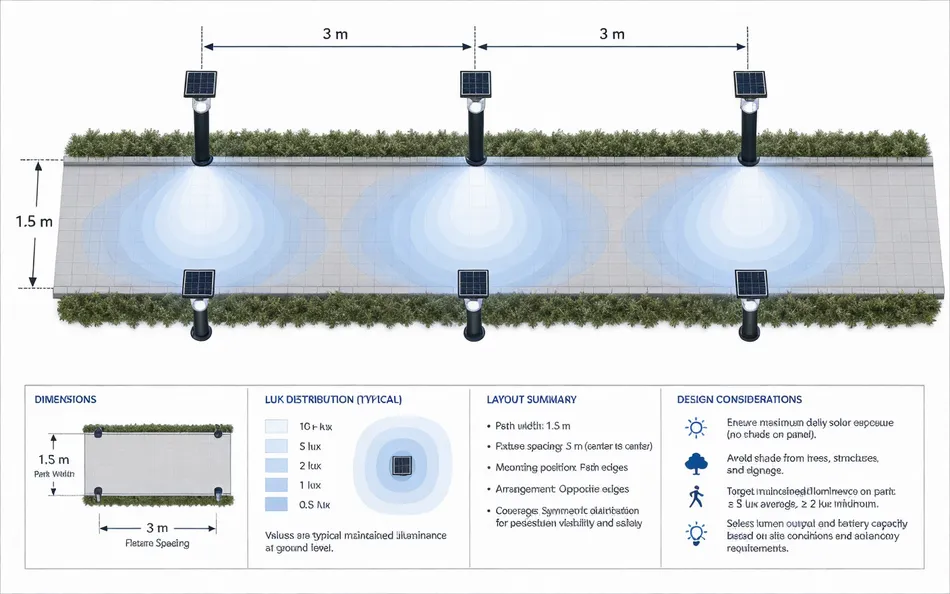
Start With Spacing, Work Backward to Lumen Spec
We see a lot of buyers specify the lowest-lumen model to hit a unit price target, then find out the spacing needs to be tighter than the project budget allows for. The right approach is to start with the spacing the project requires and work backward to the lumen spec.
Quick Spacing Reference
Mounting Methods at a Glance
| Method | Best For | Civil Work | Stability |
|---|---|---|---|
| Ground Stake | Landscape soil, garden beds, unpaved paths | None — no tools required | Standard |
| Surface Mount | Paved paths, concrete plazas, decks | 4 anchor bolts into paving | High |
| Anchor Base | High-traffic commercial areas, exposed sites | Small concrete footing | Highest — impact resistant |
Shade Assessment Before Ordering
For projects where shade is unavoidable, we size the battery and panel combination against the actual charging window during the engineering review. The inputs we need are straightforward:
- Route photos showing path orientation and surrounding structures
- A simple sketch with obvious shade sources marked
- Estimated daily direct sun hours at the fixture locations
Market Segments Where Walkway Lights Create Repeat Orders
The commercial value of solar walkway lights comes from the installation pattern: a project installs a run of fixtures, the run expands, and the buyer needs to reorder the same SKU to match the existing installation. That reorder logic is what makes this product type worth building a supply relationship around.
Campus, Hospital, and Business Park Routes
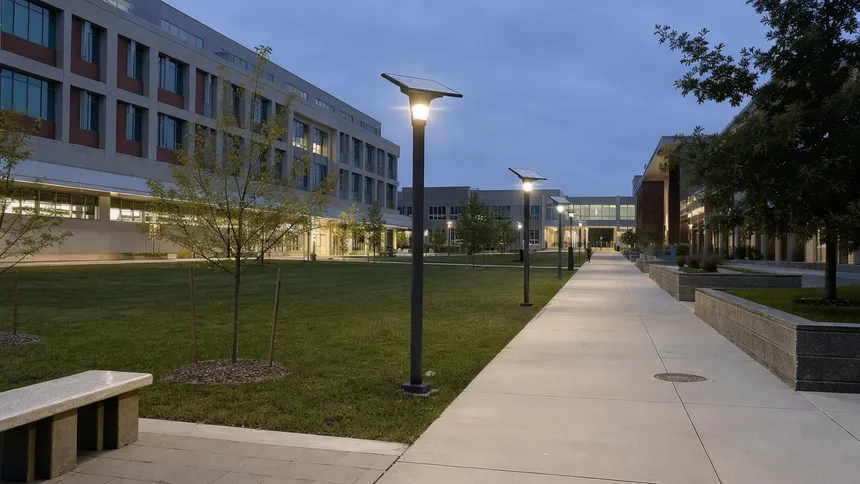
Universities, hospitals, and corporate campuses install walkway lights in project quantities — typically 100–500 units per phase — and reorder as routes expand or as older fixtures are replaced. The key sourcing requirement is batch consistency: a campus that installed 200 walkway lights in Phase 1 needs Phase 2 to match exactly in lumen output, color temperature, and housing finish. A visible mismatch between phases is a problem the facilities manager will trace back to the supplier.
This segment also tends to have longer procurement cycles with formal specification processes. Getting your product specified early — before the project goes to tender — is the commercial opportunity. Buyers who can provide lumen data, IP test certificates, and CE documentation have a significant advantage over those who can't.
Municipal Parks and Public Walkways
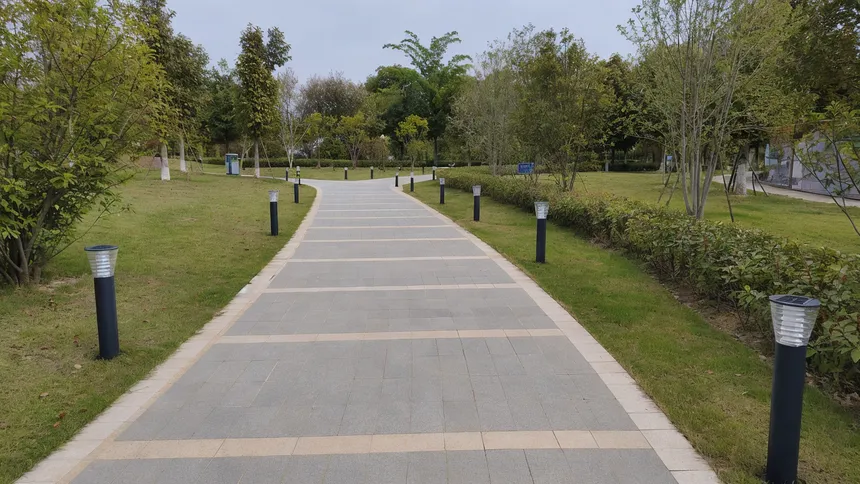
Municipal buyers specify in larger quantities — 500 to 5,000+ units per project — and require compliance documentation as a condition of purchase. CE Declaration of Conformity, IP test certificates, RoHS records, and IEC 62124 documentation are standard requirements for public procurement in European and many other markets. Batch consistency and documentation readiness are the two factors that determine whether a factory can serve this segment reliably.
This segment has grown significantly for us over the past three years, particularly in Southeast Asia and the Middle East, where municipalities are expanding public park infrastructure without the budget for grid-connected lighting. Worth paying attention to if you're building a project supply business.
For distributors supplying contractors who bid on municipal projects, having a factory that can provide the full compliance documentation package — not just a CE mark on the housing — is a meaningful competitive advantage. We maintain documentation by batch and can provide it on request.
Hotels, Resorts, and Commercial Landscape Projects
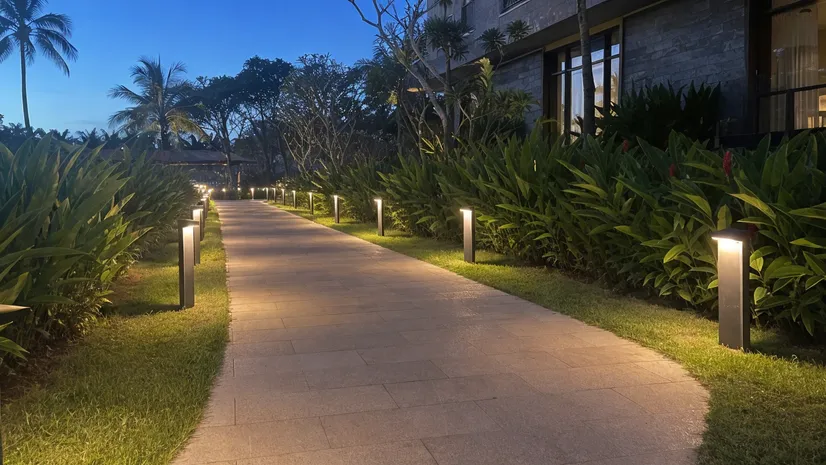
This segment buys on visual quality and durability. Walkway lights on hotel grounds or resort paths need to hold their appearance over a multi-year maintenance cycle in a high-traffic environment. CCT consistency matters here more than in residential applications — a run of walkway lights with mixed warm and cool units is immediately visible to guests and reflects on the property's maintenance standards.
For this segment, die-cast aluminum or stainless steel housings with powder-coated finishes are the right specification. The higher unit cost is justified by the longer service life and the lower maintenance burden. Margin is higher than in the residential segment, and buyers are less price-sensitive if the product specification is right.
Key buying criteria: Visual consistency across long runs, die-cast aluminum or stainless steel housings, powder-coated finishes, multi-year maintenance cycle durability.
Residential Community Developments
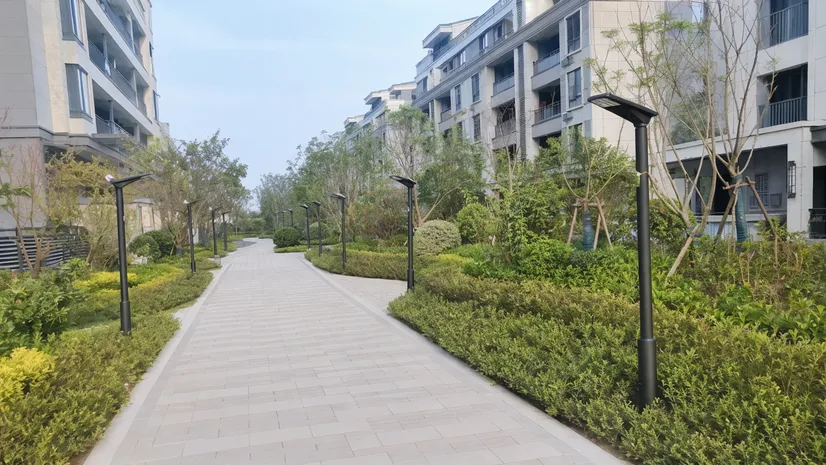
Developers and property management companies order walkway lights in project quantities — typically 200–1,000 units per development — with reorders as new phases open. The buying pattern is predictable: a spec is set for the first phase, and subsequent phases reorder the same SKU. This is the segment where ABS/PC housings with UV-stabilized finishes are the right cost-performance balance — durable enough for a 3-year warranty cycle, priced to fit a residential development budget.
For distributors, residential community developers are a high-volume repeatable account. Once a spec is established and the first phase is delivered successfully, subsequent phases are straightforward reorders. The commercial risk is losing the account to a competitor who can match the original spec — which is why batch traceability and reorder consistency matter as much as the initial unit price.
Order pattern: 200–1,000 units per phase, predictable reorders on same SKU. ABS/PC housings with UV-stabilized finishes for cost-performance balance.
Distributor Programs: Walkway Lights as a Mid-Tier SKU
For distributors building a solar outdoor lighting range, walkway lights sit between low-cost pathway lights and heavier bollard lights in terms of price point and application. They're the right SKU for buyers who need more output and a more commercial appearance than a garden pathway light, but don't need the structural weight of a bollard.
A distributor who carries pathway lights, walkway lights, and bollard lights can cover the full range of pedestrian route applications from residential to commercial.
Pathway Lights
Entry-level residential
Walkway Lights
Mid-tier — residential to commercial
Bollard Lights
Heavy commercial / municipal
Batch Consistency Controls That Protect a Walkway Run
The parent category page covers our full QC system — battery matching, waterproof inspection, controller testing, and 100% pre-shipment inspection. This section focuses on the specific controls that matter for walkway light orders, where the defects that show up in a single unit become visible across an entire run.
LED Lumen Binning
Lumen variation between units in the same batch is the defect that's hardest to catch before installation and most visible after. A walkway run with 10% lumen variation between fixtures will show as alternating bright and dim spots along the path — immediately noticeable and difficult to explain to a project owner.
We sort LED chips by lumen output and color temperature before module assembly. Chips from different bins are not mixed within a production batch. The lumen output range for a batch is confirmed before units move to final assembly, and the confirmed range is documented in the batch record.
For OEM/ODM orders where tighter tolerances are required — say, a branded product line where the buyer needs ±5% lumen consistency — we can discuss tighter binning specifications during the engineering review.

CCT Consistency Across the Run
Color temperature is held within ±200K of the specified CCT across a production run. For a 3000K order, every unit in the batch will fall between 2800K and 3200K. This is the standard we hold for all production runs.
For buyers who need tighter CCT tolerance for a high-visibility commercial installation, confirm the requirement during the order review and we'll adjust the binning specification accordingly.
The practical consequence of CCT drift is a walkway run that looks warm at one end and cool at the other — a problem that's invisible in a warehouse and obvious on site. We've seen this happen with suppliers who don't control binning at the module stage, and it's one of the reasons we run the confirmation before final assembly rather than after.
Battery Matching for Consistent Cloudy-Day Autonomy
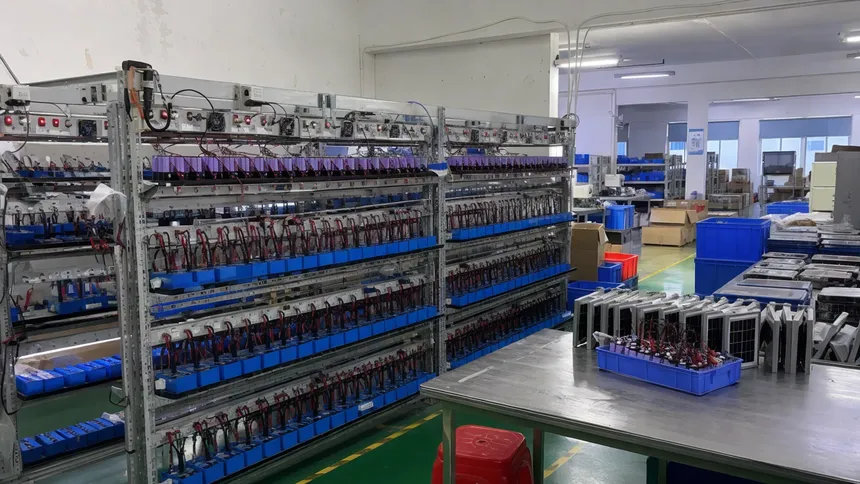
Battery cells are matched by capacity and internal resistance before pack assembly. A pack built from unmatched cells will have one weak cell that limits the pack's effective capacity — the pack charges to the weakest cell's capacity, not the rated capacity.
In a walkway run, this shows up as some fixtures going dark earlier than others on cloudy days, which generates field complaints and warranty claims.
Our aging test racks run charge/discharge cycle tests on battery packs before installation in units. For OEM/ODM orders where the buyer specifies a target autonomy — 3 cloudy days for a Northern European market, for example — we size the battery and solar panel combination against that requirement and confirm the autonomy before production starts.
Waterproof Inspection at Stake and Base Interfaces
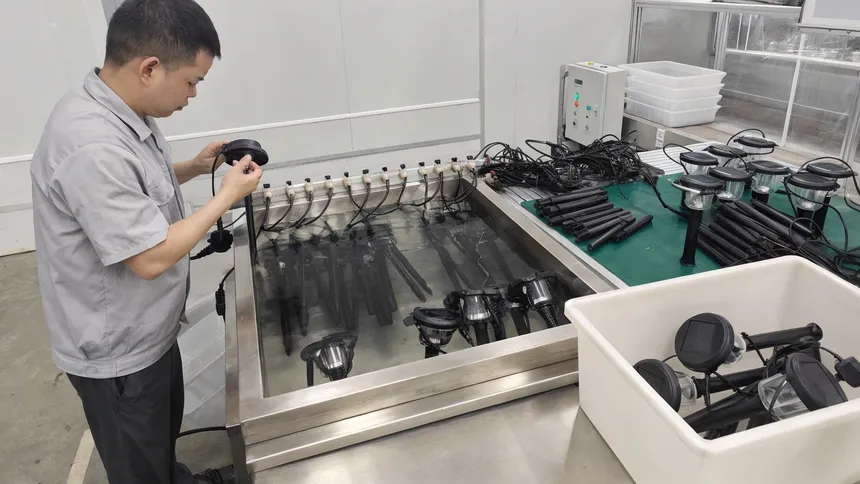
The waterproof failure point specific to walkway lights is the stake-to-body interface and the cable entry point where the solar panel connects to the housing. Ground-level installation means these joints are exposed to pooled water after rain, which is a more demanding condition than a water jet test.
We seal both interfaces with silicone during assembly and verify the seal integrity as part of the IP inspection on every unit.
IP65/IP67 verification runs on dedicated waterproof inspection equipment — not a visual check of the housing design. For ground-level or flood-prone installations where IP67 is specified, we test at temporary immersion conditions, not just water jet.
Lumen Binning
Chips sorted by output before assembly. No cross-bin mixing within a batch.
±200K CCT
Standard tolerance across the full production run. Tighter specs available on request.
Cell Matching
Capacity and internal resistance matched. Aging cycle tested before unit assembly.
IP65/IP67 Tested
Dedicated equipment. Immersion conditions for ground-level and flood-prone installs.
Customization That Builds a Sellable SKU Instead of Uncontrolled Variants
Private-label solar walkway lights are a margin opportunity — but only if the customization is controlled. The buyers who get the most value from OEM/ODM programs are the ones who customize the commercial dimensions (lumen, CCT, color, branding, packaging) and keep the core electrical architecture standard. Customizing too many variables at once creates SKU complexity that erodes the margin advantage and makes reorders harder to manage.
What Can Be Customized
Lumen Output
Adjustable within the LED module's design range without changing the housing. Useful for positioning a premium SKU above a standard one in your catalog, or for meeting a specific project illuminance requirement.
Color Temperature
Available: 2700K, 3000K, 4000K, 5000K, 6500K.
We recommend limiting a product line to two CCTs — warm white (2700K or 3000K) for residential and hospitality channels, neutral or cool white (4000K or 5000K) for commercial and municipal applications. More than two CCTs in a walkway light line creates inventory fragmentation without proportional revenue benefit.
Housing Color
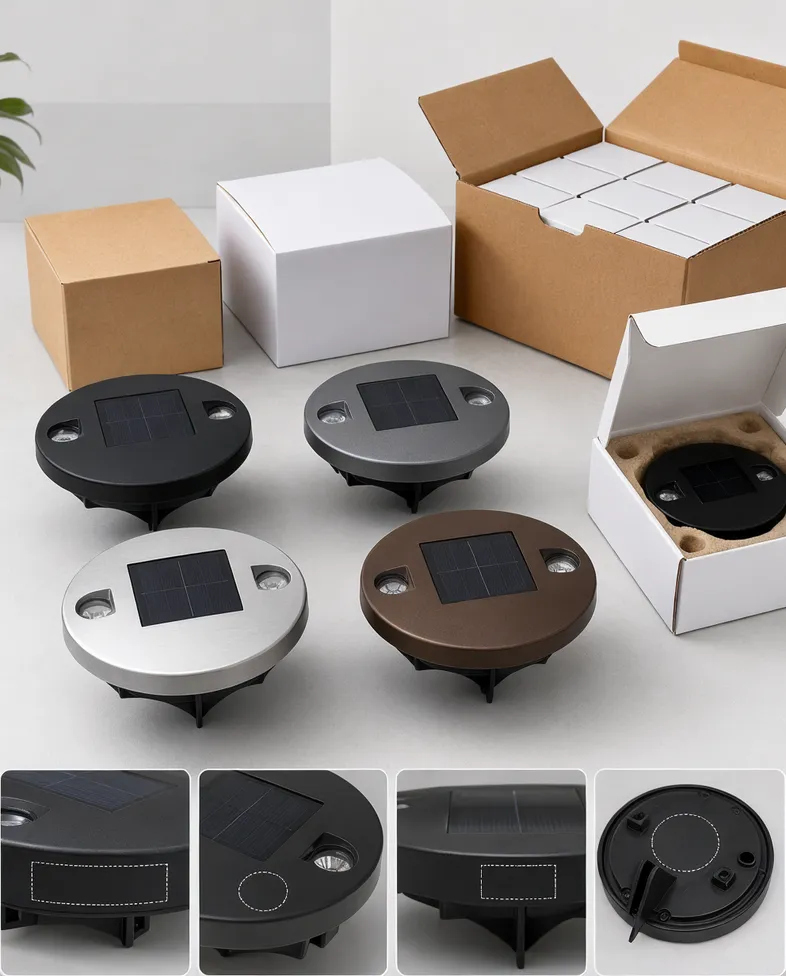
Standard options cover black, white, dark bronze, and silver.
Custom RAL colors are available on runs over 500 units where the powder line changeover cost is justified. Below 500 units, the changeover cost adds more to the unit price than most buyers expect — worth discussing before committing to a custom color.
Battery Capacity & Solar Panel Sizing
Configured for your target autonomy requirement and market latitude. We run the engineering calculation before confirming the spec — a buyer targeting Northern Europe needs a different battery/panel combination than one targeting the Middle East, even for the same lumen output.
Sensor Logic
PIR sensitivity, trigger distance, dimming percentage, and mode sequence can be programmed to your specification.
Common configurations include:
- Dusk-to-dawn full brightness
- Dusk-to-dawn with 30% dim and PIR step-up to 100%
- Time-controlled dimming after midnight
Branding & Packaging
Logo application via laser engraving, pad printing, or label on the housing. Custom carton design, inner packaging, multilingual installation guides, and accessory pack configuration.
For buyers building a branded solar lighting line, we can coordinate walkway lights with pathway lights, bollard lights, and deck lights to share consistent housing language and branding across the range.
What Should Stay Standardized
Customizing the solar panel supplier, the LED chip source, or the controller architecture outside our standard component set adds lead time and cost without proportional benefit for most buyers.
Our standard components come from approved suppliers with consistent quality records. Deviating from them requires a new engineering review and extended sample validation — which adds weeks to the timeline and increases the risk of spec mismatches during production.
For most OEM/ODM programs, the right approach is to customize the visible and commercial dimensions and keep the core electrical architecture standard. We'll tell you if a requested customization is outside that boundary and explain the trade-off.
MOQ & Process
Standard Catalog Models
100 units minimum order.
OEM/ODM Programs
MOQ varies by customization scope, typically 300–500 units for housing color or packaging changes, higher for tooling-dependent modifications.
Engineering Review
Our 15+ optical and electrical engineers handle lumen confirmation, battery sizing, solar panel sizing for your target latitude, and sensor logic programming. We lock the spec before production starts.
Walkway Lights vs Pathway, Bollard, Driveway, Fence, and Deck Lights
If solar walkway lights are not the right fit for your project or product line, the table below maps the other product families in the same category to their best-fit applications. The goal is to help you find the right product within the JXSOL range, not to route you to a competitor.
| Product | Best-Fit Market | Mounting | Typical Order Logic | Choose When |
|---|---|---|---|---|
| Solar Walkway Lights | Campus paths, commercial routes, public parks, property development | Ground stake, surface mount, anchor base | Project quantities, batch consistency critical | Repeated spacing across longer pedestrian runs; consistent output per unit matters |
| Solar Pathway Lights | Garden paths, resort walkways, residential communities, retail landscape | Ground stake | Retail and distributor SKUs, mixed-SKU orders | Lower-cost stake-mount for residential and garden-path applications |
| Solar Bollard Lights | Hotel grounds, municipal plazas, commercial landscape, high-traffic routes | Ground anchor, surface mount | Project quantities, higher unit value | Stronger structural presence, higher visual impact, impact resistance required |
| Solar Post Top Lights | Decorative area lighting, heritage streetscapes, resort grounds | Separate pole mount | Project quantities, elevated light output needed | Elevated decorative fixture where walkway-height lighting is insufficient |
| Solar Driveway Lights | Entry routes, private roads, edge marking | Ground spike, surface mount, recessed | Distributor SKU expansion, residential projects | Vehicle-adjacent installation, edge marking, beam control required |
| Solar Fence Lights | Property perimeters, boundary lighting, outdoor-living product lines | Clip or surface mount to fence rail | Retail and distributor assortments | Boundary and perimeter lighting, low-cost SKU with broad retail appeal |
| Solar Deck Lights | Outdoor living, hospitality decking, building-material channels | Recessed or surface deck mount | Distributor assortments, hospitality projects | Step and surface lighting, pairs with outdoor furniture and decking |
For the full category overview and product family comparison, see the solar pathway, walkway and bollard lighting range.
Choosing between walkway lights and bollard lights?
Walkway lights are the right choice when the project needs a lower-profile fixture at lower landed cost across a longer run. Solar bollard lights for stronger commercial route presence are the right choice when the fixture needs to handle foot traffic impact, carry more visual weight, or meet a higher structural specification.
Choosing between walkway lights and pathway lights?
Solar pathway lights for garden-path and retail SKUs are the right choice for residential and garden-path applications where the buyer needs a lower-cost stake-mount product with broad retail appeal. Walkway lights are the right choice when the project requires consistent output across a longer run and a more commercial housing specification.
Packing, Accessories, and Reorder Traceability for Walkway Light Orders
Packaging for a walkway light order is not just a shipping detail — it's a margin protection tool. Scratched housings, missing stakes, and unlabeled cartons generate after-sales workload that costs more to resolve than the original packing investment.
Scratch Protection for Painted and Powder-Coated Housings
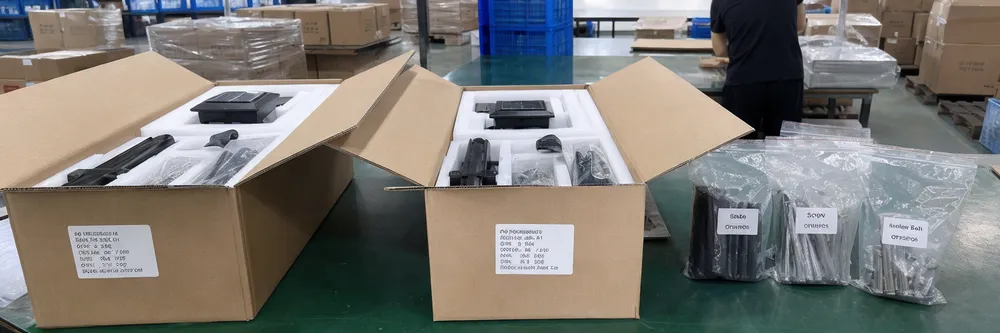
Walkway light housings — whether ABS/PC with UV-stabilized paint or die-cast aluminum with powder coat — will scratch in transit if carton packing isn't designed for it. We use foam inserts or individual PE bags for housing protection, with carton walls sized to prevent unit-to-unit contact. For powder-coated aluminum housings, we add a protective film on the housing surface before packing, removed by the installer on site.
Accessory Pack Labeling
Stakes, screws, anchor bolts, and installation instructions are packed in labeled bags by SKU, checked against a packing list before carton sealing. A walkway light that arrives without its ground stake generates a customer service call that takes longer to resolve than the cost of the missing part. For mixed-SKU orders — walkway lights shipping alongside pathway lights, bollard lights, or deck lights — accessory packs are labeled by SKU to prevent cross-contamination between product families.
Batch Codes and Reorder Traceability
Every carton is labeled with SKU code, batch code, production date, and accessory configuration. This matters when a reorder needs to match a previous batch. A residential development that installed Phase 1 walkway lights in a specific CCT and housing color needs Phase 2 to match. Reference the batch code from your first order and we can confirm whether the same component lot is available or whether a new batch needs to be validated against your sample.
Warranty Claim Traceability for Distribution Programs
For buyers who run ongoing distribution programs, batch code traceability simplifies warranty claim management — if a field failure is reported, the batch code identifies the production run and allows us to check whether the issue is isolated or systemic.
Solar Walkway Lights FAQ for Procurement Decisions
What lumen output is typical for solar walkway lights?
Residential Community Paths & Landscape Routes
50–100 lm
per fixture
Sufficient for safe pedestrian navigation at 2–3 meter spacing.
Commercial Walkways, Campus & Public Routes
100–300 lm
per fixture
Appropriate where safety lighting standards apply or where spacing exceeds 3 meters.
The key variable is spacing: a 100 lm fixture at 2-meter spacing delivers a very different illuminance level than the same fixture at 5-meter spacing. Confirm your spacing plan before specifying lumen output — or send us the route dimensions and we'll recommend the configuration.
How far apart should solar walkway lights be installed?
Spacing depends on lumen output, fixture height, beam pattern, and route width.
General Starting Point
For a 1.5-meter-wide pedestrian path targeting 5–10 lux average illuminance at ground level, a 100 lm walkway light at 3-meter spacing is a reasonable baseline.
2 m
Tighter spacing
Allows lower lumen per fixture
3 m
Baseline spacing
100 lm per fixture reference
4–5 m
Wider spacing
Requires higher lumen output to avoid dark gaps
For projects with specific illuminance requirements — municipal parks, campus safety lighting, hospitality grounds — send us the route dimensions and target illuminance and we'll calculate the spacing and fixture count.
Read our walkway and pathway lighting layout guideWhat IP rating should I specify for walkway lights in outdoor projects?
IP65 is the minimum for any outdoor solar walkway light — it covers protection against water jets from any direction, which handles rain, irrigation spray, and cleaning.
When to specify IP67 instead:
- Ground-level installations where water can pool around the base
- Paved paths with poor drainage
- Flood-prone areas or any installation where the fixture base sits in standing water after rain
IP67 covers temporary immersion up to 1 meter. IP65 is sufficient for stake-mount walkway lights in standard landscape soil where the base drains freely.
Verification note: The IP rating should be verified by test certificate, not assumed from the housing design. We test on in-house waterproof inspection equipment and provide IP test certificates with the order.
LiFePO4 vs Li-ion batteries: which is better for solar walkway lights?
LiFePO4 (lithium iron phosphate) is the better choice for most walkway light applications. Here's the direct comparison:
| Parameter | LiFePO4 | Li-ion 18650 |
|---|---|---|
| Cycle life | 2,000+ cycles | 500–800 cycles |
| Thermal stability | Superior | Moderate |
| Discharge curve | Flatter — consistent brightness | Steeper — brightness drops as battery depletes |
| Cell cost | Higher | Lower |
| Temperature range suitability | Wide swings (sun exposure + cold nights) | Moderate climates |
Choose LiFePO4 when:
Commercial and project applications where the 3-year warranty needs to be backed by actual battery performance, or where fixtures experience wide temperature swings between direct sun exposure and cold nights.
Choose Li-ion 18650 when:
Cost-sensitive SKUs where the buyer needs to hit a specific price point and the installation environment doesn't involve extreme temperatures.
For commercial and project applications where the 3-year warranty needs to be backed by actual battery performance, we recommend LiFePO4.
Are solar walkway lights better than solar bollard lights for commercial paths?
It depends on the application. Walkway lights are the right choice when the project needs a lower-profile fixture at lower landed cost across a longer run — campus paths, residential community routes, public park walkways where the fixture doesn't need to handle significant impact or carry strong visual weight.
Solar bollard lights are the right choice when the fixture needs to withstand foot traffic impact, carry more architectural presence, or meet a higher structural specification — hotel entrances, municipal plazas, commercial landscapes where the fixture is part of the visual design.
The lumen output ranges overlap (both can deliver 100–300 lm), so the decision is primarily about housing form, structural requirement, and unit cost.
Solar bollard lights for stronger commercial route presence — covers the bollard specification in detail.
What information should I send to get an accurate quote?
The inputs that let us quote without back-and-forth:
- Route length and planned fixture spacing (or total fixture count)
- Target lumen output per fixture (or the application and spacing if you need a recommendation)
- Color temperature preference
- IP rating requirement
- Mounting method (ground stake, surface mount, or anchor base)
- Target market or latitude (for battery and panel sizing)
- Order quantity
- Any OEM/ODM requirements (housing color, logo, packaging, branding)
A route photo or sketch is useful if shade conditions are a factor. The more of these you can provide upfront, the faster we can return a specific configuration and pricing.
Send the Route Layout or SKU Target for a Quote
The fastest path to a useful quote is a specific brief. Send us your route length and planned spacing, target lumen output, CCT, IP rating, mounting method, target market, order quantity, and any branding or packaging requirements.
Quoting a Specific Project?
Include these details for the fastest engineering review:
- Route length and planned spacing
- Target lumen output and CCT
- IP rating requirement
- Mounting method
- Target market and order quantity
- Branding or packaging requirements
Building a Distributor SKU?
If you're building a distributor SKU rather than quoting a specific project, tell us your target market and the price tier you're working in — we'll recommend a configuration based on what's moving for our existing distributors in that region.
Our team benchmarks against active distributor orders in your region to recommend configurations with proven sell-through.
Engineering Review on Every RFQ
Our engineering team reviews every RFQ before responding. For walkway light orders, that means checking the battery and panel sizing against your target latitude, confirming the lumen output against your spacing plan, and flagging any configuration issues before production starts — not after.
Send Your RFQ
Not ready to quote yet? We can help you narrow down the right configuration before you commit to an order.
Discuss Your Target Market and SKU MixExplore Related Solar Lighting Products
© 2026 JXSOL. All rights reserved.