

Solar Pathway Lights
Manufactured In-House, Exported Worldwide
Seven product families from one production system. Standard models from 100 units. OEM/ODM with engineering review included.
Solar pathway lights, walkway lights, bollard lights, post-top, driveway, fence, and deck lights — all produced under one roof.
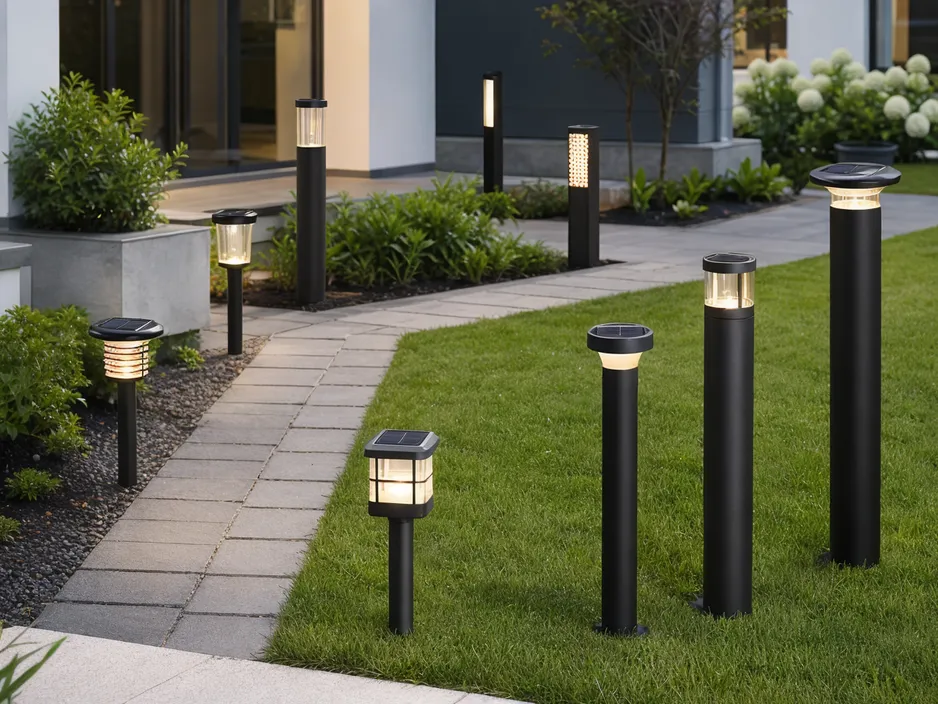
Solar Pathway Lights Built for Repeat B2B Supply
JXSOL is the export brand of Zhongshan Century Juxing Optoelectronics Technology Co., Ltd., a solar lighting manufacturer based in Guzhen Town, Zhongshan, Guangdong. We've been making solar-powered outdoor lighting since 2012 — pathway and bollard products are part of the same production system that handles street lights, flood lights, and garden fixtures. The factory covers 12,000 square meters, runs 6 dedicated production lines, and ships 1,200,000 units per year.
This page covers the full low-height solar lighting category: solar pathway lights, solar walkway lights, solar bollard lights, solar post top lights, solar driveway lights, solar fence lights, and solar deck lights. If you're building a product line, sourcing for a project, or looking for a factory you can reorder from without renegotiating every time, this is the right starting point. Individual product pages carry the model-level details — this page gives you the category picture.
We supply distributors, project contractors, and brand owners. The common thread is that they need a factory with consistent output, not a sourcing agent assembling orders from three different suppliers. Our production is in-house, our engineering team is on-site, and our inspection lab is in the same building where the product is assembled. Learn more about the JXSOL factory.
In-House Production
All manufacturing under one roof — no third-party assembly, no split-source quality risk.
On-Site Engineering
Engineering team works in the same building as production — design changes don't require external coordination.
Repeat-Order Ready
Consistent output means you reorder without renegotiating specs, pricing, or lead times every cycle.
One Category Covering Seven Product Families
The seven product types below cover the full range of low-height solar lighting applications — from simple stake-mount pathway units to commercial-grade bollards and pole-mounted post-top fixtures. Each has a distinct commercial fit.
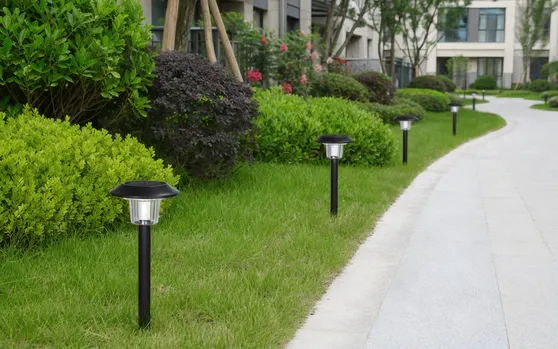
Solar Pathway Lights
Garden paths · Resort walkways · Residential communities · Retail landscape
Low-profile stake mount, broad SKU range, fast-moving retail and distributor item.
View Product Details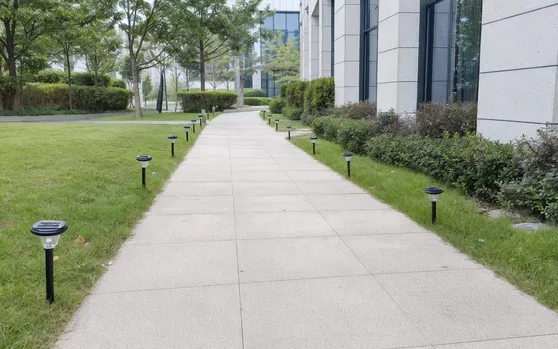
Solar Walkway Lights
Campus paths · Commercial walkways · Public projects · Property development
Designed for repeated spacing across longer runs; consistent lumen output per unit matters here.
View Product Details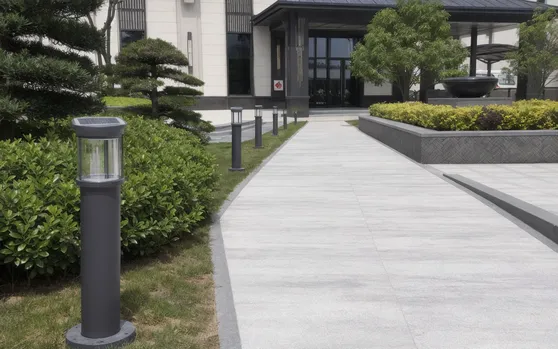
Solar Bollard Lights
Commercial landscapes · Hotel grounds · Plazas · Municipal routes
Stronger structural presence, higher visual impact, better impact resistance than pathway stakes.
View Product Details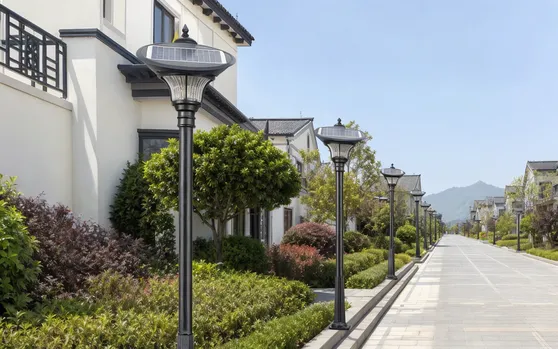
Solar Post Top Lights
Decorative area lighting · Heritage streetscapes · Resort & hospitality grounds
Pole-mounted solar fixture where buyers need elevated light output with a decorative form.
View Product Details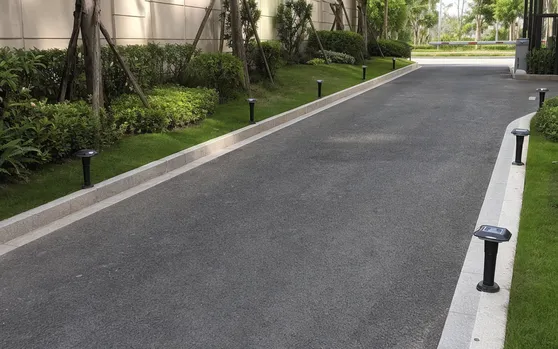
Solar Driveway Lights
Entry routes · Private roads · Edge marking · Distributor SKU expansion
Beam control and mounting strength for vehicle-adjacent installation.
View Product Details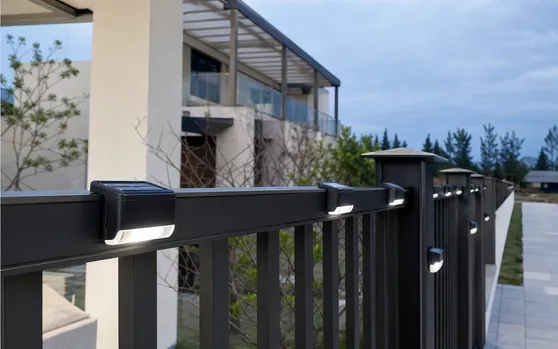
Solar Fence Lights
Property perimeters · Boundary lighting · Outdoor-living product lines
Clip or surface mount to fence rails; low-cost boundary SKU with broad retail appeal.
View Product Details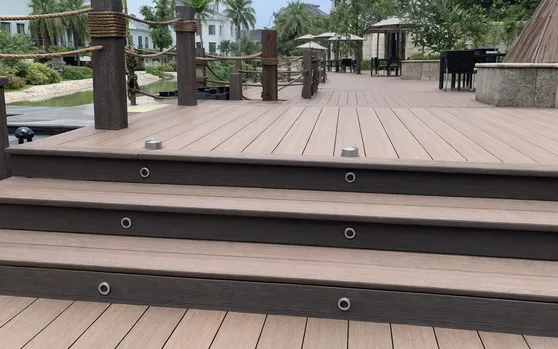
Solar Deck Lights
Outdoor living · Hospitality decking · Building-material distributor channels
Recessed or surface deck mount; pairs well with outdoor furniture and decking assortments.
View Product DetailsHow the Product Families Relate
Pathway & Walkway — Stake-Mount Tier
Pathway and walkway lights share the same stake-mount installation logic and similar lumen ranges — the distinction is primarily in housing form and the buyer's channel. Pathway lights move through retail and landscape distributor channels; walkway lights are more commonly specified in project quantities with uniform spacing requirements.
Bollards and post tops share heavier construction and higher lumen output. Bollards are self-standing columns; post tops mount atop a separate pole. Both target commercial and municipal projects where visual presence and durability justify a higher price point.
Driveway, Fence & Deck — Accessory Tier
These three families serve niche mounting contexts — vehicle-adjacent edges, fence rails, and deck surfaces. They round out a distributor's assortment and often sell as add-on SKUs alongside pathway or bollard orders.
Why Buyers Source Solar Pathway & Bollard Lighting
The commercial case for solar pathway and bollard lighting rests on installation economics, maintenance reduction, and expanding end-user demand. Here's what drives sourcing decisions across buyer types.
Zero Trenching Cost
Each solar unit is self-contained — no conduit, no transformer, no electrician. For projects with 20+ fixtures across a site, the trenching savings alone can exceed the product cost. This is the single biggest driver for landscape contractors and property developers.
SKU Breadth for Distributors
Pathway and bollard lighting spans multiple price tiers, form factors, and lumen classes. Distributors can build a coherent solar outdoor assortment from a single supplier — reducing vendor management overhead and consolidating freight.
Growing End-User Demand
Residential and commercial buyers increasingly expect solar as the default for low-height outdoor lighting. Retailers report year-over-year category growth driven by sustainability awareness and rising electricity costs in key markets.
Reduced Maintenance Liability
Property managers and HOAs favor solar fixtures because there's no wiring to degrade, no circuit breakers to trip, and no monthly energy cost to allocate. Maintenance is limited to occasional panel cleaning and battery replacement at 3–5 year intervals.
Faster Project Timelines
Solar pathway and bollard fixtures install in minutes per unit. Contractors can light an entire pathway in a single day without waiting for electrical permits or coordinating with utility providers — compressing project schedules significantly.
Sustainability & ESG Alignment
Corporate and municipal buyers increasingly require renewable-energy solutions to meet ESG targets and green building certifications. Solar pathway lighting is a visible, low-risk way to demonstrate commitment without complex system integration.
Technical Comparison Across Product Families
Use this reference table to compare key specifications across the seven product families. Ranges reflect the breadth of SKUs available within each family — actual specs depend on the model selected.
| Product Family | Lumen Range | Height | Panel Type | Battery | Runtime | IP Rating |
|---|---|---|---|---|---|---|
| Solar Pathway Lights | 10–80 lm | 30–60 cm | Mono/Poly | NiMH / LiFePO4 | 6–10 hrs | IP44–IP65 |
| Solar Walkway Lights | 30–150 lm | 40–80 cm | Mono/Poly | LiFePO4 / Li-ion | 8–12 hrs | IP54–IP65 |
| Solar Bollard Lights | 80–400 lm | 60–120 cm | Mono/PERC | LiFePO4 | 8–14 hrs | IP65–IP66 |
| Solar Post Top Lights | 150–800 lm | Pole-mounted (2–4 m) | Mono/PERC | LiFePO4 | 10–14 hrs | IP65–IP67 |
| Solar Driveway Lights | 30–200 lm | 30–80 cm | Mono/Poly | LiFePO4 / Li-ion | 8–12 hrs | IP65–IP67 |
| Solar Fence Lights | 5–50 lm | N/A (surface mount) | Poly/Amorphous | NiMH / Li-ion | 6–10 hrs | IP44–IP65 |
| Solar Deck Lights | 5–40 lm | N/A (recessed/surface) | Poly/Amorphous | NiMH / Li-ion | 6–8 hrs | IP65–IP67 |
* Specifications are representative ranges across available SKUs. Exact values depend on model selection. Contact our team for detailed datasheets.
How Buyers Should Match Solar Pathway Lights to Market Position and Project Risk
The wrong product family choice creates problems downstream: wrong mounting method for the installation environment, lumen output that doesn't match the project spec, housing that doesn't hold up to the use case. Here's how to think through the selection before you quote a customer or build a purchase order.
For Retail and Distributor SKU Programs
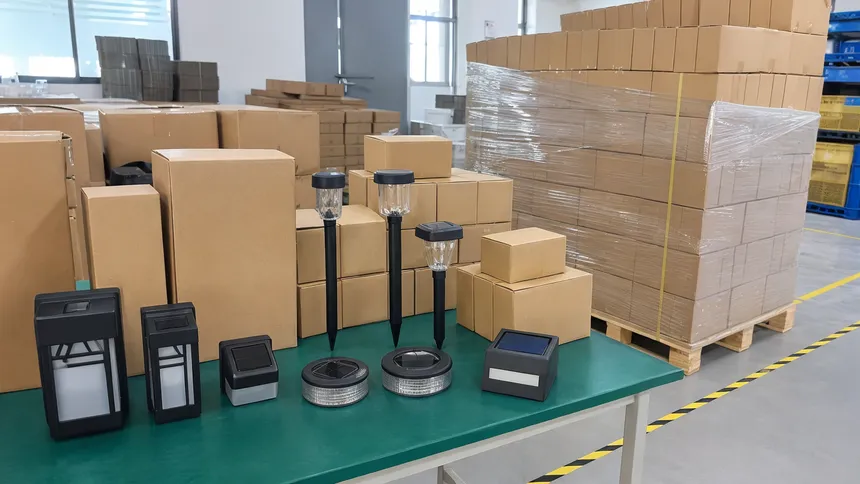
Prioritize: solar pathway lights, solar fence lights, and solar deck lights. These three move through hardware, garden, and outdoor-living channels with minimal installation complexity — stake-in-ground or clip-on-fence means no civil work, no electrician, no permit.
Key Sourcing Criteria
- Carton size consistency for shelf and warehouse planning
- Common CCT: 3000K warm white and 4000K neutral white cover most retail markets
- Housing that photographs well for e-commerce listings
For this channel, MOQ flexibility matters. Standard models from 100 units let you test a new SKU with your buyers before committing to a full container. Once a SKU is proven, reorder reliability becomes the priority — and that's where factory capacity and scheduling discipline matter more than unit price.
For Contractor and Project Supply
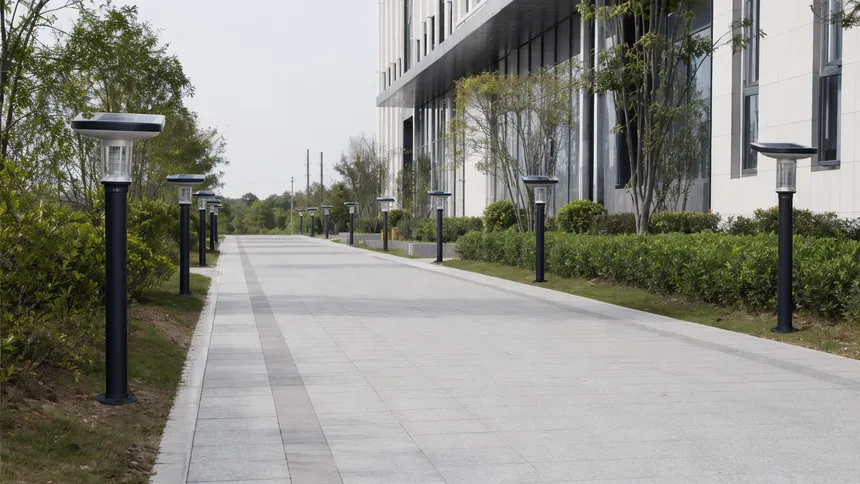
Prioritize: solar walkway lights and solar bollard lights. Projects specify uniform spacing, consistent lumen output across every unit in the run, and a housing that holds its appearance over a multi-year maintenance cycle.
Critical Spec
Batch-to-batch lumen consistency is the spec that matters most here — a project with 200 walkway lights installed at 3-meter intervals will show any variation immediately.
For project supply, request lumen confirmation data and ask about batch control. We run lumen and color temperature confirmation at the LED module assembly stage, so the output range across a batch is controlled before units reach final assembly, not checked after the fact.
For Commercial Landscape and Municipal Routes
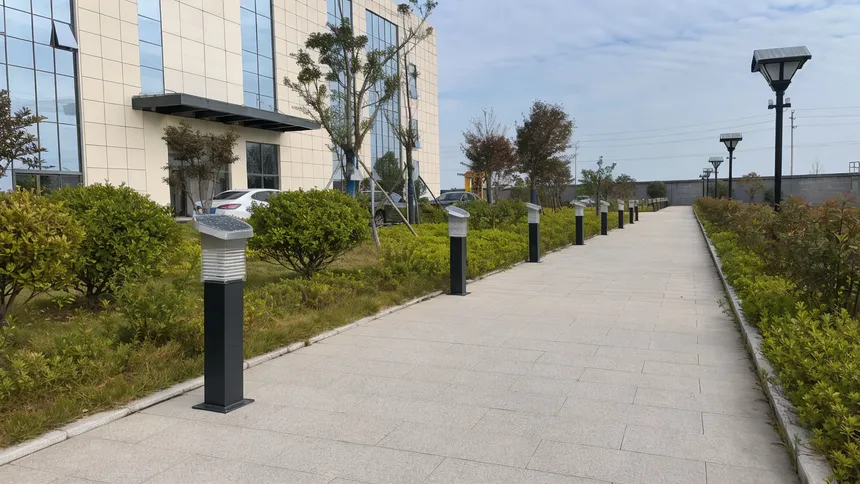
Prioritize: solar bollard lights and solar post top lights. These buyers need structural durability — a bollard that survives a shopping cart impact or a post-top that holds its alignment after a storm.
What Matters Most
- Housing material and base plate thickness
- Fastener specification for structural integrity
- Compliance documentation: CE Declaration of Conformity, IP test certificates, RoHS records
Municipal and commercial landscape buyers also tend to need compliance documentation provided with the order. See our solar lighting certifications.
For Driveway and Edge Marking Applications
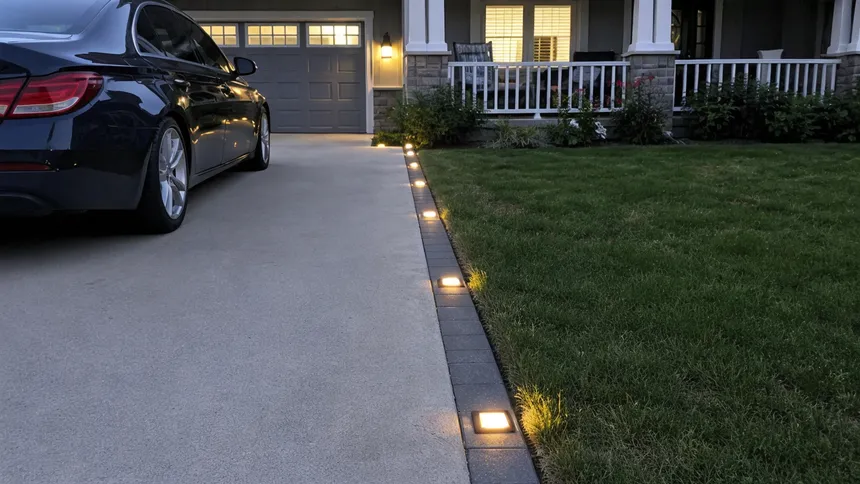
Prioritize: Solar driveway lights need beam control and mounting strength that pathway stakes don't provide. The fixture sits at vehicle-adjacent height, so the housing needs to handle proximity to moving vehicles and the occasional graze.
Selection Focus
- IP rating: IP65 minimum for ground-level installation
- Mounting method: ground spike vs. surface mount vs. recessed
- Replacement simplicity for residential communities and private road developments
Driveway lights in a residential community or private road development will need occasional unit replacement, and that process should be straightforward for the end installer.
Not sure whether bollards or pathway lights are the right fit for a specific project?
Read our comparison guide or send your project specs for a configuration recommendation.
Category-Level Specs to Confirm Before You Quote a Customer
These are the parameter ranges across the full pathway and bollard lighting category. Use them to confirm whether our production scope covers your requirements before sending an RFQ. Individual product pages carry the model-specific values.
| Parameter | Category Range | Notes |
|---|---|---|
| Lumen Output | 10–800 lm | Pathway/fence/deck: 10–150 lm typical; walkway: 50–300 lm; bollard/post-top: 200–800 lm |
| Color Temperature | 2700K–6500K | 3000K and 4000K are the most common; 6500K available for markets that prefer cool white |
| LED Power | 0.5W–10W | Scales with lumen output and product family |
| Solar Panel Type | Monocrystalline silicon | Standard across the category; panel size scales with battery capacity and target autonomy |
| Solar Panel Output | 1W–10W | Sized per product to meet autonomy targets in the buyer's target latitude |
| Battery Type | LiFePO4 or Li-ion 18650 | LiFePO4 preferred for longer cycle life and thermal stability; Li-ion available for cost-sensitive SKUs |
| Battery Capacity | 600mAh–6000mAh | Sized to target autonomy; see autonomy row below |
| Autonomy (cloudy days) | 2–5 days | Depends on battery capacity, lumen output, and lighting mode; confirm per product |
| IP Rating | IP65 / IP67 | IP65 standard; IP67 available for ground-level and driveway applications |
| Housing Material | ABS, PC, die-cast aluminum, stainless steel | ABS/PC for pathway and deck; die-cast aluminum or stainless for bollard and post-top |
| Surface Finish | UV-stabilized paint, powder coat, anodizing | UV-stabilized finish standard; powder coat on metal housings; anodizing available for aluminum |
| Mounting Type | Ground stake, surface mount, recessed, pole mount | Varies by product family; see individual product pages |
| Sensor / Control | PIR motion sensor, dusk-to-dawn, dimming modes | PIR and dusk-to-dawn standard; multi-mode dimming available |
| Certifications | CE, RoHS, IP65/IP67, IEC 62124 | CE and RoHS required for EU market entry; IEC 62124 covers solar system performance |
| Warranty | 3 years | Standard across the category |
A Note on Battery Specification
Battery capacity is the spec that most directly affects field performance — and the one most commonly misrepresented in this product category. A 600mAh cell in a pathway light running at 50 lm with a PIR sensor will behave very differently from the same cell running at full brightness all night. When you're quoting a project or building a product spec, confirm the autonomy claim against the actual lighting mode, not just the battery capacity number.
We size batteries against the target lighting mode and autonomy requirement during the engineering review. For OEM/ODM orders, we run charge/discharge cycle tests on the battery pack configuration before production starts.
Submit Your Spec Requirements for a QuoteWaterproofing, Battery Matching, and Lumen Consistency Before Shipment
Solar pathway and bollard lights fail in the field in predictable ways. We've been making this product category since 2012, and the failure modes haven't changed much — what's changed is how thoroughly we control for them before a unit leaves the factory.
Water Ingress at Seams, Joints, and Base Interfaces
The most common field failure in low-height solar lighting is water entering through housing seams, lens joints, stake-to-body interfaces, or the cable entry point where the solar panel connects to the housing. A fixture that passes a basic splash test can still fail after six months of ground-level installation where water pools around the base.
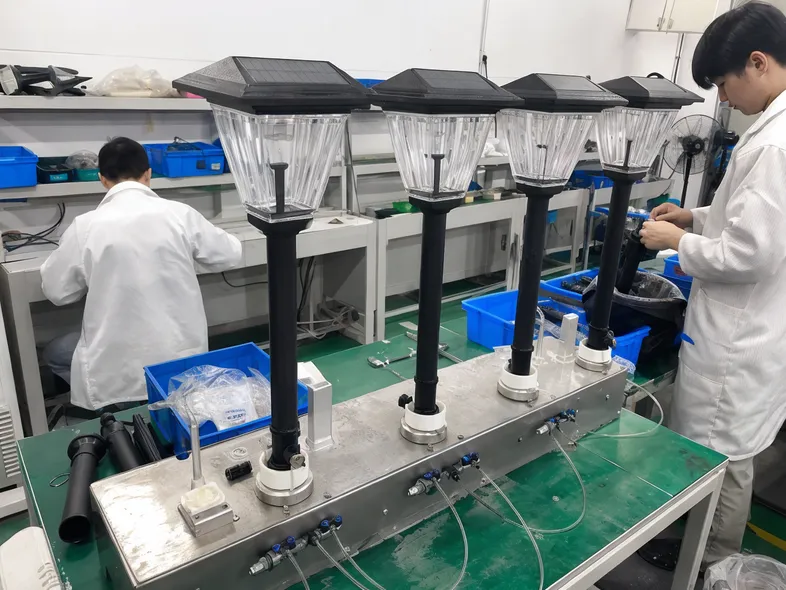
Our IP65/IP67 verification runs on dedicated waterproof inspection equipment — not a visual check of the housing design, but an actual ingress test on assembled units. For ground-level products like driveway lights and recessed deck lights, we test at IP67 (temporary immersion) rather than IP65 (water jet). The stake-to-body joint and cable entry points are sealed with silicone during assembly, and the seal integrity is part of the waterproof inspection checkpoint.
Water jet resistance — standard pathway fixtures
Temporary immersion — ground-level & recessed units
Units tested — not spot-check sampling
Why We Moved to 100% Inspection
We switched from a spot-check approach to 100% waterproof inspection on this category after seeing a batch of pathway lights with inconsistent silicone application at the stake joint. The defect rate was low — around 2% — but 2% of a 5,000-unit order is 100 units that fail in the field. Not acceptable.
Defect rate that triggered the policy change — low statistically, unacceptable at order scale
Housing Seams
Ultrasonic weld or gasket seal verified under pressure
Lens Joints
O-ring or silicone channel inspected before final assembly
Stake-to-Body Interface
Silicone sealed during assembly, integrity tested post-seal
Cable Entry Point
Panel-to-housing connection sealed and immersion-tested
Battery Capacity Mismatch and Cloudy-Day Autonomy
The second most common failure is a battery that can't support the claimed autonomy in real conditions. This happens when cells are not matched by capacity and internal resistance before pack assembly, or when the battery capacity is sized for ideal solar irradiance rather than the buyer's actual target market.
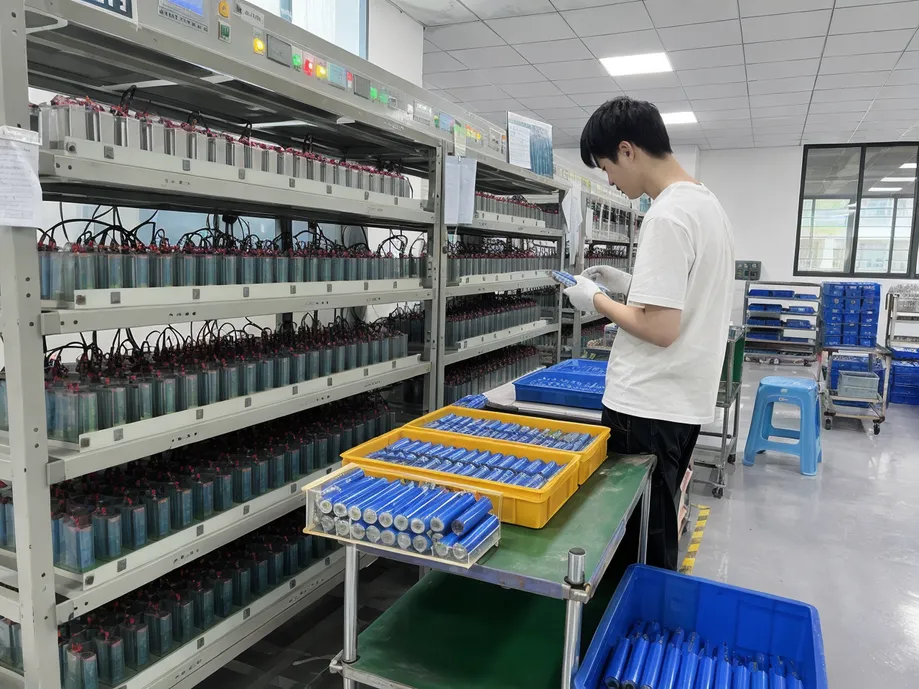
We match battery cells by capacity and internal resistance before pack assembly. Packs go through charge/discharge cycle testing on our aging test racks before they're installed in units. For OEM/ODM orders where the buyer specifies a target autonomy — say, 3 cloudy days for a Northern European market — we size the battery and solar panel combination against that requirement, not against a generic spec.
Cell Matching Protocol
Cells sorted by capacity and internal resistance before pack assembly. Charge/discharge cycle testing on aging racks confirms real-world autonomy before unit installation.

Lumen and Color Temperature Inconsistency Across Batches
A distributor who reorders 500 pathway lights six months after the first order expects the new batch to match the original. Lumen output drift between batches is one of the most common complaints in this category, and it usually traces back to LED binning — using chips from different bins without controlling for output and color temperature.
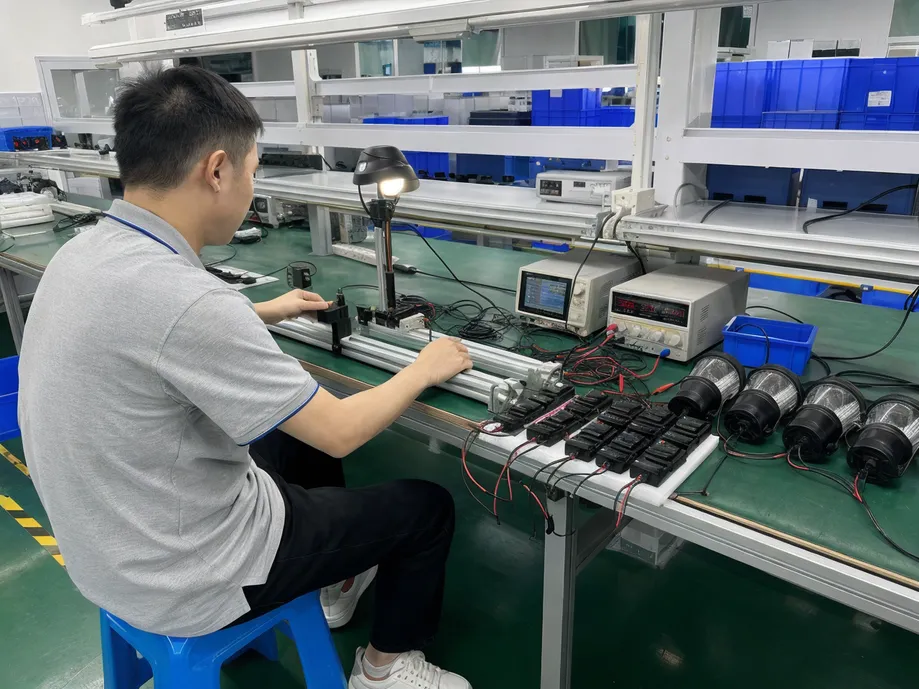
We run lumen binning at the LED module assembly stage. Chips are sorted by lumen output and color temperature before module assembly, and the output range for a batch is confirmed before units move to final assembly. Color temperature is held within ±200K of the specified CCT across a production run. For buyers who need tighter tolerances for a branded product line, we can discuss tighter binning specifications during the OEM/ODM engineering review.
Binning Tolerances
Color Temperature: ±200K of specified CCT across production run
Lumen Sorting: Chips binned by output before module assembly
Tighter Specs: Available for branded product lines during OEM/ODM engineering review
Controller and Sensor Function Failures
PIR sensors that don't trigger reliably, dusk-to-dawn circuits that activate in daylight, and dimming modes that don't hold their programmed behavior — these are the controller failures that generate warranty claims. They're also the failures that are easiest to catch before shipment if you test every unit.
Controller and sensor function checks run on every unit at a dedicated test bench. PIR trigger distance and angle, dusk-to-dawn threshold, and lighting mode behavior are all verified. For products with multi-mode dimming, each mode is confirmed against the programmed spec. This is part of the 100% pre-shipment inspection — not a sample check.
- PIR trigger distance and angle confirmed at test bench
- Dusk-to-dawn threshold validated against spec
- Each dimming mode tested individually on multi-mode products
- Not a sample check — every unit passes before packing
Accessory Errors in Mixed-SKU Orders
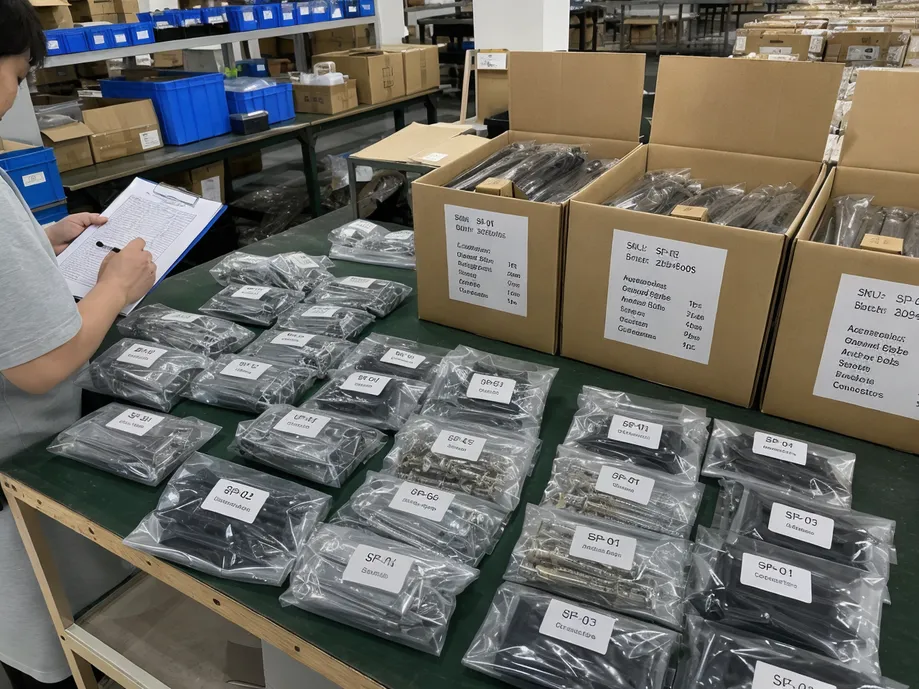
A pathway light that arrives without its ground stake, or a bollard that ships without the correct anchor bolts, generates a customer service problem that costs more to resolve than the missing part. In mixed-SKU orders — which are common in this category — accessory pack errors are more likely because different product families have different accessory configurations.
We pack accessories in labeled bags by SKU, checked against a packing list before carton sealing. Cartons are labeled with SKU code, batch code, and accessory configuration. For mixed-SKU orders, we prepare a consolidated packing list that maps each carton to its SKU and accessory contents.
- Accessories in labeled bags matched to specific SKU
- Packing list cross-check before carton sealing
- Carton labels: SKU code + batch code + accessory config
- Consolidated packing list mapping cartons to SKU and contents
OEM/ODM Options That Protect SKU Margin Instead of Creating Uncontrolled Variants
Private-label solar pathway and bollard lights are a margin opportunity — but only if the customization is controlled. Uncontrolled variants (too many CCT options, too many housing colors, non-standard battery sizes) create inventory fragmentation and reorder complexity that erodes the margin advantage. Here's how we approach OEM/ODM for this category.
What Can Be Customized
The customization dimensions that make commercial sense for this category:
Lumen Output
Adjustable within the LED module's design range without changing the housing. Useful for positioning a premium SKU above a standard one in your catalog.
Color Temperature
2700K, 3000K, 4000K, 5000K, 6500K. We recommend limiting your line to two CCTs — warm white for residential and hospitality channels, neutral or cool white for commercial and municipal.
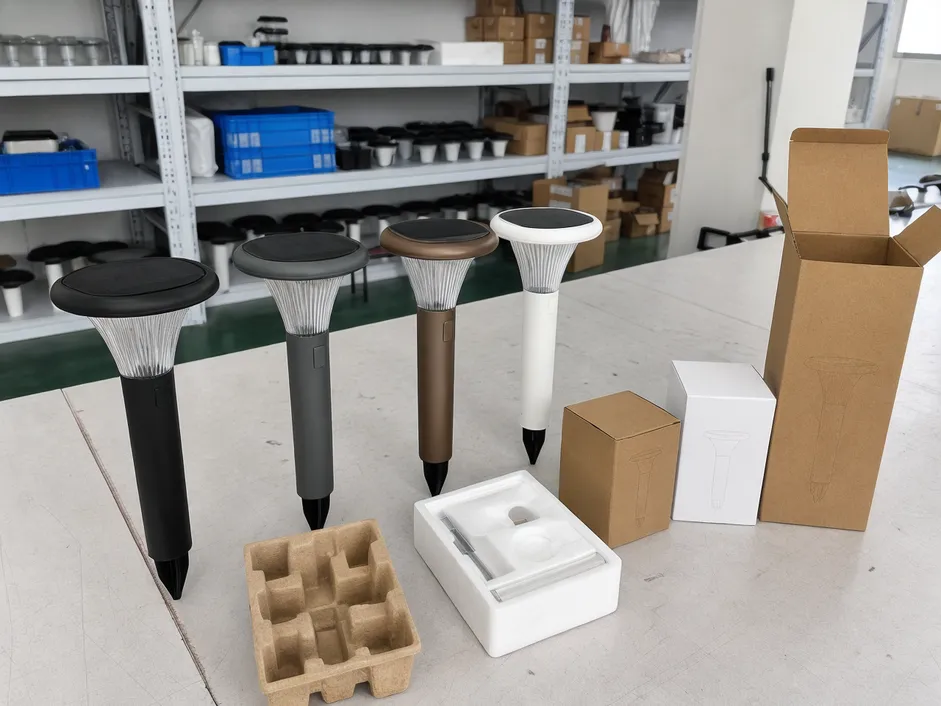
Housing Color
Standard options cover black, white, dark bronze, and silver. Custom RAL colors are available on runs over 500 units where the powder line changeover cost is justified.
Logo and Branding
Laser engraving, pad printing, or label on the housing. Packaging with your brand name, logo, and product specifications.
Packaging
Custom carton design, inner packaging, multilingual installation guides, and accessory pack configuration.
Lighting Mode & Sensor Logic
PIR sensitivity, trigger distance, dimming percentage, and mode sequence can be programmed to your specification.
Battery Capacity
Sized to your target autonomy requirement and market latitude. We run the engineering calculation before confirming the spec.
SKU Mix
We can build a coordinated line — pathway, bollard, deck, and fence lights — with consistent housing language and shared branding across the range.
What Should Stay Standardized
Customizing the solar panel size, the LED chip supplier, or the controller architecture outside of our standard component set adds lead time and cost without proportional benefit for most buyers.
Our standard components are sourced from approved suppliers with consistent quality records. Deviating from them requires a new engineering review and extended sample validation.
For most OEM/ODM programs, the right approach is to customize the visible and commercial dimensions — lumen, CCT, color, branding, packaging — and keep the core electrical architecture standard.
MOQ and Process
Standard catalog models: 100 units minimum.
OEM/ODM programs with custom specifications: MOQ varies by customization scope, typically 300–500 units for housing color or packaging changes, higher for tooling-dependent modifications.
Engineering review: Our 15+ optical and electrical engineers handle lumen confirmation, battery sizing, solar panel sizing for your target latitude, and sensor logic programming.
Spec lock: We lock the spec before production starts, not during it.
Market Segments Where Low-Height Solar Lighting Moves in Volume
The commercial value of this product category comes from its installation simplicity — no grid connection, no civil work, no licensed electrician. That removes the main barrier to adoption in markets where wired outdoor lighting is expensive or impractical. Here are the segments where buyers in this category build repeatable volume.
Real Estate and Residential Community Development
Developers and property management companies order pathway lights, driveway lights, fence lights, and deck lights in project quantities — typically 200–2,000 units per development, with reorders as new phases open.
The buying pattern is predictable: a spec is set for the first phase, and subsequent phases reorder the same SKU. Consistency across batches is the primary sourcing requirement.
Primary SKUs:
Hotels, Resorts, and Commercial Landscape Contractors
This segment buys on visual quality and durability. Solar bollard lights and solar post top lights are the primary product families — they need to hold their appearance over a multi-year maintenance cycle in a high-traffic environment.
Margin is higher than in the residential segment, and buyers are less price-sensitive if the product specification is right.
Primary SKUs:
Municipal Parks and Public Walkways
Municipal buyers specify in larger quantities — 500 to 5,000+ units per project — and require compliance documentation: CE Declaration of Conformity, IP test certificates, and RoHS records.
Batch consistency and documentation readiness are the two factors that determine whether a factory can serve this segment reliably.
Primary SKUs:
Campus, Hospital, and Business Park Projects
Route continuity is the key requirement here — a campus with 150 walkway lights needs every unit to perform consistently, because a dark fixture in a lit run is immediately visible.
These buyers also tend to reorder as campuses expand or as older fixtures are replaced. Establishing a spec and a supplier relationship early in a campus development creates a long-term reorder account.
Primary SKU:
Retail, Wholesale, and Outdoor-Living Distributors
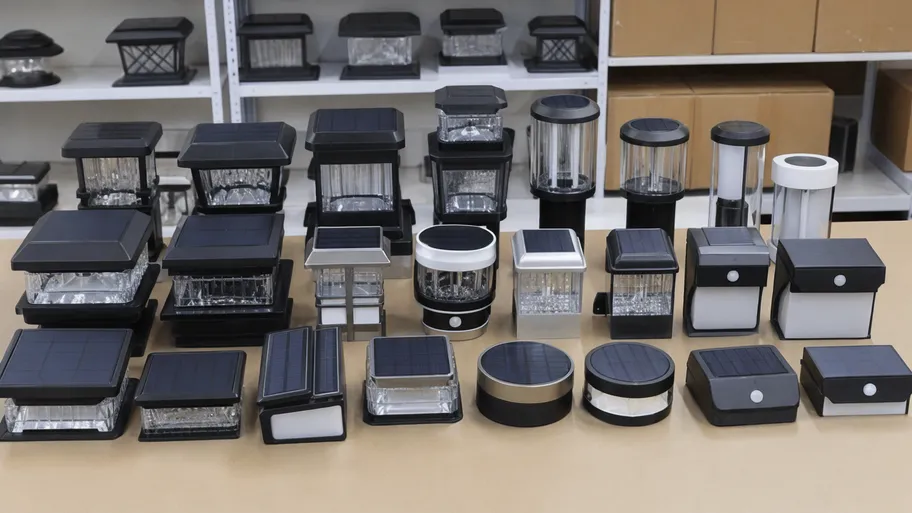
Distributors building a solar outdoor lighting assortment need breadth: pathway, deck, fence, and driveway lights that can be merchandised together and sold across multiple retail channels.
The commercial advantage of sourcing this range from one factory is SKU consolidation — one supplier, one quality standard, one reorder process.
Highest-volume SKUs:
Export Packing, MOQ, and Reorder Planning for Mixed-SKU Orders
The practical side of ordering this category from a factory in China involves more than unit price and lead time. Here's what affects your landed cost and reorder reliability.
MOQ and Order Structure
Standard catalog models start at 100 units per SKU. Mixed-SKU orders are common in this category — a distributor might order 300 pathway lights, 200 deck lights, 150 fence lights, and 100 bollard lights in a single container.
We plan mixed-SKU orders with carton-level SKU separation, labeled accessory bags, and a consolidated packing list so your receiving team can verify the order without opening every carton.
First Order Recommendation
Start with your two or three highest-confidence SKUs rather than the full range. Once the product is validated with your customers, adding SKUs to a reorder is straightforward — the factory already has your quality standard on file.
Packaging and Scratch Protection
Solar pathway and bollard light housings are typically ABS, PC, or die-cast aluminum with a painted or powder-coated finish. These surfaces scratch in transit if carton packing isn't designed for it.
- Foam inserts or individual PE bags for housing protection
- Carton walls sized to prevent unit-to-unit contact
- Stakes, poles, and mounting hardware packed separately — not loose in the same compartment as the housing
For bollard lights and post-top lights with longer poles or heavier bases, carton dimensions are sized to keep the product within standard container loading configurations. We can provide carton dimensions and weights for your freight calculation before order confirmation.
Batch Codes and Reorder Traceability
Every carton is labeled with SKU code, batch code, production date, and accessory configuration.
This matters when a reorder needs to match a previous batch — you can reference the batch code from your first order and we can confirm whether the same component lot is available or whether a new batch needs to be validated against your sample.
Carton Label Contents
Export Markets and Documentation
We export to North America, Europe, the Middle East, Southeast Asia, and Africa.
Available documentation with order:
- CE Declaration of Conformity
- RoHS test reports
- IP test certificates
- IEC 62124 documentation
For buyers importing into markets with specific labeling requirements — country of origin marking, voltage/frequency labeling, warning symbols — we can configure packaging and product labeling to your market's requirements.
Factory Credentials Behind the Category Supply
JXSOL has manufactured solar-powered outdoor lighting since 2012 — 13+ years in one product category. The pathway and bollard product line runs on the same production infrastructure as our street lights and flood lights.
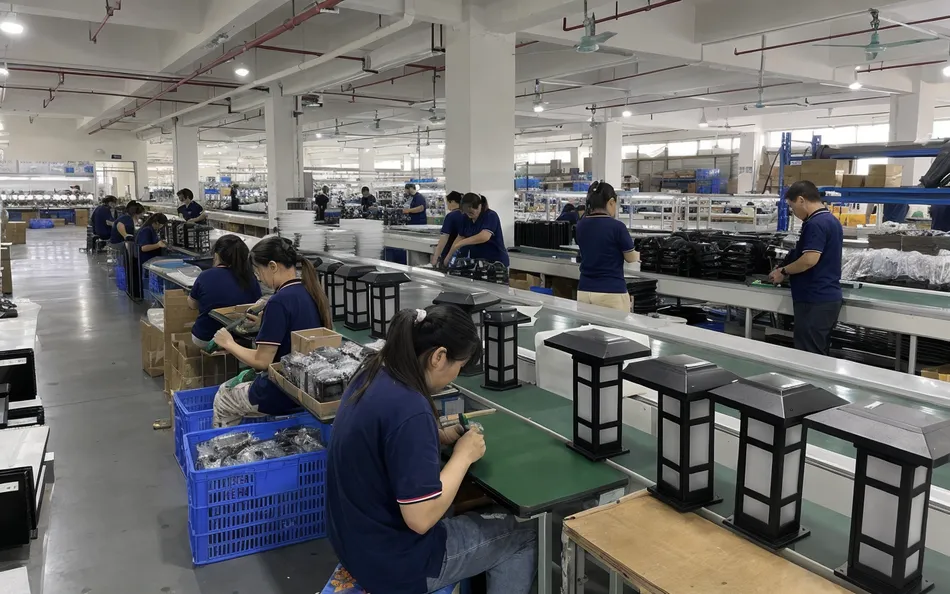
12,000 m²
Facility Area
150
Employees
6
Production Lines
5,000+
Daily Output
1,200,000
Annual Unit Capacity
Production Infrastructure
Automated SMT
Control board assembly
LED Module Assembly
Lumen binning for consistency
Battery Pack Matching
Cycle testing per batch
100% Inspection
Pre-shipment QC on every unit
Engineering & R&D Support
15+ optical and electrical engineers for R&D and OEM/ODM support. Located in Guzhen Town, Zhongshan, Guangdong — the center of China's lighting manufacturing cluster.
Certifications
ISO 9001:2015
Quality management system — process control from incoming materials through final inspection.
CE
Electrical safety and EMC compliance for European market entry.
RoHS
Restricted substance compliance, documentation traceable to component level.
IP65 / IP67
Ingress protection, tested on in-house waterproof inspection equipment.
IEC 62124
Solar photovoltaic system performance standard.
3-Year Warranty
Standard across the full pathway and bollard category.
The certifications cover the compliance requirements for North American and European market entry. For buyers in other markets, we can discuss what documentation is needed for your specific import requirements.
Solar Pathway Lights FAQ for Project and Distribution Buyers
What lumen range should buyers specify for commercial solar pathway lights?
For residential community paths and garden walkways, 20–80 lm per fixture is the typical range — enough for safe navigation without over-lighting the space. For commercial walkways where safety lighting standards apply, 100–300 lm per fixture is more appropriate, especially if fixtures are spaced more than 3 meters apart. For bollard lights in commercial landscapes or plazas, 200–600 lm is the working range.
The key variable is spacing: tighter spacing allows lower lumen per fixture; wider spacing requires more output per unit to maintain consistent illumination across the run. Confirm your spacing plan before specifying lumen output — a 50 lm pathway light at 1.5-meter spacing delivers a very different result than the same fixture at 4-meter spacing.
Quick Lumen Reference by Application
Residential Paths
20–80 lm
Garden & community walkways
Commercial Walkways
100–300 lm
Safety-standard applications
Bollards / Plazas
200–600 lm
Commercial landscapes
Solar bollard lights vs solar pathway lights: which product type is better for a project?
The decision comes down to three factors: structural requirement, visual presence, and budget.
Pathway lights are stake-mount, lower profile, and lower cost — they're the right choice for residential paths, garden routes, and retail landscape applications where the fixture doesn't need to withstand impact or carry significant visual weight.
Bollard lights are ground-mounted with a heavier housing and a wider base, designed for commercial environments where the fixture will be in close proximity to foot traffic, vehicles, or maintenance equipment.
If the project is a hotel entrance, a municipal plaza, or a commercial landscape where the fixture is part of the visual design, bollards are the right product family. If the project is a residential community path or a garden walkway, pathway lights deliver the same function at lower cost.
Pathway Lights
- Stake-mount, lower profile
- Lower cost per unit
- Residential paths & garden routes
- Retail landscape applications
Bollard Lights
- Ground-mounted, heavier housing
- Impact-resistant for high-traffic zones
- Hotel entrances & municipal plazas
- Part of the visual design language
What IP rating should outdoor solar walkway lights have?
IP65 is the minimum for any outdoor solar walkway or pathway light — it covers protection against water jets from any direction, which handles rain, irrigation spray, and cleaning.
Rating by Installation Type
IP65 — Elevated Fixtures
Sufficient for stake-mount pathway lights, bollards, and post-top fixtures where the housing is elevated above ground level.
IP67 — Ground-Level Applications
Required for recessed driveway lights or deck lights installed flush with a surface where water can pool (temporary immersion up to 1 meter).
The IP rating should be verified by test certificate, not assumed from the housing design — we test on in-house waterproof inspection equipment and provide IP test certificates with the order.
How do you prevent solar bollard lights from failing after rainy seasons?
Failure Mode 1 — Water Ingress
The failure modes to control for are water ingress at the base joint (where the bollard body meets the ground anchor), cable entry points, and the lens-to-housing seal.
Field vs. bench reality: A bollard that passes a bench IP test can still fail in the field if the base joint isn't sealed against standing water — ground-level installation means the base sits in pooled water after heavy rain, which is a more demanding condition than a water jet test.
We seal the base joint and cable entry points with silicone during assembly and verify the seal as part of the IP inspection.
Failure Mode 2 — Battery Degradation from Thermal Cycling
A bollard housing that heats up in direct sun and cools overnight stresses the battery pack. This thermal cycling accelerates capacity fade over time.
JXSOL Mitigation Approach
- LiFePO4 cells for bollard applications where thermal stability matters — superior cycle life under temperature stress compared to standard lithium-ion.
- Capacity margin — battery sized above the minimum autonomy requirement to account for capacity fade over the warranty period.
How should buyers size battery autonomy for walkway and driveway lighting projects?
The standard specification is 2–3 days of autonomy in cloudy conditions, which covers most markets. For Northern European markets or high-latitude installations where winter solar irradiance is significantly lower, 4–5 days of autonomy is a safer specification.
The autonomy calculation depends on three variables: battery capacity, lumen output (which determines current draw), and lighting mode (full brightness all night vs. dimmed with PIR activation).
PIR-Activated Mode Advantage
A PIR-activated mode that runs at 20% brightness until triggered, then steps up to 100% for 30 seconds, can extend autonomy by 2–3× compared to full-brightness all-night operation.
For project specifications, send us your target latitude, required lumen output, and preferred lighting mode — we'll calculate the battery and panel sizing and confirm the autonomy before production. Submit your project specs.
Can JXSOL customize color temperature, lumen output, housing color, and packaging?
Yes. Color temperature options cover 2700K through 6500K; we recommend limiting a product line to two CCTs to avoid inventory fragmentation. Lumen output is adjustable within the LED module's design range without changing the housing.
Housing Colors
Black, white, dark bronze, and silver as standard. Custom RAL colors available on runs over 500 units.
Packaging
Fully customized — carton design, inner packaging, multilingual installation guides, and accessory pack configuration.
Logo Application
Available via laser engraving, pad printing, or label.
MOQ for standard models is 100 units; OEM/ODM programs with custom specifications typically start at 300–500 units depending on the customization scope. See OEM/ODM services.
What is the MOQ for standard solar pathway and bollard light models?
100 units per SKU for standard catalog models. Mixed-SKU orders are accepted — you can combine pathway lights, bollard lights, deck lights, and fence lights in a single order as long as each SKU meets the 100-unit minimum.
OEM/ODM MOQ by Customization Scope
- Color or packaging changes: 300–500 units
- Tooling-dependent modifications: Higher, quoted per project
Send your pathway layout for project spacing and configuration guidance.
RFQ Inputs That Let JXSOL Quote the Right Configuration
Send us the following and we'll come back with a specific configuration recommendation and pricing — no back-and-forth on basic parameters.
What to include in your RFQ
Product Type
Which product family or families — pathway, walkway, bollard, post-top, driveway, fence, deck
Quantity
Per SKU and total order volume
Target Market
Country or region — affects compliance documentation and battery/panel sizing
Lumen Output
Required output per fixture, or the application and spacing if you need a recommendation
Color Temperature
Preferred CCT, or "standard" if you want our recommendation for your market
IP Rating
IP65 or IP67, or describe the installation environment
Autonomy Requirement
Target cloudy-day autonomy, or your target latitude
Housing Material
ABS/PC, die-cast aluminum, or stainless steel
OEM/ODM Requirements
Housing color, logo, packaging, lighting mode, or other customization
Timeline
Target delivery date or project schedule
Submit Your RFQ
We respond with a configuration recommendation and pricing within one business day.
© 2026 JXSOL. All rights reserved.